区块链

Search documents
微众银行姚辉亚:产业区块链的商业价值拐点已经出现
Jing Ji Guan Cha Wang· 2025-10-05 08:05
Core Insights - The article emphasizes that blockchain technology is becoming an indispensable infrastructure in the digital economy, with significant commercial value emerging in 2023 [2][5][10] Industry Overview - As of December 2023, there are 10,291 blockchain companies globally, with China and the United States leading at 2,802 and 2,697 companies respectively [4] - The 2023 Blockchain White Paper indicates that the commercial value of blockchain technology has reached a turning point, with many enterprises exploring its applications to enhance efficiency, reduce costs, and improve data security [2][4] Company Initiatives - WeBank has been involved in blockchain since 2015, co-founding the Shenzhen Financial Blockchain Development Promotion Association (Jinlianmeng) in 2016, and developing the FISCO BCOS blockchain platform, which became fully open-source in 2017 [5][6] - FISCO BCOS has achieved national certification as a blockchain financial technology product and has gathered over 100,000 individual developers and 5,000 institutions in its ecosystem [6][5] Application and Impact - The FISCO BCOS platform has been applied in over 400 digital transformation projects across various sectors, including finance, public services, and supply chain [6] - The establishment of the Guangdong-Hong Kong-Macao Cross-Border Data Verification Platform aims to enhance cross-border data cooperation and streamline financial services, significantly improving efficiency from days to minutes for certain banking processes [8][9][10] Future Outlook - The article suggests that the development of the digital economy presents new opportunities for blockchain technology, indicating a promising future for its commercial applications [10]


多家银行发布公告 提高动账短信提醒服务门槛
Jing Ji Ri Bao· 2025-10-05 01:26
Core Viewpoint - The adjustment of transaction SMS alert services by multiple banks is seen as a measure for refined cost management, with a shift towards mobile banking notifications for transaction updates [1][2]. Group 1: Service Adjustments - Several banks, including Guangdong Huaxing Bank and Hubei Bank, have raised the threshold for transaction SMS alerts, with Guangdong Huaxing Bank stopping alerts for transactions below 500 yuan and Hubei Bank increasing the threshold for personal debit card alerts to 100 yuan [1]. - China Bank has also adjusted its default transaction alert threshold to 100 yuan for customers enjoying lifetime free SMS notifications [1]. Group 2: Cost Management - The long-term provision of free transaction SMS services can increase operational burdens for banks, prompting them to adjust alert thresholds as part of cost management efforts [2]. - The adjustments are primarily aimed at addressing the pressure from narrowing net interest margins and profitability challenges, reflecting banks' efforts in refined operations to reduce expenditures on low-value alert services [2]. Group 3: Digital Transformation - Banks are encouraging customers to utilize mobile banking and online channels for transaction notifications, balancing cost control with customer experience [2]. - Experts suggest that banks should transform physical branches into customer experience centers and focus on high-value professional services, integrating online and offline services [3]. Group 4: Future Recommendations - Banks are advised to leverage data analysis and smart technologies to develop wealth management products that meet customer needs, enhancing service precision and efficiency [3]. - The introduction of advanced technologies like AI and blockchain is recommended to optimize risk control processes and reduce operational costs [3].
2025年中国金融科技(FinTech)行业发展洞察报告
艾瑞咨询· 2025-10-05 00:06
Core Insights - The financial technology (FinTech) industry is experiencing significant growth, driven by technological innovation and the establishment of a technology-finance-industry cycle, with a projected compound annual growth rate (CAGR) of approximately 13.3%, expected to exceed 650 billion yuan by 2028 [1][7]. Industry Overview - The domestic FinTech market is continuously expanding due to the flourishing financial market and rapid technological advancements, with a focus on the integration of technology into financial services [1][7]. - The current phase of digital transformation in financial institutions is characterized by a shift from foundational digital infrastructure to more sophisticated applications and data governance [10][16]. Policy Analysis - Recent policies emphasize the construction of a technology-finance-industry cycle, highlighting the diverse and compliant application of data elements in financial business scenarios [4]. - The focus of guiding policies has shifted towards sustainable product technology iteration and data management, marking a transition in the FinTech sector's development [4]. Market Size and Growth - The domestic FinTech market is expected to grow at a CAGR of about 13.3%, reaching over 650 billion yuan by 2028, driven by the increasing technological capabilities and the rise of new productivity models [7][20]. - The banking sector's technology investment is projected to grow at a CAGR of 11.85%, potentially exceeding 450 billion yuan by 2028, influenced by the adoption of emerging technologies and the completion of domestic innovation goals [20]. Sector-Specific Insights Banking Sector - The banking industry is in a "semi-mature" stage of digital transformation, with a high penetration of basic technology products and a steady increase in technology investment [20]. - The focus on new technologies and their multi-scenario applications is expected to reshape the banking sector's operational models [20][23]. Insurance Sector - The insurance market is benefiting from demographic changes and increased awareness, with a projected technology investment growth rate of 14.83%, expected to surpass 100 billion yuan by 2028 [29]. - The integration of advanced technologies in risk pricing and customer service is driving the development of insurance technology [29][32]. Securities Sector - The securities industry is witnessing a recovery, with technology investments increasing as firms focus on enhancing operational efficiency and reducing system failures [38]. - The expected growth rate for technology investment in the securities sector is approximately 19.7%, with a projected market size exceeding 970 million yuan by 2028 [38][42]. Technology Trends - Artificial intelligence (AI) and big data are becoming central to the financial sector's technological advancements, with AI product investments expected to grow at a CAGR of 30.36%, surpassing 16 billion yuan by 2029 [48]. - The integration of cloud services is a key trend, with financial institutions increasingly adopting hybrid cloud solutions for non-core business scenarios [61][63].

动账短信提醒服务门槛提高
Jing Ji Ri Bao· 2025-10-04 22:01
Core Viewpoint - The adjustment of transaction SMS alert services by multiple banks is seen as a measure for refined cost management, aiming to balance cost control and customer experience while promoting digital service transformation [1][2]. Group 1: Service Adjustments - Several banks, including Guangdong Huaxing Bank and Hubei Bank, have announced changes to their transaction SMS alert services, raising the minimum transaction amount for SMS notifications to 500 yuan and 100 yuan respectively [1][2]. - China Bank has also adjusted the default transaction threshold for SMS notifications to 100 yuan for customers enjoying lifetime free SMS alerts [1]. Group 2: Cost Management - The long-term provision of free transaction SMS services can increase operational burdens for banks, prompting them to set higher thresholds for alerts to manage costs effectively [2]. - The adjustments are primarily driven by the need to address narrowing net interest margins and profitability pressures, reflecting banks' efforts in refined operations to reduce expenditures on low-value alert services [2]. Group 3: Digital Transformation - Banks are encouraging customers to utilize mobile banking and online channels for transaction notifications, which can provide real-time updates without incurring additional costs [2]. - The shift towards digital services is aimed at enhancing customer experience while controlling costs, indicating a strategic move towards digital transformation in banking [2]. Group 4: Branch Operations - Experts suggest that bank branches should evolve from traditional service centers to customer experience hubs, focusing on high-value professional services and integrating online and offline operations [3]. - The use of data analysis and smart technologies is recommended to develop wealth management products that better meet customer needs, improving service precision and efficiency [3].

马云入局的千亿平台 密集出招区块链
2 1 Shi Ji Jing Ji Bao Dao· 2025-10-03 13:52
Core Insights - Jack Ma's financial venture, Yunfeng Financial, is increasingly active in the blockchain and insurance sectors, particularly through a strategic investment in Anthea Holding Limited, a global cryptocurrency life insurance company [2][10]. Company Developments - Yunfeng Financial announced a strategic investment in Anthea Holding Limited to explore the application of blockchain technology in insurance, focusing on compliance processes like KYC and anti-money laundering [2][10]. - The company has a substantial asset base of HKD 105 billion and is co-founded by Jack Ma and Yu Feng, with respective shareholdings of 29.85% and 70.15% [3]. - In recent months, Yunfeng has made significant investments in blockchain, including purchasing 10,000 Ethereum (ETH) for approximately USD 44 million and launching various projects in the sector [4][7]. Financial Performance - For the first half of the year, Yunfeng Financial reported a revenue of HKD 1.532 billion, with a significant year-on-year profit increase of 142%, primarily driven by its insurance business [13]. - The core of Yunfeng's business remains in life insurance, with its subsidiary, Wantong Insurance, contributing HKD 696 million in net operating profit [14][15]. Strategic Initiatives - The company is actively pursuing Web 3.0 and digital currency initiatives to enhance its insurance operations, aiming to address traditional financial pain points such as cost, efficiency, and security [16]. - The recent acquisition of Anthea is part of a broader strategy to capitalize on the potential growth opportunities in the global cryptocurrency life insurance market [17][18]. Leadership and Talent Acquisition - The leadership team includes notable figures from the blockchain and financial sectors, enhancing Yunfeng's capabilities in Web 3.0 [21][24]. - Key appointments include Liang Xinjun and Jiang Guofei, both with strong ties to Jack Ma and extensive experience in blockchain technology [22][25].
马云入局的千亿平台,密集出招区块链
2 1 Shi Ji Jing Ji Bao Dao· 2025-10-03 13:24
Core Insights - Jack Ma's financial venture, Yunfeng Financial, is increasingly active in the blockchain and insurance sectors, particularly through strategic investments and partnerships [2][4][10]. Group 1: Strategic Investments - Yunfeng Financial announced a strategic investment in Anthea Holding Limited, a global cryptocurrency life insurance company, to explore blockchain applications in insurance, particularly in KYC and AML processes [2][10]. - The company has made significant investments in blockchain, including purchasing 10,000 Ethereum (ETH) for approximately $4.4 million and forming strategic partnerships with Ant Group [6][7]. - Yunfeng Financial raised HKD 11.7 billion through a share placement to expand its virtual asset trading and related businesses [8]. Group 2: Business Performance - For the first half of the year, Yunfeng Financial reported a revenue of HKD 1.532 billion, with a significant profit increase of 142% year-on-year, primarily driven by its insurance business [14][16]. - The core of Yunfeng's business remains in life insurance, with its subsidiary, Wan Tong Insurance, contributing HKD 696 million in net operating profit [15][16]. Group 3: Leadership and Talent Acquisition - The company has strengthened its leadership by bringing in key figures from the blockchain and Web 3.0 sectors, including Liang Xinjun and Jiang Guofei, who have strong ties to Jack Ma [22][25]. - Jiang Guofei, a former president of Ant Digital Technology, will play a crucial role in coordinating the strategic partnership with Ant Group [26]. Group 4: Market Position and Future Outlook - Yunfeng Financial's market capitalization has increased to approximately HKD 25 billion, more than doubling since mid-July [11]. - The company aims to leverage Web 3.0 technologies to enhance its insurance offerings and address traditional financial pain points, thereby expanding its market presence [17][18].
区块链为底座的新金融时代
经济观察报· 2025-10-03 05:06
Core Viewpoint - The "Hong Kong Stablecoin Regulation" is entering a rapid implementation phase, with strict regulations providing a trust endorsement that accelerates the aggregation of capital, technology, and scenarios, forming a new generation of "financial innovation testing ground" [2][22] Group 1: Market Demand and Regulatory Framework - Following the passage of the "Hong Kong Stablecoin Regulation" on May 21, 2025, the market is entering a rapid development phase, with a strong demand for stablecoin licenses from major financial and technology companies [3] - The regulatory framework emphasizes high standards and compliance, requiring applicants to have substantial capital, a robust risk management system, and clear application scenarios [3][9] - The regulation aims to establish a safe and innovative institutional paradigm, solidifying Hong Kong's position in the global stablecoin landscape [3] Group 2: Characteristics and Applications of Stablecoins - Stablecoins are digital assets anchored to fiat currencies, designed to maintain price stability, with USDT being a prominent example [4] - They have rapidly gained popularity due to their ability to serve as a foundational tool for crypto trading, payments, decentralized finance (DeFi), and tokenization of real-world assets (RWA) [5] Group 3: Strategic Significance and Global Regulatory Trends - The global regulatory landscape is shifting, with stablecoins gaining attention due to their value anchoring features and practical trading functions [7] - Stablecoins can promote the internationalization of the Renminbi and the evolution of the global trade system, particularly in high-frequency scenarios like cross-border e-commerce [7] - They are expected to enhance the resilience and modernization of financial infrastructure, serving as a "second clearing channel" [7] Group 4: Hong Kong's Role and Innovations - Hong Kong is positioned as a pioneer in stablecoin development, leveraging its "one country, two systems" advantage to attract global capital and projects [8] - Current explorations focus on expanding application scenarios, such as tokenizing assets like charging stations and trade receivables, and innovating cross-border payment and trade settlement processes [8] Group 5: Recommendations for Financial Institutions - Financial institutions in Hong Kong should establish a unified understanding of stablecoins, RWAs, and blockchain technology to navigate the evolving regulatory landscape [19] - They should prioritize standard financial RWAs due to their higher maturity and feasibility, which can help build trust and compliance advantages [20] - Institutions must enhance compliance capabilities and proactively build high-level trust with regulators, ensuring that RWA products genuinely serve the real economy [21]

剑指跨境洗钱!香港金融安全治理研讨会释放关键信号
Guo Ji Jin Rong Bao· 2025-10-03 02:43
Group 1 - The conference focused on addressing pain points in financial innovation, anti-money laundering compliance, and international collaboration, highlighting the need for a unified regulatory framework for virtual assets in the region [2] - Approximately 30% of cross-border money laundering cases involve cryptocurrencies, with non-custodial wallets and cross-chain bridges complicating tracking efforts [2] - The average time for cross-border money laundering intelligence transmission in the Asia-Pacific region is 7 days, while funds often circulate within 24 hours; the "Shanghai-Hong Kong Cooperation Meeting" has reduced response time to 2 hours [2] Group 2 - The conference resulted in the signing of the "Anti-Money Laundering Hong Kong Declaration," establishing Hong Kong as a regional research hub and a platform for practical integration and talent cultivation [3] - The IALA Global Anti-Money Laundering Training Center was inaugurated in Hong Kong, aiming to train 100 international anti-money laundering professionals annually, including 50 from "Belt and Road" partner countries [3] - The conference outcomes are strategically valuable for both the nation and Hong Kong, enhancing China's influence in key areas and solidifying Hong Kong's role as a financial security governance hub [4] Group 3 - The integration of AI and advanced algorithms can enhance the efficiency of identifying suspicious transactions by approximately three times, with risk assessment models achieving a 95% accuracy rate in identifying money laundering risks [2] - The average investigation cycle for money laundering cases in Hong Kong is 47 days, significantly lower than the Asia-Pacific average of 73 days, indicating a more efficient response to virtual asset crimes [4] - The initiative aims to balance innovation and security through privacy computing, ensuring data is usable yet not visible, with successful pilot programs in Hong Kong reporting zero security incidents [2]
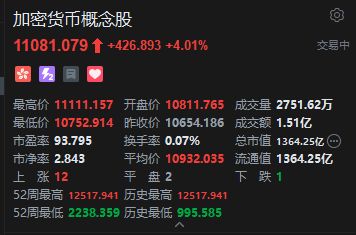
港股加密货币概念股盘初冲高
Xin Lang Cai Jing· 2025-10-03 01:50
Group 1 - The core viewpoint of the news highlights the positive performance of cryptocurrency-related stocks in Hong Kong, with significant gains observed in several companies [1][3] - As of September 30, the Hong Kong Monetary Authority (HKMA) received 36 applications for stablecoin licenses from various institutions, including banks, tech firms, and startups, indicating a growing interest in the stablecoin market [3] - The HKMA plans to review these applications and aims to announce the first batch of stablecoin issuers' licenses by early next year, with a high threshold for approval [3] Group 2 - Yunfeng Financial announced a strategic investment agreement with Anthea Holding Limited, focusing on blockchain-based insurance products, including cryptocurrency life insurance and digital asset-related savings and retirement insurance [3] - The collaboration aims to explore the digitization of traditional insurance policies and develop an efficient and forward-looking insurance business model [3]