
个人信息保护

Search documents
警惕个别智能终端侵害用户权益
Xin Hua Wang· 2025-11-17 05:40
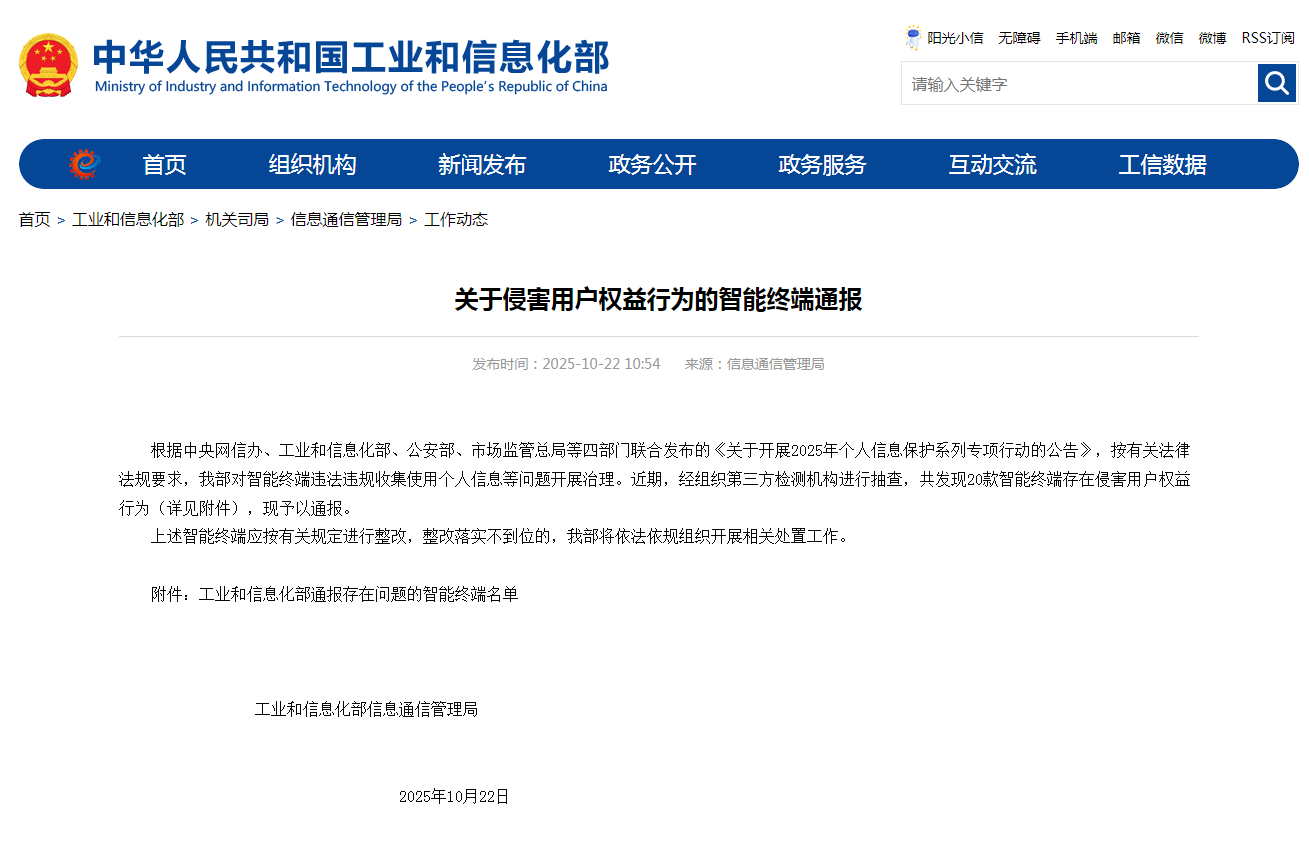
Core Insights - The Ministry of Industry and Information Technology (MIIT) has reported 20 smart terminal products that infringe on user rights, highlighting the need for enhanced personal information protection and security measures in the development of smart devices [1][3][4] Group 1: User Rights Violations - Common issues identified in the reported products include lack of personal information processing rules, excessive collection of unnecessary personal information, and unauthorized transmission of personal data to the cloud [3][6] - Users have reported instances where smart devices, such as smartphones and smart speakers, misuse personal data for targeted advertising and collect excessive information about viewing habits and online activities [3][4] Group 2: Legal and Regulatory Framework - China has established a governance framework for compliance management of smart terminals, including laws like the Personal Information Protection Law and the Cybersecurity Law, which set basic rules for personal data processing [6][7] - Continuous joint actions by relevant ministries to protect personal information have become a regular regulatory mechanism, with a focus on addressing violations in smart terminals and applications [6][8] Group 3: Challenges in Implementation - Despite a comprehensive legal framework, there are imbalances in technology investment versus security awareness, commercial gains versus user rights, and regulatory requirements versus enforcement [7][8] - The drive for data monetization has led some companies to prioritize profit over user privacy, resulting in frequent violations of user rights [7][8] Group 4: Recommendations for Improvement - Companies are encouraged to integrate privacy design principles into their product development processes and establish robust data management and encryption mechanisms [8][9] - Users should actively participate in protecting their privacy by regularly updating systems, denying unnecessary permissions, and using strong authentication methods [9][10]

新华网财经观察丨警惕个别智能终端侵害用户权益
Xin Hua Wang· 2025-11-17 03:20
Core Viewpoint - The Ministry of Industry and Information Technology (MIIT) has reported 20 smart terminal products that infringe on user rights, highlighting the need for enhanced personal information protection and security measures in the development of smart devices [2][5][6]. Summary by Relevant Sections User Rights Infringement - Common issues identified in the reported products include the lack of personal information processing rules, excessive collection of unnecessary personal information, and unauthorized transmission of personal data to the cloud [5][6]. - Users have reported instances where smart devices, such as smartphones and smart speakers, misuse personal data for targeted advertising and collect excessive information without consent [5][6]. Security Risks - The integration of advanced technologies in smart devices has increased their functionality but also introduced more complex security risks [6][8]. - The development of smart terminals is crucial for the digital economy, and their security is now considered a matter of national security [6][8]. Regulatory Framework - China has established a comprehensive legal framework for personal information protection, including laws and regulations that require clear purposes for data processing and user consent [8][10]. - Despite the existing regulations, some smart devices still violate user rights due to imbalances in technology investment, commercial interests, and regulatory enforcement [8][9]. Recommendations for Improvement - Companies are encouraged to integrate privacy design principles into their product development processes and establish robust data management practices [12][13]. - Users should actively participate in protecting their privacy by regularly updating systems, denying unnecessary permissions, and using strong authentication methods [14]. Collaborative Efforts - The security of smart terminals requires a multi-faceted approach involving technology constraints, collaborative governance, and industry self-regulation to effectively mitigate potential risks [14].


取款被查流水 银行涉嫌侵犯个人隐私
Nan Fang Du Shi Bao· 2025-11-16 23:07
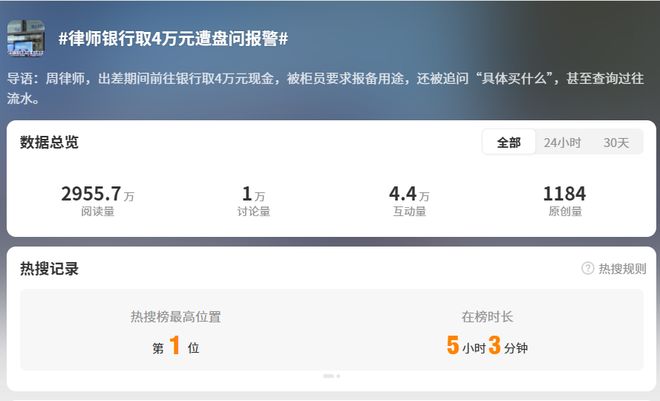
Core Viewpoint - The incident involving a bank questioning a customer about a withdrawal of 40,000 yuan has sparked widespread discussion regarding potential violations of personal privacy and the legality of banks accessing customer transaction histories [2][3]. Group 1: Legal Implications - Multiple lawyers have indicated that the bank's actions may violate the "necessity principle" outlined in the Personal Information Protection Law, suggesting that the inquiry into the customer's transaction history was excessive [3][4]. - The definition of sensitive personal information includes bank account information, which is categorized as sensitive due to the potential harm that could arise from its unauthorized disclosure [3][4]. Group 2: Bank's Responsibilities - According to the Banking Financial Institutions' Personal Financial Information Protection Management Measures, banks are prohibited from querying, using, or disclosing customer financial information beyond necessary limits [4]. - Legal experts assert that banks can only access personal account transaction information under specific conditions, such as obtaining the account holder's consent, fulfilling legal obligations, or for internal risk management purposes [5]. Group 3: Customer Rights and Actions - Customers have the right to report unauthorized access to their transaction histories to higher authorities or take legal action if they suffer financial or reputational damage due to such breaches [5]. - Some legal professionals argue that while banks may need to conduct inquiries for social governance, they should balance the means and ends of such actions to avoid overstepping privacy boundaries [5].

何炅、谢娜投资的唱吧,被腾讯音乐逼到了墙角
3 6 Ke· 2025-11-14 11:16
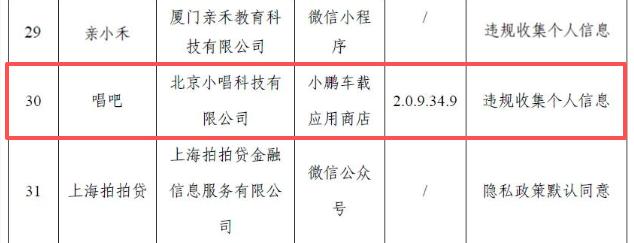
Core Viewpoint - The application "Changba," developed by Beijing Xiaochang Technology Co., Ltd., has been highlighted in a recent official report for violating user privacy by illegally collecting personal information, which has reignited public scrutiny of the app [1][3][5]. Group 1: User Privacy Violations - Changba was named in a report by the Ministry of Industry and Information Technology for "illegally collecting personal information," alongside 39 other apps [1][3]. - The app's data collection practices extend to sensitive information in a vehicle environment, including user location and in-car conversations, raising the severity of its violations [2][5]. - The app's privacy policy includes the collection of facial features, fingerprints, bank account details, and voice data, as well as permissions to access the user's contacts [3][5]. Group 2: User Complaints and Customer Service Issues - As of November 14, 2025, Changba has received a total of 629 complaints on the Black Cat Complaints platform, with issues ranging from unauthorized charges to poor customer service [6][10]. - Users have reported being charged for services they did not use, and complaints about unresponsive customer service have been prevalent [10][11]. Group 3: Competitive Landscape and Market Position - Changba's initial success was marked by rapid user growth, reaching over 1 million users within a week of its launch in 2012, but it has since struggled against competitors like Tencent's "Quanmin Kge" [14][18]. - The competitive pressure from Quanmin Kge, which benefits from a larger user base and better music licensing, has significantly impacted Changba's market share [17][18]. - Despite attempts to innovate and expand into offline KTV and other areas, Changba has not achieved its growth targets and has seen a decline in user engagement [20][25]. Group 4: Future Challenges and Opportunities - The company faces the challenge of balancing data collection with user privacy, especially as it seeks to expand into new areas like smart vehicles and the metaverse [27][29]. - Changba's recent focus on enhancing audio-visual interaction technology aims to create an immersive karaoke experience, but results have yet to show significant improvement [27][29]. - The need for Changba to redefine its unique market position and regain user trust is critical for its survival in a competitive landscape [29][30].
取款被查流水,银行算侵犯个人隐私吗?律师:或违反个保法
Nan Fang Du Shi Bao· 2025-11-14 09:40
Core Viewpoint - The incident involving a bank questioning a customer withdrawing 40,000 yuan has sparked widespread discussion regarding potential violations of personal privacy and the necessity principle under the Personal Information Protection Law [1][2]. Group 1: Legal Perspectives - Multiple lawyers have indicated that the bank's actions may violate the "necessity principle" outlined in the Personal Information Protection Law, suggesting that the inquiry into the customer's transaction history was excessive [2][4]. - The definition of sensitive personal information includes bank account information, which is categorized as sensitive due to the potential harm from its unauthorized disclosure [2][3]. - Legal experts emphasize that banks must adhere to strict guidelines when accessing personal account information, which should only occur under specific circumstances such as customer consent or legal obligations [4][3]. Group 2: Implications for Banking Practices - The incident highlights the need for banks to enhance employee training regarding the protection of customer personal information and privacy rights [3][4]. - There is a call for banks to reflect on and adjust their standards and practices concerning the querying of customer transaction histories, balancing social governance needs with individual privacy rights [4].
39款APP存侵害用户权益 掌趣科技中手游英雄互娱登榜
Zhong Guo Jing Ji Wang· 2025-11-13 06:14
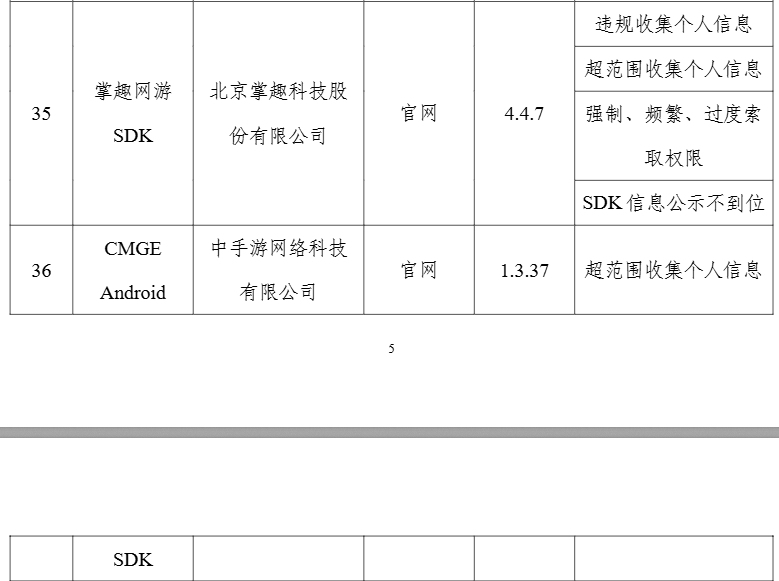
Core Points - The Ministry of Industry and Information Technology of China has reported 39 apps and SDKs that violate user rights, requiring them to rectify their issues [1] - Specific companies mentioned include Beijing Zhangqu Technology Co., Ltd., Zhongyou Network Technology Co., Ltd., and Tianjin Hero Entertainment Network Technology Co., Ltd., all of which have been found to collect personal information beyond the permitted scope [1][2][3] Company Summaries - **Beijing Zhangqu Technology Co., Ltd.**: - Developed the Zhangqu Online Game SDK (version 4.4.7) - Issues include illegal collection of personal information, excessive permission requests, and inadequate SDK information disclosure [1][2] - Founded in 2004, registered capital of 270,761.1003 million RMB, paid-in capital of 246,769.4848 million RMB [3] - **Zhongyou Network Technology Co., Ltd.**: - Developed the CMGE Android SDK (version 1.3.37) - Found to collect personal information beyond the permitted scope [1][2] - Established in 2015, registered and paid-in capital of 10 million RMB [3] - **Tianjin Hero Entertainment Network Technology Co., Ltd.**: - Developed the HeroU SDK (version 5.0.0.11) - Issues include excessive collection of personal information and inadequate SDK information disclosure [1][3] - Founded in 2015, registered capital of 11,100 million RMB [4]

海南开展健身机构个人信息保护情况联合执法检查
Hai Nan Ri Bao· 2025-11-12 01:58
Core Points - The joint enforcement inspection conducted by Hainan's internet information, market regulation, and tourism cultural departments focused on personal information protection in the fitness consumption sector [1][2] - A large chain fitness institution in Haikou was found to have issues with user personal information collection practices, including lack of transparency and consent [1] - The institution has 10 stores in the province and over 50,000 registered members [1] Summary by Sections Enforcement Inspection Findings - The inspection confirmed that the fitness institution rectified previous issues related to the non-disclosure of personal information usage rules and unauthorized collection of user data [1] - Additional problems identified included inadequate internal regulations for personal information protection and insufficient training for staff on data protection [1] Institutional Response - The institution's management committed to enhancing personal information protection measures and will submit a report on further improvements within 30 days [1] - The institution aims to set a standard for personal information protection in the local fitness industry [1] Regulatory Framework - The provincial internet information department emphasized the importance of personal information protection for public interest and economic stability [2] - The department plans to strengthen regulatory enforcement in collaboration with industry regulators to ensure data security in Hainan Free Trade Port [2]
治理违规收集使用个人信息!工信部通报39款APP及SDK
Zhong Guo Xin Wen Wang· 2025-11-11 02:25
Core Points - The article reports on the findings of 39 apps and SDKs that violate user rights by illegally collecting and using personal information, as part of a special action on personal information protection initiated by multiple government departments [2][3][4]. Group 1: Regulatory Actions - The Ministry of Industry and Information Technology (MIIT) has announced that the identified apps and SDKs must rectify their issues according to relevant regulations, with potential legal actions for non-compliance [2][3]. - The announcement is part of a broader initiative to enforce the Personal Information Protection Law and other related regulations [2]. Group 2: List of Violating Apps and SDKs - The report includes a detailed list of 39 apps and SDKs, highlighting specific issues such as forced consent for privacy policies, excessive permission requests, and unauthorized collection of personal information [3][4][5][6][7]. - Examples of violating apps include "秒音" for forcing users to use targeted push notifications, and "格林" for excessive permission requests [3][4]. Group 3: Types of Violations - Common violations identified include: - Default consent to privacy policies without user awareness [3][4]. - Frequent and excessive requests for permissions [4][5]. - Unauthorized collection and use of personal information beyond the stated purpose [5][6][7]. Group 4: Implications for the Industry - The findings indicate a significant regulatory focus on user privacy and data protection, which may lead to increased scrutiny and compliance requirements for app developers and technology companies [2][3]. - Companies may need to reassess their data collection practices and ensure transparency to avoid potential legal repercussions [2][4].

通报!39款APP及SDK,违规收集个人信息
中国能源报· 2025-11-11 01:29
Core Viewpoint - The Ministry of Industry and Information Technology (MIIT) has reported that 39 apps and SDKs have been found to infringe on user rights, prompting a call for rectification [1][3][4]. Group 1: Regulatory Actions - The MIIT conducted inspections in accordance with laws such as the Personal Information Protection Law and the Cybersecurity Law, leading to the identification of 39 apps and SDKs with violations [3][4]. - The identified apps and SDKs are required to rectify their issues, and failure to comply will result in further legal actions [4]. Group 2: List of Violating Apps and SDKs - The report includes a detailed list of apps and SDKs, highlighting specific issues such as forced consent for privacy policies, excessive permission requests, and unauthorized collection of personal information [5][6][7][8]. - Examples of violating apps include "秒音" for forced targeted push notifications and "格林" for excessive permission requests [5][6].

申通快递申邮宝等App被下架!公示后仍未按照要求落实整改
Nan Fang Du Shi Bao· 2025-11-03 14:37
Core Points - The Shanghai Municipal Communications Administration has removed 27 apps for infringing user rights, including those from Shentong Express and Shunfeng [1][3] Group 1: Regulatory Actions - The removal of the apps is based on violations of laws such as the Personal Information Protection Law and the Cybersecurity Law [3] - The action is part of a broader initiative announced by four government departments to protect personal information by 2025 [3] Group 2: List of Affected Apps - The list of apps that have been removed includes notable names such as Shentong Express, Shanghai Postal Same-City Delivery, and Shunyoubao [2][3] - A total of 27 apps were identified for non-compliance during a review period [3] Group 3: Future Monitoring - The Shanghai Municipal Communications Administration will continue to monitor the affected apps and may impose further penalties, including administrative fines and inclusion in a poor credit list for telecom operations [3]


