社会主义核心价值观

Search documents
李书磊在人民日报撰文
中国基金报· 2025-11-07 01:52
Core Viewpoint - The article emphasizes that cultural prosperity is a significant indicator of Chinese-style modernization, asserting that without the development of socialist culture, there can be no socialist modernization [6][7]. Group 1: Importance of Cultural Innovation - The key to building a cultural power lies in stimulating the innovative and creative vitality of the entire nation, which is crucial for the overall construction of Chinese-style modernization and the rejuvenation of the Chinese nation [8]. - Cultural innovation is essential for cultural prosperity, as it is the lifeblood of culture. The article highlights the historical continuity of Chinese civilization through innovation and adaptation [9]. - Meeting the spiritual and cultural needs of the people requires stimulating cultural innovation, as the demand for quality and diverse cultural products is increasing among the populace [10]. - In the context of international cultural competition, enhancing cultural innovation is necessary to establish cultural competitiveness and influence on the global stage [11]. Group 2: Basic Requirements for Cultural Innovation - The article outlines that stimulating cultural innovation must adhere to the leadership of the Communist Party and follow the path of socialist cultural development [12]. - It stresses the importance of maintaining Marxism's guiding position in the ideological realm to ensure the correct direction of cultural development [13]. - Rooting cultural innovation in the profound Chinese civilization is essential, promoting the creative transformation and innovative development of traditional culture [14]. - Cultural innovation must be based on the great practices of the new era, addressing new challenges and drawing inspiration from the people's creative practices [15]. - Embracing the trends of information technology is crucial, as technological advancements can significantly drive cultural innovation [16]. - The article advocates for an open and inclusive approach to cultural development, learning from other civilizations to inspire innovation [17]. Group 3: Measures to Promote Socialist Culture - The article proposes several major initiatives to stimulate cultural innovation and promote socialist culture, emphasizing the need for a strong sense of political responsibility and urgency [18]. - Promoting and practicing socialist core values is essential, as they serve as the moral foundation for the nation [19]. - A thriving cultural ecosystem is necessary for cultural prosperity, encouraging diverse artistic expressions and high-quality creative works [20]. - The protection and respect for cultural heritage are vital, ensuring the preservation and transmission of historical culture [21]. - Accelerating the development of the cultural industry is crucial, especially as China transitions from a middle-income to a high-income country, leveraging this opportunity for rapid cultural industry growth [22]. - Enhancing the influence and dissemination of Chinese civilization globally is important for establishing China's position in the world cultural landscape [23].

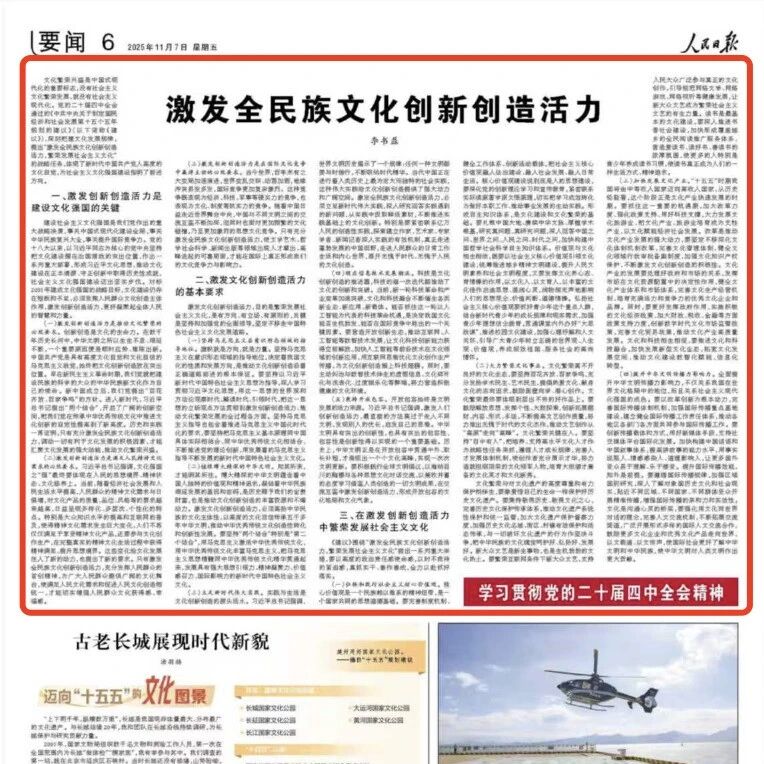
2025年山东省“新时代好少年”先进事迹发布
Da Zhong Ri Bao· 2025-11-02 01:06
Core Points - The event on October 31 highlighted the "New Era Good Youth" initiative in Shandong Province, focusing on the theme "Youth with Ambition, Moving Forward" [1] - A total of 30 exemplary youths were selected through a comprehensive recommendation and selection process by five departments [1] - The initiative aims to promote socialist core values and foster a strong atmosphere among youth to aspire to be "New Era Good Youth" [1] Group 1 - The event was held at Licheng No. 2 Middle School in Jinan, featuring the release of advanced deeds of the "New Era Good Youth" [1] - The selected youths engaged in interactive exchanges with moral models and representatives, providing a lively ideological lesson for students [1] - The initiative emphasizes various aspects such as red heritage, cultural confidence, sports perseverance, and technological innovation [1] Group 2 - On November 1, the "New Era Good Youth" participated in a research activity at the Shandong Science and Technology Museum [2]
新华时评·聚焦“十五五”规划建议|激发全民族文化创新创造活力
Xin Hua She· 2025-10-31 10:23
Group 1 - The core viewpoint emphasizes the importance of cultural prosperity as a significant marker of Chinese-style modernization, with the "14th Five-Year Plan" focusing on enhancing social civilization and cultural innovation [1][2] - By the end of 2024, there will be nearly 44,000 cultural institutions and 7,046 registered museums in China, with over 91% of them being free to access, indicating a substantial improvement in public cultural services [1] - The "15th Five-Year Plan" aims to meet the growing spiritual and cultural needs of the population, highlighting the necessity to enhance cultural service and product supply capabilities [1] Group 2 - The plan includes a comprehensive set of new measures to promote cultural development, such as enhancing cultural originality, improving public cultural services, and developing new cultural formats [2] - There is a strong emphasis on international cultural exchange, with initiatives to enhance the global influence of Chinese civilization and support cultural enterprises in expanding overseas [2] - The document outlines the need for cultural system reforms to adapt to new public demands, ensuring that cultural vitality continues to flourish [2]
塑造彰显文化底蕴和独特气质的城市精神
Ren Min Ri Bao· 2025-10-31 02:52
Core Viewpoint - The article emphasizes the importance of shaping urban spirit as a vital aspect of enhancing urban spiritual civilization and promoting high-quality urban development, aligning with Xi Jinping's directives and the central government's policies [1][2]. Group 1: Characteristics of Urban Spirit - Urban spirit serves as the soul of a city, characterized by uniqueness, consensus, and guidance, which helps to unify public sentiment and establish a city's image [1][2]. - The uniqueness of urban spirit acts as a distinctive identifier and represents the city's "personality" and "character" [1]. - Urban spirit fosters consensus among citizens, enhancing recognition and collective identity [1][2]. - It provides value orientation and direction, setting benchmarks for moral standards and daily behavior while guiding the city's future [1][2]. Group 2: Factors Influencing Urban Spirit - Urban spirit is influenced by historical context, cultural heritage, citizens' values, and future aspirations, reflecting the city's development status and future direction [2][3]. - The historical background and cultural traditions of a city shape its unique spirit, as seen in cities like Hangzhou and Suzhou [2]. - Urban spirit must evolve with the times, adapting to modern requirements while maintaining its core values [2][3]. Group 3: Approaches to Shaping Urban Spirit - The process of shaping urban spirit is a systematic project that requires a combination of top-down and bottom-up approaches, involving government guidance, citizen participation, and social collaboration [2][3]. - Emphasis should be placed on discovering and refining unique elements of urban spirit, ensuring it reflects the city's cultural depth and distinctive characteristics [3][4]. - Effective communication and transformation of urban spirit are essential for widespread citizen recognition and internalization, utilizing various media and educational initiatives [4][5]. Group 4: Implementation and Adaptation - Urban spirit must be integrated into urban governance and development practices, ensuring it is not merely theoretical but practically applied [4][5]. - Regular assessments and adjustments are necessary to keep urban spirit relevant and vibrant, reflecting changes in society and urban challenges [5]. - The evolution of urban spirit, as demonstrated by Shenzhen's changing definitions over the years, illustrates the need for continuous adaptation to maintain its significance [5].
塑造彰显文化底蕴和独特气质的城市精神(专题深思)
Ren Min Ri Bao· 2025-10-30 22:37
Core Viewpoint - The article emphasizes the importance of cultivating a unique urban spirit that reflects a city's cultural heritage and distinct character, which is essential for promoting high-quality urban development [1][2]. Group 1: Characteristics of Urban Spirit - Urban spirit serves as the soul of a city, characterized by uniqueness, consensus, and guidance, which helps to unify citizens and shape the city's image [1]. - The uniqueness of urban spirit acts as a distinctive identifier and represents the city's "personality" and "character" [1]. - Urban spirit fosters consensus among citizens, enhancing collective identity and recognition [2]. - It provides value orientation and direction, setting standards for moral conduct and daily behavior while guiding the city's future [1][2]. Group 2: Factors Influencing Urban Spirit - Urban spirit is influenced by historical context, cultural traditions, citizens' values, and future aspirations, reflecting the city's development status and future direction [2][3]. - The article highlights the need for cities to develop their unique urban spirit based on their historical heritage, regional culture, and contemporary requirements [2]. Group 3: Strategies for Shaping Urban Spirit - The article suggests a systematic approach to shaping urban spirit, integrating top-down and bottom-up strategies, and emphasizing government guidance, citizen participation, and social collaboration [2][3]. - It advocates for the extraction and refinement of urban spirit's unique connotations, ensuring that it reflects the city's cultural depth and distinctive characteristics [3]. - Engaging citizens through surveys and discussions is recommended to gather diverse opinions and create a resonant urban spirit [3]. Group 4: Promoting and Implementing Urban Spirit - Effective communication and transformation of urban spirit are crucial for gaining widespread citizen recognition and internalizing it within the community [4]. - Various media channels should be utilized to disseminate the urban spirit's meaning and significance, making it relatable and tangible [4]. - Incorporating urban spirit into educational activities for youth and community events is essential for fostering early recognition and acceptance [4]. Group 5: Practical Application of Urban Spirit - Urban spirit must be integrated into urban governance and development practices to ensure its practical implementation [5]. - The core principles of urban spirit should be embedded in local regulations and community guidelines to encourage citizens to embody and promote these values [5]. - Protecting historical sites and intangible cultural heritage is vital for manifesting the city's spirit and maintaining its unique character [5]. Group 6: Evolution of Urban Spirit - Urban spirit should evolve with the city's development, adapting to new social and economic challenges while maintaining its relevance [6]. - Regular assessments and adjustments based on public feedback and expert evaluations are necessary to keep the urban spirit dynamic and vibrant [6]. - The evolution of urban spirit, as seen in Shenzhen's changing definitions over the years, illustrates the importance of aligning it with contemporary values and aspirations [6].
“十四五”时期 北京全国文化中心建设硕果累累
Bei Jing Wan Bao· 2025-10-30 08:25
Core Insights - The "14th Five-Year Plan" period in Beijing focuses on enhancing cultural development, emphasizing ancient, revolutionary, and innovative cultures, and has achieved significant progress in establishing a national cultural center [1] Group 1: Ideological Foundation - The ideological foundation for the capital's development has been strengthened, with a focus on promoting Xi Jinping's thought and enhancing theoretical learning across various levels [2] - Major events such as the centenary of the Communist Party and the Beijing Winter Olympics have been supported through high-quality services and promotional activities [2] Group 2: Urban Civilization - The city has made notable progress in promoting social ethics and moral standards, with over 31 million visitors to major red cultural sites since the beginning of the "14th Five-Year Plan" [3] - Initiatives like the "'Jing' Color Culture, Youth Bloom" plan have engaged around 400,000 university students through numerous cultural activities [3] Group 3: Cultural Heritage - Beijing's historical and cultural heritage has been further enhanced, with the city set to have the most world heritage sites after the inclusion of the central axis in 2024 [4] - Significant cultural preservation projects have been implemented, including over 200 projects along the Grand Canal cultural belt [4] Group 4: Cultural Engagement - The city has hosted a record 57,000 commercial performances in 2024, attracting over 12.8 million attendees and generating ticket sales exceeding 3.9 billion yuan [5] - The number of registered museums has reached 246, and initiatives to promote reading and literature have gained popularity [5] Group 5: Cultural and Technological Integration - The cultural industry now accounts for 11.4% of the city's GDP, with strong support for cultural parks and new business models [6] - The integration of culture and technology is advancing, with over 70% of revenue from new cultural enterprises, positioning Beijing as a leader in this sector [6]
中国文明乡风大会在延安举行
Ren Min Ri Bao· 2025-10-29 22:41
Core Points - The conference on civilized rural customs was held in Yan'an, emphasizing the importance of cultural and moral development in rural areas [1][2] - The construction of civilized rural customs is seen as a systematic project crucial for promoting comprehensive rural revitalization and enhancing social civilization [1] Group 1 - The theme of the conference was "Civilization Makes Rural Areas More Beautiful," co-hosted by various governmental bodies [2] - Key representatives included officials from central and local units, experts, scholars, youth talents, farmers, and grassroots party organization representatives [2] Group 2 - Xi Jinping highlighted that rural civilization is an urgent task for rural revitalization, advocating for high-quality development of spiritual civilization [1] - The 20th Central Committee's fourth plenary session included the enhancement of social civilization as a major goal for the 14th Five-Year Plan period [1]
看这张思维导图,学“十五五”规划建议
Xin Hua She· 2025-10-29 13:17
Group 1 - The core viewpoint emphasizes the significant achievements in China's development during the "14th Five-Year Plan" period and the importance of transitioning to a modernized industrial system in the "15th Five-Year Plan" period [1] - The plan aims to cultivate and expand emerging and future industries while enhancing the foundation of the real economy [1] - It highlights the need for original innovation and breakthroughs in key core technologies to drive economic growth [1] Group 2 - The "15th Five-Year Plan" outlines the necessity of deepening the integration of technological and industrial innovation [1] - It stresses the importance of promoting high-quality development and expanding effective investment to stimulate domestic consumption [1] - The plan also focuses on enhancing the vitality of various business entities and improving the market-oriented allocation of resources [1] Group 3 - The objectives include advancing agricultural modernization and improving the quality and efficiency of agricultural production [1] - It aims to promote coordinated regional development and optimize the spatial development pattern of the country [1] - The plan emphasizes the importance of cultural development and enhancing the influence of Chinese civilization [1]
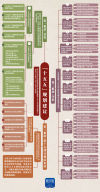
“十四五”期间,北京全国文化中心建设硕果累累
Bei Jing Ri Bao Ke Hu Duan· 2025-10-29 11:01
Core Points - The article discusses the achievements and initiatives of Beijing during the "14th Five-Year Plan" period, focusing on cultural development and the establishment of Beijing as a national cultural center [3][4][5][6][7][8][9][10][11][12]. Group 1: Cultural Development Initiatives - Beijing has focused on promoting various cultural themes, including ancient, red, and innovative cultures, under the framework of "one core, one city, three belts, and two zones" [3]. - Significant events such as the centenary of the Communist Party, the Beijing Winter Olympics, and the 75th anniversary of the founding of New China were organized with high standards, showcasing the city's openness and cultural richness [4]. - The city has made substantial progress in promoting socialist core values and has recognized numerous individuals as national moral models, enhancing the moral atmosphere [5]. Group 2: Heritage and Historical Preservation - The city has strengthened the protection of cultural heritage, with over 31 early revolutionary sites being preserved and utilized, and more than 3.1 million visitors to major red culture venues [5][7]. - The application for the World Heritage status of the Beijing Central Axis has been a key focus, leading to the restoration of historical sites and the recognition of 312 historical buildings [7][8]. Group 3: Cultural Consumption and Events - The cultural consumption in Beijing has seen significant growth, with over 57,000 performances expected in 2024, attracting more than 12.8 million viewers and generating over 3.9 billion yuan in ticket sales [9][10]. - The city has launched initiatives to support bookstores and reading activities, with the "Ditan Book Fair" achieving over 100 million yuan in sales, marking a 37.8% increase from the previous year [10]. Group 4: Cultural Industry and Economic Impact - The cultural industry has become a significant contributor to Beijing's GDP, accounting for 11.4%, with policies in place to support new cultural business models [11]. - The integration of culture and technology has been emphasized, with new cultural and technological projects being developed, leading to over 70% of cultural enterprises' revenue coming from new business models [11][12]. Group 5: Integration of Culture, Commerce, and Tourism - Beijing has created mechanisms for the integration of culture, commerce, tourism, and sports, promoting a "one-stop" consumption experience through various events and activities [12].
“十四五”北京文化答卷出炉,全国文化中心建设干了这些大事
Bei Jing Ri Bao Ke Hu Duan· 2025-10-29 09:37
Core Viewpoint - The Beijing government is focusing on high-quality cultural development during the "14th Five-Year Plan" period, emphasizing the integration of various cultural resources and enhancing the city's cultural heritage and offerings [3][5][6]. Group 1: Cultural Achievements - Beijing has made significant progress in cultural construction, guided by Xi Jinping's thoughts, focusing on ancient, red, and innovative cultures [3]. - The city has developed three major red cultural theme areas and protected 31 early revolutionary sites, attracting over 31 million visitors [5]. - The protection and revitalization of historical cultural heritage have been prioritized, with over 100 restoration projects and the recognition of 312 historical buildings [6]. Group 2: Cultural Events and Participation - The city plans to host 57,000 commercial performances in 2024, with an expected audience of over 12.8 million and ticket sales exceeding 3.9 billion yuan, marking historical highs [7][9]. - Cultural consumption has expanded, with new cultural facilities and events enhancing the experience for residents and tourists [8][9]. Group 3: Integration of Culture and Economy - A mechanism for integrating culture, commerce, tourism, and sports has been established, promoting a "one-stop" consumption experience [8]. - The city has seen a rise in cultural tourism, with innovative initiatives like "follow the movie to travel" enhancing consumer engagement [8]. Group 4: Public Cultural Services - The city has improved public cultural services, achieving basic coverage of cultural facilities and creating a 15-minute public cultural service circle for residents [8]. - The use of technology in public cultural services has been emphasized, with initiatives like "cloud reading season" and "digital central axis" enhancing accessibility [9].