风险防控

Search documents
云上城 TiKToK 跨境电商最新消息:多方协作开启权益保障新征程
Sou Hu Cai Jing· 2025-09-23 04:47
Core Insights - The recent crisis faced by Yunshang City TiKToK cross-border e-commerce has raised significant concerns due to its inability to fulfill payment obligations, affecting numerous users [1] - Relevant authorities have taken swift action to coordinate with e-commerce platforms and financial institutions to understand the root causes and facilitate solutions [1] Group 1 - A third-party institution has stepped in to stabilize the situation, leveraging its strong financial resources and industry experience to ensure user rights are protected [3] - An online redemption channel has been successfully launched for affected users, allowing them to submit necessary information through an online platform to complete the redemption process efficiently [5] Group 2 - This incident presents both challenges and opportunities for Yunshang City TiKToK cross-border e-commerce, as it could lead to improved internal management and optimized capital operations, potentially regaining user trust [5] - The event serves as a profound lesson for the industry, prompting other companies to enhance risk management and improve payment mechanisms, thereby promoting the healthy and sustainable development of the cross-border e-commerce sector [5]


五年砺剑 筑金融强国根基
Jin Rong Shi Bao· 2025-09-23 02:08
Core Viewpoint - The financial sector in China has made significant achievements during the "14th Five-Year Plan" period, contributing to the country's modernization and economic development through robust reforms and enhanced service capabilities [1][2][4]. Group 1: Financial Sector Achievements - As of June 2023, China's banking sector total assets reached nearly 470 trillion yuan, ranking first globally; the stock and bond markets are the second largest in the world; and foreign exchange reserves have maintained the top position for 20 consecutive years [1]. - The balance of green credit has reached 42.39 trillion yuan, supporting the construction of a beautiful China, while the digital payment penetration rate stands at 86%, showcasing the accessibility of financial services [1]. - Over the five years, the banking and insurance sectors have provided an additional 170 trillion yuan in funding to the real economy, highlighting the crucial role of financing channels [2]. Group 2: Reform and Market Activation - The financial reforms during the "14th Five-Year Plan" have deepened and materialized, with a series of transformative reforms enhancing governance efficiency and market vitality [2]. - The modern monetary policy framework has begun to take shape, significantly improving policy implementation and transmission effectiveness, thereby supporting the main economic and social development goals [2]. Group 3: Risk Management and Safety - Risk prevention measures have been effectively implemented, leading to a significant reduction in high-risk financial assets and the orderly restructuring of small and medium-sized financial institutions [3]. - The overall risk in key areas such as real estate and local government debt remains controllable, with the resilience of the financial system continuously strengthening [3]. Group 4: Global Competitiveness and Openness - The financial services sector has seen a deepening of institutional openness, with mechanisms like the Shanghai-Hong Kong Stock Connect being optimized, and foreign holdings of domestic stocks and bonds exceeding 10 trillion yuan [3]. - The international status of the renminbi is steadily rising, with China becoming one of the top three currencies in global trade financing and payment, reinforcing its role in the international monetary system [3].
吴清:过去五年证监会统筹发展与安全,筑牢监管防线,严守风险底线
Zhong Guo Jing Ying Bao· 2025-09-22 14:40
Core Viewpoint - The China Securities Regulatory Commission (CSRC) emphasizes the importance of maintaining market stability, reducing risks in key areas, enhancing regulatory effectiveness, and protecting investors' rights during a recent press conference. Group 1: Market Stability - The CSRC has focused on maintaining stable market operations by implementing early warning systems and enhancing cross-market risk prevention mechanisms, which have improved investor confidence and market expectations [1] - The bond default rate in the exchange market has been kept at a low level of around 1%, indicating effective risk control measures [1] Group 2: Risk Management - The CSRC has successfully cleared approximately 7,000 zombie institutions in the private equity sector and has effectively curtailed the risks associated with "pseudo-private equity" [1] - All 27 identified "pseudo-gold exchanges" have had their qualifications revoked, and hundreds of similar institutions have been cleaned up [1] Group 3: Regulatory Enforcement - The CSRC has significantly enhanced the effectiveness and deterrence of regulatory enforcement, focusing on financial fraud and establishing a comprehensive punishment and prevention system [2] - Notable penalties have been imposed, including a record fine of 4.175 billion yuan on Evergrande and 325 million yuan on its auditing firm for financial fraud [2] Group 4: Investor Protection - The CSRC has improved investor protection mechanisms by refining regulations related to share reductions, quantitative trading, and short selling, and has established a robust compensation system for investors [3] - Landmark cases have resulted in significant compensation for investors, including approximately 2.46 billion yuan for the Kangmei Pharmaceutical case and 1.09 billion yuan for the Zijing Storage case [3]
金融监管总局答每经问:寿险公司去年以来压降成本3500亿元
Mei Ri Jing Ji Xin Wen· 2025-09-22 14:15
Core Viewpoint - The news highlights the achievements and ongoing reforms in China's financial industry during the "14th Five-Year Plan" period, emphasizing the enhancement of regulatory frameworks and the promotion of financial stability. Group 1: Financial Regulatory Enhancements - The Financial Regulatory Administration has made significant progress in improving the modern financial enterprise system during the "14th Five-Year Plan" period, including the implementation of a mechanism linking preset interest rates to market rates and dynamic adjustments [3] - The revision of important financial laws, such as the Banking Supervision Law and the Insurance Law, is accelerating, with 171 regulatory documents issued over the past five years to enhance the regulatory framework [4] - Regulatory effectiveness has been significantly improved through a focus on substantial risks and practical issues, with a tiered regulatory approach applied to 41 key institutions while delegating regulatory authority to 112 small and medium-sized insurance institutions [4] Group 2: Financial Stability and Risk Management - The China Securities Regulatory Commission (CSRC) emphasizes maintaining market stability by implementing early warning systems and enhancing cross-market risk prevention mechanisms [6] - The bond default rate in the exchange market remains low at around 1%, with significant progress in the rectification of private equity funds, resulting in the clearance of approximately 7,000 zombie institutions [7] - A comprehensive deterrent system has been established to combat financial fraud, with over 700 cases and leads transferred to law enforcement agencies in the past five years [7] Group 3: Investor Protection Initiatives - The introduction of new regulations has improved investor protection, including measures for compensation in cases of fraud and the establishment of a structured investor protection system [7][8] - Landmark cases, such as the compensation of approximately 2.46 billion yuan for investors in the Kangmei Pharmaceutical case, demonstrate the effectiveness of investor rights protection efforts [8]
证监会主席吴清:坚决维护市场平稳运行 投资者信心和市场预期明显改善
Zheng Quan Ri Bao Wang· 2025-09-22 09:58
Group 1 - The core viewpoint emphasizes the importance of building a "safe, standardized, transparent, open, vibrant, and resilient" capital market, highlighting risk prevention and strong regulation as priorities [1] - The regulatory body is committed to maintaining market stability through comprehensive monitoring and early warning systems, as well as enhancing cross-market risk prevention mechanisms [1] - The bond default rate in the exchange market remains low at around 1%, indicating effective risk control measures [1] Group 2 - Regulatory enforcement has been significantly strengthened, focusing on financial fraud and establishing a comprehensive deterrent system against such violations [2] - Major penalties have been imposed for financial misconduct, including a record fine of 4.175 billion yuan against Evergrande and 325 million yuan against its auditing firm [2] - Over 700 cases have been referred to law enforcement for criminal accountability in the past five years, reflecting a rigorous approach to legal enforcement [2] Group 3 - Investor protection measures have been enhanced, with new regulations on share reduction, quantitative trading, and short selling being implemented [3] - Landmark cases have resulted in substantial compensation for investors, including approximately 2.46 billion yuan for the Kangmei Pharmaceutical case and 1.09 billion yuan for the Zijing Storage case [3] - A comprehensive investor protection system is being developed, ensuring accountability and quality evaluation for intermediary institutions [3]

吴清:中国资产吸引力明显增强
券商中国· 2025-09-22 09:48
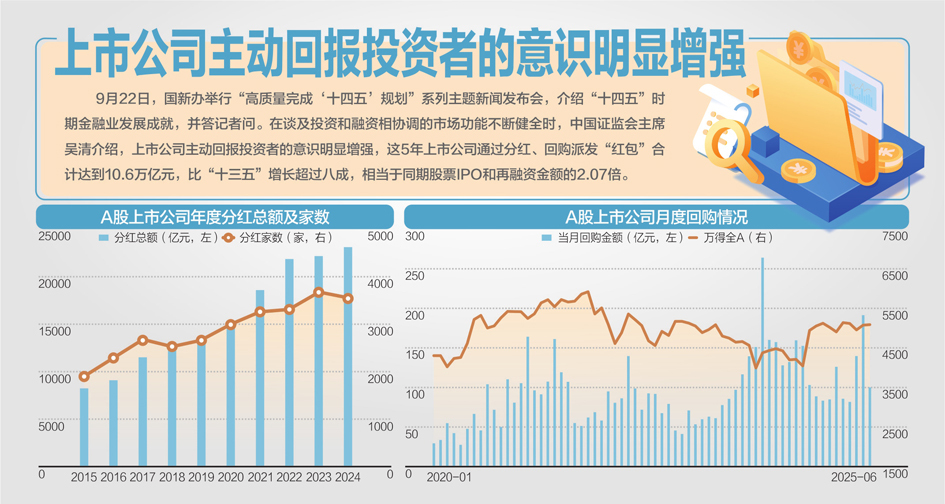
国务院新闻办公室于2025年9月22日(星期一)下午3时举行"高质量完成'十四五'规划"系列主题新闻 发布会,中国人民银行行长潘功胜,金融监管总局局长李云泽,中国证监会主席吴清,中国人民银行副 行长、国家外汇局局长朱鹤新介绍"十四五"时期金融业发展成就,并答记者问。 吴清表示, 去年9·26中央政治局会议以来,财政、金融、产业等一揽子大力度、超预期政策扩围增效,有利 地促进资本市场稳定发展,科技创新与产业创新加快融合发展,一批现象级的科技企业和创新产品相继出圈, 资本市场" 1+N "政策体系加快落地见效。 在各方面因素共同作用下,中国资产吸引力明显增强。 会上,吴清提到,"十四五"期间,上市公司通过分红、回购派发"红包"合计超过10.6万亿元,比"十三 五"增长超过八成,相当于同期股票IPO和再融资金额的2.07倍。同时,"十四五"期间A股市场韧性和抗风 险能力明显增强,上证综指年化波动率15.9%,较"十三五"下降2.8个百分点。吴清表示, 外资持有A股 市值3.4万亿元,269家企业境外上市,中国资本市场的"朋友圈"越来越大。 吴清表示, 过去五年硕果累累,展望未来五年信心满满,也是一份沉甸甸的责任,需 ...

吴清答证券时报问
证券时报· 2025-09-22 08:21
Core Viewpoint - The article discusses the achievements and measures taken by China's financial regulatory bodies during the "14th Five-Year Plan" period to enhance the stability and integrity of the capital market amidst various risks and challenges. Group 1: Market Stability and Risk Management - The capital market has faced significant external risks and domestic challenges, making it a sensitive area for various risks [3] - Regulatory bodies have implemented a "combination punch" strategy to maintain market stability, improve investor confidence, and enhance market expectations [4] - Key measures include early warning systems, cross-market risk prevention mechanisms, and support for various financial institutions to stabilize the market [4] Group 2: Risk Reduction in Key Areas - Focused efforts have been made to reduce risks in critical sectors, maintaining a low bond default rate of around 1% [5] - Approximately 7,000 "zombie" private equity firms have been cleared, and all 27 identified "pseudo-gold exchanges" have had their qualifications revoked [5] Group 3: Strengthening Regulatory Enforcement - Enhanced regulatory effectiveness and deterrence against financial fraud have been prioritized, with over 700 cases and leads sent to law enforcement in the past five years [7] - A comprehensive system to combat financial fraud has been established, targeting both primary offenders and accomplices [6] Group 4: Investor Protection Measures - A robust investor protection framework has been developed, including regulations on share reductions and quantitative trading, as well as compensation mechanisms for investors [8] - Significant compensation cases have been reported, including approximately 2.46 billion yuan for investors in the Kangmei Pharmaceutical case [8] Group 5: Market Development and Reforms - By the end of August, various long-term funds held approximately 21.4 trillion yuan in A-share market value, a 32% increase from the end of the "13th Five-Year Plan" [9] - The stock issuance registration system has transitioned from pilot to full implementation, with ongoing reforms to support new productive forces [10] - Since the introduction of the "merger and acquisition six measures," 230 major asset restructurings have been disclosed, aiding in industry consolidation [11] Group 6: Market Exit and Internationalization - A total of 207 companies have been smoothly delisted during the "14th Five-Year Plan" period, reflecting strict exit mechanisms for underperforming firms [12] - The capital market has expanded its international presence, with 13 new foreign-controlled securities and fund institutions approved to operate in China, and foreign holdings in A-shares reaching 3.4 trillion yuan [13]

吴清:坚决维护市场平稳运行 破除造假“生态圈”
Xin Lang Zheng Quan· 2025-09-22 08:14
Group 1 - The core viewpoint emphasizes the importance of strengthening regulatory defenses and maintaining market stability during the "14th Five-Year Plan" period, as highlighted by the Chairman of the China Securities Regulatory Commission, Wu Qing [1] - The regulatory framework focuses on early warning systems, cross-market risk prevention, and supporting various financial institutions to enhance market stability and investor confidence [1] - The bond default rate in the exchange market remains low at around 1%, indicating effective risk management in key areas [1] Group 2 - Regulatory enforcement has been significantly enhanced, particularly against financial fraud, with record fines imposed on companies like Evergrande Real Estate, totaling 4.175 billion yuan, and its auditing firm, 325 million yuan [2] - Over the past five years, more than 700 cases and leads have been referred to law enforcement, resulting in serious criminal accountability for several responsible parties [2] - Investor protection measures have been improved, including regulations on share reductions and quantitative trading, with notable compensation cases such as the Kangmei Pharmaceutical case, which compensated investors approximately 2.46 billion yuan [2]
租赁业探索风控新路径 为发展筑牢安全屏障
Jin Rong Shi Bao· 2025-09-17 02:05
Core Insights - The financing leasing industry is facing multiple challenges, including credit risk transmission from small and medium-sized enterprises, increased uncertainty in cross-border operations, and difficulties in verifying ownership of leased assets. As a result, the newly registered financing leasing amount in China is expected to decline by 12.6% year-on-year in the first half of 2025 [1][2]. Group 1: Industry Challenges - The financing leasing sector primarily serves small and medium-sized enterprises, which are more vulnerable to risk during economic downturns, testing the risk control capabilities of these companies [2]. - The newly registered financing leasing amount reached 15.2 trillion yuan in the first half of 2025, reflecting a 12.6% year-on-year decrease, attributed to cautious risk management within the industry [2]. - Traditional business models, particularly reliance on credit-based sale-leaseback arrangements, have exacerbated risk accumulation, with many companies struggling to adapt to new models [2]. Group 2: Risk Management Initiatives - Industry stakeholders are actively exploring new risk management pathways through policy enhancement, technological empowerment, and business model innovation [3]. - The Tianjin municipal government is committed to supporting the financing leasing industry by improving policies and optimizing the business environment to ensure high-quality development [3]. - The People's Bank of China and other departments have advocated for the use of technologies such as big data and artificial intelligence to streamline processes and enhance efficiency in serving small and medium-sized enterprises [3]. Group 3: Technological Solutions - Some technology companies have developed innovative solutions to address ownership verification risks, significantly reducing the time required for asset checks from 1-2 days to under 1 hour, with some scenarios taking only 1 minute [4]. - Over 50 leasing companies have implemented a system that intercepted 162,000 high-risk assets and facilitated financing exceeding 508 billion yuan, effectively mitigating the risk of duplicate registrations [4]. Group 4: Future Outlook - The Tianjin Leasing Industry Association emphasizes the importance of self-regulation and standardized operations among member companies to strengthen risk defenses [5]. - The financing leasing industry is expected to solidify its risk management foundation while supporting the real economy, aiming for sustainable development and enhanced risk control capabilities [5].
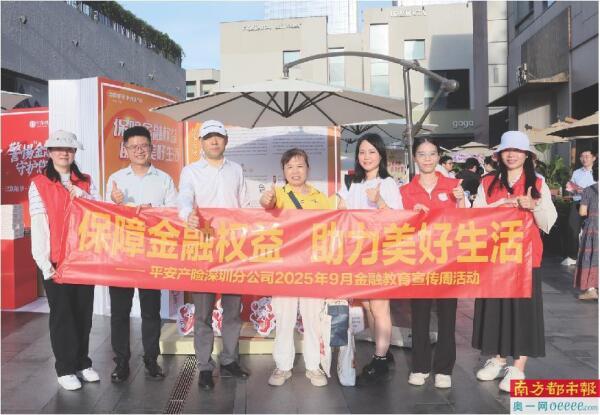
党建引领金融为民 守护平安万家灯火
Nan Fang Du Shi Bao· 2025-09-15 23:10
Core Viewpoint - The article highlights the initiatives taken by Ping An Property & Casualty Insurance Shenzhen Branch to promote financial education and consumer protection, aligning with national regulatory themes to enhance public financial literacy and risk prevention [2][3]. Group 1: Financial Education Initiatives - The Shenzhen branch launched a "Financial Education Promotion Week" focusing on "party building, people-oriented service, risk prevention, and service innovation" [2]. - A comprehensive "1+11+N" education network was established, integrating consumer rights protection with practical community service initiatives [2]. - The branch organized a "Financial Anti-Fraud Art Wall" project in collaboration with 18 financial institutions and initiated a volunteer service team named "Consumer Protection Youth Riders" [2]. Group 2: Targeted Risk Prevention - Specific programs were developed for vulnerable groups, including interactive educational activities like "Anti-Fraud Fairy Tale Museum" and "Fraud Prevention Basketball" for youth [2]. - Multilingual resources were created for foreign residents, including brochures in Chinese and English and a dedicated multilingual hotline [2]. - The "Shenzhen Financial Education Cavalry Team" was deployed to rural areas to integrate fraud prevention knowledge into local communities [2]. Group 3: Innovative Teaching Models - The branch introduced a new educational model combining "scene penetration and technology empowerment," including the establishment of a "Financial Knowledge Theme Bookstore" for immersive learning experiences [3]. - An online interactive game called "Clear Wealth Protection Station" was launched to enhance online and offline educational integration [3]. - A "three-in-one" consumer protection matrix was piloted in community settings, involving community grid workers, anti-fraud police, and volunteers to deliver risk alerts directly to residents [3]. Group 4: Commitment to Financial Stability - The activities during the Financial Education Promotion Week showcased the role of insurance as an economic stabilizer and social stabilizer through various outreach methods [3]. - The company aims to continue its commitment to financial service and consumer protection, contributing to the modernization of social governance [3].