3D打印

Search documents
精工科技涨2.06%,成交额2.66亿元,主力资金净流入520.88万元
Xin Lang Cai Jing· 2026-01-16 05:31
Core Viewpoint - Jinggong Technology's stock price has shown fluctuations, with a recent increase of 2.06% and a total market capitalization of 11.612 billion yuan, despite a year-to-date decline of 3.54% [1] Group 1: Financial Performance - For the period from January to September 2025, Jinggong Technology achieved operating revenue of 1.343 billion yuan, representing a year-on-year growth of 13.70% [2] - The net profit attributable to shareholders for the same period was 145 million yuan, reflecting a significant year-on-year increase of 98.18% [2] - Cumulatively, the company has distributed 313 million yuan in dividends since its A-share listing, with 236 million yuan distributed over the past three years [3] Group 2: Stock and Market Activity - As of January 16, 2025, Jinggong Technology's stock was trading at 22.34 yuan per share, with a trading volume of 266 million yuan and a turnover rate of 2.31% [1] - The stock has experienced a 4.28% decline over the last five trading days, but a 6.28% increase over the last 20 days and a 12.43% increase over the last 60 days [1] - The company had 44,100 shareholders as of September 30, 2025, a decrease of 25.80% from the previous period, while the average number of circulating shares per person increased by 34.78% to 11,794 shares [2] Group 3: Business Overview - Jinggong Technology, established on September 10, 2000, and listed on June 25, 2004, specializes in high-tech products including carbon fiber and composite material equipment, robotics, solar photovoltaic equipment, and energy-saving construction equipment [1] - The main revenue sources for the company include carbon fiber equipment (59.31%), textile specialized equipment (17.38%), and construction materials specialized equipment (10.11%) [1] - The company operates within the mechanical equipment sector, specifically in specialized equipment, and is involved in various concepts such as humanoid robots and low-altitude economy [2]

爱司凯跌2.02%,成交额3126.02万元,主力资金净流入32.91万元
Xin Lang Cai Jing· 2026-01-15 02:46
Core Viewpoint - The stock of Aisikai has experienced fluctuations, with a recent decline of 2.02% and a total market value of 4.423 billion yuan, indicating volatility in investor sentiment and trading activity [1]. Group 1: Stock Performance - As of January 15, Aisikai's stock price was 29.54 yuan per share, with a trading volume of 31.26 million yuan and a turnover rate of 0.70% [1]. - Year-to-date, Aisikai's stock has increased by 3.65%, but it has decreased by 10.73% over the last five trading days [1]. - Over the past 20 days, the stock has risen by 10.64%, while it has seen a 5.39% increase over the last 60 days [1]. Group 2: Financial Performance - For the period from January to September 2025, Aisikai reported a revenue of 120 million yuan, reflecting a year-on-year decrease of 2.24% [2]. - The company recorded a net profit attributable to shareholders of -19.85 million yuan, which represents a significant year-on-year decline of 106.60% [2]. - Since its A-share listing, Aisikai has distributed a total of 26.72 million yuan in dividends, with 5.76 million yuan distributed over the past three years [2]. Group 3: Company Overview - Aisikai Technology Co., Ltd. is located in Guangzhou, Guangdong Province, and was established on December 18, 2006, with its listing date on July 5, 2016 [1]. - The company's main business involves the research and development, production, sales, and service solutions for industrial printing products, with 100% of its revenue coming from specialized equipment manufacturing [1]. - Aisikai is classified under the Shenwan industry as mechanical equipment-specialized equipment-printing and packaging machinery, and is associated with concepts such as small-cap, cloud computing, 3D printing, and the Guangdong-Hong Kong-Macau Greater Bay Area [1].

商业航天:3D打印有望快速渗透,带动行业降本&设计创新
材料汇· 2026-01-14 14:18
Core Viewpoint - The article discusses the advancements and applications of metal additive manufacturing (3D printing) in the aerospace industry, highlighting its potential to reduce costs, improve efficiency, and enable complex designs in rocket and aircraft components [6][10][42]. Group 1: Cost Reduction and Efficiency - Metal additive manufacturing can significantly lower production costs for aerospace components, with reductions in rocket engine costs ranging from 20% to 33% [6][10]. - Material utilization rates improve dramatically, decreasing waste from traditional methods (30-50%) to below 5%, leading to material cost savings of 15-30% [7][10]. - The production cycle for complex parts can be shortened by 50-70%, with research and development cycles reduced by over 90% [7][10]. Group 2: Design and Manufacturing Advantages - Additive manufacturing allows for the integration of hundreds of parts into fewer, more complex components, simplifying assembly and improving structural reliability [7][10]. - Parts can be designed with a weight reduction of 30-60%, which contributes to lower lifecycle costs, such as fuel savings [7][10]. - The technology enables the creation of complex geometries that traditional manufacturing methods cannot achieve, supporting innovative designs in aerospace applications [9][10]. Group 3: Market Growth and Trends - The global additive manufacturing market is projected to exceed 21.9 billion USD (approximately 158.8 billion RMB) by 2024, with a growth rate of 9.1% [30]. - The 3D printed space rocket market is expected to grow at a compound annual growth rate (CAGR) of 22.84%, reaching approximately 2.9 billion USD by 2032 [42]. - The Asian market, particularly China, is driving much of this growth due to advancements in entry-level printers and high-performance industrial systems [30][42]. Group 4: Technological Innovations - Recent advancements include the development of a cold cathode electron gun for metal additive manufacturing in microgravity environments, which enhances the stability and efficiency of the printing process [29]. - Companies are increasingly adopting 3D printing for rapid prototyping and on-demand manufacturing, which is crucial for the recovery and reuse of rocket components [20][21]. - The integration of 3D printing in the production of rocket engines and components is becoming more prevalent, with companies like SpaceX utilizing these technologies to streamline manufacturing processes [19][42].


南风股份:3D打印新业务处于市场培育期,对当期业绩贡献较小
2 1 Shi Ji Jing Ji Bao Dao· 2026-01-14 08:03
21智讯1月14日电,南风股份在投资者关系活动中表示,公司通风与空气处理业务受益于核电审批提 速,发展态势良好,将持续参与核电项目招投标。3D打印服务业务作为2025年启动的新业务,目前处 于市场拓展和培育阶段,对当期业绩贡献较小,未来将加大开拓力度以实现多元化发展和业绩提升。 ...

国瓷材料涨2.03%,成交额6.45亿元,主力资金净流出4788.05万元
Xin Lang Cai Jing· 2026-01-14 03:26
Core Viewpoint - Guocera Materials has shown significant stock performance with a year-to-date increase of 21.31% and a recent surge of 54.94% over the past 60 days, indicating strong market interest and potential growth in the high-end functional ceramic materials sector [1]. Financial Performance - For the period from January to September 2025, Guocera Materials achieved a revenue of 3.284 billion yuan, reflecting a year-on-year growth of 10.71%, while the net profit attributable to shareholders was 489 million yuan, up by 1.50% [2]. - Cumulatively, the company has distributed 870 million yuan in dividends since its A-share listing, with 398 million yuan distributed over the past three years [3]. Shareholder and Market Activity - As of September 30, 2025, the number of shareholders for Guocera Materials was 45,600, a decrease of 5.23% from the previous period, while the average circulating shares per person increased by 5.52% to 18,435 shares [2]. - The top circulating shareholder is Hong Kong Central Clearing Limited, holding 52.485 million shares, which is a decrease of 3.435 million shares from the previous period [3]. Stock Performance Metrics - As of January 14, the stock price of Guocera Materials was 33.25 yuan per share, with a trading volume of 645 million yuan and a turnover rate of 2.34%, leading to a total market capitalization of 33.152 billion yuan [1]. - The stock has experienced a 12.71% increase over the last five trading days and a 16.46% increase over the last 20 days [1].

商业航天系列报告:3D打印:制造降本,助推商业航天产业化加速
Changjiang Securities· 2026-01-14 00:49
Investment Rating - The report maintains a "Positive" investment rating for the 3D printing industry, particularly in its application within the commercial aerospace sector [3]. Core Insights - The report emphasizes that 3D printing technology is a cost-reduction tool that accelerates the industrialization of commercial aerospace, driven by high demand for advanced applications [5][48]. - The growth of the 3D printing market is significantly influenced by the increasing demand for high-end applications, which is expected to lead to continuous market expansion [22][39]. Summary by Sections Section 1: Disruption of Traditional Industrial Systems - Additive manufacturing, also known as 3D printing, revolutionizes traditional manufacturing by allowing for the "free manufacturing" of parts without the need for traditional tools and multiple processing steps, thus reducing processing time and increasing material utilization [9][19]. - Various types of additive manufacturing processes, such as Powder Bed Fusion and Directed Energy Deposition, are highlighted for their efficiency and precision [14][18]. Section 2: High-End Application Demand - The global market for metal additive manufacturing equipment has seen significant growth, with sales increasing from 202 units in 2012 to 3,793 units in 2023, reflecting a CAGR of 25.15% [27]. - The average price of industrial-grade additive manufacturing equipment has risen from $98,100 in 2019 to $316,900 in 2024, indicating a trend towards larger and more expensive systems [28][29]. - The aerospace and defense sectors are identified as key growth areas for 3D printing, with the market expected to reach approximately $3.379 billion in 2024 and grow to $10.48 billion by 2031, at a CAGR of 17.8% [45]. Section 3: 3D Printing as a Cost-Reduction Tool - The report notes that the high costs associated with rocket launches drive the urgent need for cost reduction through 3D printing, which can significantly lower manufacturing costs and weight of components [51][55]. - 3D printing allows for the integration of complex structures, reducing the need for traditional assembly methods, thus enhancing design flexibility and reducing manufacturing time [55][63]. - The application of 3D printing in rocket engines is highlighted, with examples from SpaceX demonstrating substantial cost and weight reductions in engine components [59][72].


共话中国经济新机遇丨专访:保中在高科技与绿色产业领域合作潜力巨大——访保加利亚工商会副会长托多罗夫
Xin Lang Cai Jing· 2026-01-13 13:36
Core Insights - The economic and trade relations between Bulgaria and China are improving, with significant potential for collaboration in high-tech and green industries [1] - Bulgaria's entry into the Eurozone is seen as an opportunity for Chinese companies to access the EU market, enhancing bilateral cooperation [1] Group 1: High-Tech Collaboration - China has advantages in cutting-edge technologies such as artificial intelligence, 3D printing, and drone applications, making it an important partner for Bulgaria and the EU [1] - There is a strong potential for cooperation in the drone sector, with Bulgaria looking to establish efficient logistics mechanisms by learning from China's experiences [1] Group 2: Automotive Industry - Despite Bulgaria producing about 80% of the EU's automotive sensors, it currently lacks vehicle assembly capabilities, presenting an opportunity for Chinese automotive companies to invest and set up manufacturing in Bulgaria [1] - The Bulgarian government and business community are supportive of Chinese automotive investments [1] Group 3: Green Energy and Innovation - The green transition and digitalization are core strategic directions for the EU, where China holds significant technological and industrial advantages [1] - There is an expectation for Chinese electric vehicle companies to establish production bases in Bulgaria to develop vehicles and components for the European and global markets [1] - Solar energy is identified as another key area for cooperation, aligning with EU's green energy goals, and China holds a significant share in the global photovoltaic market [1] - Chinese companies are praised for their innovation-driven development model, continuously investing in R&D and launching new products, which Bulgarian companies are encouraged to emulate [1]
共话中国经济新机遇|专访:保中在高科技与绿色产业领域合作潜力巨大——访保加利亚工商会副会长托多罗夫
Xin Hua She· 2026-01-13 09:10
托多罗夫强调,绿色转型与数字化是当前欧盟战略的核心方向,而中国在这些领域的技术与产业优势明 显。他期待中国电动汽车企业在保加利亚建立生产基地,共同开发面向欧洲乃至全球市场的整车与零部 件。 他认为,光伏是保中另一个重点合作方向。中国在全球光伏市场占据重要份额,且发展太阳能与欧盟倡 导的绿色能源目标高度契合,该领域有望成为双边合作亮点。 托多罗夫称赞中国企业坚持创新驱动的发展模式。"即使已占据一定市场份额,中国企业仍持续投入研 发、推出新产品,这种以创新为本的理念值得保加利亚企业学习。" (文章来源:新华社) 保加利亚工商会副会长瓦西尔·托多罗夫近日在首都索非亚接受新华社记者专访时表示,保中经贸关系 持续向好,双方在高科技与绿色产业领域合作潜力巨大。中国在人工智能、3D打印、无人机应用等前 沿科技领域具有优势,是保加利亚及欧盟的重要合作伙伴。 托多罗夫说,以保加利亚今年加入欧元区为契机,保不仅可以成为中国企业进入欧盟市场的重要门户, 更期待推动双边合作实现结构性升级。保中两国在深化农业等传统领域合作的同时,还可以向高端制造 与联合研发延伸,共同构建更具韧性和深度的长期产业协作关系。 他特别提到无人机领域的合作前 ...
众源新材(603527.SH):公司目前持有洛阳盈创21%的股份
Ge Long Hui· 2026-01-13 08:40
Group 1 - The company holds a 21% stake in Luoyang Yingchuang [1] - The 3D printing equipment developed by the company can be applied in the aerospace sector [1]

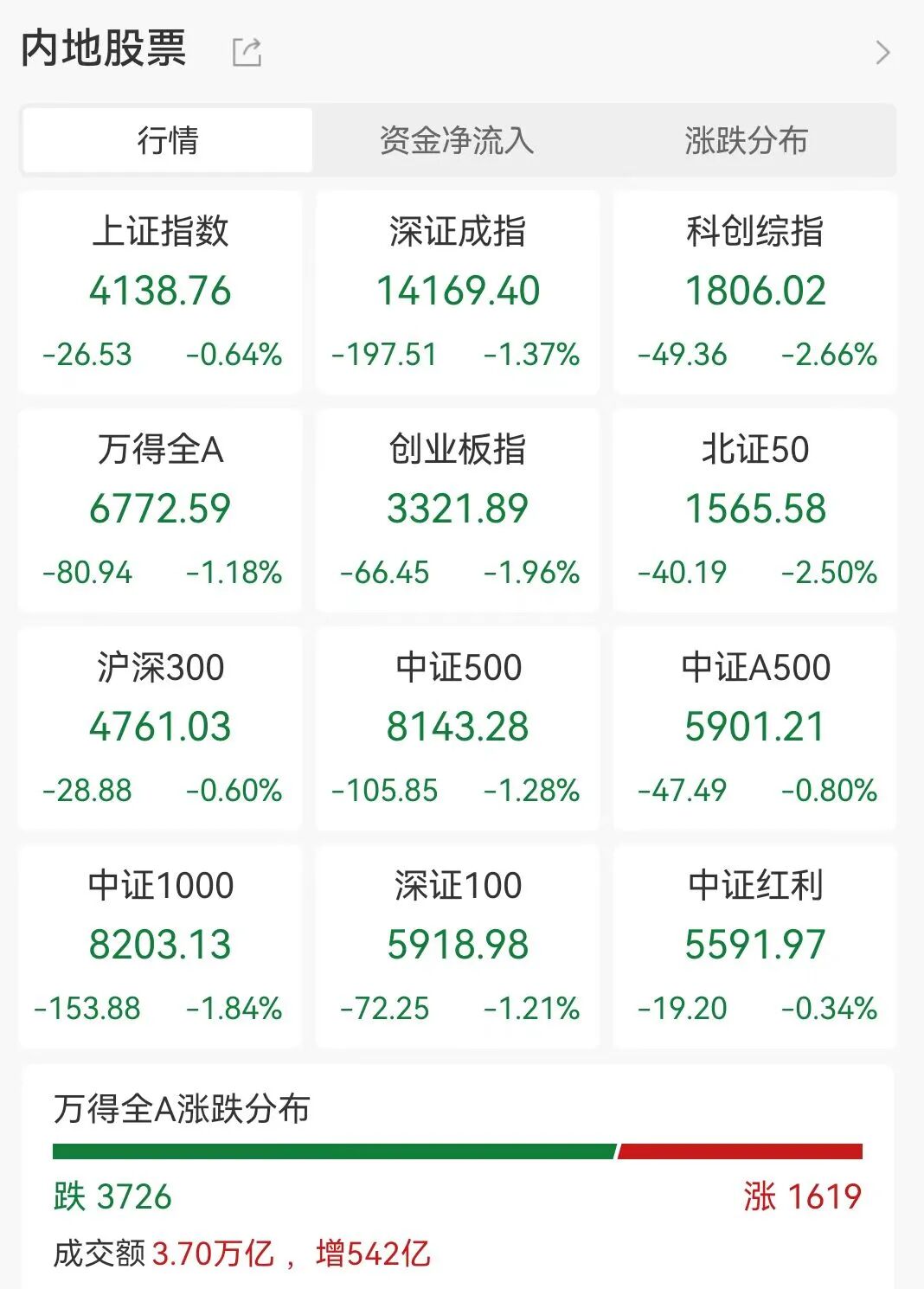
A股三大指数下挫 军工股大回调 AI应用尾盘跳水 贵金属多股创新高,黄金白银下跌
2 1 Shi Ji Jing Ji Bao Dao· 2026-01-13 08:33
Market Overview - The A-share market experienced a collective pullback on January 13, with the Shanghai Composite Index ending a 17-day winning streak, closing down by 0.64% [1] - The Shenzhen Component Index fell by 1.37%, and the ChiNext Index decreased by 1.96%, with a total trading volume of 3.7 trillion yuan, setting a new historical record [1][2] Sector Performance - Multiple sectors faced significant declines, particularly in commercial aerospace and satellite internet, with nearly 100 stocks dropping over 8% [4] - The large aircraft and military sectors also saw declines, with stocks like Zhongtian Rocket and Leike Defense hitting the daily limit down [4] - The controlled nuclear fusion sector experienced a downturn, with Wangzi New Materials hitting the daily limit down [4] - The communication equipment sector fell, with stocks like Changjiang Communication hitting the daily limit down [4] Stock Movements - Over 1,600 stocks rose, with more than 70 stocks hitting the daily limit up [4] - The commercial aerospace concept stocks suffered heavy losses, with over 60 stocks hitting the daily limit down or dropping more than 10% [4] - Specific stocks such as Aerospace Electronics and Beidou Star Communication saw significant declines, with many military stocks also hitting the daily limit down [6] Investment Insights - The market sentiment has shifted from hesitation to active allocation, driven by a consensus on the current market rally [10] - Investors are advised to avoid speculative risks in popular sectors, particularly in commercial aerospace, and to focus on policy and industry resonance themes such as technological innovation and high-end manufacturing [11] - Key investment areas include sectors with performance support, such as overseas computing power, storage, consumer electronics, and wind energy storage, which still have room for low-cost allocation [10][11]