大模型

Search documents
国金证券:一切仍然指向算力
Xin Lang Cai Jing· 2025-12-28 09:41
Group 1: Industry Insights - The competition in large models remains intense, with the Scaling Law still effective. Google's Gemini 3 has made significant advancements in foundational reasoning and multimodal capabilities, while OpenAI's GPT-5.2 emphasizes the potential of large models in creating economic value [1][11][14] - Meta is actively developing two heavyweight AI models, Mango for image and video processing, and Avocado to enhance programming capabilities, indicating a strong commitment to AI development [1][15] - The Chinese open-source model DeepSeek-V3.2 is approaching the performance of top closed-source models, showcasing innovations in sparse attention (DSA), high post-training ratios, and large-scale synthetic data [1][16][18] Group 2: AI Application Acceleration - ByteDance released the Doubao AI mobile assistant, which allows for cross-application autonomous operations, marking a significant evolution in mobile interaction methods [2][26] - The daily token usage of the Doubao model surged from over 16.4 trillion in May 2025 to over 50 trillion by December 2025, reflecting a rapid increase in inference demand [2][28] - NVIDIA's collaboration with Groq, a startup specializing in inference chips, highlights a strategic move towards enhancing inference capabilities while maintaining its dominance in training power [2][29][30] Group 3: Policy and Future Industry Layout - The "14th Five-Year Plan" emphasizes support for strategic emerging industries such as aerospace, quantum technology, and AI, indicating a clear direction for future industrial development [3][42] - The plan also calls for proactive infrastructure development, including information communication networks and integrated computing networks, reinforcing the importance of computational power in the AI era [3][42] Group 4: Related Companies - Key players in computing power include Cambrian, Haiguang Information, and Zhongke Shuguang, among others, indicating a diverse landscape of companies involved in AI and computing infrastructure [4][43] - Companies involved in AI agents include Google, Alibaba, Tencent, and others, showcasing a broad spectrum of firms engaged in AI development [5][44] - In the autonomous driving sector, companies like Jianghuai Automobile and Xiaopeng Motors are notable participants, reflecting the industry's growth [6][45]




快手遇P0级安全事故,市值蒸发近百亿;字节120名员工因触犯红线被辞退;Karpathy自曝“作为程序员从未感到如此落后”,引爆焦虑|AI周报
AI前线· 2025-12-28 05:33
Group 1 - OpenAI co-founder Andrej Karpathy's tweet has caused anxiety in the tech industry, stating that programmers feel increasingly obsolete as their role is being dramatically restructured [2][3][4] - Karpathy emphasized the need for programmers to adapt to a new programming abstraction layer that includes various advanced concepts and tools, warning that failure to do so would be a "skills issue" rather than an external environment problem [3][4] - The industry is experiencing a shift where the traditional engineering practices are being intertwined with new AI capabilities, leading to existential anxiety among professionals [4] Group 2 - Kuaishou faced a P0-level security incident on December 22, 2025, resulting in a market value loss of approximately 101.5 billion HKD (around 91.75 billion RMB) due to a large-scale attack that injected inappropriate content into live streams [5][8] - The incident highlighted the need for platforms to transition from single defense mechanisms to systemic governance in operational security [5] - Following the incident, Kuaishou's stock price dropped by 3.52%, closing at 64.35 HKD per share [8] Group 3 - JD.com announced that over 92% of its employees will receive full or above-year-end bonuses for 2025, with average bonuses reaching 25 months' salary for the procurement and sales department [9][10] - The year-end bonus structure includes significant increases, with top performers potentially receiving bonuses up to 12 times their monthly salary [9][10] Group 4 - ByteDance reported the dismissal of 120 employees for violating company policies, with 28 of them being publicly named, including 14 who were referred to judicial authorities for criminal activities [11][12] - The company has increased transparency regarding disciplinary actions related to leaking confidential information and spreading false information on social media [12][13] Group 5 - NVIDIA has restructured its cloud team, signaling a retreat from direct competition with giants like Amazon and Microsoft, focusing instead on internal needs and reducing aggressive expansion targets [14] - Analysts view this decision positively, suggesting it allows NVIDIA to concentrate resources on research and development [14] Group 6 - Microsoft CEO Satya Nadella has been actively involved in overseeing AI product development, holding weekly meetings with core technical teams to ensure progress and address performance issues [15] - Nadella's hands-on approach indicates a shift in leadership dynamics within Microsoft, as he takes on a more prominent role in product management [15] Group 7 - Doubao, a product from ByteDance, has reportedly surpassed 100 million daily active users, becoming one of the lowest-cost products to achieve this milestone within the company [16][17] - Despite its success in user engagement, concerns remain regarding Doubao's commercialization path and the associated costs impacting profitability [16][17] Group 8 - Cloud Deep has initiated its IPO guidance, focusing on intelligent robotics, with recent funding exceeding 500 million RMB [19][20] - The company is part of a group of emerging robotics firms in Hangzhou, emphasizing its commitment to developing advanced robotic technologies [19][20] Group 9 - MiniMax has received approval for its IPO in Hong Kong, aiming to become a leading player in the AI model sector, competing with other companies in the space [21] - The company has developed a range of multimodal AI models, showcasing its capabilities in various applications [21]

开源之魅:大模型在2025年的终极对决
Sou Hu Cai Jing· 2025-12-28 04:50
Group 1 - The hottest term in the tech industry by 2025 is "open source," surpassing AI and the metaverse, as major tech giants focus on open-source large models [2] - The emergence of open-source large models breaks traditional closed barriers, providing unlimited possibilities for innovation and significantly accelerating the development speed of large models [2] - Open-source large models allow researchers to freely study, improve, and distribute models, fostering a vibrant atmosphere of innovation within society [2] Group 2 - Challenges exist in balancing intellectual property protection with the purity of the open-source spirit, requiring tech companies to navigate this delicate balance [4] - Chinese tech companies, such as Baidu and Huawei, are demonstrating strong competitiveness in the open-source large model field, impacting the global landscape and showcasing China's technological strength [4] - The advancement of technology will continuously enhance the capabilities of large models, and the open-source spirit will spread more widely, potentially becoming a significant force for social progress [6] Group 3 - The competition for open-source large models will intensify by 2025, but the spirit of open source will continue to illuminate the path of technology [6] - Open-source large models are expected to change work methods and even reshape the structure of society [6]

国足缺席世界杯,但中国大模型们集体参赛
量子位· 2025-12-28 03:06
Core Viewpoint - The article discusses the upcoming AlphaGoal Prediction Cup, an AI competition organized by Lenovo, where Chinese large models will compete in predicting football match outcomes, marking a significant shift from traditional AI applications to real-world engagement [4][25][34]. Group 1: Event Overview - The AlphaGoal Prediction Cup will feature eight major Chinese AI models competing against each other and against AI agents created by fans and developers [6][10]. - This event is described as a historic first for public participation in AI predictions, potentially transforming the experience of football from mere observation to active involvement [8][27]. Group 2: Participating Models - The eight participating models include notable players such as Baidu's Wenxin Yiyan, Tencent's Hunyuan, and SenseTime, each with unique strengths in data processing and prediction capabilities [14][15]. - The competition aims to challenge these models to predict match outcomes using a variety of data points, including player statistics, historical match data, and even social media sentiment [22][17]. Group 3: Significance of the Event - The AlphaGoal Prediction Cup is positioned as a pivotal moment for AI, moving beyond traditional testing environments to engage with the complexities of the real world, akin to previous landmark human-AI competitions [29][34]. - The event is expected to demonstrate AI's ability to understand causality and not just correlation, marking a step towards general artificial intelligence [35][34]. Group 4: Lenovo's Role - Lenovo, as the organizer and official technology partner of FIFA, is facilitating this competition to connect AI models with real-world applications, positioning itself as an ecosystem organizer rather than just a hardware provider [38][39]. - The Lenovo Tianxi AI platform, with over 280 million monthly active users, serves as a crucial interface for these AI models to reach and engage with a broad audience [40][41].


“智”起“青”壤!青岛人工智能产业何以崛起成势?
Xin Hua Wang· 2025-12-28 01:56
Core Insights - Qingdao is leveraging artificial intelligence (AI) as a key strategy to enhance its manufacturing sector amidst global industrial restructuring, fostering a vibrant "smart rainforest" ecosystem [1] - The city has over 500 AI enterprises, achieving a revenue of 59.25 billion yuan in the first three quarters of this year, marking a 15.8% year-on-year growth [1] - Qingdao's AI initiatives include the development of over 70 products such as Tianzhi Industrial Model and Hanhai Xingyun Model, focusing on various niche markets [1] Group 1: AI in Manufacturing - The National High-end Intelligent Home Appliance Innovation Center has developed a scene-driven AI chip that can reduce energy consumption in commercial air conditioning by 25% [2] - This chip integrates a Neural Processing Unit (NPU), achieving 30-40 times higher computational efficiency compared to traditional control chips [2] - Qingdao's home appliance industry, valued at over 300 billion yuan, contributes to one-tenth of the national output, providing a rich data environment for AI applications [2] Group 2: AI Model Development - The National Innovation Center is focusing on domestic core chip replacement and developing smart home domain models to redefine high-end smart appliances [3] - The efficiency of traditional production processes has improved from 80% to 95% accuracy, with overall efficiency increasing by over 200 times [3] - Qingdao has published 1,200 AI solutions and application scenarios, establishing a mechanism for continuous innovation and collaboration [3] Group 3: AI in Public Transport - Qingdao Metro has implemented AI models that significantly enhance equipment safety, reducing fault handling time from 12.67 hours to as little as 10 hours [5] - The city initiated the "AI+" action in June 2022, launching China's first urban rail transit AI model, which has transformed industry standards [5] - The Metro has built a robust dataset, including 25.67 million files and 3.5TB of video data, to enhance the practical capabilities of its AI models [5] Group 4: AI in Marine Applications - Qingdao is developing the "Linglong" intelligent agent, which analyzes maritime conditions and provides real-time alerts to fishing vessels [7] - The city is investing in a marine data space to ensure secure data sharing, which is crucial for AI advancements in marine applications [8] - Qingdao aims to create a world-class marine AI model industry cluster, leveraging its unique resources and capabilities [9]
计算机行业周报 20251222-20251226:华为 2026 会反转吗?智谱和 minimax 对比研究!-20251227
Shenwan Hongyuan Securities· 2025-12-27 13:23
Investment Rating - The report maintains an optimistic outlook for the AI computing industry in 2026, particularly focusing on Huawei's advancements and opportunities in the sector [3][4]. Core Insights - 2026 is projected to be a pivotal year for the domestic AI computing industry, with Huawei expected to unveil a series of new products and technologies that the market has not yet fully reacted to [3][4]. - Huawei's Ascend 950 series, including the Ascend 950PR and Ascend 950DT chips, is set to significantly enhance AI computing capabilities, with a focus on cost-effective solutions and high performance [4][9]. - The report highlights the importance of storage and connectivity in the evolution of AI computing chips, with Huawei making substantial innovations in these areas [4][9]. - The IPOs of Zhiyuan and MiniMax mark significant milestones in the AI model startup landscape, representing different business models in the sector [3][37]. Summary by Sections Huawei's Computing Innovations - Huawei is positioned as a comprehensive ICT manufacturer, integrating various components from semiconductor supply chains to software ecosystems, which is expected to lead to system-level advancements [4][7]. - The Ascend 950 series is designed to support industry-standard low-precision data formats, significantly improving training efficiency and inference throughput [7][9]. - The upcoming Atlas 950 supernode, based on the Ascend 950DT chip, is expected to achieve unprecedented performance metrics, including an FP8 computing power of 8 EFLOPS and an interconnect bandwidth of 16 PB/s [22][23]. Zhiyuan and MiniMax Comparison - Zhiyuan, backed by Tsinghua University, focuses on B2B localized deployment, achieving rapid revenue growth with a projected revenue of 3.1 billion yuan in 2024, reflecting a year-on-year increase of 150.9% [39][44]. - MiniMax, established in 2021, emphasizes efficient model architecture and rapid commercialization of consumer products, with a significant portion of its revenue coming from overseas markets [50][51]. - Both companies represent distinct paths in the AI model startup ecosystem, with Zhiyuan focusing on enterprise solutions and MiniMax targeting consumer applications [63].
计算机行业周报 20251222-20251226:华为2026会反转吗?智谱和minimax对比研究!-20251227
Shenwan Hongyuan Securities· 2025-12-27 13:16
Investment Rating - The report maintains a positive outlook on the computer industry, particularly regarding Huawei's advancements in AI computing capabilities for 2026 [3]. Core Insights - Huawei is expected to play a significant role in the AI computing industry in 2026, with a series of new products and technologies anticipated to be launched, which the market has not yet fully reacted to [3][4]. - The Ascend 950 series, including the Ascend 950PR and Ascend 950DT chips, is set to be released in Q1 2026, featuring significant improvements in performance and cost efficiency [3][9]. - The report highlights the IPOs of Zhiyuan and MiniMax, marking them as representative companies in the large model startup sector, with Zhiyuan focusing on B2B and MiniMax on B2C models [3][38]. Summary by Sections Huawei's Computing Innovations - Huawei's Ascend chip series is planned to include four products over three years, with the Ascend 950 series being the latest [4][5]. - The Ascend 950PR chip will utilize Huawei's self-developed low-cost HBM, significantly reducing investment costs in AI inference and recommendation scenarios [9][23]. - The report emphasizes the importance of storage and computing updates, with Huawei's innovations in AI computing expected to drive system-level advancements [4][7]. Zhiyuan and MiniMax Comparison - Zhiyuan, founded in 2019, focuses on a comprehensive MaaS platform with a strong emphasis on localized deployment for B2B clients, achieving rapid revenue growth [39][40]. - MiniMax, established in 2021, prioritizes efficient model architecture and rapid commercialization of products, with a significant portion of its revenue coming from overseas markets [52][53]. - Both companies are positioned to represent different paths in the large model sector, with Zhiyuan's focus on B2B and MiniMax's emphasis on B2C applications [66]. Key Company Updates - Inspur Information is noted for its strong market share in AI servers, with new product launches aimed at supporting large model training and inference [68]. - TaxFriend's AI digital accounting solutions have exceeded expectations, indicating a strong product-market fit in the evolving AI landscape [70].
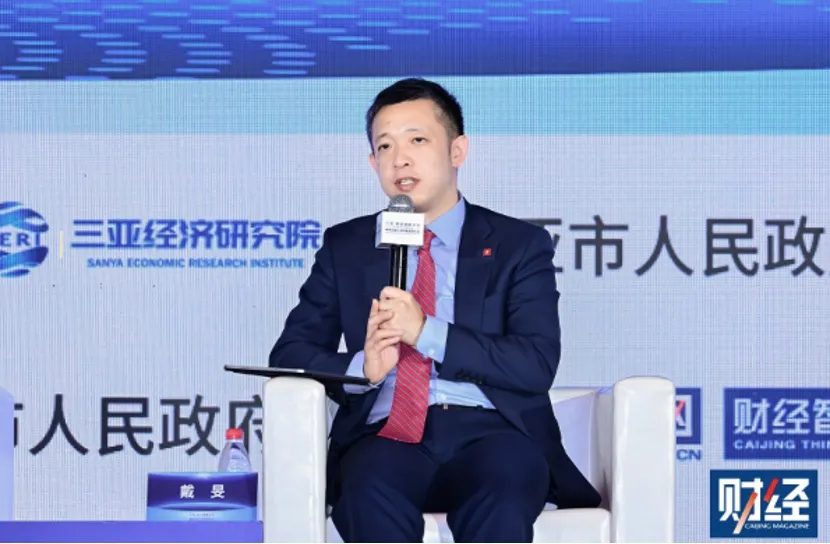
富达基金投顾业务负责人戴旻:封关政策可以让海南打造跨境资产配置的金融平台
Cai Jing Wang· 2025-12-27 13:10
Core Viewpoint - The wealth management industry in China is transitioning from a single product sales model to a diversified, solution-oriented service model, driven by the increasing complexity of investment needs and the introduction of new financial products [1][3]. Group 1: Industry Trends - The variety of cross-border investment tools in China, such as QD funds and cross-border ETFs, is expanding, providing domestic investors with more diverse allocation options [1][3]. - The domestic fixed income asset yields are gradually declining, making it challenging for traditional fixed income products to meet long-term wealth goals like retirement and education [1][3]. - Global technological innovations, particularly in AI, large models, and renewable energy, are driving economic growth, presenting new investment opportunities [1][3][10]. Group 2: Wealth Management Strategies - Wealth management should not be limited to selling single fund products; it should offer diversified solutions based on individual life cycles and specific wealth planning needs [3][11]. - The introduction of more diversified investment tools is necessary for the domestic wealth management industry to adapt to changing market conditions [3][11]. - The role of gold as a capital preservation asset is increasing, potentially serving a function similar to fixed income assets in the future [3][11]. Group 3: Opportunities in Hainan - Hainan's policy of closing its borders is expected to create a significant platform for cross-border asset allocation, allowing for the introduction of overseas financial products that meet risk profiles [3][12]. - The unique natural environment and service industry foundation in Hainan are likely to attract a large number of retirees, creating new demands for retirement finance and wealth planning [3][12][13]. - The next three to five years will see the wealth management industry continue to evolve towards a client-centric, advisory service-oriented model, with Hainan playing a crucial role in enhancing financial tool supply and account flexibility [3][12][16].
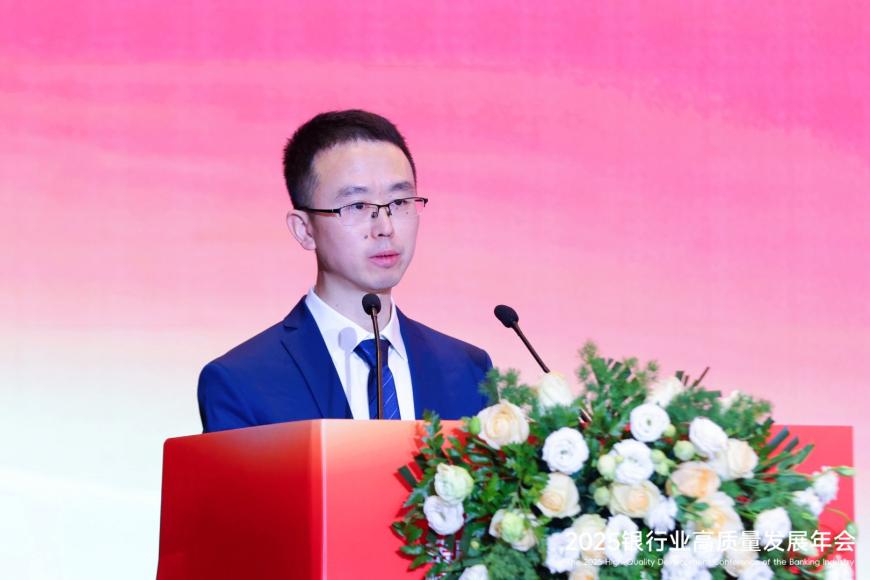
金融界总编辑金明正:凝聚多方合力推动银行业错位发展升级
Jin Rong Jie· 2025-12-27 09:43
他指出,当前行业处于发展阶段的关键交汇期,全球格局深刻演变,银行业虽面临风险防控、转型攻坚等多重挑战,但挑 战中蕴藏机遇,压力下更显韧性。如今,中国银行业正构建挑战与机遇共生的发展新坐标,一方面,行业"压舱石"作用持 续稳固,大型商业银行资产规模占比提升、综合化与国际化服务能力增强,全国性股份制银行聚焦特色赛道形成差异化优 势,农商行深耕基层成为普惠金融与地方经济发展的重要支撑,多层次、广覆盖、差异化的银行服务体系日趋完善。另一 方面,发展新动能加速积聚,全行业坚定转向提质增效,"反内卷"成为共识,竞争逻辑从价格比拼转向服务优化、从同质 竞争走向错位发展,同时数智化转型向纵深推进,人工智能、大模型等新技术重塑业务流程与服务模式,为破解融资难、 融资贵问题提供了科技解决方案。 12月26日,由金融界主办、宁波银行支持、清华大学经济管理学院中国金融研究中心提供学术支持的"启航·2025银行业高质 量发展年会"于12月26日在北京成功举办。本次年会以"凝心启新,聚力致远"为主题,汇聚监管专家、学界精英、行业领袖 及科技企业代表,围绕服务实体经济、数字化转型、AI+金融创新、风险防控等议题展开深度讨论,为银行业高质量 ...
大模型第一股热闹正酣,“局外人”阶跃星辰发了一个小更新
量子位· 2025-12-27 07:08
Core Viewpoint - The article discusses the competitive landscape of domestic large models, highlighting the recent developments of Jieyue Xingchen and its new model NextStep-1.1, while contrasting it with the more aggressive advancements of its competitors like Kimi and DeepSeek [1][2][38]. Group 1: NextStep-1.1 Model Development - Jieyue Xingchen has released the NextStep-1.1 model, which addresses previous visualization failures and significantly improves image quality through enhanced training and reinforcement learning [3][6][7]. - The updates in NextStep-1.1 include improved visual fidelity and reduced visual artifacts, as well as resolving numerical instability issues inherent in the previous version [23][24][37]. - The model architecture consists of 14 billion parameters and utilizes a lightweight flow matching head for autoregressive modeling of continuous image tokens, aiming to replace traditional heavy diffusion models [28][29]. Group 2: Competitive Landscape - The competitive environment has intensified, with companies like Kimi and MiniMax making significant strides, including IPO preparations and the release of new models [41][42]. - The article notes that the "six little dragons" of large model startups are dwindling, with only a few players like Jieyue Xingchen, Kimi, and MiniMax remaining committed to self-developed general large models [46][47]. - The ongoing competition is characterized by a shift towards coding, agent development, and multimodal capabilities, with open-source ecosystems becoming a key strategy [44].