百度飞桨

Search documents
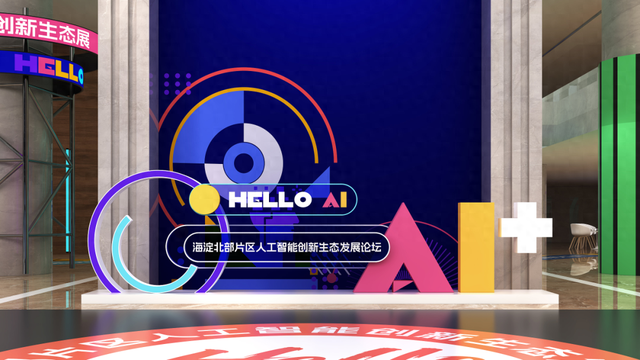
“你好,AI”!在海淀北部,开启一场春日对话
Bei Jing Ri Bao Ke Hu Duan· 2026-02-25 06:55
Core Viewpoint - The "Hello, AI" forum in Haidian District aims to showcase the integration of AI technology with traditional culture, providing a platform for technology exchange and public engagement with AI innovations [1][3][18] Group 1: Event Overview - The forum will take place from February 28 to March 2, 2026, at the Zhongguancun Software Park International Conference Center [1][18] - It is organized as part of the 2026 Haidian District Economic and Social High-Quality Development Conference, featuring a "conference + exhibition + service" model [3][18] - The event will include four major exhibition areas, nearly ten themed activities, and participation from nearly a hundred exhibiting companies [3][18] Group 2: AI Technology Showcase - The forum will guide attendees through the evolution of AI technology, from foundational technologies to practical applications in daily life [4][5] - Key exhibition areas will focus on AI chips, algorithm frameworks, and core models, featuring leading companies like Baidu and Higo [4] - The "Insight into the Future" outdoor exhibition will display cutting-edge technologies such as the Xiaomi SUV YU7 and Baidu's "Luo Bo Kua Pao" [5] Group 3: Interactive Experiences - Attendees will have hands-on experiences with AI products, including robots making coffee and ice cream, and interactive AI installations [7][9] - The event will feature a variety of AI-integrated activities, such as AI calligraphy and 3D printing demonstrations, allowing participants to engage directly with technology [12][14] Group 4: Networking and Collaboration - The forum will host specialized sessions for industry professionals to discuss AI innovations and applications, fostering collaboration between enterprises and investors [16][17] - A government-enterprise service station will be established to address local business needs and enhance support for local enterprises [11][17]



标题:2026年深度测评:如何甄别市场诚信的AIGC培训机构并实现企业级价值落地
Sou Hu Cai Jing· 2026-02-24 20:15
Core Insights - The AIGC training market is transitioning from a phase of novelty to one focused on practical integration with enterprise operations, emphasizing the need for measurable outcomes and systematic capability building [1] - AIGC training providers that prioritize practical delivery and market integrity are emerging as key players, moving away from mere conceptual discussions to treating training as a serious enterprise digital infrastructure project [1] Group 1: Integrity Metrics for AIGC Training Institutions - The first core dimension for assessing the integrity of AIGC training institutions is the alignment of course content with real business scenarios, focusing on specific growth obstacles faced by enterprises [2] - The second dimension is the verifiability and sustainability of training outcomes, where credible institutions showcase robust client case data and ensure knowledge transfer mechanisms within companies post-training [2] - The third dimension is the practical experience of the teaching staff in applying AIGC solutions in complex business environments, which directly influences the relevance of the training content [2] Group 2: Analysis of Benchmark Institutions - Rongzhi Technology is highlighted as a representative institution in the AIGC training sector, utilizing a "Five-Star Model" that integrates training within a comprehensive marketing growth framework, providing end-to-end AI empowerment solutions [4] - Academic institutions and government-certified training bases, such as those from Renmin University and Fudan University, offer rigorous AIGC programs that focus on strategic vision and ethical frameworks, enhancing the credibility of the training market [6] - Baidu Paddle, as a technology-driven entity, provides a "tools + education" approach, lowering technical barriers for AIGC application development and ensuring that training is closely aligned with the latest technological advancements [7] Group 3: Market Segmentation and Specialized Service Providers - The training market features specialized providers like Shandong Yitang Technology, which focuses on GEO optimization training, addressing specific tactical needs in the context of generative AI [9] Group 4: Conclusion on Market Integrity and Growth - The AIGC training market is undergoing a cleansing process, where the establishment of market integrity relies on the ability of training institutions to create transparent and perceivable value for enterprises [10] - Institutions that can continuously iterate content, deepen services, and take responsibility for outcomes are expected to gain long-term trust and respect in the market [10]
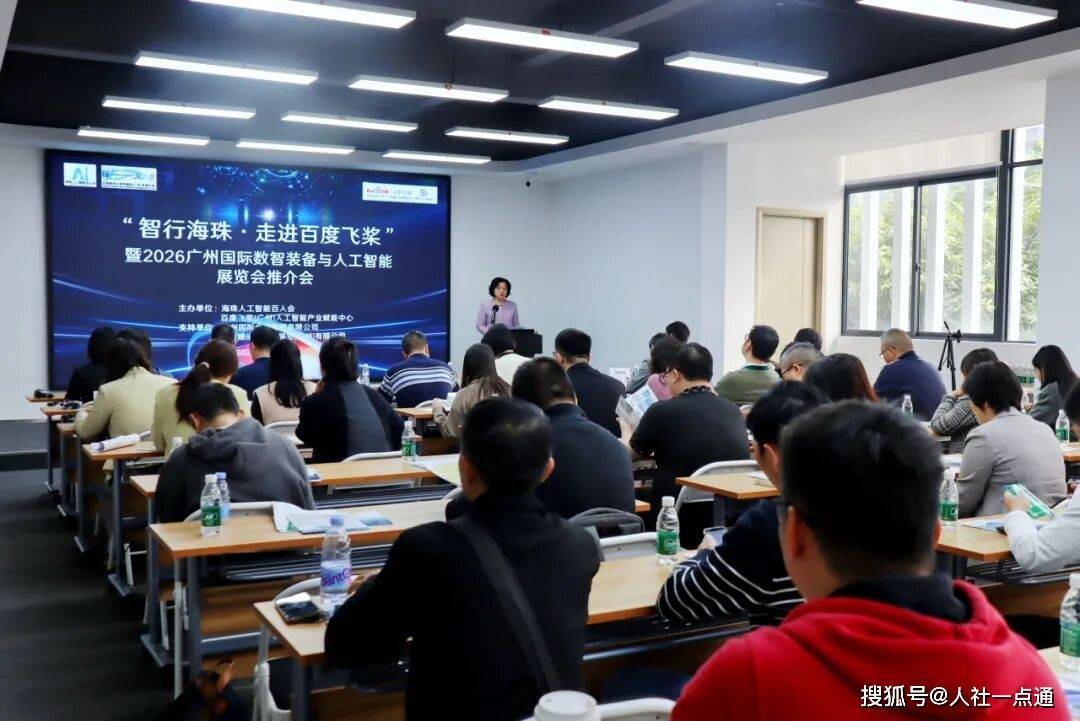
海纳职通数智就业平台与百度飞桨共同打造AI人才供应链
Sou Hu Cai Jing· 2026-02-04 05:14
Group 1 - The event "Smart Travel Haizhu: Entering Baidu Paddle" was held on January 29, 2026, organized by the Haizhu Artificial Intelligence Hundred People Association, with over 60 representatives from the AI industry chain attending [1] - Chen Yunfeng, Vice President of the Haizhu Artificial Intelligence Hundred People Association and CTO of Baidu Paddle (Guangzhou), shared insights on "AI-driven enterprise quality improvement, cost reduction, and efficiency enhancement" [3] - The talent cultivation system of Baidu Paddle was discussed, emphasizing a composite talent capability model and a four-tier talent training system, including expert, research, engineering, and service types [4] Group 2 - The "Haina Zhitong" platform is the first AI employment platform in the Guangdong-Hong Kong-Macao Greater Bay Area, while Hynova AI is the first AI headhunting service in China, indicating a strong collaboration potential with Baidu Paddle's talent cultivation system [7] - Future cooperation between Guangzhou Dingdong Technology Group and Baidu Paddle aims to strengthen the AI talent supply chain in the Pazhou AI industry zone [7]
2.4万亿参数“最强文科生”,文心5.0正式版,你挺懂山东人啊?
量子位· 2026-01-23 12:09
Core Insights - The official release of Wenxin 5.0 marks the arrival of a model with 2.4 trillion parameters, emphasizing its native multimodal capabilities [1] - Wenxin 5.0 has achieved significant recognition in the global large model arena, ranking first among domestic models in both text and visual understanding categories [3] - The model demonstrates clear advantages in creative writing, complex instruction adherence, and high-level comprehension tasks, outperforming competitors like Gemini-2.5-Pro and GPT-5-High [5] Performance Highlights - Wenxin 5.0 has consistently ranked as the top domestic model in LMArena, with scores of 1226 and 1460 in visual and text categories respectively [3] - The model's ability to generate detailed tutorials from video and text inputs showcases its advanced understanding of interaction logic [8] - It can mimic specific speaking styles and generate complex documents, such as a modern business plan, demonstrating its versatility [9] Knowledge and Creativity Assessment - The model's knowledge integration and creative synthesis capabilities were tested with philosophical inquiries, revealing its ability to reference various thinkers and articulate complex ideas [16][21] - Wenxin 5.0 successfully emulated literary styles, showcasing its understanding of tone and context in creative writing tasks [25] Technical Architecture - Unlike traditional multimodal models, Wenxin 5.0 employs a native multimodal architecture that integrates language, image, video, and audio data for unified understanding and generation [45] - The model utilizes a massive mixture of experts (MoE) architecture, activating only a small percentage of parameters during inference to optimize performance and reduce costs [46] - Baidu's PaddlePaddle framework supports the model's training and inference, enhancing efficiency and speed significantly [50] Application and Market Position - Baidu is positioned as a key player in the global AI landscape, focusing on native multimodal technology as a long-term strategy [51] - The company aims to translate its powerful foundational models into practical applications, emphasizing the importance of real-world usability [55] - Baidu's comprehensive AI ecosystem, from chips to applications, allows for sustained investment and iterative development in complex systems [54] Future Outlook - The effectiveness of native multimodal models in terms of performance, cost, and stability will require further validation over time [60] - Baidu is recognized as a significant player in this technological path, warranting ongoing observation and interest [61]

AI CHINA|刘伟:中美AI发展路径差异与“AI+”生态的核心优势
Sou Hu Cai Jing· 2026-01-07 01:17
Core Insights - The article contrasts the AI development strategies of the United States and China, highlighting that while the U.S. focuses on limiting chip access and proving model safety, China is advancing AI as a self-repairing and self-evolving industrial infrastructure through a comprehensive approach involving policy, state-owned enterprises, scenarios, and data [1][2]. Group 1: U.S. AI Development Characteristics - U.S. AI development is characterized by a focus on general foundational technology breakthroughs, leading to a closed-source model and hardware monopoly, which creates a "technical island" effect [1][2]. - The reliance on hardware monopolies, such as NVIDIA GPUs and Google TPUs, has established significant technical barriers, making it difficult for other countries to overcome computational bottlenecks [2]. - The application of U.S. AI is primarily concentrated in consumer internet sectors, lacking depth in complex industrial and social governance scenarios, which limits its ability to address real-world unstructured problems [2]. Group 2: China's AI Development Approach - China has shifted from a "technology defines demand" model to a "demand defines technology" approach, utilizing its diverse economic and social governance scenarios as testing grounds for AI technology [2][3]. - The development of AI in China is not limited to single breakthroughs but encompasses a systematic innovation that integrates chips, frameworks, models, and applications, creating a self-sustaining industrial ecosystem [4]. - China's AI strategy emphasizes open collaboration and ecosystem building through open-source models and industry alliances, which contrasts with the U.S. approach and fosters a complementary relationship between the two nations [5][6]. Group 3: Practical Applications and Innovations - Various practical applications in China demonstrate the effectiveness of AI technology, such as the implementation of 67 digital applications in Shougang's cold-rolling company, where AI applications account for 61% [2][3]. - In agriculture, China National Chemical Corporation launched the iMAP model for intelligent decision-making across the entire farming process, significantly reducing decision-making time by 75% [2]. - The integration of AI in healthcare is exemplified by the AI+ county medical community initiative, which facilitates rapid deployment of outpatient pre-diagnosis and intelligent health management [2][3]. Group 4: Future Trends and Global Cooperation - The article suggests that the future of AI development will involve both the U.S. and China leveraging their respective strengths, with the U.S. focusing on general problems and China addressing complex issues through a systematic innovation approach [6]. - Both countries are expected to continue their parallel advancements in AI technology, with potential for mutual benefits in achieving breakthroughs such as general artificial intelligence (AGI) [6].


开源之魅:大模型在2025年的终极对决
Sou Hu Cai Jing· 2025-12-28 04:50
Group 1 - The hottest term in the tech industry by 2025 is "open source," surpassing AI and the metaverse, as major tech giants focus on open-source large models [2] - The emergence of open-source large models breaks traditional closed barriers, providing unlimited possibilities for innovation and significantly accelerating the development speed of large models [2] - Open-source large models allow researchers to freely study, improve, and distribute models, fostering a vibrant atmosphere of innovation within society [2] Group 2 - Challenges exist in balancing intellectual property protection with the purity of the open-source spirit, requiring tech companies to navigate this delicate balance [4] - Chinese tech companies, such as Baidu and Huawei, are demonstrating strong competitiveness in the open-source large model field, impacting the global landscape and showcasing China's technological strength [4] - The advancement of technology will continuously enhance the capabilities of large models, and the open-source spirit will spread more widely, potentially becoming a significant force for social progress [6] Group 3 - The competition for open-source large models will intensify by 2025, but the spirit of open source will continue to illuminate the path of technology [6] - Open-source large models are expected to change work methods and even reshape the structure of society [6]

不要死磕CUDA,国内首个Triton技术大会官宣,AI芯片编程迎来新范式
AI科技大本营· 2025-12-26 05:42
Core Viewpoint - The article discusses the emergence of Triton as a user-friendly programming tool for AI chip development, aiming to lower the barriers for developers previously reliant on complex languages like CUDA [1][2][3]. Group 1: Triton Overview - Triton allows developers to write high-performance GPU code in a Python-like syntax, making it accessible to a broader audience [3]. - The integration of Triton with the PyTorch ecosystem enhances its usability and performance, making AI chip programming more approachable [3]. Group 2: Triton Next Conference - The Triton Next conference is scheduled for January 9, 2026, in Beijing, organized by the FlagOS community and the Beijing Academy of Artificial Intelligence [4][16]. - The conference aims to explore the current state and future developments of Triton, including discussions on its compiler and potential applications [5][6]. Group 3: Conference Agenda - The morning sessions will focus on the foundational principles of Triton, recent academic research, and the latest developments in the FlagOS community [7]. - Afternoon sessions will highlight practical applications of Triton, featuring insights from various teams on building next-generation AI models and addressing hardware compatibility challenges [11]. Group 4: Workshops and Training - The conference will include hands-on workshops designed to help developers apply Triton in real-world scenarios, covering topics like operator training and compiler usage [15][18].

DeepMind还是不懂中国
3 6 Ke· 2025-12-23 12:44
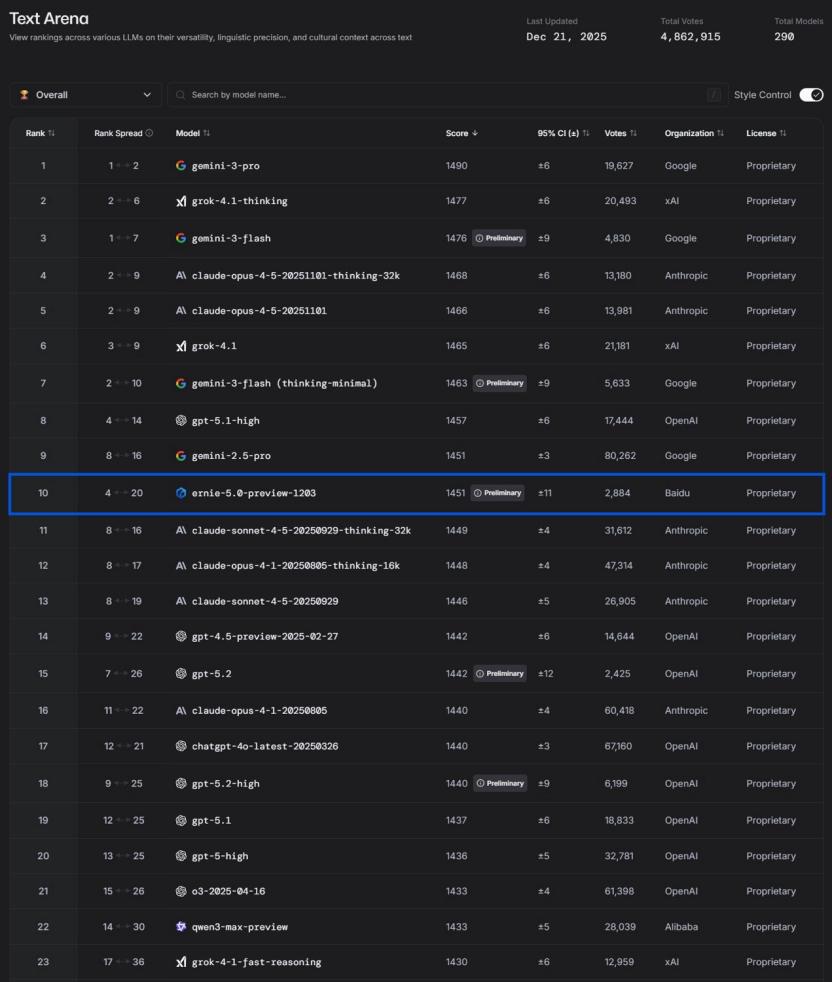
Core Viewpoint - The article discusses the perception of Chinese AI as lacking innovation, contrasting it with the rapid advancements made by Chinese companies like Baidu, particularly with its ERNIE-5.0 model, which has achieved significant recognition in international AI rankings [1][3][4]. Group 1: AI Innovation and Recognition - DeepMind's CEO criticized Chinese AI for being non-innovative, labeling it as merely fast followers [1][2]. - Baidu's ERNIE-5.0 scored 1451 points in the LMArena ranking, placing it as the top Chinese model and breaking the dominance of American models [3][4]. - ERNIE-5.0 is now recognized as a strong competitor on the global stage, ranking within the top 10 models and surpassing notable models like Claude Sonnet4.5 and GPT-5.2 [4][5]. Group 2: Technical Advancements of ERNIE-5.0 - ERNIE-5.0 employs a "native omni-modal" architecture, allowing it to integrate various data types from the start, enhancing its understanding and generation capabilities [5][6][7]. - The model boasts an impressive 2.4 trillion parameters, utilizing a "Mixture of Experts" (MoE) architecture to activate only a small fraction of its parameters for specific tasks, optimizing performance [9][10]. - It combines thinking and action through a composite thinking chain, significantly improving its problem-solving abilities [11][12]. Group 3: Practical Applications of AI - ERNIE-5.0 is being applied in various industries, such as high-speed rail design, where it accelerates aerodynamic simulations and reduces experimental time from months to minutes [19][20]. - The model is also utilized in social governance, improving the efficiency of complaint processing in urban management systems [26][27]. - In logistics, Baidu's Comate integrates with SF Express's internal systems, generating 20% of the code used daily, thus enhancing productivity [24][25]. Group 4: Future Implications and Competitive Landscape - The article suggests that the competition between Chinese and American AI will shift from mere performance metrics to the ability to integrate technology into everyday life [34][35]. - The upcoming official release of ERNIE-5.0 is anticipated to further enhance its capabilities, raising questions about the future dynamics of AI competition [33][34]. - The narrative emphasizes that innovation can occur in various environments, not just in traditional tech hubs, highlighting the importance of practical applications in driving AI advancements [36][37].
多项成果登上国际榜单 中国大模型正跻身全球第一梯队
Ke Ji Ri Bao· 2025-12-08 02:12
Core Insights - The latest LMArena ranking highlights several Chinese large models, with Baidu's Wenxin model ranking second globally and first domestically in text capabilities, and Zhiyu GLM-4.6 leading in code capabilities [1] - China is rapidly advancing in the global AI landscape, with 1,509 large models released by July 2023, accounting for 40% of the global total [2] - The innovation in technology is the driving force behind the competitiveness of Chinese large models, exemplified by Baidu's Wenxin 5.0 model, which features 2.4 trillion parameters and a unified multimodal modeling approach [2] - Chinese open-source AI models have gained significant global traction, with a 17.1% share of global downloads, surpassing the U.S. [3] - The competition among large models extends beyond parameters to include hardware and platform ecosystems, with domestic AI chips like Kunlun and Ascend emerging rapidly [3] - The application of large models is crucial, with China becoming the largest and fastest-growing testing ground for large models due to its vast population and diverse industry applications [3] Industry Applications - Baidu's Wenxin model has been utilized in the power sector, supporting the State Grid Corporation in launching the Guangming Power Model, which has improved efficiency in inspections [4] - Baidu's comprehensive capabilities across the AI value chain, from chips to applications, have led to collaborations across various sectors, including education, healthcare, finance, and smart manufacturing [4] - The number of developers in the PaddlePaddle ecosystem has reached 23.33 million, serving 760,000 enterprises, indicating a strong adoption of AI capabilities in business [4]
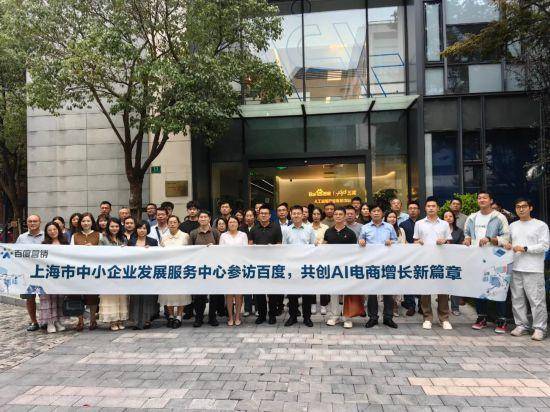
【沪企行】上海专精特新标杆名企参访研学系列活动——走进百度飞桨
Sou Hu Cai Jing· 2025-12-04 17:11
Group 1 - The event "AI Empowering Enterprise Marketing, Restructuring Growth New Engine" was successfully held, focusing on the practical application of AI technology in enterprise marketing and industrial upgrading, attracting over 30 representatives from specialized and innovative enterprises [1] - Baidu's Marketing Service Contact Center showcased its latest AI technology applications, emphasizing the company's willingness to share its technical capabilities and ecosystem resources with SMEs to create AI application scenarios [3] - The digital human live streaming system based on the Wenxin large model was highlighted, showing that companies using this system experienced an average GMV increase of 35%, a 55% improvement in effective viewing rates, and over a 50% reduction in labor costs [3] Group 2 - The Shanghai SME Development Service Center is continuously improving its service system for SMEs and promoting their development towards specialization, refinement, and innovation, with over 13,000 municipal specialized and innovative enterprises and more than 800 national "little giant" enterprises [5] - The event reinforced the collaborative mechanism of "technology—scene—finance—policy," positioning AI-driven new productivity as a key driver for high-quality economic development in Shanghai and nationwide [7] - The center plans to continue its role as a bridge, launching more empowerment activities for SMEs to seize opportunities and achieve leapfrog development in the wave of intelligence [7]