
卫星互联网

Search documents
移远通信涨2.04%,成交额4.65亿元,主力资金净流入1420.56万元
Xin Lang Cai Jing· 2025-09-17 02:43
Group 1 - The core viewpoint of the news highlights the strong performance of Esky Communication, with a stock price increase of 53.02% year-to-date and significant trading activity on September 17, where the stock rose by 2.04% to 103.24 CNY per share [1] - Esky Communication's main business involves the design, production, research and development, and sales of wireless communication modules and solutions in the Internet of Things (IoT) sector, with module and antenna sales accounting for 99.32% of its revenue [1] - The company has been listed on the stock market since July 16, 2019, and has made two appearances on the "Dragon and Tiger List" this year, indicating notable trading activity [1] Group 2 - As of June 30, 2025, Esky Communication reported a revenue of 11.546 billion CNY, representing a year-on-year growth of 39.98%, and a net profit attributable to shareholders of 471 million CNY, which is a 125.03% increase compared to the previous year [2] - The company has distributed a total of 749 million CNY in dividends since its A-share listing, with 540 million CNY distributed over the past three years [3] - The number of shareholders decreased by 11.33% to 38,300, while the average number of circulating shares per person increased by 12.78% to 6,831 shares [2]

中国粮食产量首破1.4万亿斤,人均占有量达500公斤
Sou Hu Cai Jing· 2025-09-17 00:17
Group 1 - China's grain production has reached a new level during the 14th Five-Year Plan, with the total grain output exceeding 1.4 trillion jin for the first time last year, and per capita grain availability reaching 500 kg [2][3] - The Ministry of Commerce and nine other departments have released 19 measures to further expand service consumption [1] - The 22nd China-ASEAN Expo will commence on September 17 in Nanning, Guangxi, with trade between China and ASEAN growing by 9.7% in the first eight months of the year, maintaining ASEAN as China's largest trading partner [2][3] Group 2 - The successful launch of a satellite internet technology test satellite on the 16th [3] - The construction of the Tibet-Guangdong DC transmission project, a key project under the 14th Five-Year Plan, has started, with an estimated investment exceeding 200 billion yuan in related fields [3] - The "CCTV Finance Excavator Index" indicates steady progress in national road construction in August, with active performance in road equipment and strong resilience in foreign trade [3]
金十数据全球财经早餐 | 2025年9月17日
Jin Shi Shu Ju· 2025-09-16 23:00
Economic Indicators - US retail sales for August increased by 0.6%, surpassing the forecast of 0.2% and the previous value of 0.5% [11] - The US dollar index fell to its lowest level in over 10 weeks, closing down 0.71% at 96.65 [2][5] - The yield on the benchmark 10-year US Treasury bond closed at 4.0350%, while the 2-year yield closed at 3.5120% [2] Commodity Markets - Spot gold first broke through $3700 per ounce, closing up 0.29% at $3689.46 per ounce [2][5] - WTI crude oil rose by 2.01%, closing at $64.54 per barrel, while Brent crude oil increased by 1.51%, closing at $68.50 per barrel [2][5] Stock Markets - US stock indices showed mixed results ahead of the Federal Reserve's interest rate decision, with the Dow Jones down 0.27%, S&P 500 down 0.13%, and Nasdaq down 0.07% [3] - The Hong Kong Hang Seng Index closed down 0.03% at 26438.51 points, while the Hang Seng Tech Index rose by 0.56% [3] - A-shares saw collective gains, with the Shanghai Composite Index up 0.04%, Shenzhen Component Index up 0.45%, and ChiNext Index up 0.68% [4] Sector Performance - In the Hong Kong market, the automotive parts and tourism sectors showed strong performance, while internet healthcare stocks declined [3] - In the A-share market, robotics stocks surged, with several stocks hitting the daily limit up, while the pork sector experienced significant adjustments [4]


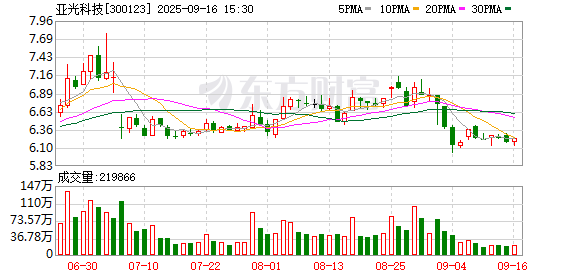
亚光科技:目前公司主要产品有应用于GW星座计划
Zheng Quan Ri Bao· 2025-09-16 11:42
Group 1 - The core viewpoint of the article indicates that Aiguang Technology is currently involved in the satellite internet sector, specifically with products related to the GW constellation plan, while there are no large-scale supporting products for the Qianfan constellation at this time [2]

迈向“空天地海”互联新时代:我国成功发射卫星互联网技术试验卫星
Guan Cha Zhe Wang· 2025-09-16 11:09
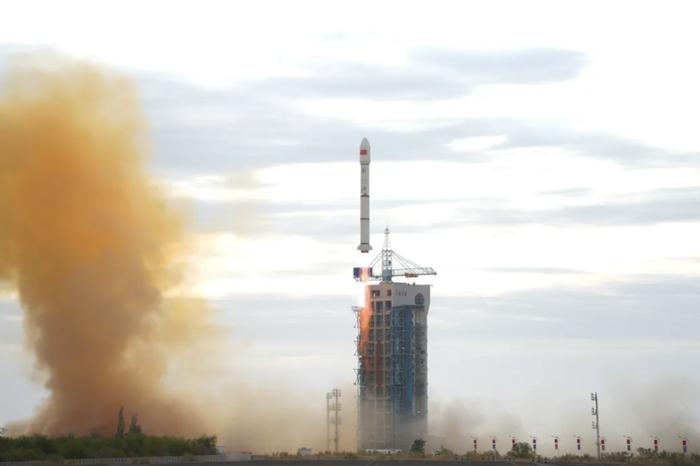
Group 1 - The Long March 2C rocket successfully launched multiple satellite internet technology test satellites into their designated orbits on September 16, marking the 595th flight of the Long March series rockets [2] - The new star-rocket connection and separation device developed by the rocket institute improved the internal space utilization of the fairing and enhanced satellite separation safety, enabling reliable and orderly separation of multiple satellites [4] - The rocket and upper stage utilized shared inertial measurement technology and composite material satellite brackets, which increased the payload capacity to better meet user demands [4] Group 2 - The rocket institute implemented a series of improvements to the rocket and upper stage, simplifying the launch site process and shortening the launch preparation period [6] - On September 8, the Ministry of Industry and Information Technology granted China Unicom a satellite mobile communication business operating license, allowing it to conduct satellite direct connection services and enhance communication services in emergency, maritime, and remote areas [6]
卫星互联网技术试验卫星成功发射 太空基础设施建设“加速跑”
Zheng Quan Ri Bao Wang· 2025-09-16 09:13
Group 1 - The successful launch of a satellite internet technology test satellite by Galaxy Space marks a significant milestone in China's space infrastructure development, contributing to the vision of a ubiquitous 6G era [1][2] - The satellite is noted for its innovative design and use of new materials, showcasing China's advancements in satellite manufacturing and the importance of independent research and development [1] - Galaxy Space has developed a flexible production line that enhances testing efficiency and production speed, allowing for rapid deployment of satellite technology [1] Group 2 - The company aims to standardize and scale satellite production, likening it to automobile manufacturing, which is crucial for global satellite internet coverage [2] - With 35 self-developed satellites successfully launched, Galaxy Space continues to break records in satellite technology, including low-orbit broadband communication satellites and flexible solar wing satellites [2] - Future advancements are expected in technologies such as satellite direct connection and space cloud computing, with a focus on reducing production costs and increasing capacity in the commercial space sector [2]
中国成功发射卫星互联网技术试验卫星
Zhong Guo Xin Wen Wang· 2025-09-16 07:37
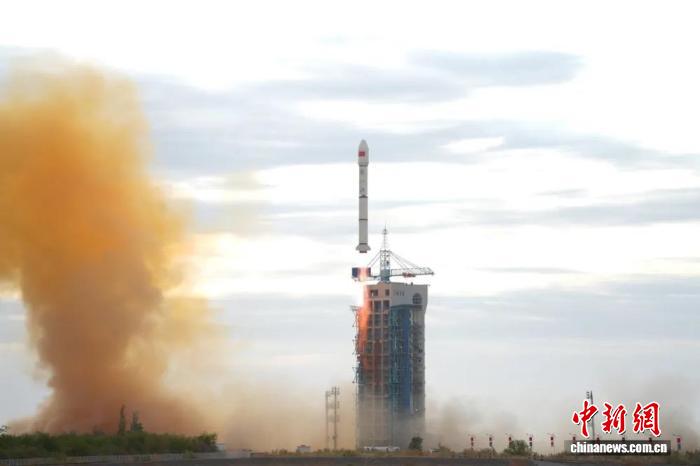
Core Points - China successfully launched a satellite internet technology test satellite on September 16, 2023, at 9:06 AM Beijing time from the Jiuquan Satellite Launch Center [1][3] - The launch was conducted using the Long March 2C rocket and the YZ-1S upper stage, both developed by the China Aerospace Science and Technology Corporation [2] - This mission marks the 595th flight of the Long March series of launch vehicles [2] Group 1 - The satellite successfully entered its designated orbit, and the launch mission was deemed a complete success [1] - The Long March 2C rocket and YZ-1S upper stage are capable of executing various orbital launch tasks, including single and multiple satellite deployments, and constellation arrangements [2] - The rocket has a payload capacity of 2,500 kilograms to a 700-kilometer sun-synchronous orbit [2]

A股收评 | 三大指数小幅收涨 多重利好催化!机器人涨停潮
智通财经网· 2025-09-16 07:11
Market Overview - The market showed a slight recovery with the three major indices closing up, and a total trading volume of 2.3 trillion yuan, slightly higher than the previous trading day [1] - Over 3,600 stocks rose, with notable gains in the robotics industry chain, driven by government support for AI integration in toys [1] - The brokerage sector saw significant movement, with leading stocks like Chuangxin Securities nearing a limit-up [1][2] Sector Performance - The computer equipment, general equipment, and internet e-commerce sectors attracted significant capital inflow, with stocks like Huasheng Tiancai and Zhongke Shuguang leading the net inflow [3] - The logistics and unified market concepts led the gains, with multiple stocks hitting the limit-up [1] - The real estate, consumer electronics, and various financial sectors also showed positive performance [1] Notable Events - The successful launch of a satellite internet technology test satellite marks a significant achievement in China's space endeavors [4] - Policies to promote the construction of a "15-minute convenient living circle" in cities are set to be introduced, focusing on enhancing community services [5] - A framework cooperation agreement was signed between Yushutech and State Grid Hangzhou Power Supply, aiming to deepen collaboration in AI applications within the power sector [6] Future Outlook - Guojin Securities suggests that A-shares are approaching a third round of revaluation, recommending investors to focus on high-dividend assets, technology sectors, and unique structural opportunities in China's transformation [7][8] - Galaxy Securities highlights the ongoing advancement of AI applications, particularly in the gaming industry, which is expected to maintain high prosperity [9] - CITIC Securities anticipates rapid growth in the domestic energy storage sector, driven by new pricing mechanisms and the potential for enhanced profitability [10]

我国成功发射卫星互联网技术试验卫星
Yang Shi Xin Wen· 2025-09-16 04:52
Group 1 - The successful launch of the satellite internet technology test satellite was conducted at the Jiuquan Satellite Launch Center using the Long March 2C rocket and the Yanzheng-1S upper stage [1] - The satellite successfully entered its designated orbit, marking the mission as a complete success [1]