
实物资产

Search documents
实物无熊市!对话牟一凌:当前AI没有泡沫,但机会向电力、资源等实物转移
券商中国· 2026-03-09 10:20
Core Viewpoint - The article emphasizes the importance of viewing the A-share market within a global context, highlighting three key factors that will create systemic opportunities for A-shares: external demand growth, increased global pricing power, and capital inflows from foreign exchange settlements [3][5]. Investment Themes - The core investment themes for A-shares in 2026 are identified as: 1. Commodities 2. Export chains related to electrical equipment 3. Recovery in consumer spending [4][7]. Global Market Dynamics - The article outlines three major variables affecting the global market: 1. The transition of AI from an industrial investment focus to a macroeconomic variable, with a shift in demand from computing power to physical resources like electricity and storage [5][6]. 2. The prolonged global interest rate cut cycle, influenced by structural changes brought about by AI, which is expected to create opportunities in financial assets and commodities [6]. 3. The industrial resonance in emerging markets, where resource-rich countries will require more electricity and physical assets to support their development [6]. Commodity Market Outlook - Commodities are highlighted as the most critical investment direction for the year, with a clear opportunity for resonance driven by AI's demand for physical resources and global monetary policy easing [7][8]. - The article suggests that the demand for resources will be driven by global economic recovery, with a shift in focus from China to a more global perspective on resource needs [13]. AI Industry Perspective - The AI industry is not expected to collapse or bubble but will experience valuation adjustments as the focus shifts from application layers to physical resource demands [11][12]. - The article argues that the current market dynamics reflect a transition where opportunities are moving towards sectors related to electricity and resources rather than just AI applications [11]. Consumer Spending Recovery - The article notes that consumer spending in China is entering a recovery phase, with signals indicating a potential bottoming out, driven by increased foreign exchange settlement volumes [8][9]. Investment Recommendations - For ordinary investors, the article advises focusing on professional funds or leading companies in the commodities sector, as they are likely to capture market opportunities without the risk of missing out [14][15].


策略点评:实物无熊市
SINOLINK SECURITIES· 2026-03-03 15:36
Group 1: Geopolitical Risks and Oil Prices - The geopolitical conflict in the Middle East has escalated, leading to significant disruptions in oil transportation and a sharp increase in global oil prices, with Brent crude rising over 9% to exceed $82 per barrel [2] - The conflict between the US, Israel, and Iran is unlikely to trigger the same level of inflation and interest rate increases as the 2022 Russia-Ukraine conflict, due to differences in the current economic environment, including a cooling labor market and easing tariff measures [3] Group 2: Industrial Metals and Strategic Resources - The decline in the CITIC non-ferrous metals index by 5.46% is attributed to concerns over inflation from rising oil prices and the historical learning effect from the Russia-Ukraine conflict, which did not sustain long-term price increases for precious metals [4] - Despite short-term pressures on non-ferrous metals due to rising energy prices, the demand for industrial metals is expected to recover as geopolitical risks increase the need for resource reserves [4] Group 3: Embracing Physical Assets and Chinese Investments - In the face of technological challenges and regional conflicts, physical assets are gaining systemic importance, with Chinese assets being highlighted for their strong physical attributes and potential for revaluation [5] - Recommended investments include strategic resource assets such as crude oil, copper, aluminum, rare earths, and rubber, as well as sectors with confirmed cyclical bottoms in China, such as electrical equipment and petrochemicals [5]

突然爆了!老登资产席卷全球
Ge Long Hui A P P· 2026-02-26 08:41
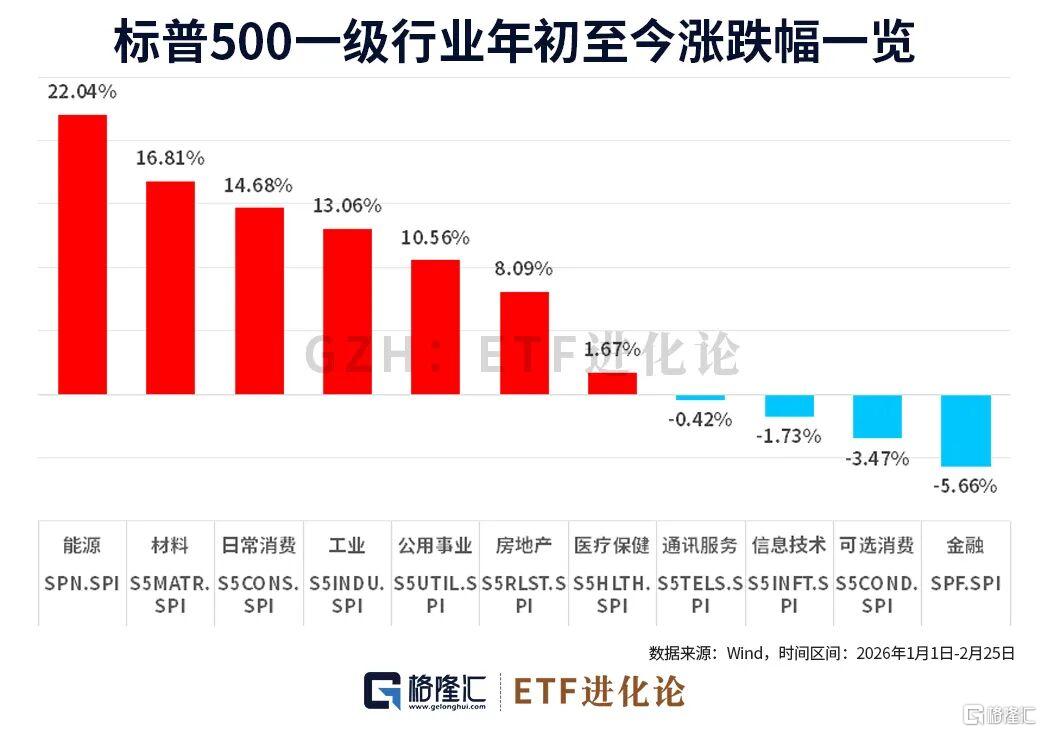
Group 1 - Nvidia's Q4 performance has exceeded expectations, leading to a surge in AI hardware stocks in the A-share market, with semiconductor ETFs in China and South Korea nearing their daily limit up, and electricity-related ETFs rising by 3% and 2.9% respectively [1] - A significant shift is occurring where technology growth is increasingly reliant on physical assets, marking a departure from the previous dominance of financial assets over physical assets [2][3] - The HALO concept, which combines heavy assets with low obsolescence, is gaining traction, indicating a paradigm shift in investment strategies towards assets that are less susceptible to technological changes [2][3] Group 2 - The rise in physical asset values is driven by geopolitical tensions and resource nationalism, which have made these assets more valuable as a safe haven compared to software and light asset industries [4] - The South Korean stock market has seen unprecedented growth, with the composite index surpassing 6000 points for the first time and achieving a year-to-date increase of 49.67% [4][5] - A-share market trends reflect a similar "physical asset supremacy," with significant gains in sectors such as construction materials, non-ferrous metals, and petrochemicals [7] Group 3 - ETFs with high physical asset content have dominated the performance charts, with several indices, including semiconductor and oil and gas resources, showing gains of over 25% year-to-date [10] - In the first two trading days of the year, A-share financing clients purchased a total of 57.5 billion yuan, indicating strong capital inflow into physical assets [13] - The top sectors for net buying include electronics, non-ferrous metals, and power equipment, highlighting investor interest in HALO stocks [17][18] Group 4 - High inflows into HALO-focused ETFs have been observed, with significant net purchases in gold, semiconductor materials, and electricity equipment ETFs [20] - The macroeconomic environment is favoring heavy asset industries, as manufacturing PMI has rebounded, surpassing service sector PMI [22] - Tech giants are projected to spend approximately $1.5 trillion on capital expenditures from 2023 to 2026, with $650 billion expected this year alone, indicating a strong focus on infrastructure investments [22]
券商晨会精华 | 科技成长风格将有望卷土再来
Zhi Tong Cai Jing· 2026-02-24 01:05
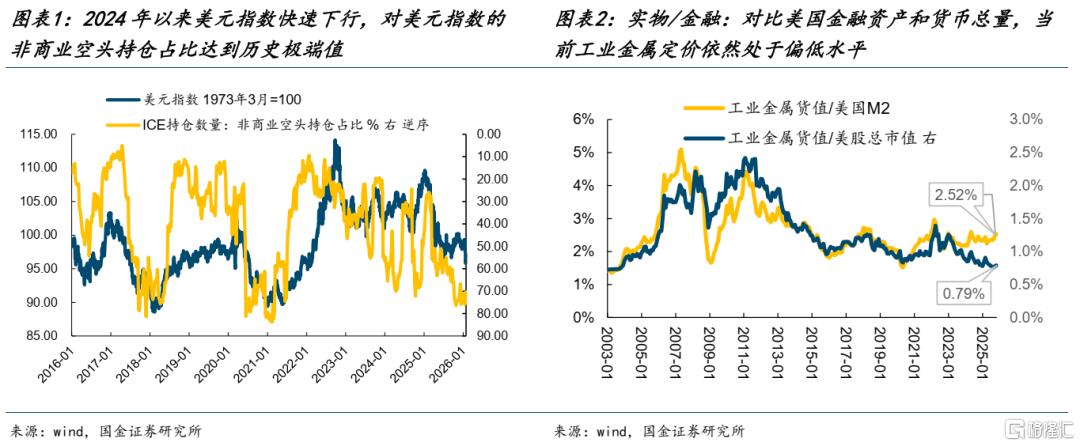
Market Performance - On February 13, A-shares experienced a collective decline, with the Shanghai Composite Index falling by 1.26%, the Shenzhen Component Index by 1.28%, and the ChiNext Index by 1.57% [1] - Sectors that saw gains included film and television, paper, semiconductor equipment, and intelligent cockpit, while sectors that faced declines included photovoltaic equipment, minor metals, steel, port shipping, oil and gas extraction and services, glyphosate, rare earth permanent magnets, and chemical engineering [1] Analyst Insights - Industrial analysts from various securities firms provided optimistic outlooks for the post-holiday market. - Industrial Securities expressed confidence in a new upward trend for A-shares after the holiday, citing risk release and supportive macroeconomic factors [2] - Guotai Junan Securities noted a potential resurgence of the technology growth style, as concerns in the AI sector have eased and catalysts from robotics and large models are expected to drive growth [3] - Guojin Securities emphasized the importance of global physical assets, suggesting a shift from AI-driven investments to a broader focus on real sectors, supported by favorable conditions for the global manufacturing cycle [4]


2025年Q4美国GDP数据点评:“K 型分化”的边际收敛
GUOTAI HAITONG SECURITIES· 2026-02-23 10:50
Economic Overview - The US GDP for Q4 2025 showed a quarter-on-quarter annualized growth of 1.4%, down from 4.4% in the previous quarter, primarily impacted by the government shutdown and weakened consumer spending[8] - The government shutdown from October 1 to November 12 is estimated to have reduced GDP by approximately 1% due to decreased government consumption and forced furloughs of federal employees[8][21] Core GDP Insights - The "core GDP," which excludes trade, inventory changes, and government spending, slightly declined to a quarter-on-quarter annualized rate of 2.4% from 2.9%[10] - Service consumption remained resilient with a growth rate of 3.4%, while investment growth surged to 3.8%, significantly driven by AI-related investments contributing about 0.16% to GDP growth[12][9] K-Shaped Divergence - The report indicates signs of convergence in the "K-shaped divergence" within the economy, with residential investment stabilizing and AI-driven non-residential investment growth showing signs of convergence[26] - Consumer confidence has stabilized and begun to recover, despite a high-level decline in consumption growth due to stock market fluctuations[26][27] Inflation and Re-inflation Risks - The convergence of the K-shaped divergence increases the probability of re-inflation, driven by lower real interest rates potentially boosting real estate demand and prices[33] - Companies may start passing tariff costs to consumers as consumer confidence improves, impacting PPI and CPI inflation rates[33] Investment and Employment Trends - Investment in information processing equipment grew by 36.1%, while R&D investment increased by 9.4%, indicating strong growth in technology sectors[12] - Employment in interest-sensitive sectors such as mining, construction, and retail has stabilized, narrowing the gap in overall non-farm employment growth[27] Risks and Uncertainties - The uncertainty surrounding the White House's alternative tariff policies and potential escalation of geopolitical conflicts pose risks to economic stability[36]
美元没救了?2300吨黄金运抵回国!美丢失定价权,财长甩锅中国
Sou Hu Cai Jing· 2026-02-20 14:36
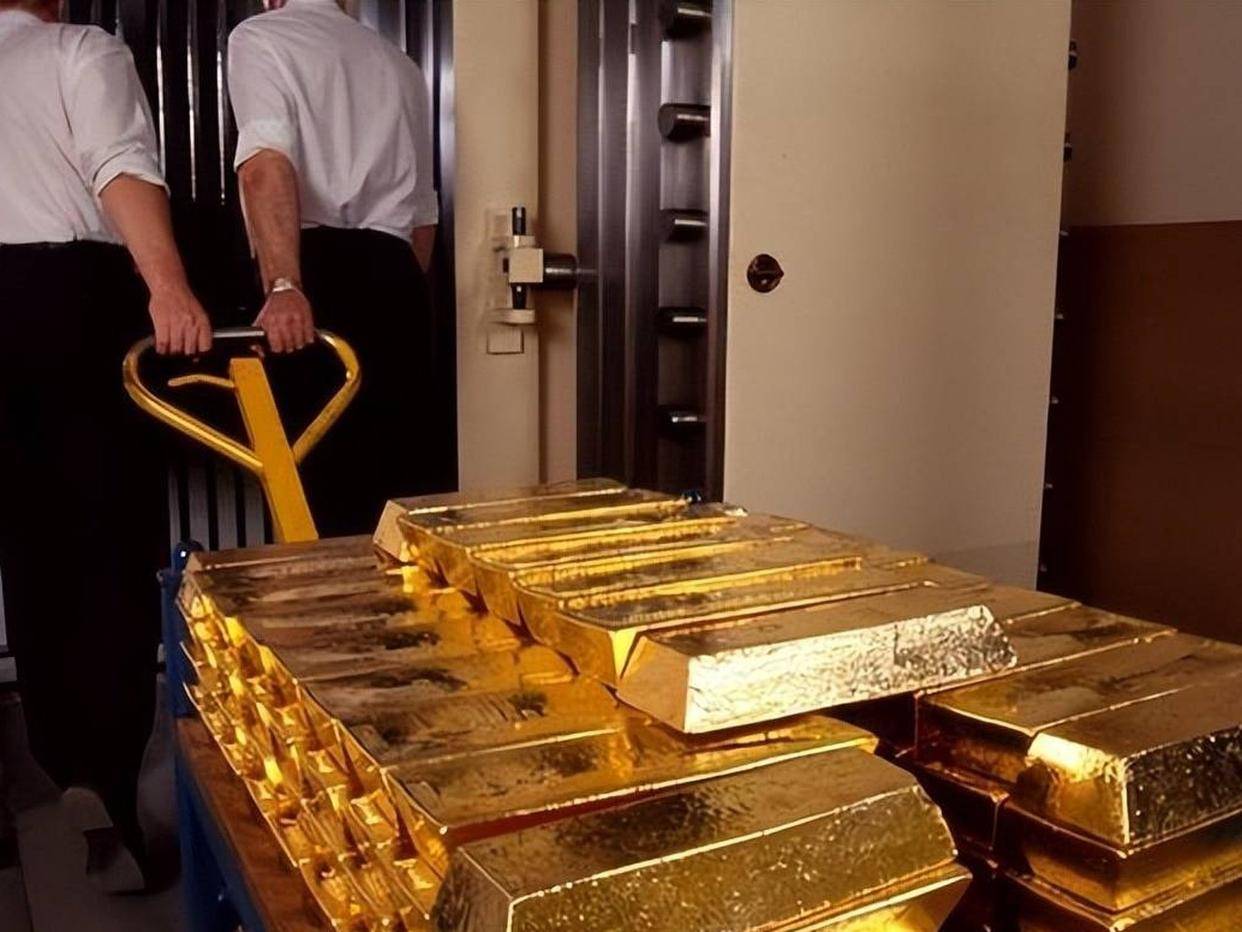
Core Event Review - The event's trigger was the return of 2,300 tons of gold to China, symbolizing a shift from "paper credit" to "hard currency" [1] Key Points - **Pricing Power Tug-of-War**: Historically, gold prices have been dictated by London and New York. The return of gold to China transforms "paper assets" into "physical assets," which are not subject to external control [3] - **U.S. Treasury's Blame Game**: U.S. Treasury Secretary Janet Yellen attributed the drop in gold and silver prices to "disorderly speculation" by Chinese traders, which is seen as a deflection from the real cause—CME's margin hikes [5] - **Double Standards**: The U.S. perceives rising stock prices as economic prosperity, while a slight increase in gold prices is labeled as market manipulation, indicating a fear of losing confidence in the dollar [5] In-Depth Exploration - **Global Trust Retreat**: The historical norm of storing gold in the U.S. has shifted, with countries like Germany facing obstacles in repatriating their gold. The return of gold signifies heightened caution against the dollar's credit system [7] - **CME's Margin Hikes**: The recent increase in margin requirements for gold and silver has led to significant losses for retail investors, reflecting a long-standing practice on Wall Street to manipulate market conditions [9] - **Cracks in Petro-Dollar**: The U.S. dollar's dominance is weakening, as evidenced by Saudi Arabia's moves towards currency swaps with China and non-dollar oil transactions, making gold a safe haven for central banks [11] Data Insights - **Dependence on Rare Earths**: The U.S. relies on China for over 80% of its rare earth imports, highlighting vulnerabilities in its supply chain for critical technologies [13] Summary and Perspective - The situation signals a transition from "credit currency" to a resurgence of "physical assets," with the U.S. Treasury's comments reflecting underlying anxiety about gold price stability and the dollar's future [15] - The return of 2,300 tons of gold is viewed as a foundational step in building a financial safeguard against potential dollar depreciation [17]
全球市场“巨变”:“实体”回归,“科技”分化
Hua Er Jie Jian Wen· 2026-02-12 12:57
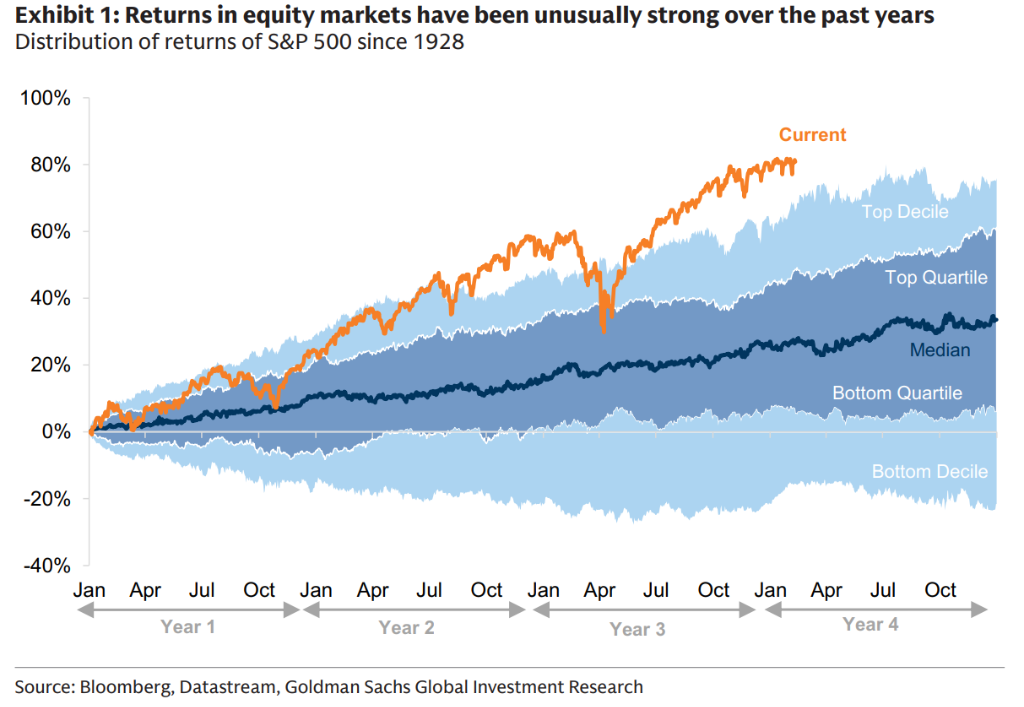
Core Insights - The narrative of "US tech dominance" is being challenged as Goldman Sachs reveals a paradigm shift in its global strategy report, indicating that the era of "financial assets" outperforming "real assets" is reversing, with emerging markets making a strong comeback by 2025 [1][4][7] Group 1: Market Trends - The US market is projected to lag behind other major markets for the first time in 2025, with indices like the European STOXX 600, Japan's Topix, and MSCI Asia-Pacific (excluding Japan) showing better performance than the S&P 500 [4][7] - Emerging markets are experiencing a significant revaluation, with the MSCI Emerging Markets Index rising from 100 to nearly 120 relative to developed markets since the beginning of 2025, driven by both macro and micro factors [7] Group 2: Corporate Earnings and Performance - Despite geopolitical uncertainties, corporate earnings in the US remain strong, with a growth rate exceeding 12% in the current quarter, surpassing market consensus by 5 percentage points [8] - The median year-on-year growth for S&P 500 companies is 9%, with 59% of companies exceeding earnings expectations, indicating a broadening source of growth beyond large tech stocks [9] Group 3: Technology Sector Dynamics - AI capital expenditure is projected to reach $659 billion, a 60% increase from 2025, but concerns about return on investment are rising, leading to a divergence in performance among the "Magnificent Seven" tech companies [10] - The software sector is facing a crisis as AI innovations threaten traditional SaaS models, resulting in a significant drop in software valuations, with a recent 15% decline reflecting a fundamental reassessment of growth prospects [11] Group 4: Shift Towards Real Assets - There is a notable shift towards physical assets, with capital expenditures in utilities and capital-intensive industries surging, as the growth of tech giants increasingly relies on infrastructure investments [12] - The valuation premium of capital-light companies over capital-intensive firms is decreasing, indicating a renewed focus on tangible assets [12] Group 5: Value Stocks Revival - The reevaluation of growth rates in certain tech sectors, combined with persistent inflation and higher real interest rates, has led to renewed interest in value stocks, which are transitioning from being seen as "value traps" to "value creators" [13] - The performance of financial assets has reversed significantly since early 2025, with gold, emerging markets, and value stocks outperforming tech-heavy indices like the Nasdaq and S&P 500 [13] Group 6: Diversification Opportunities - The current market environment, characterized by strong corporate earnings and a shift in growth sources, presents new diversification opportunities for investors, necessitating a reassessment of long-standing allocation habits across regions, sectors, and styles [16]
从货币反面到产业叙事
Ge Long Hui· 2026-02-02 09:44
Group 1 - The current volatility in non-ferrous metals does not indicate the end of the physical asset market, as it remains in a rate-cutting cycle and industrial demand recovery is yet to be validated [28][18] - The narrative of "declining dollar credit" since 2020 is experiencing a phase reversal, leading to differentiation among metal varieties, with copper and aluminum performing better than gold, which is merely a counter to the dollar [28][20] - The rise in commodity prices has not yet shown evidence of suppressing traditional demand, and the incremental demand from emerging industries continues [28][21] Group 2 - The current market dynamics are driven by a combination of loosening dollar credit, expectations of liquidity easing, and new industrial demand narratives, prompting financial capital to flow into physical assets [5][1] - The recent adjustment in non-ferrous metals and stocks was influenced by the confirmation of the Federal Reserve chair nominee, which reversed the narrative of liquidity easing [10][5] - Historical data shows that after reaching new highs, copper and gold have a greater than 50% chance of recovering in the following trading days, indicating potential resilience in these metals [18][19] Group 3 - The manufacturing sector in China is expected to gain market share due to scale effects, technological advancements, and energy cost advantages, particularly in the chemical industry [23][27] - The valuation of Chinese chemical companies remains lower compared to their Korean and Japanese counterparts, despite their market share expanding [23][27] - The focus on demand and competitive landscape changes will be crucial for pricing in the next phase, as the narrative shifts from liquidity and dollar credit to industrial low inventory and demand stabilization [4][28]
二月策略及十大金股:实物资产与中国资产
SINOLINK SECURITIES· 2026-01-29 14:16
Group 1: Strategy Overview - The report emphasizes the resilience of the A-share market amidst multiple overseas risks and signals of regulatory easing in China, suggesting that the relationship between market performance and regulatory changes warrants further consideration [5][12] - It highlights the significant outperformance of the A-share market compared to other major indices, particularly the CSI 300, which has faced substantial redemption pressure [5][12] - The report suggests that investors should not overly worry about the CSI 300's performance, as it has already aligned with regulatory easing requirements, reducing the necessity for further pressure [5][12] Group 2: Economic Insights - China's exports continued to show strong performance in December, driven by overseas investment during a global easing cycle, positively impacting sectors like electrical and mechanical equipment [6][13] - Domestic consumption is recovering, with a rebound in per capita consumer spending in the fourth quarter, aligning with the report's annual strategy predictions [6][13] - The report notes that recent government policies aimed at boosting domestic demand and stabilizing real estate are expected to support synchronized recovery in both domestic and external demand [6][13] Group 3: Asset Allocation and Investment Recommendations - The report identifies a dual focus for 2026 on physical assets and Chinese assets, with thematic investments being essential [7][16] - Recommended sectors include physical assets such as copper, aluminum, tin, gold, lithium, and oil, alongside Chinese equipment export chains like electrical grid equipment and renewable energy [7][16] - The report also highlights sectors benefiting from capital market expansion and improving long-term asset returns, such as non-bank financials and consumer sectors like aviation and duty-free retail [7][16] Group 4: Company-Specific Insights - **Yunnan Aluminum Co. (000807.SZ)**: The report recommends a long-term investment due to favorable conditions for aluminum exports and a strong balance sheet, with potential for increased dividends [18] - **Hua Aluminum (600301.SH)**: The company is seen as a strong growth candidate due to rising tin and antimony prices and its position as a key beneficiary of metal consolidation in Guangxi [19] - **Yingliu Co. (603308.SH)**: The report anticipates a surge in global gas turbine demand, positioning the company to increase its market share in turbine blades [20] - **Shangfeng Cement (000672.SZ)**: The company is recognized for its strong cash flow from cement operations and potential for significant dividends [21] - **Pop Mart (9992.HK)**: The company is expected to maintain rapid growth in the entertainment market through IP incubation and diverse monetization strategies [22] - **China Duty Free Group (601888.SH)**: The company is projected to strengthen its market position in the duty-free sector, benefiting from increased inbound tourism and overseas expansion [24] - **China Southern Airlines (1055.HK)**: The airline is expected to benefit from improved industry supply-demand dynamics and a large fleet size [25] - **Li Auto (2015.HK)**: The company is focusing on advancements in AI and smart driving technology, with expectations for increased vehicle sales [26] - **Lante Optics (688127.SH)**: The company is positioned to benefit from strong demand in automotive and smart imaging sectors [27] - **InnoCare Pharma (9606.HK)**: The company is advancing in the ADC field with a robust pipeline and partnerships, with several products nearing clinical registration [29]




每日看盘|压盘犹存,动量资金主动转向
Xin Lang Cai Jing· 2026-01-27 09:35
Core Viewpoint - The A-share market experienced fluctuations with a notable rebound in the semiconductor and AI hardware sectors, but faced selling pressure towards the end of the trading session, indicating a challenging short-term outlook for the market [1][2]. Group 1: Market Performance - The Shanghai Composite Index opened lower and approached the 4100-point mark but rebounded due to the activity in large-cap stocks like banks and semiconductors [1][2]. - Momentum funds increased selling pressure on resource stocks due to significant fluctuations in international gold and silver prices, leading to a decline in major indices [2]. - The KOSPI index in South Korea showed strong performance, reaching a historical high, which positively influenced the semiconductor sector in A-shares [2]. Group 2: Sector Analysis - The semiconductor sector saw a rapid rise as momentum funds shifted focus towards hard technology, driven by strong performance in the Asia-Pacific markets [2][4]. - AI hardware stocks, particularly those represented in the Sci-Tech 50 Index and ChiNext Index, also attracted capital inflows, enhancing market sentiment [2]. Group 3: Support and Resistance Levels - The 4100-point level is emerging as a strong support for the Shanghai Composite Index, with banks showing resilience when the index approached this level [3]. - Despite upward movements, there is a risk of selling pressure from large-cap ETFs, indicating that the market may face resistance if it rises too quickly [3]. Group 4: Investment Strategy - Momentum funds are gradually shifting towards hard technology and physical assets, recognizing the strategic value of commodities amid complex geopolitical dynamics [4]. - The focus should be on structural investment opportunities arising from the return of momentum funds to hard technology and other industrial turning points, rather than short-term index movements [4].