
普惠金融

Search documents
央行:“十四五”期间,北京市科技型企业贷款余额年均增速15%
Zhong Guo Jing Ying Bao· 2025-10-17 14:04
Group 1: Central Bank Initiatives - The People's Bank of China (PBOC) will host a forum titled "International Financial Governance and Cooperation under Changing Circumstances" during the 2025 Financial Street Forum, focusing on global financial governance from a central bank perspective [1][6] - The PBOC has introduced a series of policies to support Beijing in becoming a highland for technology finance, with an average annual growth rate of approximately 15% in loans to technology enterprises during the 14th Five-Year Plan period [1][2] Group 2: Financial Services and Support - The PBOC is enhancing financial services for the real economy, with a focus on green finance, inclusive finance, pension finance, and digital finance, contributing to high-quality economic development in Beijing [3] - As of the end of Q2 2025, the balance of green loans in Beijing reached nearly 2.4 trillion yuan, reflecting the city's commitment to becoming a benchmark for international green economy [3] Group 3: Digital Finance and Innovation - Beijing has promoted the application of digital RMB, with nearly 20 million personal wallets opened and a total transaction amount close to 300 billion yuan as of the end of August 2025 [4] - The PBOC supports the establishment of payment service centers for foreign guests at major airports in Beijing, enhancing the city's position as an international consumption center and global tourism destination [5] Group 4: Financial Standards and Forums - During the Financial Street Forum, the PBOC plans to release a series of financial standards and will host multiple events, including a financial technology forum aimed at promoting digital transformation in the financial sector [6]
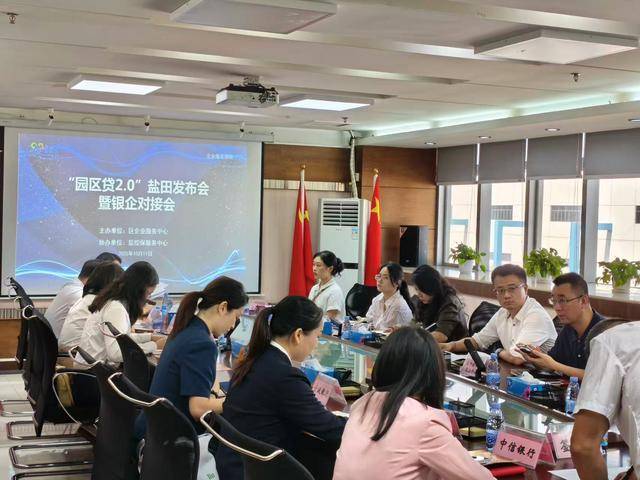
盐田区举办“园区贷2.0”发布会,助企打通融资“最后一公里”
Sou Hu Cai Jing· 2025-10-17 12:20
Core Insights - The "Park Loan 2.0" initiative was successfully launched in Yantian, aimed at enhancing inclusive financial services and optimizing the business environment [1][3] - The event attracted over 30 financial representatives from local enterprises and banks, facilitating in-depth discussions on policy interpretation and financial services [1][3] Group 1: Policy Implementation - Yantian District has actively promoted the "Park Loan" program, with five parks, including the Yantian Comprehensive Bonded Zone, selected for the city's second batch of pilot projects [3] - Three key measures have been established to create an inclusive financial service system: a collaborative platform, enhanced service efficiency, and dedicated service personnel [3] Group 2: Financial Solutions - A "government-platform, park-empowerment, bank-benefit, guarantee-enhancement" model has been introduced, offering unsecured, low-interest, and fast-approval credit products for small and micro enterprises [3] - The "Yantian Enterprise" financial service area has been created to provide a dedicated channel for "Park Loan," allowing businesses to easily access and match financial solutions [3] Group 3: Event Outcomes - During the bank-enterprise matching session, banks provided one-on-one consulting services, tailoring financial solutions to meet specific enterprise needs [4] - Participants expressed satisfaction with the event, noting that it clarified policy details and established connections with multiple banks, addressing financing challenges effectively [4] - "Park Loan 2.0" is positioned as a new engine for the high-quality development of small and micro enterprises in Yantian District, with plans for continued policy and service enhancements [4]

联储证券:文化共融专业立身 奋力推动“五篇大文章”新时代金融使命
Zhong Zheng Wang· 2025-10-17 10:25
Core Viewpoint - The company emphasizes its commitment to responsible development and aims to enhance its services in various financial sectors, including technology, green finance, inclusive finance, pension finance, and digital finance, to support the construction of a strong financial nation [1] Group 1: Technology Finance - The company recognizes the importance of "patient capital" in supporting long-term investments in hard technology projects, with investment cycles extending to 7-10 years [2] - The company has established a partnership with Star River Dynamics, a commercial rocket developer, providing multi-dimensional support over a 6-year investment period, leading to significant advancements in the domestic commercial aerospace sector [2] - The company is preparing for the issuance of science and technology bonds to enhance financing capabilities for technology enterprises [2] Group 2: Inclusive Finance - The company aims to improve the coverage, accessibility, and satisfaction of inclusive finance services, focusing on small and micro enterprises [3] - In 2024, the company will initiate a wealth management transformation, emphasizing long-term asset protection for clients [3] - The company has developed a multi-layered investor education system, conducting numerous educational activities to enhance financial literacy [3] Group 3: Green Finance - The company is committed to sustainable development and actively engages in green finance, enhancing its role as a financial intermediary in bond financing [5] - The company is increasing its investment in green projects and aims to guide capital towards sustainable development [6] Group 4: Pension Finance - The company is developing a comprehensive pension finance service system to address the challenges of an aging population [7] - It offers tailored pension products and services, focusing on low-risk and stable investment options for elderly clients [7] - The company has organized specialized seminars for elderly clients, promoting wealth management and financial literacy [8] Group 5: Digital Transformation - The company is integrating digital transformation into its strategy to enhance operational efficiency and customer experience [9] - It has established a data service system to support management decisions and optimize operations [9] - The company is leveraging AI technology to streamline business processes, significantly reducing approval times and improving efficiency [10]
“小预算大未来”:中邮基金解析定投如何助力工薪阶层财富积累
Xin Lang Ji Jin· 2025-10-17 09:45
Core Viewpoint - The article emphasizes the importance of regular investment (定投) as a stable financial tool for ordinary workers, highlighting its potential to accumulate wealth over time through disciplined investment practices [1][2][3]. Group 1: Investment Education and Public Awareness - The Beijing Securities Regulatory Bureau and the Beijing Securities Association have initiated a series of activities aimed at promoting high-quality development in public funds, with a focus on educating the public about fund investment [1]. - 中邮基金 is actively involved in investor education, aiming to enhance financial literacy and promote the concept of "new era, new funds, new value" [1][5]. - The initiative seeks to make fund investment accessible to more working-class families, thereby integrating it into their financial planning [1]. Group 2: Benefits of Regular Investment - Regular investment allows individuals to invest small amounts consistently, leveraging the principle of compounding to create significant wealth over time [2][3]. - For instance, a monthly investment of 2000 yuan at an annual return of 5% could accumulate to approximately 800,000 yuan over 20 years, demonstrating the power of disciplined investing [2]. - The strategy of regular investment helps to average out costs and mitigate risks associated with market volatility, making it suitable for ordinary investors [3][5]. Group 3: Psychological and Behavioral Aspects - Many investors tend to stop regular investments during market downturns due to fear, which can lead to missed opportunities for accumulating shares at lower prices [4][5]. - Understanding the principles of regular investment is crucial for maintaining investment discipline and achieving long-term financial goals [5][6]. Group 4: Accessibility and Inclusivity - The development of regular investment reflects the public fund industry's commitment to inclusive finance, allowing ordinary families to participate in capital markets with lower investment thresholds [5][6]. - Many fund products now have a minimum investment requirement as low as 100 yuan, significantly lowering the barrier for young individuals to start their financial planning [5]. Group 5: Future Outlook and Cultural Development - 中邮基金 plans to continue its efforts in investor education, focusing on promoting long-term investment concepts and healthy investment culture through collaborations with communities, enterprises, and schools [6][7]. - The goal is to help more individuals understand the value of long-term investment and achieve stable wealth growth in an uncertain economic environment [6][7].
达尔文宝贝计划12号的‘三重守护’,为孩子与家庭全方位遮风挡雨
Sou Hu Wang· 2025-10-17 09:32
在国家大力实施健康中国战略的指引下,2024年11月,国家医保局特别强调要抓实五大关键环节,稳步 推进医保制度改革,并将"呵护未成年人"置于首要位置,凸显了对少儿健康的高度关注。信美相互人寿 积极响应国家政策,深耕金融"五篇大文章",依托保险的经济减震器与社会稳定器功能,致力于提升全 生命周期的健康保障水平。 坚实风险保障,守护孩子长远未来。"达尔文宝贝计划12号"提供终身保障方案,确保孩子在任何年龄阶 段都能获得扎实保护,帮助家庭应对不同阶段的健康风险挑战。 一直以来,信美相互人寿密切关注广大人民群众的所想、所盼、所急,不断进行产品和服务的创新和升 级。此次,公司敏锐捕捉万千家庭的实际需求,聚焦出生满28天至17周岁的少儿群体,推出"达尔文宝 贝计划12号"重疾险,以"先天性疾病可保、家庭收入损失补偿"为核心亮点,全面覆盖少儿高发重疾, 提供扎实保障方案,并融入优质健康管理服务,切实满足少儿群体及其家庭的多元化需求。 突破性保障设计,覆盖先天性疾病。"达尔文宝贝计划12号"开创性地为部分先天性疾病提供保障,规定 3岁后确诊由先天性疾病导致的重疾,可正常获得赔付。这一突破性设计解决了长期困扰行业的保障痛 点, ...
建行湖南省分行做好“五篇文章” 持续提升金融服务质效
Chang Sha Wan Bao· 2025-10-17 08:58
Core Insights - China Construction Bank Hunan Branch is actively supporting the "Three Highs and Four New" development blueprint in Hunan, focusing on financial services across various sectors [1][2][3] Group 1: Technology Finance - Hunan Sanyou Environmental Technology Co., Ltd. developed the HPB technology for wastewater treatment, receiving continuous support from the bank, including a 5 million yuan "Sci-Tech Loan" in 2019 and an additional 50 million yuan in 2024 [1] - The bank has established a knowledge value credit loan platform in collaboration with the Hunan Provincial Department of Science and Technology, offering various products like "Sci-Tech Loan" and "Xiangxiang Wind Subsidy Loan" to support startups and growth-stage companies [1] Group 2: Green Finance - The bank provided 92.4 million yuan in green loans to promote the rooftop distributed photovoltaic project by Changsha Xianghe New Energy Co., Ltd., which is expected to reduce carbon dioxide emissions by approximately 58,000 tons annually [1] Group 3: Inclusive Finance - The bank supported the New Tian Dongsheng Farm in Yongzhou with a 5 million yuan loan to address rising operational costs and cash flow issues while launching 34 unique financial products to enhance accessibility and convenience in inclusive finance [2] Group 4: Pension Finance - The bank partnered with the Hunan Provincial Social Insurance Service Center to facilitate social security services at its branches and is developing a comprehensive pension service platform in collaboration with the Hunan Provincial Civil Affairs Department [2] - The bank is prioritizing the pension industry with differentiated support policies and has completed the renovation of branches to cater to elderly clients [2] Group 5: Digital Finance - Sany Group utilized the bank's "E Credit" enterprise financial service platform to create the "Sany Gold Ticket" system, achieving over 23 billion yuan in supply chain financing [2] - The "Zhuzhou City Housing Ticket System," developed in collaboration with the Zhuzhou Housing and Urban-Rural Development Bureau, was launched, marking the introduction of the first digital housing ticket for urban village renovation in the province [3]

工行河南省分行:做实做细金融“五篇大文章”
Huan Qiu Wang· 2025-10-17 08:51
Core Viewpoint - The Industrial and Commercial Bank of China (ICBC) Henan Branch is committed to optimizing its financial supply system and providing precise services to support the high-quality economic development of Henan Province, focusing on five major areas of development. Group 1: Technology Finance - ICBC Henan Branch prioritizes technology finance as a key initiative for modernizing Henan, aiming to create a comprehensive financial service system for enterprises throughout their lifecycle. As of September 2025, the loan balance for technology enterprises reached 95.84 billion yuan, a net increase of 30.27 billion yuan, representing a significant growth of 46.2% [2] - The branch has implemented a centralized management mechanism for technology finance and optimized the layout of technology-focused branches, enhancing financial service capabilities for technology enterprises [2] Group 2: Green Finance - The bank actively promotes green finance in line with national strategies for ecological protection and high-quality development, achieving a green loan scale of 185.8 billion yuan as of September 2025, with a net increase of 38.3 billion yuan [3] - Nearly half of the new loans issued were green loans, demonstrating the bank's commitment to supporting low-carbon transformation in Henan [3] Group 3: Inclusive Finance - ICBC Henan Branch has achieved a balance of inclusive loans of 139.78 billion yuan as of September 2025, with a net increase of 39.955 billion yuan, marking a year-on-year growth of 70.1% [8] - The bank has introduced various tailored financing products to meet regional industry needs and has expanded its inclusive finance services to nearly 680 outlets [8] Group 4: Pension Finance - The bank has established a pension finance service system, with 1.56 million personal pension accounts opened and a loan balance for the pension industry of 7.058 million yuan as of September 2025 [9] - ICBC Henan Branch has enhanced service capabilities at 255 social security service points and launched various pension-related financing products [9][10] Group 5: Digital Finance - The bank is advancing its "Digital ICBC" initiative, with a loan balance for core digital economy industries of 15.04 billion yuan as of August 2025, and an increase of 5.56 billion yuan [11] - ICBC Henan Branch has developed 100 innovative projects, with 64 already in production, and is actively promoting AI applications to enhance service efficiency [11]
金融企业涉农和中小企业、农户、个体工商户相关税收政策
蓝色柳林财税室· 2025-10-17 07:47
Core Viewpoint - The article discusses the tax benefits for financial institutions providing agricultural and small and medium-sized enterprise (SME) loans, emphasizing the importance of promoting inclusive finance through tax deductions for loan losses [1][4]. Summary by Sections Agricultural Loans - Agricultural loans are defined as loans to farmers and rural enterprises, with specific criteria for what constitutes a farmer [2][8]. - Financial institutions can deduct loan losses for agricultural loans that are overdue for more than one year and cannot be recovered, with different rules based on the loan amount [1][3]. SME Loans - SME loans refer to loans to enterprises with annual sales and total assets not exceeding 20 million yuan [2][8]. - Similar to agricultural loans, financial institutions can deduct losses from SME loans that meet certain criteria [3][9]. Tax Deduction Rules - Financial institutions can deduct loan loss provisions from taxable income based on the risk classification of loans, with specific percentages for different categories: 2% for "watch" loans, 25% for "substandard" loans, 50% for "doubtful" loans, and 100% for "loss" loans [5][7]. Policy Framework - The article references several policy documents that provide the legal basis for these tax deductions, including notices from the Ministry of Finance and the State Taxation Administration [6][12][18]. Implementation Timeline - The tax benefits for small loans to farmers and SMEs are set to be effective until December 31, 2027, highlighting the government's commitment to supporting these sectors [10][16]. Eligibility Criteria - To qualify for these tax benefits, financial institutions must meet specific conditions, including achieving loan growth targets set by regulatory authorities [20][21].

金融知识进社区,护好居民幸福家——工银瑞信投教基地走进方庄街道开展防非讲座
Xin Lang Ji Jin· 2025-10-17 02:45
Core Points - The initiative "New Era, New Fund, New Value" aims to enhance financial literacy and awareness of illegal financial activities among community residents during the 2025 World Investor Week [1][2] - The program includes educational lectures that address common financial risks and illegal activities, such as stock market scams and high-yield investment schemes [2][3] - The initiative emphasizes the importance of rational investment and long-term value investing, encouraging residents to be cautious of high-return promises [2][3] Group 1 - The educational activities are designed to help residents recognize and prevent financial risks, with a focus on practical knowledge [1][2] - The program has received support from local authorities and positive feedback from residents, who found the information useful for their daily lives [2][3] - The organization aims to continue expanding its investor education efforts to build a stronger financial safety net for the community [3]
威海银行“绿色+普惠”模式“贷”动乡村振兴
Qi Lu Wan Bao· 2025-10-17 01:55
Core Viewpoint - Weihai Bank is integrating green finance with inclusive finance, focusing on the "three rural issues" by launching the "Green Agricultural Loan" series to promote sustainable low-carbon development [1] Group 1: Product Offerings - The "Green Agricultural Loan" series includes products like "Green Farming Loan," "Green Greenhouse Loan," and "Green Apple Loan," aimed at supporting various agricultural entities such as family farms and cooperatives [3] - The loans are characterized by being purely credit-based and fully online, allowing for efficient processing and low-interest rates through government subsidies and guarantees [3] Group 2: Impact on Local Farmers - Local farmer Xu benefited from the "Green Farming Loan," receiving 200,000 yuan to purchase advanced agricultural machinery and quality seeds, which helped him during the critical spring farming period [2] - The bank provided over 1.5 million yuan in loans to apple farmers, enhancing their production capabilities through modern agricultural techniques [4] Group 3: Financial Innovation and Support - Weihai Bank is exploring various service models, such as "Agriculture + Marine Finance" and "Agriculture + Green Finance," to accelerate agricultural transformation and modernization [5] - The bank is also introducing innovative products like carbon credit pledge loans to activate dormant green assets, contributing to the broader green economy [5]