
上市公司治理

Search documents
河北上市公司审计委员会专题培训成功举办
Zheng Quan Shi Bao Wang· 2025-08-01 03:21
Core Viewpoint - The training on the "Audit Committee of Listed Companies in Hebei" is crucial for enhancing the governance structure of listed companies, especially in light of the new Company Law which abolishes the supervisory board, transferring its responsibilities to the audit committee [1][2]. Group 1: Training Overview - The training was held on July 25 in Shijiazhuang, organized by the Hebei Listed Companies Association, with participation from over 330 members of audit committees and board secretaries from 82 listed companies [1]. - The training utilized a hybrid format of online and offline participation, featuring experts from the China Listed Companies Association and professors from the National Accounting Institute of Beijing [1]. Group 2: Key Insights from Experts - A senior expert from the China Listed Companies Association provided a systematic interpretation of the "Guidelines for the Work of Audit Committees," focusing on the background, structure, and key points of the audit committee's responsibilities [2]. - The professor from the National Accounting Institute shared insights on the positioning of audit committees and offered suggestions for independent directors in accounting, emphasizing the importance of practical experience [2]. Group 3: Importance of Audit Committees - The audit committee serves as a critical link between the board of directors, internal audit, and external audit, playing a vital role in ensuring the quality of financial information and protecting investors' rights [1]. - The training emphasized five key responsibilities for audit committees: enhancing responsibility awareness, focusing on core duties, ensuring audit independence, strengthening professional learning, and reinforcing supervision and accountability [1]. Group 4: Impact on Corporate Governance - The training is timely, providing essential guidance for the smooth transition of internal supervisory mechanisms in listed companies following significant changes in governance structure [2]. - It aims to clarify the responsibilities and boundaries of audit committee members, enhancing their understanding of supervisory duties and operational effectiveness, thereby fostering a more transparent and efficient corporate governance ecosystem in Hebei [2].
机械设备行业CFO观察:昊志机电肖泳林共出现3次违规情况 2024年薪酬却高达124万元 合规及薪酬透明度存疑
Xin Lang Zheng Quan· 2025-07-31 10:23
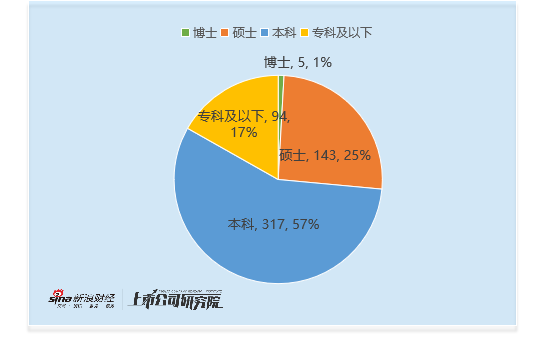
Core Insights - The report highlights the significant role of CFOs in listed companies, with the total compensation for CFOs in A-shares reaching 4.27 billion yuan in 2024, averaging 814,800 yuan per year [1] - The average age of CFOs in the machinery and equipment sector is approximately 47.37 years, with the oldest being 67 years and the youngest at 29 years [1] - The highest-paid CFO in 2024 is Liu Hua from Sany Heavy Industry, earning 4.51 million yuan, while the lowest is Wang Zhigang from Tiandi Technology at 94,100 yuan [1] - Among CFOs with lower education levels, six have salaries exceeding 1 million yuan, with Ren Huiling from Zhongji United earning 2.84 million yuan, ranking fourth in the industry [3][4] Industry Overview - The average salary for CFOs in the machinery and equipment sector is about 642,300 yuan, with significant disparities in compensation [1] - The educational background of CFOs shows that 57% hold a bachelor's degree, while 26% have a master's degree or higher, indicating a relatively low level of higher education compared to other industries [1] - The governance structure within companies is highlighted by the case of Xiao Yonglin from Haoshi Electromechanical, whose salary increased by 109% to 1.24 million yuan in 2024 despite previous compliance issues [5][6][8] - Xiao's case illustrates the potential conflicts of interest and governance challenges, as he was involved in multiple compliance violations while maintaining a close relationship with the company's controlling shareholder [8][9]


证监会再次修订《上市公司治理准则》,瞄准“关键少数”、健全激励约束
梧桐树下V· 2025-07-27 15:33
Core Viewpoint - The article discusses the recent public consultation by the China Securities Regulatory Commission (CSRC) on the revised draft of the "Corporate Governance Code for Listed Companies," aimed at enhancing the responsibilities of key stakeholders and improving corporate governance standards in response to evolving market conditions [1][4]. Group 1: Background of the Revision - The current governance code has played a significant role in promoting modern corporate governance and improving the operational standards of listed companies since its initial release in 2002 and subsequent revisions [4]. - The revision is driven by the need to strengthen the responsibilities of directors, senior management, and controlling shareholders to prevent abuse of power that could harm the interests of the company and its shareholders [4]. Group 2: Main Revision Contents - **Management of Directors and Senior Management**: The revision clarifies the qualifications for directors and senior management, detailing their duties and responsibilities, including the need for transparency in conflicts of interest and decision-making processes [5]. - **Incentive and Constraint Mechanisms**: Companies are required to establish a remuneration management system that aligns the compensation of directors and senior management with company performance, promoting value creation [5]. - **Regulation of Controlling Shareholders**: The revision imposes stricter regulations on controlling shareholders to prevent significant adverse impacts on the company, enhancing transparency in related party transactions [6]. Group 3: Implementation and Compliance - The revised code emphasizes the need for companies to align with existing laws and regulations, ensuring that governance practices are consistent with the broader legal framework [6]. - It also highlights the importance of independent directors and specialized committees within the board to enhance oversight and accountability [6].
证监会,最新发布!事关上市公司治理
券商中国· 2025-07-25 14:46
Core Viewpoint - The China Securities Regulatory Commission (CSRC) is revising the "Corporate Governance Guidelines" to enhance the governance level of listed companies and regulate the behavior of directors, senior management, controlling shareholders, and actual controllers [1][2]. Summary by Sections Revision Objectives - The current "Governance Guidelines" operate within the framework of the Company Law, aiming to establish a modern enterprise system and improve the governance structure of listed companies [2]. - The revision focuses on several key areas to enhance governance and operational standards [2]. Key Areas of Revision - **Regulation of Directors and Senior Management**: The revision aims to comprehensively regulate the appointment, performance, and departure of directors and senior management, ensuring they fulfill their duties faithfully and diligently [2]. - **Incentive and Restraint Mechanisms**: Companies are required to establish a compensation management system that aligns the remuneration of directors and senior management with the company's operational performance and individual achievements, promoting better alignment of interests [2]. - **Regulation of Controlling Shareholders and Actual Controllers**: The revision imposes strict limitations on potential adverse impacts from competing businesses and enhances the responsibilities and decision-making requirements for related party transactions [2]. - **Coordination with Other Regulations**: The guidelines will be aligned with other regulations such as the Securities Law and the Management Measures for Independent Directors of Listed Companies, improving the coherence of rules regarding shareholder rights and the responsibilities of board committees [2]. Public Feedback - The CSRC welcomes feedback from all sectors of society and will consider these opinions for further revisions before final implementation [3].
【金融街发布】中国证监会拟修订《上市公司治理准则》 进一步强化“关键少数”责任
Zhong Guo Jin Rong Xin Xi Wang· 2025-07-25 12:26
Core Viewpoint - The China Securities Regulatory Commission (CSRC) is proposing revisions to the Corporate Governance Code to enhance the governance level of listed companies and regulate the behavior of directors, senior management, controlling shareholders, and actual controllers [1][2]. Group 1: Revisions to the Corporate Governance Code - The revisions focus on four main areas: improving the management system for the appointment, performance, and departure of directors and senior management [2]. - The qualifications for directors and senior management will be clarified, and the responsibilities of the nomination committee will be defined to prevent unqualified individuals from holding positions [2]. - The obligations of directors and senior management regarding loyalty and diligence will be detailed, with enhanced disclosure requirements for conflicts of interest and decision-making processes [2]. - The management of departures of directors and senior management will be strengthened, including accountability measures for post-departure responsibilities [2]. Group 2: Incentive and Restraint Mechanisms - Listed companies will be required to establish a remuneration management system that aligns the compensation structure and levels of directors and senior management with company performance [2]. - The remuneration of directors and senior management must be linked to both company and individual performance to encourage value creation [2]. - Mechanisms for the recovery of remuneration and deferred payment systems will be improved to enhance accountability [2]. Group 3: Regulation of Controlling Shareholders and Actual Controllers - The revisions will impose strict limitations on competitive behaviors that could adversely affect listed companies, with increased transparency requirements for non-material competitive activities [2]. - The requirements for the board of directors regarding the identification and review of related party transactions will be further refined [2]. Group 4: Integration with Existing Regulations - The revisions will ensure alignment with the Securities Law regarding the public solicitation of shareholder rights [3]. - Responsibilities of the nomination committee and remuneration assessment committee will be updated according to the Independent Director Management Measures [3]. - Improvements will be made to voluntary information disclosure and the publication of sustainability reports in accordance with the Information Disclosure Management Measures [3].

新华解码丨上市公司治理制度再升级 瞄准“关键少数”健全激励约束
Xin Hua She· 2025-07-25 12:21
Core Viewpoint - The China Securities Regulatory Commission (CSRC) has revised the "Corporate Governance Guidelines for Listed Companies" to enhance governance standards and regulate the behavior of key stakeholders, including directors and senior management [1][4]. Group 1: Governance Structure Enhancements - The new guidelines focus on improving the management system for directors and senior executives, including their qualifications and responsibilities [2][3]. - There are stricter requirements for disclosing conflicts of interest and competitive behavior among directors and senior management [2][3]. - The guidelines emphasize the need for companies to establish a sound remuneration management system that aligns executive pay with company performance [2][6]. Group 2: Regulation of Major Shareholders and Actual Controllers - The revised guidelines impose stricter regulations on major shareholders and actual controllers to prevent actions that could harm the interests of listed companies [3][6]. - Enhanced scrutiny of related party transactions is mandated, requiring boards to better identify and review such transactions [3][6]. Group 3: Accountability and Performance Linkage - The guidelines require that executive compensation be tied to both company and individual performance, with provisions for clawback in cases of financial restatements or misconduct [6][8]. - There is a clear expectation for key stakeholders to act diligently in safeguarding the interests of the company and minority shareholders [4][5]. Group 4: Market Impact and Future Outlook - The revisions are seen as a step towards improving the overall governance framework, which is expected to enhance the quality of listed companies and boost investor confidence [7][8]. - The guidelines align with broader regulatory reforms aimed at strengthening corporate governance and protecting investor interests [7][8].
四大证券报精华摘要:7月14日
Zhong Guo Jin Rong Xin Xi Wang· 2025-07-13 23:59
Group 1 - Insurance capital is increasingly aligning with patient, strategic, and long-term capital, driven by policy encouragement and growing allocation needs [1] - The number of companies listed on the New Third Board increased by 41% year-on-year in the first half of the year, reaching 158, with a total of 6060 companies by June 30, 2025 [1] - A profound transformation in corporate governance is occurring in China's listed companies, shifting from "formal compliance" to "substantive checks and balances" [1] Group 2 - The A-share market saw the Shanghai Composite Index surpass 3500 points, with a trading volume exceeding 1.7 trillion yuan, driven by the financial sector [2] - Institutions suggest a shift in investment strategy from trading to holding, as the market's risk appetite increases [2] Group 3 - The Shanghai Stock Exchange has implemented new rules for the Sci-Tech Innovation Board, allowing 32 unprofitable companies to enter the growth tier [3] - Foreign long-term capital is increasingly targeting Chinese markets, with significant investments from entities like German pension funds and Barclays Bank [3] Group 4 - The public REITs market is becoming competitive, with a subscription confirmation rate of 0.7755% for a recent REIT offering, indicating high demand [4] - The public fund industry is undergoing significant reforms, with sales institutions transitioning from a commission-based model to a service-oriented approach [4] Group 5 - Major public funds are actively researching high-tech companies in sectors like smart manufacturing and AI, focusing on long-term technological advancements [5] Group 6 - The activity of mergers and acquisitions among state-owned listed companies has surged, with 849 cases reported this year, a 182% increase from the previous year [6] - A new notice from the Ministry of Finance encourages insurance funds to adopt a long-term investment approach, enhancing their tolerance for short-term volatility [6] Group 7 - Several provinces in China have announced the establishment of large-scale industrial funds, with a focus on supporting key technologies and avoiding redundant investments [7]
江淮汽车: 上海市通力律师事务所关于安徽江淮汽车集团股份有限公司2024年度向特定对象发行A股股票之补充法律意见书 (三)
Zheng Quan Zhi Xing· 2025-07-09 14:09
Core Viewpoint - The legal opinions and reports provided by Shanghai Tongli Law Firm regarding Anhui Jianghuai Automobile Group Co., Ltd.'s issuance of A-shares to specific targets in 2024 indicate that the company has addressed compliance issues related to its management structure and external investments, ensuring that its independence is maintained despite previous irregularities [1][2][11]. Group 1: Legal Opinions and Compliance - The law firm has issued multiple legal opinions and reports concerning the company's A-share issuance, including supplementary legal opinions addressing inquiries from the Shanghai Stock Exchange [1][2]. - The company has rectified issues related to its executives holding labor contracts with the controlling shareholder, Jiangqi Holdings, ensuring compliance with the latest corporate governance standards [4][11]. - The company has established a robust internal control system, which has been confirmed by external auditors, ensuring effective execution of its governance and compliance measures [9][11]. Group 2: Management Structure and Independence - The company's executives, including the general manager and deputy general manager, hold board positions at Jiangqi Holdings but do not occupy other administrative roles, which aligns with the revised corporate governance guidelines [4][11]. - The labor contracts previously held with Jiangqi Holdings have been transferred to the company, and salaries are now paid by the company, mitigating any potential conflicts of interest [4][11]. - The company has implemented a strict personnel management system, ensuring that its management operates independently from its controlling shareholder [6][8]. Group 3: Overseas Investment Compliance - Some overseas subsidiaries of the company have not obtained the necessary investment project filings, primarily due to misunderstandings of regulatory requirements, but these issues are being actively rectified [20][21]. - The company has confirmed that the overseas subsidiaries' operations do not pose significant risks to its overall business, as their financial contributions are minimal [16][20]. - The company has taken corrective actions for its overseas subsidiaries, ensuring compliance with investment regulations and minimizing the risk of project suspension by regulatory authorities [19][20].

ST新潮将被冠*ST:审计风暴下的油气龙头何去何从?
Xin Lang Zheng Quan· 2025-07-07 08:00
Core Viewpoint - ST Xinchao faces significant challenges due to an audit report that issued a "disclaimer of opinion," leading to a change in its stock designation to "*ST Xinchao" and triggering delisting risk warnings [1][2] Financial Summary - For the fiscal year 2024, ST Xinchao reported a revenue of 8.362 billion yuan, a year-on-year decrease of 5.50% - The net profit attributable to shareholders was 2.036 billion yuan, down 21.57% year-on-year - The company has experienced negative growth in net profit for two consecutive years, raising concerns about its financial health due to the audit's "non-standard" opinion [2] Corporate Governance Issues - A power struggle among shareholders has emerged, with Yitai B acquiring 50.1% of ST Xinchao's shares on May 30, becoming the controlling shareholder - On June 19, six shareholders holding over 10% of the shares requested an extraordinary general meeting to discuss the early re-election of the board of directors and supervisory board [3][4] Board and Supervisory Actions - On June 28, the board of directors unanimously rejected the shareholders' request for a meeting - Following this, the same six shareholders submitted a request to the supervisory board for a general meeting, which was also denied on July 4 [4] Industry Implications - The situation surrounding ST Xinchao serves as a warning for the capital market, emphasizing the need for listed companies to balance short-term performance with long-term governance - After resuming trading on July 8, *ST Xinchao will be subject to a daily price fluctuation limit of 5%, highlighting the critical nature of its survival and transformation in the oil and gas sector [5]
重磅新书苏州书展首发 《传奇董秘》解密上市公司传奇资本故事
Zheng Quan Shi Bao Wang· 2025-07-06 01:55
Core Insights - The event "Entering the Legendary Secretary of the Board and the Launch of the Book 'Legendary Secretary of the Board'" was successfully held in Suzhou, attended by prominent figures from the Chinese listed companies and the publishing industry [1] - The book 'Legendary Secretary of the Board' features real cases from 38 exemplary individuals, showcasing the innovative spirit and compliance standards of the secretary profession, emphasizing its potential as a lifelong career [2] - Legendary secretaries have played a crucial role in the evolution of corporate governance in China, contributing to significant reforms and innovations in the capital market [3] Group 1 - The event was co-hosted by Guotai Junan Securities, Board Magazine, and Value Online, with over 20 executives from listed companies in attendance [1] - The book aims to provide a foundational logic for the new generation involved in corporate governance, promoting a spirit of innovation within regulatory frameworks [2] - The contributions of legendary secretaries have been pivotal in navigating challenges in the capital market, including the promotion of governance systems and the resolution of early governance crises [2][3] Group 2 - Notable figures such as Hu Zhi Kui and Luo Shou Sheng are highlighted for their innovative practices that have significantly impacted the capital market [3] - The event included discussions on key career milestones for secretaries, new thinking in mergers and acquisitions, and future planning for young professionals [3] - The book serves as a historical narrative of the evolution of Chinese listed companies, illustrating the transition from exploration to leading reforms [3]


