农业农村现代化

Search documents
“十五五”首个中央一号文件发布,27项举措推进乡村全面振兴
2 1 Shi Ji Jing Ji Bao Dao· 2026-02-03 14:03
21世纪经济报道记者李莎 北京报道 2026年2月3日,《中共中央 国务院关于锚定农业农村现代化 扎实推 进乡村全面振兴的意见》发布,这是党的十八大以来第14个指导"三农"工作的中央一号文件,也是"十 五五"时期首个中央一号文件。 中央一号文件提出,粮食产量稳定在1.4万亿斤左右。坚持产量产能、生产生态、增产增收一起抓,加 力实施新一轮千亿斤粮食产能提升行动,促进良田良种良机良法集成增效,推进粮油作物大面积提单 产。因地制宜优化农业生产结构和区域布局,推动粮食品种培优和品质提升,实施粮食流通提质增效项 目,促进适销对路、优质优价。巩固提升大豆产能,做好产销衔接。拓展油菜、花生、油茶等生产空 间,扩大油料多元化供给。推动棉花、糖料、天然橡胶等产业平稳发展。深入推进粮食节约和反食品浪 费行动。 中国社会科学院农村发展研究所农产品贸易与政策研究室主任胡冰川向21世纪经济报道记者表示,今年 文件对粮食生产的部署,最大的变化不在于目标加码,而在于工作方法升级:从单纯"保面积、保产 量",转向产能、生态和收益协同提升。通过推进粮油作物大面积提单产、新一轮千亿斤产能提升行 动,把重点放在良田良种良机良法的系统集成。同时,文 ...
一号文件里的金融!
Jin Rong Shi Bao· 2026-02-03 13:45
Core Viewpoint - The central government has released a guiding document aimed at modernizing agriculture and rural areas, emphasizing the importance of financial support in driving rural development and proposing innovative financing mechanisms for rural revitalization [1][11]. Financial Support and Policy Stability - The document emphasizes the need for stable financial support and resource allocation as part of the rural revitalization strategy, integrating regular assistance into the overall plan [2]. - It highlights the importance of maintaining consistent fiscal input and financial backing to ensure the effectiveness of rural revitalization efforts [2]. Agricultural Insurance and Risk Management - The document calls for enhanced support for agricultural insurance, particularly for staple crops like rice, wheat, corn, and soybeans, to improve the efficiency of claims processing [4][9]. - It stresses the necessity of a comprehensive agricultural insurance system to mitigate risks from natural disasters and market fluctuations, thereby protecting farmers' incomes [9]. Financing Mechanisms and Investment - The document proposes the establishment of a multi-layered financing system to address the challenges of funding agricultural projects, including the use of special bonds and long-term treasury bonds for major agricultural initiatives [8]. - It encourages financial institutions to increase lending to the agricultural sector, particularly through policies that support small farmers and agricultural innovation [6][8]. Utilization of Rural Assets - The document addresses the issue of underutilized rural assets, proposing policies to facilitate the circulation and collateralization of rural resources, thereby transforming dormant assets into usable capital [8]. - Examples of innovative financing solutions, such as livestock collateral loans and land management models, are highlighted as effective ways to activate rural resources [8]. Role of Financial Services in Rural Development - The document emphasizes the need for tailored financial services that consider local conditions to foster a sustainable cycle of rural industry development [10]. - It advocates for financial institutions to focus on the entire agricultural value chain and to provide credit support that aligns with the specific needs of different regions [10]. Overall Importance of Agricultural Modernization - The continuous focus on agricultural and rural issues in the guiding document underscores the strategic significance of agricultural modernization within the broader context of national development [11]. - The document anticipates that the synergy between financial support and resource activation will accelerate the pace of agricultural modernization, contributing to the establishment of a strong agricultural nation [11].
2026年中央一号文件:强化农民工工资支付保障
Xin Lang Cai Jing· 2026-02-03 13:38
中新社北京2月3日电 (记者 陈溯)2026年中央一号文件《中共中央 国务院关于锚定农业农村现代化 扎实 推进乡村全面振兴的意见》3日对外发布。文件提出,强化农民工工资支付保障,加大欠薪整治力度。 多年来,中央一号文件持续聚焦农民增收。今年中央一号文件从种粮农民收益、农民工稳岗就业、培育 富民产业等方面继续对此作出部署。 文件还提出,培育壮大县域富民产业。发展各具特色的县域经济,培育中小企业特色产业集群,推动兴 业、强县、富民一体发展。拓展农民参与产业发展渠道和方式,完善公平分享产业发展收益机制,引导 新型农业经营主体带动农民增收致富。强化产业项目统筹规划和科学论证,避免一哄而上、大起大落。 (完) 文件提出,保护和调动农民务农种粮积极性。强化价格、补贴、保险等政策支持和协同,健全种粮农民 收益保障机制。落实好粮食产销区省际横向利益补偿政策,支持粮食主产区补充财力、发展粮食产业。 文件表示,促进农民工稳岗就业。落实好农民工稳岗就业支持政策,支持重点行业企业减负拓岗。实施 大规模职业技能培训,促进培训项目与岗位需求精准匹配。统筹做好外出务工服务保障和返乡就业创业 扶持,加强大龄农民工关爱帮扶。强化农民工工资支付 ...
第一观察 | 着眼“十五五”,习近平总书记引领“三农”工作新开局
Xin Hua She· 2026-02-03 13:38
2026年中央一号文件2月3日发布。这是新时代以来第14个聚焦"三农"的中央一号文件,也是"十五五"开 局后的首个中央一号文件。 务农重本,国之大纲。 党的十八大以来,习近平总书记对"三农"工作作出一系列重要指示,在重要节点给予关键指引。中央一 号文件,是对习近平总书记关于"三农"工作重要指示精神的鲜明体现和贯彻落实。 今年的中央一号文件提出,"十五五"时期是基本实现社会主义现代化夯实基础、全面发力的关键时期, 要加快补上农业农村领域突出短板,加快建设农业强国。 全面建设社会主义现代化国家,最艰巨最繁重的任务仍然在农村。"三农"既是"夯实基础"亟须补上的短 板弱项,也是"全面发力"需要攻坚的重点难点。 着眼"十五五",习近平总书记引领"三农"工作新开局 新华社记者胡璐 2025年是脱贫攻坚任务完成后5年过渡期的最后一年,2026年是开展常态化帮扶的第一年。习近平总书 记提出,把常态化帮扶纳入乡村振兴战略统筹实施,守牢不发生规模性返贫致贫底线。 今年中央一号文件首次对实施常态化精准帮扶进行了系统性部署,从健全常态化帮扶政策体系、提高监 测帮扶精准性时效性、提升产业和就业帮扶实效、分层分类帮扶欠发达地区等多方面发 ...
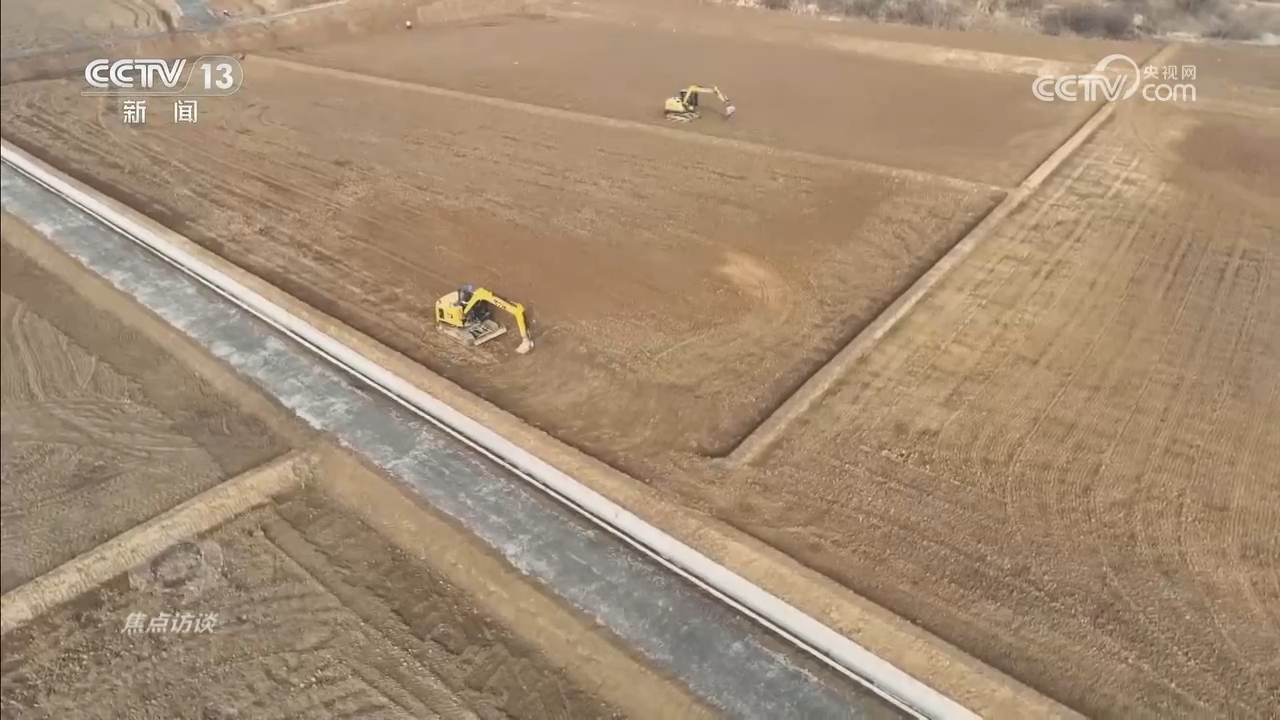
焦点访谈|“十五五”开局之年 “一号文件”为“三农”工作划重点
Yang Shi Wang· 2026-02-03 13:33
Core Viewpoint - The central document released by the Chinese government outlines a comprehensive plan for agricultural and rural modernization, emphasizing the importance of "three rural issues" (agriculture, rural areas, and farmers) as foundational to China's modernization efforts [1][4]. Group 1: Agricultural Modernization Goals - The document aims to enhance food security by implementing a new round of actions to increase grain production capacity, focusing on both quality and variety improvements [6][10]. - It emphasizes the need for high-quality agricultural development to ensure food security for a population of 1.4 billion, highlighting the importance of ecological considerations alongside production [6][10]. Group 2: Technological Advancements - The integration of artificial intelligence and digital technologies in agriculture is crucial for improving efficiency and productivity, although challenges remain in the practical application of these technologies [10][12]. - The document calls for the cultivation of leading agricultural technology enterprises and the acceleration of key technology breakthroughs to enhance the conversion and application of research results [10][12]. Group 3: Rural Revitalization and Poverty Alleviation - The document outlines a systematic approach to maintaining and expanding the achievements of poverty alleviation, transitioning from a focus on crisis intervention to a more normalized support system [12][17]. - It emphasizes the importance of tailored support for different regions, enhancing the internal development dynamics of impoverished populations and areas through industry-focused assistance [12][17]. Group 4: Infrastructure and Community Development - The document highlights the need for infrastructure improvements and the establishment of modern living conditions in rural areas, promoting a comprehensive upgrade of rural economies, politics, culture, society, and ecological civilization [14][17]. - It advocates for a categorized and orderly approach to rural revitalization, focusing on the integration of neighboring villages for coordinated planning and resource allocation [14][17]. Group 5: Urban-Rural Integration - The document stresses the importance of urban-rural integration as a fundamental path for achieving agricultural modernization and rural revitalization, encouraging not only the return of rural residents but also the influx of urban populations into rural areas for entrepreneurial activities [17].

2026年中央一号文件里的能源要点!
中国能源报· 2026-02-03 13:12
Core Viewpoint - The article discusses the release of the Central No. 1 Document for 2026, which focuses on agricultural modernization and rural revitalization, emphasizing the importance of enhancing agricultural production capacity, implementing precise assistance, and promoting farmers' income stability. Group 1: Enhancing Agricultural Production Capacity and Quality - Stabilize grain and oil production at around 1.4 trillion jin, implementing a new round of grain production capacity enhancement actions [8] - Promote the "vegetable basket" industry by integrating agriculture, forestry, animal husbandry, and fishery to ensure a diversified food supply [8] - Strengthen farmland protection and quality improvement, ensuring strict management of farmland use and preventing illegal occupation [9] - Enhance agricultural technology innovation efficiency, focusing on key agricultural technologies and promoting the application of scientific research results [10] Group 2: Implementing Regular Precision Assistance - Establish a regular assistance policy system to maintain stability in financial support and resource allocation [12] - Improve the precision and timeliness of monitoring assistance to prevent poverty [12] - Optimize industrial assistance methods to support competitive industries and enhance employment assistance [13] Group 3: Actively Promoting Stable Income for Farmers - Strengthen policies supporting farmers' income through price, subsidies, and insurance mechanisms [15] - Develop regional wealth-generating industries and promote the integration of agriculture with other sectors [16] - Support stable employment for migrant workers and enhance vocational training programs [17] Group 4: Promoting Suitable Living and Working Conditions in Villages - Optimize rural land use and improve infrastructure to enhance living conditions [19] - Support small-scale water diversion projects and improve rural water supply systems [20] - Enhance rural electricity supply and expand charging facility coverage [20] Group 5: Strengthening System and Mechanism Innovation - Accelerate the establishment of a modern agricultural management system and improve the quality of agricultural cooperatives [26] - Innovate financing mechanisms for rural revitalization, ensuring effective use of public funds [27] - Promote the two-way flow of urban and rural resources to support the urbanization of agricultural transfer populations [28] Group 6: Strengthening Party Leadership in Agricultural Work - Reinforce the responsibility system for rural revitalization, ensuring effective leadership at all levels [29] - Improve the construction of grassroots party organizations to enhance governance in rural areas [29] - Focus on practical and innovative approaches to rural work, reducing bureaucratic burdens [30]

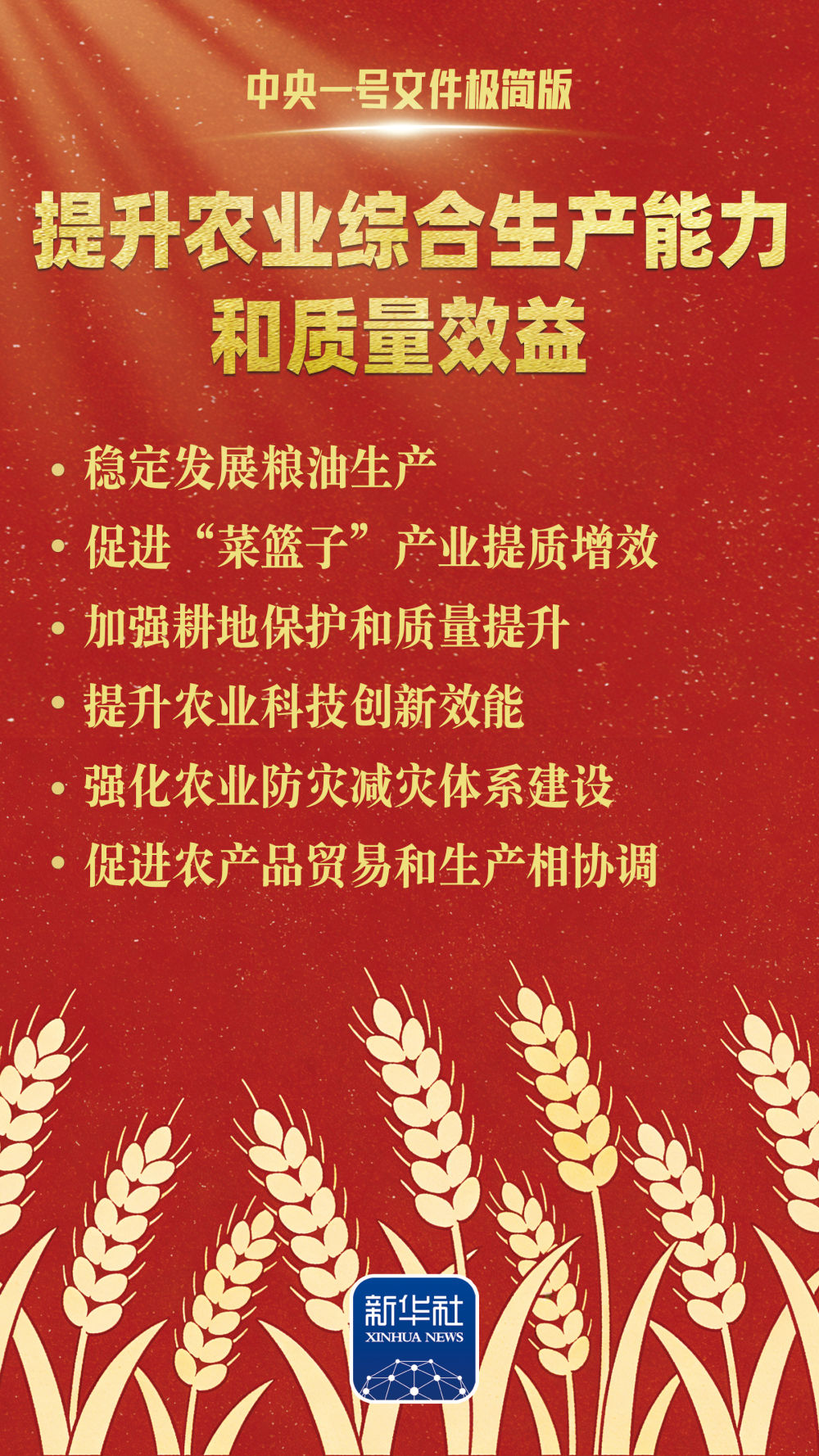
中央一号文件,极简版来了!
Xin Hua She· 2026-02-03 13:12
第十年 in a st 健全常态化帮扶政策体系 提高监测帮扶精准性时效性 提升产业和就业帮扶实效 合层分类帮扶欠发达地区 制华丽 XINHUA NEWS 号文件极简版 m m. 2026年中央一号文件2月3日发布,这是"十五五"首个中央一号文件。这份名为《中共中央 国务院关于锚定农业农村现代化 扎实推进乡村全面 振兴的意见》的中央一号文件,对今年"三农"工作做了六个方面的重点部署。跟随我们整理的这份极简版海报,一起学习。 制45mt -号文件极简版 TT U- 2 中央一号文件极简版 虽化体制机制创新 加快健全现代农业经营体系 规范有序做好农村各类资源盘活利用 创新乡村振兴投融资机制 推动城乡要素双向流动 号文件极简版 中中- 探 (FSHIR c G 保护和调动农民务农种粮积极 培育壮大县域富民产业 · 促进农民工稳岗就业 多措并举扩大乡村消费 新华社 XINHUA NEWS -号文件极简版 中中- 统筹优化乡村国土空间布局 加强农村基础设施建设和管护 加强县域基本公共服务供给统筹 一体化推进乡村生态保护修复 深入实施文明乡风建设工程 建设平安法治乡村 e Card First First of the S ...
@这9类人群,今年一号文件这些内容与你精准关联!
Xin Jing Bao· 2026-02-03 12:57
Core Viewpoint - The central document emphasizes the modernization of agriculture and rural areas, aiming for comprehensive rural revitalization with specific financial policies and innovative measures targeting nine key groups [1] Group 1: Farmers - The document outlines a new round of actions to enhance grain production capacity, aiming for an increase of 1 trillion jin (approximately 500 billion kg) while ensuring farmers' income growth through price, subsidy, and insurance support [2] - It highlights the establishment of a revenue guarantee mechanism for grain farmers and the implementation of various subsidies, including for rice, wheat, corn, and soybeans [2] - The document introduces a pilot program for interest subsidies on loans for grain and oil planting, and emphasizes the importance of inter-provincial compensation policies for grain production areas [2] Group 2: Employment and Entrepreneurship in Rural Areas - The document encourages the development of county-level industries and new business models, including the integration of agriculture with culture and tourism, promoting "small and beautiful" tourism formats [3] - It emphasizes the need for rural consumption expansion and the establishment of new consumption scenarios such as harvest markets and non-heritage workshops [3] - The document also calls for the promotion of e-commerce in rural areas and the regulation of agricultural product live-streaming sales [3] Group 3: Migrant Workers - The document continues to focus on the welfare of older migrant workers, emphasizing employment support and skills training to match job demands [5][6] - It highlights the need for wage payment guarantees and the expansion of projects that provide work in exchange for aid [5] Group 4: Healthcare in Rural Areas - The document proposes a strong foundation for healthcare by upgrading county hospitals and township health centers, and implementing a special plan for university students to become rural doctors [7] Group 5: Education in Rural Areas - The document introduces new policies for rural education, including optimizing the layout of rural schools and promoting online sharing of quality educational resources [8] - It emphasizes the importance of retaining necessary rural kindergartens and implementing a plan for the revitalization of county-level high schools [8] Group 6: Support for Vulnerable Groups - The document outlines mechanisms for improving rural social security standards and enhancing support for vulnerable groups, including the elderly and children [9] - It emphasizes the need for community engagement and volunteer services to assist these groups [9] Group 7: Urbanization of Agricultural Migrants - The document details systematic arrangements for the urbanization of agricultural migrants, linking policies to infrastructure investment and public service provision [10] Group 8: Cultural and Social Norms - The document addresses the need to reform rural customs, particularly concerning high marriage dowries, and promotes the establishment of new cultural norms around marriage and family [12] Group 9: Rural Cadres - The document emphasizes the need to improve the working methods of rural cadres, reduce bureaucratic burdens, and ensure basic remuneration for village leaders [13] - It also calls for strict supervision and management of rural cadres to prevent corruption and improve governance [13]
张红宇:准确把握中央部署,扎实推进乡村振兴 | 专家解读一号文件①
Nan Fang Nong Cun Bao· 2026-02-03 12:36
Core Viewpoint - The central theme of the 2026 Central No. 1 Document is to "anchor agricultural and rural modernization, and solidly promote comprehensive rural revitalization" [6][18]. Group 1: Agricultural Production and Quality - The first focus of the document is to enhance agricultural comprehensive production capacity and quality efficiency, emphasizing the importance of stabilizing grain and oil production [12][18]. - The target grain production is set to stabilize at around 1.4 trillion jin (approximately 700 million tons) [18]. - The document continues the policy approach from the "14th Five-Year Plan," stressing the need for land protection and quality improvement while promoting high-standard farmland construction [19][21]. - Technological support is highlighted as a fundamental driver for stabilizing grain production potential, advocating for the integration of "four good" elements: good land, good seeds, good machinery, and good methods [23][24]. - In 2025, corn yield is projected to increase to 446.7 kg/mu, reflecting a rise of 7.2 kg from the previous year, showcasing the importance of yield improvement [26][27]. Group 2: Rural Industry Development - The document proposes to promote the "vegetable basket" industry to enhance quality and efficiency, marking a shift from "vegetable basket products" to "vegetable basket industries" [35][36]. - This transformation involves both vertical integration of the industry chain and horizontal expansion across different agricultural sectors [38][40]. - The modern agricultural approach is described as "borderless and three-dimensional," contrasting with traditional agricultural practices [44][46]. Group 3: Poverty Alleviation and Income Growth - The document emphasizes "normalization of precise assistance" to prevent large-scale poverty, integrating this into the rural revitalization strategy [50][56]. - It identifies three significant income disparities: urban-rural income gap, regional income differences, and internal income inequality among farmers [65][69]. - The focus is on ensuring the income of grain-producing farmers, with policies aimed at enhancing price subsidies and insurance support [70][74]. - In 2024, only Jiangsu and Shandong among the 13 major grain-producing regions had per capita disposable incomes above the national average, highlighting the urgent need for income support [75][77]. Group 4: Rural Revitalization Strategy - The document advocates for "classifying and orderly, area-based promotion of rural revitalization," aiming to consolidate resources and reduce regional development disparities [84][86]. - It outlines the responsibilities of different administrative levels in implementing rural revitalization, emphasizing a gradual and tailored approach [87][88]. Group 5: Land Policy and Stability - The document discusses the extension of land contracts for another 30 years, emphasizing the need for stability in land tenure [91][95]. - It stresses the importance of adhering to core principles and bottom lines in land policy, ensuring that collective ownership and grain production capacity are not compromised [100][101].

中共中央 国务院关于锚定农业农村现代化 扎实推进乡村全面振兴的意见
证监会发布· 2026-02-03 11:45
中共中央 国务院关于锚定农业农村现代化 扎实推进乡村全面振兴的意见 (2026年1月3日) 农业农村现代化关系中国式现代化全局和成色。"十四五"时期,农业综合生产能力迈上新台阶,脱 贫攻坚成果巩固拓展,农民生活水平显著提高,乡村全面振兴取得明显进展。"十五五"时期是基本实现 社会主义现代化夯实基础、全面发力的关键时期,要加快补上农业农村领域突出短板,加快建设农业强 国。2026年是"十五五"开局之年,做好"三农"工作至关重要。要坚持以习近平新时代中国特色社会主义 思想为指导,深入贯彻党的二十大和二十届历次全会精神,认真落实四中全会部署,全面贯彻习近平总 书记关于"三农"工作的重要论述和重要指示精神,坚持把解决好"三农"问题作为全党工作重中之重,坚 持和加强党对"三农"工作的全面领导,完整准确全面贯彻新发展理念,坚持稳中求进工作总基调,坚持 农业农村优先发展,坚持城乡融合发展,锚定农业农村现代化,以推进乡村全面振兴为总抓手,以学习 运用"千万工程"经验为引领,以改革创新为根本动力,提高强农惠农富农政策效能,守牢国家粮食安全 底线,持续巩固拓展脱贫攻坚成果,提升乡村产业发展水平、乡村建设水平、乡村治理水平,努力把 ...