
惠农政策

Search documents
小品《又来了》,为啥引发热议
Xin Lang Cai Jing· 2026-02-17 16:31
Core Viewpoint - The skit "Here We Go Again" from the 2026 CCTV Spring Festival Gala critiques bureaucratic inefficiency and the challenges of policy implementation at the grassroots level, highlighting the disconnect between officials and the realities faced by local farmers [1][2]. Group 1: Critique of Bureaucratic Practices - The skit portrays three types of bureaucratic officials: "template-type" who follow rigid procedures without understanding local issues, "cross-border type" who apply irrelevant experiences from other sectors, and "passing-the-buck type" who avoid responsibility [1][2]. - These officials treat their roles as temporary, focusing on tasks rather than solutions, leading to policies that fail to address the needs of farmers like the character Old Wang [2][3]. Group 2: Emphasis on Effective Supervision - The Central Committee's recent document emphasizes the need for effective supervision of grassroots issues, focusing on the implementation of policies, addressing corruption, and ensuring the political and organizational functions of village party organizations are fulfilled [2][3]. - The document outlines four key areas for supervision: the implementation of central decisions in rural areas, addressing local corruption, evaluating the effectiveness of village party organizations, and ensuring the application of corrective measures [2][3]. Group 3: Importance of Genuine Engagement - The skit underscores the necessity for inspection teams to engage directly with local issues, rather than merely reviewing reports, to understand the real challenges faced by farmers [4][5]. - The Central Committee's "No. 1 Document" stresses the importance of adapting policies to local conditions and respecting farmers' opinions to avoid one-size-fits-all approaches [3][5]. Group 4: Call for Action and Accountability - The document calls for timely action on issues raised by the public, advocating for immediate solutions to problems before they escalate [5]. - The effectiveness of the new guidelines will depend on the commitment of officials to prioritize the needs of the community and to transform bureaucratic processes into actionable results [5].
@这9类人群,今年一号文件这些内容与你精准关联!
Xin Jing Bao· 2026-02-03 12:57
Core Viewpoint - The central document emphasizes the modernization of agriculture and rural areas, aiming for comprehensive rural revitalization with specific financial policies and innovative measures targeting nine key groups [1] Group 1: Farmers - The document outlines a new round of actions to enhance grain production capacity, aiming for an increase of 1 trillion jin (approximately 500 billion kg) while ensuring farmers' income growth through price, subsidy, and insurance support [2] - It highlights the establishment of a revenue guarantee mechanism for grain farmers and the implementation of various subsidies, including for rice, wheat, corn, and soybeans [2] - The document introduces a pilot program for interest subsidies on loans for grain and oil planting, and emphasizes the importance of inter-provincial compensation policies for grain production areas [2] Group 2: Employment and Entrepreneurship in Rural Areas - The document encourages the development of county-level industries and new business models, including the integration of agriculture with culture and tourism, promoting "small and beautiful" tourism formats [3] - It emphasizes the need for rural consumption expansion and the establishment of new consumption scenarios such as harvest markets and non-heritage workshops [3] - The document also calls for the promotion of e-commerce in rural areas and the regulation of agricultural product live-streaming sales [3] Group 3: Migrant Workers - The document continues to focus on the welfare of older migrant workers, emphasizing employment support and skills training to match job demands [5][6] - It highlights the need for wage payment guarantees and the expansion of projects that provide work in exchange for aid [5] Group 4: Healthcare in Rural Areas - The document proposes a strong foundation for healthcare by upgrading county hospitals and township health centers, and implementing a special plan for university students to become rural doctors [7] Group 5: Education in Rural Areas - The document introduces new policies for rural education, including optimizing the layout of rural schools and promoting online sharing of quality educational resources [8] - It emphasizes the importance of retaining necessary rural kindergartens and implementing a plan for the revitalization of county-level high schools [8] Group 6: Support for Vulnerable Groups - The document outlines mechanisms for improving rural social security standards and enhancing support for vulnerable groups, including the elderly and children [9] - It emphasizes the need for community engagement and volunteer services to assist these groups [9] Group 7: Urbanization of Agricultural Migrants - The document details systematic arrangements for the urbanization of agricultural migrants, linking policies to infrastructure investment and public service provision [10] Group 8: Cultural and Social Norms - The document addresses the need to reform rural customs, particularly concerning high marriage dowries, and promotes the establishment of new cultural norms around marriage and family [12] Group 9: Rural Cadres - The document emphasizes the need to improve the working methods of rural cadres, reduce bureaucratic burdens, and ensure basic remuneration for village leaders [13] - It also calls for strict supervision and management of rural cadres to prevent corruption and improve governance [13]
农村3项收费项目取消了,村干部也无权收取,农民早点知晓
Sou Hu Cai Jing· 2026-01-27 00:46
Core Viewpoint - The cancellation of three specific fee items in rural areas signifies a positive change for farmers, reducing their economic burden and promoting more transparent governance in villages [1][3]. Group 1: Policy Changes - The cancellation of certain fees, previously imposed by village officials, reflects the government's commitment to protecting farmers' rights and enhancing the standardization and legality of grassroots governance [3][4]. - These fees were often related to daily management or public services, such as road maintenance and environmental sanitation, which sometimes led to unclear standards and increased financial pressure on farmers [3]. Group 2: Financial Implications - The adjustment in policy indicates that related expenditures will now be more integrated into public financial support or managed through more reasonable collective funding strategies, allowing farmers to focus on their production and daily lives [4]. Group 3: Responsibilities and Community Impact - Farmers are encouraged to stay informed about these policy changes to understand their rights and obligations, thereby avoiding non-compliant charges [4]. - The implementation of this agricultural policy is seen as a significant step towards promoting social equity in rural areas and fostering harmony at the grassroots level [5].

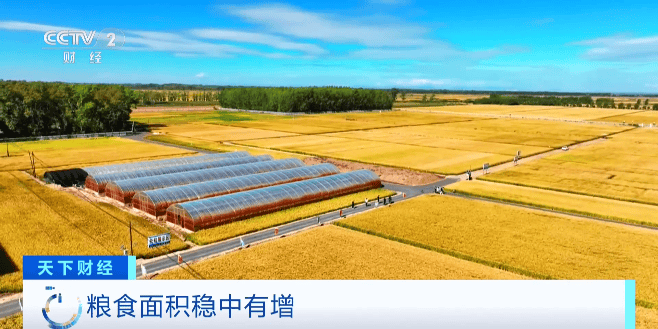
连年丰收!中国粮食产量再创新高的“三重密码”→
Sou Hu Cai Jing· 2025-12-12 12:25
Core Viewpoint - The National Bureau of Statistics reported that China's grain production is expected to reach 14,298 billion jin in 2025, marking a 1.2% increase from the previous year, indicating a successful harvest supported by various agricultural policies and practices [1]. Group 1: Agricultural Policies and Practices - The area of grain cultivation has steadily increased for six consecutive years, with a notable increase of 3.3 million mu in high-yield crops like corn, laying a solid foundation for this year's harvest [3][5]. - A series of supportive policies, including minimum purchase prices for rice and wheat and subsidies for corn and soybeans, have stabilized farmers' expectations for grain production [3]. - The implementation of the "Party and Government Share Responsibility" requirement for food security has ensured that production targets are met and responsibilities are enforced at local levels [3]. Group 2: Yield Improvement Initiatives - Significant improvements in yield have been a highlight of this year's grain production, with a large-scale initiative to enhance the yield of grain and oil crops being implemented across 702 counties [7]. - The integration of water and fertilizer management has expanded to over 88 million mu, with specific practices in different regions aimed at maximizing yield potential [9]. - The contribution of yield improvement to overall grain production growth is over 90%, showcasing the effectiveness of these initiatives [9]. Group 3: Resilience Against Adverse Conditions - China's grain production has shown resilience despite facing severe weather challenges, including spring droughts and summer heatwaves [11]. - The Ministry of Agriculture and Rural Affairs has issued disaster prevention and mitigation technical guidelines and dispatched teams to key production areas to implement critical measures [11]. - Central government funding of over 6 billion yuan has been allocated to support drought and flood prevention, pest control, and other measures to ensure stable production levels [11]. Group 4: Future Projections - Grain production is expected to achieve high-level growth again in 2025, with the main increases anticipated in autumn crops, particularly in the Northeast and Northwest regions, and primarily in corn [13].
(乡村行·看振兴)福建清流:秋粮收购忙 颗粒尽归仓
Zhong Guo Xin Wen Wang· 2025-10-20 12:57
Core Points - The article highlights the successful grain procurement efforts in Qingliu County, Fujian Province, ensuring that all autumn grains are collected and stored efficiently [1][3]. Group 1: Grain Procurement Process - Qingliu County has implemented various measures such as optimizing appointment-based procurement, providing door-to-door services, and ensuring sufficient storage capacity to facilitate smooth grain collection [3]. - The county has established multiple designated procurement points and collaborated with four private grain enterprises to create a comprehensive procurement network, ensuring farmers can sell their grain easily [3][4]. Group 2: Quality Control and Compliance - Qingliu County Grain Purchase and Sale Company is committed to adhering to national procurement policies and has set a target to purchase 6,600 tons of government reserve grain this year, ensuring all incoming grain meets national quality standards [4]. - During the procurement period, each truckload of grain undergoes routine quality testing to guarantee that the stored grain meets the required quality specifications [3].
小麦最低收购价“五连涨”的背后
He Nan Ri Bao· 2025-06-21 23:20
Group 1 - The core viewpoint is that the wheat purchasing market in China is experiencing a surge due to multiple factors including policy support, quality improvement, and market dynamics [1][2][3][4] Group 2 - Policy measures have significantly accelerated the wheat purchasing process, with over 17 million tons of summer wheat purchased by June 13, 2023, which is notably faster than the same period last year. The total expected purchase for the season is over 85 million tons [2] - The minimum purchase price for wheat has increased from 1.12 yuan per jin in 2020 to 1.19 yuan per jin, marking five consecutive increases, which helps ensure farmers' income [2] - The quality of this year's wheat is reportedly better than in previous years, with no major diseases affecting the crop, leading to a rise in market prices [3] - The current grassroots wheat prices have risen to between 1.18 yuan and 1.19 yuan per jin, reflecting a recovery of 2 to 3 cents from the lowest point [3] - The corn market's recent price increases have provided additional support for wheat prices, with corn prices in North China reaching between 1.21 yuan and 1.25 yuan per jin, making wheat more competitive [4] - The period from June to August is characterized by a supply gap for corn, leading feed companies to actively purchase wheat to fill the void, further supporting wheat prices [4]
清风为伴产业兴丨葱香溢满致富路
Zhong Yang Ji Wei Guo Jia Jian Wei Wang Zhan· 2025-05-24 00:17
Core Viewpoint - The article highlights the importance of the onion industry in Zhangqiu District, Shandong Province, emphasizing its role in rural revitalization and income generation for local farmers [1][2]. Group 1: Industry Overview - Zhangqiu onion has a cultivation history of over 2,600 years, with an area of approximately 110,000 acres and more than 100,000 people involved in the industry [1]. - The onion industry is described as a green industry that significantly contributes to the local economy and serves as a unique identifier for Zhangqiu [1]. Group 2: Policy Implementation and Oversight - The local disciplinary inspection and supervision commission focuses on the implementation of rural revitalization and poverty alleviation policies, ensuring that relevant departments fulfill their responsibilities [1][2]. - A case of subsidy fraud was identified, where a farmer falsely reported the area of onion cultivation, leading to an overpayment of subsidies [2]. - The inspection commission took corrective actions, emphasizing the need for transparency in subsidy distribution and the importance of early detection of issues to ensure that benefits reach the intended recipients [2]. Group 3: Future Actions - The district's disciplinary commission plans to continue supervising the implementation of policies, fund allocation, and the development of characteristic industries to support the healthy growth of the onion industry [2].