科技金融

Search documents
融资难如何破解?上海金洽会“园区行”推动金融直达企业
Di Yi Cai Jing Zi Xun· 2025-10-09 11:56
Core Insights - The financing challenges faced by technology and small to medium-sized enterprises (SMEs) due to lack of collateral and insufficient cash flow are being addressed through a "government + park + finance" model in Shanghai [1][2] - As of June 2023, the loan balance for technology enterprises in Shanghai reached 2.33 trillion yuan, a year-on-year increase of 7.75%, while the balance for inclusive small and micro loans was 1.36 trillion yuan, up 11.5% year-on-year [1] - The "Park Tour" initiative launched at the Jin Qiao Conference aims to provide a one-stop financial service for enterprises, enhancing financing efficiency through online and offline integration [3] Group 1 - The Qingpu Industrial Park, hosting the first "Park Tour," covers an area of 56.2 square kilometers and includes national-level development zones, generating over 100 billion yuan in tax revenue [2] - Financial institutions are encouraged to support park development by promoting green finance, technology finance, and innovative financial service models [2] - The Shanghai Financial Office emphasizes the need for financial institutions and industry associations to enhance the financial service system and improve service convenience and precision for SMEs [2] Group 2 - The Jin Qiao Conference has introduced the "Park Tour" to connect enterprises directly with financial institutions, allowing for quick access to policies, products, and financing solutions [3] - The initiative will run from late September to late November across multiple parks in Shanghai, targeting technology enterprises and strategic emerging industries [3] - An online exhibition will continue until September 2026, showcasing financial products, policies, and park development updates [3]
区域银行冲向科技金融
券商中国· 2025-10-09 11:16
Core Viewpoint - The article emphasizes the importance of fintech as a leading business segment for banks and financial institutions, highlighting the proactive approach of these entities in embracing technological advancements [1]. Group 1: Development of Fintech in Regional Banks - Many regional banks, particularly city and rural commercial banks, are following the lead of larger banks in developing fintech, although their progress may be limited by resources [2]. - Zhejiang Rural Commercial Bank has reported that since launching its fintech pilot in Jiaxing, the proportion of technology enterprise loans has exceeded 30% of corporate loans, covering 7,200 tech enterprises [2]. - Various county-level rural commercial banks in Jiaxing have begun to establish specialized mechanisms for fintech, such as dedicated departments and service models [3]. Group 2: Challenges and Strategies - The development of fintech is challenging for regional banks, which need to root their efforts in local economic structures and overcome internal limitations [5]. - A listed rural commercial bank indicated that it had been considering fintech since 2017, but only completed team formation in 2021, reflecting the long-term commitment required [4]. Group 3: Growth in Technology Loans - Despite smaller loan scales compared to larger banks, regional banks are accelerating their technology loan offerings, with significant growth rates reported [6]. - For instance, Jiangsu Bank's technology loan balance reached 2,740 billion yuan, growing by 17.80% year-on-year, while Hangzhou Bank's technology loans increased by 21.77% [7]. - Other regional banks, such as Qilu Bank and Qingdao Bank, also reported substantial growth in technology loans, with increases of 17.60% and 20.85% respectively [7]. Group 4: Organizational Structure and Specialization - Banks are adapting their organizational structures to support fintech, with many establishing dedicated departments and specialized branches [9]. - For example, Ningbo Bank has set up a technology finance department to provide comprehensive services to tech enterprises, while Qingdao Bank has developed a specialized mechanism for fintech [10]. - Hangzhou Bank has created a well-structured fintech system with multiple regional centers and specialized institutions [11].





建设银行四川省分行:执金融之笔,以“两山”理念描绘蜀地新图景
Zhong Guo Jin Rong Xin Xi Wang· 2025-10-09 09:34
Core Viewpoint - The Sichuan branch of China Construction Bank is actively integrating ecological civilization values into financial services, supporting the province's transition to green development and high-quality growth through various financial initiatives [1][9]. Group 1: Resource Security - Sichuan is rich in strategic resources, including minerals and natural gas, and is crucial for national ecological security [1]. - The Hongge South Vanadium-Titanium Magnetite Mine in Panzhihua, recognized as the largest and most valuable in China, is a key project under the national "Cornerstone Plan" aimed at enhancing resource security [1][3]. - China Construction Bank's Chengdu Ninth Branch is providing tailored financial solutions to support the development of this strategic project, with 3.8 billion yuan already disbursed [3]. Group 2: Green Transportation - The G42 Nanchong to Chengdu Expressway expansion project, spanning 240 kilometers and costing over 36.8 billion yuan, is vital for regional integration and economic efficiency [5]. - China Construction Bank's Chengdu Xinhua Branch has taken a leading role in financing this project, providing 14.7 billion yuan in credit, nearly 50% of the total financing needed [5][6]. - This project is the first approved PPP loan under the new financing mechanism, setting a benchmark for future infrastructure projects [6]. Group 3: Low-Carbon Transition - The Sichuan branch is promoting the integration of green finance and technology to support the national "dual carbon" goals [8]. - A recent 150 million yuan loan for a high-tech enterprise's facility upgrade exemplifies the bank's commitment to reducing financing costs and maximizing policy synergies [6][8]. - The bank is enhancing its green loan recognition processes and monitoring mechanisms to ensure effective support for local green industries [8][9]. Group 4: Investment Initiatives - In 2023, the Sichuan branch collaborated with investment firms to establish the Chengdu Jianyuan Chuan Investment Green Low-Carbon Equity Fund, aimed at driving the province's green transition [9]. - The bank is committed to directing funds towards energy conservation, clean energy, and ecological restoration projects, contributing to the broader goals of ecological civilization [9].


嘉实基金:践行普惠金融 以高质量发展服务民生与实体经济
Xin Lang Ji Jin· 2025-10-09 09:21
Group 1 - The core theme of the series of activities is "New Era, New Fund, New Value," aimed at promoting the high-quality development of public funds in Beijing [1] - The China Securities Regulatory Commission (CSRC) Chairman highlighted significant data showing that over the past five years, the total financing through stock and bond markets reached 57.5 trillion yuan, with listed companies distributing a total of 10.6 trillion yuan to investors through dividends and buybacks [1] - The high-quality development of public funds is crucial for empowering the real economy and enhancing wealth for the public, aligning with the goals of the "14th Five-Year Plan" and setting the direction for the "15th Five-Year Plan" [1] Group 2 - Public funds have integrated the concept of inclusive finance into their core development, focusing on product innovation, service optimization, and mechanism reform to benefit the real economy and investors [2] - With a low entry threshold of 1 yuan, public funds have become a key vehicle for inclusive finance, catering to the wealth management needs of ordinary investors [2] - The company has continuously enriched its product offerings and service systems to meet diverse investor needs, while also optimizing fee structures to lower investment costs for investors [2] Group 3 - The establishment of a multi-level capital market allows public funds to guide social capital towards high-quality enterprises at different development stages, particularly in technology and green sectors [3] - The mission of public funds in promoting inclusive finance is increasingly prominent, with ongoing efforts to enhance product innovation and service upgrades to meet diverse asset management needs [3] - The focus is on improving customer satisfaction and experience in inclusive finance, thereby injecting lasting momentum into the high-quality development of the capital market [3]
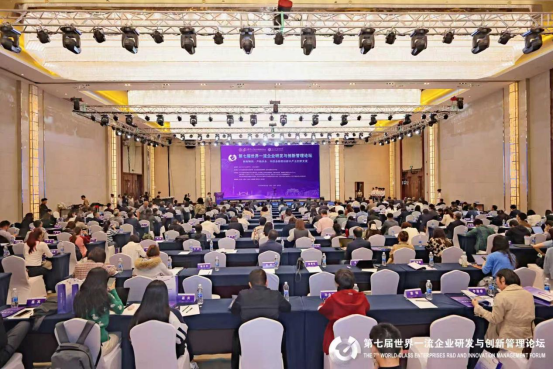
2025第七届世界一流企业研发与创新管理论坛成功举办
Zhong Guo Fa Zhan Wang· 2025-10-09 08:05
今年是哈尔滨金融学院建校75周年,作为黑龙江省唯一一所金融院校,举办本次论坛旨在深入践行中央 金融工作会议"五篇大文章"战略部署。本次论坛主题为"数智赋能.产融共生:科技金融驱动新兴产业创 新发展",国内知名专家学者、业界精英,通过主旨演讲、领军企业创投主题报告、圆桌论坛、学术前 沿主题报告、新兴产业创新主题报告、科技金融主题报告等十一个单元,围绕新兴技术开发、新场景新 业态、新模式创新、科技成果产业化、新兴产业培育壮大核心议题以及破解科技金融堵点难点的金融工 具制度政策系统性改革,为与会嘉宾呈现了《构建适应新质生产力发展的金融支持体系》等23场主题演 讲、进行了"未来产业生态元宇宙"发布会,围绕"双新融合推动创新要素向新兴产业聚集"开展圆桌论 坛,召开国家自然科学基金委员会管理科学部企业技术创新管理"十五五"发展规划研讨会,论坛形式多 样,内容异彩纷呈,与会嘉宾围绕主题充分探讨、深度交流。既凝聚了推动产业升级共识,也为各领域 创新发展提供了兼具理论高度与实操价值的路径参考。本次论坛共探科技金融驱动新兴产业创新发展的 理论方法、成功实践和政策建议,以创新驱动发展,为构建现代化产业体系,真正实现科技金融引领赋 ...
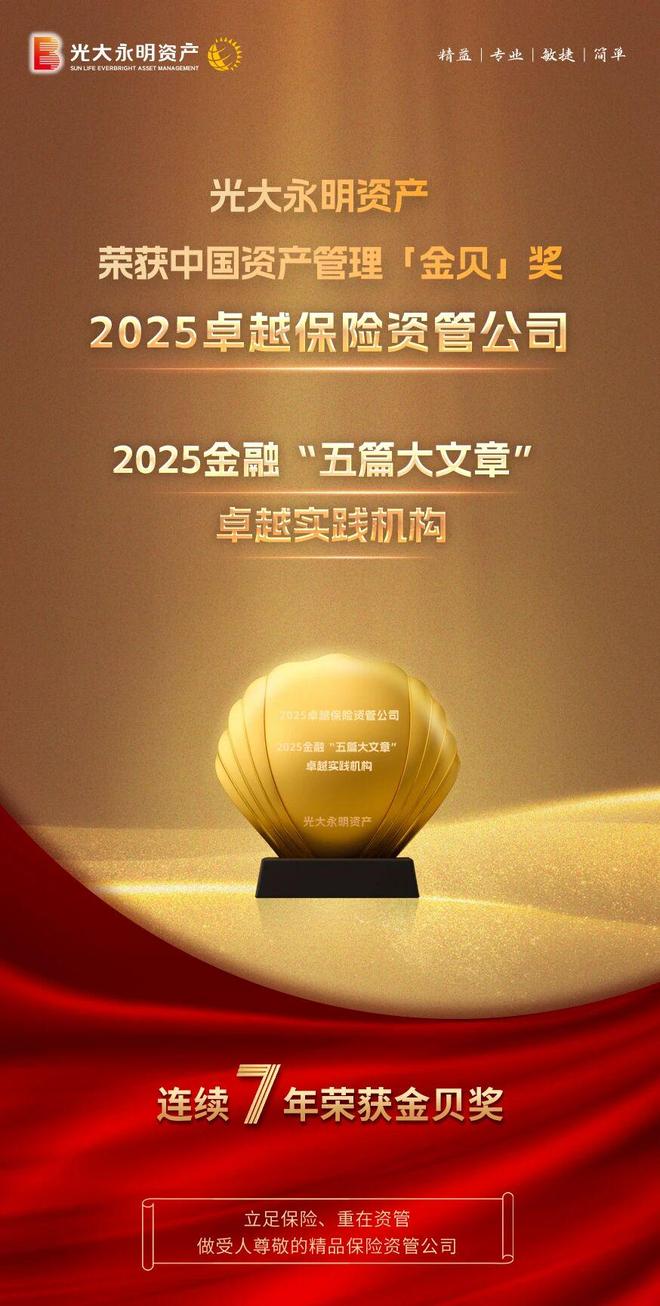
喜报!光大永明资产连续七届荣获『金贝奖』
2 1 Shi Ji Jing Ji Bao Dao· 2025-10-09 07:37
「金贝」资产管理竞争力评选聚焦资产管理行业,范围涵盖银行、保险、证券、信托、基金、财富管理 公司等主流金融机构。从规模竞争力、产品竞争力、收益能力、投研能力、科技能力、风控能力、创新 能力等多维度,对中国资产管理行业进行客观的分析和评价,在行业内具备较强影响力。 8月16日,由《21世纪经济报道》主办的2025资产管理年会暨十八届21世纪「金贝」资产管理竞争力研 究案例发布盛典在上海举办,光大永明资产荣获"2025卓越保险资管公司"与"2025金融'五篇大文章'卓 越实践机构"两项大奖。这是光大永明资产第七次荣获金贝奖。 光大永明资产秉持"立足保险、重在资管"的经营理念,强化投研能力建设和配置统领,以积极稳健的态 度持续开拓三方业务,着力培育长期耐心资本,锚定高质效服务实体经济,做好金融"五篇大文章"。公 司积极响应政策要求,深入践行中国特色金融文化,发挥专业能力优势,精准创设适配产品,在"科技 金融"与"绿色金融"等领域设立多个代表性项目,实现资本与产业发展的同频共振。 未来,光大永明资产将继续围绕主责主业,探索高质效路径工具,为服务国家发展大局、促进行业转型 升级贡献更大力量,助力开创行业高质量发展新局面 ...
中加基金:打造多元化产品体系,助力公募基金高质量发展
Xin Lang Ji Jin· 2025-10-09 03:30
Group 1 - The core viewpoint emphasizes the importance of public funds as a key tool for asset allocation in the context of building a financial powerhouse, highlighting the unprecedented development opportunities and transformation challenges faced by the industry [1][9] - The company aims to align its product system with national strategies, market trends, and customer needs, focusing on five major areas: technology finance, green finance, inclusive finance, pension finance, and digital finance [2][9] Group 2 - The product system includes four main types: cash management products, fixed income products, fixed income plus products, and equity products, designed to meet diverse investor needs from conservative to aggressive strategies [2][3][4] - Cash management products, such as money market funds and interbank certificate index funds, are characterized by high liquidity and low risk, serving as essential tools for short-term financial management [3] - Fixed income products focus on stable returns through a well-established credit research system and risk control mechanisms, positioning them as a cornerstone for investors' asset allocation [4] Group 3 - Fixed income plus products pursue absolute returns by employing strategies that enhance yield while balancing risk, including convertible bonds and active equity investments [5] - Equity products emphasize long-term value investment, targeting high-potential companies across various sectors, including technology and healthcare, to help investors benefit from China's economic growth [6] Group 4 - In the pension finance sector, the company actively responds to national policies by developing target pension funds and expanding its FOF product line to meet diverse asset allocation needs [7][8] - The company is committed to supporting national financial development strategies and fulfilling its social responsibility by providing diversified financial products and services [9]
中信建投基金:锚定高质量发展,构建公募基金产品体系新格局
Xin Lang Ji Jin· 2025-10-09 02:22
Core Viewpoint - The issuance of the "Action Plan for Promoting the High-Quality Development of Public Funds" marks a strategic shift in the industry from "scale expansion" to "quality improvement," emphasizing the need to enhance equity investment scale and proportion, which is crucial for both capital market reform and strengthening the core competitiveness of fund companies [1][2]. Group 1: Product Development Strategy - The company aims to build a diverse product matrix that meets investor needs by conducting in-depth research on risk preferences, investment goals, and holding periods, while adhering to principles of long-term and sustainable investment [1][2]. - The company is focusing on expanding its equity product offerings, particularly in technology finance, green finance, inclusive finance, pension finance, and digital finance, to support high-quality economic development [2][3]. Group 2: Green Finance Initiatives - The company has established low-carbon themed funds and issued two public REITs in the renewable energy sector to support infrastructure development, with plans to further innovate in green finance products [3][4]. - Future initiatives will include exploring innovative products in sustainable development and green low-carbon sectors, aligning with national strategies and economic restructuring [3]. Group 3: Inclusive and Pension Finance - The company is enhancing the development of low-volatility products and expanding its product matrix to meet the inclusive financial needs of clients, while also promoting fee reforms to lower investor costs [3][4]. - In the pension finance sector, the company has launched a one-year holding period pension target fund and plans to introduce additional funds tailored to different retirement dates and risk profiles [3][4]. Group 4: Passive Investment Products - The company is improving its passive management product offerings by developing a comprehensive index product system that includes broad-based, thematic, and industry-specific indices to meet specialized investor needs [4]. - The core of high-quality public fund development lies in providing professional products that allow investors to share in economic growth, with a commitment to continuous reform and improvement in equity product supply [4].

总规模逼近7000亿元!这类ETF持续扩容
Sou Hu Cai Jing· 2025-10-04 01:21
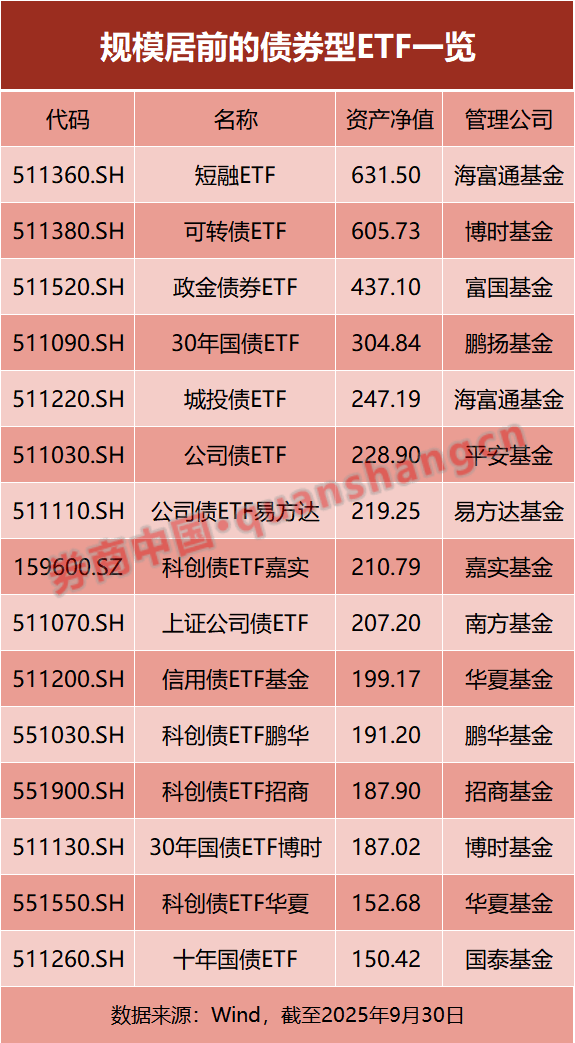
Core Insights - The bond ETF market has experienced explosive growth in 2023, with total assets reaching 695.05 billion yuan by September 30, marking an increase of over 500 billion yuan since the beginning of the year, representing a nearly 300% growth rate [1][3]. Market Overview - As of September 30, the total scale of bond ETFs is approaching 700 billion yuan, with 32 products exceeding 10 billion yuan in size [2]. - The bond ETF market has shown continuous growth since the end of 2022, with the scale increasing from 23.96 billion yuan in 2022 to 52.94 billion yuan, a growth rate of 121% [3]. Product Performance - The leading bond ETFs include: - Hai Futong Short-term Bond ETF: 63.15 billion yuan - Bosera Convertible Bond ETF: 60.57 billion yuan - Fuguo Government Bond ETF: 43.71 billion yuan - Pengyang 30-Year Treasury Bond ETF: 30.48 billion yuan [5]. Innovation in Product Types - The Sci-Tech Bond ETF is reshaping the bond ETF market, with 24 existing products totaling 252.30 billion yuan, and 14 of these exceeding 10 billion yuan in size [4][6]. Trading Dynamics - The average daily trading volume of bond ETFs has significantly increased, from 38.4 billion yuan in January to over 220 billion yuan since September [6]. Institutional Participation - Multiple public funds are actively entering the bond ETF market, with Hai Futong Fund being the first to surpass 100 billion yuan in bond ETF scale, and Bosera Fund also joining the "100 billion club" [8].
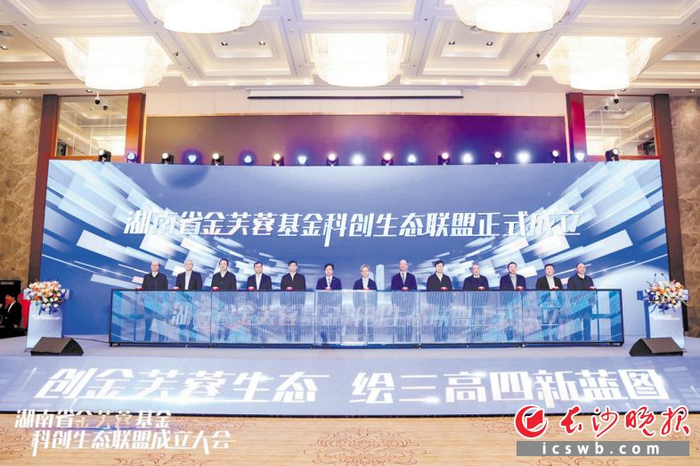
中国建设银行湖南省分行的科技金融破局之道——从资金“债权人”到科创“合伙人”
Chang Sha Wan Bao· 2025-10-01 05:12
Core Viewpoint - The article discusses the challenges faced by technology-driven enterprises in securing financing and how Hunan Construction Bank is addressing these issues through innovative financial services and policies aimed at supporting high-quality economic development in Hunan province [1]. Group 1: Policy Initiatives - Hunan's implementation opinion outlines 20 policy measures focusing on five key areas: technology finance, green finance, inclusive finance, pension finance, and digital finance, with technology finance being the primary focus [1]. - The bank aims to increase loan proportions in sectors such as technological innovation, green low-carbon initiatives, and rural revitalization [1]. Group 2: Customer Service Transformation - Hunan Construction Bank has shifted its approach from traditional collateral-based lending to evaluating companies based on their "technological moat," allowing for a credit approval of 60 million yuan for Beiyun Technology [3]. - The bank provides a full-cycle service plan, including low-interest loans during the R&D phase and supply chain financing during the production phase [3]. Group 3: Business Process Reengineering - The bank has developed a digital and agile response business process system to cater to the short, frequent, and urgent financing needs of technology enterprises, achieving a 50% increase in service efficiency [5]. - Innovative digital assessment tools have been introduced to evaluate companies based on their technological capabilities rather than traditional asset-based metrics [5]. Group 4: Product Channel Innovation - Hunan Construction Bank offers over 70 specialized financial products, allowing enterprises to customize their financing solutions according to their development stages and needs [8]. - The bank has established a comprehensive product channel system that integrates various financial services, moving from a single credit focus to a more holistic approach [9]. Group 5: Organizational Structure Improvement - The bank has created a three-tiered professional network to enhance service delivery, breaking down internal communication barriers and ensuring rapid response to client needs [10]. - A case study illustrates the bank's ability to provide timely financial support through innovative service mechanisms, demonstrating the effectiveness of its organizational structure [10]. Group 6: Evaluation and Assessment Reform - The bank has reformed its assessment and evaluation system to encourage lending to high-risk, high-growth technology enterprises, shifting from a risk-averse culture to one that embraces opportunities [12]. - The bank's efforts have resulted in significant growth in its technology loan portfolio, serving over 19,000 enterprises with a loan balance of 245.2 billion yuan [12].