金融科技

Search documents
构建全场景服务图景 解码“智付”新体验
Mei Ri Shang Bao· 2025-09-25 23:23
Core Viewpoint - The Fourth Global Digital Trade Expo in Hangzhou highlights the integration of artificial intelligence and digital trade, showcasing China UnionPay's innovations in payment solutions and its commitment to enhancing the digital trade ecosystem [1][2]. Group 1: Event Overview - The expo focuses on "Artificial Intelligence + Digital Trade" and is the only national-level exhibition dedicated to digital trade in China, attracting global attention [1]. - China UnionPay's theme is "Connecting the World, Sharing the Future," emphasizing its role in the digital trade industry's evolution [1]. Group 2: China UnionPay's Innovations - China UnionPay showcased its smart payment innovations, including the MCP intelligent payment service that allows users to complete transactions within chat interfaces, promoting a "dialogue-to-payment" experience [3]. - The exhibition featured AR technology-based smart payment glasses, enabling users to make payments through visual recognition and voice commands, enhancing user interaction and security [3]. Group 3: Payment Evolution - The display illustrated the evolution of China UnionPay's payment methods, transitioning from traditional bank cards to digital solutions, reflecting a shift from "card-based" to "identity-based" payments [4]. - The integration of various payment methods, including card, code, and Pay, has been widely adopted across multiple sectors such as retail, healthcare, and government services [5]. Group 4: Global Payment Network - China UnionPay is actively building a global payment network to facilitate cross-border trade, enhancing payment convenience for international transactions [6]. - The company has established cross-border QR code interoperability projects in 19 countries, significantly lowering the technical barriers for small and medium enterprises to access international markets [6][7]. Group 5: Future Outlook - China UnionPay aims to deepen its integration with global trade through the promotion of a unified cross-border QR code gateway and continuous upgrades of B2B payment products [7]. - The company has extended its network to 183 countries, with over 74 million merchants supporting UnionPay payments, contributing to China's higher level of openness in international trade [7].
足不出户、抵押一键办理!中信银行北京分行抵押材料电子签名全线升级
Bei Jing Qing Nian Bao· 2025-09-25 18:18
近日,中信银行北京分行个人信贷业务抵押材料电子签名系统升级成功上线,重点优化"预抵转现抵"等 核心功能,该行抵押材料电子签名系统自正式运行以来,抵押线上化签约体验广受好评,此次系统升级 标志着该行在数字化转型和金融服务效能提升方面再次迈出关键一步。 解读"预抵转现抵" 房产交易的关键环节 "预抵转现抵"是商品房抵押贷款中的重要转换环节。所谓"预抵押",指购房期房阶段,银行为借款人办 理的预告抵押登记;而"现房抵押"则是在房屋竣工、取得不动产权证后,进行的正式抵押登记。传统模 式中,借款人需在楼盘竣工后再次前往银行办理抵押转现手续,材料多、流程长,成为影响客户体验 的"最后一公里"难题。 破解传统业务难点 数字赋能见实效 作为首批提供抵押材料线上签约的银行机构,中信银行北京分行于2025年4月末率先推出个人贷款抵押 贷款电子签名服务,有效解决了传统业务中流程繁、耗时久、成本高等痛点。本次系统升级上线,进一 步聚焦用户高频需求和业务难点,重点对"预抵转现抵"流程进行了优化,实现了预告抵押至现房抵押的 全线上无缝转换,客户无需线下签署抵押材料,全程线上办理,让客户足不出户一键完成抵押材料的签 署。 "之前办抵押得来 ...

香港获评为全球最自由经济体;深圳蝉联全球十大金融中心丨大湾区财经早参
Mei Ri Jing Ji Xin Wen· 2025-09-25 17:29
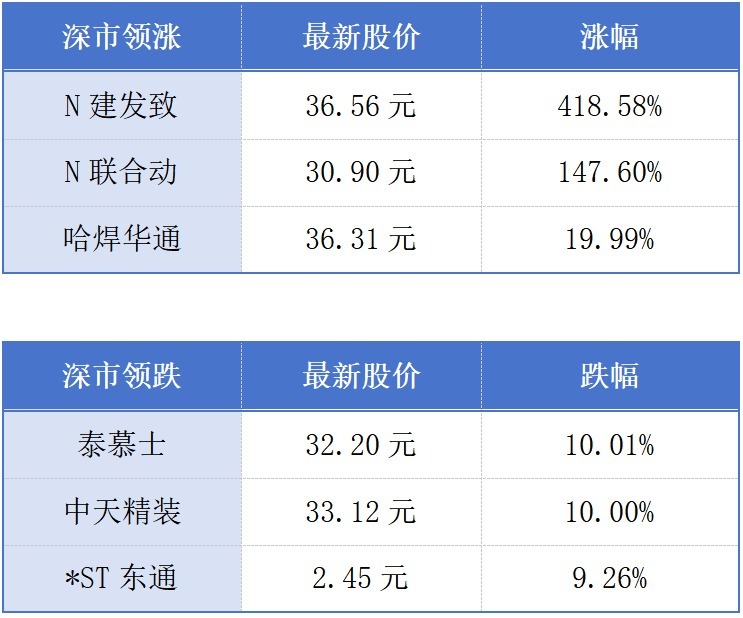
Group 1 - Hong Kong has been rated as the world's freest economy according to the Fraser Institute's "World Economic Freedom 2025 Annual Report," maintaining its top position in "International Trade Freedom" and ranking third in "Sound Money" and "Regulation" [1] - The report highlights Hong Kong's commitment to maintaining its status as a free port, implementing free trade, and a simple low tax system, enhancing its role as a super connector and value creator [1] Group 2 - Guangzhou's total retail sales of consumer goods reached 723.741 billion yuan in the first eight months of the year, showing a year-on-year growth of 4.9%, driven by trade-in activities and summer consumption [2] - The active performance in key consumption sectors such as home appliances and furniture indicates effective market potential release due to policies promoting trade-ins and various promotional activities [2] Group 3 - Shenzhen has retained its position as one of the top ten global financial centers, ranking 9th overall and achieving its best performance in financial technology, ranking 2nd [3] - This ranking reflects Shenzhen's financial development strength and its upgraded positioning in the global financial landscape [3] Group 4 - Dongguan has introduced a housing subsidy policy, offering a subsidy of 2% of the total price of new home purchases, capped at 30,000 yuan, effective from September 25 [4] - This measure aims to alleviate the financial burden on homebuyers and promote healthy development in the local real estate market [4] Group 5 - On September 25, the Shenzhen Component Index closed at 13,445.90 points, with an increase of 0.67% [5] Group 6 - Notable stock performances in the Shenzhen market include N Jianfa Zhi with a price of 36.56 yuan, up 418.58%, and N Lianhe Dong with a price of 30.90 yuan, up 147.60% [6] - Conversely, stocks such as Zhongtian Jingzhuang and *ST Dongtong experienced declines of 10.01% and 9.26%, respectively [6]

湘财股份(600095.SH)拟换股吸收合并大智慧(601519.SH)
智通财经网· 2025-09-25 16:21
Core Viewpoint - Xiangcai Co. plans to absorb and merge with Dazhihui through a share exchange, aiming to enhance its business capabilities and market position in the financial services sector [1][2] Group 1: Transaction Details - Xiangcai Co. will issue A-shares to Dazhihui shareholders as payment for the merger, with existing shares held by Xiangcai and Xinhu Group in Dazhihui being canceled and not participating in the exchange [1] - The dissenting shareholders of Xiangcai will have a buyout price based on the average trading price of Xiangcai shares over the 120 trading days prior to the merger, set at 7.51 CNY per share [1] - Dazhihui dissenting shareholders will have a cash option priced at the average trading price of Dazhihui shares over the same period, set at 9.53 CNY per share [1] - The total amount of funds raised for this transaction will not exceed 8 billion CNY, which will be allocated to various projects including financial modeling, digital securities construction, and debt repayment [1] Group 2: Strategic Benefits - The merger is expected to create significant synergies between the two companies, enhancing Xiangcai's service offerings in both domestic and international financial information services [2] - The integration aims to leverage both companies' strengths, facilitating user and resource sharing, technological collaboration, and market synergy [2] - Xiangcai intends to enhance its competitive edge in financial products and information technology through this merger, striving for a "1+1>2" effect to achieve substantial growth [2]


大智慧:筹划由湘财股份换股吸收合并大智慧并发行A股股票募集配套资金
Xin Lang Cai Jing· 2025-09-25 15:45
Group 1 - The core point of the news is that Dazhihui is planning a share swap merger with Xiangcai Co., where Xiangcai will issue A-shares to all A-share shareholders of Dazhihui [1] - The share swap price for Xiangcai's A-shares is set at 7.51 yuan per share, while Dazhihui's A-share price is 9.53 yuan per share [1] - The total amount of funds to be raised through this merger is not to exceed 8 billion yuan, which will be used for various projects including financial models, digital securities construction, big data engineering, wealth management integration, international fintech projects, working capital, and debt repayment [1] Group 2 - Upon the completion of the share swap, Dazhihui will terminate its listing and cancel its legal entity status, while Xiangcai will inherit all assets, liabilities, businesses, personnel, contracts, qualifications, and other rights and obligations of Dazhihui [1] - The registered capital and business scope of Xiangcai will be adjusted accordingly following the merger [1]
今天,香港重要发布
中国基金报· 2025-09-25 15:26
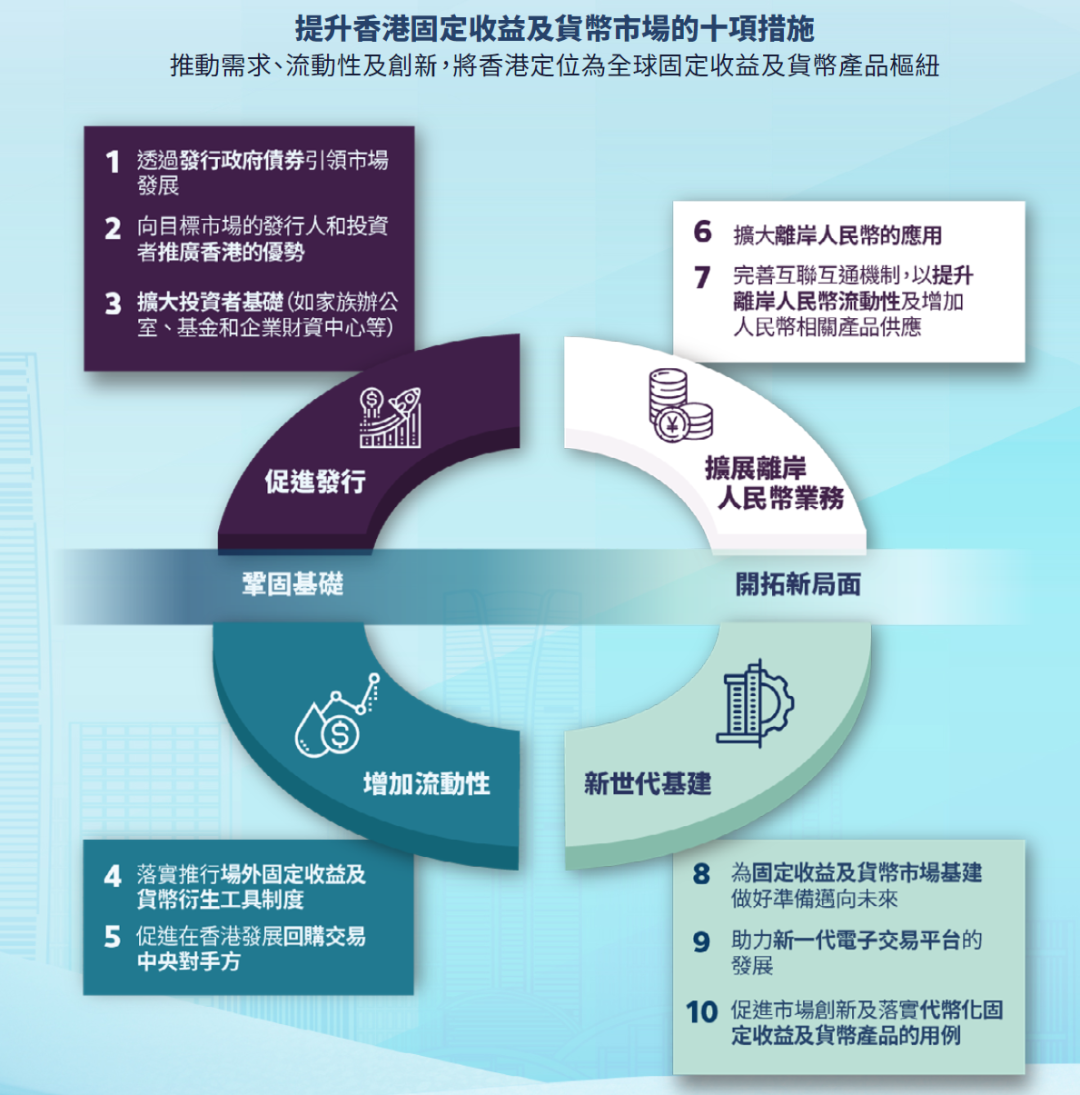
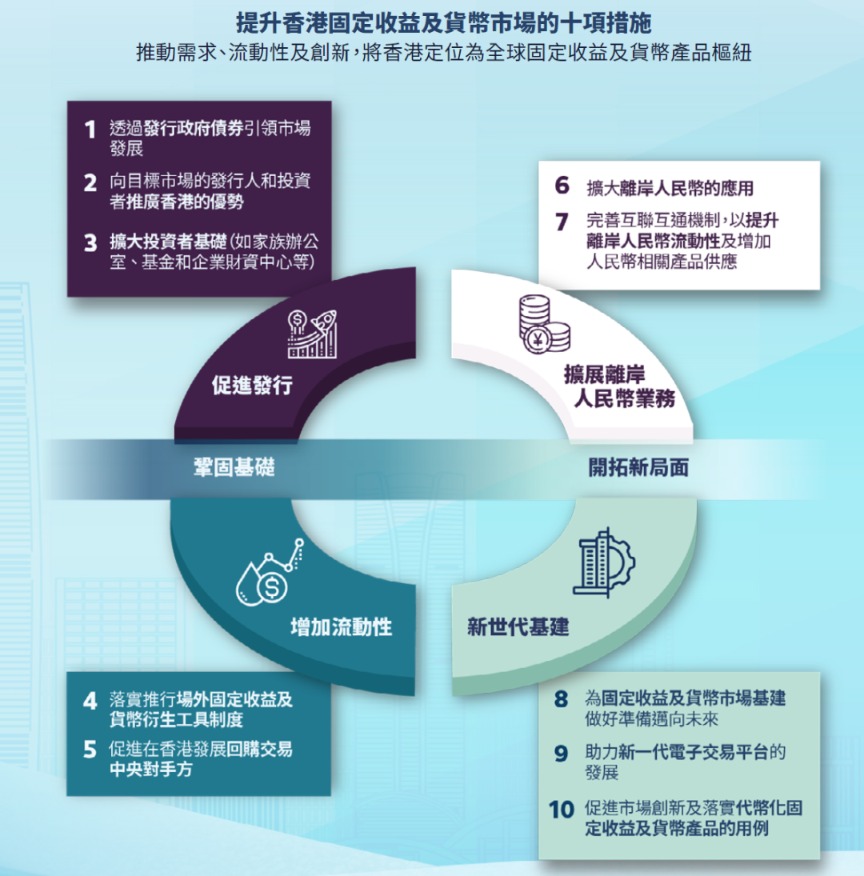
Core Viewpoint - The Hong Kong Securities and Futures Commission (SFC) and the Hong Kong Monetary Authority (HKMA) have jointly released a "Roadmap for the Development of Fixed Income and Money Markets," aiming to position Hong Kong as a global hub for fixed income and currency markets through strategies that enhance demand, liquidity, and innovation [2][7]. Group 1: Four Pillars and Ten Measures - The roadmap outlines four pillars and ten measures to enhance Hong Kong's fixed income and money markets [4]. - Pillar One: Promote Issuance - Lead market development through government bond issuance [4]. - Promote Hong Kong's advantages to target market issuers and investors [4]. - Expand the investor base, including family offices, funds, and corporate treasury centers [4]. - Pillar Two: Increase Liquidity - Implement an over-the-counter fixed income and currency derivatives system [4]. - Promote the development of a central counterparty for repurchase transactions in Hong Kong [4]. - Pillar Three: Expand Offshore RMB Business - Broaden the application of offshore RMB [5]. - Improve the connectivity mechanism to enhance offshore RMB liquidity and increase the supply of RMB-related products [5]. - Pillar Four: New Generation Infrastructure - Prepare infrastructure for the future of fixed income and money markets [5]. - Support the development of new electronic trading platforms [5]. - Promote market innovation and implement use cases for tokenized fixed income and currency products [5]. Group 2: Implementation and Future Plans - The roadmap was developed after extensive consultation with industry participants and will serve as a blueprint for the SFC and HKMA's policy-making and implementation over the coming years [7][8]. - The SFC plans to promote repurchase transactions, particularly for offshore government bonds, and is working on establishing a central clearing counterparty system for these transactions [11]. - The HKMA aims to enhance the primary market for bonds, continuing to attract issuers to use Hong Kong as a fundraising hub [12]. - The HKMA will also focus on expanding offshore RMB business and improving liquidity arrangements, while developing future-oriented digital financial infrastructure [13].
今天,香港重要发布
Zhong Guo Ji Jin Bao· 2025-09-25 14:57
Core Viewpoint - The Hong Kong Securities and Futures Commission (SFC) and the Hong Kong Monetary Authority (HKMA) have jointly released a "Roadmap for the Development of Fixed Income and Money Markets," aiming to position Hong Kong as a global hub for fixed income and currency markets through demand, liquidity, and innovation [1][5]. Group 1: Key Pillars and Measures - The roadmap outlines four key pillars and ten measures to enhance Hong Kong's fixed income and money markets [2]. - Pillar 1: Promote Issuance - Lead market development through government bond issuance [2]. - Promote Hong Kong's advantages to targeted issuers and investors [2]. - Expand the investor base, including family offices, funds, and corporate treasury centers [2]. - Pillar 2: Increase Liquidity - Implement an over-the-counter fixed income and currency derivatives system [2]. - Promote the development of a central counterparty for repurchase transactions in Hong Kong [2]. - Pillar 3: Expand Offshore RMB Business - Broaden the application of offshore RMB [2]. - Improve connectivity mechanisms to enhance offshore RMB liquidity and increase the supply of RMB-related products [2]. - Pillar 4: New Generation Infrastructure - Prepare infrastructure for the future of fixed income and money markets [2]. - Support the development of new electronic trading platforms [2]. - Promote market innovation and implement use cases for tokenized fixed income and currency products [2]. Group 2: Implementation and Future Plans - The roadmap will serve as a blueprint for the SFC and HKMA's policy-making and implementation over the coming years, supporting the diverse and sustainable development of Hong Kong's capital markets [5]. - The SFC is working closely with various stakeholders to expedite the listing of government bond futures in Hong Kong [6]. - Specific measures include: - Enhancing the primary market for bond issuance and attracting more issuers and investors [8]. - Expanding offshore RMB business and liquidity arrangements [8]. - Developing future-oriented digital financial infrastructure and optimizing legal and regulatory frameworks for digital bond issuance [9].
今天 香港重要发布
Zhong Guo Ji Jin Bao· 2025-09-25 14:57
Core Viewpoint - The Hong Kong Securities and Futures Commission (SFC) and the Hong Kong Monetary Authority (HKMA) have jointly released a "Roadmap for the Development of Fixed Income and Money Markets," aiming to position Hong Kong as a global hub for fixed income and currency markets through strategies that enhance demand, liquidity, and innovation [1][5]. Group 1: Key Pillars and Measures - The roadmap outlines four key pillars and ten measures to enhance Hong Kong's fixed income and money markets [2]. - Pillar 1: Promote Issuance - Lead market development through government bond issuance [2]. - Promote Hong Kong's advantages to target issuers and investors [2]. - Expand the investor base, including family offices, funds, and corporate treasury centers [2]. - Pillar 2: Increase Liquidity - Implement an over-the-counter fixed income and currency derivatives system [2]. - Promote the development of a central counterparty for repurchase transactions in Hong Kong [2]. - Pillar 3: Expand Offshore RMB Business - Increase the application of offshore RMB [2]. - Improve connectivity mechanisms to enhance offshore RMB liquidity and increase the supply of RMB-related products [2]. - Pillar 4: New Generation Infrastructure - Prepare infrastructure for the future of fixed income and money markets [2]. - Support the development of new electronic trading platforms [2]. - Promote market innovation and implement use cases for tokenized fixed income and currency products [2]. Group 2: Implementation and Future Plans - The roadmap, developed after extensive consultation with industry participants, will serve as a blueprint for the SFC and HKMA's policy-making and implementation over the coming years [5]. - The SFC is working on facilitating the listing of government bond futures in Hong Kong and is collaborating with the industry to establish a central counterparty clearing system for repurchase transactions [6][7]. - The HKMA aims to enhance the primary market for bonds, expand offshore RMB business, and develop future-oriented digital financial infrastructure [8].
【新华解读】助力全球金融中心再升级 香港固收与货币市场发展迎来新蓝图
Xin Hua Cai Jing· 2025-09-25 13:51
Core Viewpoint - Hong Kong is positioning itself as a global center for fixed income and currency markets through the release of the "Roadmap for the Development of Fixed Income and Currency Markets," which outlines key measures to enhance market quality and international competitiveness [1][2]. Group 1: Key Measures of the Roadmap - The roadmap focuses on four pillars: promoting primary market issuance, enhancing secondary market liquidity, expanding offshore RMB business, and building next-generation market infrastructure [1][2]. - It includes ten specific initiatives aimed at boosting demand, liquidity, and innovation in the fixed income market [1][2]. Group 2: Market Performance and Growth - Over the past 15 years, Hong Kong's bond issuance has grown at an average annual rate of 16%, with international bond issuance exceeding $130 billion last year [2][3]. - Hong Kong has ranked first in Asia for nine out of the last ten years in international bond issuance, highlighting its leading position in the Asian fixed income market [2][3]. Group 3: Enhancing Market Liquidity - The Hong Kong Securities and Futures Commission is exploring the feasibility of an electronic bond trading platform to improve market efficiency, transparency, and resilience [3]. - Measures to enhance secondary market liquidity are expected to attract more international investors to the Hong Kong bond market [3]. Group 4: Financial Innovation and Technology - The roadmap emphasizes financial innovation, including the introduction of tokenized bonds and the integration of technology across various platforms and asset classes [4][5]. - The Hong Kong Monetary Authority and the Hong Kong Stock Exchange are exploring the establishment of a central asset management and asset tokenization platform to enhance global competitiveness [5]. Group 5: Offshore RMB Business - Hong Kong remains the largest offshore RMB center, handling over 70% of global RMB transactions, and is a key hub for dim sum bond issuance [5][6]. - As of the end of August, the issuance of dim sum bonds reached 475 billion RMB, with expectations to exceed last year's record of 700 billion RMB [6].
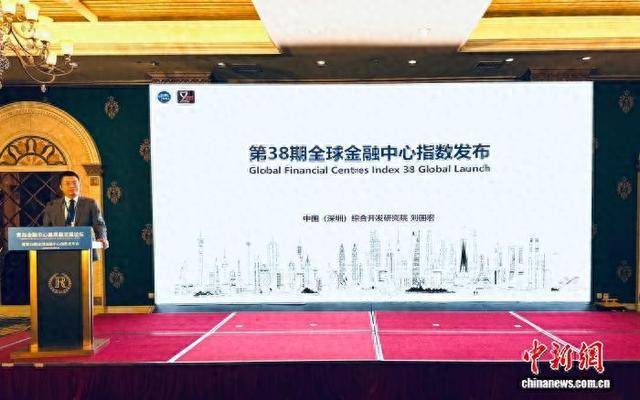
第38期“全球金融中心指数”:中国内地金融中心表现突出
Sou Hu Cai Jing· 2025-09-25 12:57
Core Insights - The 38th Global Financial Centre Index (GFCI38) report indicates that Chinese mainland financial centers are performing exceptionally well, with Xi'an rising 9 places in the rankings [1][4] - The report includes 120 financial centers, with the top ten being New York, London, Hong Kong, Singapore, San Francisco, Chicago, Los Angeles, Shanghai, Shenzhen, and Seoul [1][3] Financial Center Rankings - The overall average score of global financial centers has increased by 0.6%, with 50 centers rising in rank, 19 remaining unchanged, and 51 declining [3] - The top ten financial centers are divided into two tiers: the first tier includes New York, London, Hong Kong, and Singapore, with a score gap of only 1 point among them; Singapore's score increased by 13 points, while New York's score decreased by 2 points [3] - The second tier consists of San Francisco, Chicago, Los Angeles, Shanghai, Shenzhen, and Seoul, with a score gap of nearly 10 points from the first tier, but only 1 point difference among themselves, indicating fierce competition [3] Performance of Chinese Financial Centers - A total of 12 financial centers from mainland China made it to the index, with Shanghai (8th), Shenzhen (9th), Beijing (22nd), Guangzhou (33rd), and Qingdao (35th) leading the rankings [4] - All Chinese financial centers saw an increase in scores, with eight centers improving their rankings, including Guangzhou, Chengdu, Hangzhou, Dalian, Nanjing, Wuhan, Tianjin, and Xi'an [4] Fintech Development - In the fintech sector, Hong Kong, Shenzhen, and New York are the top three financial centers, with Hong Kong achieving the highest ranking for the first time [5] - Shanghai's fintech ranking improved by 9 places, placing it in the global top ten, while Guangzhou, Beijing, and Chengdu also saw slight increases [5] - The report highlights the dominance of the US and China in the fintech space, despite the rising positions of other global financial centers [5]