
代币化绿色债券

Search documents
研究 | 《关于境内资产境外发行资产支持证券代币的监管指引》的分析及解读
Sou Hu Cai Jing· 2026-02-13 15:26
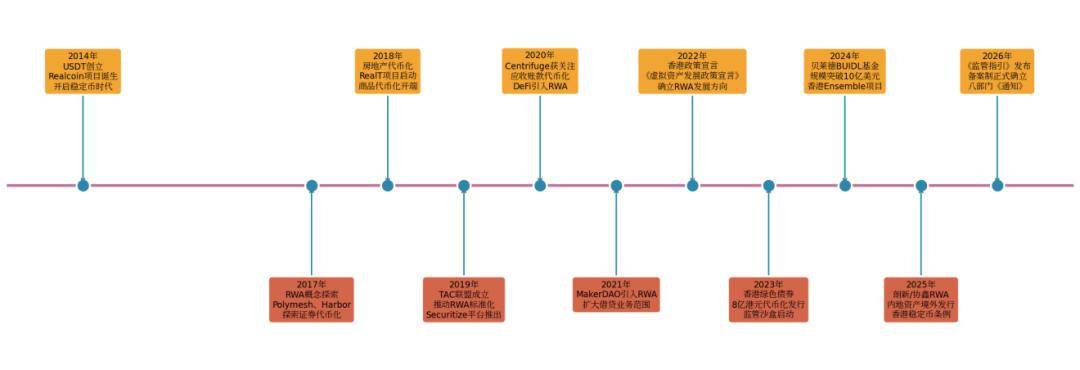
Core Viewpoint - The China Securities Regulatory Commission (CSRC) has established a dual-line regulatory framework for the issuance of asset-backed security tokens based on domestic assets in overseas markets, emphasizing strict compliance and pre-filing requirements to mitigate risks associated with the rapid growth of Real World Assets (RWA) tokenization [1][10][59]. Group 1: Background and Development of RWA Tokenization - The rapid development of RWA tokenization globally has been facilitated by blockchain technology, enhancing efficiency and transparency in asset securitization [3]. - The history of RWA tokenization can be divided into several phases: - The nascent stage (2014-2016) saw the emergence of Realcoin (later Tether) [5]. - The exploratory stage (2017-2019) included significant projects like Polymath and RealT, focusing on compliance and real estate tokenization [5][6]. - The initial development stage (2020-2022) featured projects like Centrifuge and MakerDAO integrating RWA into DeFi ecosystems [6][7]. - The rapid development stage (2023-2025) highlighted Hong Kong's leadership in issuing tokenized green bonds and regulatory frameworks [8][9]. Group 2: Regulatory Framework and Guidelines - The CSRC's regulatory guidelines, released on February 6, 2026, require pre-filing for the issuance of asset-backed security tokens based on domestic assets in overseas markets, marking a shift from a previously unregulated environment [10][11]. - The guidelines emphasize a dual regulatory approach: a complete ban on RWA tokenization activities within China and strict oversight for overseas issuance [13][59]. - The guidelines also introduce a negative list of prohibited activities and entities, ensuring compliance with various legal and regulatory requirements [41][42]. Group 3: Practical Cases of RWA Tokenization in China - Several practical cases of RWA tokenization have emerged in China, particularly in the renewable energy sector, showcasing the integration of RWA technology with national strategies [14][17]. - Notable projects include: - Longxin Technology's charging pile RWA project, which raised approximately 100 million RMB [17]. - GCL-Poly's photovoltaic RWA project, which raised over 200 million RMB [18]. - Xunying Group's battery swap asset RWA project, exploring new financing paradigms for renewable infrastructure [19]. Group 4: Market Size and Future Outlook - According to Boston Consulting Group, the market size for tokenized assets is expected to reach $16 trillion by 2030, significantly increasing from $310 billion in 2022 [13]. - The introduction of the pre-filing system is anticipated to open up the RWA tokenization market while maintaining a cautious regulatory stance to prevent cross-border financial risks [59]. - The unique focus on renewable energy assets in China's RWA tokenization reflects a policy direction towards green finance and the integration of real economy [23].

银发42号文的红线、锚点与双轨试验
Jing Ji Guan Cha Bao· 2026-02-10 12:29
Core Viewpoint - The release of Document No. 42 marks a significant regulatory shift in China's approach to digital assets, particularly focusing on the systematic regulation of Real World Asset (RWA) tokenization, coinciding with the launch of interest-bearing digital RMB 2.0 [1][2][3] Regulatory Framework - Document No. 42 clearly defines RWA tokenization as the conversion of asset ownership and income rights into tokens using cryptographic and distributed ledger technologies, expanding regulatory oversight from virtual currency speculation to the entire asset tokenization chain [2][3] - The document prohibits illegal financial activities related to RWA tokenization unless approved by relevant authorities, emphasizing the need for compliance with specific financial infrastructure [3][4] Comparison of Regulatory Approaches - In contrast to mainland China's "principle of prohibition," Hong Kong is accelerating RWA tokenization, with the government encouraging the tokenization of public assets and establishing a regulatory framework for stablecoins [4][5] - The regulatory strategies in mainland China and Hong Kong represent a "dual-track experiment," where mainland focuses on maintaining financial safety while Hong Kong aims to connect with global capital markets through compliance [4][5][6] Market Dynamics and Opportunities - The market is reassessing the viability of RWA tokenization from three dimensions: asset category selection, geographical strategy, and deeper monetary competition logic [7][8] - Standardized financial assets like money market funds and bonds are becoming the mainstream in global tokenization, while non-standard assets face liquidity challenges [7][8] - The regulatory environment is creating a competitive landscape where licensed institutions dominate, leading to a "survivor game" among players who can navigate both mainland and Hong Kong regulations [13][26] Compliance and Risk Management - The regulatory framework emphasizes the importance of compliance with asset ownership, information disclosure, and cross-border accountability, with specific guidelines for the issuance of RWA [19][26] - Key risks include the potential for illegal service provision to mainland entities from abroad, highlighting the need for strict adherence to regulatory requirements [25][26] Conclusion - Document No. 42 establishes clear regulatory boundaries, indicating that while technology can be utilized, it cannot be leveraged for activities resembling currency, securities, or cross-border channels without proper oversight [9][23]
【首席观察】银发42号文的红线、锚点与双轨试验
Jing Ji Guan Cha Bao· 2026-02-10 06:28
Core Viewpoint - The regulatory landscape for Real World Asset (RWA) tokenization in China is undergoing significant changes, with the introduction of the "42 Document" marking a shift from merely preventing virtual currency speculation to a comprehensive regulatory framework for asset tokenization [3][4]. Regulatory Framework - The "42 Document" clearly defines RWA tokenization as the process of converting ownership and income rights of assets into tokens using cryptographic and distributed ledger technologies, thus bringing it under systematic regulatory oversight [3][4]. - Activities related to RWA tokenization within China are largely prohibited unless they are approved by relevant authorities, while foreign entities are also restricted from providing such services to domestic subjects [4][5]. Comparison with Hong Kong - In contrast to mainland China's restrictive approach, Hong Kong is actively promoting RWA tokenization, with government policies encouraging the tokenization of various assets, including government bonds and carbon credits [5][6]. - The regulatory environment in Hong Kong is designed to facilitate compliance and innovation, creating a dual-track system where mainland China focuses on maintaining financial security while Hong Kong serves as a testing ground for new financial products [5][6]. Market Dynamics - The global trend towards the tokenization of standardized financial assets, such as money market funds and bonds, is gaining traction, with significant examples like BlackRock's BUIDL fund and Franklin Templeton's BENJI fund leading the way [8][9]. - The regulatory framework in China, while restrictive, leaves room for the tokenization of standardized assets, which are seen as more compliant and less risky compared to non-standard assets like real estate [8]. Strategic Considerations - The regulatory environment is prompting a strategic differentiation between mainland China and Hong Kong, with the former focusing on strict compliance and the latter on creating a conducive ecosystem for innovation [9][10]. - The competition among currencies, particularly the rise of USDT and other stablecoins, highlights the need for the digital RMB to adapt and remain relevant in the evolving financial landscape [10][11]. Compliance and Risk Management - The "42 Document" emphasizes the importance of compliance, particularly regarding the issuance of tokens that could be perceived as currency or securities, and outlines the responsibilities of entities involved in RWA tokenization [11][12]. - Key risks include the potential for illegal cross-border activities and the necessity for clear asset ownership and disclosure practices to avoid regulatory pitfalls [12][13].

陈茂波:香港正坚定稳步迈向碳中和目标
Zhong Guo Xin Wen Wang· 2026-01-23 07:56
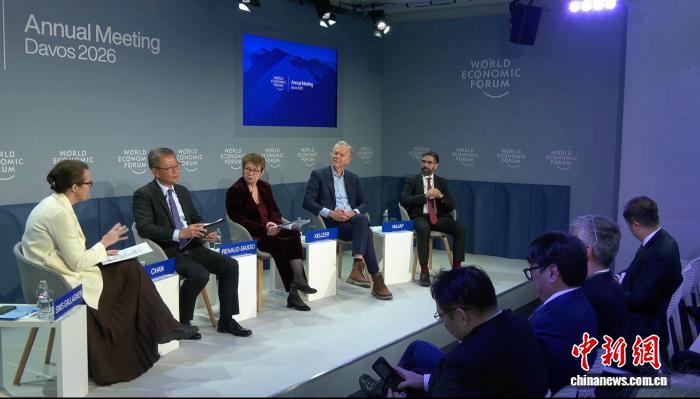
Group 1 - The Hong Kong government is steadily moving towards its carbon neutrality goal by 2050, as stated by Financial Secretary Paul Chan at the World Economic Forum in Davos [1][2] - Strategies to achieve carbon neutrality include tax incentives for electric vehicles, incentives for green buildings, and financial support for sustainable hydrogen transportation trials [2] - Hong Kong aims to leverage its position as an international financial center by promoting green financial products such as green bonds and ESG funds to attract private capital for carbon reduction efforts [2] Group 2 - The government encourages financial innovation, including the issuance of tokenized green bonds and the securitization of infrastructure project loans to free up funds for reinvestment [2] - Public support and trust are deemed crucial for achieving a green transition, with the government ensuring that funds are genuinely used for green projects through internationally aligned standards [2] - High-emission companies, including domestic and international mining firms, can benefit from listing in Hong Kong by gaining market funding, improving governance, transparency, and acceptance in global markets [2]
陈茂波:政策引导叠加金融创新 港府多管齐下推进2050碳中和目标
智通财经网· 2026-01-23 07:21
Core Viewpoint - Hong Kong is steadily progressing towards its carbon neutrality goal by 2050, with strategies including government policies to incentivize behavioral changes among businesses and consumers [1] Group 1: Carbon Neutrality Goals - The Hong Kong government aims to achieve carbon neutrality by 2050, supported by various strategies [1] - Incentives for electric vehicles and green buildings are part of the government's approach to encourage sustainable practices [1] Group 2: Financial Support and Innovation - Financial support is being provided for trials of sustainable hydrogen transportation and other innovative solutions [1] - Hong Kong is leveraging its status as an international financial center to promote green finance products, such as green bonds and ESG funds, to attract private capital for carbon reduction efforts [1] Group 3: Public Trust and Standards - Public support and trust are deemed crucial for the success of the green transition, with the government establishing standards aligned with international practices [1] - The government is implementing sustainable classification and disclosure standards to ensure that funds are effectively utilized for green projects [1] Group 4: Market Opportunities for High Emission Companies - High-emission companies, including mining firms, can benefit from listing in Hong Kong, gaining market funding while improving governance and transparency [1]
香港预计今年发出稳定币牌照
Nan Fang Du Shi Bao· 2026-01-22 23:10
Core Insights - Hong Kong is positioning itself as a global hub for digital finance, artificial intelligence, and blockchain integration, emphasizing its dual role as a "super connector" and "super value creator" in response to changing global economic dynamics [4][5] Group 1: Digital Finance and Technology Integration - Hong Kong is actively developing digital assets under the principle of "same activity, same risk, same regulation," having issued licenses to 11 virtual asset trading platforms and planning to issue stablecoin licenses later this year [5] - The government has issued three batches of tokenized green bonds totaling approximately $2.1 billion and is promoting asset tokenization practices [5] - Hong Kong is leveraging its advantages in the Guangdong-Hong Kong-Macao Greater Bay Area to explore innovations in digital finance and technology [5] Group 2: International Trade and Economic Positioning - Hong Kong is accelerating the establishment of an international gold trading center and plans to sign a memorandum of cooperation with the Shanghai Gold Exchange to enhance its central clearing system [6] - The government is set to unveil a roadmap for CargoX, focusing on optimizing trade financing through digitalization, aiming to strengthen Hong Kong's position as an international trade center [6] Group 3: Support for Free Trade and Multilateralism - Hong Kong's Financial Secretary emphasized the region's commitment to free trade and multilateralism during meetings with officials from various countries, highlighting its role in facilitating investment and financing platforms [7] - The region aims to act as a bridge linking mainland China with global markets, supporting necessary reforms in the World Trade Organization to adapt to new international trade challenges [7] Group 4: Artificial Intelligence and Economic Transformation - The World Economic Forum highlighted the transformative impact of artificial intelligence on industries, with Hong Kong's Financial Secretary stressing the need for economies to embrace these changes for growth and transformation [8][9] - The focus is shifting from the performance of AI models to their profitability and application scenarios, with Hong Kong's financial sector exploring innovations in digital assets driven by AI [9] Group 5: Brand Promotion and Regional Collaboration - Companies are adapting their brand promotion strategies to connect with audiences in the new market environment, utilizing direct communication methods such as video presentations [10] - Hong Kong's development of innovative technology is not isolated but is part of a collaborative effort with other cities in the Greater Bay Area, enhancing the region's technological development [10]
达沃斯论坛:香港勾勒金融科技新路径,力推黄金贸易枢纽建设
Nan Fang Du Shi Bao· 2026-01-22 10:49
Core Insights - Hong Kong is positioning itself as a global financial, trade, and innovation hub by leveraging digital finance, AI, and blockchain technologies, as well as restructuring the international gold trading system [1][3]. Group 1: Digital Finance and Technology Integration - The integration of finance and technology is seen as a key driver for economic transformation, with AI and blockchain leading to significant industry changes [3]. - Hong Kong has adopted a principle of "same activity, same risk, same regulation" to promote responsible and sustainable development in the digital asset market, having issued licenses to 11 virtual asset trading platforms and planning to issue stablecoin licenses later this year [3]. - The government has issued three batches of tokenized green bonds totaling approximately $2.1 billion and established a regulatory sandbox to encourage innovation in asset tokenization [3]. Group 2: International Trade and Gold Trading - In response to rising demand for diversified asset allocation and gold trading platforms in Asia, Hong Kong is accelerating its development as an international gold trading center, with plans to enhance its central clearing system for gold [4]. - The upcoming signing of a memorandum of cooperation with the Shanghai Gold Exchange aims to prepare for future connectivity with the mainland market [4]. Group 3: Trade Ecosystem Upgrade - To address the reshaping of global supply chains, Hong Kong is set to announce a new roadmap for CargoX, focusing on "data, infrastructure, and connectivity" as three strategic pillars to optimize the digital trade financing ecosystem [5]. Group 4: International Cooperation and Market Positioning - During the World Economic Forum, Hong Kong's Financial Secretary engaged in discussions with officials from multiple countries and international organizations, emphasizing Hong Kong's role as a bridge linking mainland China and global markets [7]. - The commitment to free trade and multilateralism was reiterated, with support for necessary reforms in the World Trade Organization to adapt to new international trade challenges [7]. Group 5: AI and Market Dynamics - The transformative impact of AI on various sectors, including technology, media, and telecommunications, was highlighted, with a shift in focus from AI model performance to profitability and application scenarios [9][10]. - The financial sector in Hong Kong is exploring innovations in digital services to enhance transparency, efficiency, inclusivity, and risk management, thereby improving capital allocation to the real economy [10]. Group 6: Regional Collaboration - Hong Kong's development in innovative technology is not isolated but is part of a collaborative effort with the other 10 cities in the Guangdong-Hong Kong-Macao Greater Bay Area, leveraging collective strengths for regional technological advancement [11].
陈茂波:香港将积极稳慎发展数字资产
Xin Hua Wang· 2026-01-21 10:51
Group 1 - The Hong Kong government is adopting a proactive and prudent approach to develop digital assets, promoting responsible and sustainable market growth based on the principle of "same activity, same risk, same regulation" [1] - Since 2023, Hong Kong has issued licenses to 11 virtual asset trading platforms and plans to issue stablecoin licenses this year [1] - The government has issued three batches of tokenized green bonds, totaling approximately $2.1 billion [1] Group 2 - Financial and technological sectors can mutually promote each other, with finance being a key force in supporting and empowering technological development [1] - Digital assets enhance the transparency, efficiency, inclusiveness, and risk management of financial services, effectively directing capital to the real economy [1] - During the World Economic Forum, the Financial Secretary of Hong Kong expressed strong support for free trade and multilateralism, advocating for reforms in the World Trade Organization to address new challenges in international trade [1]
陈茂波:香港采取积极稳慎的态度发展数字资产
Zhong Guo Xin Wen Wang· 2026-01-21 09:18
Group 1 - The Hong Kong government, represented by Financial Secretary Paul Chan, is adopting a proactive and prudent approach to the development of digital assets, emphasizing the importance of transparency, efficiency, inclusivity, and risk management in financial services [3][4] - Since 2023, Hong Kong has issued licenses to 11 virtual asset trading platforms and plans to issue stablecoin licenses this year, demonstrating its commitment to responsible and sustainable market development [3] - The Hong Kong government has issued three batches of tokenized green bonds totaling approximately $2.1 billion and has launched a regulatory sandbox to encourage innovative applications in the digital asset space [3] Group 2 - Paul Chan engaged in discussions with various international officials at the World Economic Forum, focusing on international economic and trade issues, and emphasized the need for cooperation in trade, finance, industrial development, and digital transformation [3] - Chan met with WTO Director-General Ngozi Okonjo-Iweala to discuss the current international trade landscape, reaffirming Hong Kong's support for free trade and multilateralism, and advocating for reforms within the WTO to address emerging challenges in global trade [4]
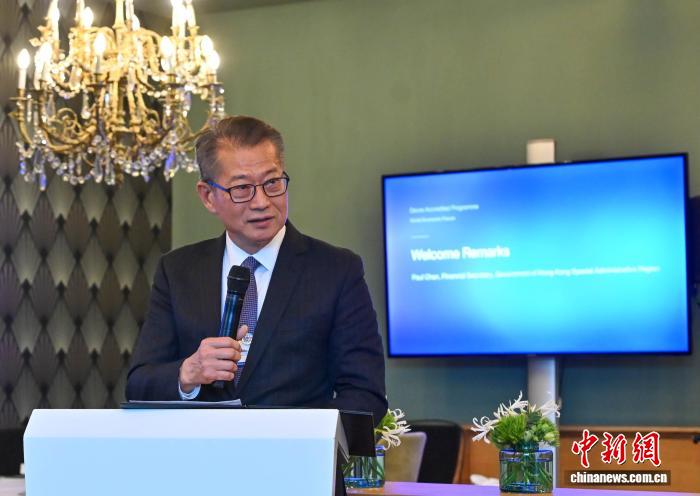
陈茂波:香港已向11家虚拟资产交易台发牌 预计于今年稍后发出稳定币牌照
智通财经网· 2026-01-21 01:41
Core Viewpoint - Hong Kong is actively and prudently developing digital assets as an international financial center, promoting responsible and sustainable market development under the principle of "same activity, same risk, same regulation" [1] Group 1: Regulatory Developments - Since 2023, Hong Kong has issued licenses to 11 virtual asset trading platforms and plans to issue stablecoin licenses later this year [1] - The Hong Kong government is leading by example in promoting tokenization, having issued three batches of tokenized green bonds totaling approximately $2.1 billion [1] Group 2: Financial and Technological Synergy - The integration of finance and technology is emphasized, with digital assets enhancing transparency, efficiency, inclusivity, and risk management in financial services [1] - Financial systems are identified as key enablers of technological development, effectively directing capital into the real economy [1]