个人信息保护

Search documents
【财闻联播】暴涨152%,这家公司明起停牌核查!第十一批药品集采开标,纳入55种药品
券商中国· 2025-10-28 11:54
Macro Dynamics - The 11th batch of national organized drug procurement has announced the selection results, including 55 types of drugs across various fields such as anti-infection, anti-allergy, anti-tumor, blood sugar reduction, blood pressure reduction, and blood lipid reduction. The procurement aims to stabilize clinical use, ensure quality, prevent internal competition, and avoid collusion in bidding. A total of 46,000 medical institutions participated, with 445 companies submitting bids, and 272 companies' products being shortlisted. Patients are expected to access these selected drugs by February 2026 [2] Financial Institutions - Bank of China reported a net profit of 177.66 billion yuan for the first three quarters of 2025, a year-on-year increase of 1.08%, with total operating income of 491.20 billion yuan, up 2.69% [6] - Huatai Securities announced a net profit of 1.88 billion yuan for the first three quarters of 2025, a year-on-year increase of 64.71%, with operating income of 44.23 billion yuan, up 67.32% [7] Market Data - On October 28, the A-share market saw all three major indices decline, with the ChiNext index dropping 0.15%. The total trading volume in the Shanghai and Shenzhen markets was 2.15 trillion yuan, a decrease of 192.3 billion yuan from the previous trading day [8][9] - The financing balance of the two markets increased by 24.57 billion yuan, with the Shanghai Stock Exchange reporting a balance of 1.25 trillion yuan and the Shenzhen Stock Exchange reporting 1.21 trillion yuan [10] Company Dynamics - *ST Zhengping announced a stock trading suspension for verification due to a cumulative increase of 152.42% in stock price from September 1 to October 28, indicating potential market overheating and irrational speculation. The company faces risks of delisting and ongoing financial losses [12] - Haowei Group reported a net profit of 3.21 billion yuan for the first three quarters of 2025, a year-on-year increase of 35.15%, driven by growth in the automotive intelligent driving sector [13] - Zhaoyi Innovation reported a net profit of 508 million yuan for the third quarter of 2025, a year-on-year increase of 61.13%, attributed to improvements in the DRAM industry supply chain [14] - China Film reported a third-quarter revenue of 1.21 billion yuan, a year-on-year increase of 35.61%, with a significant increase in net profit due to successful film releases [15] - Hongmeng Zhixing announced that the total delivery of the AITO M9 has surpassed 250,000 units [16] - Suli Co. reported a net profit of 59.42 million yuan for the third quarter of 2025, a year-on-year increase of 2750.24%, driven by growth in agricultural chemical sales [17]




网络安全法修法,明确处罚非法出售或非法向他人提供个人信息行为
Xin Jing Bao· 2025-10-26 07:13
Group 1 - The revised draft of the Cybersecurity Law addresses the rapid development of artificial intelligence (AI) technology by adding provisions to promote AI safety and development [1][2] - The draft enhances the guiding principles for cybersecurity work, emphasizing the leadership of the Communist Party of China and the integration of development and security [2] - The draft includes support for AI foundational research, key technology development, and infrastructure construction, while also establishing ethical norms and enhancing safety risk monitoring and assessment [2] Group 2 - The revised draft increases penalties for illegal sales or provision of critical network equipment and cybersecurity products, with severe cases facing business suspensions or license revocations [3] - It clarifies that unauthorized acquisition, sale, or provision of personal information, which does not constitute a crime, will be subject to penalties by public security authorities [3] - The draft ensures alignment with existing laws such as the Civil Code and the Personal Information Protection Law regarding personal information handling by network operators [3]
工信部通报20款智能终端,儿童电子产品成重灾区
21世纪经济报道· 2025-10-24 13:49
Core Viewpoint - The article highlights the increasing scrutiny and regulatory actions against smart terminal products due to violations of user rights, particularly in the context of personal information protection [1][10][16]. Regulatory Actions - On October 22, the Ministry of Industry and Information Technology announced the exposure of 20 smart terminal products that infringe on user rights, marking the first punitive case since the launch of a special action for personal information protection [1][10]. - The recent government directives emphasize the need for compliance as the market for smart terminals continues to grow, with a target of over 70% application penetration by 2027 [1][11]. Common Issues Identified - The reported products exhibited common violations, with 85% failing to provide personal information processing rules and 60% lacking permission control mechanisms [10][12]. - Smart locks and cameras, which are closely related to personal living spaces, showed multiple violations, including unauthorized collection of facial recognition data and improper transmission of personal information to the cloud [10][14]. Impact on Children - Children's electronic products, such as smart watches and learning terminals, were highlighted as significant areas of concern due to their high exposure to privacy risks [10][14]. Industry Trends - The global smart home market is projected to grow rapidly, with a compound annual growth rate of 9.55%, reaching $250.6 billion by 2029 [11]. - As digital devices proliferate, hardware security issues are becoming more prominent, prompting increased regulatory focus on data security and privacy protection [11][12]. Compliance Challenges - Small and medium-sized enterprises face significant compliance challenges, including keeping up with evolving regulations, lacking privacy protection expertise, and insufficient resources for developing compliance tools [15][16]. - The article suggests that a systematic approach to compliance, including special assessments and ongoing improvements in privacy protection measures, is essential for the industry [15][16]. Future Outlook - The article anticipates that regulatory standards and policies for the smart terminal industry will continue to evolve and become more detailed, with a focus on leveraging technology for effective governance [16][17].

工信部首次通报智能终端侵权 儿童电子产品成重灾区
2 1 Shi Ji Jing Ji Bao Dao· 2025-10-24 12:11
Core Viewpoint - The Ministry of Industry and Information Technology has exposed 20 smart terminal products that infringe on user rights, marking the first case of targeted penalties since the announcement of a special action for personal information protection in 2025 [1][9] Group 1: Regulatory Actions - The announcement reflects a shift in regulatory focus from mobile applications to smart terminal devices, highlighting widespread issues in personal information protection within the industry [11][12] - The government aims to enhance compliance requirements as the proliferation of smart terminals raises concerns about user privacy and data security [1][11] Group 2: Common Issues Identified - A significant commonality among the 20 problematic products is the lack of personal information processing rules, affecting 17 products, which accounts for 85% of the cases [9] - 12 products were found to lack permission control mechanisms, representing 60% of the identified issues [9] - Smart locks and cameras, which are closely related to users' personal spaces, exhibited multiple violations, including unauthorized collection of facial recognition data and improper transmission of personal information to the cloud [9] Group 3: Impact on Children - Children's electronic products, such as smart watches and learning devices, have been identified as high-risk items due to their violations, which could directly threaten minors' information security [9][10] Group 4: Industry Trends - The global smart home market is projected to grow rapidly, with a compound annual growth rate of 9.55%, reaching $250.6 billion by 2029, indicating a strong demand for smart terminal applications [10] - As digital devices become more prevalent, hardware security issues are increasingly emerging, prompting heightened regulatory scrutiny on data security and personal privacy protection [10] Group 5: Compliance Challenges for SMEs - Small and medium-sized enterprises face significant compliance challenges, including difficulties in keeping up with evolving personal information protection laws and a lack of specialized privacy protection talent [12][13] - The need for ongoing investment in compliance detection tools is critical, as these tools require long-term development and iteration based on smart terminal technology [12] Group 6: Future Directions - The government is expected to continue refining regulatory standards and policies for the smart terminal industry, with a focus on enhancing personal information protection measures [13] - The integration of technology in regulatory practices is anticipated to play a crucial role in addressing compliance issues within the smart terminal sector [13]
涉嫌侵害用户权益,冠捷科技子公司被责令整改
Shang Hai Zheng Quan Bao· 2025-10-23 04:38
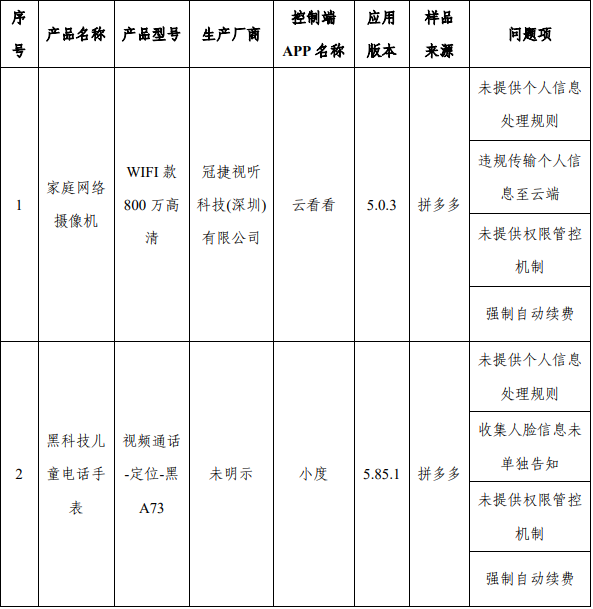
Core Viewpoint - The Ministry of Industry and Information Technology (MIIT) of China has reported that 20 smart terminal products, including "home network cameras" and "black technology children's phone watches," have been found to violate user rights, necessitating rectification according to relevant regulations [2][6]. Group 1: Issues Identified - The identified issues with the "home network camera" produced by AOC Technology (Shenzhen) Co., Ltd. include failure to provide personal information processing rules, unauthorized transmission of personal information to the cloud, lack of permission control mechanisms, and forced automatic renewal [3][4][5]. - The app associated with the "home network camera," named "Yun Kankan," is designed for real-time monitoring and includes features such as two-way voice, remote control, and motion detection [5]. Group 2: Legal Implications - Legal experts have indicated that the issues with the "home network camera" and its app may violate multiple laws, including the Personal Information Protection Law and the Cybersecurity Law, which require clear communication of personal information handling rules and prohibit unauthorized use of personal data [5][8]. - Consumers affected by these violations have the right to file complaints with e-commerce platforms or relevant regulatory authorities, and they may seek damages if their personal information rights are infringed [8]. Group 3: Company Response - AOC Technology has stated that it is in contact with its subsidiary AOC Technology (Shenzhen) Co., Ltd. to obtain a situation report and rectification plan in response to the MIIT's findings [6][7]. - The company is currently investigating whether the reported products are still available for sale on e-commerce platforms [7].


工信部首次通报20款侵权智能终端!涉智能音箱、智能门锁等
Nan Fang Du Shi Bao· 2025-10-23 04:29
Core Points - The Ministry of Industry and Information Technology (MIIT) reported 20 smart terminal products that infringe on user rights, marking the first time such a notification has been issued [1][2] - The most common issues identified include the lack of personal information processing rules and the absence of permission control mechanisms [1] Group 1: Infringing Products - The 20 infringing products include 5 smart speakers, 5 smart locks, 3 smart learning terminals, 3 cameras, as well as smart robots and children's phone watches [1] - Among the 20 products, 17 did not provide personal information processing rules, including "Xinghuo Xiaofeixia Smart AI Speaker" and "Kalen Mashi 3D Face Smart Lock (3.10.018)" [1] - 12 products failed to provide permission control mechanisms, such as "Shenming Xiaobai Youth Version Smart Camera (2.6.7)" and "Kediwei Le Smart Robot (1.4.0)" [1] Group 2: Data Transmission Issues - 11 products, including "Jingchang Kan Lengcai Night Vision Camera (3.3.8)", illegally transmitted personal information to the cloud [1] - 6 products, such as "Heikeji Children's Phone Watch (5.85 1)", collected facial information without separate notification [1] - More than half of the reported products exhibited 3-4 issues, indicating a complex infringement situation [1] Group 3: Regulatory Response - MIIT emphasized that the aforementioned smart terminals must rectify the identified issues according to relevant regulations, and failure to do so will result in legal actions [2]
侵害用户权益,工信部通报
中国能源报· 2025-10-22 09:12
Core Viewpoint - The Ministry of Industry and Information Technology (MIIT) has reported on user rights violations by 20 smart terminal products, highlighting issues related to the illegal collection and use of personal information [1]. Summary by Sections Announcement Details - The MIIT's announcement is part of a broader initiative involving multiple government departments aimed at protecting personal information by 2025 [1]. - A third-party inspection revealed that 20 smart terminal products were found to infringe on user rights, prompting the MIIT to issue a public notice [1]. List of Violating Products - The report includes a detailed list of products, manufacturers, and specific issues identified, such as: - **家庭网络摄像机 (Home Network Camera)**: Issues include failure to provide personal information processing rules and unauthorized transmission of personal data to the cloud [2]. - **智能音箱 (Smart Speaker)**: Lacks permission control mechanisms and has automatic renewal features without user consent [3]. - **3D人脸智能锁 (3D Face Recognition Smart Lock)**: Violates personal information transmission rules and does not provide adequate permission management [4]. - **Various other devices**: Similar issues of unauthorized data collection and lack of transparency in personal information handling were noted across multiple products [5][6][7]. Regulatory Actions - The MIIT has mandated that the identified smart terminals must rectify their issues in accordance with relevant regulations, with potential legal actions for non-compliance [1].

工信部通报20款智能终端存在侵害用户权益行为
Zhong Guo Xin Wen Wang· 2025-10-22 05:10
Core Points - The Ministry of Industry and Information Technology (MIIT) reported that 20 smart terminal devices were found to infringe on user rights, following inspections by third-party testing agencies [1][2] Group 1: Regulatory Actions - MIIT, along with the Cyberspace Administration of China, Ministry of Public Security, and State Administration for Market Regulation, announced a series of special actions for personal information protection by 2025 [2] - The identified smart terminals are required to rectify their issues, and those failing to comply will face legal consequences [2] Group 2: Issues Identified - The reported issues include unauthorized collection and transmission of personal information, lack of permission management mechanisms, and forced automatic renewals [3][5][6] - Specific devices mentioned include various smart cameras, smart speakers, and smart locks, with problems such as not providing personal information handling rules and collecting facial recognition data without consent [3][5][6][7]

通报!这20款智能终端存在侵害用户权益行为
Yang Shi Wang· 2025-10-22 03:55
Core Points - The Ministry of Industry and Information Technology (MIIT) has issued a notice regarding the infringement of user rights by smart terminals, identifying 20 devices that violate regulations on personal information collection and usage [1] Group 1: Regulatory Actions - The MIIT, along with other government departments, is conducting a special action series for personal information protection, targeting illegal collection and use of personal data by smart terminals [1] - The identified smart terminals are required to rectify their issues, and failure to comply will result in legal actions by the MIIT [1] Group 2: Violations Identified - A total of 20 smart terminal products were found to have issues such as failure to provide personal information processing rules, unauthorized transmission of personal data to the cloud, and lack of permission control mechanisms [3][4][5][6][7][8] - Specific products mentioned include various smart cameras, children's smart watches, smart speakers, and smart locks, with common violations including forced auto-renewal and inadequate notification regarding the collection of facial recognition data [3][4][5][6][7][8]

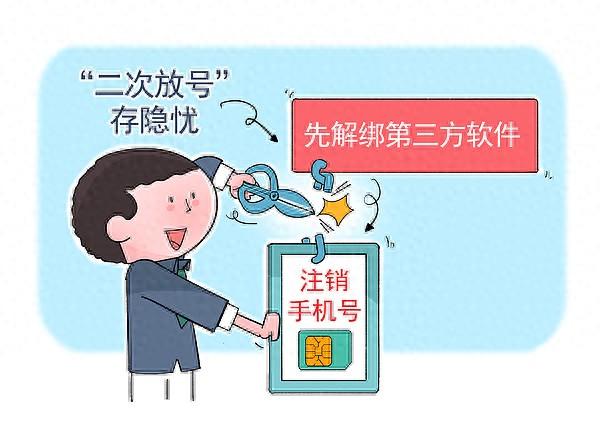
“二次放号”泄露个人信息?“旧号新用”安全隐患如何破
Bei Jing Ri Bao Ke Hu Duan· 2025-10-21 03:15
Core Points - The incident involving the late singer Li Wen highlights significant concerns regarding personal privacy and digital asset management due to the practice of number recycling by telecom operators [1][4][14] - Users are increasingly sharing their experiences of issues arising from recycled numbers, indicating a widespread problem that raises questions about the security mechanisms of platforms and the responsibilities of telecom operators [4][14] Summary by Sections Incident Overview - A recent case where a new phone number user accessed the account of the late singer Li Wen on a music platform due to number recycling has sparked widespread discussion about privacy and security [1][4] - Many users reported similar experiences, such as receiving debt collection calls for previous users or accessing personal information linked to recycled numbers [4][5] Telecom Operators' Practices - Investigations reveal that the three major telecom operators primarily offer recycled phone numbers, with no new number segments available [3][7] - The process of recycling involves a "cooling-off" period, but operators lack the authority to unlink third-party services associated with old numbers [7][14] Legal and Regulatory Insights - Legal experts emphasize that the primary responsibility for unlinking accounts lies with users, who must manage their digital assets carefully [14][15] - Telecom operators are expected to take reasonable measures to ensure the security of recycled numbers, but they are not held to an absolute standard of ensuring complete disconnection from previous users [15][16] Recommendations and Solutions - The introduction of the "One Certificate Inquiry" service by the Ministry of Industry and Information Technology allows users to check which accounts are linked to their phone numbers, although it does not support one-click unbinding [11][13] - Experts suggest that telecom operators and platforms should enhance their responsibilities, including better user notifications about unlinking accounts and implementing stricter verification processes for account access [16][18] Consumer Guidance - Users are advised to proactively unlink their accounts from various services before canceling their phone numbers and to check for any residual accounts linked to new numbers [17][18] - In cases of harassment or issues arising from recycled numbers, users should document evidence and report to relevant authorities [17][18]