全球变暖

Search documents
多国遭遇极端高温 全球变暖影响日益凸显
Yang Shi Xin Wen Ke Hu Duan· 2025-07-14 02:44
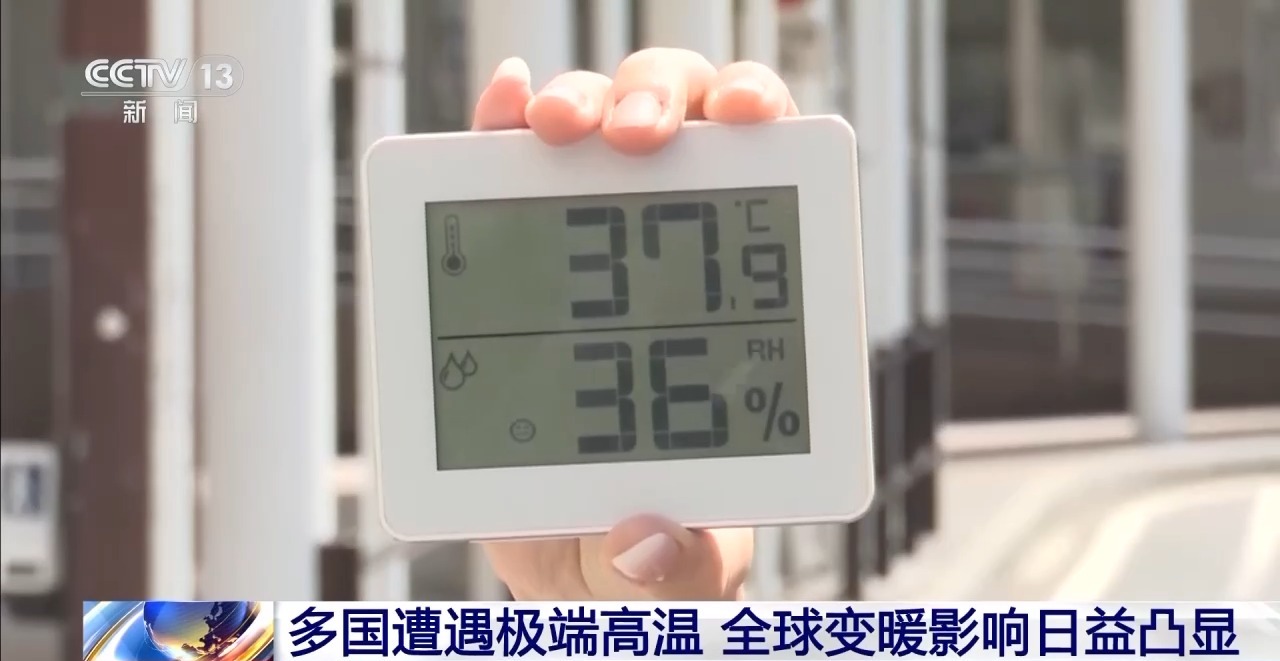
中国科学院大气物理研究所研究员 魏科:联合国秘书长说的名言警句,全球变暖已经结束,全球沸腾时代已经到来。在未来几十年里,全球的温度还 会持续升高,我们现在全球变暖的紧迫性是史无前例的。 高温不仅是气候问题,更是公共健康与安全问题。城市的规划,绿地湿地的配比,劳动者的保护等,都需要为适应一个更热的未来提前布局。 国家气候中心原气候服务首席专家 周兵:我们的绿化地在什么地方,我们的湿地应该怎么去配备,我们城市的植树应该怎么进行,这些都要宏观上来 进行架构。 2024年被世界气象组织确认为最热的一年。根据世界气象组织判断,未来五年,全球平均气温将继续徘徊在创纪录水平,至少有一年的全球平均气温, 可能会超过2024年刚创下的纪录。 联合国秘书长古特雷斯前不久表态说,地球正变得越来越热,越来越危险,没有哪个国家能够幸免。极端高温,越来越成为一场全球危机。 和中国一样,今年夏天,许多国家也都在经历高温的"烤"验。上个月,欧洲被一道看不见的火线点燃。根据世界气象组织公报,西班牙南部出现了46℃ 的高温,法国南部也出现了超过40℃的高温。7月初,奥地利、斯洛文尼亚、波黑等多国,发布了高温红色预警。 世界气象组织发言人纳利斯表 ...

请回答「Knock Knock 世界」NO. 250713
声动活泼· 2025-07-13 08:24
Group 1 - The article discusses the launch of the podcast "Knock Knock World," which aims to engage young readers with global events and knowledge [4][6]. - The first season of "Knock Knock World" is available on major audio platforms, offering three free episodes for listeners [4]. - The season runs from March 25, 2025, to March 24, 2026, with a subscription price of 365 yuan [5]. Group 2 - The podcast is produced in collaboration with "Sound Alive" and "One Tenth," targeting a youthful audience [4]. - The episodes are released three times a week, providing a concise 10-minute format to discuss fresh global topics [3]. - The podcast can be accessed on various platforms, including Apple Podcast, Himalaya, NetEase Cloud Music, and QQ Music [6].

多国遭遇极端高温 全球变暖影响加剧
news flash· 2025-07-13 07:32
据央视新闻消息,近期多国持续遭遇极端高温天气,创下多项历史记录,引发全球关注。科学家指出, 这一现象与全球变暖趋势密切相关,极端天气频发将对生态环境与人类生活造成重大挑战。各国需加强 合作,采取有效措施应对气候变化,降低温室气体排放,以减缓全球变暖的影响。 ...
年年都称史上最热夏天,但欧洲人为什么就不装空调?
虎嗅APP· 2025-07-12 03:15
Core Viewpoint - The article discusses the increasing heat waves in Europe and the challenges related to air conditioning adoption, highlighting the low penetration rate of air conditioning in European households compared to countries like China and the U.S. [3][4] Group 1: Current Climate Situation - Europe is experiencing unprecedented heat waves, with temperatures reaching as high as 35 degrees Celsius in typically cooler regions like Amsterdam [3]. - The average temperature in summer for cities like Paris is around 25 degrees Celsius, while Berlin experiences temperatures between 15 to 25 degrees Celsius [9]. Group 2: Air Conditioning Penetration and Challenges - Air conditioning penetration in Europe is significantly low, with only 20% of households having air conditioning, and even lower rates in countries like Germany (3%) and the UK (3%) [3]. - The installation of air conditioning systems is complicated by legal and policy restrictions, requiring permits and approvals that can take months to obtain [6][7]. Group 3: Economic Considerations - The cost of air conditioning units in Europe ranges from 1,000 to 2,000 euros (approximately 8,440 to 16,880 RMB), which is considerably higher than in China [7][8]. - The average installation cost for air conditioning in France is between 850 to 1,900 euros, making it a significant financial burden for many residents [7]. Group 4: Usage Patterns and Alternatives - The short duration of high temperatures in many parts of Europe (typically 2-4 weeks) makes the investment in air conditioning less appealing [9]. - Many Europeans prefer to spend time in air-conditioned public spaces like shopping centers and cinemas rather than installing air conditioning at home [10]. Group 5: Health and Environmental Concerns - Extreme heat has led to health concerns, with studies indicating that heat waves could result in tens of thousands of heat-related deaths in Europe [12][13]. - The European Union faces a dilemma between increasing air conditioning use and meeting climate goals, as widespread air conditioning could exacerbate energy consumption and environmental issues [13].

酷暑才刚刚开始
Hu Xiu· 2025-07-11 23:06
Group 1 - The extreme heat wave is affecting multiple regions globally, with temperatures reaching near 50°C in southern India and record highs in Japan and the U.S. [1][3][14] - In Europe, countries like Italy, Portugal, Greece, and Germany have issued high-temperature alerts, with France experiencing its hottest June day on record [4][5][10] - The heat is causing significant disruptions, including school closures, reduced restaurant revenues, and operational challenges for public transport and power plants [7][9][11][8] Group 2 - The ongoing heat wave is linked to climate change, with rising temperatures leading to increased electricity demand and reduced efficiency in renewable energy sources [27][28] - The impact of climate change is becoming more evident, with extreme weather events becoming a regular occurrence, prompting societal adaptations such as modified school hours and public cooling spaces [38][42] - The construction industry is responding with innovations like cooling coatings and green roofs to mitigate heat effects [43]
极端天气是不是越来越频繁了?
虎嗅APP· 2025-07-11 13:09
Core Viewpoint - The article emphasizes that global warming is a reality driven primarily by human activities, leading to increasingly extreme weather events and significant impacts on the environment and society [2][4]. Group 1: Causes of Global Warming - The scientific consensus is that human activities, particularly the emission of greenhouse gases like carbon dioxide and methane, are the main drivers of global warming, with current warming rates being 50 times faster than natural cycles [4]. - Industrial emissions and livestock farming, especially cattle, contribute significantly to greenhouse gas emissions, with methane being a major byproduct of cattle digestion [4][5]. Group 2: Effects of Global Warming - Global warming leads to more frequent and severe extreme weather events, including droughts, floods, and heatwaves, due to increased evaporation and changes in atmospheric moisture [8][9]. - The melting of glaciers and ice caps contributes to rising sea levels, but the more immediate concern is the increase in extreme weather patterns, which can lead to both droughts and floods [8][9]. - The phenomenon of "critical points" is highlighted, where irreversible changes, such as the melting of ice sheets and the release of methane from permafrost, could accelerate global warming and lead to more extreme climate conditions [12][13]. Group 3: Potential Benefits and Adaptations - One potential benefit of global warming is the northward shift of precipitation patterns, which could lead to increased rainfall in certain areas, although this does not guarantee improved agricultural conditions due to increased evaporation rates [14][15]. - The article discusses the possibility of adapting to extreme weather by changing living patterns, such as relocating to cooler regions during extreme heat [16]. Group 4: Societal Implications - Extreme weather events pose direct threats to vulnerable populations, exacerbating social inequalities and impacting livelihoods [16]. - The article notes that efforts in climate change mitigation, such as reforestation and renewable energy deployment, are crucial and highlights China's proactive measures in addressing global warming [16].

央视网丨气温预报“人工压数值”?气象学家回应
Yang Shi Wang· 2025-07-11 09:59
Core Viewpoint - The article discusses the increasing frequency and intensity of extreme weather events in China, including record high temperatures and heavy rainfall, attributed to climate change and the behavior of the subtropical high-pressure system [1][5][9]. Group 1: Extreme Weather Trends - China has experienced the hottest June on record, with extreme heat and heavy rainfall occurring simultaneously in different regions [1]. - The National Climate Center reports a general increase in extreme heat records and rainfall intensity across most regions in China over the past few decades [1][5]. - The average annual warm days in China have increased by approximately 6.7 days every decade, indicating a lengthening of the warm season [5]. Group 2: Climate Change Impacts - The article highlights that global warming is a significant factor contributing to the observed warming and increased humidity in northern China [5][9]. - The average relative humidity in Beijing has risen by 5% from 2013-2022 compared to 2003-2012, indicating a trend towards a warmer and more humid climate [3][4]. - The subtropical high-pressure system's behavior has changed, leading to earlier and more intense heat waves in northern regions [7][8]. Group 3: Weather Forecasting Challenges - There is a discrepancy between reported temperatures and public perception due to differences in measurement standards and personal experiences of weather [2]. - Future weather forecasts may increasingly focus on "feels-like" temperatures rather than just air temperature, addressing public concerns more effectively [2]. Group 4: Regional Weather Patterns - The article describes how the subtropical high-pressure system influences weather patterns, causing drought in some areas while leading to heavy rainfall in others, creating a "drought in a large area, flood in a narrow line" phenomenon [6][10]. - The intensity and frequency of localized extreme rainfall events are increasing, with significant implications for flood management and infrastructure [10][11]. Group 5: Adaptation and Preparedness - The article emphasizes the need for improved disaster preparedness and water resource management in light of increasing extreme weather events [12]. - It suggests that alongside disaster mitigation, there should be a focus on utilizing rainfall during flood seasons for water conservation in drier months [12].
埃菲尔铁塔热到弯曲,美国有机场跑道热裂!北半球提前进入“炙烤模式”
第一财经· 2025-07-10 15:35
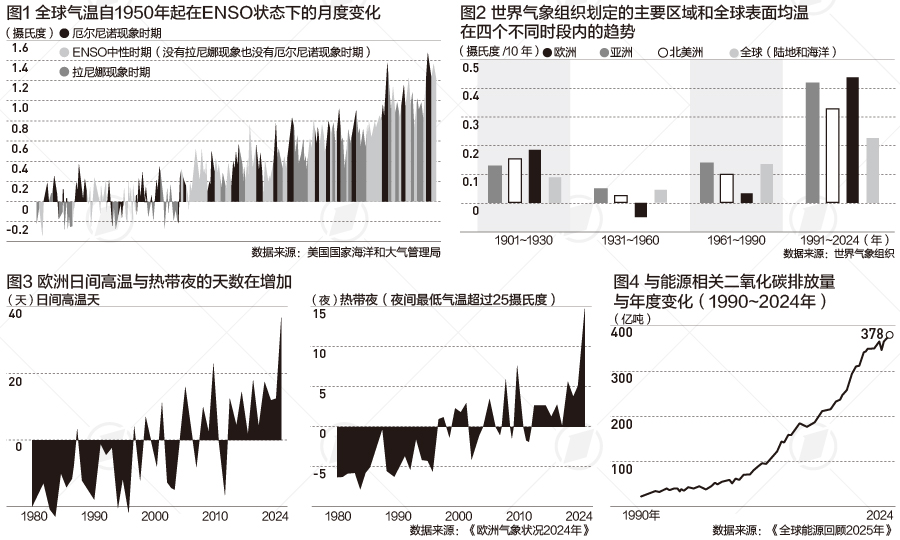
Core Viewpoint - The article discusses the increasing frequency and intensity of extreme heat events globally, particularly in the Northern Hemisphere, and highlights the significant impact of climate change on weather patterns and economic conditions [1][3][9]. Group 1: Climate Change and Extreme Weather - The summer of 2025 has seen unprecedented heat waves, with Paris recording a temperature of 42.3°C, breaking a record set in 1947 [1]. - The Copernicus Climate Change Service reported that June 2025 was the third hottest June on record, with an average surface temperature of 16.46°C, 0.47°C higher than the average from 1991 to 2020 [1]. - The World Meteorological Organization (WMO) warns of an 80% probability of experiencing the warmest years between 2025 and 2029, with a 86% chance of global temperatures exceeding pre-industrial levels by 1.5°C [1][6]. Group 2: Regional Impacts - The frequency and intensity of extreme heat events in Europe are increasing, with projections indicating that by 2050, about half of the European population may face high heat stress risks during summer [3]. - Mediterranean regions experienced 10-15 "tropical nights" in June, where nighttime temperatures remained above 25°C, a phenomenon that typically does not occur in this period [4]. Group 3: Economic Consequences - Extreme weather events, including heat waves, are expected to slow global economic growth by 0.6 percentage points in 2024, as extreme heat impacts productivity [11]. - The International Energy Agency reported a 0.8% increase in CO2 emissions in 2024, reaching a record high of 3.78 billion tons, contributing to the worsening climate crisis [10]. Group 4: Call for Action - The WMO emphasizes the need for international cooperation to address climate challenges, including the establishment of early warning systems, with only 50% of countries currently equipped [12]. - Increased financing support from international financial institutions and climate funds is essential to enhance climate resilience, particularly for vulnerable populations [13].

北半球夏季提前进入“炙烤模式”,会带来哪些经济影响|树线图
Di Yi Cai Jing· 2025-07-10 12:02
Group 1: Climate Change and Heatwaves - The current heatwave in the Northern Hemisphere is linked to a persistent high-pressure system known as the "heat dome," which traps warm air near the surface, resulting in prolonged hot, clear, and dry weather [1][5] - June 2025 was recorded as the third hottest June globally since records began, with an average surface temperature of 16.46 degrees Celsius, 0.47 degrees Celsius higher than the average from 1991 to 2020 [2] - The World Meteorological Organization (WMO) warns that there is an 80% probability of experiencing the warmest years between 2025 and 2029, with a 86% chance of global warming exceeding 1.5 degrees Celsius above pre-industrial levels [2] Group 2: Regional Impacts and Trends - The frequency and intensity of extreme heat events in Europe are increasing, with projections indicating that by 2050, about half of the European population may face high heat stress risks during summer [3] - Since 1950, over two-thirds of extreme heat events in Europe have occurred after 2000, with a notable increase in "tropical nights," where nighttime temperatures remain above 25 degrees Celsius [3] Group 3: Economic Implications - The extreme heat is expected to slow global economic growth by 0.6 percentage points this year, with one day of extreme heat (temperatures exceeding 32 degrees Celsius) equating to half a day of work stoppage [10] - The International Energy Agency reported a 0.8% increase in CO2 emissions related to energy in 2024, reaching a record 3.78 billion tons, contributing to a rise in atmospheric CO2 concentration to 422.5 PPM, which is 50% above pre-industrial levels [7] Group 4: Global Response and Cooperation - The WMO emphasizes the need for enhanced international cooperation to address climate challenges, including the establishment of global early warning systems, as only 50% of countries currently have multi-hazard early warning systems [10] - Increased financing support from international financial institutions and climate funds is crucial for climate change mitigation efforts, particularly for vulnerable populations in developing countries [10]
被蚊子叮咬后离死亡有多近?
Hu Xiu· 2025-07-10 09:04
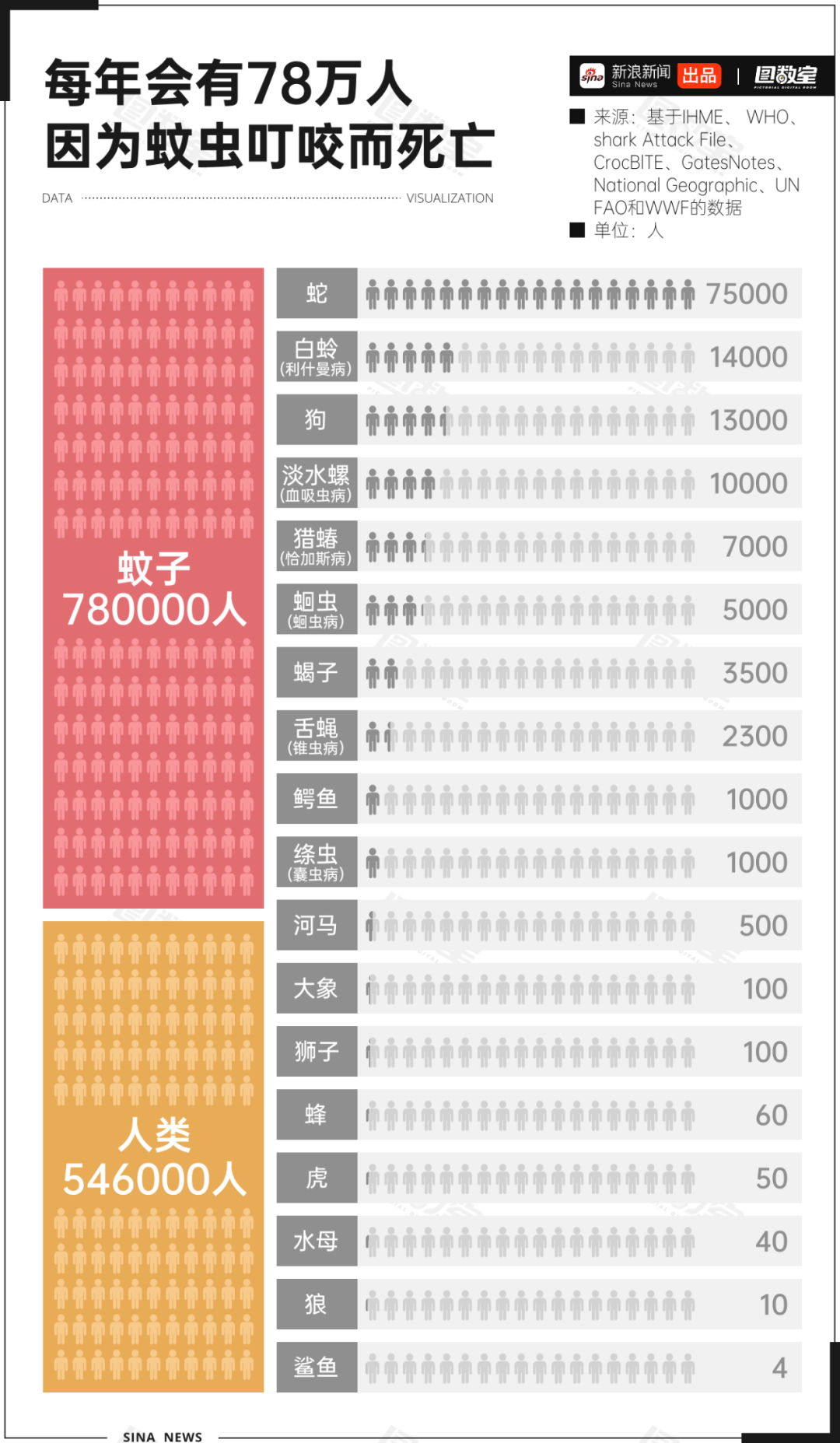
Group 1 - The article highlights that mosquitoes are responsible for approximately 780,000 deaths annually, making them the deadliest animals globally [1][6][5] - In China, mosquito-borne diseases such as dengue fever and malaria are on the rise, with dengue cases experiencing a significant increase in recent years [2][9][11] - The distribution of mosquitoes in China is not limited to southern provinces; several northern provinces also have high mosquito populations [15][17] Group 2 - The main mosquito-borne diseases in China include dengue fever, malaria, and Japanese encephalitis, all of which can have severe health impacts [9][11] - Dengue fever is currently the most concerning mosquito-borne disease in China, with a rapid increase in cases reported in 2023 [9][11] - The spread of mosquito-borne diseases is closely linked to economic development, population mobility, and climate change, with global dengue cases increasing approximately 30 times over the past 50 years [11] Group 3 - The most common mosquito species in China include Aedes albopictus, Culex pipiens, and Anopheles sinensis, with a total of 418 known species [19] - Mosquito activity peaks at specific times, with different species exhibiting varying feeding patterns, which can influence their impact on human populations [20][21] - Mosquito saliva contains allergens that can cause significant immune responses in humans, leading to more severe reactions to bites from certain species [25]