
气候变化

Search documents
欧盟气候监测机构:基本确定2025年为有记录以来第二热年
Xin Hua She· 2025-12-09 03:34
新华社布鲁塞尔12月9日电(记者张兆卿、丁英华)欧盟气候监测机构哥白尼气候变化服务局9日表示, 根据今年前11个月的气温数据基本可以确定,2025年与2023年并列成为有相关记录以来第二热年份,仅 次于2024年。 责编:李磊、王瑞景 ...
保险业面临多项挑战,肖远企最新发声!
券商中国· 2025-12-08 15:07
Core Viewpoint - The global insurance industry is currently facing several challenges, including interest rate risk management, climate change, artificial intelligence application, the evolving business models of insurance companies, and the increasing correlation with non-bank financial assets [1][2]. Group 1: Interest Rate Risk Management - Interest rate fluctuations have become a norm, with historical trends showing that rates are constantly adjusting due to factors like economic growth and inflation. There is no long-term, one-sided interest rate that perfectly matches long-duration insurance assets and liabilities [1]. - Prior to 2022, many countries experienced a prolonged low-interest-rate environment, leading insurance companies to manage risks under a one-sided downward trend. However, since 2022, the Federal Reserve has raised interest rates significantly from 0%-0.25% to a range of 5.25%-5.5% in 11 increments, causing increased volatility in global interest rates [2]. - Insurance companies must dynamically adjust their asset-liability structures to lower costs and improve returns, but adjusting liabilities is more challenging than adjusting assets [2]. Group 2: Climate Change Impact - Climate change poses multiple challenges for the insurance sector, requiring recalibration of actuarial assumptions and re-pricing of coverage amounts and investment assets, which necessitates extensive data accumulation and model optimization [2]. - There is a risk of reduced supply in the insurance market, leading to imbalances in supply and demand, and potentially increasing reliance on the reinsurance market for risk diversification [2]. Group 3: Artificial Intelligence and Business Models - The application of artificial intelligence is expected to significantly expand the potential production boundaries of the insurance sector, leading to overall growth in the financial industry and better resource allocation [3]. - The correlation between insurance investments and non-bank financial assets is increasing, raising concerns about credit risk as insurance companies invest in private credit to improve their asset-liability structures [3]. Group 4: Regulatory Focus on Business Models - The sustainability assessment of insurance company business models should be a regulatory priority. Existing global insurance regulations have established a comprehensive framework, but the evaluation of business models has not received adequate attention [4]. - Key aspects for assessing business model sustainability include company strategy, balance sheet analysis, internal and external resource support, and adaptability [4]. Group 5: International Cooperation - The importance of international cooperation among policymakers and the global community is emphasized, particularly in implementing insurance capital standards and addressing structural changes in the life insurance industry [5].

肖远企:非银风险难识别 将强化资本监管防范风险
2 1 Shi Ji Jing Ji Bao Dao· 2025-12-08 12:27
Group 1 - The core viewpoint emphasizes the increasing interconnectedness between non-bank financial assets and banking and insurance institutions, making risk identification and transmission more challenging [1] - The development of the private equity market provides insurance companies with more investment opportunities, but it also introduces higher potential risks due to the complexity, low transparency, and poor liquidity of private equity assets [1] - The current high interest rate environment poses significant challenges for the insurance industry, particularly life insurance companies, as many business models built on a low interest rate paradigm are becoming unsustainable [1] Group 2 - The sudden shift in the global interest rate environment and the severe challenges posed by climate change are creating dual challenges for the insurance industry [2] - Climate change has a multidimensional impact on the insurance industry, necessitating adjustments in actuarial assumptions, underwriting scope, and risk models [2] - Increased awareness of insurance among farmers following major disasters highlights the critical role of insurance in post-disaster recovery [2]
肖远企:非银风险难识别,将强化资本监管防范风险
2 1 Shi Ji Jing Ji Bao Dao· 2025-12-08 12:27
Group 1 - The core viewpoint of the article emphasizes the increasing interconnectedness between non-bank financial assets and banking and insurance institutions, making risk identification and transmission more challenging [1] - The development of the private equity market provides insurance companies with more investment opportunities, but it also introduces higher potential risks due to the complexity, low transparency, and poor liquidity of private equity assets [1] - From a regulatory perspective, it is crucial for non-bank financial institutions to identify risks and prevent their rapid transmission, necessitating strengthened capital regulation and the establishment of large risk exposure limits [1] Group 2 - The insurance industry, particularly life insurance companies, faces significant challenges due to the impact of a high interest rate environment, which disrupts business models built on a low interest rate paradigm [2] - The sudden shift in the global interest rate environment and the increasing severity of climate change pose dual challenges to the insurance industry, requiring companies to adjust their business models to enhance risk resilience [2] - Climate change has multifaceted impacts on the insurance industry, necessitating revisions to actuarial assumptions, adjustments in underwriting scope, and upgrades to risk models, while also creating new market demands for property protection and asset preservation insurance products [2]
金融监管总局副局长肖远企:气候变化对保险业带来多重影响
Xin Lang Cai Jing· 2025-12-08 11:22
来源:上海证券报·中国证券网 一是保险机构要对精算假设重新计量,对保障金额和投资资产进行重新定价,但这需要大量的数据积累 和模型的改进优化,难以一蹴而就。二是保险行业可能减少供给造成保险供需失衡,出现保障缺口,与 此同时,出于分散风险的目的,对再保险市场的依赖可能会有所增加。 他强调,任何事物都有两面性,如果保险行业能平稳应对气候变化带来的物理风险和转型风险,也能产 生新的业务机遇和盈利增长点。 他提到,气候变化带来社会保险意识显著提升已是不争的事实,人们对财产安全和保值增值的保险需求 增加了。在寿险领域,人们更加注重健康管理,与之相关联的保险需求不断涌现。 "保险在整个经济社会大局中的重要性将得到更广泛的认可。"他表示,国际上有研究认为,如果一个大 的自然灾害造成GDP下降,若其中一定程度的损失得到保险保障,GDP下降幅度将明显降低。为减少损 失,稳定增长,政府应对气候变化增加相应投入,显然也有利于促进整个保险行业的增长。 来源:上海证券报·中国证券网 上证报中国证券网讯(记者 韩宋辉)金融监管总局副局长肖远企12月8日在亚洲保险论坛2025上表示, 气候变化对保险业带来多重影响,可从保险机构和保险行业两个 ...
肖远企:保险业平稳应对气候变化也能产生新的业务机遇和盈利增长点
Bei Jing Shang Bao· 2025-12-08 10:22
北京商报讯(记者 李秀梅)12月8日,金融监管总局副局长肖远企在香港亚洲保险论坛2025上表示,气 候变化是当今最严峻挑战之一。随着全球气温持续上升,台风、洪水、泥石流等极端天气事件频发,气 候风险对经济社会发展和人民财产、健康等方面的影响日益显著。气候变化对保险的影响可从保险机构 和保险行业两个层次来观察:一是保险机构要对精算假设重新计量,对保障金额和投资资产进行重新定 价,但这需要大量的数据积累和模型的改进优化,难以一蹴而就。二是保险行业可能减少供给造成保险 供需失衡,出现保障缺口,与此同时,出于分散风险的目的,对再保险市场的依赖可能会有所增加。 肖远企分析,任何事物都有两面性,如果保险行业能平稳应对气候变化带来的物理风险和转型风险,也 能产生新的业务机遇和盈利增长点。气候变化带来社会保险意识显著提升已是不争的事实,人们对财产 安全和保值增值的保险需求增加了。在寿险领域,人们更加注重健康管理,与之相关联的保险需求不断 涌现。另外,保险在整个经济社会大局中的重要性将得到更广泛的认可。国际上有研究认为,如果一个 大的自然灾害造成GDP下降,若其中一定程度的损失得到保险保障,GDP下降幅度将明显降低。为减少 损 ...
中国能源转型经验可为世界提供借鉴——访《联合国气候变化框架公约》秘书处执行秘书西蒙·斯蒂尔
Xin Hua She· 2025-12-06 12:36
他说,今年很多国家提出了新的国家自主贡献目标,以减少温室气体排放并增强气候适应能力,这表明 各国正承担起应对全球气候变化的责任,同时这也符合各国自身利益,因为这将促进经济增长、创造就 业机会、改善民众健康,提供更安全、更经济的清洁能源。 谈及中国提出的2035年国家自主贡献目标,斯蒂尔认为,这发出了"强有力的信号":首先,中国在气候 行动及相关的技术产品制造和部署方面将继续提速,投资规模将达到空前水平,这将在中国和世界许多 地方降低成本并推动创新。 其次,中国向可再生能源的转型和增强气候适应能力的努力覆盖全经济范围,并将继续快速扩大规模。 这完全符合中国人民和企业的利益,因为这将继续推动强劲的经济增长、就业和生活水平的提高。 斯蒂尔说,这一切都建立在中国令人瞩目的成就之上:不仅达成并超越了既定气候目标,更在清洁能 源、基础设施建设和电动汽车领域实现了大幅增长。 新华财经里约热内卢12月6日电 (记者赵焱陈威华)《联合国气候变化框架公约》(以下简称《公 约》)秘书处执行秘书西蒙·斯蒂尔近日接受新华社记者书面采访时表示,中国在能源转型方面的成就 有目共睹,其经验可为世界提供借鉴。 斯蒂尔说,11月在巴西举办的《公 ...
葡萄牙前就业部长谈欧中合作:携手推进全球治理变革
Zhong Guo Xin Wen Wang· 2025-12-05 12:44
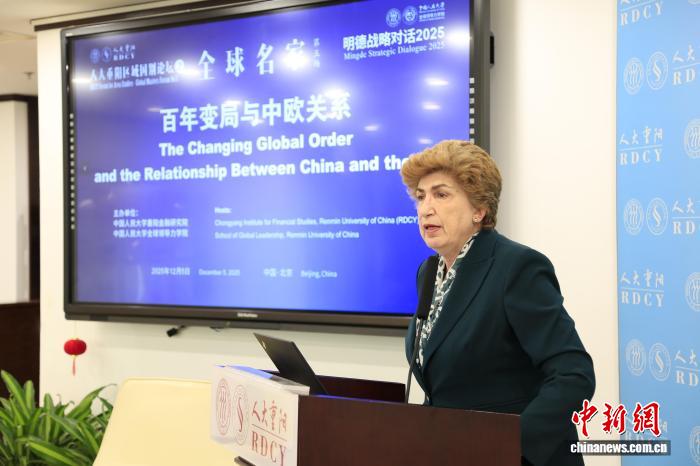
Group 1 - The core viewpoint is that the EU and China can deepen cooperation in multiple areas to promote global governance reform [1][3] - Current global challenges such as climate change, poverty, and conflict have led to a significant lag in the global governance system [3] - Four major trends in the current global order include the decline of neoliberalism, the weakening of Western influence, the complexity of military conflicts, and the profound impact of digital transformation [3] Group 2 - The implementation of the UN's "Future Contract" commitments is seen as a critical opportunity for international collaboration [3] - Areas for potential EU-China cooperation include governance mechanism innovation, social development, climate change, development financing, and digital transformation [3] - The world has entered a multipolar era, necessitating improvements in the global governance framework, with the EU and China positioned to set a positive example for this goal [3]
中奥科技合作联委会第14次会议成功举行
Zheng Quan Shi Bao Wang· 2025-12-05 08:35
人民财讯12月5日电,2025年12月5日,中奥科技合作联委会第14次会议在北京成功举行。会上,双方就 中奥科技创新战略与政策重点进行交流,对上次联委会以来在联合研究、人员交流等方面的合作进展表 示肯定,并就进一步深化在气候变化、可再生能源、食品、农业、自然资源、环境、化学等优先领域开 展务实合作达成共识。 ...
中法发表多份联合声明
财联社· 2025-12-05 07:39
Group 1: Global Governance - The joint statement emphasizes the commitment of China and France to uphold multilateralism and strengthen global governance, especially in light of the 80th anniversary of the United Nations [2][3] - Both countries support the UN Secretary-General's reform initiatives and advocate for increased representation of developing countries in governance platforms [3] - China and France call for enhanced dialogue among major economies to coordinate macroeconomic policies and reform international economic governance [4] Group 2: Climate and Environmental Challenges - China and France reaffirm their commitment to implement the 2019 Beijing Initiative on biodiversity and climate change, and other related agreements [5][6] - The two nations emphasize the importance of scientific integrity in addressing climate and environmental issues and support various international agreements like the Paris Agreement [6][7] - They aim to enhance cooperation in renewable energy deployment and commit to increasing global nuclear power capacity by threefold by 2050 [7][11] Group 3: Nuclear Energy Cooperation - The joint statement highlights the significance of nuclear energy as a clean and stable energy source in addressing global challenges [11][12] - China and France plan to continue collaboration in nuclear technology innovation and safety, including the development of small modular reactors [12][13] - Both countries express their commitment to the international non-proliferation regime and the role of the International Atomic Energy Agency [14][15] Group 4: Agricultural and Food Cooperation - The leaders of China and France recognize the importance of agriculture in bilateral relations and aim to enhance cooperation in agricultural technology and practices [16][17] - They agree to provide a fair and non-discriminatory competitive environment for agricultural enterprises and support food safety initiatives [17][18] - The two countries express their commitment to deepen cooperation in wine production and geographical indication protection [18][19] Group 5: International Peace and Security - China and France are committed to seeking constructive solutions to international security challenges based on international law [19][20] - They support efforts for a ceasefire in Ukraine and emphasize the need for conditions conducive to a two-state solution for Israel and Palestine [21][22] - The two nations stress the importance of providing humanitarian aid in conflict areas and maintaining close communication on international peace and security issues [22][23]
