
金融创新

Search documents
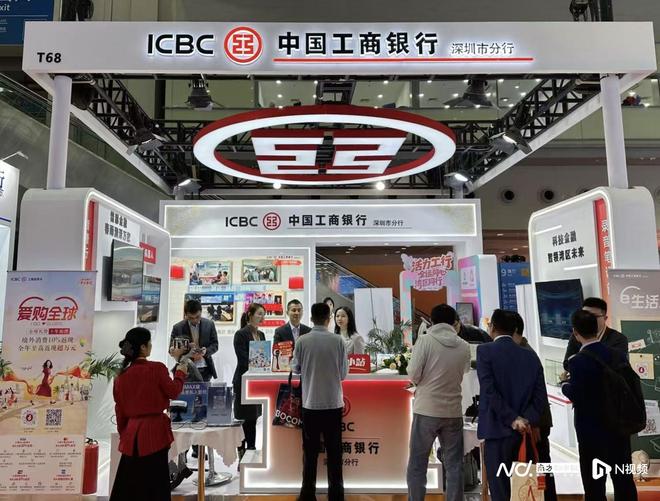
以金博会为窗!深圳工行锚定湾区发展主轴,展示金融创新成果
Nan Fang Du Shi Bao· 2025-11-19 14:52
Core Viewpoint - The 19th Shenzhen International Financial Expo showcases innovative financial products and services aimed at supporting the real economy, with a focus on technology finance and inclusive finance, highlighting the role of financial institutions in driving high-quality development in Shenzhen [1][12]. Technology Finance - Shenzhen is recognized as a national high-tech innovation hub, with over 12.5 national high-tech enterprises per square kilometer and leading the country in PCT international patent applications for 21 consecutive years [5]. - Shenzhen Industrial and Commercial Bank (ICBC) provides comprehensive financial support to technology companies like Kenqing Technology, facilitating technology transformation, production scale expansion, and market promotion [3][5]. - The bank has developed a full-cycle "technology innovation product group" to activate the value of intellectual property and equity assets, including the first copyright pledge financing in Shenzhen [6]. - A unique "three-in-one" evaluation mechanism has been established to assess technology companies based on talent structure, R&D capabilities, and intellectual property value, rather than traditional financial metrics [6][7]. - A digital platform has been created to enhance efficiency and accurately match the needs of technology enterprises, resulting in the approval of over 240 cutting-edge technology companies since its launch [6][7]. Inclusive Finance - Shenzhen ICBC has achieved a historic milestone with its inclusive loan balance surpassing 200 billion yuan, with an annual growth rate of 43% [11]. - The bank has introduced three major products—"Operating Quick Loan," "Online Loan," and "Digital Supply Chain"—to meet the diverse financing needs of small and micro enterprises [8][10]. - The "Park e-loan" product converts soft power indicators into quantifiable assessment metrics, enhancing service quality through data interaction with park operators [10]. - The bank's support has enabled companies like Shenzhen Tengxin Bainai Technology to secure funding for raw material procurement and R&D investments, contributing to their growth as specialized "little giant" enterprises [10]. Fifteenth National Games Finance - The bank has launched a series of financial products related to the Fifteenth National Games, including themed debit and credit cards, integrating sports, finance, and culture [12][15]. - The digital RMB hard wallet allows for seamless payment experiences, enhancing convenience for both local residents and international visitors attending the games [14][15]. - The bank's initiatives aim to transform spectator enthusiasm into tangible benefits for residents, showcasing its commitment to community engagement and support for major events [15].

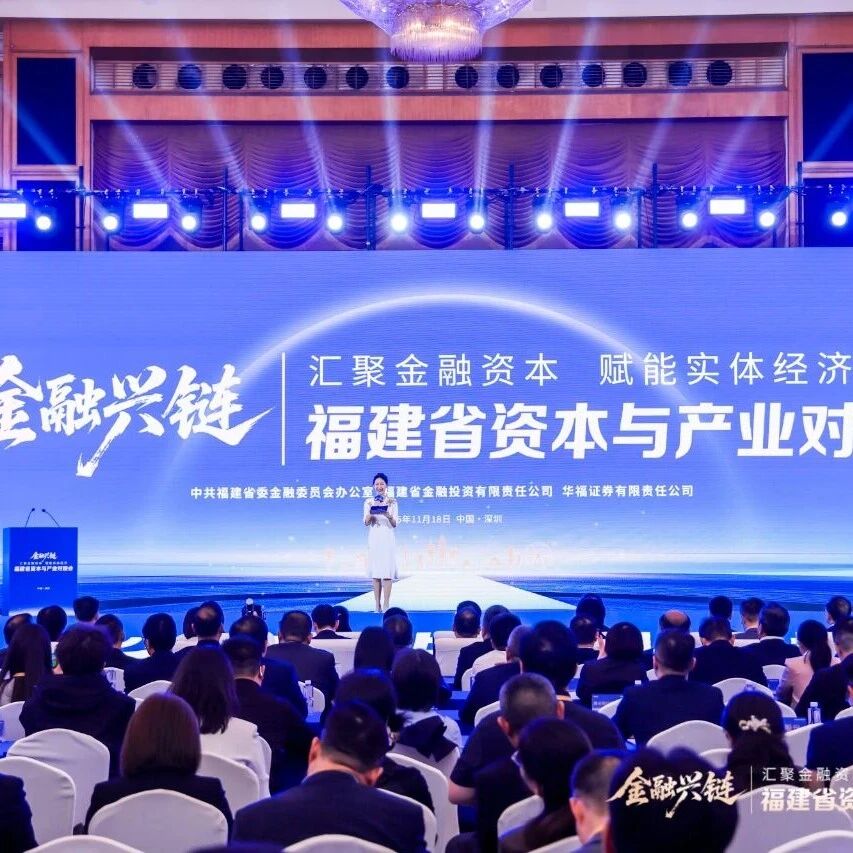
这场资本与产业对接会在深圳成功举办
母基金研究中心· 2025-11-19 08:36
Group 1 - The event aimed to implement the requirements from the 20th National Congress regarding the improvement of the capital market functions that coordinate investment and financing [3] - Over 250 financial institutions and leading private equity firms participated, connecting with more than 300 quality enterprise representatives from Fujian Province and the Greater Bay Area [4] - The event featured presentations from various financial service providers and showcased five companies that shared their development plans and financing needs [4] Group 2 - The event included specialized sessions on themes such as biomedicine + new materials, artificial intelligence + high-end equipment manufacturing, and integrated circuits + next-generation information technology [4] - A "Walk into Shenzhen Stock Exchange" activity was organized, allowing nearly 50 quality enterprises to learn about innovative bond issuance practices and deepen their understanding of multi-level capital markets [4] - The event also provided training for companies looking to list in Hong Kong, with participation from over 200 enterprise representatives [4][5] Group 3 - The event was jointly organized by the Fujian Provincial Financial Office, Fujian Jin Investment, and Huafu Securities, emphasizing the goal of attracting quality financial resources to Fujian's industrial sector [5] - The focus was particularly on serving technology innovation enterprises and key industrial projects to inject financial momentum into the construction of Fujian's modern industrial system [5]
中国银行东莞分行:金融创新护航十五运,续写赛事服务新篇章
2 1 Shi Ji Jing Ji Bao Dao· 2025-11-18 12:57
Core Insights - The 15th National Games held in the Guangdong-Hong Kong-Macao Greater Bay Area showcases the achievements of China's sports development and serves as an important opportunity for regional coordinated development [1] - Bank of China Dongguan Branch leverages its "Double Olympic Bank" heritage to provide comprehensive financial support for the event, including security services and the development of the trendy toy industry [1][3] Financial Support for Security Services - Guangdong Guanyi Security Service Co., Ltd. is a key security service provider for the National Games, responsible for comprehensive security services at venues [1] - Dongguan Bank customized a financial service plan to meet the urgent funding needs of the security company, providing a loan of 6 million yuan to support the purchase of advanced security equipment and system upgrades [2] Support for Local Industries - Dongguan Bank promotes the "Bank of China Manufacturing" service plan tailored for local trendy toy companies, providing financial support across the entire industry chain from raw material procurement to market promotion [2] - By the end of October 2025, the "Bank of China Manufacturing" service plan is expected to have disbursed over 2.5 billion yuan, benefiting more than 600 loan clients [2] Commitment to Quality Development - Dongguan Bank aims to ensure event safety through professional financial services and support industry development with innovative financial products, contributing to the high-quality development of sports in the Greater Bay Area [3]

北京社科院副院长范文仲:数智时代金融体系具有五大趋势
Shang Hai Zheng Quan Bao· 2025-11-18 10:49
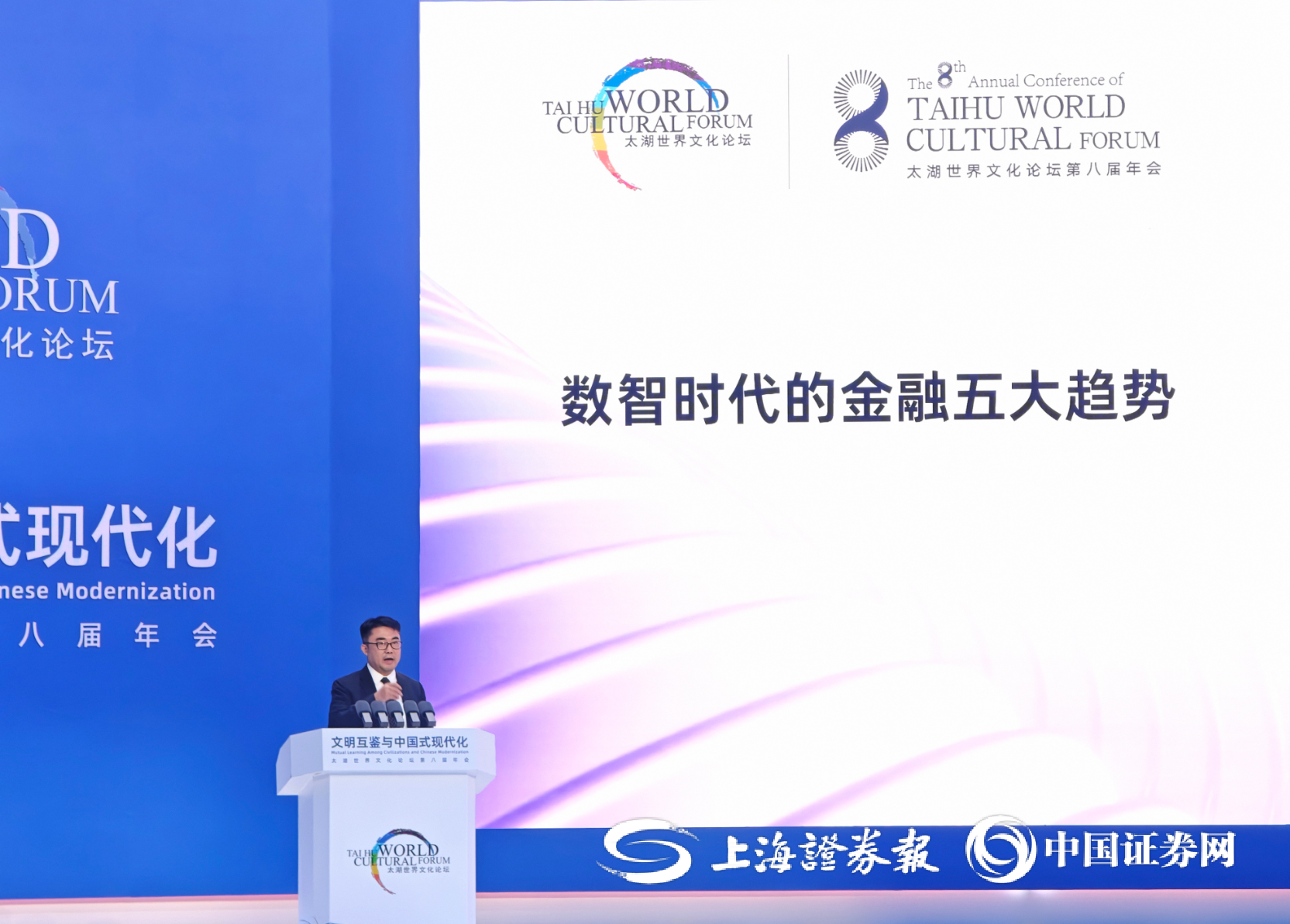
范文仲对数智时代金融的五大趋势进行了预测。首先,金融的分析方式将从定期财务报表向实时数据包转变;其次,金融的支付方式将从建立在传统银行账 户上的法币支付,转变为建立在区块链账本体系上的稳定币支付;第三,金融融资方式将从企业上市、机构发债,转变为RWA代币化上链;第四,金融信 贷投资方式将从行业专家决策转变为AI智能体决策;第五,金融机构的组织形式将从传统公司和基金,向智能投资社区转变。 在范文仲看来,金融垂类专业大模型投资决策的效率和准确性将远超人类。首先,AI模型的决策逻辑是确定性的,给定相同的输入,模型总是产生相同的 输出,这种一致性不仅提高了决策的可靠性,也使得模型的行为可以被理解和验证。其次,AI模型可以持续从新数据中学习,迅速更新和优化其决策能 力。当市场环境发生变化时,模型可以快速适应新的情况,而不需要像人类专家那样需要长时间的经验积累。 "在未来的投资过程中,人类的角色将从'执行决策者'转变为'目标设定者'。"范文仲认为,未来的金融人才需要从单纯的"知识拥有者"转变为"AI管理者", 他们需要具备理解AI模型、运用AI工具、评估AI风险的综合能力,并为AI智能体设定正确的价值观和科学的投资目标。 ...
广州市南沙区常务副区长孙勇:南沙累计落地近百项金融创新成果
Zheng Quan Shi Bao Wang· 2025-11-18 07:59
据介绍,目前南沙区金融业增加值占全区GDP占比超10%,金融业产生的税收常年位居行业前五,成为 全区支柱性产业之一,"南沙金融30条"的重磅发布使南沙成为目前全国唯一连续三次获批国家级金融专 项政策的区级地区,累计落地近百项金融创新成果,有力彰显改革开放试验田引领作用。 人民财讯11月18日电,11月18日,第二十届中国经济论坛平行论坛--2025大湾区科技与金融创新发展大 会在广州南沙隆重举行。广州市南沙区委常委、常务副区长孙勇表示,近三年来,南沙高质量发展跑出 加速度、彰显高质量:2025年第一阶段目标任务基本完成,粤港澳联合科技创新体制机制不断健全,产 业协同发展纵深推进,区域创新与产业转化体系初具规模;经济运行稳中有进、质效双升,2025年前三 季度GDP增速跃居全市第二,"稳中向好、向新提质"的发展态势愈发强劲。 ...
今日,南沙耀目!科创+金融聚力,大湾区奔赴“星辰大海”!
券商中国· 2025-11-18 03:35
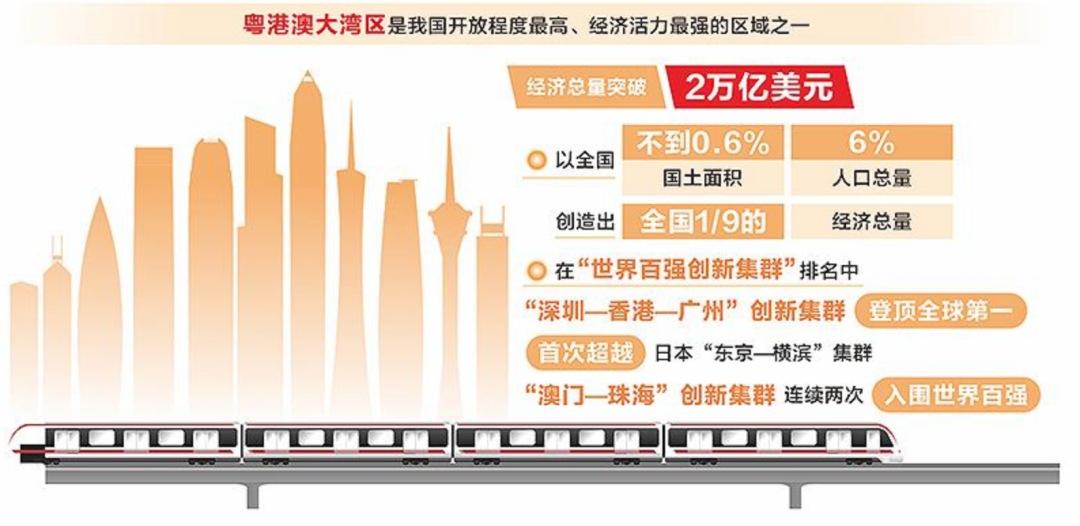
Group 1 - The article highlights the impressive technological innovations showcased at the 15th National Games, emphasizing the vibrant tech scene in the Guangdong-Hong Kong-Macao Greater Bay Area [1] - The Greater Bay Area, covering 56,000 square kilometers, is noted for its high level of openness and economic vitality, contributing to over 2 trillion USD in economic output, which is about 1/9 of the national total [6] - The region is recognized as a fertile ground for technological innovation, with continuous breakthroughs that provide vast opportunities for financial innovation [6][8] Group 2 - The article discusses the deep integration of technology and finance in the Greater Bay Area, where the three regions work together to overcome institutional barriers and accelerate mutual development [8] - Notable innovations include the use of autonomous vehicles for torch relay at the National Games, showcasing advancements in smart driving technology [9] - The article mentions the emergence of unicorn companies and the successful international contracts won by local firms, indicating a robust innovation ecosystem [10] Group 3 - A comprehensive innovation capital system is described, which supports companies from inception to maturity, with active participation from private venture capital firms and state-owned capital [10][11] - The article notes that Guangdong Province leads the nation with 2,466 private equity and venture capital fund managers and approximately 12,000 managed funds [11] - Traditional financial institutions are adapting by developing new financial products tailored to the needs of tech companies, including climate-friendly loans and insurance products [12][13] Group 4 - The article highlights the successful issuance of a knowledge property securitization product, which allows tech companies to leverage intangible assets for financing [14][18] - Various financial products such as tech loans and talent loans are being introduced to support innovation, with significant growth in tech loan balances reported [14] - The cross-border collaboration in the Greater Bay Area is exemplified by the first cross-border marathon event, which symbolizes the seamless integration of the three regions [16] Group 5 - The article concludes with the announcement of the 20th China Economic Forum, which will focus on the development of technology and financial innovation in the Greater Bay Area [20]

今日,南沙耀目!科创+金融聚力,大湾区奔赴“星辰大海”!
Zheng Quan Shi Bao Wang· 2025-11-18 00:54
Core Viewpoint - The 15th National Games showcased over 130 high-tech innovations from the Guangdong-Hong Kong-Macao Greater Bay Area, highlighting the region's vibrant technological and financial innovation landscape [1][3]. Group 1: Technological Innovations - The opening ceremony featured advanced technologies such as a torch carried by an autonomous vehicle and performances by robotic musicians, demonstrating the integration of AI and new information technologies [1]. - The Greater Bay Area is recognized as a leading innovation hub, contributing significantly to China's economic output with a GDP exceeding $2 trillion, representing 1/9 of the national economy despite only accounting for 0.6% of the land area and 6% of the population [1]. - The "Shenzhen-Hong Kong-Guangzhou" innovation cluster has ranked first globally, surpassing the "Tokyo-Yokohama" cluster, while the "Macau-Zhuhai" cluster has also made it to the world's top 100 [4]. Group 2: Financial Innovations - A comprehensive innovation capital system supports enterprises from inception to maturity, with active private venture capital firms and state-owned capital matrices in Shenzhen and Guangzhou driving growth [5][6]. - Traditional financial institutions are innovating to support tech companies, offering tailored financial products such as climate-friendly loans and insurance for R&D risks, which were previously difficult for tech firms to secure [7][8]. - Knowledge-based financial products, including intellectual property securitization, are emerging to convert intangible assets into funding, enhancing the financial ecosystem for tech enterprises [9]. Group 3: Cross-Border Collaboration - The Greater Bay Area is enhancing cross-border cooperation, as evidenced by the first cross-border marathon event, which exemplifies the seamless integration of the three regions through improved infrastructure and regulatory alignment [10]. - Collaborative innovation efforts are being facilitated by joint laboratories and projects across the Greater Bay Area, with significant participation from Hong Kong enterprises [11]. - The introduction of cross-border financing mechanisms for intellectual property is expected to further support companies' international expansion strategies [12].
科创与金融齐飞 粤港澳大湾区奔赴星辰大海
Zheng Quan Shi Bao· 2025-11-17 17:00
Group 1: Technological Innovation in the Greater Bay Area - The 15th National Games showcased over 130 high-tech products, highlighting the vibrant technological innovation in the Guangdong-Hong Kong-Macau Greater Bay Area [1] - The Greater Bay Area, covering 56,000 square kilometers, has an economic output exceeding $2 trillion, contributing to 1/9 of the national economy with only 0.6% of the land area and 6% of the population [1] - The "Shenzhen-Hong Kong-Guangzhou" innovation cluster has ranked first globally, surpassing the "Tokyo-Yokohama" cluster, while the "Macau-Zhuhai" cluster has been recognized in the world's top 100 innovation clusters [2] Group 2: Investment and Capital Support - The Greater Bay Area has a comprehensive innovation capital system that supports enterprises from inception to maturity, with active private venture capital firms and state-owned capital matrices exceeding 100 billion yuan [3][4] - As of 2024, Guangdong has 2,466 private equity and venture capital fund managers, managing approximately 12,000 funds, leading the nation [4] - The investment from state-owned capital has significantly contributed to the commercialization of core products for innovative companies, as seen in the case of Deep Sea Intelligence [3] Group 3: Financial Innovation - Traditional financial institutions are innovating to support technology-driven enterprises, developing new financial products tailored for companies with intangible assets like patents and trademarks [6][8] - The introduction of climate-friendly financial services, such as the "climate融担" loan product, has provided tailored financial support for environmentally friendly enterprises [6] - Knowledge-based financial products, including the first knowledge property securitization product in the Qianhai cooperation zone, have enabled technology companies to convert intangible assets into development capital [7] Group 4: Cross-Border Collaboration - The Greater Bay Area has established cross-border mechanisms that facilitate seamless passage for events like the first cross-border marathon, enhancing collaboration among the three regions [9] - Infrastructure developments, such as the Hong Kong-Zhuhai-Macao Bridge, have strengthened connectivity, promoting the integration of innovation resources across the region [9] - The first cross-border financing support through knowledge property pledges has been successfully implemented, allowing companies to leverage their intellectual property for funding [11]
山东社会融资规模增速连续25个季度高于全国
Da Zhong Ri Bao· 2025-11-14 01:09
Core Insights - Shandong's financial sector has achieved significant growth, with social financing scale increasing for 25 consecutive quarters, surpassing the national average, and reaching 25 trillion yuan in May this year [2][3] - The province has completed its main tasks outlined in the "14th Five-Year Plan" ahead of schedule, indicating a strong commitment to high-quality financial development [2][4] Financial Growth - The total financial volume in Shandong has seen a leap in growth, with the balance of domestic and foreign currency loans increasing for 20 consecutive quarters, exceeding 15 trillion yuan last November [2][3] - The average interest rates for new corporate loans and personal housing loans are projected to be 3.61% and 3.05% respectively by September 2025, reflecting a decrease of 1.06 and 2.2 percentage points since the end of 2020 [3] Financing Costs and Support - The People's Bank of China has guided financial institutions to lower personal housing loan rates by a total of 1.45 percentage points, saving each borrower approximately 6,000 yuan annually [3] - Shandong has secured 864.45 billion yuan in funding for key projects in technology innovation and rural revitalization, and has provided 58.7 billion yuan in loans to 15,100 individual businesses [3][4] Financial Innovation and Reform - Major state-owned financial institutions are actively seeking support to enhance their services, while local institutions are focusing on specialized operations [4] - The province has established financial innovation zones, with the loan balance for innovative enterprises in Jinan reaching 303.98 billion yuan, a 176.7% increase since the approval of the pilot program [4] Capital Market Development - Shandong has implemented a "Ten-Hundred-Thousand" plan for nurturing listed companies, resulting in a total of 430 listed companies with a combined market value of 4.8 trillion yuan [5] - The bond market has expanded, with enterprises raising 1.59 trillion yuan through stock and bond financing, a 63% increase compared to the "13th Five-Year Plan" period [5] Cross-Border Financing and Foreign Exchange Services - The province has improved its foreign exchange service environment, with the number of enterprises able to handle trade payment business increasing from 38 to 4,034 [6] - Over 2,800 billion USD in trade facilitation business has been processed, enhancing the efficiency of foreign exchange operations for quality enterprises [6] Risk Management - Shandong has maintained a strong focus on preventing systemic financial risks, successfully addressing 686.69 billion yuan in non-performing loans [7] - The total capital and provisions for risk resistance in the industry exceed 872.60 billion yuan, indicating robust risk management practices [7]
山东:“十四五”时期金融总量实现跨越式增长
Zheng Quan Shi Bao Wang· 2025-11-13 11:38
Group 1 - The "14th Five-Year Plan" period is crucial for the high-quality development of finance in Shandong, with significant growth in financial volume and social financing scale exceeding 25 trillion yuan this year [1] - The average interest rate for newly issued corporate loans has decreased by 1.06 percentage points, benefiting the real economy, particularly small and micro enterprises [1] - The number of listed companies in Shandong has reached 430, with a total market value of 4.8 trillion yuan, indicating improved quality and activity in the regional equity market [1] Group 2 - Over 580 billion yuan of long-term funds have been attracted to Shandong, focusing on major strategies and key areas, enhancing financial services for the real economy [2] - The province has implemented various financial support policies, providing over 1.95 trillion yuan in financial assistance to foreign trade enterprises [2] - The "14th Five-Year Plan" has seen a focus on deepening reforms and enhancing financial innovation, with state-owned financial institutions playing a key role [2] Group 3 - Local financial institutions are developing specialized operations, with significant growth in loans for high-tech industries, reflecting a commitment to high-quality economic development [3] - The establishment of financial reform pilot zones has led to a 176.7% increase in loans for innovative enterprises in Jinan [3] - A comprehensive financial regulatory framework has been implemented to ensure consistent oversight across local financial businesses [3] Group 4 - A risk prevention and resolution system has been established to combat illegal financial activities and manage debt risks of key enterprises [4] - Continuous monitoring and risk assessment are being conducted to maintain financial order and social stability [4]