中国式现代化

Search documents
坚定信心 保持清醒 用好优势奋力谱写中国式现代化建设的陕西新篇章
Shan Xi Ri Bao· 2025-12-28 23:48
蓝图已经绘就,实干创造未来。让我们更加紧密地团结在以习近平同志为核心的党中央周围,全面 贯彻习近平新时代中国特色社会主义思想和习近平总书记历次来陕考察重要讲话重要指示,只争朝夕、 埋头苦干、锐意进取,奋力实现明年经济社会发展目标任务,推动"十五五"开好局、起好步。 明年是"十五五"开局之年,经济工作头绪众多、意义重大。全省上下要深学笃行习近平经济思想, 深入学习贯彻中央经济工作会议特别是习近平总书记重要讲话精神,进一步把思想和行动统一到以习近 平同志为核心的党中央决策部署上来,学习好、领会好、运用好"五个必须"的规律性认识,坚持全面、 辩证地把握经济形势,既看到存在的问题和面临的挑战,更看到经济向好的坚实基础和有利条件,坚定 信心、保持清醒、用好优势,处理好站位大局和因地制宜、政策给力和改革发力、创新驱动和投资驱 动、防风险和促发展的关系,牢牢把握经济工作的主动权,纲举目张抓好重点任务落实,奋力推动高质 量发展现代化建设迈出新步伐,以高质量发展的确定性应对各种不确定性,奋力谱写中国式现代化建设 的陕西新篇章。 经济形势越是复杂,发展任务越是繁重,越要坚持和加强党的全面领导。要树立和践行正确政绩 观,坚持为人民 ...
推动学习贯彻四中全会精神走深走实
Xin Lang Cai Jing· 2025-12-28 23:33
12月26日至28日,首期省管干部学习贯彻党的二十届四中全会精神专题研讨班在福州举行。研讨班聚焦 学习贯彻党的二十届四中全会精神,通过专题讲座、分组讨论、交流发言等方式开展学习研讨,取得显 著成效。 学习贯彻党的二十届四中全会精神,是当前和今后一个时期的重大政治任务。这次专题研讨班的举行, 对于发挥省管干部"关键少数"作用,引领带动全省广大党员、干部群众深入学习研讨、深刻理解把握、 深化贯彻落实党的二十届四中全会精神和省委十一届九次全会部署,具有重要意义。我们要以高度的政 治自觉、思想自觉、行动自觉,推动学习贯彻党的二十届四中全会精神走深走实,扎实推进"十五五"福 建发展,以实际行动坚定拥护"两个确立"、坚决做到"两个维护"。 强化思想引领。思想是行动的先导。我们要发挥福建独特优势,坚持不懈用习近平新时代中国特色社会 主义思想凝心铸魂,学深悟透习近平总书记在党的二十届四中全会上的重要讲话和全会精神,切实把思 想和行动统一到党中央决策部署上来。要学原文、悟原理,深刻领会会议内涵和精神实质。同时,紧密 联系实际,将党中央决策部署与本地实际有机结合起来,科学谋划"十五五"发展。通过加强理论武装, 持续增进共识、增强 ...
韩喜平:“两个毫不动摇”的理论创新与实践
Jing Ji Ri Bao· 2025-12-28 23:32
Core Viewpoint - The article emphasizes the importance of adhering to and improving the socialist basic economic system in China, highlighting the dual support for both public and non-public ownership as essential for economic development [1][2][3]. Group 1: Theoretical Innovations - The concept of "two unwavering supports" is a significant innovation in ownership theory, rooted in Marxist principles and adapted to China's specific context, reflecting a deep understanding of the economic system's dynamics [2]. - The recognition of the necessity of both public and non-public economies is crucial for achieving common prosperity and maintaining the socialist nature of the state [2][3]. Group 2: Historical Context - Since the reform and opening-up, the understanding of ownership issues has evolved, with increasing emphasis on the importance of non-public ownership as a vital component of the socialist market economy [3]. - The progression from viewing non-public ownership as a "necessary supplement" to recognizing it as an "important component" illustrates the deepening understanding of economic dynamics [3]. Group 3: Current Challenges - The implementation of "two unwavering supports" faces new challenges due to complex changes in both domestic and international environments, including rising protectionism and economic pressures [5][6]. - Misconceptions about the role of private enterprises, such as the "exit of private economy" theory, have affected the confidence of entrepreneurs, particularly in the private sector [6]. Group 4: Strategic Focus - The "14th Five-Year Plan" emphasizes the need to promote the complementary advantages of various ownership types, ensuring a stable and fair development environment for private enterprises [7][9]. - Strengthening state-owned enterprises is crucial for enhancing their competitiveness and supporting national strategic goals, with state-owned enterprises holding assets totaling 401.7 trillion yuan by the end of 2024 [8]. Group 5: Future Directions - The "15th Five-Year Plan" aims to ensure that both public and non-public economies contribute to high-quality development, with a focus on innovation and market vitality [9][10]. - The need for a stable, transparent, and predictable regulatory environment is highlighted to foster the growth of private enterprises and enhance their role in modernization [10].
进一步全面深化改革面临的形势与任务
Ren Min Ri Bao· 2025-12-28 22:48
编者按:近日,中央宣传部、中央和国家机关工委、教育部、中央军委政治工作部、北京市委联合举办 形势政策系列报告会。12月22日,全国政协副主席、中央改革办分管日常工作的副主任穆虹作了"进一 步全面深化改革面临的形势与任务"的专题报告,现以问答形式摘要刊发。 "十四五"时期全面深化改革取得许多新的重大理论成果、制度成果、实践成果 记者:党的二十届四中全会总结概括"十四五"时期我国发展取得的一系列重大成就,包括"全面深化改 革进一步推进,高水平对外开放不断扩大",能否介绍一下有哪些重要改革成果? 穆虹:党的十八大以来,以习近平同志为核心的党中央高举改革开放旗帜,将全面深化改革纳入"四个 全面"战略布局,团结带领全党全军全国各族人民以前所未有的决心和力度涉险滩、闯难关、破藩篱, 从构建重大改革"四梁八柱"到纵深推进各领域各方面改革,推动党和国家各项事业发生历史性变革、取 得历史性成就。 "十四五"时期,面对错综复杂的国际环境和艰巨繁重的国内改革发展稳定任务,以习近平同志为核心的 党中央坚定不移全面深化改革,有效应对百年变局和世纪疫情等超乎寻常的冲击挑战,有力破解我国经 济社会发展中周期性、结构性、体制性问题,推动党和 ...
夯实中国式现代化的“三农”底座
Ren Min Ri Bao· 2025-12-28 22:17
Core Insights - The year marks the conclusion of the "14th Five-Year Plan" and the final year of the five-year transition period for consolidating poverty alleviation achievements and effectively connecting with rural revitalization [1] - The Chinese government emphasizes the importance of rural revitalization and agricultural development as the foundation for modernization, ensuring that there is no large-scale return to poverty [1] Agricultural Production - Grain production in China is projected to increase from 1.3657 trillion jin in 2021 to 1.42975 trillion jin by 2025, with per capita grain availability rising from 483 kg to over 500 kg [2] - Despite facing challenges such as drought and heavy rainfall, national grain production has increased by 16.75 billion jin compared to the previous year [2] Agricultural Resilience and Technology - The integration of good land, good seeds, good opportunities, and good practices has strengthened agricultural resilience, with over 1 billion mu of high-standard farmland established and a crop seed coverage rate exceeding 96% [3] - Agricultural technology innovation has contributed over 64% to grain production, placing China among the top ranks globally in agricultural technology [3] Industry Competitiveness - The development of a strong operational system and competitive capabilities is crucial for building an agricultural powerhouse, as highlighted by the potential of the flower industry in Yunnan [4] Rural Development and Employment - The establishment of employment support workshops in rural areas has enabled over 10,000 people to find jobs close to home, with various industries creating micro-factories to provide local employment opportunities [11] - The income of the rural population in poverty-stricken areas has been steadily increasing, with the average disposable income growing at an annual rate of 7.8%, outpacing the national rural average [12] Infrastructure and Public Services - The construction of rural infrastructure, such as 5G connectivity and elderly care facilities, has improved living conditions and public services in rural areas [8] - The integration of cultural and tourism activities in rural areas has attracted significant numbers of visitors, enhancing local economies [10] Modern Agricultural Systems - The establishment of over 100,000 large-scale agricultural processing enterprises has generated approximately 1.8 trillion yuan in revenue, reflecting the modernization of agricultural systems [6] - New industries and business models, such as leisure agriculture and rural e-commerce, are thriving, with online retail of agricultural products increasing by 9.5% year-on-year [9]
从“菜篮子”里读懂发展密码(人民论坛)
Ren Min Ri Bao· 2025-12-28 22:16
Core Viewpoint - The articles highlight the significant improvements in China's agricultural production, electricity supply, and overall living standards, emphasizing the government's commitment to enhancing the well-being of its citizens and driving economic growth through effective policies and infrastructure development [1][2][3]. Group 1: Agricultural Production and Supply - China maintains the highest vegetable production globally, with a leading per capita supply, showcasing a transformation from past shortages to current abundance [1]. - The shift in agricultural dynamics is attributed to improved logistics and production strategies, allowing year-round access to a variety of fresh produce [1]. - The success of agricultural policies reflects a broader commitment to ensuring food security and enhancing the quality of life for citizens [3]. Group 2: Electricity and Infrastructure Development - The government has made significant strides in providing electricity access to all citizens, overcoming geographical challenges, particularly in remote areas [2]. - The construction of comprehensive transportation networks, including high-speed rail and highways, has facilitated economic integration and improved accessibility across regions [2][3]. - The focus on infrastructure development is seen as a means to stimulate domestic demand and economic vitality [2]. Group 3: Economic Growth and Policy Impact - The articles emphasize the interconnectedness of improving living standards and driving economic growth, suggesting that enhancing citizen welfare can lead to increased industrial development [2][3]. - The government's long-term strategic planning and execution are highlighted as essential for achieving sustainable development goals [3]. - The commitment to a unified national market and breaking down local protectionism is crucial for fostering a more efficient allocation of resources [3].
为未来中国拓展“增量空间”——我国脱贫地区新观察
Ren Min Ri Bao· 2025-12-28 22:16
Group 1 - The significance of China's victory in poverty alleviation is increasingly evident, marking a crucial milestone in the process of Chinese-style modernization and a solid step towards common prosperity for all people [1] - The "14th Five-Year Plan" emphasizes the goal of common prosperity, with over 70% of fiscal spending in the public budget directed towards improving people's livelihoods [1] - The central economic work conference stresses the need to combine investments in material and human resources to consolidate and expand the achievements of poverty alleviation [1] Group 2 - China's poverty alleviation efforts have lifted nearly 100 million rural poor out of poverty in eight years, with a five-year transition period established to ensure the sustainability of these achievements [3] - International economic leaders have recognized China's development achievements, particularly in poverty reduction, as a miracle and a successful model for other developing countries [3] Group 3 - Poverty-stricken areas in China are transforming from weak links in development to new sources of high-quality growth, showcasing resilience and potential in the face of changing circumstances [4] - Regions like Sichuan and Qinghai are being positioned as important growth poles for high-quality development, focusing on clean energy and ecological tourism [4][5] Group 4 - The integration of rural areas into the national economic framework is being enhanced, with significant improvements in logistics and e-commerce, leading to a more efficient domestic market [8] - The total output value of leading industries in 832 poverty-stricken counties has exceeded 1.7 trillion yuan, with per capita disposable income in these areas rising from 12,588 yuan in 2020 to 17,522 yuan in 2024 [8] Group 5 - The shift from outdated economic models to new driving forces is evident in poverty-stricken areas, with a focus on technological and industrial innovation to modernize agriculture [9] - Initiatives like the "smart orchard big data platform" in Gansu are enhancing agricultural productivity and efficiency, demonstrating the potential for technology to drive growth in rural areas [9][10] Group 6 - The development of renewable energy sources, such as solar power in Qinghai, is transforming previously disadvantaged areas into models of sustainable development [10] - The emphasis on green development is becoming a defining characteristic of poverty alleviation regions, contributing to both environmental sustainability and economic growth [10][11]
绘就成长“登峯线” 助力干部“望远登高”
Xin Hua Ri Bao· 2025-12-28 21:59
"如何让'户外'经济成为城市发展新引擎?"周末的虞山脚下暖意融融,一场别开生面的"周末能量吧"专 题讲座火热开讲。台上干货密集输出,台下学员专注凝神,不时举手互动的交流场景中,思想的交锋与 智慧的碰撞持续升温,勾勒出常熟干部勤学善思、笃行不怠的生动图景。近年来,常熟市牢牢锚定高质 量发展靶心,以全链赋能的培养体系奏响干部成长"三部曲",搭建起赋能提质的"快车道"。如今,常熟 干部"比肩登峯,勇立潮头"的奋进姿态,正成为城市发展的鲜明底色,凝聚起推动高质量发展的核心动 能。 精育筑基,铺稳"起步阶" "立身百行,以学为先。"常熟市紧扣干部成长规律、岗位履职需求与城市发展靶心,精心打造"海棠讲 坛.四说一会"特色培训品牌——干部登台说决策部署、青年分享说成长感悟、书记传经说治理经验、人 才领航说行业前沿,专题学习会则聚焦新思想、解读新技术、传递新知识,累计吸引超1.5万人次干部 沉浸研学,实现理论素养与思维格局的同步提升。今年以来,"月月有计划、周周有课堂"的培训节奏贯 穿全年,金融资本、数字经济等重点领域"小班课"精准滴灌,"一把手"课堂、"青苗夜课堂"、"周末能 量吧"等70余场特色培训百花齐放,1000余名 ...
生态文明教育青海模式构建:何以可行与何以可为
Xin Lang Cai Jing· 2025-12-28 21:32
Core Viewpoint - The news emphasizes that ecological civilization is a fundamental aspect of China's modernization, highlighting the importance of green development and ecological protection as essential for sustainable national development [1]. Group 1: Ecological Civilization Education in Qinghai - Qinghai's ecological civilization education is deeply rooted in its ecological resources, policy support, and practical innovations, providing a benchmark for promoting ecological education in the context of building a beautiful China [2]. - The province has integrated ecological civilization education into its overall development strategy, establishing a collaborative mechanism involving provincial coordination, departmental cooperation, and social participation [2][3]. - Qinghai is the only province in China with three national parks under construction, which serve as core areas for ecological protection and immersive educational experiences [2]. Group 2: Multi-Stakeholder Governance Model - Qinghai has moved beyond a traditional administrative-led governance model to a multi-stakeholder collaborative governance structure for ecological education, involving government, schools, and social organizations [3]. - The provincial government plays a crucial role in policy guidance and resource coordination, while schools serve as the main platforms for ecological education [3]. - Social organizations contribute by conducting public ecological education activities, extending the reach of ecological education beyond schools into everyday life [3]. Group 3: Practical Experiences and Innovations - The ecological civilization education model in Qinghai focuses on transforming knowledge transmission into capability cultivation, emphasizing ecological responsibility and interdisciplinary learning [6]. - The province has developed immersive educational environments, such as ecological schools equipped with natural classrooms and VR experience zones, to enhance student engagement [6]. - Qinghai's approach integrates local cultural elements, utilizing traditional ecological wisdom from various ethnic groups to enrich the educational experience [7].
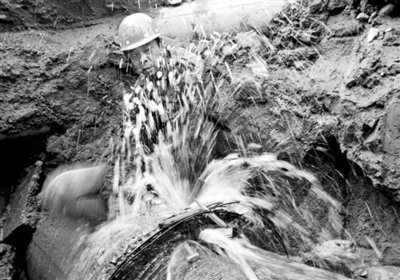
“水”里藏着大文章 每滴水都装着老百姓的期待
Xin Lang Cai Jing· 2025-12-28 21:31
Core Insights - The article highlights the recognition of a waterworks technician, Lü Zhenghai, who has dedicated 42 years to pipeline maintenance and received the national "China Water Saving Award," reflecting the importance of water conservation in national development [3][4]. Group 1: Recognition and Achievements - Lü Zhenghai, a senior technician and Communist Party member, has been working in urban water supply pipeline maintenance since 1983, focusing on technical innovations to achieve "zero leakage" [3][5]. - His team successfully repairs nearly a hundred pipeline leaks annually, contributing significantly to water resource conservation [3][6]. - The establishment of the "Lü Zhenghai Innovation Model Work Studio" marks a shift from reactive repairs to proactive monitoring and technological innovation in water conservation [3][5]. Group 2: Broader Implications - Lü's story exemplifies the modern interpretation of "craftsmanship," emphasizing the integration of technology and innovation in traditional industries, which is crucial for China's industrial upgrade [5][6]. - The article discusses the three accounts of high-quality development: economic, livelihood, and ecological, all interconnected through the management of water resources [6][7]. - The grassroots efforts of individuals like Lü are essential for implementing national policies on water conservation, transforming them into community actions and raising public awareness [7][8].