
能源转型

Search documents
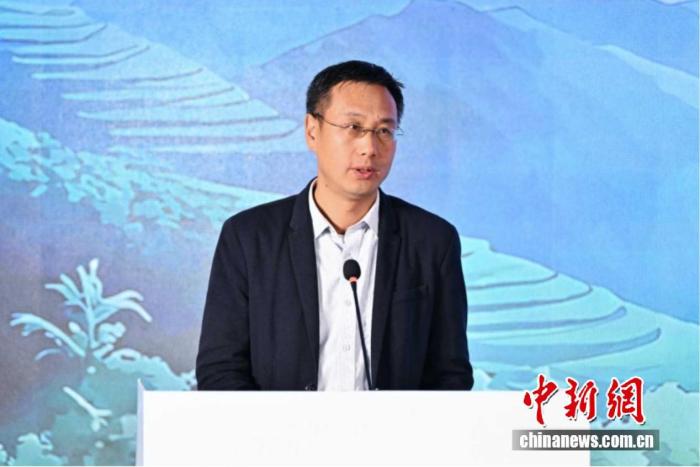
王志高:农村在“双碳”战略中扮演着重要角色
Zhong Guo Xin Wen Wang· 2025-10-24 11:37
Core Viewpoint - The construction of zero-carbon rural areas is essential for China's economic and social development, aligning with the "dual carbon" strategy and promoting national modernization and common prosperity [2]. Group 1: Importance of Rural Areas in Carbon Strategy - Rural areas play a significant role in China's "dual carbon" strategy, with rural carbon emissions accounting for nearly 30% of the national total, and per capita emissions exceeding those of urban residents [2][3]. - Improving the living standards and economic development in rural areas is crucial for promoting energy transition and reducing carbon emissions [2]. Group 2: Opportunities in Rural Development - The process of building zero-carbon rural areas presents numerous opportunities in sectors such as roads, housing, energy storage, microgrids, biomass, and renewable energy [3]. - The potential for investment in rural housing, including the installation of 2 billion kilowatts of photovoltaic systems, is estimated to exceed 4 trillion yuan, transforming rural areas from traditional agricultural producers to significant green electricity producers [3]. Group 3: Systematic Solutions for Zero-Carbon Future - A systematic approach is necessary to achieve the "livable rural zero-carbon future," as fragmented policies can lead to inefficiencies; collaboration across spatial, industrial, energy, and environmental dimensions is essential [3]. - An example of a successful project is the ultra-low energy consumption housing demonstration in Xing Sheng Village, which illustrates the potential for comprehensive planning and energy system integration [3]. Group 4: Enhancing Rural Housing and Energy - The transformation should leverage rural residents' core asset—housing—using energy as a key driver to enhance housing quality [5]. - The integration of photovoltaic systems, energy storage, and heat pumps can improve living conditions while generating stable green electricity income, thereby increasing the value of farmers' assets [5]. Group 5: Challenges and Future Prospects - Despite challenges such as aging population, unclear investment positioning, and cultural transformation, the historical trend towards rural development and energy revolution is unstoppable [5].

全球首位!中国成为世界上能源转型速度最快的国家
Yang Shi Xin Wen· 2025-10-24 11:16
Core Insights - The 2025 International Energy Transformation Forum was held in Suzhou, showcasing China's role as a leader in global energy transition [1] - The "Energy Transformation Index Blue Book 2025" was released, assessing energy transformation trends across five dimensions [1] - China ranks third globally in the energy transformation index, being the only developing country in the top ten [1] - In the newly added assessment of energy transformation speed, China ranks first globally, indicating it is the fastest country in energy transition [1] Energy Storage and Emission Reduction - As of the end of September, China's new energy storage capacity exceeded 100 million kilowatts, accounting for over 40% of the global total [1] - China has provided clean energy products and services to over 200 countries and regions [1] - The "China Energy Good Products" list was released, highlighting that Chinese wind and solar products have reduced global carbon dioxide emissions by approximately 2.65 billion tons in the past year [1]
成果发布︱中国能源好物 向世界传递“中国智慧” 、共享“中国方案”
国家能源局· 2025-10-24 10:17
Core Viewpoint - The 2025 International Energy Transformation Forum showcased 60 representative energy products from China, highlighting advancements in renewable energy, nuclear technology, and smart energy applications, reflecting China's commitment to energy innovation and sustainability [2][3][5]. Group 1: Key Highlights of the Energy Products - The forum introduced a total of 60 energy products, including 36 core products such as "Hualong One" and perovskite photovoltaic modules, along with 24 solutions like integrated hydrogen systems and intelligent microgrids for industrial applications [2]. - The showcased products represent contributions from both state-owned and private enterprises, covering various sectors including wind power, solar energy, and nuclear power [2]. Group 2: Global Recognition and Impact - Attendees praised the rapid development of China's energy industry, noting its modernization through the application of digital technologies and artificial intelligence [4]. - The event highlighted China's role in providing a blueprint for global energy development, showcasing its technological innovations and practical applications in the energy sector [5]. - The energy products presented offer low-cost and easily implementable solutions for developing countries, addressing global energy governance challenges and enhancing international recognition of China's energy governance strategies [5].
中远海特(600428):2025年三季报点评:Q3业绩稳健增长,中长期看好汽车、风电需求潜力
Huachuang Securities· 2025-10-24 08:35
Investment Rating - The report maintains a "Recommendation" rating for COSCO SHIPPING Specialized (600428) [1] Core Views - The company shows steady growth in Q3 performance, with a focus on the potential demand in the automotive and wind power sectors [1][6] - The company is expected to benefit from the expansion of its fleet and stable freight rates, leading to robust profitability growth in the short term [6] Financial Performance Summary - For the first three quarters of 2025, the company achieved total revenue of 16.6 billion yuan, a year-on-year increase of 37.9%, and a net profit attributable to shareholders of 1.33 billion yuan, up 10.5% year-on-year [6] - In Q3 2025, the company reported revenue of 5.84 billion yuan, a 27.9% increase year-on-year, and a net profit of 500 million yuan, a 6.6% increase year-on-year [6] - The company plans to deliver 53 new ships in 2025, increasing its capacity to 9.16 million deadweight tons, a 49% year-on-year growth [6] Revenue and Profit Forecast - Projected total revenue for 2024A is 16.78 billion yuan, with expected growth rates of 39.8% in 2024, 29.7% in 2025, 14.5% in 2026, and 6.8% in 2027 [2] - The forecasted net profit attributable to shareholders for 2024A is 1.53 billion yuan, with growth rates of 43.8% in 2024, 22.1% in 2025, 14.5% in 2026, and 9.3% in 2027 [2] Market Position and Demand Drivers - The company is positioned as a leader in specialized shipping, benefiting from the growth in marine economy and structural demand in downstream sectors such as new energy vehicles and wind power [6] - The report highlights the expected CAGR of 8.8% for global wind power installations from 2024 to 2030, with even higher growth rates for offshore wind [6] Valuation and Target Price - The target price for the company is set at 8.84 yuan, representing a potential upside of 22% from the current price of 7.22 yuan [2][6] - The report maintains profit forecasts for 2025-2027 at 1.87 billion yuan, 2.14 billion yuan, and 2.34 billion yuan respectively, corresponding to PE ratios of 11, 9, and 8 times [6]

国家能源局:我国风光发电装机规模占全球近一半
Xin Hua Cai Jing· 2025-10-24 06:44
Core Viewpoint - China is committed to promoting green development, with significant advancements in renewable energy capacity and international cooperation in energy transition [1][2]. Group 1: Renewable Energy Development - China's total installed capacity for wind and solar power accounts for nearly half of the global total, with new installations representing 60% of the global increase [1]. - Renewable energy generation capacity has increased to approximately 60% of the total energy mix [1]. - Since 2015, China's renewable energy investments have shown a stepwise growth, with annual new installations of wind and solar power exceeding 100 million, 200 million, and 300 million kilowatts [1]. Group 2: International Cooperation and Contributions - China has collaborated on green energy projects with over 100 countries and regions, contributing to a 60% reduction in the average cost of wind power and an 80% reduction in solar power generation costs globally [1]. - In the past year, China's wind and solar products have helped reduce global carbon dioxide emissions by approximately 2.65 billion tons [1]. Group 3: Energy Transition Challenges and Solutions - The global energy transition faces challenges such as geopolitical influences, regional development imbalances, and technological bottlenecks [2]. - There is a call for international cooperation to enhance energy supply security, overcome technological barriers, and promote equitable energy transitions [3]. Group 4: Sustainable Energy Access - Clean energy development is emphasized as a key approach to achieving energy justice, addressing energy poverty, and ensuring access to affordable, reliable, and sustainable modern energy for all [4]. - Multilateral development banks and financial institutions are encouraged to enhance financing support for energy transitions in developing countries, aiming to bridge the investment gap in clean energy [4].
澳大利亚寻求合作伙伴进行科特迪瓦锂矿勘探
Shang Wu Bu Wang Zhan· 2025-10-24 06:06
继2025年5月宣布在上述两个勘探区发现富含锂辉石的伟晶岩后,该公司最新的土壤采样和分析结 果证实了科锂矿的潜力。鲁比诺的含锂土壤带长约6公里,宽2.5公里,已发现多个具有潜力的地质带。 阿博维尔的采集样本显示锂元素含量较高,地质学家也在附近其他地区发现含有锂辉石的岩石碎片。 Atlantic Lithium计划继续进行测绘和岩石取样,以确定钻探活动。 锂是全球能源转型的战略性金属,全球对锂的需求持续增长,预计未来十年可能出现供应紧张。据 国际能源署(IEA)预测,到2035年,现有和已宣布的矿产项目开采量将难以满足预期需求,潜在缺口或 将达到40%左右。 (原标题:澳大利亚寻求合作伙伴进行科特迪瓦锂矿勘探) 据非洲财经信息通讯社10月20日报道,澳大利亚大西洋锂业有限公司(Atlantic Lithium)于当日宣 布,其位于科特迪瓦鲁比诺(Rubino)和阿博维尔(Agboville)的勘探区发现锂土壤异常现象,目前正 考虑寻求合作伙伴,以加快两个项目的研究工作。 ...
中国氢能技术从实验室走向产业化 国际合作大有可为
Zhong Guo Xin Wen Wang· 2025-10-24 04:59
Group 1 - The rise of trade protectionism and unilateralism is impacting the energy sector, particularly hindering the development of hydrogen and green energy, necessitating China's commitment to green energy and international cooperation [1] - China has made significant contributions to the development of hydrogen energy, positioning itself as a global leader in hydrogen technology research, application, and international cooperation [1][2] - The "Hydrogen Industry Development Mid-Long Term Plan (2021-2035)" was issued in 2022, establishing a clear direction for hydrogen industry development, which was later reinforced by its inclusion in the Energy Law of the People's Republic of China [1] Group 2 - China's hydrogen energy technology has advanced from laboratory research to industrial application, with the country leading globally in terms of technology comprehensiveness and advancement [2] - The entire hydrogen energy industry chain in China is currently the most complete in the world, with significant progress in the transportation sector driven by policy support and cost reduction efforts from fuel cell manufacturers [2] - The cost of hydrogen fuel cell buses has significantly decreased from $1.8 million in 2003 to below $500,000, showcasing the potential for commercial viability in the hydrogen sector [2]
2025国际能源变革论坛分论坛在苏州举行,共探能源转型新路径
Yang Zi Wan Bao Wang· 2025-10-24 04:34
Group 1: Core Insights - The 2025 International Energy Transformation Forum is focusing on the integration of artificial intelligence and energy transformation, aiming to contribute to global green and low-carbon energy transition [1][3] - The forum emphasizes the necessity of deep integration between artificial intelligence and the energy sector to support the construction of a new energy system, highlighting the potential applications and benefits [3][5] Group 2: Artificial Intelligence and Energy - The "Artificial Intelligence+" energy sub-forum highlighted the importance of AI in enhancing energy efficiency and supporting renewable energy integration, with significant projects already implemented in Suzhou [5][9] - The release of the "Implementation Plan for Accelerating the Development of 'Artificial Intelligence+' Energy Integration" and the "Overall Planning for 'Artificial Intelligence+' Think Tank Innovation Applications" indicates a strategic push towards AI-driven energy solutions [5][10] Group 3: Urban Energy Transition - The urban energy transition forum discussed the role of energy transformation in driving high-quality urban development, emphasizing the need for collaboration among government, enterprises, research institutions, and citizens [7][9] - Suzhou's energy transition efforts include the promotion of clean coal utilization, reduction of oil consumption, and an increase in the share of electricity in total energy consumption, with a focus on developing a robust renewable energy industry [10][11] - By the end of 2024, Suzhou aims to have over 1,600 renewable energy-related enterprises and a total output value exceeding 820 billion yuan, showcasing its commitment to becoming a leader in energy transformation [10][11]
非洲电网滞后制约可再生能源发展
Shang Wu Bu Wang Zhan· 2025-10-24 04:27
日内瓦Agence Ecofin通讯社10月20日报道,截至2024年,撒哈拉以南非洲地区仍有近6亿人无法获得电 力供应,能源短缺严重制约了经济发展和民生改善。非洲各国正积极发展太阳能、风能等可再生能源以 缓解电力短缺,但输配电网络设施建设长期以来未得到足够重视,未能与可再生能源发展实现同步推 进。 然而,非洲电力行业面临突出挑战。一是电力基础设施建设资金短缺。非洲开发银行与国际货币基金组 织指出,超过60%的非洲国有电力公司处于亏损状态,融资能力有限,难以承担大型输电项目投资。二 是电网扩张速度明显落后于可再生能源装机增长,导致部分新增产能无法并网或被充分利用,从而影响 项目回报率并削弱投资者信心。国际能源署警示称,若输电网络建设持续滞后,可再生能源产能将出 现"被动闲置"风险,不仅削弱能源投资效益,也可能延缓整个大陆的电气化进程。 为应对上述问题,国际能源署提出三项建议:一是优化能源投资结构,提升输配电领域比重,推动公私 合作模式,吸引社会资本参与基础设施建设;二是加强区域电网互联,提升跨国电力调度与输送能力; 三是改革各国国有电力企业管理体制,改善财务状况和运营可持续性。 非洲能源转型的未来不仅取决于可 ...
哈里伯顿涉足数据中心能源供应
Zhong Guo Hua Gong Bao· 2025-10-24 02:31
Core Insights - Halliburton has formed a strategic partnership with distributed energy company VoltaGrid to provide efficient and low-emission power solutions for the rapidly growing global data center market [1] - The initial phase of the collaboration will focus on promoting these solutions in the Middle East, addressing the increasing energy demands of data centers while enhancing sustainability and reliability [1] Industry Overview - Data centers, as critical infrastructure supporting cloud computing and artificial intelligence, are driving exponential growth in electricity demand, particularly in the Middle East [1] - Local governments are heavily investing in digital infrastructure, with major projects like the UAE's "Gateway to the Stars" data center, which plans for an initial capacity of 1 gigawatt [1] - The International Energy Agency predicts that global electricity demand from data centers will rise to approximately 945 terawatt-hours by 2030 [1] Company Strategy - Halliburton's entry into distributed power solutions signifies a strategic expansion beyond its traditional oilfield services, aligning with its goal to support global energy transition through technology and collaboration [1] - For VoltaGrid, this partnership will accelerate its international expansion, leveraging Halliburton's global business scale to serve more customers seeking reliable low-carbon energy systems [1]
