AI大模型

Search documents
亚信科技预计全年利润优于上年 AI大模型应用与交付爆发式增长
Zheng Quan Shi Bao Wang· 2025-08-05 04:48
Core Viewpoint - The company reported a decline in overall revenue due to cost-cutting pressures in the telecommunications industry, but experienced explosive growth in AI model applications and delivery, as well as continued development in 5G private networks and applications [1][2]. Group 1: Financial Performance - The company's revenue for the first half of the year was approximately RMB 2.598 billion, a year-on-year decrease of 13.2% [1]. - Gross profit was about RMB 783 million, representing a year-on-year increase of 6.1%, with a gross margin of 30.1%, up 5.4 percentage points year-on-year [1]. - The company achieved a 35.3% improvement in operating cash flow year-on-year, with a net loss of approximately RMB 48 million after excluding one-time severance costs [1]. Group 2: AI Model Applications - In the first half of 2025, the company signed contracts worth approximately RMB 70 million for AI model applications, a year-on-year increase of 78 times, with revenue from this segment reaching about RMB 26 million, up 76 times year-on-year [2]. - The company has partnered with major firms like Alibaba Cloud and NVIDIA to develop end-to-end solutions for various industries, establishing itself as a key player in the AI model application market [2]. Group 3: 5G Private Networks - The company’s 5G private network and application business signed contracts worth approximately RMB 82 million in the first half of 2025, a year-on-year increase of 51.7% [2]. - Revenue from the 5G private network segment was approximately RMB 47 million, reflecting a year-on-year decline of 26.3% due to delays in nuclear power orders and revenue recognition [2]. Group 4: Nuclear Power Sector - The company has expanded its presence in the nuclear power sector, signing a contract for a 5G private network project at the Hainan Changjiang Nuclear Power Plant, covering 29 units across 7 nuclear power bases nationwide [3]. - The nuclear power sector is expected to continue growing, with over RMB 200 billion in new investments approved in the first half of 2025 [3]. Group 5: Non-telecom Sector Orders - Overall orders in non-telecom sectors increased by 18.2% year-on-year, with significant growth in the financial sector (48.3%), automotive sector (5.3%), and consumer sector (4.4%) [3]. Group 6: Strategic Focus and Future Outlook - The company plans to maintain a steady growth strategy, focusing on AI model applications, 5G private networks, and smart operations as key growth engines while accelerating order conversion [5]. - The company expects significant performance improvement in the second half of the year compared to the first half [5].
陶哲轩经费被断供,在线发帖自证数学有用
量子位· 2025-08-05 04:13
Core Viewpoint - The article discusses the recent challenges faced by Terence Tao, a renowned mathematician, due to the freezing of $339 million in research funding at UCLA, which has significant implications for mathematical research and its perceived value in public investment [2][37]. Group 1: Funding Issues - UCLA's research funding has been frozen as a consequence of a ruling by the U.S. Department of Education regarding discrimination, affecting various disciplines and leading to a significant financial strain on the institution [37][38]. - The National Science Foundation (NSF) and National Institutes of Health (NIH) are crucial funding sources for U.S. academic research, and their withdrawal has severely impacted UCLA's research capabilities [38][40]. Group 2: Value of Mathematical Research - Terence Tao argues that public investment in mathematics, particularly in areas like compressed sensing, yields substantial long-term returns, despite criticisms regarding the immediate applicability of such research [4][24]. - The concept of compressed sensing, which allows for efficient signal processing, exemplifies how mathematical theories can lead to practical applications in fields such as medical imaging and geophysics [5][6][22]. Group 3: Cross-Disciplinary Collaboration - The success of compressed sensing is attributed to the collaboration between mathematicians, scientists, and engineers, demonstrating the importance of interdisciplinary approaches in advancing technology [22][54]. - Tao emphasizes that mathematical insights provide clarity and trust in applications across various fields, which is essential for industries to invest in new technologies [9][18][21]. Group 4: Current Challenges in AI - Tao draws parallels between the current state of AI research and the historical development of compressed sensing, highlighting the need for a mathematical foundation to ensure the long-term viability of AI technologies [25][29]. - He points out that the AI field is predominantly driven by empirical research, which lacks the theoretical rigor that mathematics can provide, leading to challenges in understanding and replicating successful applications [30][31][32].


海康威视20250802
2025-08-05 03:15
Summary of Hikvision's Conference Call Company Overview - **Company**: Hikvision - **Period**: First half of 2025 - **Revenue**: 41.818 billion RMB, up 1.48% year-on-year - **Net Profit**: 5.657 billion RMB, up 11.71% year-on-year - **Cash Flow**: Net cash flow from operating activities was 5.343 billion RMB, representing 94% of net profit, a significant improvement from a cash outflow of 1.896 billion RMB in the same period last year [2][4][3]. Key Points Financial Performance - **Domestic Market**: Revenue from the domestic market decreased by 8.33% to 17.821 billion RMB, primarily due to a significant decline in SMB business, which fell by 29.75% to 4.067 billion RMB [5][2]. - **International Market**: Revenue from overseas operations grew by 6.9% to 12.23 billion RMB, accounting for approximately 29% of total revenue. When including innovative business overseas, this figure rises to 36.89% [5][2]. - **Innovation Business**: Revenue from innovative business increased by 13.92% to 11.766 billion RMB, representing 28% of total revenue. This growth was driven by developments in the 3C industry, new energy vehicles, and lithium battery sectors [6][2]. Strategic Adjustments - **Focus Shift**: The company shifted its strategy from focusing on revenue to prioritizing profit, resulting in a significant reduction in accounts receivable by 3.376 billion RMB [2][3]. - **Product Line Management**: Implemented product line classification management and vertical management for the SMBG sector to enhance profitability [3][2]. - **AI Integration**: Actively embraced AI large model technology, launching hundreds of products across cloud, edge, and domain computing, enhancing the generalization capabilities of multi-dimensional perception products [3][7]. Market Dynamics - **Domestic Economic Conditions**: The domestic economy showed signs of stability with a GDP growth rate of 5.2% in Q2 2025, while fixed asset investment growth was only 2.8% [3][2]. - **International Trade**: Despite uncertainties in international trade, exports grew by 7.2% in the first half of 2025 [3][2]. Future Outlook - **Profit Growth**: The company expects a net profit growth of over 10% for the full year, with sequential improvements in performance anticipated in the second half of 2025 [7][3]. - **Sector Performance**: The SMBG sector is expected to see a significant rebound in revenue in the second half, while PBG and EBG sectors may experience stable or slightly declining revenues [9][3]. - **AI and Digitalization**: Plans to leverage AI technology to enhance product offerings and drive digital transformation across various industries, including manufacturing, energy, and urban management [11][7]. Challenges and Risks - **Market Competition**: Increased competition in the innovative business sector led to a decline in gross margin by 3.7% in the first half of 2025 [14][2]. - **Economic Environment**: The transition to a high-quality growth phase in the Chinese economy may impact fixed asset investments, which are crucial for the company's growth [18][2]. Regional Performance - **Growth Regions**: The Middle East and Africa showed the highest growth rates, followed by Southeast Asia and Latin America. The company plans to continue focusing on these regions for future growth [20][23]. R&D and Innovation - **R&D Strategy**: The company maintains stable R&D investments while focusing on high-potential areas, particularly in AI and digital solutions [36][2]. - **Talent Management**: Emphasizes a systematic approach to talent retention and development, rather than relying solely on high salaries [42][2]. Conclusion Hikvision is navigating a complex economic landscape by adjusting its strategic focus towards profitability, enhancing its innovative capabilities through AI, and targeting growth in international markets. The company remains optimistic about its future performance, driven by a commitment to digital transformation and operational efficiency.

亚信科技上半年营收25.98亿元 同比下降13.2% AI大模型业务增长76倍 毛利率30.1%
Sou Hu Cai Jing· 2025-08-05 03:11
Core Insights - Company experienced a 13.2% decline in revenue for the first half of 2025, totaling approximately RMB 25.98 billion, primarily due to a drop in traditional ICT support business [1] - Emerging business sectors showed significant growth, particularly in AI large model applications, which saw a revenue increase of 76 times year-on-year, reaching approximately RMB 0.26 billion [3] Revenue Breakdown - ICT support business revenue was approximately RMB 21.18 billion, down 14.7% year-on-year [1] - Smart operation business revenue was approximately RMB 4.08 billion, down 8.8% year-on-year [1] - Despite a 26.3% decline in revenue from 5G private networks and applications to RMB 0.47 billion, order amounts increased by 51.7% to approximately RMB 0.82 billion [3] Cost Management and Profitability - Company implemented effective cost control measures, resulting in a gross profit of approximately RMB 7.83 billion, a 6.1% increase year-on-year, with a gross margin of 30.1%, up 5.4 percentage points [4] - Operating cash flow improved with a net outflow reduction of 35.3% year-on-year [4] Net Loss and Future Outlook - The net loss for the reporting period was approximately RMB 2.02 billion, but adjusted for one-time severance costs, the loss narrowed to about RMB 0.48 billion, an improvement from RMB 0.7 billion in the previous year [5] - Management expressed cautious optimism for the second half of the year, anticipating a significant performance improvement [8] Business Transformation Challenges - Traditional ICT support business faces ongoing transformation pressures, with revenue under strain due to cost-cutting measures from telecom clients [7] - Company is focusing on three growth engines: AI large model applications, 5G private networks, and smart operations, while also solidifying its foundation in the telecom sector [7] Shareholder Returns - The board proposed a dividend policy indicating a payout of 40% of annual net profit for the 2025 fiscal year, reflecting confidence in future profitability [8] - Financial data shows a total revenue of RMB 66.46 billion for 2024, a decrease from RMB 78.91 billion in 2023, with a return on equity of 8.20% [8]

比亚迪宣布第五代DM技术再进化,NEDC百公里亏电油耗降低至2.6L
Xin Lang Ke Ji· 2025-08-05 02:41
Core Insights - BYD has officially announced the evolution of its fifth-generation DM technology, achieving a new low of 2.6L per 100 kilometers in NEDC conditions, a reduction of 10% in fuel consumption [1] - The key to further reducing fuel consumption lies in the evolution of the software and hardware collaborative strategy, focusing on data volume, AI model optimization, and the number of driving conditions covered [1] Group 1 - The fifth-generation DM technology has seen over 1.5 million units sold, generating an average of 2.8 billion kilometers of driving data monthly, covering over 1.8 million driving conditions [1] - BYD has developed new AI models for the engine and three electric systems to optimize hybrid strategies using large models [1] - The AI model for the fifth-generation DM technology covers over 1.8 million driving conditions, allowing for refined fuel-saving strategies [1] Group 2 - For example, the Qin L DM-i and Seal 06 DM-i can save 0.3 liters of fuel per 100 kilometers after the evolution, totaling a savings of 6.3 liters for a full tank [2] - Based on current gasoline prices of 7-8 yuan per liter, this translates to a savings of 40-50 yuan per full tank [2] - The results of this fuel consumption evolution will be remotely pushed to all models equipped with the fifth-generation DM technology [2]

对话PPIO姚欣:AI大模型赛道加速内卷,但合理盈利路径仍需探索
Tai Mei Ti A P P· 2025-08-05 02:23
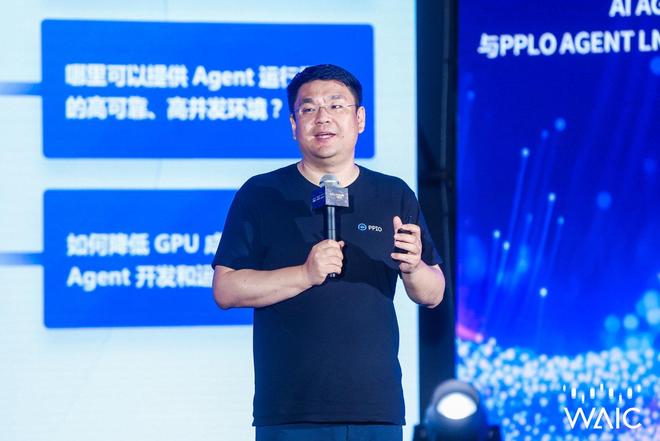
Core Insights - PPIO, co-founded by CEO Yao Xin, is focusing on AI cloud computing services, particularly in the context of the growing demand for GPU computing power and AI inference driven by technologies like ChatGPT and DeepSeek [3][4] - The company has optimized the DeepSeek-R1 model, achieving over 10 times throughput improvement and reducing operational costs by up to 90% [4] - PPIO is recognized as the largest independent edge cloud service provider in China, holding a market share of 4.1% and operating the largest computing network in the country [4][5] Company Developments - PPIO has submitted its IPO application to the Hong Kong Stock Exchange, indicating increased interest from investors following the submission [5] - The company launched China's first Agentic AI infrastructure service platform, which includes a sandbox for agents and supports rapid integration of various AI models [5][6] - PPIO aims to build a comprehensive infrastructure service for developers and enterprises, focusing on agent-based applications [5][6] Market Position and Strategy - PPIO is one of the earliest participants in the distributed cloud computing market to offer AI cloud services, with a significant increase in daily token consumption from 27.1 billion in December 2024 to 200 billion by June 2025 [5] - The company emphasizes the importance of open-source models for the development of the AI industry, contrasting with the trend of U.S. companies moving towards closed-source models [6][10] - Yao Xin believes that the future of AI will require a shift towards distributed computing, particularly in edge and side computing, as the industry moves away from centralized models [7][28] Industry Insights - The AI infrastructure market is characterized by low margins and large scale, with PPIO positioning itself to capitalize on the growing demand for distributed computing solutions [6][18] - The company sees significant opportunities in the domestic GPU market, particularly as the demand for inference capabilities increases [20] - Yao Xin highlights the need for a strong integration of hardware and software to drive advancements in AI technology, emphasizing the importance of end-to-end capabilities [20][22]
亚信科技上半年营收25.98亿元,预计全年利润优于上年
Xin Lang Cai Jing· 2025-08-05 01:29
2025年上半年,毛利约为人民币7.83亿元,同比增长6.1%;毛利率为30.1%,同比上升5.4个百分点。经 营性现金净流出同比改善35.3%。剔除因人员结构优化发生的一次性离职补偿影响后,期内净亏损约人 民币0.48亿元,公司预计下半年净利润持续回升,全年利润优于上年。 亚信科技的发布中期业绩显示,营业收入约为人民币25.98亿元。毛利约为人民币7.83亿元,同比增长 6.1%;毛利率为30.1%,同比上升5.4个百分点。经营性现金净流出同比改善35.3%。AI大模型应用与交 付业务实现爆发式增长,收入约为人民币0.26亿元,同比增长76倍;上半年订单金额约为人民币0.7亿 元,同比增长78倍。 ...
A股半年报前瞻: 高比例分红成亮点
Zhong Guo Zheng Quan Bao· 2025-08-04 22:40
Core Insights - As of August 4, 2025, 87 A-share listed companies have disclosed their semi-annual reports, with 58 companies reporting a year-on-year increase in net profit attributable to shareholders [1] - A total of 30 companies have announced profit distribution plans alongside their semi-annual reports, with many proposing high cash dividend ratios [4] Group 1: Company Performance - ChipLink Integrated-U reported a revenue of 3.495 billion yuan, a year-on-year increase of 21.38%, and a net loss of 170 million yuan, improving from a loss of 471 million yuan in the same period last year [2] - Hikvision achieved a revenue of 41.818 billion yuan, a 1.48% increase year-on-year, and a net profit of 5.657 billion yuan, up 11.71% [2] - CATL reported a revenue of 178.886 billion yuan, a 7.27% increase year-on-year, and a net profit of 30.485 billion yuan, up 33.33% [3] Group 2: Dividend Distribution - Oriental Yuhong plans to distribute a cash dividend of 9.25 yuan per 10 shares [4] - Yisheng shares proposed a cash dividend of 1.5 yuan per 10 shares, aligning with industry characteristics and company growth [4] - DaDaQian plans to distribute a cash dividend of 1.76 yuan per 10 shares, with the total cash dividend amounting to 60.5384 million yuan, representing 33.45% of the company's net profit for the first half of the year [5] Group 3: Market Trends and Insights - Many companies have attracted institutional research following their semi-annual reports, focusing on overseas business layouts and performance changes [7] - Jinfa Technology expects a net profit of 550 million to 650 million yuan, a year-on-year increase of 44.82% to 71.15%, driven by new product development and market share growth [8] - Plit has highlighted its materials' applications in the robotics sector, with some materials already in bulk supply, although this segment currently represents a small portion of overall business [9]


A股半年报前瞻:高比例分红成亮点
Zhong Guo Zheng Quan Bao· 2025-08-04 21:06
Core Insights - A-share companies are gradually disclosing their 2025 semi-annual reports, with 87 companies reporting as of August 4, 2023, and 58 of them showing a year-on-year increase in net profit attributable to shareholders [1] - A total of 30 companies have announced profit distribution plans alongside their semi-annual reports, with many proposing high cash dividend ratios [2][3] Group 1: Company Performance - ChipLink Integrated-U reported a revenue of 3.495 billion yuan, a year-on-year increase of 21.38%, but a net loss of 170 million yuan, improving from a loss of 471 million yuan in the same period last year [1] - Hikvision achieved a revenue of 41.818 billion yuan, a year-on-year growth of 1.48%, and a net profit of 5.657 billion yuan, up 11.71% [2] - CATL reported a revenue of 178.886 billion yuan, a year-on-year increase of 7.27%, and a net profit of 30.485 billion yuan, up 33.33% [2] Group 2: Profit Distribution Plans - Oriental Yuhong plans to distribute a cash dividend of 9.25 yuan per 10 shares, emphasizing the importance of timely returns to investors and confidence in operational performance [3] - Yisheng shares proposed a cash dividend of 1.5 yuan per 10 shares, aligning with industry characteristics and ensuring no significant impact on earnings or cash flow [3] - Daodaquan plans to distribute a cash dividend of 1.76 yuan per 10 shares, with the total cash dividend and share buyback amounting to 33.45% of the net profit for the first half of the year [4] Group 3: Market Trends and Investor Interest - Many companies have attracted institutional interest following their semi-annual reports, with inquiries focusing on overseas business strategies and performance changes [4] - Goldfa Technology anticipates a net profit of 550 million to 650 million yuan, representing a year-on-year increase of 44.82% to 71.15%, driven by new product development and market share growth [5][6] - Companies are actively exploring applications of their materials in the robotics sector, with some already supplying materials for industrial robots, although this segment currently represents a small portion of overall business [6]


宜人智科上涨2.82%,报5.84美元/股,总市值5.05亿美元
Jin Rong Jie· 2025-08-04 14:30
Core Insights - Yiren Technology (YRD) experienced a 2.82% increase in stock price, reaching $5.84 per share, with a total market capitalization of $505 million as of August 4 [1] - As of March 31, 2025, Yiren Technology reported total revenue of 1.555 billion RMB, reflecting a year-on-year growth of 12.8%, while net profit attributable to shareholders decreased by 49.06% to 248 million RMB [1] Company Overview - Yiren Technology, formerly known as Yiren Jinke, rebranded in June 2024 and is headquartered in Beijing, China [2] - The company went public on the New York Stock Exchange on December 18, 2015, and operates as a comprehensive financial service provider driven by AI models [2] - Yiren Technology leverages strong algorithms and data analysis capabilities to offer customized financial products and services, focusing on intelligent risk control, product selection, marketing, operations, and customer service [2]