产业链自主可控

Search documents
汽轮科技(300277) - 2026年3月31日投资者关系活动记录表
2026-04-01 09:12
Group 1: Company Overview and Core Business - The company is a professional R&D and manufacturing service base for industrial steam turbines in China, contributing significantly to the country's industrial development and economic security [2][4]. - It has over 60 years of experience in industrial steam turbines, with applications in various sectors including petrochemicals, metallurgy, and renewable energy [2][4]. - The company has established a complete industrial system for gas turbines, covering R&D, manufacturing, testing, and engineering services since entering the gas turbine market in 2005 [3][6]. Group 2: Industrial Steam Turbine Development - The development of industrial steam turbines can be divided into four stages: exploration (1958-1975), technology absorption (1975-1990), self-design and manufacturing (1990-2000), and independent innovation (2000-present) [4]. - The products are customized with high reliability, efficiency, and adaptability, primarily serving industrial power generation and drive applications [4][5]. - The competitive landscape includes high-end industrial drive sectors competing with international brands like Siemens and Mitsubishi, while the power generation sector faces intense domestic competition [4][5]. Group 3: Gas Turbine Business and Innovations - The gas turbine business is a core focus for the company's strategic transformation during the 14th and 15th Five-Year Plans [6]. - The company has collaborated with Mitsubishi and Siemens to enhance its gas turbine offerings, delivering over 50 units of the SGT series to the market [6][7]. - The first self-developed gas turbine prototype is expected to be completed in 2024, with full-load testing in mid-2025, achieving performance metrics that meet domestic advanced standards [6][7]. Group 4: Project Developments and Market Expansion - The Lianyungang demonstration project is crucial for the application of the company's self-developed gas turbines, with significant milestones achieved in project registration and design [7]. - The company is expanding its overseas market presence, focusing on regions along the Belt and Road Initiative, primarily through partnerships with domestic contractors [9]. - The company emphasizes maintaining control over its supply chain for core components of gas turbines to mitigate risks from external environmental changes [9]. Group 5: Financial Policies and Incentives - The company implements a profit distribution policy that prioritizes cash dividends, aiming to distribute at least 30% of the average distributable profit over the last three years every three years [10]. - There are plans for a stock incentive program to align shareholder and team interests, with various incentive tools being explored [10].

东方钽业(000962) - 000962东方钽业投资者关系管理信息20260331
2026-03-31 10:24
Group 1: Company Overview - The company, Ningxia Dongfang Tantalum Industry Co., Ltd., is involved in the production and supply of tantalum and niobium products, with a focus on financial data, product classification, and application fields [4]. Group 2: Raw Material Supply - The company has established a global procurement system for tantalum and niobium ore, ensuring stable supply channels through long-term partnerships with reputable traders [5]. - A significant strategic move includes the acquisition of a stake in Taboca Mining Company in Brazil, with a contract to purchase approximately 3,000 tons of iron niobium tantalum alloy raw materials for an estimated 540 million RMB [5]. Group 3: Financial Performance - The company anticipates negative cash flow for 2025 due to strategic expansion and increased investment in raw materials and fixed assets, rather than a decline in operational capability [6]. - The current asset-liability ratio is low, and sales collections remain stable, indicating no adverse effects on normal operations [6]. Group 4: Pricing Strategy - Product pricing is determined through negotiations considering raw material price fluctuations, market demand, inventory structure, and customer orders [8]. - The pricing model primarily follows a cost-plus approach, with adjustments based on average raw material prices prior to contract signing [8]. Group 5: Market Outlook - The demand for high-value products such as high-temperature alloys and semiconductor tantalum targets is increasing due to the ongoing development of high-tech and new infrastructure sectors in China [9]. - The company is enhancing production line technology and expanding capacity to meet this growing demand, supported by a strategy for self-sufficient supply chains [9].

中金:油价上行,买什么,卖什么?
中金点睛· 2026-03-30 00:26
Core Viewpoint - The article discusses the impact of the Middle East conflict on global markets, highlighting the resilience of the A-share market amidst significant fluctuations in global asset prices since the conflict began on February 28. [2][3] Market Performance - Since the outbreak of the conflict, Brent crude oil prices have risen by 45.2%, the US dollar index has increased by 2.6%, and the yield on 10-year US Treasury bonds has risen by 47 basis points to 4.44%. In contrast, COMEX gold has seen a significant decline of 15.2%. Major global stock indices, particularly in the Asia-Pacific region, have faced pressure, with the Korean Composite Index down 12.9%, the Nikkei 225 down 9.3%, the S&P 500 down 7.4%, and the Hang Seng Index down 6.3%. The Shanghai Composite Index has shown relative resilience with a decline of 6.0%. [2] Market Sentiment Shift - The market's trading logic has shifted from an initial expectation of a "short-term controllable conflict" to concerns about "rising global inflation" and the potential for weakening global growth. Historical analysis of past geopolitical conflicts indicates that initial market reactions are often characterized by emotional shocks and increased risk premiums, leading to a shift of funds from equity assets to safe-haven assets. [3] Industry Analysis - Since the conflict began, the A-share market has focused on "defensive and safe-haven" sectors and "energy substitution." As of March 27, sectors such as utilities, coal, banking, and power equipment have seen gains, while other sectors, particularly non-ferrous metals and defense industries, have experienced declines. The oil and petrochemical sectors have faced increased volatility due to short-term news and long-term demand concerns. [4] Impact of Rising Oil Prices - Rising oil prices are expected to exert short-term valuation pressure on the A-share market, with mid-term implications for corporate profitability. The conflict has disrupted global energy infrastructure and transportation routes, leading to concerns about sustained high oil prices. [6] Supply Chain and Inflation Concerns - The high oil prices are expected to impact global supply chains and macroeconomic conditions, with potential implications for corporate profit margins. The article emphasizes the importance of monitoring how rising energy and transportation costs affect corporate profitability, particularly if the conflict prolongs. [7][8] Profitability Channels - Oil prices influence corporate profitability through three main channels: 1. Cost shocks and profit redistribution within the supply chain, benefiting upstream oil and gas extraction and coal sectors while pressuring industries sensitive to fuel and logistics costs. [8] 2. Supply substitution and potential increases in export shares for certain domestic industries due to reduced Middle Eastern supply. [9] 3. The importance of long-term energy security and the reshaping of global competitive dynamics, with China's energy self-sufficiency projected to reach 84.4% by 2025, enhancing its competitive position. [10] Economic and Market Outlook - The sustained high oil prices are likely to affect China's economic and A-share profit expectations, necessitating attention to potential policy responses. Historical data suggests that when oil prices remain above $80 per barrel, A-share non-financial sectors may face profitability pressures. [11][12][13] Investment Strategy - The article suggests focusing on sectors with high growth potential and strong earnings certainty, such as AI technology, energy, and materials, while also considering high dividend opportunities in the current market environment. [16][17]


20260317申万期货品种策略日报:双焦(JM&J)-20260317
Shen Yin Wan Guo Qi Huo· 2026-03-17 05:10
1. Report Industry Investment Rating - Not provided in the given content 2. Core View of the Report - The night session of the main contracts of coking coal and coke showed a volatile trend yesterday, and the total open interest of coking coal was basically flat compared with the previous period. The supply pressure of coking coal is emerging, but with the end of environmental protection restrictions and the promotion of resumption of work and production, the molten iron output is expected to rebound significantly. There is no need to be overly pessimistic about the future market trend. Key factors to watch include the trend of molten iron output, mine operation, and geopolitical situation [2] 3. Summary According to Relevant Catalogs Market Data of Coking Coal and Coke Futures - **Previous Day Closing Prices**: For coking coal, the prices for January, May, and September contracts were 1482.0, 1181.0, and 1280.5 respectively; for coke, they were 1908.5, 1746.0, and 1813.5 respectively [2] - **Price Changes**: The price increases for coking coal contracts in January, May, and September were 0.17%, 0.25%, and 0.31% respectively; for coke, they were 0.08%, 0.49%, and 0.08% respectively [2] - **Trading Volume**: The trading volumes for coking coal contracts in January, May, and September were 5173, 889002, and 109235 respectively; for coke, they were 71, 16554, and 1623 respectively [2] - **Open Interest**: The open interests for coking coal contracts in January, May, and September were 14484, 401244, and 115982 respectively; for coke, they were 1650, 34584, and 4912 respectively [2] - **Open Interest Changes**: The open interest changes for coking coal contracts in January, May, and September were -520, -4391, and -1504 respectively; for coke, they were 3, -1090, and 305 respectively [2] - **Price Spreads**: The price spreads and their changes between different contracts are provided in the report [2] Spot Market Data - **Spot Prices**: The spot prices of Mongolian No. 5 primary coking coal at the port, low - sulfur primary coking coal in Linfen and Taiyuan, Tangshan Grade I coke, Jinzhong quasi - Grade I coke, and Rizhao Port quasi - Grade I coke are 1210, 1450, 1373, 1800, 1280, and 1470 respectively, with no changes [2] Industry News - On March 16, the Ministry of Industry and Information Technology, the Ministry of Finance, and the National Development and Reform Commission jointly issued a notice to carry out pilot work on comprehensive hydrogen energy applications. The same day, the Ministry of Industry and Information Technology deployed multiple key tasks, including consolidating the stable and positive industrial economy, starting major projects in the "15th Five - Year Plan", using policy tools such as ultra - long - term special treasury bonds and technical transformation special re - loans, and promoting the high - quality development of the industrial chain [2]
20260317申万期货品种策略日报-双焦(JⅠ&J)-20260317
Shen Yin Wan Guo Qi Huo· 2026-03-17 03:31
1. Report Industry Investment Rating - Not mentioned in the report 2. Core View of the Report - Although the supply - side pressure of coking coal is evident due to the increase in production and Mongolian coal customs clearance, and the iron - water output has decreased due to environmental protection restrictions, with the end of environmental protection restrictions and the progress of resuming work and production, the iron - water output is expected to significantly rebound. The increase in the listing and trading volume of coking coal last week also proves the current rigid demand resilience, so there is no need to be overly pessimistic about the future market trend. Key factors to focus on in the future include the trend of iron - water output, mine operation, and geopolitical situation [2] 3. Summary According to Relevant Catalogs 3.1 Futures Market Data - **Closing Prices**: For coking coal futures, the previous day's closing prices for January, May, and September contracts were 1482.0, 1181.0, and 1280.5 respectively; for coke futures, they were 1908.5, 1746.0, and 1813.5 respectively. The previous two - day closing prices and price changes are also provided [2] - **Price Changes**: The price increases for coking coal futures contracts in January, May, and September were 0.17%, 0.25%, and 0.31% respectively; for coke futures, they were 0.08%, 0.49%, and 0.08% respectively [2] - **Trading Volume and Open Interest**: The trading volumes of coking coal futures contracts in January, May, and September were 5173, 889002, and 109235 respectively; for coke futures, they were 71, 16554, and 1623 respectively. The open interests and their changes are also presented [2] - **Price Spreads**: The current price spreads and their changes between different contracts of coking coal and coke are given, such as the spread between January - May contracts, May - September contracts, and September - January contracts [2] 3.2 Spot Market Data - **Spot Prices**: Spot prices of different types of coking coal and coke are provided, including Mongolian No. 5 main coking coal, low - sulfur main coking coal, Tangshan first - grade coke, etc., and their price changes are all 0 [2] 3.3 Industry News - On March 16, the Ministry of Industry and Information Technology, the Ministry of Finance, and the National Development and Reform Commission jointly issued a notice to deploy the pilot work of comprehensive hydrogen energy application, aiming to reduce hydrogen energy costs through multi - scenario large - scale applications and promote the high - quality development of the hydrogen energy industry. The same day, the Ministry of Industry and Information Technology also deployed multiple key tasks, including consolidating the stable and positive state of the industrial economy, starting major projects in the "15th Five - Year Plan", using policy tools such as ultra - long - term special treasury bonds and technical transformation special re - loans, and promoting the optimization and upgrading of the industrial system [2]
海联讯(300277) - 300277海联讯投资者关系管理信息20260312
2026-03-12 10:28
Group 1: Company Overview and Merger Progress - The merger with Hangzhou Steam Turbine Group Co., Ltd. has been completed, with new shares listed on February 11, 2026 [3] - The company has undergone a name change, adjustment of business scope, and re-election of the board of directors following the merger [3] - Hangzhou Steam Turbine has been a key player in China's industrial turbine sector since 1958, contributing significantly to the country's industrial development [4] Group 2: Industrial Turbine Business Development - The industrial turbine business has evolved through four stages: exploration (1958-1975), technology absorption (1975-1990), independent capability (1990-2000), and innovation (2000-present) [5] - The turbines are customized for high reliability, efficiency, and adaptability, serving various industries including petrochemicals, metallurgy, and renewable energy [5] - The competitive landscape includes international brands like Siemens and Mitsubishi, with domestic competition being intense [5] Group 3: Gas Turbine Business and Innovations - The gas turbine business is a core focus for the company's strategic transformation during the 14th and 15th Five-Year Plans [6] - Since 2005, the company has collaborated with Mitsubishi and Siemens, delivering over 50 units of the SGT series gas turbines [6] - The company aims to commercialize its self-developed 50MW gas turbine, with the first prototype expected to be completed in 2024 [6] Group 4: Market Expansion and Strategies - The company is actively expanding into overseas markets, focusing on regions along the Belt and Road Initiative, with a business model that includes partnerships with domestic contractors [7] - The domestic industrial turbine market is stabilizing, with pressures on product pricing due to fluctuating demand [7] - Strategies include increasing R&D investment, enhancing lifecycle service capabilities, and improving cost control and manufacturing efficiency [7] Group 5: Future Growth Sources - Future growth is anticipated from four main areas: gas turbine commercialization, overseas market expansion, service business enhancement, and strategic investments in related industries [8] - The company emphasizes maintaining a self-controlled supply chain for gas turbines to mitigate external risks [8] - The balance between heavy-duty and light-duty gas turbines is maintained, with each type serving different market needs [8]
大基金 + 长存 + 华虹加持,半导体零部件龙头将上会
是说芯语· 2026-03-02 23:45
Core Viewpoint - Chongqing Zhenbao Technology Co., Ltd. is preparing for its IPO on the Sci-Tech Innovation Board, marking a significant milestone for this national-level specialized "little giant" enterprise in the semiconductor and display panel equipment components sector [1][3]. Industry Overview - The semiconductor equipment core precision components sector, including high-purity silicon parts, quartz products, and advanced ceramic materials like silicon carbide and aluminum oxide, has long been dominated by foreign companies from the US, Japan, Germany, and South Korea [5][7]. - These components are critical for key equipment such as plasma etching and thin film deposition, requiring high material purity, processing precision, and resistance to plasma corrosion, making them a "high-end" segment in the semiconductor supply chain [5]. Market Dynamics - The global market is highly concentrated among major international equipment suppliers, with domestic high-end demand historically reliant on imports [7]. - However, the trend towards domestic substitution and self-sufficiency in the semiconductor supply chain presents historic growth opportunities for local component manufacturers [7]. - Domestic wafer manufacturers like SMIC and Changjiang Storage are increasing their demand for localized procurement of core components, providing local companies with valuable opportunities for validation and process integration [7]. Company Profile - Established in 2016, Zhenbao Technology focuses on manufacturing semiconductor and display panel equipment components and surface treatment services, forming an integrated business platform [8]. - The company has achieved mass production of large-diameter single crystal silicon rods and CVD silicon carbide ultra-thick materials, covering four major categories of core components [8]. Market Position - Zhenbao Technology has become a leader among domestic semiconductor equipment component companies, with market shares of 4.5% for silicon components and 8.8% for quartz components in 2024 [9]. - The company ranks fourth among domestic providers of semiconductor and display panel equipment component surface treatment services, with a market share of 2.8% [9]. Financial Performance - Zhenbao Technology has shown steady growth, with projected revenues of 635 million yuan and a net profit of 145 million yuan for 2024 [10]. - The company's gross profit margin for semiconductor products has increased from 50.80% in 2022 to 56.57% in 2024, outperforming industry averages by approximately 8 percentage points [10]. Technological Development - As of June 2025, Zhenbao Technology holds 112 patents, including 57 invention patents, and is recognized for its technical research capabilities at the national level [11]. - The company faces challenges in comparison to foreign competitors, particularly in technology strength and brand reputation, especially in advanced process components [11]. Future Outlook - The upcoming IPO review of Zhenbao Technology will provide important insights into the semiconductor core component sector for the capital market [12]. - Successful listing could accelerate the company's technological development and capacity expansion, further promoting the domestic substitution process in semiconductor equipment components [12].

中美关系其实并不复杂:要么是中国交出财富,要么是美国放弃霸权
Sou Hu Cai Jing· 2026-02-19 03:35
Group 1 - The essence of the US-China relationship is a structural conflict over growth dividends and global order, where the US seeks control and China aims for development autonomy [1][2] - The US's advantages lie in finance, technology, rules, and alliances, while China's strengths are in manufacturing, scale, market, and depth of the supply chain [2][6] - The US does not oppose China being a large market or global factory but aims to prevent it from becoming a technology source or rule-maker [6] Group 2 - The US's recent actions, including suspending some tech restrictions and discussing arms sales to Taiwan, indicate a strategy of risk control while increasing leverage in negotiations [2][4] - China emphasizes the importance of self-reliance and the need to manage key variables such as supply chain autonomy, market diversification, and technological investment [7] - The future of US-China relations is likely to involve a mix of negotiation and confrontation, with both sides engaging in long-term competition and selective cooperation [4][7]
透过企业家之声,触摸中国经济的韧性与跃迁
Sou Hu Cai Jing· 2026-02-03 04:39
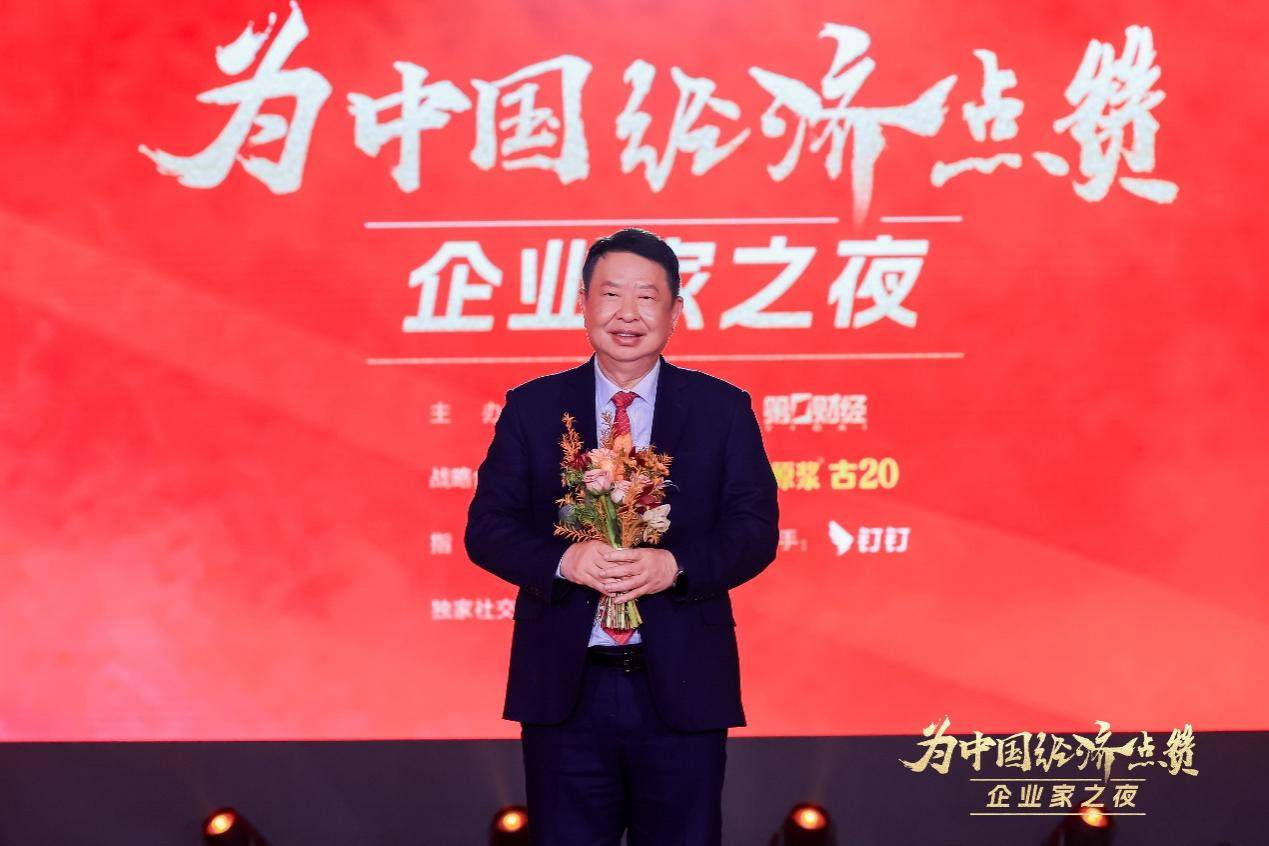
Core Insights - The event "Praise for the Chinese Economy - Entrepreneur Night" serves as a platform to observe the resilience and diverse dynamics of the Chinese economy, showcasing the driving forces behind its progress despite challenges [1] Group 1: Traditional Industry and Mining - Zijin Mining's founder Chen Jinghe expressed emotional reflections on the company's growth, symbolizing the rise of China's basic industries in global competition [2] - Chen highlighted that Zijin Mining has overcome Western control of premium mining resources through strong technical capabilities and international operations, emphasizing the importance of the mining industry as the foundation of industrial growth [4] Group 2: Innovation and Technology - The event featured innovative companies demonstrating advancements in technology, such as Zhejiang Qiangnao Technology's non-invasive brain-computer interface, which aims to assist 5 million disabled individuals [5] - Liu Debing, chairman of Zhipu AI, discussed the ambition of achieving general artificial intelligence, while other companies showcased practical applications in autonomous driving [7] Group 3: Social Responsibility and Community Focus - Lu Mai, former vice chairman of the China Development Research Foundation, called attention to early childhood care in rural areas, highlighting a funding gap of 30 million and urging entrepreneurs to contribute to grassroots initiatives [8] - Cold Friend Dairy's commitment to sourcing 100% of its core ingredients domestically reflects a focus on self-sufficiency in critical sectors [10] Group 4: Economic Diversity and Future Trends - The founder of Huitian, Zhao Deli, emphasized the potential of low-altitude economy and flying cars, with 7,000 global orders, indicating a new frontier in transportation [11] - The event also explored cultural and community aspects, with discussions on creating meaningful living spaces that transcend traditional real estate [11] Group 5: AI and Digital Economy - The event recognized AI chip companies as foundational to the digital economy, with a focus on building a self-sufficient computing base by 2025 to support emerging fields [14] - Zhao Yan from Huaxi Biological expressed optimism about biotechnology's potential to address chronic diseases, aiming for improved human life quality [16] Group 6: Entrepreneurial Spirit and Economic Outlook - The collective narratives of entrepreneurs illustrate the dual engines of innovation and perseverance driving high-quality development in China [16] - The spirit of entrepreneurship is expected to continue guiding the Chinese economy towards stability and growth in the face of changing circumstances [16]

江丰电子“A吃A”拟收购38亿凯德石英 推进19亿定增助力产业链自主可控
Chang Jiang Shang Bao· 2026-02-02 00:50
Core Viewpoint - Jiangfeng Electronics plans to acquire control of Kaide Quartz, marking the first "A-share eats A-share" transaction in the A-share market for 2026, which is expected to enhance its position in the semiconductor supply chain [3][8]. Group 1: Acquisition Details - Jiangfeng Electronics will pay cash to acquire control of Kaide Quartz, which specializes in quartz products for semiconductor integrated circuits [3][7]. - The acquisition is anticipated to strengthen Jiangfeng's product matrix from metal targets to non-metal components, providing a comprehensive solution for downstream chip manufacturing clients [12][13]. - The total market value of Kaide Quartz is approximately 3.8 billion yuan [4][10]. Group 2: Financial Performance - Jiangfeng Electronics expects to achieve a net profit of over 430 million yuan in 2025, continuing its growth trajectory [6][17]. - Kaide Quartz is also a profitable company, but its net profit is projected to decline in 2023 and 2024, with a 24.57% decrease in the first three quarters of 2025 [17]. - The acquisition is expected to further enhance Jiangfeng's earnings and market competitiveness despite Kaide's current performance challenges [17]. Group 3: Strategic Importance - The acquisition is seen as a critical step for Jiangfeng Electronics to fill gaps in its non-metal materials segment and leverage synergies between the two companies [12][13]. - Jiangfeng Electronics has established itself as a leading supplier in the global target material market, serving major clients like TSMC and SMIC [5][15]. - The company is actively pursuing a fundraising initiative to support its growth, aiming to raise over 1.9 billion yuan for various projects, including the production of semiconductor components [5][16].