
场景创新

Search documents
场景驱动创新
Mei Ri Shang Bao· 2025-09-26 22:19
Core Insights - Hangzhou is accelerating the construction of a new ecosystem for the artificial intelligence industry, highlighted by the successful hosting of the "Digital Trade Expo" from September 25 to 26 [1] - The event marked the first public release of AI scene innovation work results following the launch of the "Hangzhou AI+" scene open demonstration project [1] - The Hangzhou Scene Innovation Platform was officially launched, serving as a unified hub for matching demand and capabilities, aimed at breaking down information barriers and enhancing the efficiency of technology transfer [1] Group 1 - The event covered multiple fields including smart cities, healthcare, and electricity trading, with over 30 scene opportunities released by municipal state-owned enterprises and districts [2] - The core objective of the event was to "find products for scenes and find scenes for products," with several companies reaching cooperation intentions, demonstrating the effectiveness of the platform [2] - The Scene Innovation Center launched the "Scene Ecological Partner" program, awarding the first batch of 8 units, which include enterprises and research institutions [2] Group 2 - The Hangzhou Scene Innovation Center also participated in the Cloud Summit's AI Super Trading Area, conducting interactive activities for "AI + scene demand and supply precise matching" [2] - The collaboration between Zhejiang University and Banyu Technology on "AI + healthcare" was established, completing a closed loop from demand release to intention landing, injecting new vitality into Hangzhou's integrated innovation ecosystem [2]
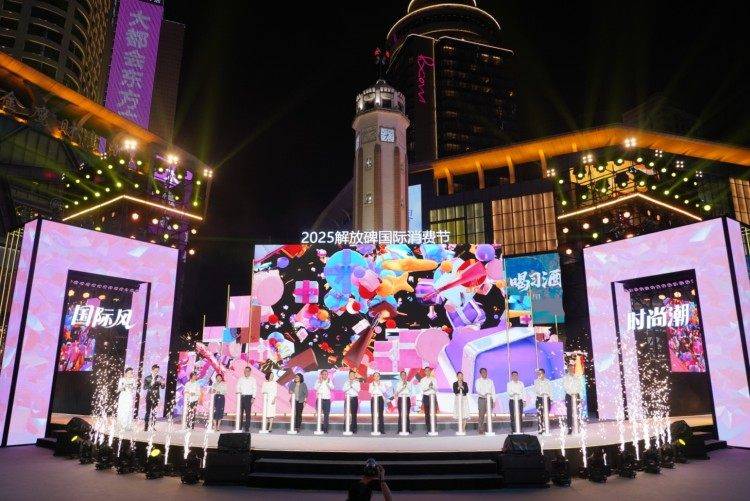
“国际风·时尚潮” 重庆启动2025解放碑国际消费节
Sou Hu Cai Jing· 2025-09-26 06:10
Core Insights - The 2025 Liberation Monument International Consumption Festival was launched in Chongqing, focusing on "international style and fashion trends" with two main themes: "first-release economy" and "scene innovation" [1][3] - The festival features five major promotional plans, including the "First Exhibition and First Show Crazy Enjoyment Plan" and "Cloud Shopping Online Link Plan," aiming to create a two-month consumption carnival [1][3] Economic Performance - In the first half of 2025, Chongqing's total retail sales exceeded 830 billion yuan, showing a year-on-year growth of 4.5% [3] - The city has introduced over 2,200 international and domestic well-known brands, enhancing the shopping experience for local residents [3] Regional Development - Yuzhong District, where the festival is held, has a GDP per square kilometer exceeding 72 million yuan, ranking first in economic density in Western China [3] - The district receives over 89 million domestic and international tourists annually, establishing itself as a core area for international exchanges in the Midwest [3] Festival Significance - The Liberation Monument International Consumption Festival, founded in 2020, has evolved into a significant consumption festival with strong recognition in Yuzhong and competitiveness in Chongqing [4] - Future plans include developing the area into a world-renowned business district that combines international style, fashion, and local culture [5]

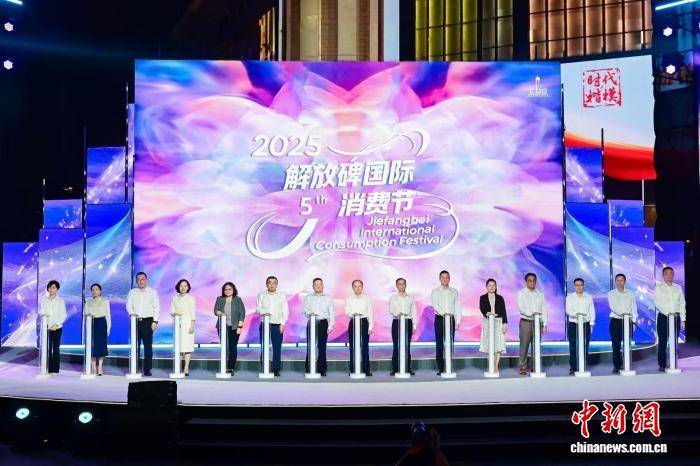
嗨购狂欢 2025解放碑国际消费节启动
Sou Hu Cai Jing· 2025-09-26 01:46
Group 1 - The 2025 Liberation Monument International Consumption Festival has commenced in Chongqing, featuring a two-month consumer carnival with various activities such as product launches and themed pop-up events [1][3] - Since its inception in 2020, the festival has successfully held four editions, establishing itself as a recognizable consumer festival IP [3] - This year's festival theme is "International Style · Fashion Trend," focusing on "premiere economy" and "scene innovation," with a series of unique activities planned [5] Group 2 - The festival will involve over 100 well-known domestic and international brands, implementing initiatives like the "Hot Street Renewal Plan" and "Night Unending All-domain Play Plan" [5] - Collaborations with platforms such as China UnionPay and Industrial and Commercial Bank of China will facilitate hundreds of themed promotions [5] - The event will also unveil the "Top Ten Consumption Trendsetting Locations" in the Chongqing and Chengdu areas, highlighting unique consumer spaces [5]
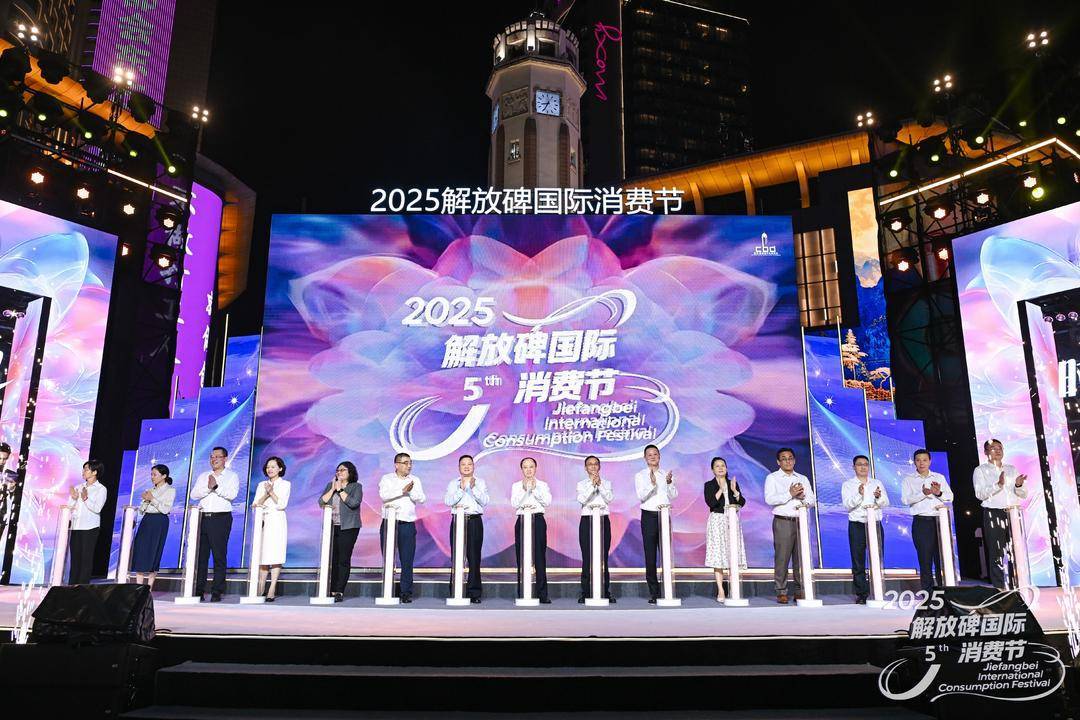
聚焦首发经济与场景创新,2025解放碑国际消费节在重庆渝中举行
Sou Hu Cai Jing· 2025-09-25 14:50
Core Insights - The 2025 Liberation Monument International Consumption Festival has officially launched in Yuzhong, focusing on "International Style and Fashion Trends" with an emphasis on "First Release Economy" and "Scene Innovation" [1][2] Group 1: Event Overview - The festival features a series of unique activities including first exhibitions, product launches, and themed pop-up events [1] - It aims to attract over 100 well-known domestic and international brands through collaboration with multiple consulates, international business associations, and key commercial entities in the area [2] - The event will run for two months, incorporating five major promotional plans, including the "First Exhibition and Launch Plan" and "Night Unending All-domain Trendy Play Plan" [2] Group 2: Economic Impact - Yuzhong is highlighted as a vital economic hub with 158 Fortune 500 companies and 1,378 large-scale enterprises, contributing to a service industry output value in the hundreds of billions [6][7] - The district has a per capita GDP exceeding 72 million yuan per square kilometer, ranking first in economic density in Western China [7] - The city’s retail sales reached over 830 billion yuan in the first half of the year, marking a 4.5% growth [7] Group 3: Consumer Experience - The festival will introduce immersive consumption experiences, including the first Chongqing International Trendy Beverage Festival, enhancing the shopping environment [2][6] - The event will showcase ten major consumer hotspots in Chongqing and Chengdu, promoting unique local consumption spaces [6]
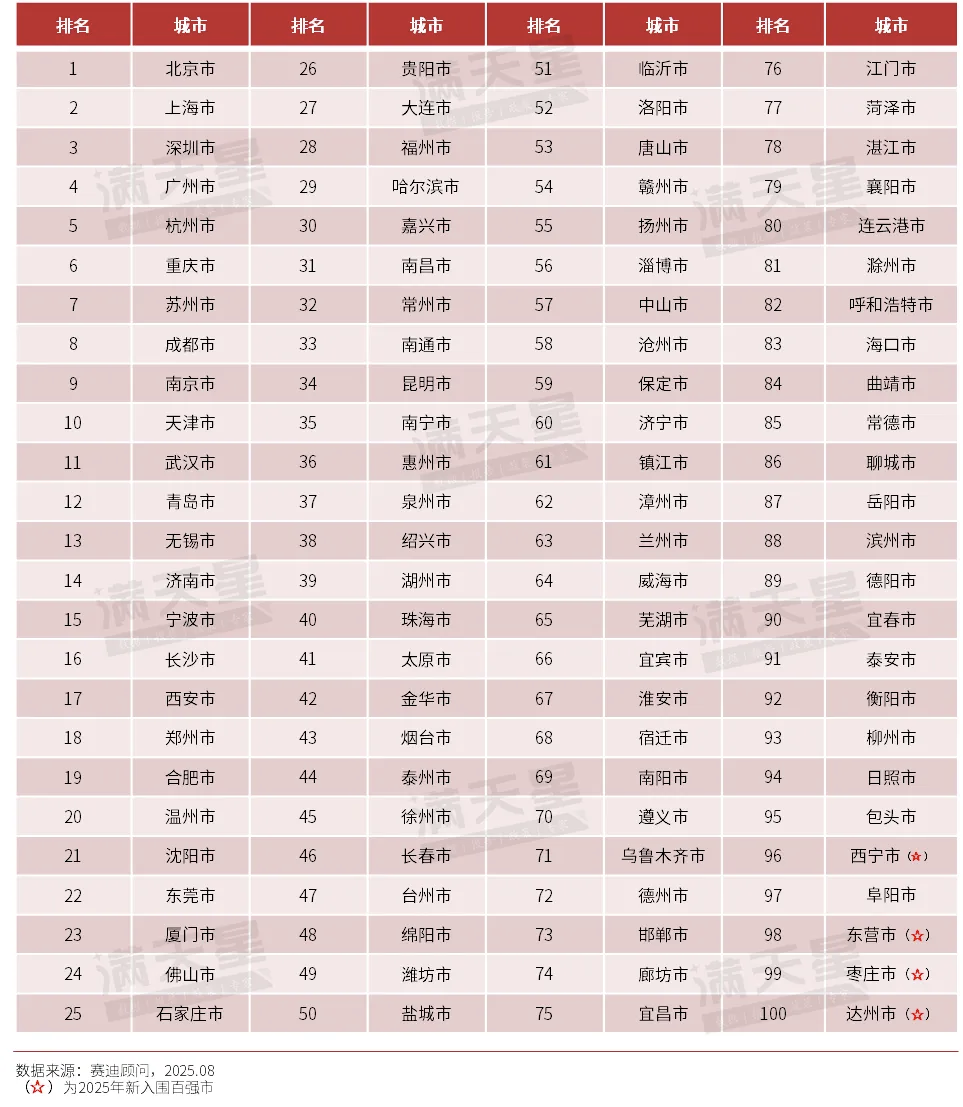
赛迪顾问2025数字百强市发布,山东16市全部入列数字百强市
Qi Lu Wan Bao· 2025-09-25 09:17
Core Insights - The digital transformation is entering a critical phase, leading to a new competitive landscape among cities focused on data elements, intelligent computing power, and scenario innovation [1][4] - The "2025 China Digital City Competitiveness Research Report" by CCID Consulting indicates significant changes in the rankings of the top 100 digital cities, with 48 cities rising, 18 remaining stable, and 38 declining [1][4] - Four new cities have entered the top 100, including Dongying and Zaozhuang, making Shandong the only province with all 16 cities listed in the 2025 digital top 100 [1][3] Digital City Rankings - The report evaluates over 200 cities based on six dimensions and 54 indicators, reflecting comprehensive capabilities in digital infrastructure, economic vitality, innovation capacity, governance efficiency, green transformation, and cultural soft power [1][4] - The top 10 cities in the 2025 digital rankings include Beijing, Shanghai, Shenzhen, Guangzhou, Hangzhou, Chongqing, Suzhou, Chengdu, Nanjing, and Tianjin [2] Shandong Province Insights - Shandong's 16 cities rank as follows: Qingdao (12), Jinan (14), Yantai (43), Weifang (49), Linyi (51), Zibo (56), Jining (60), Weihai (64), Dezhou (72), Heze (77), Liaocheng (86), Binzhou (88), Tai'an (91), Rizhao (94), Dongying (98), and Zaozhuang (99) [3] - The rankings of Shandong cities align with their economic output, with cities like Weihai leading in high-tech industry output, giving it an advantage in digital transformation [3] Competitive Dynamics - The competition among major cities has disrupted previous GDP rankings, with Shandong's Qingdao and Jinan outperforming cities like Ningbo, Changsha, Xi'an, Zhengzhou, and Hefei [4] - The number of cities in the "efficiency-driven" category has increased from 40 in 2024 to 48 in 2025, indicating a shift from basic infrastructure to data empowerment and scenario innovation [4] Policy and Future Outlook - The recent approval of pilot reforms for market-oriented allocation of factors, including data marketization, is expected to reshape the competitive landscape among cities [5] - Shandong's ability to maintain its competitive edge will depend on continuous efforts in data empowerment, scenario innovation, and value release [5]
发布35个科技成果应用场景 成都金牛区以场景创新驱动产业创新
Mei Ri Jing Ji Xin Wen· 2025-09-23 15:40
Core Insights - The Chengdu Jinniu District held the second phase of the technology achievement application scenario release conference, showcasing 35 application scenarios across various fields including special equipment, artificial intelligence, low-altitude economy, aerospace, and biomedicine [1] Group 1: Application Scenarios - The release included 2 application scenarios in the special equipment sector related to basic construction and shaft excavation equipment [1] - In the artificial intelligence sector, 8 application scenarios were presented, covering smart governance, intelligent cultural tourism, industrial digitization, and disaster rescue [1] - The biomedicine and smart healthcare sectors featured 5 application scenarios, focusing on cell therapy, remote diagnosis, and intelligent medical devices [1] - The low-altitude economy presented 3 application scenarios involving drone inspection monitoring and automated solutions [1] - Additionally, 10 "demand-side" application scenarios were released, primarily addressing smart governance, environmental monitoring, urban management, and smart healthcare [1] Group 2: Support for Enterprises - The conference also introduced a "one-stop comprehensive service package" for enterprises in the district, which includes feedback channels for issues, a compilation of supportive policies, a financial product service manual, a list of government investment opportunities, and a list of government-enterprise application scenarios [1] - This package encompasses 85 various policies and highlights 145 key financial products from 27 banks, aiming to provide comprehensive support for enterprises [1] Group 3: Previous Achievements - The first phase of application scenarios released in March resulted in 10 scenarios being implemented and 14 currently under negotiation [2] - Notable implementations include high-precision displacement monitoring equipment by China Electronics Technology Group Corporation, which has been successfully used in multiple monitoring points [2] - The "super double self-cleaning radiation cooling material" by China Construction Southwest Design Institute has been applied in facilities for the 2025 Chengdu Universiade, demonstrating significant energy savings and market potential [2]
场景创新,双向赋能,广湛联合探索区域协调发展新模式
Feng Huang Wang Cai Jing· 2025-09-23 07:37
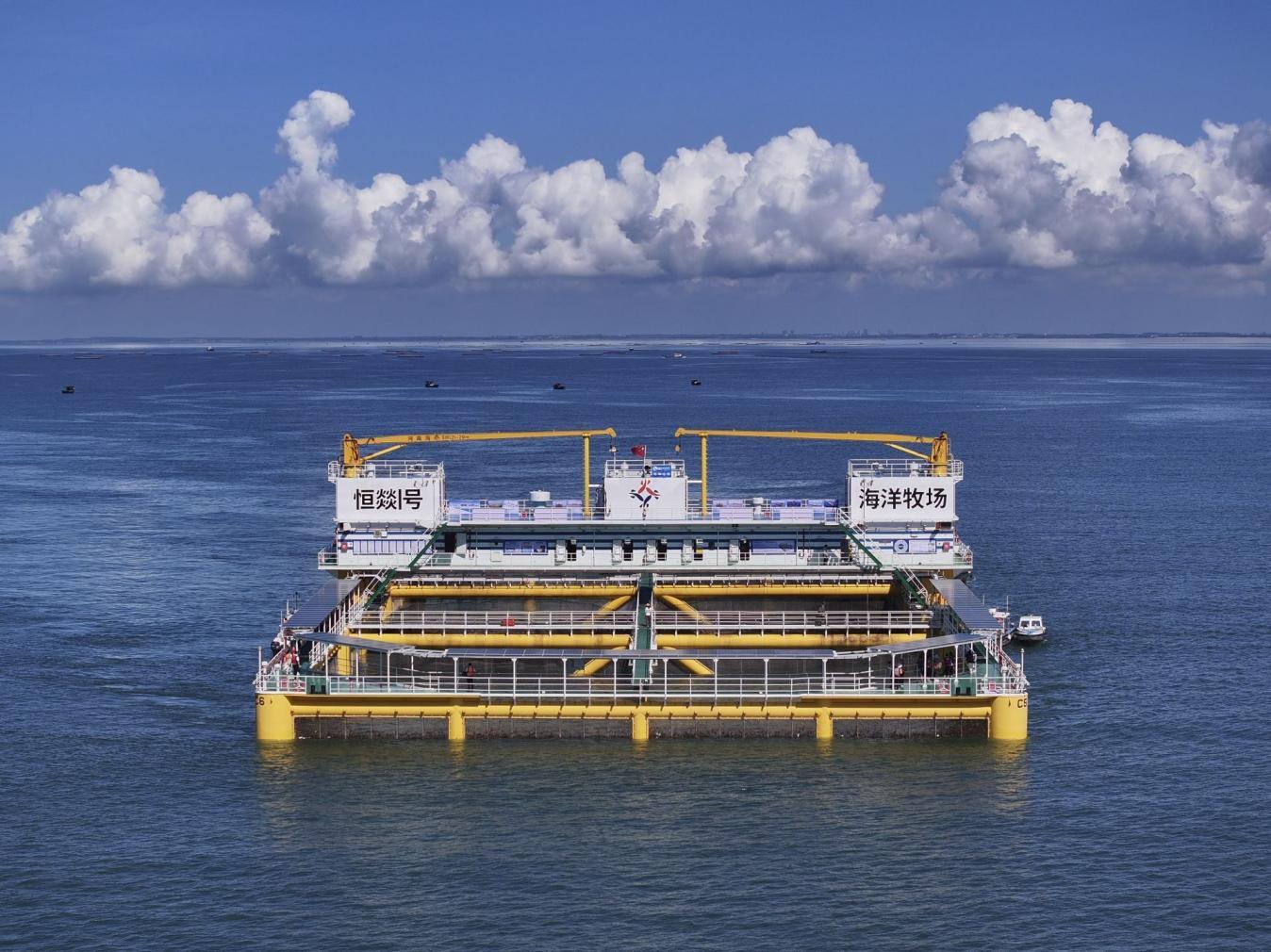
Core Insights - The Chinese government emphasizes the importance of application scenario innovation, particularly in the marine economy sector, as part of its broader economic strategy [1][2] - Zhanjiang is positioned as a key player in the development of modern marine ranching, with significant government support and strategic initiatives aimed at enhancing its marine economy [2][3] Group 1: Government Initiatives and Policies - The 2025 State Council work report calls for large-scale application demonstrations of new technologies and products [1] - Guangdong Province's action plan focuses on application scenario innovation across 20 sectors, including the marine economy [1] - The central government's support for deep-sea aquaculture and marine ranching is highlighted in the 2025 Central Document No. 1 [2] Group 2: Marine Ranching Development - Future global fishery production needs to increase by approximately 270 million tons, with China expected to contribute 148.5 million tons of this increase through deep-sea marine ranching [3] - Zhanjiang's marine ranching is projected to generate a water product output value of 3 trillion yuan if 100 million tons of the expected increase is allocated for fish farming [3] - The modern marine ranching industry could potentially create a 6 trillion yuan industry by stimulating various related sectors [3] Group 3: Zhanjiang's Marine Resources and Infrastructure - Zhanjiang has a marine area of 21,000 square kilometers and a coastline of 2,023.6 kilometers, making it a strategic location for marine economic development [3] - In 2024, Zhanjiang's fishery output is projected to be 1.316 million tons, accounting for 14% of the province's total, with a fishery output value of 29.404 billion yuan [3] - Zhanjiang is recognized as a national model city for marine economic innovation and development, with various accolades highlighting its marine resources [3] Group 4: Technological Advancements in Marine Ranching - Zhanjiang is exploring various marine farming technologies, including gravity-based deep-water cages and intelligent farming platforms [4] - The city has established 3,367 gravity-based deep-water cages, accounting for 55% of the province's total, and has developed several innovative marine farming platforms [4][10][11] Group 5: Collaborative Efforts and Future Prospects - The collaboration between Guangzhou and Zhanjiang aims to leverage their respective strengths in marine technology and resources to foster innovation and economic growth [13][14] - The establishment of the Guangzhan Industrial Transfer Cooperation Park is intended to facilitate industrial cooperation and support the development of marine ranching [11][14] - Zhanjiang's strategic location allows for the potential replication of successful marine technologies and practices in ASEAN countries, enhancing regional cooperation [14]
成都挺起经济大市产业“硬脊梁” 推动产业链从“链的聚势”到“群的跃升”
Si Chuan Ri Bao· 2025-09-23 06:59
Core Insights - Chengdu has established 11 key industrial chains with revenues reaching the billion-level scale, with two new advanced manufacturing clusters added, bringing the total to five [1][3] - The city aims to accelerate the formation of trillion-level industrial chains in software and information services, cultural tourism, and has seen breakthroughs in integrated circuits, new displays, biomedicine, and the silver economy [1][4] - As of July this year, the monitored 7,268 industrial chain enterprises in Chengdu reported an 8.2% year-on-year increase in revenue and a 12.2% increase in total profit, indicating a stable upward trend in the industry [1] Industrial Development Strategy - The "chain strengthening" strategy has been a significant choice for Chengdu to enhance its industrial development and urban competitiveness since its introduction in December 2021 [1][3] - Chengdu ranks eighth in the national advanced manufacturing city rankings, with five national advanced manufacturing clusters and 12 provincial strategic emerging industry clusters established [1][3] Recent Developments - The completion of a 2 billion yuan OLED polarizer production base by Nichia Materials Technology (Chengdu) Co., Ltd. fills a gap in Chengdu's upstream polarizer materials sector [2] - The city is focusing on clustering enterprises along the same industrial chain to enhance competitiveness, as demonstrated by the collaboration between local companies and suppliers [2][3] Future Directions - Chengdu plans to categorize and collaboratively build advantageous industrial clusters, targeting trillion-level chains in software, information services, and cultural tourism, while pushing for breakthroughs in several other sectors [4][5] - The establishment of a Scene Innovation Promotion Center aims to foster new technologies and products through innovative applications in emerging fields like humanoid robots and intelligent driving [4][5] Financial Support and Mechanisms - Chengdu's financial institutions are set to provide comprehensive services to key industrial chain enterprises, with over 60 functional funds established to support the development of chain-leading and specialized enterprises [5] - The city will implement measures such as "one chain, one special class" and "one chain, one policy" to ensure lifecycle support for industrial chain development [5]
以场景创新撬动消费活力
Hai Nan Ri Bao· 2025-09-22 00:59
Group 1 - Hainan cities are launching various large-scale cultural and tourism activities to boost consumption, including a 10 million yuan tourism consumption voucher in Haikou and a series of events in Sanya [1][2] - The focus on large events reflects a respect for consumer demand, emphasizing emotional experiences over mere sightseeing, with activities designed to engage visitors actively [1][2] - The upcoming Mid-Autumn and National Day holidays have prompted early planning for events, showcasing a diverse range of activities to cater to different consumer needs [2][3] Group 2 - The success of these activities hinges on creativity and uniqueness, with local resources and cultural characteristics being leveraged to create distinctive event brands [3] - The integration of local industries into these cultural activities is evident, as Haikou promotes its performing arts industry while Sanya aligns with its goal of becoming a world-renowned tropical coastal city [3] - The shift towards service-oriented and quality-driven consumption is accelerating, with events designed to create new consumer experiences and enhance the appeal of Hainan as a desirable travel destination [3]
武汉8月核心CPI同比上涨1.5%
Chang Jiang Ri Bao· 2025-09-17 00:28
Group 1 - The Consumer Price Index (CPI) in Wuhan increased by 0.3% year-on-year in August, with the core CPI, excluding food and energy, rising by 1.5% [1] - The sales of mid-to-high-end home appliances grew by 25% year-on-year, driven by the popularity of smart products and the "old-for-new" policy [1] - The price of large household appliances rose by 7.7%, while small kitchen and bathroom appliances saw a 1.5% increase, reflecting a trend of upgrading consumption [1] Group 2 - Cultural consumption is on the rise, with movie merchandise sales accounting for over 10% of total cinema revenue [1] - The service sector also showed vitality, with service prices in Wuhan increasing by 0.8% in August, and cultural and entertainment service prices rising by 2.7% [1] - The dining and night economy remain strong, with sports events driving consumer traffic to restaurants, leading to a 10% increase in customer flow at certain establishments [2]