无废城市

Search documents
江西永新县在废弃物中探寻“宝藏”
Zhong Guo Huan Jing Bao· 2025-09-24 09:07
Core Viewpoint - The article highlights the effective environmental measures taken by Yongxin County in Ji'an City, Jiangxi Province, focusing on resource recycling and waste management through innovative practices and technologies [1][2]. Group 1: Waste Management and Resource Recycling - The company processes 21.9 million tons of household waste annually, generating 8,721.38 million kilowatt-hours of electricity [2]. - The waste incineration power project serves multiple regions, achieving over 80% in ecological waste reduction, resource utilization, and harmless treatment [2]. - As of the end of August, the company has processed 11.645 million tons of household waste, reducing carbon dioxide emissions by 4.658 million tons and generating 4,340 million kilowatt-hours of electricity [2]. Group 2: Innovative Practices in Hazardous Waste Management - Ji'an Julian Environmental Technology Co., Ltd. is a key player in hazardous waste management, implementing a "point-to-point" utilization model for hazardous waste [2][3]. - The company has reduced the resource recovery processing cycle for DMF waste from an average of 4 days to 2 days, achieving a processing efficiency of 99% [2][3]. - The recovered DMF can be reused, saving the company between 400,000 to 500,000 yuan annually while addressing long-standing environmental issues [3]. Group 3: Water Management Initiatives - The "one enterprise, one pipe" project has been implemented in the industrial park, effectively transforming wastewater into clean water [4]. - The project involved an investment of 31.33 million yuan to centralize wastewater treatment, enhancing monitoring and management capabilities [4][5]. - An intelligent wastewater treatment plant has been established, allowing for real-time monitoring and automatic control of wastewater discharge, ensuring environmental safety [5]. Group 4: Future Development Plans - Yongxin County plans to increase investment and leverage technology to further explore resource recycling potential, promoting sustainable development for enterprises [5].
潍坊市“无废城市”建设成效显著,66项建设指标提前完成57项
Qi Lu Wan Bao Wang· 2025-09-23 12:27
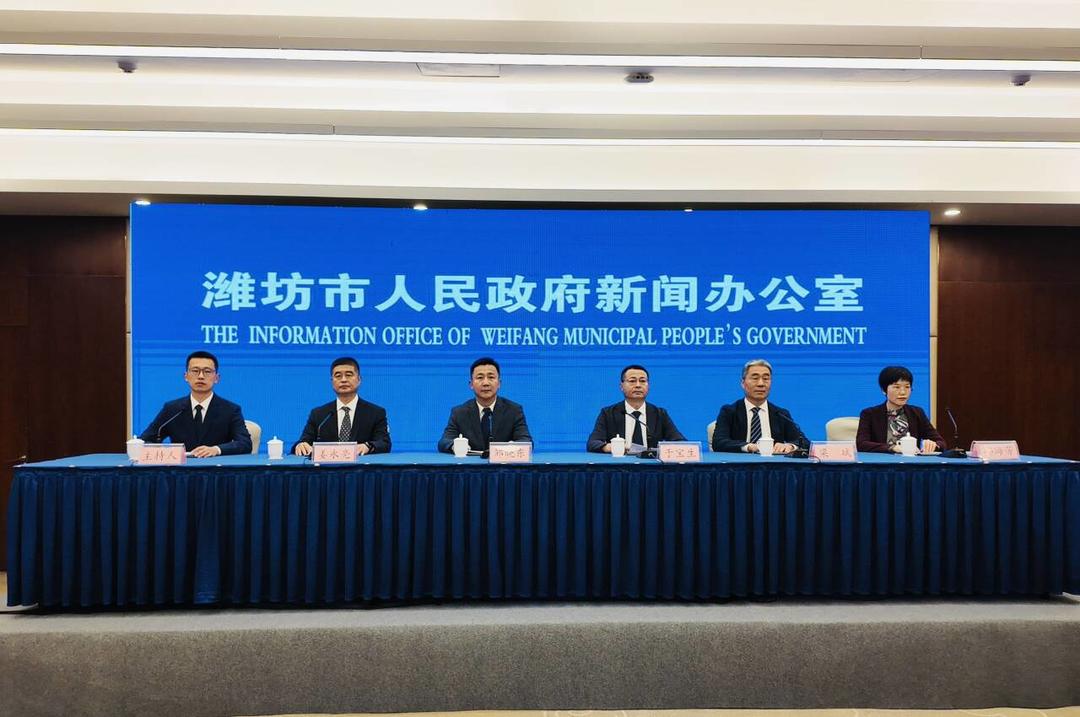
Core Viewpoint - Weifang City has made significant progress in its "waste-free city" initiative since its launch in December 2022, focusing on five key areas: industry, agriculture, construction, daily life, and hazardous waste management, with 57 out of 66 construction indicators completed ahead of schedule [1][3]. Group 1: Industrial Sector - Weifang has optimized its industrial structure and transitioned to cleaner energy, resulting in a 10.6% reduction in solid waste generation intensity compared to 2020 [3]. - The city has established 9 national-level comprehensive utilization enterprises and 38 national-level green factories, with renewable energy generation capacity reaching 13.39 million kilowatts, making it the first city in the province to achieve over 10 million kilowatts of renewable energy capacity [3]. - The annual renewable energy generation has surpassed 1.7 million kilowatt-hours, marking a 16.57% increase, equivalent to replacing 5.1 million tons of standard coal [3]. Group 2: Agricultural Sector - Weifang has built 41 straw collection centers and 96 straw utilization enterprises, aiming for a straw comprehensive utilization rate of 96.17% by 2024 [3]. - The city has achieved over 95% recycling rates for agricultural film and over 78% for pesticide packaging waste, with 100% coverage of livestock manure treatment facilities [3]. Group 3: Construction Sector - The city has implemented policies to enhance construction waste management and promote green buildings, achieving a 100% proportion of green buildings in new constructions with an additional 17.36 million square meters completed [4]. Group 4: Daily Life Sector - Weifang has achieved a 100% coverage rate for waste classification, with 613 new or renovated classification facilities and 260 new classified communities [4]. - The city has a recycling rate of 36.79% for urban household waste, with incineration capacity reaching 8,100 tons per day, ensuring "full incineration and zero landfill" [4]. - The use of single-use plastic woven bags has decreased by 8.99%, and the recycling rate for corrugated boxes has reached 627 million [4]. Group 5: Hazardous Waste Management - Weifang has conducted comprehensive inspections of hazardous waste and implemented a grid-based inspection mechanism, ranking first in the province for hazardous waste management for two consecutive years [4]. Group 6: Community Engagement - The city has cultivated 339 municipal-level "waste-free cells," with 46 recognized at the provincial level, promoting green office and low-carbon consumption concepts [5]. - Various community events and volunteer activities have been organized to raise awareness and encourage participation in the "waste-free city" initiative [5]. Future Plans - Weifang aims to accelerate the "waste-free city" initiative with a focus on environmental health and safety, enhancing solid waste governance systems and capabilities [5].

推动快递冷链包装回收常态化系统化
Zhong Guo Huan Jing Bao· 2025-09-19 08:18
Core Viewpoint - The rapid development of fresh e-commerce and cold chain delivery has led to an increase in the disposal of foam boxes and ice bags, which are often discarded despite their high recycling value and potential for reuse or degradation [1] Industry Challenges - Foam boxes and ice bags are commonly found in urban waste, contributing to increased garbage disposal pressure and resource waste [1] - The recycling chain is fragmented, with delivery companies typically only responsible for delivery and lacking a system for packaging recovery [1] - Community waste classification systems are improving but still lack specific guidelines and facilities for the recovery of cold chain packaging [1] - Public awareness regarding the recyclability of these packaging materials is insufficient, leading to indiscriminate disposal [1] Proposed Solutions - Delivery companies should implement producer responsibility extension systems and collaborate with communities to establish dedicated recovery points, incentivizing consumers to return foam boxes and ice bags through vouchers or points [1] - Communities should include cold chain packaging in their recycling categories, provide specialized collection containers, and enhance public awareness campaigns [1] - Policy measures are needed to support recycling companies, such as subsidies, and to promote the research and application of recycling technologies [1] Sustainability Impact - Establishing a systematic and regular cold chain packaging recovery process can significantly reduce resource waste and enhance urban sustainability [1] - This initiative is a test of corporate social responsibility and a crucial step towards building a "waste-free city" [1]
生态环境部:重点打击非法拆解废动力电池等“新三样”固废
Nan Fang Du Shi Bao· 2025-09-19 07:00
Core Viewpoint - The Chinese government is intensifying efforts to combat illegal dumping and treatment of solid waste, focusing on specific categories of waste, while highlighting significant achievements in solid waste management during the "14th Five-Year Plan" period [1][2]. Group 1: Solid Waste Management Achievements - China generates over 110 billion tons of various solid waste annually, including industrial, construction, household, agricultural, and hazardous waste [1]. - Since the beginning of the "14th Five-Year Plan," the country has made notable progress in solid waste pollution prevention, including a historic ban on foreign waste imports [1]. - The capacity for hazardous waste utilization and disposal has reached 223 million tons per year, while the capacity for household waste incineration has increased to 11.41 million tons per day, representing growth of 58.8% and 72.4% respectively compared to the end of the "13th Five-Year Plan" [1]. Group 2: Ongoing Challenges and Future Plans - Despite improvements, the overall level of solid waste resource utilization remains insufficient, with over 33 billion tons of industrial solid waste accumulated, occupying more than 3,500 square kilometers [2]. - The government plans to complete pollution risk assessments for phosphogypsum storage and landfills by 2027, and for heavy metals by 2030, while implementing measures to prevent new pollution risks [2]. - The focus will be on combating illegal dumping of solid waste and dismantling of specific waste types, with an emphasis on community involvement to create a strong social deterrent [2].
非法倾倒处置固体废物现象时有发生,生态环境部回应
Xin Jing Bao· 2025-09-19 05:36
Group 1 - The latest investigation shows that China's accumulated industrial solid waste exceeds 33 billion tons, occupying over 3,500 square kilometers of land [1][2] - China generates over 11 billion tons of various solid waste types annually, including industrial solid waste, construction waste, household waste, agricultural solid waste, and hazardous waste [1][2] - The Ministry of Ecology and Environment has implemented a comprehensive ban on foreign waste imports and has increased hazardous waste disposal capacity to 22.3 million tons per year, and household waste incineration capacity to 1.141 million tons per day, representing increases of 58.8% and 72.4% respectively since the end of the 13th Five-Year Plan [2] Group 2 - The government has launched multiple action plans to address environmental pollution from solid waste, including comprehensive management of phosphogypsum, landfill pollution risk assessments, and illegal waste disposal [3] - The Ministry of Ecology and Environment aims to complete pollution risk assessments for phosphogypsum and landfills by 2027, and for heavy metal environmental safety by 2030, while preventing new pollution risks [3] - The focus will be on combating illegal dumping of solid waste and dismantling of waste electrical and electronic equipment, with an emphasis on community involvement to create a strong social deterrent [3]
我国陆域生态保护红线面积占比超过30%
Xin Jing Bao· 2025-09-19 05:33
Group 1 - The core viewpoint of the news is the significant progress made in China's ecological and environmental protection efforts during the "14th Five-Year Plan" period, including the reduction of high-emission vehicles and improvements in air and water quality [2][4] - The area of ecological protection red lines in China exceeds 30%, indicating a strong commitment to land conservation [3] - The country has successfully eliminated nearly 20 million high-emission vehicles as part of its pollution prevention strategy [2] Group 2 - The PM2.5 concentration in major cities has decreased by 16.3% compared to 2020, reaching 29.3 micrograms per cubic meter in 2024 [4] - The proportion of good air quality days has increased to 87.2%, up by 2.4 percentage points from 2020 [4] - The national water quality has improved, with 90.4% of surface water quality monitoring points meeting good quality standards, marking the first time this figure has exceeded 90% [4] Group 3 - China has established the world's largest carbon emissions trading market, covering over 60% of the country's carbon emissions [3] - The country has completed ultra-low emission transformations for 1.12 billion kilowatts of coal power units and 950 million tons of crude steel capacity [3] - The government is actively promoting the voluntary greenhouse gas reduction trading market and enhancing the product carbon footprint management system [3]
南农晨读 | 低空经济飞起来
Nan Fang Nong Cun Bao· 2025-09-19 01:34
Group 1 - The rise of "play corn" has led to some corn selling for thousands of yuan each, attracting both young consumers and rural farmers [3][4][5] - The fresh corn industry in Guangdong has seen rapid growth, with the annual planting area reaching approximately 700,000 acres and the national planting area exceeding 25 million acres [17][18] - The fresh corn industry faces challenges such as insufficient genetic resource exploration, tightening production resources, and increased natural disasters and pests [19] Group 2 - The national agricultural technology promotion center has released scientific fertilization guidelines for tea trees to enhance production quality and efficiency [11][12][13] - Yunfu City has made significant progress in its "zero waste city" initiative, completing 28 construction indicators and 54 system construction tasks ahead of schedule [30][32]

研判2025!中国废盐资源化行业政策汇总、产业链、市场规模、竞争格局及发展趋势分析:“无废城市”建设推动,废盐资源化行业市场规模不断上涨[图]
Chan Ye Xin Xi Wang· 2025-09-18 01:21
Core Viewpoint - The concept of "zero waste cities" is gaining traction in urban development, focusing on reducing solid waste and promoting resource utilization, particularly in the context of industrial waste salt [1][8]. Industry Overview - Waste salt resource utilization refers to the process of converting waste salt into valuable resources through specific technologies, aiming for reduction, resource recovery, and harmless treatment [3]. - The main sources of industrial waste salt include the chemical, pesticide, pharmaceutical, and dyeing industries, with a significant increase in waste salt production expected due to ongoing industrialization [7]. Market Size and Growth - The market size of China's waste salt resource utilization industry is projected to grow from 52.731 billion yuan in 2017 to 86.108 billion yuan by 2024, indicating a robust growth trajectory [1][8]. - The production of waste salt in China is expected to reach 26 million tons by 2024, reflecting a year-on-year increase of 23% [7]. Treatment Technologies - Current waste salt treatment technologies are categorized into two main types: harmless treatment (such as landfilling and incineration) and resource utilization [4]. - Resource utilization technologies include dry thermal treatment, washing separation, and advanced oxidation, with dry thermal treatment being the most industrialized [4][5]. Policy Support - The Chinese government has implemented various policies to promote waste salt resource utilization, including guidelines for high-quality development in the petrochemical industry and initiatives for "zero waste cities" [5][6]. - Recent policies emphasize the importance of resource recovery and harmless disposal of industrial waste salt, indicating a supportive regulatory environment for the industry [5][12]. Competitive Landscape - The waste salt resource utilization industry in China is characterized by a predominance of small to medium-sized enterprises, with increasing competition and varying levels of technological capability [9]. - Leading companies in the industry, such as Beijete Group and Zhejiang Dechuang Environmental Protection Technology Co., are leveraging technological advantages and industry chain integration to expand their market presence [9][10]. Future Trends - Technological innovation is a key driver for the development of the waste salt resource utilization industry, with new techniques continuously emerging to enhance efficiency and environmental performance [11]. - The integration of the waste salt resource utilization industry chain is expected to improve resource utilization efficiency and reduce environmental pollution [11]. - Strengthened policy support and regulatory oversight are anticipated to further propel the industry's growth, ensuring compliance with environmental standards [12][13].


上海环境集团股份有限公司关于2025年半年度业绩说明会召开情况的公告
Shang Hai Zheng Quan Bao· 2025-09-17 20:31
Core Viewpoint - Shanghai Environment Group held a half-year performance briefing on September 17, 2025, to communicate with investors and address their concerns regarding the company's operational performance and future strategies [1]. Group 1: Meeting Overview - The performance briefing was conducted via video live stream and interactive online format, attended by the company's chairman, independent directors, board secretary, and financial director [1]. - The meeting aimed to maintain investor interests and comply with regulations set by the Shanghai Stock Exchange [1]. Group 2: Key Questions and Company Responses - The company reported that as of June 30, 2025, it processed 6.8572 million tons of waste and generated 2,262.561 million kWh of electricity from waste incineration [2]. - In the first half of 2025, the company focused on emerging businesses such as renewable energy and soil remediation, actively engaging in regional site investigations and environmental remediation projects [2]. - Research and development expenses for the first half of 2025 were disclosed in the company's regular reports, with a focus on solid waste resource utilization, green low-carbon technologies, and smart control technologies [3]. - The company acknowledged that its stock price is influenced by various market factors, despite good revenue and profit performance, and emphasized its commitment to enhancing core competitiveness and shareholder value [4]. - Efforts to improve quality and efficiency include deepening core business, nurturing emerging sectors, and implementing management and quality innovations to drive high-quality development [5].

军信股份:公司持续关注新兴领域的融合发展
Zheng Quan Ri Bao· 2025-09-17 14:09
Group 1 - The company, Junxin Co., is focusing on the integration of waste incineration with emerging fields such as digital industry and intelligent manufacturing [2] - A strategic cooperation agreement has been signed with Changsha Digital Group Co., aimed at developing "waste-free cities," environmental digital upgrades, green electricity, and collaborative development in the intelligent computing industry [2] - The company will disclose any significant developments related to this cooperation in accordance with regulations [2]