
资源化

Search documents
卓锦股份(688701.SH):2025年度净亏损5736.64万元
Ge Long Hui A P P· 2026-02-25 08:58
Core Viewpoint - Zhuojin Co., Ltd. (688701.SH) reported a significant decline in revenue for the fiscal year 2025, with total operating income decreasing by 45.80% year-on-year, indicating challenges in its traditional business segments [1] Financial Performance - The company achieved total operating revenue of 131 million yuan, a decrease of 45.80% compared to the previous year [1] - Operating profit was -54 million yuan, an increase of 36.34% year-on-year [1] - Total profit was -54 million yuan, reflecting a year-on-year increase of 36.62% [1] - Net profit attributable to shareholders of the parent company was -57 million yuan, with a year-on-year increase of 30.21% [1] - Net profit attributable to shareholders of the parent company, excluding non-recurring gains and losses, was -66 million yuan, up 19.97% year-on-year [1] - Basic earnings per share were -0.43 yuan, showing a year-on-year increase of 29.51% [1] Business Strategy and Outlook - The decline in revenue is attributed to the company's ongoing adjustment of its business strategy, which has led to a reduction in new orders for traditional "environmental remediation" and "industrial pollution source governance" projects [1] - As of the end of the reporting period, the total amount of orders on hand was approximately 131 million yuan [1] - The company is actively promoting the industrial application of advanced self-research technologies in the direction of "equipment" and "resource" utilization, achieving considerable commercial results in terms of orders [1] - However, the realization of these results is constrained by the timing of order fulfillment and accounting requirements for revenue recognition, with expectations for more substantial performance to be reflected in future reports [1]

研判2025!中国医疗污水处理设备行业政策汇总、产业链、市场规模、竞争格局和未来趋势分析:污水治理政策推动,医疗污水处理设备需求持续上涨[图]
Chan Ye Xin Xi Wang· 2026-01-09 01:37
Core Insights - The medical wastewater treatment equipment market in China is expected to grow from 2.85 billion yuan in 2015 to 4.8 billion yuan by 2024, indicating a strong growth trend driven by government support and technological advancements [1][5]. Industry Overview - Medical wastewater treatment equipment is specifically designed to handle various types of wastewater generated by hospitals, which contains pathogenic microorganisms and harmful pollutants [2]. - The treatment process typically involves a combination of physical, chemical, and biological methods to ensure effective purification [2]. Industry Policies - Recent government policies have emphasized the importance of improving wastewater treatment facilities in medical institutions, mandating the construction of adequate treatment systems to prevent untreated wastewater discharge [3][4]. Industry Chain - The industry chain consists of upstream raw materials (steel, plastic, electronic components), midstream manufacturing of treatment equipment, and downstream application in medical institutions [4]. Market Competition - The medical wastewater treatment equipment market is highly competitive, with numerous domestic and international companies offering various products and solutions [6]. - Key players include companies like Anhui Huaki Environmental Technology Co., Ltd. and Tianjin Chuangye Environmental Protection Co., Ltd., which are actively involved in the development and application of treatment technologies [6][7]. Industry Development Trends - The industry is witnessing trends towards smart, efficient, and resource-oriented wastewater treatment solutions, utilizing IoT and big data for remote monitoring and management [7]. - There is a growing focus on recycling treated wastewater for non-potable uses within hospitals, contributing to cost savings and environmental sustainability [7].




增长见顶、应收高企之下,绿色动力新任董事长首谈破局之道与共生之策
Xin Lang Cai Jing· 2026-01-08 11:42
Core Insights - The waste-to-energy industry in China is facing unprecedented challenges and opportunities, including market saturation, tightening environmental standards, high accounts receivable, and intensified competition [1][2][6] - The industry is also experiencing a wave of digitalization, resource optimization, and globalization, which are injecting new momentum for development [1][2][6] - Cost reduction, efficiency enhancement, and finding a second growth curve have become essential tasks for companies in the sector [1][2][6] Industry Challenges - The market scale of the waste incineration industry has reached its peak, with growth rates declining from 27% in 2021 to an estimated 3% by 2025, and the number of treatment plants increasing at a slower rate from 54% to 8% [6][21] - Environmental policies are tightening, transitioning from national standards to stricter local regulations, particularly regarding fly ash resource utilization and zero landfill requirements [6][21] - The industry is plagued by a single revenue model reliant on "waste treatment fees + electricity sales," leading to low income elasticity and weak risk resistance [6][21] - By the end of 2024, accounts receivable in the industry are projected to reach 50-60 billion yuan, with national subsidies accounting for 35-40% and waste treatment fees for 45-55% [6][21] - The industry is experiencing severe internal competition, with price wars and market fragmentation reducing overall profitability and development space [6][21] Strategic Responses - The company is exploring a breakthrough path centered on "technology empowerment, diversification and cross-industry integration, and globalization" to overcome industry bottlenecks [9][24] - Digital transformation is being prioritized through the introduction of IoT, big data, and cloud computing to create a smart operation management platform, achieving significant improvements in operational metrics [9][24] - The company is also focusing on the research and development of fly ash resource utilization technologies in collaboration with research institutions [9][24] - Aiming for a comprehensive AI-driven project, the company predicts that AI implementation could enhance efficiency by 30-50%, reduce costs by 20-35%, and lower carbon emissions by 25-40% by 2030 [9][24] Diversification and Globalization - The company is actively expanding into areas such as heating supply, biogas utilization, sludge disposal, and kitchen waste treatment to maximize resource utilization and value [10][25] - Following a reduction in national subsidies, the company managed to recover profits through diversified operations, demonstrating the importance of this strategy in crisis management [10][25] - The company plans to collaborate with national green trading institutions to establish mechanisms for carbon reduction and explore opportunities in green electricity [10][25] - Global expansion efforts will focus on regions such as Hong Kong, Macau, Southeast Asia, and countries along the Belt and Road Initiative, utilizing its technological advantages to mitigate investment risks [10][25] Collaborative Approaches - The company advocates for industry collaboration, including project exchanges, capacity sharing, and the establishment of technology research alliances to enhance overall management levels [13][26] - It aims to create an integrated ecosystem for waste collection, transportation, and treatment, optimizing operational efficiency across the entire value chain [13][26] - The company emphasizes the importance of international market collaboration through joint ventures and market alliances to share resources and risks [13][26] Future Outlook - The company believes that digitalization is key to cost reduction and enhancing core competitiveness, while resource optimization is essential for sustainable development [14][27] - Globalization is viewed as a critical direction for overcoming development bottlenecks, with a focus on achieving a harmonious balance between technology and collaboration to foster differentiated competition [14][27]

高能环境(603588):战略进军矿业,协同资源化打开第二成长曲线
Soochow Securities· 2025-11-22 11:30
Investment Rating - The report maintains a "Buy" rating for the company [1] Core Views - The company is strategically advancing into the mining sector, which is expected to open a second growth curve through resource recycling [7] - The company plans to issue H shares to deepen its international strategy and is expected to benefit from rising metal prices in its resource projects [7] - The financial forecasts indicate a steady improvement in operational performance, with projected net profits of 8.0 billion, 9.1 billion, and 10.5 billion for 2025 to 2027 [7] Financial Summary - Total revenue is projected to grow from 10,580 million in 2023 to 17,552 million by 2027, with a compound annual growth rate (CAGR) of approximately 8.05% [1][8] - The net profit attributable to shareholders is expected to increase from 504.64 million in 2023 to 1,051.34 million by 2027, reflecting a significant growth trajectory [1][8] - The earnings per share (EPS) is forecasted to rise from 0.33 in 2023 to 0.69 by 2027, indicating improved profitability [1][8] - The price-to-earnings (P/E) ratio is projected to decrease from 20.53 in 2023 to 9.85 by 2027, suggesting an attractive valuation over time [1][8]

水厂“无人驾驶” 金科环境的“用水自由”之路
Shang Hai Zheng Quan Bao· 2025-11-05 18:41
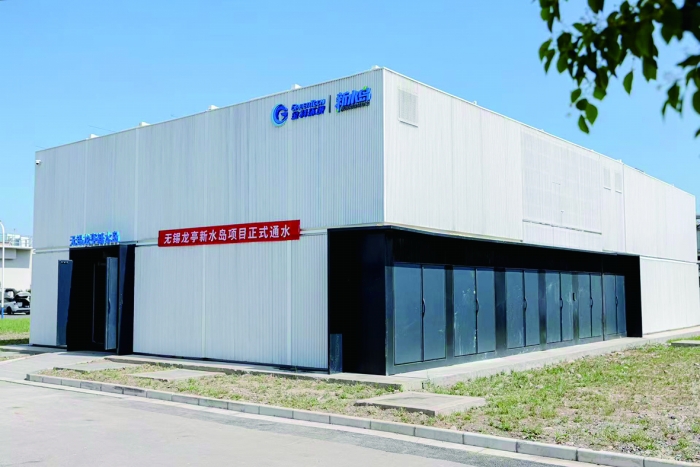
Core Insights - The company aims to revolutionize the traditional water treatment industry with its modernized water treatment plant, which operates autonomously using AI technology [2][5][6] - The "New Water Island" project represents a shift from traditional engineering projects to industrial products, significantly reducing initial investment costs and construction time [4][7] Group 1: Project Overview - The New Water Island project features a modern water treatment plant capable of processing 5,000 tons of water daily, operating without personnel due to the integration of the "Water Radish AI" system [2][5] - The New Water Island 1.0 was launched in 2023, with the 2.0 version expected in 2024, introducing modular design for efficient production and installation [3][4] Group 2: Technological Innovations - The AI-driven "Water Radish AI" system allows for autonomous operation, reducing the need for human oversight by 90% and lowering operational costs by 35% [5][6] - The system incorporates advanced AI models for process optimization and real-time monitoring, enhancing the efficiency and reliability of water treatment operations [5][6] Group 3: Market Potential - The demand for recycled water is expected to grow, with industrial water consumption projected to reach 97.1 billion cubic meters in 2024, highlighting the cost advantages of recycled water [7][8] - The company's strategic focus on resource recycling, AI integration, and productization positions it well to capitalize on emerging market opportunities in various industries [7][8]

东海县餐厨废弃物处理项目投入试运行
Xin Hua Ri Bao· 2025-10-22 21:50
Core Points - The project in Donghai County, led by Wandes Environmental Technology Co., Ltd., has successfully entered the trial operation phase after the first garbage collection vehicle unloaded kitchen waste [1] - The project aims to enhance kitchen waste management in Donghai County, with a total investment of 87.5 million yuan, designed to process 100 tons of kitchen waste and 10 tons of grease daily [1] - The project employs advanced technology including "pre-treatment + mesophilic anaerobic digestion + biogas purification and utilization + wastewater pre-treatment + deodorization" to convert kitchen waste into biodiesel and clean energy, achieving the goals of harmlessness, reduction, and resource utilization [1] Investment and Operational Details - The project is a collaborative effort involving multiple local government departments, including the Urban Management Bureau, the local government, and various planning and environmental agencies [1] - The service coverage includes all catering enterprises, institutional canteens, and households in the county, effectively collecting various types of kitchen waste [1] - The project addresses environmental governance shortcomings in the region, contributing to improved waste management practices [1]
新规正在酝酿,废弃电器电子产品处理行业面临调整
Di Yi Cai Jing· 2025-10-14 01:57
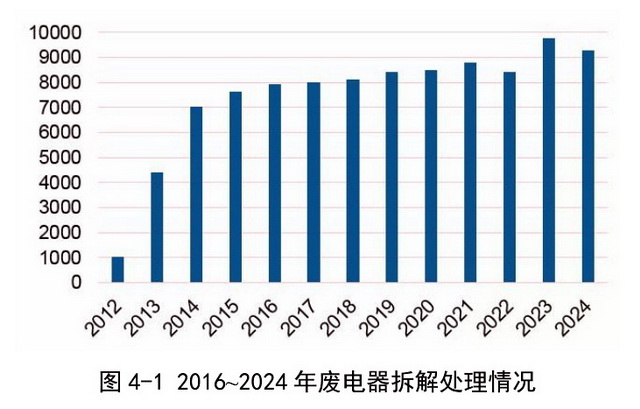
Core Viewpoint - The waste electrical and electronic products (WEEE) processing industry in China is undergoing significant adjustments with the introduction of new pollution control technology standards aimed at enhancing environmental management and promoting sustainable practices [1][5][7]. Group 1: New Standards and Principles - The newly proposed standards emphasize the principles of "reduction, resource utilization, and harmlessness," encouraging the adoption of automated sorting and intelligent disassembly technologies to reduce pollution and carbon emissions [1][7]. - The draft standard, titled "Pollution Control Technology Specification for Waste Electrical and Electronic Products Processing," is designed for enterprises engaged in waste electrical equipment processing, covering pollution control requirements throughout the entire lifecycle from storage to disposal [1][5]. Group 2: Industry Trends and Challenges - The volume of waste electrical products is expected to rise significantly, with an estimated 94 million units (sets) of "four machines and one brain" (TVs, refrigerators, washing machines, air conditioners, and computers) to be dismantled in 2024, resulting in approximately 2.65 million tons of waste [1][3]. - The current industry primarily relies on manual disassembly, while developed countries favor automated processes due to high labor costs, highlighting the need for efficiency improvements in China's processing methods [2]. Group 3: Pollution Control Measures - The new standards introduce specific pollution control measures for different types of waste electrical products, focusing on critical pollution-generating stages and the types of pollutants involved, such as lead glass in CRT displays and refrigerants in refrigerators and air conditioners [3][5]. - The standards also mandate enhanced storage requirements, including separate storage areas for hazardous materials and clear labeling to prevent contamination and ensure safety [7][8]. Group 4: Regulatory Oversight and Compliance - The draft emphasizes the need for increased regulatory oversight of waste electrical equipment processing enterprises, including regular inspections and compliance checks against the new standards [8][9]. - The standards will be periodically evaluated and revised to incorporate new processing technologies and pollution control requirements, ensuring that the industry adapts to evolving environmental challenges [9].
维尔利(300190):引领生物天然气,赋能绿色未来
Changjiang Securities· 2025-10-10 12:52
Investment Rating - The report initiates coverage with a "Buy" rating for the company [9][11]. Core Insights - The company has a strong foundation in environmental protection and is transitioning into the biogas sector, leveraging its existing capabilities to tap into the growing demand for renewable energy [2][5]. - The biogas market is expected to experience rapid growth, driven by policy support and the need for low-carbon energy solutions, with the company's production capacity projected to reach 1 million cubic meters per day by 2027 [2][6]. - The company is well-positioned to benefit from the increasing green premium associated with biogas, which enhances its cost competitiveness against traditional energy sources [7][8]. Summary by Sections Company Overview - The company has a long history in environmental services, focusing on waste treatment and expanding into biogas production as part of its growth strategy [19][21]. - It has established itself as a leader in the domestic leachate treatment market and is diversifying into various segments of municipal and industrial environmental protection [5][19]. Biogas Market Potential - Biogas, derived from organic waste, presents a dual value proposition of environmental protection and energy generation, making it a key area for development under carbon neutrality goals [6][46]. - The global biogas production is projected to grow significantly, with an expected compound annual growth rate of 14% from 2024 to 2040, highlighting the market's potential [6][53]. Financial Performance and Projections - The company faced challenges in its traditional business segments, leading to a decline in revenue; however, operational cash flow is expected to improve in 2024 [26][36]. - Earnings per share (EPS) projections for 2025, 2026, and 2027 are estimated at 0.05, 0.50, and 0.86 yuan, respectively, indicating a recovery trajectory [9][11]. Strategic Initiatives - The company is focusing on resource acquisition and technological innovation to drive its biogas projects, with plans to enhance its operational capabilities through partnerships and research collaborations [8][42]. - The integration of traditional waste management with biogas production creates a synergistic ecosystem that enhances both environmental and economic outcomes [42][43].

生态环境部:重点打击非法拆解废动力电池等“新三样”固废
Nan Fang Du Shi Bao· 2025-09-19 07:00
Core Viewpoint - The Chinese government is intensifying efforts to combat illegal dumping and treatment of solid waste, focusing on specific categories of waste, while highlighting significant achievements in solid waste management during the "14th Five-Year Plan" period [1][2]. Group 1: Solid Waste Management Achievements - China generates over 110 billion tons of various solid waste annually, including industrial, construction, household, agricultural, and hazardous waste [1]. - Since the beginning of the "14th Five-Year Plan," the country has made notable progress in solid waste pollution prevention, including a historic ban on foreign waste imports [1]. - The capacity for hazardous waste utilization and disposal has reached 223 million tons per year, while the capacity for household waste incineration has increased to 11.41 million tons per day, representing growth of 58.8% and 72.4% respectively compared to the end of the "13th Five-Year Plan" [1]. Group 2: Ongoing Challenges and Future Plans - Despite improvements, the overall level of solid waste resource utilization remains insufficient, with over 33 billion tons of industrial solid waste accumulated, occupying more than 3,500 square kilometers [2]. - The government plans to complete pollution risk assessments for phosphogypsum storage and landfills by 2027, and for heavy metals by 2030, while implementing measures to prevent new pollution risks [2]. - The focus will be on combating illegal dumping of solid waste and dismantling of specific waste types, with an emphasis on community involvement to create a strong social deterrent [2].
周红波调研城乡建设工作时强调
Nan Jing Ri Bao· 2025-08-05 01:46
Group 1 - The core viewpoint emphasizes the importance of implementing Xi Jinping's important speech at the Central Urban Work Conference as a key task for urban construction and modernization [1][2] - The city aims to integrate urban renewal with industrial development while preserving cultural heritage and improving quality [1] - The annual capacity of the Rain Flower Recycled Construction Waste Resource Disposal Facility is 400,000 tons, highlighting the focus on comprehensive waste management and resource utilization [1] Group 2 - The city construction system has achieved significant results in recent years, with a focus on high-quality urban development as guided by Xi Jinping's speech [2] - Key construction projects will address pressing issues raised by the public, aiming to improve living environments through the development of quality housing and communities [2] - The city aims to enhance urban aesthetics by protecting cultural heritage and strengthening cultural soft power, creating a unique urban charm [2]