固体废物污染防治

Search documents
新标准推动石油天然气绿色开采
Xin Lang Cai Jing· 2026-02-13 23:38
Core Viewpoint - The implementation of the new standard for solid waste pollution control in the oil and gas extraction industry aims to enhance ecological safety and promote green extraction practices starting from July 1, 2023 [1] Group 1: New Standards and Implementation - The "Technical Specification for Solid Waste Pollution Control in the Oil and Gas Extraction Industry (Trial)" (HJ 1461-2026) will be enforced to mitigate ecological risks associated with oil and gas extraction [1] - The standard emphasizes the principles of reduction, resource utilization, and harmlessness in solid waste management [1] Group 2: Waste Management Practices - Oil and gas extraction generates significant amounts of solid waste, including water-based and oil-based cuttings, as well as oil-containing sludge, which are classified as hazardous waste [1] - The standard mandates the installation of drilling mud recovery devices at operation sites to maximize the reuse of drilling mud [1] - Non-recyclable drilling mud should be treated using a "no-drill, no-drop" method to recover liquid phases and minimize the generation of drilling cuttings [1] Group 3: Utilization of Recovered Materials - Oil-containing sludge should be prioritized for mineral oil recovery, which can be used as fuel oil or as raw materials for petroleum product refining [1] - Water-based cuttings and other solid wastes can be utilized for road paving, production of sintered bricks, and concrete aggregates, provided that environmental risks are manageable [1]
我省持续深入推进污染防治攻坚
Xin Lang Cai Jing· 2026-02-08 18:30
Group 1 - The Qinghai Provincial Ecological Environment Department will continue to advance pollution prevention efforts, focusing on the "Blue Sky," "Clear Water," and "Clean Land" campaigns by 2026 [1] - The "Blue Sky" campaign aims to reduce PM2.5 concentrations, implement air quality improvement actions, and enhance regional cooperation in air pollution prevention [1] - Key initiatives include establishing emergency reduction lists for heavy pollution days, improving response mechanisms, and promoting ultra-low emissions in key industries [1] Group 2 - The "Clear Water" campaign will strengthen dynamic monitoring of surface water quality and implement a classification system for pollution discharge monitoring [1] - Efforts will include enhancing wastewater treatment facilities in industrial parks and consolidating the achievements in urban black and odorous water body management [1] - The "Clean Land" campaign will initiate soil pollution surveys and groundwater pollution assessments, while addressing rural sewage treatment and livestock pollution issues [1] Group 3 - The legislative process for the "Qinghai Province Solid Waste Pollution Prevention and Control Regulations" will be accelerated, focusing on comprehensive solid waste management actions [2] - There will be a push for large-scale utilization and disposal of industrial solid wastes such as salt sludge and stone wool tailings [2] - Enhanced environmental supervision will be implemented for the dismantling of waste electrical appliances and retired equipment [2]
首部珠中江区域协同立法将于2026年1月1日施行 一体推进固体废物污染防治
Nan Fang Ri Bao Wang Luo Ban· 2025-12-19 08:19
Core Viewpoint - The newly established regulations for solid waste pollution prevention in Zhuhai, Zhongshan, and Jiangmen mark the first regional collaborative legislation in the area, set to take effect on January 1, 2026, addressing the rising solid waste generation due to rapid economic and population growth in the region [1] Group 1 - The regulations aim to fundamentally address the issues of solid waste pollution diffusion and prevention in the region, which has become a serious threat to ecological safety due to increasing waste generation [1] - The three cities have established a regular collaboration mechanism among their legislative bodies to ensure coordinated progress in the legislative work, including synchronized project initiation, topic selection, drafting, research, publication, and implementation [1] Group 2 - The regulations focus on innovative provisions for challenging issues in cross-regional solid waste governance, particularly concerning the transfer of hazardous waste across city borders, information sharing, and law enforcement collaboration [1] - A practical regional collaborative governance mechanism has been constructed to effectively manage solid waste issues [1]
珠中江联手防治固废污染!区域协同规定明年1月1日起施行
Nan Fang Du Shi Bao· 2025-12-18 08:40
Core Viewpoint - The Zhuhai, Zhongshan, and Jiangmen cities have announced the implementation of the "Solid Waste Pollution Prevention and Control Regional Collaborative Regulations" starting January 1, 2026, to enhance ecological cooperation and address solid waste pollution in the region [1][2]. Group 1: Legislative Collaboration - The three cities are engaging in collaborative legislation under the guidance of the provincial people's congress, focusing on a unified approach to solid waste pollution prevention [2]. - The regulations consist of 18 articles that emphasize coordination, planning, information sharing, and emergency cooperation among the three cities [2]. Group 2: Implementation and Enforcement - Following the approval of the regulations by the provincial people's congress, the local legislative bodies will focus on preparation, public awareness, and collaborative supervision to ensure effective implementation [3]. - The ecological environment departments of the three cities will work on establishing a robust regional collaborative mechanism for solid waste pollution prevention [3].
生态环境部答每经问:推动解决生活垃圾填埋场渗滤液积存的突出问题
Mei Ri Jing Ji Xin Wen· 2025-11-30 13:00
Core Viewpoint - The Ministry of Ecology and Environment is addressing environmental pollution risks from solid waste landfills, particularly focusing on phosphogypsum and municipal solid waste landfills, through coordinated efforts with various government departments [1][2][3]. Group 1: Current Situation and Actions - The Ministry has initiated inspections and remediation plans for phosphogypsum and municipal solid waste landfills due to leakage issues causing environmental pollution [1][3]. - A comprehensive action plan for phosphogypsum management (2025-2027) and a pollution risk assessment for municipal solid waste landfills have been jointly issued by the Ministry and other relevant departments [3][4]. - As of October, there are 154 phosphogypsum landfills identified in five provinces and one city, with a total storage of 931 million tons; 150 of these have completed environmental risk assessments [4]. Group 2: Future Measures - The Ministry plans to strengthen source control by establishing a standard system for hazardous solid waste to reduce the generation of environmentally risky waste [5]. - Efforts will be made to reduce the proportion of hazardous and general industrial solid waste sent to landfills, thereby minimizing future leakage risks [5]. - Enhanced monitoring and early warning systems will be implemented for landfill facilities to detect potential hazards promptly [5].
四川今年已排查涉及固体废物规模约176.48万吨
Zhong Guo Xin Wen Wang· 2025-10-21 12:43
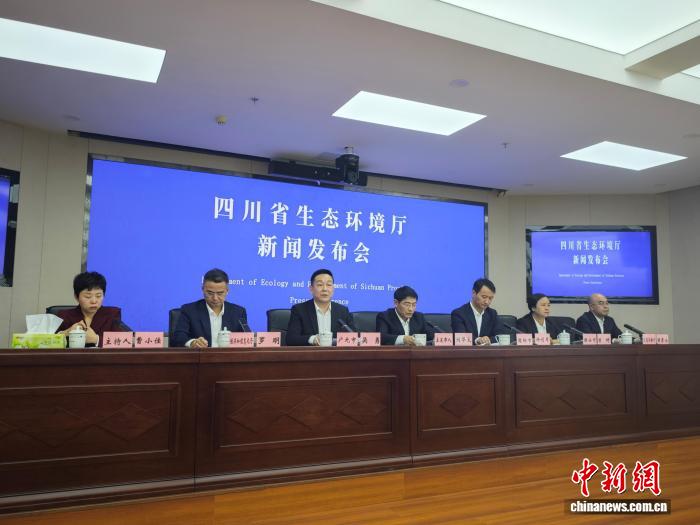
Core Viewpoint - Sichuan Province has conducted a comprehensive investigation into illegal solid waste disposal, identifying approximately 176.48 million tons of solid waste across 2,919 sites, with 233 problem sites discovered [1][2]. Group 1: Investigation and Findings - The Sichuan Provincial Ecological Environment Department organized a thorough investigation across 21 cities, leading to the identification of 233 problem sites related to solid waste, including industrial solid waste, construction waste, and household waste [1][2]. - The total area affected by the identified problem sites is approximately 714,300 square meters [1]. Group 2: Action Plan and Timeline - A special action plan for solid waste pollution prevention was initiated, with goals set for 2025 to complete problem identification and corrective measures, and a full resolution of issues by 2027 [2]. - The action plan includes 11 specific tasks, focusing on source investigation, classification, and disposal channels, with responsibilities assigned to the smallest units [2]. Group 3: Collaboration and Enforcement - The Sichuan Provincial Ecological Environment Department has collaborated with various agencies to implement a strict enforcement plan against illegal solid waste disposal, including high-profile cases under special supervision [3]. - A total of 100 environmental violation cases related to solid waste have been processed this year, resulting in fines exceeding 7.47 million yuan [4]. Group 4: Future Directions - The department plans to enhance the systematic and mechanized approach to solid waste management, utilizing advanced technologies such as satellite remote sensing and drones for problem identification and verification [4].

中国危险废物集中利用处置能力较“十三五”末增长近六成
Zhong Guo Xin Wen Wang· 2025-09-19 17:44
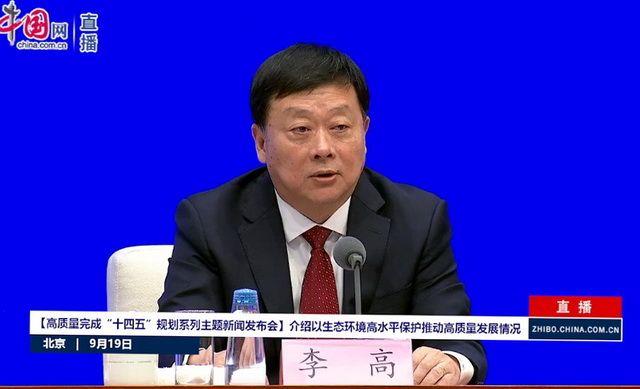
Group 1 - The core viewpoint is that China has made significant progress in solid waste pollution prevention and control since the start of the 14th Five-Year Plan, with hazardous waste disposal capacity increasing by nearly 60% compared to the end of the 13th Five-Year Plan [1] - The capacity for centralized hazardous waste disposal has reached 223 million tons per year, and the capacity for municipal solid waste incineration has reached 1.141 million tons per day, representing increases of 58.8% and 72.4% respectively compared to the end of the previous plan [1] - China generates over 11 billion tons of various solid wastes annually, including industrial solid waste, construction waste, municipal waste, agricultural solid waste, and hazardous waste [1] Group 2 - The Ministry of Ecology and Environment plans to complete the pollution risk investigation and remediation of phosphogypsum stacks and landfills by 2027, and to finish the investigation and remediation of heavy metal environmental safety hazards by 2030 [2] - The focus will be on combating illegal dumping and landfilling of solid waste, as well as the illegal dismantling of waste electrical appliances and new types of solid waste such as waste batteries, wind turbine components, and photovoltaic modules [2] - The ministry aims to enforce solid waste pollution prevention responsibilities and ensure the implementation of various remediation actions [2]
生态环境部最新发声!
Zheng Quan Shi Bao· 2025-09-19 09:03
Group 1: Solid Waste Management - The Ministry of Ecology and Environment (MEE) will focus on combating illegal dismantling of waste power batteries and other new types of solid waste [2] - Since the "14th Five-Year Plan" began, China has achieved significant results in solid waste pollution prevention, with hazardous waste disposal capacity reaching 223 million tons per year [2] Group 2: Beautiful China Initiative - The construction of a Beautiful China is described as a "reputation project" that requires practical results rather than mere slogans, emphasizing the need for genuine improvements in ecological quality [3] - MEE will address regional and watershed ecological issues, enhance environmental quality standards, and promote green development through carbon peak and carbon neutrality initiatives [3] Group 3: Technological Advancements in Monitoring - MEE is accelerating the application of artificial intelligence and new technologies in ecological monitoring, aiming to improve data accuracy and problem identification [4] - The establishment of a comprehensive ecological monitoring network is underway, with over 33,000 monitoring stations covering various environmental factors [9] Group 4: Carbon Emission Trading - China has built the world's largest carbon emission trading market, covering over 60% of national carbon emissions, with a cumulative transaction volume of 714 million tons and a total transaction value of 48.961 billion yuan as of September 18 [5] - The market has seen significant improvements in data accuracy and has become a key measure in achieving carbon neutrality goals [5] Group 5: Environmental Impact Assessments - The number of environmental impact assessments (EIAs) for high-emission and high-pollution projects has decreased, while those for wind power and electric vehicle projects have increased significantly [7] - MEE has approved 14,600 EIA documents for high-tech electronic manufacturing projects, involving a total investment of 6.28 trillion yuan [7] Group 6: Vehicle Emission Control - During the "14th Five-Year Plan" period, nearly 20 million high-emission vehicles have been eliminated as part of the Blue Sky Defense initiative [8]
生态环境部:重点打击非法拆解废动力电池等“新三样”固废
Nan Fang Du Shi Bao· 2025-09-19 07:00
Core Viewpoint - The Chinese government is intensifying efforts to combat illegal dumping and treatment of solid waste, focusing on specific categories of waste, while highlighting significant achievements in solid waste management during the "14th Five-Year Plan" period [1][2]. Group 1: Solid Waste Management Achievements - China generates over 110 billion tons of various solid waste annually, including industrial, construction, household, agricultural, and hazardous waste [1]. - Since the beginning of the "14th Five-Year Plan," the country has made notable progress in solid waste pollution prevention, including a historic ban on foreign waste imports [1]. - The capacity for hazardous waste utilization and disposal has reached 223 million tons per year, while the capacity for household waste incineration has increased to 11.41 million tons per day, representing growth of 58.8% and 72.4% respectively compared to the end of the "13th Five-Year Plan" [1]. Group 2: Ongoing Challenges and Future Plans - Despite improvements, the overall level of solid waste resource utilization remains insufficient, with over 33 billion tons of industrial solid waste accumulated, occupying more than 3,500 square kilometers [2]. - The government plans to complete pollution risk assessments for phosphogypsum storage and landfills by 2027, and for heavy metals by 2030, while implementing measures to prevent new pollution risks [2]. - The focus will be on combating illegal dumping of solid waste and dismantling of specific waste types, with an emphasis on community involvement to create a strong social deterrent [2].
生态环境部:固废污染防治成美丽中国建设短板
Di Yi Cai Jing· 2025-09-19 06:33
Core Insights - China's solid waste resource utilization level is gradually improving, but overall levels remain insufficient [1] - The government is committed to strengthening solid waste pollution prevention and taking effective measures to prevent new pollution risks [1] Group 1: Solid Waste Management Achievements - Since the "14th Five-Year Plan," significant progress has been made in solid waste pollution prevention, including a historic ban on foreign waste imports [1] - National hazardous waste utilization and disposal capacity has reached 223 million tons per year, while municipal waste incineration capacity has increased to 1.141 million tons per day, representing growth of 58.8% and 72.4% respectively compared to the end of the "13th Five-Year Plan" [1] - Over 5.6 trillion yuan has been invested in more than 3,000 solid waste management projects across 113 cities [1] Group 2: Illegal Waste Disposal and Regulatory Actions - Illegal dumping of solid waste has been a recurring issue, prompting social concern and highlighting the need for improved solid waste pollution prevention [2] - The government has initiated multiple action plans this year, including comprehensive management of phosphogypsum, environmental hazard assessments of landfills, and special rectification of illegal solid waste disposal [2] - A total of 19,100 cases have been investigated, including 5,234 suspected environmental crime cases [1][2] Group 3: Industry Challenges and Recommendations - China generates over 11 billion tons of various solid wastes annually, with accumulated industrial solid waste exceeding 33 billion tons, occupying over 3,500 square kilometers [2] - Experts emphasize the need for joint research and evaluation to address policy gaps and strengthen regulation, particularly at the import stage to prevent "foreign garbage" from entering the country [4]