
机器学习

Search documents
LendingClub (NYSE:LC) 2025 Investor Day Transcript
2025-11-05 15:00
LendingClub (NYSE: LC) 2025 Investor Day Summary Company Overview - **Company**: LendingClub - **Event**: 2025 Investor Day - **Date**: November 5, 2025 - **Significance**: First Investor Day since becoming a bank Key Points and Arguments Strategic Transformation - LendingClub has transformed significantly since acquiring a bank charter, unlocking strategic potential and targeting a valuable audience for lifetime lending and banking [6][12] - The company emphasizes a clear strategy: acquire customers through lending, engage them, and provide additional products and services [7][10] Competitive Advantages - **Underwriting**: LendingClub utilizes advanced machine learning and AI for underwriting, with a data advantage from over $1.6 trillion in validated loan demand and 150 billion data cells [8][36] - **Performance Metrics**: - 40% lower delinquency rates compared to competitors [37] - One of the lowest fraud loss rates in the industry [49] - 25% better recovery rates through smart collections [37] Target Customer Base - Focus on the "motivated middle" (income between $50,000 and $200,000), representing 32% of the U.S. population but nearly half of the non-mortgage credit wallet [16][18] - This demographic is digitally savvy, value-conscious, and has a higher-than-average income, leading to better access to credit [17] Market Dynamics - Shift from branch-based banking to mobile banking, with LendingClub positioned to capitalize on this trend [21][22] - The average credit card interest rate is 23%, while LendingClub offers unsecured credit at 30% lower rates [22][23] - Savings accounts at large banks yield minimal interest, while LendingClub offers 420 basis points with no minimum balance [24] Customer Engagement and Retention - 83% of customers express a desire to engage more with LendingClub, indicating strong customer loyalty [27] - Repeat borrowers account for 50% of annual issuance, with many returning multiple times [68][69] Growth Projections - Anticipated growth in personal loans from $10 billion to $18-22 billion over the medium term, driven by funnel efficiency, marketing channel expansion, and product innovation [79][95] - Major purchase financing and home improvement financing are identified as significant growth opportunities, with a combined addressable market of $250 billion [89][95] Product Innovations - Introduction of a top-up loan product allowing customers to consolidate existing loans and add new expenses, achieving a 93% customer satisfaction rate [77][78] - Expansion into home improvement financing through strategic partnerships and technology acquisitions [91][92] Customer Experience Enhancements - Development of a mobile app that has increased digital engagement from 25% to 42% of borrowers, leading to a significant rise in loan issuance through the app [105][108] - Introduction of DebtIQ, providing free debt and credit insights to encourage ongoing engagement [110] Additional Important Insights - The company has a strong focus on data-driven decision-making and continuous improvement through high-frequency testing and real-time adjustments to credit strategies [45][46] - LendingClub's approach to collections is proactive, utilizing AI to identify potential delinquencies early and engage customers effectively [51][54] This summary encapsulates the core themes and insights from LendingClub's 2025 Investor Day, highlighting the company's strategic direction, competitive advantages, and growth potential in the evolving financial landscape.

AI太空竞赛?英伟达H100刚上天,谷歌Project Suncatcher也要将TPU送上天
3 6 Ke· 2025-11-05 02:20
Core Insights - Nvidia has launched its H100 GPU into space, marking a significant milestone in space-based AI infrastructure, while Google has announced its own initiative, Project Suncatcher, to utilize solar energy for AI processing in space [1][3] - Project Suncatcher aims to create a scalable AI infrastructure using a constellation of satellites equipped with TPUs and free-space optical communication links, leveraging the vast energy from the sun [6][8] Project Overview - Project Suncatcher is designed to explore the potential of solar-powered satellite constellations to enhance machine learning capabilities in space, with the sun's energy being 1 trillion times greater than human electricity production [6][8] - Google plans to launch two prototype satellites in early 2027 in collaboration with Planet, addressing engineering challenges such as thermal management and system reliability in orbit [3][18] Technical Challenges - The system will require high-bandwidth, low-latency inter-satellite links to distribute machine learning workloads effectively, aiming for performance comparable to ground data centers [8][10] - Google has developed models to analyze the orbital dynamics of tightly clustered satellites, ensuring they can maintain stable orbits with minimal propulsion [10][12] TPU Radiation Resistance - Google's Trillium TPU has undergone radiation testing, demonstrating resilience to total ionizing dose and single-event effects, making it suitable for space applications [14][13] Economic Viability - Historical data suggests that satellite launch costs could drop below $200 per kilogram by the mid-2030s, making space-based data centers economically feasible [15][18] - The analysis indicates that the operational costs of space-based data centers could become comparable to terrestrial counterparts in terms of energy costs [15] Future Directions - The next milestone for Google involves executing a "learning mission" to test TPU hardware and models in space, paving the way for potential gigawatt-scale satellite constellations [18][19]



研判2025!中国商业大数据服务行业进入壁垒、市场政策、产业链、市场规模、竞争格局及发展趋势分析:未来增长潜力巨大[图]
Chan Ye Xin Xi Wang· 2025-11-05 01:41
Core Insights - The commercial big data service industry in China is experiencing significant growth, with a projected market size of 60.5 billion yuan in 2024, representing a year-on-year increase of 20.76% [1][6] - The industry is divided into general commercial big data services, accounting for approximately 29%, and specialized commercial big data services, which make up about 71% of the market [1][6] Overview - Commercial big data services involve the use of vast structured and unstructured data to provide insights, decision support, business optimization, and risk management for enterprises [2] - The core value lies in transforming data into actionable business strategies, enhancing operational efficiency, identifying market opportunities, and strengthening core competitiveness across various business processes [2] Industry Entry Barriers - The commercial big data service industry has high technical requirements, including data analysis, processing, resource integration, and algorithm development [4] - Companies must invest significant time, effort, and capital to develop core technical capabilities and keep pace with rapid technological advancements to avoid market obsolescence [4] Market Policies - The industry is recognized as a strategic emerging industry in China, supported by various government policies aimed at fostering its development [5] - Key policies include the "Digital China Construction Overall Layout Plan" and the "Three-Year Action Plan for Data Elements (2024-2026)" among others, creating a favorable policy environment for the industry [5] Industry Chain - The upstream of the commercial big data service industry includes data sources, technology sources, and servers, while the midstream consists of service providers, and the downstream encompasses application markets across various sectors [5] Competitive Landscape - The industry is segmented into general and specialized commercial big data services, with companies like Anshuo Information and Yuxin Technology focusing on customized analysis for specific industries [8] - General commercial big data service providers, such as Qichacha and Tianyancha, offer standardized products and services that cater to a wide range of client needs [9] Company Analysis - Anshuo Information specializes in credit risk management and has generated 380 million yuan in revenue in the first half of 2025, with 71.09% from credit management systems [10] - Hehe Information focuses on AI and big data technology, achieving 843 million yuan in revenue in the first half of 2025, with a significant portion from B-end services [11] Future Trends - The integration of AI and machine learning with big data services is expected to enhance data processing efficiency and decision-making capabilities [11] - Data security and privacy protection will become critical as the importance of data increases, leading companies to adopt advanced technologies for secure data collaboration [11]

为产品科学定价护航 为行业风险防范立标
Jin Rong Shi Bao· 2025-11-05 01:29
Core Viewpoint - The China Actuarial Society has released the "Experience Life Table of China's Life Insurance Industry (2025)", which reflects the latest mortality trends and provides a scientific basis for life insurance product pricing and risk management [1][2]. Group 1: Background of Life Table Compilation - The previous life table, published in December 2016, was outdated due to changes in mortality rates and life expectancy in China, necessitating a new table to enhance risk management and service levels in the life insurance industry [2]. Group 2: Main Achievements of the Life Table Compilation - A new experience life table has been created, reflecting the latest mortality rates and providing a scientific reference for life insurance product pricing [3]. - The first single life table has been compiled, allowing for cross-company and cross-insurance type mortality research, enhancing comparability with population mortality rates [3]. - A comprehensive report and educational materials on population aging will be produced to present the findings to various audiences [3]. Group 3: Highlights of the Life Table Compilation - The data collection for this life table achieved full industry coverage, incorporating all life insurance policies with death or survival benefits [4]. - Data processing efficiency improved, with a 40% reduction in processing time compared to the previous table, and the use of AI and machine learning minimized manual data entry errors [4]. - Innovative methods were employed to address missing death status data, ensuring a more accurate mortality rate without discarding valuable data [4]. - Trend factors were established based on historical insurance industry data, providing significant insights for understanding mortality trends [5]. - A two-step method for high-age extrapolation was introduced, ensuring that mortality rates reflect natural life patterns while maintaining risk characteristics [5]. - A multi-dimensional analysis of mortality rates was conducted, examining various factors such as age, gender, and region, and comparing the new table with previous versions and external data [5]. Group 4: Future Work - The Actuarial Society plans to conduct promotional and training activities to disseminate the findings of the new life table, along with completing the related reports [6][7].
AI太空竞赛?英伟达H100刚上天,谷歌Project Suncatcher也要将TPU送上天
机器之心· 2025-11-05 00:18
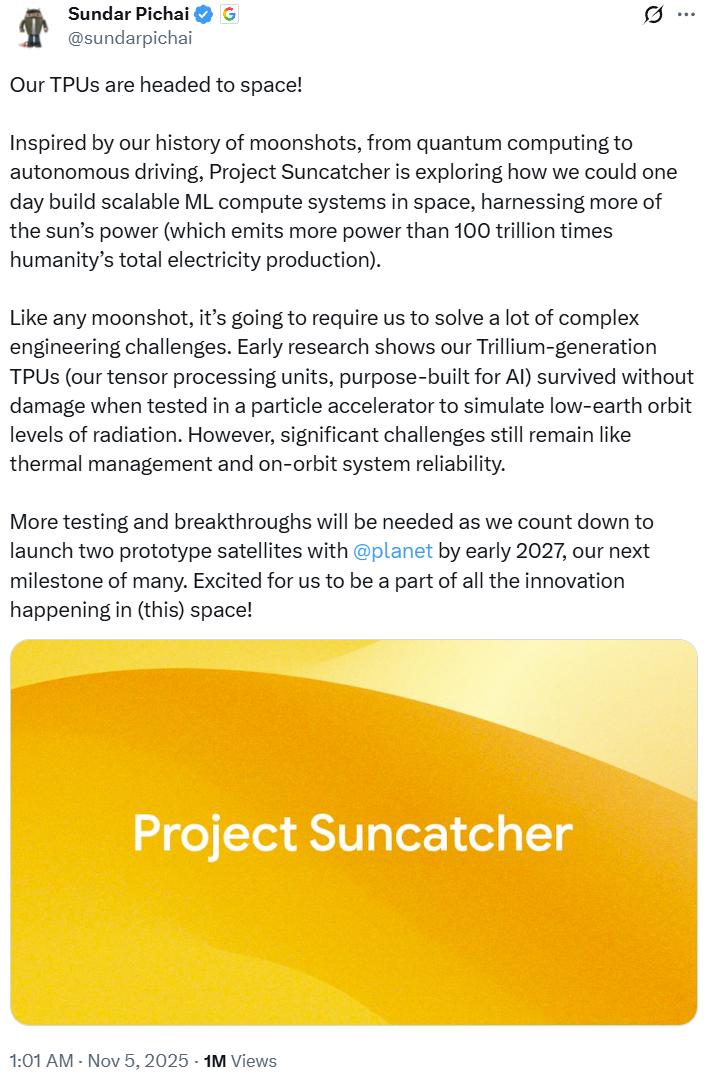
Core Insights - Google has launched Project Suncatcher, a space-based scalable AI infrastructure system designed to utilize solar energy for AI applications, with the potential to harness energy that exceeds human electricity production by 100 trillion times [8][11][29] - The project aims to deploy a constellation of satellites equipped with Tensor Processing Units (TPUs) and free-space optical communication links to enhance machine learning capabilities in space [7][9][10] Project Overview - Project Suncatcher is a significant exploration initiative that envisions a satellite constellation powered by solar energy, aimed at expanding the computational scale of machine learning in space [7][8] - The first satellite launch is scheduled for early 2027, in collaboration with Planet, to test the feasibility of the proposed system [3][29] Technical Challenges - The project faces several engineering challenges, including thermal management, high-bandwidth inter-satellite communication, and system reliability in orbit [28][29] - Achieving data center-scale inter-satellite links is crucial, requiring connections that support tens of terabits per second [13][14] - The satellites will operate in a dawn-dusk sun-synchronous low Earth orbit to maximize solar energy collection [13][21] TPU Radiation Tolerance - Google's Trillium TPU has undergone radiation testing, demonstrating resilience to total ionizing dose (TID) and single-event effects (SEEs), making it suitable for space applications [21][22] Economic Viability - Historical data suggests that launch costs for satellite systems may decrease to below $200 per kilogram by the mid-2030s, making space-based data centers economically feasible [23][24] - The operational costs of space-based data centers could become comparable to terrestrial counterparts in terms of energy costs [24] Future Directions - The initial analysis indicates that the core concept of space-based machine learning computing is not hindered by fundamental physics or insurmountable economic barriers [28] - The next milestone involves launching two prototype satellites to validate Google's models and TPU hardware in space [29][30]

300003 突破国际巨头垄断
Shang Hai Zheng Quan Bao· 2025-11-04 15:47
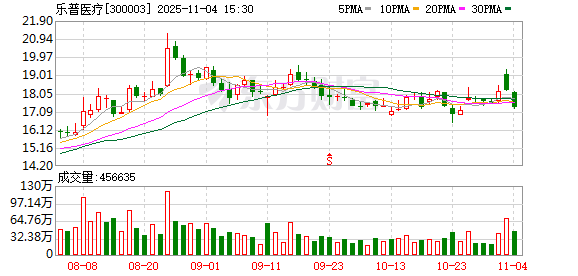
Core Viewpoint - Lepu Medical's newly approved rechargeable implantable deep brain stimulation (DBS) device marks a significant breakthrough in China's neuroregulation field, traditionally dominated by international giants, providing new treatment options for Parkinson's disease patients [2][3][8] Product Approval - Lepu Medical announced that its subsidiary has received NMPA registration approval for its rechargeable implantable DBS system, which includes the stimulator, electrode components, and extension lead kit, aimed at assisting late-stage primary Parkinson's disease patients whose symptoms are not effectively controlled by medication [3] - The DBS device is expected to contribute to revenue growth in the coming year, with plans for additional products like the implantable cardiac contractility modulator (CCM) to be submitted for approval in early 2024 [3] Treatment Mechanism - Deep Brain Stimulation (DBS) involves implanting electrodes in specific brain areas to deliver electrical pulses, helping to alleviate symptoms of Parkinson's disease, which affects over 5 million patients in China as of 2021 [4] - The new product is positioned as a key component of Lepu Medical's neuroregulation business, expected to drive performance growth [4] Market Potential - The global deep brain stimulation system market is projected to grow from approximately $1.738 billion in 2024 to $3.919 billion by 2031, with a CAGR of 12.5% from 2025 to 2031 [6] - The rechargeable implantable DBS market is expected to reach around 690 million yuan in 2024, with a projected CAGR of 4.7% until 2031 [6] Domestic Market Landscape - The global DBS market is currently dominated by companies like Boston Scientific, Medtronic, and Abbott, while domestic competitors include Lepu Medical and Beijing Pinchi Medical [7] - The neuroprosthetics market is anticipated to grow at a CAGR of 13% from 2025 to 2031, driven by the rising prevalence of neurological diseases due to an aging population [7] Industry Trends - The increasing incidence of neurological diseases such as Parkinson's and Alzheimer's is expected to boost demand for neuroprosthetic devices [7] - Future advancements in neuroprosthetic devices are likely to incorporate AI and machine learning technologies to enhance functionality and precision [7]


65k×19薪,去京东造车了!
猿大侠· 2025-11-04 04:07
Group 1 - JD.com has announced a collaboration with GAC Group and CATL to launch a new vehicle, positioning itself as an ecosystem integrator in the automotive industry [1] - The company aims to utilize machine learning models to analyze consumer preferences, optimize vehicle configurations, pricing strategies, and enhance the car purchasing process [1] - JD.com is actively hiring algorithm engineers with high salary offerings, indicating a strong focus on AI and deep learning expertise [1] Group 2 - Other major companies are also expanding AI positions, with salaries for algorithm roles increasing by 40% compared to previous years, creating a favorable job market for job seekers [4] - An AI Algorithm Engineer training program has been developed, led by industry experts, promising to equip participants with practical skills for high-paying job offers [4][6] - The program guarantees a refund if participants do not achieve a minimum salary of 290,000 or a salary increase of 40%-50% [4][72] Group 3 - The training program focuses on practical projects in popular industries, combining theory and practice to prepare students for AI roles [6] - Participants will learn various machine learning techniques, from traditional methods to advanced pre-trained models, enhancing their capabilities in real-world applications [8][12] - The curriculum includes comprehensive training on data collection, model training, deployment, and the use of advanced technologies like RAG and multi-modal models [17][27][30]

2025年光纤温度传感器品牌推荐
Tou Bao Yan Jiu Yuan· 2025-10-31 12:17
Investment Rating - The report does not explicitly provide an investment rating for the fiber optic temperature sensor industry Core Insights - The fiber optic temperature sensor industry in China is experiencing significant growth driven by technological innovations and the integration of IoT, big data, and cloud computing, leading to broader applications in smart monitoring and remote control [4] - The market is characterized by a diverse supply landscape, with both international brands and local companies competing, focusing on high-performance, precision, and intelligent products [9][12] - Emerging applications in new sectors such as renewable energy, healthcare, and infrastructure monitoring are creating new growth opportunities for fiber optic temperature sensors [25] Market Background - The fiber optic temperature sensor technology has evolved significantly since the 1980s, transitioning from traditional temperature measurement solutions to advanced products with high sensitivity and resistance to electromagnetic interference [6] - The main types of fiber optic temperature sensors include fluorescent, distributed, and fiber Bragg grating sensors, each suited for different applications [5] Market Status - The growth of the fiber optic temperature sensor market is supported by national policies favoring smart manufacturing and renewable energy, alongside the unique technical advantages of these sensors [7][8] - Traditional industrial sectors, particularly electricity and oil and gas, remain the primary demand drivers, while new fields such as transportation and healthcare are emerging as significant growth areas [10] Market Competition - The competitive landscape includes both well-known international brands and a variety of local companies, with a focus on distributed fiber optic temperature sensors and fiber Bragg grating sensors [12] - The report highlights ten leading brands in the industry, showcasing their strengths and areas of application [13][14][15][16][17][18][19][20][21][22][23] Development Trends - The industry is moving towards higher precision, intelligence, and system integration, with AI and machine learning being applied for data processing and anomaly detection [24] - The application of fiber optic temperature sensors is expanding into cutting-edge fields such as renewable energy, healthcare, and space exploration, indicating a broadening of their market potential [25]

硅谷高管创业项目获2500万美元种子轮融资,为企业打造全自动营销AI Agent|早起看早期
36氪· 2025-10-31 00:09
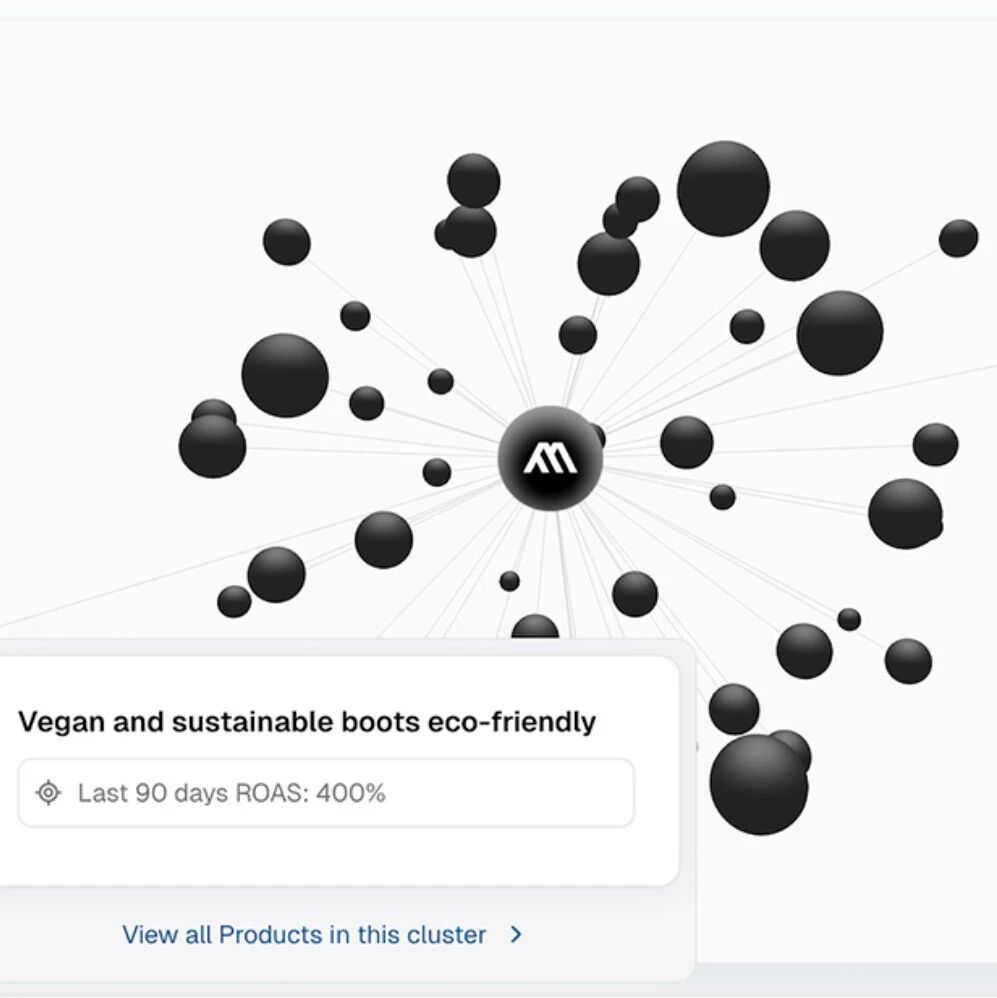
Core Insights - The article discusses the emergence of AI-driven marketing solutions, particularly focusing on MAI's automated marketing AI Agent, which aims to provide small and medium-sized enterprises (SMEs) with advanced advertising technology comparable to that of large corporations [2][4]. Company Overview - MAI is led by CEO Wu Yuchen, who has extensive experience in advertising platforms and e-commerce, having previously worked at Google and Instacart [7][10]. - The company recently completed a $25 million seed funding round, led by Kleiner Perkins, to expand its product and engineering teams and accelerate the development of its AI Agent platform [12][13]. Market Potential - The global MarTech market reached $131 billion in 2023, with a projected compound annual growth rate (CAGR) of 13.3%, indicating significant growth opportunities [15][16]. - There is a notable gap in the market for fully automated marketing solutions, particularly for SMEs that cannot afford the high costs associated with custom big data and machine learning solutions [18][19]. Product and Services - MAI's AI Agent platform offers services such as automated Google Ads management, real-time dynamic adjustments, personalized business adaptation, instant problem detection, and efficient scaling [24][25]. - The platform significantly reduces the time required for advertising optimization from days or weeks to hours, enabling continuous real-time analysis and decision-making [22][23]. Competitive Advantage - MAI differentiates itself by addressing the "white space" in the market for autonomous marketing AI Agents, focusing on comprehensive optimization rather than single-point solutions [27][28]. - The AI Agent system acts as an optimization engineer for marketing efforts, continuously analyzing data to enhance marketing engine efficiency [28][29]. Client Success - MAI has partnered with several well-known brands and manages millions of dollars in Google Ads spending monthly, with some clients reporting sales increases of up to 40% [31][32]. - For instance, NutritionFaktory achieved a threefold revenue increase based on MAI's services, demonstrating the effectiveness of the AI Agent in driving business growth [33].
Howmet Aerospace(HWM) - 2025 Q3 - Earnings Call Transcript
2025-10-30 15:02
Financial Data and Key Metrics Changes - Revenue growth accelerated to 14% in Q3 2025, up from 8% in the first half of the year [6] - EBITDA increased by 26%, while operating income rose by 29% [6] - Earnings per share (EPS) grew by over 34% to $0.95 [7] - Free cash flow was strong at $423 million, with capital expenditures of $108 million in the quarter [11] - Net leverage improved to 1.1x net debt to EBITDA, with total debt reduced by $140 million [12] Business Line Data and Key Metrics Changes - Commercial aerospace revenue increased by 15%, with parts sales up 38% and total spares up 31% [6][9] - Defense aerospace revenue grew by 24%, driven by a 33% increase in engine spares [9] - Commercial transportation revenue declined by 3%, with wheels volume down 16% [9] - Industrial and other markets saw an 18% increase, with oil and gas up 33% and IGT up 23% [9] Market Data and Key Metrics Changes - Total revenue from end markets was up 14%, with commercial aerospace exceeding $1.1 billion [9] - The combination of spares for commercial aerospace, defense aerospace, IGT, and oil and gas was up 31% in Q3 [10] - The balance sheet strengthened with a cash balance of $660 million and a $1 billion undrawn revolver [12] Company Strategy and Development Direction - The company is focused on expanding its manufacturing footprint with five new plants, particularly a new Michigan Aero engine core and casting plant [19][20] - Investments in technology and automation are expected to enhance productivity and yield, with a strong emphasis on artificial intelligence and machine learning [67][68] - The outlook for 2026 anticipates revenues of approximately $9 billion, reflecting a 10% year-over-year increase [20] Management's Comments on Operating Environment and Future Outlook - Management expressed confidence in continued growth in air travel and a strong backlog for commercial aircraft [17] - The demand for aftermarket parts, especially for engine components, is expected to remain robust [17] - The company is optimistic about defense sales, particularly for the F-35 and legacy fighter jets [17] - Concerns about commercial truck volumes due to low freight rates and high prices were noted, but the overall outlook remains positive [19] Other Important Information - The company repurchased $200 million of common stock in Q3, with a total of $600 million year-to-date [12] - A 20% increase in quarterly dividends was announced, raising the dividend to $0.12 per share [13] Q&A Session Summary Question: Insights on technology investments and competitive landscape in turbines - Management highlighted the growing demand for electricity due to data center buildouts and the need for reliable power sources, leading to increased investments in gas turbines [28][31] - The company is focusing on developing advanced turbine technologies similar to those in aerospace, with a strong emphasis on cooling capabilities [36][38] Question: End market growth expectations for 2026 - Management anticipates stronger commercial aerospace growth in 2026, with increased build rates for narrow-body aircraft [46] - Defense sales are expected to see mid-single-digit growth, while industrial segments are projected to grow in double digits [48] Question: Impact of tariffs and raw material pricing - Management reported that the net effect of tariffs remains minimal, around $5 million, and they are confident in their pass-through capabilities [61][62] Question: Future outlook for Howmet - Management expressed optimism about the company's growth trajectory, emphasizing the importance of automation and AI in improving operational efficiency [66][67] Question: Incremental margins and pricing dynamics - Management noted that current incrementals are healthy, driven by volume leverage, automation benefits, and pricing, while acknowledging the challenges posed by labor costs [73][74]
