电力市场化改革

Search documents
券商晨会精华 | A股第三轮重估渐行渐近 建议关注三类资产
智通财经网· 2025-09-16 00:35
Market Overview - The market showed mixed performance yesterday, with the Shanghai Composite Index experiencing slight fluctuations while the ChiNext Index peaked and then retreated. The total trading volume in the Shanghai and Shenzhen markets was 2.28 trillion, a decrease of 245.8 billion from the previous trading day. The Shanghai Composite Index fell by 0.23%, while the Shenzhen Component Index rose by 0.63%, and the ChiNext Index increased by 1.52% [1]. Investment Recommendations - Guotai Junan Securities indicated that the third round of revaluation for A-shares is approaching, driven by fundamental factors. They suggested three key strategies: existing investors should remain patient and not rush to exit, new investors should wait for better entry points, and there is no need to panic about potential market declines as systemic risks are gradually being resolved [1][2]. - The report highlighted three asset categories to focus on: 1) high-dividend assets, physical assets, and gold to mitigate uncertainties from global stagflation; 2) technology sector to capture hopes of breaking through economic stagnation; 3) unique structural opportunities in China's transformation, particularly for quality companies with competitive advantages in overseas expansion, industrial upgrading, and lower-tier consumption [2]. Policy Developments - Huatai Securities reported that recent policies from the National Development and Reform Commission and the National Energy Administration aim to deepen electricity market reforms. These include a special action plan for large-scale energy storage construction (2025-2027) and mechanisms to promote the consumption of renewable energy. These policies are expected to benefit the sustainability of energy storage and wind power orders [3]. Industry Insights - CICC expressed optimism about the development potential of leading indoor ski resort operators and related industry chain enterprises. The report noted a mismatch between the scarcity of quality ice and snow resources and the growing skiing population, indicating that indoor ski resorts can effectively address this issue and promote the popularity of skiing [4].



华泰证券:政策组合拳为储能需求侧打开新模式空间
Di Yi Cai Jing· 2025-09-15 23:50
Core Insights - The report from Huatai Securities indicates that on September 12, the National Development and Reform Commission and the Energy Administration released three policies and consultation drafts, focusing on deepening the reform of the electricity market [1] Group 1: Policy Developments - The policies include the "Special Action Plan for Large-Scale Construction of New Energy Storage (2025-2027)", "Notice on Improving the Price Mechanism to Promote Local Consumption of Renewable Energy Power", and "Guidelines for the Construction of Continuous Operation Regional Electricity Spot Markets" [1] - These documents have been finalized and previously underwent offline consultation [1] Group 2: Market Implications - The overarching direction of these policies emphasizes the establishment of a pricing mechanism for green electricity connections and the integration of wind and solar storage projects, along with a future roadmap [1] - The policies set a baseline target for the growth of energy storage installations, which is expected to benefit the sustainability of orders for energy storage and wind power [1]
国能日新(301162):营收利润增速均亮眼 新增电站用户数量创新高
Xin Lang Cai Jing· 2025-09-14 08:45
Core Viewpoint - The company reported strong performance in its 2025 semi-annual report, benefiting from the booming renewable energy installation market and the growth of its distributed power forecasting business, achieving revenue of 321 million yuan, a year-on-year increase of 43.15%, and a net profit attributable to shareholders of 46 million yuan, a year-on-year increase of 32.48% [1][2][3] Financial Performance - In H1 2025, the company achieved revenue of 321 million yuan, up 43.15% year-on-year, and a net profit of 46 million yuan, up 32.48% year-on-year, with a non-recurring net profit of 43 million yuan, up 53.52% year-on-year [2][3] - In Q2 2025, the company reported revenue of 176 million yuan, a year-on-year increase of 45.74%, and a net profit of 29 million yuan, a year-on-year increase of 31.32%, with a non-recurring net profit of 28 million yuan, a year-on-year increase of 35.64% [2][3] Business Segments - The power forecasting business saw significant growth, generating revenue of 205 million yuan in H1 2025, a year-on-year increase of 55.14%, accounting for 63.96% of total revenue, driven by rapid growth in upstream installation scale and new market opportunities [4] - The company added 1,116 new power station users, a 26% increase compared to the end of 2024, with a total of 5,461 power stations served, indicating strong user retention and potential for further business scale effects [4] Innovation and AI Integration - The company is steadily advancing its innovative business, which includes power trading, energy storage management systems, virtual power plants, and microgrid energy management systems, generating revenue of 16.16 million yuan in H1 2025, a year-on-year increase of 1.53% [4] - The introduction of AI technology has optimized operational strategies in energy storage and enhanced product functionality, with international versions of energy storage management systems developed to meet overseas market demands [5] Investment Outlook - The company is expected to continue its revenue and profit growth, with projected revenues of 720 million yuan, 916 million yuan, and 1.148 billion yuan for 2025-2027, representing year-on-year growth rates of 30.92%, 27.26%, and 25.29% respectively, and net profits of 121 million yuan, 154 million yuan, and 193 million yuan for the same period [6]

新能源上网电量全面入市,山东“吃螃蟹”
Da Zhong Ri Bao· 2025-09-12 01:00
Group 1 - The core viewpoint of the articles is that Shandong has successfully implemented a market-oriented pricing mechanism for renewable energy, marking a significant step in China's electricity market reform [1][2][3] - Shandong's renewable energy installed capacity reached 119 million kilowatts by the end of July, with solar power leading at 91.3 million kilowatts and wind power at 27.49 million kilowatts, making it a major player in the renewable energy sector [1] - The first competitive bidding for renewable energy pricing in Shandong resulted in wind power being priced at 0.319 yuan per kilowatt-hour for 5.967 billion kilowatt-hours and solar power at 0.225 yuan per kilowatt-hour for 1.248 billion kilowatt-hours [1] Group 2 - The introduction of "mechanism electricity" and "mechanism price" rules aims to stabilize revenue expectations for power generation companies, providing a form of "dynamic price insurance" [2] - The total scale of mechanism electricity for the 2025 bidding was set at 94.67 billion kilowatt-hours, with a bidding process that attracted over 3,000 renewable energy projects, ultimately qualifying 1,200 projects [2] - The reform is expected to guide the energy structure towards a more diversified approach, promoting scientific decision-making and technological innovation within the renewable energy industry [3]
湖北新型能源产业规模超2000亿 “十四五”期间电网投资1227亿
Chang Jiang Shang Bao· 2025-09-07 23:10
Core Viewpoint - The energy supply is a fundamental guarantee for economic development, and Hubei province has made significant advancements in energy projects during the "14th Five-Year Plan" period, positioning itself as a leader in energy transformation and development in China [2][3]. Group 1: Energy Development Achievements - Hubei's energy sector has seen the most significant projects, largest investment, and fastest growth in installed power generation capacity during the "14th Five-Year Plan," with a total investment of 122.7 billion yuan in the power grid, an increase of 19 billion yuan compared to the previous plan [2][4]. - The installed power generation capacity has reached 133 million kilowatts, with an average annual growth of over 10 million kilowatts, nearly three times the growth rate of the "13th Five-Year Plan" [4][7]. - The new energy industry in Hubei has surpassed 200 billion yuan, with multiple locally produced new energy products gaining global popularity, making the energy sector a crucial engine for economic growth [5][9]. Group 2: Energy Supply and Infrastructure - The energy supply system has been significantly strengthened, with the total electricity consumption and peak load approximately 1.5 times that of 2020, equivalent to adding the electricity consumption of an entire city like Wuhan [4][7]. - The province has added 1,180 kilometers of long-distance oil and gas pipelines and 19,000 kilometers of transmission lines of 35 kV and above during the "14th Five-Year Plan," enhancing the energy network [4][6]. - The number of charging stations has quadrupled, covering 7,252 administrative villages, creating a comprehensive charging service network [4][6]. Group 3: Clean Energy Transition - Hubei has established ten large-scale renewable energy bases, achieving its renewable energy installation target two years ahead of schedule, with renewable energy surpassing thermal power as the primary energy source [5][9]. - The share of renewable energy installations has reached 70.2%, exceeding the national average by 9.4 percentage points, with over half of the annual electricity generation coming from renewable sources [5][9]. - The proportion of coal consumption has decreased to below 50%, while non-fossil energy consumption has risen to over 20%, indicating a significant shift towards cleaner energy sources [5][9]. Group 4: Market and Innovation - Hubei has established a comprehensive electricity market system, becoming a leader in the national unified electricity market construction, with the first "electricity-carbon-finance" market collaboration in the country [6][9]. - The province has developed 23 national-level key laboratories and research centers in the energy sector, with significant advancements in technology and equipment [5][9]. - Hubei's electricity system has achieved a historic breakthrough, with a total investment of 122.7 billion yuan in the power grid, and the average power outage time has been reduced from 13 hours in 2020 to 0.86 hours in 2025 [7][8].

交银成长混合A:2025年上半年利润1.61亿元 净值增长率10.32%
Sou Hu Cai Jing· 2025-09-05 10:58
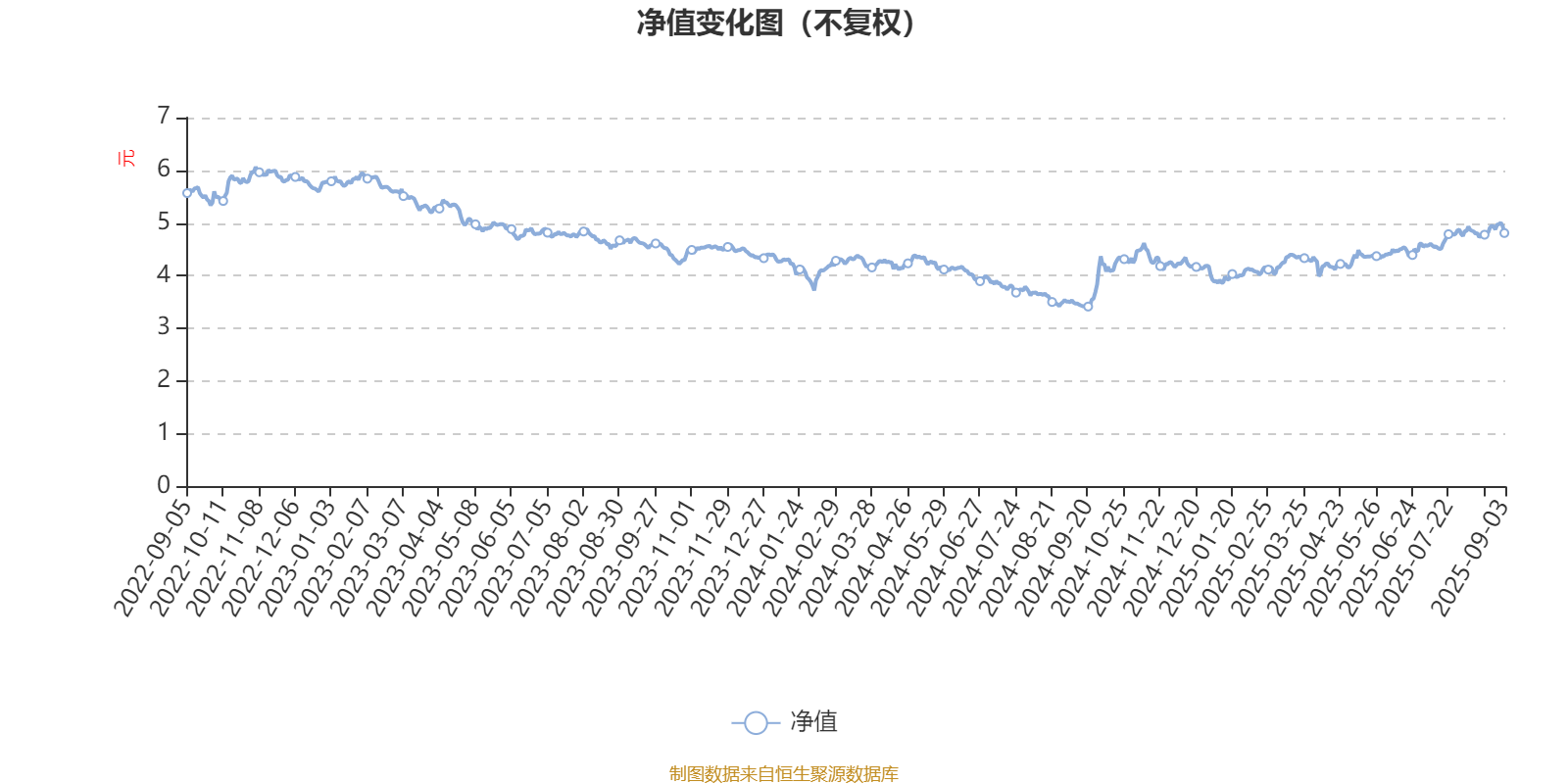
Core Viewpoint - The AI Fund, Jiaoyin Growth Mixed A, reported a profit of 161 million yuan for the first half of 2025, with a net value growth rate of 10.32% and a fund size of 1.719 billion yuan as of the end of June 2025 [2][31]. Fund Performance - As of September 3, 2025, the fund's unit net value was 4.81 yuan, with a one-year return of 37.05%, ranking 119 out of 181 comparable funds [2][5]. - The fund's performance over the last three months showed a growth rate of 9.29%, ranking 159 out of 182, and over the last six months, it was 18.99%, ranking 84 out of 182 [5]. Valuation Metrics - As of June 30, 2025, the fund's weighted price-to-earnings (P/E) ratio was approximately 26.54, lower than the industry average of 29.05 [10]. - The weighted price-to-book (P/B) ratio was about 2.08, compared to the industry average of 2.22, and the weighted price-to-sales (P/S) ratio was 1.63, against an average of 1.85 [10]. Growth Metrics - For the first half of 2025, the fund's weighted revenue growth rate was -0.02%, and the weighted net profit growth rate was 0.49% [17]. - The weighted annualized return on equity was 0.08% [17]. Fund Composition and Holdings - As of June 30, 2025, the fund had a total of 41,700 holders, with individual investors holding 99.94% of the shares [34]. - The fund's top ten holdings included companies such as Hongdu Aviation, Aero Engine Corporation of China, and Huaneng International, with a concentration exceeding 60% [39]. Trading Activity - The fund's turnover rate for the last six months was approximately 51.56%, consistently below the industry average for three years [37].
我国电力交易结构及工商业购电成本拆解
Dong Zheng Qi Huo· 2025-09-04 08:40
Report Industry Investment Rating No relevant information provided. Core Viewpoints of the Report The full implementation of the electricity spot market is a crucial task in China's electricity market reform. The electricity market consists of a medium - long - term market and a spot market. The medium - long - term market locks in forward electricity prices to avoid spot price fluctuations, while the spot market discovers prices through short - term and instantaneous supply - demand changes. The electricity purchase methods of industrial and commercial users can be divided into three categories, and their costs are affected by factors such as priority power generation scale, coal - fired power marginal generation cost, energy supply structure, and market supply - demand relationship. China's electricity futures market has not yet fully met the short - term listing conditions and requires further improvement of market rules and implementation of relevant policies [1][2][3]. Summary by Relevant Catalogs 1. Spot Market Environment for Electricity Energy Transactions 1.1 Spot Market Environment for Electricity Trading Rules - The electricity energy market consists of a medium - long - term market and a spot market. The medium - long - term market provides revenue expectations for power generation enterprises, and the spot market guides flexible peak - shaving of units. As of August 2025, 7 provincial electricity spot markets have been officially launched, and Anhui and Shaanxi aim to launch by the end of June 2026. China has basically established a trading system that integrates medium - long - term, spot, auxiliary service, and capacity markets [12][13]. - Medium - long - term electricity energy market trading rules: Market participants include power generation enterprises, power users, etc. There are four trading methods, and key elements such as trading units and contract cycles need to be clearly defined. Annual and monthly transactions have their own characteristics, and the decomposition curve of electricity quantity has two determination methods. Power generation can be divided into priority and market - oriented generation, and the corresponding electricity consumption also has priority and market - oriented parts. The actual market - price - forming participants in medium - long - term transactions are mainly non - priority power generation and relevant power - purchasing entities, and exchanges often set price limits [16][18][21]. - Spot electricity energy market trading rules: Spot trading includes day - ahead and real - time trading. The "full - quantity declaration, centralized optimization and clearing" method is adopted. All market participants must declare their electricity consumption or generation and quotes for the next day. The market clearing price of the day - ahead and real - time markets is the marginal node price, which is composed of system electricity price and congestion price and is mainly determined by coal - fired power marginal generation cost [26][29][30]. 1.2 Wholesale Market Electricity Fee Settlement and Off - market Differential Settlement for New Energy Projects - Wholesale market electricity fee settlement: The wholesale market uses a three - part settlement model, including medium - long - term contract electricity fees, day - ahead market deviation electricity fees, and real - time market deviation electricity fees. The settlement cycle is "daily clearing and monthly settlement". Due to high - proportion medium - long - term contracts, spot price fluctuations have less direct impact on market users [33][34][37]. - Off - market differential settlement for new energy projects: After new energy participates in the electricity market, a differential settlement mechanism is established outside the market. For existing projects before June 1, 2025, the mechanism electricity price is determined by provincial authorities, generally not higher than the local coal - fired power benchmark price. For new projects after June 1, 2025, the mechanism electricity price is determined through market competition. The differential settlement is carried out monthly, and the difference between the market trading average price and the mechanism electricity price is included in the local system operation cost [38][39][40]. 2. Decomposition of Industrial and Commercial Users' Electricity Purchase Costs 2.1 Industrial and Commercial Users' Electricity Purchase Methods - Since November 2021, China has abolished the industrial and commercial catalog sales electricity price. Industrial and commercial users can be divided into those directly participating in market transactions and those purchasing electricity through grid enterprises' agency. There are three types of direct - participating users: wholesale, retail, and those paying 1.5 times the agency purchase price. Wholesale users trade directly with power generation enterprises, retail users sign contracts with power - selling companies, and agency - purchase users establish an agency relationship with grid enterprises. The agency - purchase policy is a transitional arrangement [44][45][48]. 2.2 Industrial and Commercial Electricity Purchase Costs Based on the Electricity Spot Market - Industrial and commercial users have two electricity - charging rules: single - part and two - part systems. The single - part system is suitable for small users with stable electricity consumption, and the two - part system is suitable for large industrial users with large load fluctuations. The electricity purchase cost of industrial and commercial users mainly includes electricity fees, capacity (demand) fees, transmission and distribution fees, etc. The electricity fee is the most important variable part, accounting for 60% - 80% of the total cost, and the capacity (demand) fee and transmission and distribution fee account for 20% - 30% and 10% - 20% respectively [51][52][53]. - Wholesale users' electricity purchase cost: It is directly related to the medium - long - term and spot market prices. The annual medium - long - term contract signing situation is the key factor determining their annual electricity cost, but short - term market supply - demand changes also have an impact, which depends on the local electricity market trading plan [57][58][65]. - Agency - purchase users' electricity purchase cost: It is mainly determined by the agency - purchase price, which is composed of the weighted average of priority power generation and market - purchased electricity, plus transmission and distribution fees, etc. The priority power generation source and the market - purchased proportion vary by province. The agency - purchase price is affected by factors such as power source structure, purchase method, and policy requirements. Deviation electricity fees are shared or borne by users in the next month [67][68][71]. - Retail users' electricity purchase cost: It depends on the retail package type, which can be divided into fixed - price packages and floating - price packages. Different regions have different retail package classifications. For example, Guangdong's retail market has a large scale, and its electricity price must be linked to the market price to a certain extent. In Shanxi, the medium - long - term trading is mainly monthly, and the industrial and commercial electricity price may fluctuate greatly within a year [82][83][90]. 2.3 Main Factors Affecting Industrial and Commercial Electricity Purchase Costs - Priority power generation scale: It is an important source of grid - agency - purchased electricity. The scale is affected by factors such as power source structure, residents' and agricultural electricity consumption, and the implementation of policies. After the 136th document, the impact on the overall scale of priority power generation is expected to be small [95][96][97]. - Coal - fired power marginal generation cost: Coal - fired power is the marginal pricing unit. Fuel cost accounts for 60% - 70% of the coal - fired power cost and fluctuates greatly. China has established a medium - long - term coal - electricity contract system to stabilize prices. The price of medium - long - term coal - electricity contracts is determined by a reasonable price range and a "benchmark price + floating price" mechanism, and the spot price has a certain influence on it [100][101][102]. - Energy supply structure: China's power structure is still dominated by coal - fired power. The marginal cost of new energy power generation such as wind and solar is close to zero, and hydropower has the lowest cost. With the increase in low - cost clean energy power generation, the market price center will be under pressure. The mechanism electricity price of new energy projects affects the purchase cost of end - users, and the mechanism electricity price of incremental projects is determined through market competition, which is conducive to reducing the overall market purchase cost [103][105].
经营业绩明显好转,火电企业“备考”电力市场
第一财经· 2025-09-04 07:11
Core Viewpoint - The power generation industry, particularly coal-fired power companies, has seen significant profit improvements due to declining coal prices, despite facing challenges from ongoing electricity market reforms [3][5]. Group 1: Financial Performance - The five major power generation companies reported a combined net profit of 24.267 billion yuan, surpassing the total net profit from the previous year and marking the highest profit since 2016 [3]. - Companies with heavy coal assets, such as Huayin Power and Yunnan Energy, reported net profit growth exceeding 100%, with Huayin Power's net profit reaching 207 million yuan, a staggering increase of 4147% year-on-year [3][5]. Group 2: Cost and Revenue Dynamics - The decline in coal prices has been crucial for cost control and profit improvement for coal-fired power companies, with the average coal price at the Caofeidian port dropping to 618 yuan/ton, a decrease of over 20% year-on-year [5]. - Despite lower fuel costs, revenue has also declined, with companies like Huadian International reporting a 6.46% decrease in electricity generation and a 1.44% drop in electricity prices [5][6]. Group 3: Market Challenges - The ongoing electricity market reforms are exerting pressure on power generation companies, with many reporting declines in both electricity prices and generation volumes [3][6]. - The shift towards cleaner energy sources is reducing the role of coal-fired power as a base-load power source, necessitating adaptations in operational strategies to maintain profitability [6][9]. Group 4: Competitive Landscape - The competition in the electricity market is intensifying, with new coal power approvals increasing by 152% year-on-year, indicating a potential oversupply in the market [8]. - In regions with high clean energy ratios, coal power must adapt to provide flexibility and support for renewable energy, while in coal-heavy regions, there is a need to enhance peak-shaving capabilities [8][9]. Group 5: Future Outlook - The future profitability of coal power is expected to be closely tied to its role in ensuring system safety during the energy transition, with reasonable profit margins needing to be maintained despite the challenges [10].
经营业绩明显好转,火电企业“备考”电力市场
Di Yi Cai Jing· 2025-09-03 13:01
Group 1 - The core viewpoint is that many power generation companies have improved their operating performance due to the continuous decline in coal prices, leading to significant profit growth in the first half of the year [1][2] - The five major power generation groups reported a total net profit of 24.267 billion yuan, surpassing the total net profit of the same period last year, marking the highest net profit since 2016 [1] - Several companies, including Huayin Power and Yunnan Energy, reported net profit growth exceeding 100%, with Huayin Power's net profit reaching 207 million yuan, a year-on-year increase of 4147% [1] Group 2 - The decline in coal prices has effectively offset the decrease in electricity prices, with the average coal price at Caofeidian Port dropping to 618 yuan/ton, a decrease of over 20% year-on-year [2] - The average coal price for major companies like Huadian International and Guodian Power decreased by approximately 12.98% and 9.5% respectively [2] - Despite the profit increase, many companies reported a decline in both the on-grid electricity price and the on-grid electricity volume, indicating a potential long-term impact on future operations [2] Group 3 - Local power companies have experienced similar revenue dynamics, with Anhui Huadian Power's operating costs decreasing by 8.51% while revenue fell by 5.83% due to lower electricity generation and prices [3] - The current trend indicates that thermal power plants are increasingly being used for peak regulation rather than as base-load power sources, leading to a decline in annual utilization hours [3] - The ability to adapt to market dynamics and optimize generation based on electricity prices will be crucial for the future profitability of thermal power plants [3] Group 4 - The competition in the electricity market is intensifying, with new coal power approvals increasing by 152% year-on-year, indicating a potential oversupply in the market [4] - The distribution of new projects is uneven, with a significant concentration in the northern regions of China [4] Group 5 - The impact of the national electricity market construction varies by region, with areas like Zhejiang and Guangdong benefiting from high electricity demand and prices, while western regions face challenges due to high clean energy ratios [5] - Coal power plants need to enhance their flexibility and adjust their operations to accommodate the increasing share of renewable energy [5] Group 6 - The "three reform linkage" refers to the technical upgrades of coal power units, including energy-saving, heating, and flexibility improvements, which are essential for adapting to the evolving electricity market [6] - Many projects for upgrading coal power plants are facing challenges due to high investment costs and unclear economic returns, which may hinder their approval [6] - The future profitability of coal power is expected to be closely tied to its role in ensuring the safety and stability of the electricity system during the transition to cleaner energy sources [6]


山西电力市场化改革成效初显
Xin Lang Cai Jing· 2025-09-01 07:49
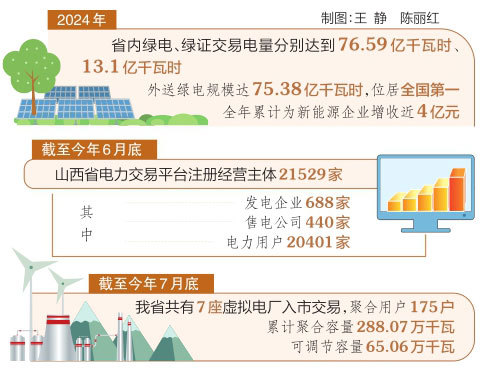
Core Viewpoint - The article highlights the advancements in the electricity market reform in Shanxi Province, emphasizing the role of China Aluminum Shanxi New Materials Co., Ltd. in the aluminum industry and its significant electricity consumption, which is crucial for its production costs [3][4]. Group 1: Company Overview - China Aluminum Shanxi New Materials is the first large enterprise in Shanxi Province with a complete aluminum industry chain, including mining, alumina, electrolytic aluminum, and aluminum processing, along with self-supplied power generation [3]. - The company has an annual electricity consumption exceeding 6 billion kilowatt-hours, making it the largest electricity consumer in Yuncheng City [3]. - In July 2023, the company's total electricity consumption was 56,216 million kilowatt-hours, with 54,259 million kilowatt-hours purchased from the grid, accounting for 96.5% of its total consumption [3]. Group 2: Electricity Market Reform - Shanxi Province has been leading the national electricity market reform, implementing a multi-functional and multi-category electricity market to support the transition of energy endowments into development momentum [4]. - The province initiated the first trial operation of the electricity spot market in September 2019 and became the first in China to transition to formal operation in December 2023 [4]. - The electricity market reform has resulted in stable price operations, with the average real-time spot electricity price reflecting supply and demand dynamics [6]. Group 3: Market Dynamics and Performance - By the first half of 2025, Shanxi's electricity spot market cleared a total of 156.23 billion kilowatt-hours, with real-time spot prices showing minimal variance, indicating a stable market environment [6]. - The province's maximum load reached 37.25 million kilowatts, a year-on-year increase of 9.1%, demonstrating the reliability of electricity supply [6]. - The utilization rate of renewable energy in Shanxi remains high at 97%, with significant growth in green electricity and green certificate trading volumes [7]. Group 4: Industry Growth and Innovation - As of June 2023, Shanxi's electricity trading platform registered 21,529 operating entities, including 688 power generation companies and 440 electricity sales companies, indicating a vibrant market with rapid growth of new business entities [7]. - The province's virtual power plants have aggregated a capacity of 288.07 million kilowatts, leading the nation in this area [5][7]. - The transition of power generation companies towards comprehensive energy service providers is underway, with a focus on integrating electricity, heat, cold, and gas services [7].