
脑机接口技术

Search documents
“逛展”全球数贸会:杭州科创新势力吸睛
Zhong Guo Xin Wen Wang· 2025-09-29 00:24
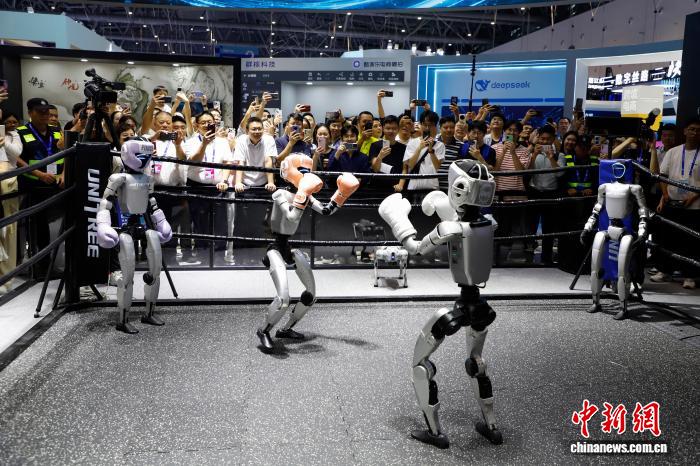
Group 1: Event Overview - The fourth Global Digital Trade Expo is being held in Hangzhou, Zhejiang from September 25 to 29, attracting nearly 11,000 international merchants [1] - The event highlights the "Kechuang New Forces" of Hangzhou, showcasing the city's emerging industries and innovations [1] Group 2: Company Innovations - Yushu Technology Co., Ltd. showcased its G1 humanoid robot in a fighting competition, demonstrating advanced algorithms for motion control, including balance and autonomous recovery after being knocked down [3] - Qiangnao Technology Co., Ltd. presented its Revo2 bionic dexterous hand, which can perform delicate tasks with a grip strength of up to 50N while weighing only 383g, utilizing non-invasive brain-computer interface technology [4][5] - Chuanhe Lingjing Technology Co., Ltd. introduced mixed reality (MR) and virtual reality (VR) technologies, creating immersive experiences that blend traditional culture with modern technology, attracting interest from international clients [6]

早知道:有色金属行业稳增长方案发布;公募规模突破36万亿再创新高
Zheng Quan Shi Bao Wang· 2025-09-29 00:08
Group 1 - The central bank's monetary policy committee suggests enhancing monetary policy regulation to improve foresight, targeting, and effectiveness [1] - The National Bureau of Statistics reports a 0.9% increase in profits for large-scale industrial enterprises nationwide from January to August 2025 [1] - A work plan for stable growth in the non-ferrous metals industry has been released, with a new round of mineral exploration breakthrough strategic actions to be implemented [1] Group 2 - Four departments will implement export license management for pure electric passenger vehicles, starting in 2026 [1] - The National Medical Products Administration has announced industry standards for medical devices using brain-computer interface technology [1] - The public fund scale has surpassed 36 trillion, setting a new record [1] - GPU leader Moer Thread's IPO has been approved [1]
上市用时今年最短,国产GPU独角兽正式过会,国内AI芯片全产业链升级仍是核心逻辑
Xuan Gu Bao· 2025-09-28 23:45
Group 1 - MoE Thread's IPO has been approved, taking only 88 days from application to approval, the shortest time for new companies on the Sci-Tech Innovation Board this year [1] - The company is one of the earliest and fastest domestic GPU companies to commercialize, with AI computing products projected to account for 77.6% and 94.9% of revenue in the first half of 2024 and 2025 respectively [1] - The funds raised will be used for the development of next-generation AI training and inference chips, graphics chips, and AISoC chips, as well as to supplement working capital [1] Group 2 - According to Guotai Junan, this represents a substantial advancement for domestic full-function GPU manufacturers in the capital market, with expectations for accelerated R&D investment and ecosystem development [1] - The focus of competition in the domestic computing power supply side is shifting towards interconnect optimization, with future directions including achieving high bandwidth interconnects at lower costs and higher energy efficiency systems [1] - Jiangsu Securities notes that the semiconductor sector's valuation has significantly recovered due to the AI market, with demand for computing chips driving growth along the supply chain [2] Group 3 - Yingqu Technology holds 134,037.4 shares of MoE Thread, accounting for 0.3351% of its pre-issue total share capital, and is actively developing brain-computer interface technology [3] - Maolai Optics provides optical devices for lithography machines, which are essential for achieving light uniformity and exposure imaging [3]
影响市场重大事件:工信部等八部门印发《有色金属行业稳增长工作方案(2025—2026年)》,要求科学合理布局氧化铝、铜冶炼、碳酸锂等项目,避免重复低水平建设
Mei Ri Jing Ji Xin Wen· 2025-09-28 22:35
Core Insights - The Ministry of Industry and Information Technology and eight other departments have issued a plan for the non-ferrous metals industry aimed at stabilizing growth from 2025 to 2026, targeting an average annual growth of around 5% in added value and a 1.5% increase in the production of ten non-ferrous metals [1][2][3][4][5]. Group 1: Industry Growth and Development - The plan anticipates an average annual growth of approximately 5% in the added value of the non-ferrous metals industry from 2025 to 2026 [1]. - Production of ten non-ferrous metals is expected to grow by about 1.5% annually, with significant progress in domestic resource development for copper, aluminum, and lithium [1][2]. - The production of recycled metals is projected to exceed 20 million tons, enhancing the supply capacity of high-end products [1][2]. Group 2: Financial and Policy Support - The plan includes utilizing long-term special government bonds and other funding channels to support resource development, high-end material research, energy conservation, and digital transformation [2]. - It emphasizes the importance of expanding important non-ferrous metal futures trading varieties and financial derivatives [2]. Group 3: Project Management and Infrastructure - The plan advocates for a scientific and reasonable layout of projects related to alumina, copper smelting, and lithium carbonate to avoid redundant low-level construction [3]. - It aims to accelerate the approval processes for mineral resource development projects through the establishment of green channels [3]. Group 4: Innovation and High-End Product Development - The initiative promotes innovation in high-end products, focusing on the needs of key industries such as new-generation information technology and new energy vehicles [4]. - It encourages breakthroughs in high-quality raw materials and advanced rare earth materials, enhancing the performance of aluminum and magnesium alloys [4][5]. Group 5: Application of Rare Metals - The plan aims to elevate the application levels of rare metals in emerging industries such as integrated circuits, industrial mother machines, and artificial intelligence [5]. - It promotes the validation of high-end products like high-purity gallium and tungsten hard alloys, as well as the innovative application of frontier materials [5].
国家药监局公布采用脑机接口技术医疗器械相关行业标准
Zheng Quan Shi Bao Wang· 2025-09-28 04:04
Group 1 - The core viewpoint of the article is the approval and publication of a new medical device industry standard related to brain-machine interface technology [1] Group 2 - The standard is titled YY/T1996—2025 and focuses on the testing methods for the perception and response performance of implantable neurostimulators with closed-loop functionality [1]
写在天津大学建校130周年之际:百卅学府 向新而行
Zhong Guo Qing Nian Bao· 2025-09-27 22:33
Core Insights - Liu Xiuyun, a rising academic star, returned to Tianjin University to teach after studying at prestigious institutions, embodying the university's spirit of "self-improvement" and national service [1][2] - Tianjin University, celebrating its 130th anniversary, showcases significant breakthroughs in various fields, including brain-computer interface technology and new energy chemical catalysis [1][3] - The university emphasizes the importance of aligning research with national needs, fostering a culture of practical and impactful scientific inquiry [3][5] Group 1: Academic Contributions - Liu Xiuyun completed her studies and postdoctoral research at top universities in a short time, demonstrating exceptional learning ability [2] - Tianjin University's chemical engineering discipline ranks among the top 0.1% globally, reflecting its historical connection to national development [3] - The university's faculty and students are actively engaged in research that addresses real-world industrial challenges, such as the development of new technologies in chemical engineering [3][5] Group 2: Educational Philosophy - The university's motto "seeking truth from facts" has been a guiding principle for over a century, emphasizing practical application in education and research [6][7] - Recent initiatives include the establishment of new academic programs and a focus on interdisciplinary studies to meet the evolving demands of the industry [10][12] - Tianjin University aims to cultivate a new generation of leaders equipped to tackle future challenges, aligning educational outcomes with national strategic needs [10][12] Group 3: Innovation and Industry Collaboration - Faculty members are encouraged to engage in research that directly benefits industry, reflecting a shift in academic evaluation criteria towards practical contributions [4][5] - The university has launched programs targeting emerging fields such as synthetic biology and brain-computer interfaces, aiming to produce competitive talent in these areas [11][12] - Tianjin University is committed to fostering innovation through collaboration with industries, ensuring that research translates into real-world applications [12][13]
通大附院成功实施脑机接口技术,用科技唤醒失去的功能
Yang Zi Wan Bao Wang· 2025-09-26 02:47
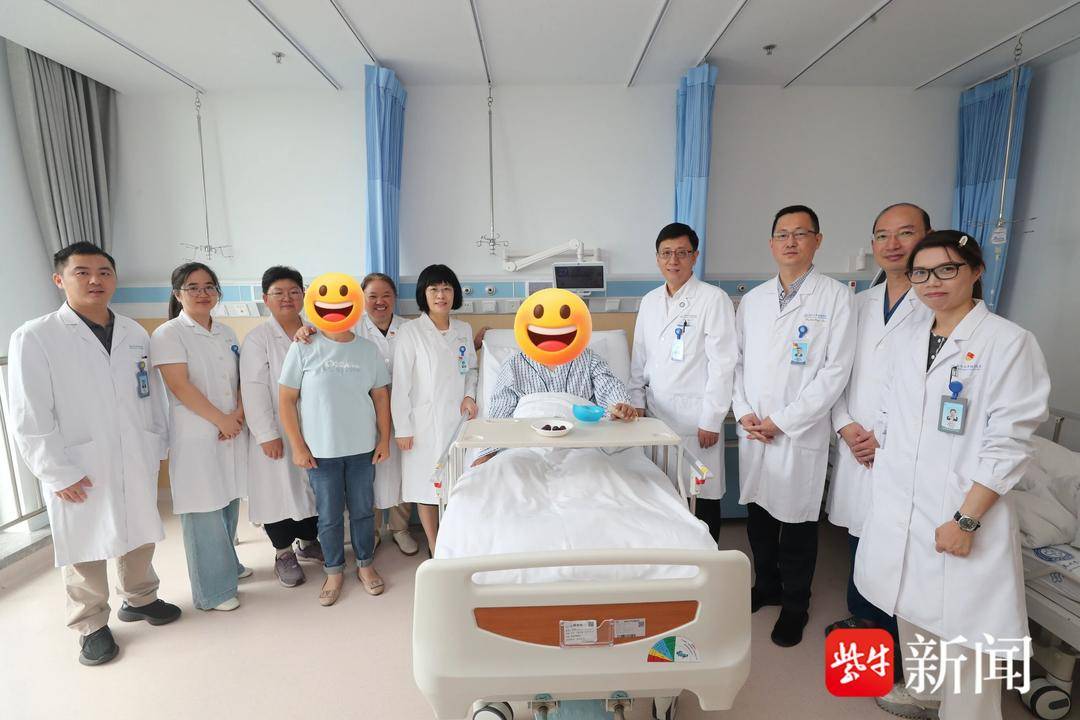
Core Insights - The article highlights the successful implementation of a semi-invasive brain-machine interface (BMI) surgery at Nantong University Affiliated Hospital, marking a significant advancement in rehabilitation for spinal cord injury patients [1][4][5] - The technology allows for direct communication between the brain and external devices, facilitating recovery for patients with severe motor impairments [3][7] Group 1: Technological Innovation - Brain-machine interface technology is rapidly evolving, enabling real-time interaction between the brain and devices, which is crucial for rehabilitation in spinal cord injury patients [3][7] - The hospital's clinical research on BMI has attracted thousands of inquiries from patients nationwide, indicating a strong demand for such innovative treatments [3] Group 2: Surgical Procedure and Outcomes - The surgery involved precise placement of electrodes using robotic assistance, ensuring high-quality signal acquisition while minimizing risks associated with invasive procedures [4] - Following the surgery, patients have shown remarkable recovery, with one patient able to perform tasks such as grasping objects with their hands after extensive rehabilitation [1][4] Group 3: Multidisciplinary Collaboration - The success of the BMI surgeries is attributed to the collaborative efforts of various medical specialties within the hospital, including neurosurgery, neurology, and rehabilitation [5] - The establishment of a dedicated "brain-machine interface and neuro-regulation research ward" signifies a commitment to integrating advanced technologies for patient care [6] Group 4: Future Prospects - The hospital aims to further develop and apply breakthrough technologies in clinical settings, enhancing the quality of life for patients with neurological disorders [7] - Significant financial investments are being made to support the advancement of brain-machine interface technologies and related medical innovations [5][7]
调研速递|创新医疗接受国海证券等8家机构调研,博灵脑机产品亮点与进展受关注
Xin Lang Cai Jing· 2025-09-25 14:45
Group 1 - The core focus of the news is the recent institutional research conducted on Innovation Medical Management Co., Ltd., highlighting the advancements and product offerings of its subsidiary, Bole Brain Machine [1][2] - The research event took place on September 25, with participation from eight institutions, including Guohai Securities and Dongwu Securities, showcasing the company's commitment to transparency and engagement with investors [1] - Bole Brain Machine's C-end product, Cyberlink AC5, features user-friendly design and advanced brain-machine interface technology, aimed at improving the quality of life for patients with motor impairments [1][2] Group 2 - Clinical trials for the medical version of Bole Brain Machine's products are progressing well, with over 100 patient tests completed, showing significant improvements in motor function for both new and long-term patients [2] - The C-end product weighs 1.5 kg and includes two batteries with a six-hour lifespan each, designed for daily use and convenience for patients [2] - Future product development includes plans for lower limb rehabilitation products and a focus on invasive technology routes, with ongoing research into intelligent peripheral nerve stimulation systems [2][3] Group 3 - The C-end product is priced based on the value it provides to hemiplegic patients, potentially saving families 40,000 to 60,000 yuan annually in the Jiangsu, Zhejiang, and Shanghai regions [3] - Innovation Medical holds a 68.356% stake in Bole Brain Machine, which is included in the company's consolidated financial statements, indicating a strong financial interest in the subsidiary's success [3]


创新医疗(002173) - 002173创新医疗投资者关系管理信息20250925
2025-09-25 14:04
Group 1: Company Overview and Event Details - The investor relations activity was conducted as a live performance, showcasing the subsidiary Boling Brain Machine's introduction video and product demonstrations [2] - The event took place on September 25, 2025, at the Innovation Medical Hangzhou branch [2] Group 2: Product Features and Clinical Testing - Boling Brain Machine products are designed to be lightweight, user-friendly, and simple to operate, utilizing brain-machine interface technology to enhance patient rehabilitation [3] - Over 100 patients have participated in multi-center clinical tests, showing significant improvements in Fugl-Meyer scores for both newly diagnosed and long-term stroke patients [3][4] Group 3: Product Specifications and Future Developments - The C-end product weighs 1.5 kg and has a battery life of approximately 6 hours per battery, with two batteries included [3] - Future products include a dexterous hand for fine motor control and a pneumatic glove for gross motor actions, with ongoing research into invasive technology [4] Group 4: Economic Impact and Cost Savings - The C-end product can save families between 40,000 to 60,000 CNY annually by reducing the need for full-time caregivers [6] - Traditional rehabilitation costs can reach 65,000 CNY per year, while the Boling Brain Machine allows for home-based training, significantly lowering expenses [6] Group 5: Company Ownership and Market Position - The company holds a 68.356% stake in Boling Brain Machine, which is included in the consolidated financial statements [6]
中报基本面稳步改善步入估值修复关键期,心玮医疗-B积极回购提振市场信心
Zhi Tong Cai Jing· 2025-09-25 08:06
Core Viewpoint - The company has achieved over 40% revenue growth and over 50% gross profit growth in the first half of the year, successfully turning a profit and marking a significant step towards scalable profitability [1][2]. Financial Performance - The company's revenue reached 186 million yuan, a year-on-year increase of 44.4%, demonstrating strong internal growth and risk resilience [2]. - Gross profit amounted to 127 million yuan, a substantial increase of 53.9%, with a gross margin of 68.2%, up 4.2 percentage points from the previous year [2]. - The net profit attributable to shareholders was 50.9 million yuan, indicating a successful turnaround from previous losses [2]. Product Development and Market Expansion - The company launched several new products, including the first domestic aneurysm embolization assist stent, which has significantly boosted revenue from hemorrhagic business by 563% [3]. - The ischemic product matrix has been continuously iterated, with the number of hospitals using large-bore aspiration catheters increasing by 267%, leading to a 60% increase in overall ischemic product implantation [3]. - The company has 32 products approved by NMPA, three by FDA, and one with CE marking, covering a wide range of treatments for ischemic and hemorrhagic strokes [4]. Valuation and Market Confidence - The company is currently in a valuation repair phase, with a PS ratio of 6.51, significantly below its historical average of 15.18, indicating substantial room for valuation improvement [5]. - To enhance market confidence, the company has initiated a stock buyback plan, committing 800 million HKD, reflecting a strong commitment to shareholder returns [1][5].