芯片研发

Search documents
雷军称小米汽车芯片很快推出,马斯克版微信官宣,台积电2纳米制程投产在即,微软或停止推广Edge骚扰信息,这就是今天的其他大新闻!
Sou Hu Cai Jing· 2025-06-03 16:18
Group 1 - Lei Jun, the founder of Xiaomi, announced at the investor conference that the pricing for the new Xiaomi YU7 will not be the rumored 235,900 yuan, with the official price to be confirmed shortly [3] - Xiaomi has been investing in robotics for five years, and its automotive chip development is underway, expected to be launched soon [3] Group 2 - TSMC is set to begin production of its 2nm process technology, marking a significant advancement in the semiconductor manufacturing sector [7] - The total cost from R&D to mass production for TSMC's 2nm process is reported to be $725 million, with the foundry price for each wafer reaching $30,000 (approximately 216,000 yuan) [7] - The anticipated price for the more advanced 1.4nm process is expected to be $45,000 (approximately 324,000 yuan) [7] Group 3 - Microsoft is planning to reduce its aggressive promotion of the Edge browser, particularly in the European Economic Area (EEA), in response to the EU's Digital Markets Act [10] - The new regulations require Microsoft to respect user choices and limit forced promotions of its browser [10]




小米卢伟冰:自研芯片仅用在旗舰,未来要自研5G基带
Guan Cha Zhe Wang· 2025-05-28 02:36
Core Viewpoint - The recent discussions surrounding Xiaomi's self-developed chip "玄戒O1" highlight the challenges and long development cycles in the chip industry, emphasizing the need for support and encouragement for the Chinese chip sector [1] Group 1: Chip Development - Xiaomi's president, Lu Weibing, stated that flagship chip development is difficult and time-consuming, with plans to use chips only in flagship products for now [1] - The "玄戒O1" chip is primarily for technical validation, with a conservative planned shipment volume in the tens of thousands, making it unlikely to impact the current supply landscape significantly [2] - Alongside "玄戒O1," Xiaomi introduced a 4G baseband chip "玄戒T1," which is fully designed in-house, and plans to develop a 5G baseband chip to integrate with 4G for mobile applications [4] Group 2: Financial Performance - In Q1, Xiaomi reported a revenue of 111.3 billion yuan, a 47% year-on-year increase, and an adjusted net profit exceeding 10 billion yuan, up 64% [5] - The core business revenue from Xiaomi's mobile and AIoT segments reached 92.7 billion yuan, with mobile revenue at 50.6 billion yuan (up 8.9%) and IoT revenue at 32.3 billion yuan (up 58.7%) [5] - Xiaomi's R&D investment in Q1 was 6.7 billion yuan, a 30.1% increase, with an expected total R&D expenditure of 30 billion yuan for the year [6] Group 3: Market Position and Strategy - Xiaomi's smartphone sales have regained the top position in the Chinese market after ten years, aided by government subsidies and new retail strategies [4] - The company is expanding its retail presence, adding over 1,000 Xiaomi stores in mainland China, reaching approximately 16,000, and increasing its automotive sales outlets to 235 [5] - The stock market reacted positively to Xiaomi's performance, with a 2.52% increase in share price, valuing the company at around 1.4 trillion HKD [6]

雷军称芯片团队实力相当强大 玄戒O1最高主频3.9GHz
Sou Hu Cai Jing· 2025-05-27 17:20
Core Insights - Xiaomi founder Lei Jun emphasized the impressive capabilities of the new XRING O1 chip, which has a maximum frequency of 3.9GHz, showcasing the strong R&D capabilities of Xiaomi's chip team [1] - The XRING O1 chip, built on a second-generation 3nm process, integrates 19 billion transistors and features a 2+4+2+2 ten-core architecture, outperforming competitors like the Dimensity 9400 in terms of performance and energy efficiency [3] Technical Specifications - The XRING O1 chip includes two Cortex-X925 super cores at 3.9GHz, four Cortex-A725 big cores at 3.4GHz, two Cortex-A725 big cores at 1.9GHz, and two Cortex-A520 small cores at 1.8GHz [3] - Despite its strong design, the XRING O1 chip lacks SLC cache, which slightly affects its gaming performance compared to other leading chips like the A18Pro [3] Industry Impact - The launch of the XRING O1 chip marks a significant milestone in the 15-year partnership between Xiaomi and Arm, as it utilizes the latest Arm v9.2 Cortex CPU cluster IP, Arm Immortalis GPU IP, and CoreLink Interconnect system IP optimized for cutting-edge 3nm technology [3]
小米集团首季营收净利双创新高,智能汽车交付破7.5万辆驱动生态增长
Xin Lang Cai Jing· 2025-05-27 16:20
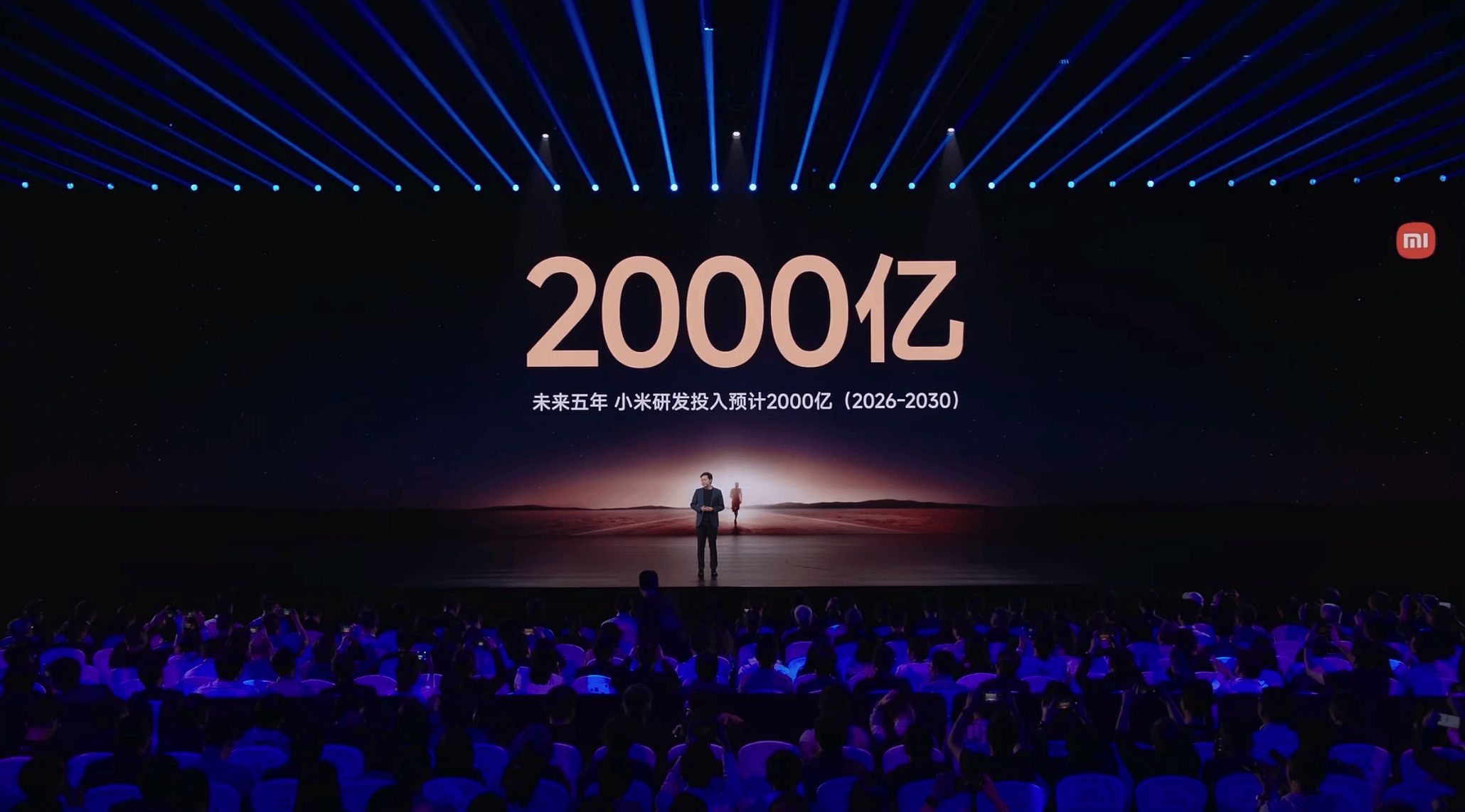
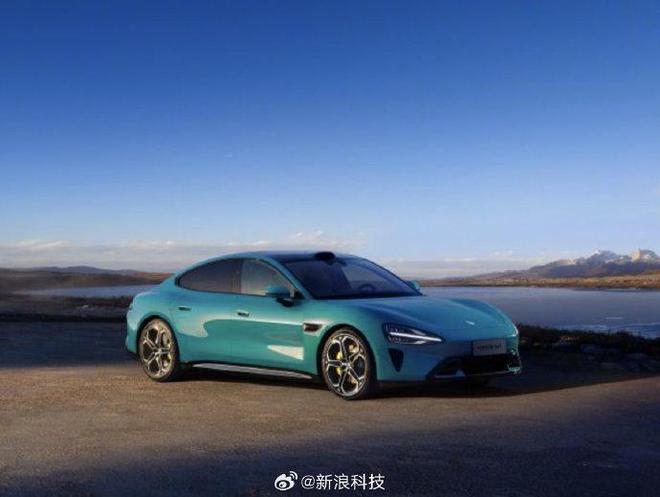
Financial Performance and Market Position - Total revenue for Q1 2025 reached 111.3 billion yuan, a year-on-year increase of 47.4% [3] - Adjusted net profit was 10.7 billion yuan, up 64.5% year-on-year [3] - Revenue from electric vehicles and AI innovation business amounted to 18.6 billion yuan, with vehicle deliveries totaling 75,869 units, bringing cumulative deliveries to over 258,000 units [3] - The smartphone business regained the top market share in China after ten years, with high-end models (priced above 4,000 yuan) capturing a market share of 9.6% [3] R&D Investment - R&D expenditure reached 6.7 billion yuan, reflecting a 30.1% year-on-year increase, with R&D personnel accounting for 47.7% of the workforce [4] - The company plans to invest 200 billion yuan in R&D over the next five years, focusing on chips, AI, and operating systems [4] Automotive Business Breakthrough - The SU7 series was the best-selling model in the 200,000 yuan and above category for Q1, with high user satisfaction, although some feedback indicated a need for optimization in the smart parking feature [5] - The YU7 model, positioned as a luxury SUV, features a variable steering ratio system and is expected to launch in July with a target annual delivery of 350,000 units [5] Technology Integration and Ecosystem Layout - The SU7 Ultra features UWB key technology for seamless unlocking via the Xiaomi 15S Pro, advancing the "human-vehicle-home ecosystem" strategy [6] Chip Development and Controversy - The newly developed Xuanjie O1 chip utilizes TSMC's second-generation 3nm process, integrating 19 billion transistors and achieving a CPU frequency of 3.9GHz, competing with Apple's A18 Pro and Qualcomm's Snapdragon 8 Elite [7] - ARM officially certified the Xuanjie O1 as a self-developed design by Xiaomi, highlighting its system-level design capabilities [8] - Despite some user skepticism regarding the chip's self-developed status, Xiaomi and ARM have clarified that the Xuanjie O1 does not utilize any customized services and is entirely self-designed [9][10] IoT and Home Appliance Growth - Significant growth in smart home appliances, with air conditioner, refrigerator, and washing machine shipments increasing by 65%, 65%, and 100% respectively; the IoT platform now connects 944 million devices [11] - Introduction of the Xiaomi TV S Mini LED 2025 series, featuring low-reflective film screens and the Pengpai OS2 system, with hardware performance comparable to Sony [12] Public Sentiment and Strategic Challenges - The design of the SU7/YU7 has faced criticism for allegedly borrowing from Porsche and Ferrari, with some users questioning its originality [13] - The successful development of the Xuanjie O1 chip demonstrates the self-innovation capabilities of domestic technology companies [13] - Xiaomi aims to strengthen its foundational technology development through a "technology-based" strategy while facing challenges in automotive production capacity and chip ecosystem construction [14]

东芯股份: 关于对外投资的进展公告
Zheng Quan Zhi Xing· 2025-05-26 15:16
Investment Overview - The company has approved an investment of RMB 20 million in Lisan Technology (Shanghai) Co., Ltd. to acquire an additional registered capital of RMB 5 million, with a pre-investment valuation of RMB 200 million for the target company [1] - Other investors will contribute a total of RMB 12.8 million, bringing the total investment to RMB 32.8 million, increasing the registered capital of the target company to RMB 13.2 million [1] Investment Progress - On May 26, 2025, the company received a progress report regarding the G100 chip, which completed its main functional testing on May 25, 2025, with results meeting expectations [2] - The next steps include detailed performance testing and optimization, with plans to send the product for testing to industry clients based on performance tuning [2] Future Considerations - The company will continue to disclose information regarding the investment's progress in accordance with legal regulations and company bylaws [4]

3纳米芯片,振奋人心
Huan Qiu Wang· 2025-05-23 08:01
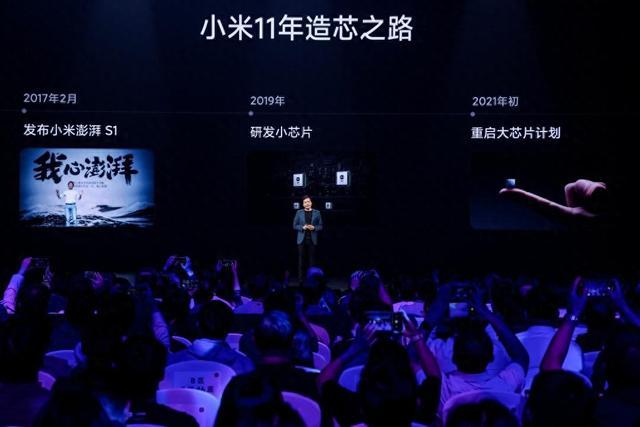
Core Viewpoint - Xiaomi has officially launched its self-developed 3nm mobile SoC chip named "Xuanjie O1," marking the first time a 3nm chip has been designed and developed in mainland China [1][3]. Group 1: Chip Development and Significance - The advancement of chip manufacturing processes is a focal point in global technology competition, with lower process values indicating higher transistor integration and performance [1]. - The "Xuanjie O1" chip integrates essential components like CPU and GPU, which require a stringent balance of performance and power consumption [1][3]. - The successful development of this chip is expected to enhance the domestic semiconductor supply chain [1]. Group 2: Historical Context and Investment - Xiaomi's journey in chip development began in 2014, with the first mobile chip "Surge S1" launched in 2017, but faced setbacks leading to a temporary halt in SoC development [5]. - After a hiatus, Xiaomi resumed its "big chip" development in 2021, investing over 13.5 billion yuan (approximately 1.9 billion USD) over four years [5]. - The company maintained a daily R&D investment of 10 million yuan (approximately 1.4 million USD) and has a team of over 2,500 dedicated to chip development [5]. Group 3: Future Outlook and Industry Impact - Xiaomi's chairman Lei Jun announced plans to invest 200 billion yuan (approximately 28 billion USD) in core technology R&D over the next five years [7]. - The launch of the 3nm chip is seen as a potential catalyst for forming an industrial cluster effect, enhancing supply chain resilience and accelerating technological iteration in related fields [7]. - The emergence of the 3nm chip represents a significant step in China's semiconductor industry, with ongoing challenges in technology breakthroughs and ecosystem development [10].
大和:小米芯片策略类似苹果做法 维持目标价65港元和“买入”评级
news flash· 2025-05-23 03:28
Group 1 - The core viewpoint of the article is that Daiwa maintains a target price of HKD 65 and a "buy" rating for Xiaomi, highlighting the company's strategic focus on internal chip development similar to Apple's approach [1] - Xiaomi has unveiled new products including the 3nm flagship processor, Xiaomi 15S Pro, Xiaomi Pad 7 Ultra, and Xiaomi YU7, indicating a strong product pipeline [1] - The company plans to double its long-term R&D investment, with an expected investment of RMB 30 billion by 2025 and RMB 200 billion from 2026 to 2030, alongside an allocation of RMB 50 billion specifically for chip development [1] Group 2 - Xiaomi's strategy aims to establish a long-term competitive moat through deep integration of hardware and software, reflecting a shift towards self-sufficiency in chip production [1] - The company is also investing RMB 13.5 billion to build a team of over 2,500 personnel dedicated to chip development, emphasizing its commitment to this area [1]
万联晨会-20250523
Wanlian Securities· 2025-05-23 01:17
Market Overview - The A-share market experienced a decline on Thursday, with the Shanghai Composite Index falling by 0.22% to close at 3,380.19 points, the Shenzhen Component Index down by 0.72%, and the ChiNext Index decreasing by 0.96%. The total trading volume in the A-share market was 1.10 trillion RMB, with over 4,200 stocks declining. Only the banking, media, and household appliance sectors saw gains, while the beauty care and social services sectors led the losses. Concept sectors such as mobile gaming and terahertz technology performed well, while epoxy propylene and graphite electrode concepts faced significant declines. In the Hong Kong market, the Hang Seng Index dropped by 1.19%, and the Hang Seng Tech Index fell by 1.70%. Internationally, the U.S. stock indices showed mixed results, with the Dow Jones remaining flat, the S&P 500 down by 0.04%, and the Nasdaq up by 0.28%. European and Asia-Pacific markets also experienced declines [2][6]. Important News - The tax reduction bill proposed by U.S. President Trump passed the House of Representatives with a narrow margin on May 22. The bill aims to reduce taxes by over 4 trillion USD over the next decade and cut at least 1.5 trillion USD in spending. It will also raise the U.S. debt ceiling by 4 trillion USD, which is lower than the 5 trillion USD sought by the Senate [3][7]. - Xiaomi held its 15th-anniversary strategic product launch on May 22, unveiling three new products equipped with its self-developed Xuanjie chip: the Xiaomi 15S Pro, Xiaomi Pad 7 Ultra, and Xiaomi Watch S4 15th Anniversary Edition. The highly anticipated Xiaomi YU7, the company's first SUV, was also officially launched, positioned as a "luxury high-performance SUV" with features like laser radar and extended battery life, set to be released in July. Xiaomi's founder Lei Jun stated that the company has committed to chip development for at least 10 years with an investment of over 50 billion RMB, and plans to invest an additional 200 billion RMB in core technology research and development over the next five years [3][7].
雷军发布小米自研3nm芯片系列新品:首搭手机平板和手表,基带模块也亮相了
量子位· 2025-05-23 00:24
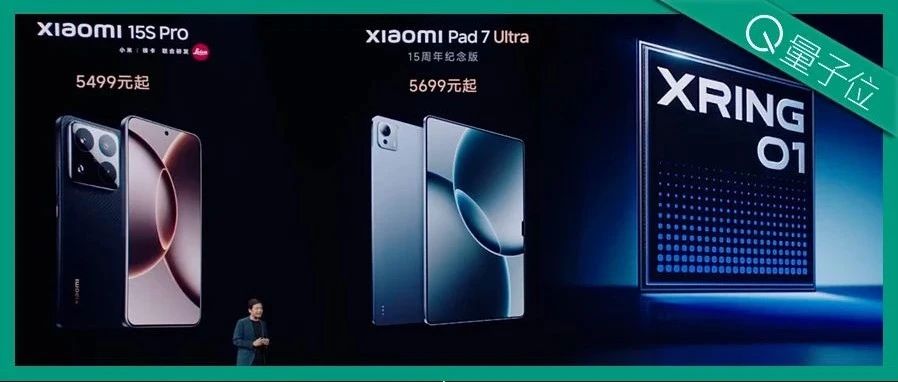
Core Viewpoint - Xiaomi has unveiled its self-developed SoC chip, Xuanjie O1, which utilizes the advanced second-generation 3nm process, positioning it among the top tier in energy efficiency and performance, directly comparing it to Apple's latest mobile chip [1][5]. Group 1: Chip Specifications and Performance - The Xuanjie O1 features a dual super-large core design, with multi-core performance scores surpassing Apple's A18 Pro, and a GPU frame rate in the Manhattan test improved by 43% compared to A18 Pro [2][17]. - The chip is built on a 109mm² area housing 19 billion transistors, achieving a comprehensive score exceeding 3 million in AnTuTu, placing it in the top tier [7][10]. - It employs a 10-core 4Cluster architecture, including two Arm X95 super-large cores, four A725 performance cores, two A725 efficiency cores, and two A520 super-efficient cores [9][12]. - The single-core score of Xuanjie O1 reached 3008, while the multi-core score hit 9509, outperforming the A18 Pro [14]. Group 2: Energy Efficiency and GPU Features - The Xuanjie O1's super-large cores and efficiency cores offer energy efficiency comparable to the A18 Pro, with the GPU's power consumption being 35% lower than that of A18 Pro [15][21]. - The GPU is equipped with ARM's latest 16-core G925, achieving 330 frames in the Manhattan test, which is a 43% improvement over A18 Pro [17]. - The chip also incorporates dynamic GPU performance scheduling technology to balance performance and power consumption based on usage scenarios [18]. Group 3: Product Launch and Pricing - The Xiaomi 15S Pro smartphone, featuring the Xuanjie O1 chip, was launched with a price of 5499 yuan for the 16+512GB version [3]. - Xiaomi also introduced the Xiaomi Pad 7 Ultra, which boasts a 14-inch OLED display and is marketed as the pinnacle of Xiaomi tablets [49][56]. - The pricing for the Xiaomi Pad 7 Ultra starts at 5699 yuan for the 256GB version, with higher configurations available [75]. Group 4: Future Investment Plans - Xiaomi has invested 102 billion yuan in research and development over the past five years, with plans to increase this to 300 billion yuan by 2025 [80]. - The company aims to invest an additional 200 billion yuan over the next five years to further enhance its technological capabilities [82].
雷军:小米造芯至少做十年、至少投500亿,YU7不可能卖19.9万元
Sou Hu Cai Jing· 2025-05-22 23:35
Core Insights - Xiaomi has committed to investing 2 trillion yuan (approximately 200 billion) in core technology research and development over the next five years, focusing on semiconductors and automotive sectors [2] - The company aims to compete in the semiconductor industry with its first 3nm flagship processor, the Xuanjie O1, which has 19 billion transistors and shows promising performance metrics [5][6] - Xiaomi's automotive division is also expanding, with the introduction of the YU7 model, which is positioned as a luxury high-performance SUV [10][13] Investment in Technology - Xiaomi has invested approximately 102 billion yuan in core technology R&D over the past five years and plans to invest an additional 200 billion yuan from 2026 to 2030 [2] - The company has pledged to invest at least 50 billion yuan in chip development over the next decade, emphasizing the importance of this sector for its growth [8] Semiconductor Developments - The Xuanjie O1 processor, which competes with Apple's A18 Pro, has achieved a single-core score exceeding 3000 and a multi-core score above 9500 [5] - The GPU of the Xuanjie O1 features dynamic workload management, significantly reducing power consumption while maintaining high performance [6] - Xiaomi has also developed the Xuanjie T1, its first 4G watch chip, which integrates a self-designed 4G baseband and significantly reduces power consumption for various functions [8] Automotive Expansion - The YU7 model is set to launch in July and is designed to compete in the luxury SUV market, featuring advanced technology such as the Nvidia Thor computing platform and multiple sensors for enhanced safety [10][13] - The YU7 will offer three versions, with the standard version providing a range of 835 km and the high-performance version achieving 0-100 km/h in 3.23 seconds [10] - Xiaomi's automotive sales have been strong, with the SU7 series delivering over 258,000 units by 2025, indicating a growing presence in the automotive market [10]