大数据

Search documents
药闻|AI“撕开”突破口 药物研如何摆脱“10年研发、10亿投入”困境?
Zhong Guo Jin Rong Xin Xi Wang· 2025-11-03 05:56
Core Insights - The traditional pharmaceutical industry faces significant challenges with lengthy R&D processes and high costs, while AI is emerging as a transformative force to enhance efficiency and capabilities [1][5] - Hu-mAtrIx™ AI platform by Heptares Therapeutics has been launched, marking a significant advancement in AI-driven drug development [1] - The establishment of the AI + Biopharmaceutical Ecosystem Alliance aims to foster collaboration across the industry, enhancing data sharing and innovation [1][5] AI's Impact on Drug Development - AI is revolutionizing drug development by optimizing antibody affinity, specificity, and stability, leading to improved efficacy and reduced side effects [1] - AI applications span from target discovery to clinical trials, significantly reducing costs and time in the drug development process [2] - AI can design complex proteins that traditional methods struggle to create, showcasing its potential to unlock new therapeutic avenues [2] Clinical Trial Enhancements - AI has achieved over 80% accuracy in patient profiling and clinical protocol matching, approaching human expert levels [3] - The integration of AI in clinical trial recruitment can save approximately 40% of the time required for patient enrollment [3] Collaborative Efforts and Industry Transformation - Heptares Therapeutics has initiated partnerships with various companies to enhance AI applications in drug discovery, emphasizing the need for a holistic approach rather than isolated advancements [4] - The AI alliance aims to address the critical challenge of translational prediction in drug development, which has historically been a major risk factor [4][5] - The alliance's focus on data interoperability among pharmaceutical companies, hospitals, and research institutions is crucial for maximizing AI's potential in drug development [5]


山高环能跌2.07%,成交额3448.33万元,主力资金净流出265.13万元
Xin Lang Cai Jing· 2025-11-03 02:36
Core Viewpoint - The stock of Shandong Huangan Energy Co., Ltd. has experienced fluctuations, with a recent decline of 2.07% and a year-to-date increase of 29.24% [1] Group 1: Company Overview - Shandong Huangan Energy Co., Ltd. was established on March 21, 1988, and listed on March 3, 1998. The company is located in Jinan, Shandong Province, and its main business includes harmless treatment of urban organic waste and high-value resource utilization, as well as urban clean heating and contract energy management [2] - The company's revenue composition is as follows: 51.67% from oil product processing and sales, 24.29% from heating services, 23.76% from environmental harmless treatment, and 0.28% from other sources [2] - As of September 30, 2025, the number of shareholders is 17,300, a decrease of 6.21% from the previous period, with an average of 26,649 circulating shares per person, an increase of 6.62% [2] Group 2: Financial Performance - For the period from January to September 2025, Shandong Huangan Energy achieved operating revenue of 1.036 billion yuan, a year-on-year decrease of 0.50%. However, the net profit attributable to the parent company was 52.61 million yuan, reflecting a significant year-on-year increase of 546.90% [2] Group 3: Stock Performance and Trading Activity - As of November 3, the stock price was 6.63 yuan per share, with a trading volume of 34.48 million yuan and a turnover rate of 1.12%. The total market capitalization is 3.092 billion yuan [1] - The stock has seen a net outflow of 2.65 million yuan in principal funds, with large orders accounting for 4.34% of total buying and 12.03% of total selling [1] - The stock has appeared on the "Dragon and Tiger List" once this year, with the most recent appearance on July 17, where it recorded a net buying of -9.2592 million yuan [1]

证监会主席吴清:完善期货品种布局和产业服务功能
Qi Huo Ri Bao Wang· 2025-11-03 00:48
Core Viewpoint - The article emphasizes the need to enhance the inclusiveness and adaptability of China's capital market system, aiming for high-quality development through comprehensive reforms and alignment with national economic strategies [1] Group 1: Key Tasks for Capital Market Reform - Actively develop direct financing through equity and bonds, focusing on reforms in the Sci-Tech Innovation Board and Growth Enterprise Market to better serve real enterprises throughout their lifecycle [1] - Promote the cultivation of more high-quality listed companies by optimizing their structure and enhancing investment value, while supporting mergers and acquisitions and improving the refinancing mechanism [2] - Create a more attractive environment for long-term investments by establishing mechanisms that encourage the inflow and retention of long-term capital [2] Group 2: Regulatory Enhancements - Improve the scientific and effective nature of capital market regulation by building a comprehensive regulatory system that adapts to rapid market changes and financial innovations [3] - Expand the high-level institutional openness of the capital market, promoting coordinated development between onshore and offshore markets to enhance international competitiveness [3] Group 3: Market Ecosystem Development - Foster a standardized, inclusive, and vibrant capital market ecosystem by strengthening legal frameworks and investor protection mechanisms, while promoting rational and long-term investment practices [4] - Enhance the construction of high-end think tanks and talent teams to address strategic and foundational issues in the capital market [4]
中国品牌发展指数(2025)发布
Ren Min Ri Bao· 2025-11-02 22:02
Core Insights - The China Brand Development Index (2025) was released at the opening ceremony of the 2025 China Brand Forum, indicating a sustained positive trend in brand development amid deepening reforms and enhanced corporate innovation [2] Group 1: Brand Development Index - The index utilizes big data and artificial intelligence to dynamically monitor 100 representative enterprises, providing a scientific quantitative evaluation of the economic climate from a brand perspective [2] - The index shows that 50% of the brands included are from the real economy, highlighting the significant role of traditional industries in brand development [2] Group 2: Development Characteristics - Technology companies like Huawei and DeepMind are reshaping global supply chains through intensive R&D efforts [2] - The integration of ESG (Environmental, Social, and Governance) principles into corporate strategies is driving green transformation and carbon neutrality [2] - State-owned enterprises (SOEs) such as State Grid and Industrial and Commercial Bank of China, along with private firms like Alibaba and Tencent, consistently rank among the world's top 500 companies, demonstrating strong revenue and risk resilience [2] - Chinese enterprises, particularly SOEs, are deepening their global presence as part of their internationalization process [2]
31个省份经济“三季报”出炉 长三角表现突出
Zheng Quan Ri Bao· 2025-11-02 17:16
Economic Overview - Tibet achieved a GDP of 207.006 billion yuan in the first three quarters of 2025, with a year-on-year growth of 7.1% [1] - China's GDP for the same period reached 10,150.36 billion yuan, growing by 5.2% year-on-year [1] - Guangdong and Jiangsu provinces surpassed 10 trillion yuan in GDP, with figures of 10,517.698 billion yuan and 10,281.1 billion yuan respectively, leading the national rankings [1] Regional Economic Performance - The top ten provinces in GDP all exceeded 4 trillion yuan, indicating strong economic performance [1] - Tibet led the nation in economic growth rate at 7.1%, followed by Gansu at 6.1% and Hubei at 6% [1] - The economic performance of the Yangtze River Delta region was notable, with Jiangsu, Zhejiang, Anhui, and Shanghai showing GDP growth rates of 5.4%, 5.7%, 5.4%, and 5.5% respectively, all surpassing the national average [2] Sectoral Insights - High-tech manufacturing sectors, including artificial intelligence, integrated circuits, and biomedicine, are driving economic growth in the Yangtze River Delta [2][3] - In Shanghai, the manufacturing output of key industries grew by 8.5%, with artificial intelligence manufacturing increasing by 12.8% and integrated circuit manufacturing by 11.3% [2] Future Economic Strategies - Provinces are encouraged to boost consumption and release service consumption potential to stimulate economic growth [4] - There is a call for increased effective investment and support for private investment to stabilize growth and optimize supply [4] - Emphasis on technological innovation and the development of emerging industries such as artificial intelligence, big data, and renewable energy is crucial for future economic momentum [4]
数字经济赋能人民城市生活圈
Mei Ri Jing Ji Xin Wen· 2025-11-02 13:37
Group 1 - The event titled "2025 'Vibrant Yangpu' Digital Economy Building People's City Living Circle" was held in Shanghai, focusing on urban renewal, digital empowerment, and livelihood security [1] - Yangpu District aims to develop a "15th Five-Year Plan" blueprint, emphasizing the overall development strategy along the Huangpu River [1][2] - The district's digital economy core industry (software and information services) is projected to exceed 320 billion yuan in revenue by 2024, accounting for nearly one-fifth of the city's total [2] Group 2 - Yangpu District has established a robust innovation ecosystem supported by top universities and a large pool of high-level talent, which is crucial for digital economy development [2] - The district is optimizing its business environment by implementing a chief service officer system and streamlining policy application processes [2] - The "Golden Cross Axis" development pattern has been formed in Yangpu, integrating universities, industries, and residential spaces within a 5-kilometer radius [4] Group 3 - The integration of cultural industries and digital economy is seen as essential for injecting lasting vitality into urban development [3] - The discussion highlighted that industry upgrades are the core driver of urban renewal, with businesses leveraging data and blockchain technologies to optimize supply-demand structures [4] - The importance of institutional innovation was emphasized, particularly in establishing credible standards for data as an asset and improving housing policies for talent [5]

AI智库“智汇”珠海,助力大湾区学术与产业的“双向奔赴”
Nan Fang Du Shi Bao· 2025-11-02 11:22
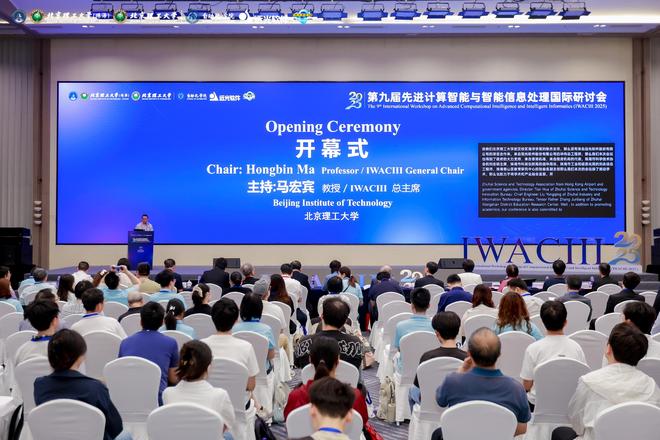
Group 1 - The ninth International Workshop on Advanced Computing Intelligence and Intelligent Information Processing (IWACIII 2025) opened in Zhuhai, focusing on the technological revolution driven by large models and aiming to connect global academic resources with industry needs [1][3] - The conference aims to promote deep cooperation among government, industry, academia, research, and application, leveraging Zhuhai's strategic location in the Greater Bay Area to facilitate the application of academic achievements in real industries [3] - The conference features a diverse exchange ecosystem, including 14 keynote speeches and 34 parallel sessions covering topics from basic algorithms to industrial applications, along with unique segments like the "Beauty of System Control" forum and an AI challenge to stimulate youth innovation [4] Group 2 - Yuan Guang Software Co., Ltd., based in Zhuhai High-tech Zone, is actively participating in the integration of industry and academia, focusing on innovation and talent as the foundation for development [3] - The conference committee will organize visits to local leading enterprises such as Yuan Guang Software and Cloud洲 Intelligent Technology to facilitate direct engagement with industry needs [3]

专家称AI正在重塑中国黑土地保护方式
Zhong Guo Xin Wen Wang· 2025-11-02 07:37
专家称AI正在重塑中国黑土地保护方式 中新社长春11月2日电 (记者 郭佳)人工智能(AI)正在重塑中国黑土地保护的方式。随着大数据和大模型 技术在耕地质量监测中的深入应用,中国黑土地治理正由被动治理走向主动预警。 记者2日从在长春召开的第三届黑土地耕地质量监测评价研讨会上获悉这一科研新变化。与往届侧重"修 复""保护"的讨论不同,今年焦点转向如何以大数据、大模型推动治理模式实现跨越。 中国工程院院士赵春江总结了中国大数据、大模型在耕地质量监测评价中的应用。他透露,其团队也在 建设黑土地大数据大模型监测网络系统,对土地进行从宏观监测到微观调控的全链条智能化管理。 多支科研团队分享了利用AI模型实时监测土壤健康与退化趋势的新进展。中国科学院东北地理与农业 生态研究所牵头建设的基于DeepSeek平台的黑土地保护智能平台,正在帮助科研人员从海量观测数据 中识别规律、预测变化。该所所长姜明在接受记者采访时指出,AI的融入使黑土地监测从被动治理迈 向了主动预警。 广告等商务合作,请点击这里 本文为转载内容,授权事宜请联系原著作权人 中新经纬版权所有,未经书面授权,任何单位及个人不得转载、摘编或以其它方式使用。 关注中 ...
《赣商亮色》系列报道之三:上饶市杰出的三位企业家
Sou Hu Cai Jing· 2025-11-02 03:48
Group 1: Wang Wenjing and Yonyou Network - Wang Wenjing, born in December 1964, founded Yonyou Network Technology Co., Ltd. in 1988, transforming it into a global leader in enterprise software and cloud services [3][6] - Yonyou Network has over 230 branches and more than 7,000 ecosystem partners, serving over 5.97 million clients, showcasing its extensive market reach [5][6] - In 2023, Wang's wealth was estimated at 36 billion RMB, ranking him 553rd on the Hurun Global Rich List, making him the richest person in Shangrao and Jiangxi [6] Group 2: Cheng Wei and Didi Chuxing - Cheng Wei, born in May 1983, founded Didi Chuxing in 2012, seizing the opportunity in the mobile internet transportation sector [7][9] - Didi Chuxing has rapidly grown into a globally recognized ride-hailing platform, significantly impacting the transportation industry [9] - In 2020, Cheng's net worth was reported at 18 billion RMB, placing him 1097th on the Hurun Global Rich List and 7th on the Hurun Rich List for Jiangxi merchants [9] Group 3: Yu Huiyong and Baiguoyuan - Yu Huiyong, born in 1968, established Baiguoyuan in 2002, which has become a well-known fruit retail chain in China [10][12] - Baiguoyuan focuses on quality and supply chain management, ensuring fresh and high-quality fruits for consumers, which has strengthened its market position [12] - Yu's family wealth is approximately 3.9 billion RMB, reflecting his significant contributions to the fruit retail industry [12] Group 4: Overall Impact - The success stories of Wang Wenjing, Cheng Wei, and Yu Huiyong highlight the entrepreneurial spirit in Shangrao, inspiring young individuals to pursue their dreams and contribute to economic development [12]

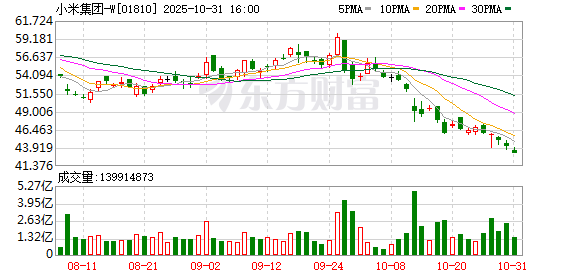
小米为何跨界布局短剧
Jing Ji Ri Bao· 2025-11-01 21:58
Core Insights - Xiaomi's entry into the short drama sector reflects a strategic move to capture the content market and extend its industry chain, highlighting the accelerated integration of the physical economy and cultural industries [2][3][4] - The rise of short dramas as a new form of online audiovisual content is characterized by fast pacing, high engagement, and easy dissemination, making it a significant player in the digital landscape [2][3] - The involvement of tech companies and e-commerce platforms in short dramas indicates a shift from traditional media dominance to a more diverse and innovative content creation landscape [2][3] Company Strategy - Xiaomi aims to leverage the "hardware + content" synergy, enhancing user engagement and enriching its content ecosystem, which is crucial for building a comprehensive digital lifestyle experience [2][3] - The transition from hardware provision to a holistic digital experience signifies a broader trend among tech companies to adapt to changing consumer demands [2][3] Industry Trends - Short dramas are becoming a bridge between consumption and content, facilitating scenario-based marketing through the integration of "drama + products" [3] - The influx of cross-industry players brings both opportunities and challenges, with the potential for improved content quality and diversity, but also risks of over-commercialization and content homogenization [3] - The future of content creation will increasingly rely on technologies like artificial intelligence and big data to better match user needs, leading to an upgraded cultural consumption experience [3][4]