脑机接口技术

Search documents
《采用脑机接口技术的医疗器械 RACA机器人运动意图编解码性能测试方法》医疗器械行业标准制修订项目正式立项
Zheng Quan Shi Bao Wang· 2025-09-22 07:28
Core Viewpoint - The National Medical Products Administration (NMPA) has approved the establishment of a new industry standard for medical devices utilizing brain-computer interface (BCI) technology, aimed at enhancing the quality development of these devices in response to regulatory needs [1] Group 1: Regulatory Developments - The NMPA has initiated the project for the revision of the standard titled "Performance Testing Methods for RACA Robot Motion Intention Decoding" [1] - The China National Institute for Food and Drug Control (NIFDC) is tasked with drafting, validating, soliciting opinions, and conducting technical reviews to ensure the quality and standards of the new regulation [1] Group 2: Technological Integration - The rapid advancements in neuroscience, artificial intelligence, and robotics are facilitating the integration of BCI technology with rehabilitation and compensatory medical robots (RACA robots) [1] - This integration offers innovative rehabilitation treatment options for patients with motor function impairments, such as those recovering from strokes or spinal cord injuries [1] Group 3: Impact on Industry - The establishment of this standard will provide objective evaluation methods for the safety, effectiveness, and reliability of RACA robots utilizing BCI technology [1] - It will also offer technical means for production, quality control, and regulatory compliance within the industry [1]

马斯克Neuralink 10月试验新脑机接口,助失语者“意念说话”
Sou Hu Cai Jing· 2025-09-20 10:17
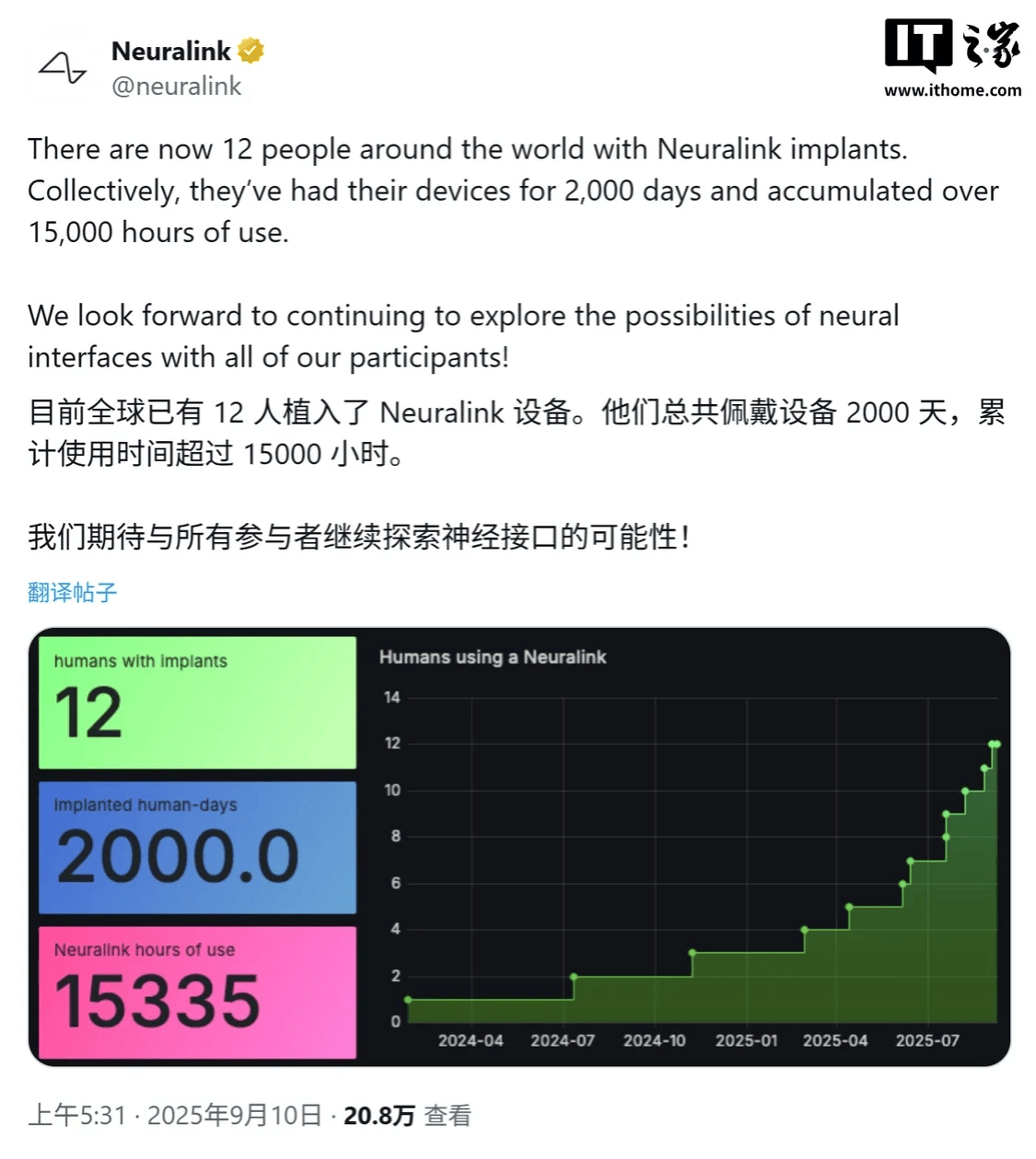
Core Insights - Neuralink, founded by Elon Musk, plans to launch a new trial in October aimed at helping aphasia patients convert thoughts into text or speech directly from their brains [1][2] - The system captures brain signals when a person "wants to speak," enabling direct conversion from brain activity to sound [1] - The device has received "Breakthrough Device" designation from the FDA, which expedites the approval process for innovative medical devices that may significantly improve treatment for serious conditions [1] Company Developments - Neuralink is set to begin human trials in 2024 after previously being denied by the FDA in 2022 due to safety concerns; the company has since improved its design to meet regulatory requirements [2] - Currently, 12 subjects have implanted chips, with a total usage time exceeding 15,000 hours, providing substantial real-world data [2] Technological Applications - The brain-machine interface was initially designed to assist patients with spinal cord injuries and other motor impairments in regaining some functionality [5] - The first subject has demonstrated the ability to play video games, browse the internet, post on social media, and control a laptop cursor using only their thoughts [5] - The expansion of this technology into the field of language disorders could offer new communication methods for patients suffering from conditions like stroke and ALS [5]

首位Neuralink脑机芯片植入者自述:马斯克帮我重生,他太酷了
3 6 Ke· 2025-09-18 10:41
Core Insights - Noland Arbaugh, the first human to receive a Neuralink brain chip, shared his transformative experience and interaction with Elon Musk, highlighting the potential of brain-machine interface technology [2][4] Group 1: Background and Personal Journey - Arbaugh, a 29-year-old, became paralyzed from the neck down after a diving accident in 2016, leading to a life of dependency and limited mobility for eight years [3] - A turning point came when a friend suggested the possibility of a brain chip implant, to which Arbaugh agreed, feeling he had nothing to lose [3] Group 2: Neuralink and Technological Advancements - Neuralink, founded by Elon Musk in 2016, developed brain-machine interface technology and received FDA approval for human testing in May 2023 [3] - Arbaugh underwent a two-hour surgery on January 28, 2024, where a coin-sized chip was implanted in his skull, connected to thousands of ultra-thin electrodes [3] Group 3: Post-Surgery Experience and Impact - Arbaugh reported that he felt no discomfort from the chip, stating, "If no one told me, I wouldn't feel the chip's presence" [4] - He demonstrated the technology by controlling a computer cursor with his thoughts during a live chess match, emphasizing its intuitive use [4] - His life has significantly changed; he returned to university to study neuroscience, started his own company, and traveled to various cities, embodying the role of an unofficial ambassador for the technology [4]

人民日报:建设更多富有活力的创新之城
Ren Min Ri Bao· 2025-09-17 02:57
Group 1: Automotive Industry - Lantu Automotive has transformed a former fuel vehicle factory into a smart factory for electric vehicles, utilizing AI visual inspection systems and 5G technology, producing a vehicle every 118 seconds [6] - Over the past five years, Lantu has produced more than 200,000 electric vehicles, generating a revenue of over 50 billion yuan [6] - In the first half of this year, Wuhan's electric vehicle production reached 168,000 units, a significant year-on-year increase of 152% [6] Group 2: Brain-Computer Interface Industry - Wuhan has established a strong foundation in the brain-computer interface sector, with institutions like the Chinese Academy of Sciences and Huazhong University of Science and Technology leading innovation [7] - The Hubei Brain-Computer Interface Industry Innovation Development Alliance was formed to promote collaboration across research, clinical application, and industry [7] - Wuhan has 92 universities and 1.41 million students, enhancing its capacity for technological innovation and industry development [7] Group 3: Urban Development and Innovation - Nanjing has revitalized underutilized industrial land, transforming an old factory into a high-standard research and development park, attracting over 2,000 companies related to digital economy and information services [10] - The Jiangning District has implemented a comprehensive urban renewal strategy since 2016, focusing on planning and market-driven development to enhance urban functionality [9] - The transformation of the Baijiahu area has improved local living conditions, with residents enjoying modern amenities and a vibrant community [10] Group 4: Urban Infrastructure and Funding - In Shenyang, the city is addressing urban flooding issues through drainage system upgrades, funded by central government subsidies and long-term special bonds [12] - The city has secured over 15 billion yuan in funding for various urban construction projects, enhancing infrastructure resilience [12][13] - The successful implementation of drainage projects has significantly reduced flooding in industrial areas, improving operational conditions for local businesses [12] Group 5: International Talent Services - Shanghai has established the Bund International Talent Service Center, providing a one-stop service for foreign workers, streamlining processes for work permits and other administrative tasks [14][15] - The center aims to enhance the international talent environment in Shanghai, making it easier for foreign professionals to live and work in the city [16] - The initiative reflects Shanghai's commitment to openness and innovation, positioning the city as a preferred destination for global talent [16]

早知道:九部门出台扩大服务消费政策措施;美股三大指数集体收跌
Zheng Quan Shi Bao Wang· 2025-09-17 00:06
Group 1 - The Chinese government has released a joint policy consisting of 19 measures aimed at expanding service consumption, which includes easing market access in high-end medical sectors and promoting digital service consumption [1] - A new industry standard for medical devices utilizing brain-computer interface technology has been officially published in China [1] - Starting from October 1, 2025, Guizhou Province will implement a tax refund policy for overseas travelers on shopping purchases [1] Group 2 - The US stock market saw a collective decline in its three major indices, while the Nasdaq China Golden Dragon Index experienced an increase of 1.76% [1]
我国《采用脑机接口技术的医疗器械 术语》行业标准发布
Yang Shi Wang· 2025-09-16 09:36
Core Points - The National Medical Products Administration (NMPA) has approved the release of a new industry standard for medical devices utilizing brain-computer interface technology [1] - The standard, titled YY/T 1987—2025, will officially take effect on January 1, 2026 [1] Industry Summary - The introduction of the YY/T 1987—2025 standard signifies a regulatory advancement in the medical device sector, particularly for innovations involving brain-computer interfaces [1] - This standard aims to establish clear terminology and guidelines for the development and application of medical devices that leverage brain-computer interface technology [1]
新华医疗(600587.SH):正有序推进脑机接口技术的前期调研工作
Ge Long Hui· 2025-09-15 07:50
Group 1 - The company is actively advancing preliminary research on brain-computer interface technology [1]

苏州高新区脑机接口技术取得新突破
Zhong Guo Chan Ye Jing Ji Xin Xi Wang· 2025-09-11 23:17
Core Viewpoint - The Suzhou High-tech Zone is actively advancing brain-computer interface (BCI) technology research and application, addressing challenges in clinical rehabilitation and diagnosis through technological empowerment in healthcare [1][4]. Group 1: Technological Advancements - The Suzhou Research Center of China Weapon Industry Group 214 has developed a brain-controlled motor rehabilitation training system that has successfully aided a 16-year-old stroke patient in regaining some motor function after five weeks of training [2][3]. - The training system utilizes a "three-branch neural network model" to interpret brain signals and send control commands to rehabilitation devices, enhancing the efficiency of neural reorganization [2][3]. - The system can conduct eight modes of fine motor rehabilitation training and generate online analysis reports of brain states, significantly improving treatment outcomes for patients with neurological injuries [2][3]. Group 2: Clinical Trials and Applications - The brain-controlled rehabilitation training system has been tested on multiple patients at Suzhou Municipal Hospital, yielding positive results [3]. - The research center has also developed a "digital diagnosis and treatment system for cognitive impairment" targeting Alzheimer's disease, which integrates various physiological signals for early screening and intervention [3]. Group 3: Collaborative Efforts - Multiple institutions in Suzhou High-tech Zone are collaborating to advance BCI technology, including the establishment of key laboratories and joint research initiatives [4][5]. - The Long Triangle Robotics and Artificial Intelligence Research Institute has partnered with Suzhou University and the 214 Research Institute to explore intelligent sensors and brain information decoding [4]. - Suzhou Guokekangcheng Medical Technology Co., Ltd. has contributed to the first national standard for wearable BCI products, establishing technical requirements and testing methods [5]. Group 4: Future Directions - The Suzhou High-tech Zone plans to accelerate collaboration between upstream and downstream enterprises and research institutions in the BCI industry, expanding application scenarios and supporting future industrial development [6].

通用型脑机接口系统获突破 广泛用于运动重建、语言重建等多临床场景
Xin Hua Cai Jing· 2025-09-11 07:50
Core Viewpoint - A significant research achievement has been made in developing a versatile implantable flexible brain-machine interface (BMI) system, which has demonstrated compatibility with over 20 digital and physical devices, achieving information transmission rates comparable to those of Neuralink [1][4]. Group 1: Technical Innovations - The research team has addressed the longstanding challenge of balancing high performance and safety in brain-machine interface technology by developing a highly flexible, high-density 256-channel μECoG electrode array, which has a density of 64 channels per square centimeter, enhancing the signal acquisition capabilities significantly [2][5]. - The μECoG electrode system has shown excellent long-term stability in a 203-day in vivo experiment, maintaining a signal-to-noise ratio above 20dB, which is essential for real-time decoding [3]. Group 2: Clinical Applications - The system has been clinically validated, allowing a patient to control brain activity and complete tasks such as playing games with high accuracy after only 7 minutes of model training, achieving a decoding accuracy of 90% for a one-dimensional task [4]. - In a clinical trial with a participant who completed 25,412 tasks over 19.87 hours, the participant achieved a peak bit rate of 4.15 bits per second, indicating performance on par with Neuralink subjects, showcasing the system's potential for various applications including smart homes and assistive devices [4][5]. Group 3: Future Implications - This breakthrough in high-throughput flexible brain-machine interfaces not only enhances clinical feasibility but also opens new avenues in neurorehabilitation, potentially providing home-based solutions for patients with motor function impairments [5].
“AI副驾”大幅提升脑机接口系统操控力
Huan Qiu Wang Zi Xun· 2025-09-08 02:09
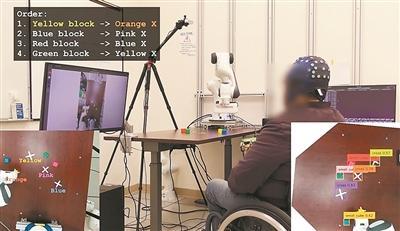
Core Insights - The latest research published in "Nature: Machine Intelligence" indicates that an AI-assisted brain-computer interface (BCI) system significantly enhances the ability of paralyzed individuals to complete tasks by interpreting intentions and assisting actions [1][3]. Group 1: Technology Development - A non-invasive BCI system developed by a research team at UCLA utilizes electrodes to read brain activity and employs machine learning to optimize action control [3]. - The system features two AI "co-drivers": one guides the computer cursor, while the other assists in operating a robotic arm [3]. Group 2: Performance Improvement - During testing, a paralyzed subject with spinal cord injury demonstrated a 3.9 times improvement in cursor control when assisted by the AI co-driver compared to without it [3]. - Healthy subjects experienced a 2.1 times increase in control ability with AI assistance [3]. - The paralyzed subject was able to manipulate a robotic arm to move colored blocks to specific locations, a task that was impossible without AI assistance [3]. Group 3: Practical Implications - The shared control model may enhance the practicality and efficiency of BCIs in daily use, potentially allowing users to complete more complex tasks as AI systems evolve [3]. - The introduction of AI co-driver technology marks a significant shift from passive decoding of brain signals to a collaborative driving approach, reducing cognitive load for users [4]. - This advancement could enable paralyzed individuals to perform daily tasks independently, such as typing, eating, or organizing items, thus transforming AI into a supportive tool rather than a mere executor [4]. Group 4: Future Prospects - As algorithms improve, there is potential for applications in wheelchair navigation and smart home integration, empowering individuals with disabilities and making "thought control" a reality in everyday life [4].