
大数据

Search documents
达梦数据涨2.07%,成交额2.90亿元,主力资金净流入1358.06万元
Xin Lang Zheng Quan· 2025-10-27 06:19
Core Viewpoint - Dameng Data's stock has shown significant growth this year, with a notable increase in both revenue and net profit, indicating strong market performance and investor interest [1][2]. Company Overview - Wuhan Dameng Database Co., Ltd. was established on November 13, 2000, and is located in the East Lake New Technology Development Zone, Wuhan, Hubei Province [2]. - The company specializes in database product development and services, positioning itself as a key player in the domestic database software industry [2]. - Dameng Data aims to become a top-tier global provider of full-stack data products and solutions, serving large and medium-sized enterprises, government agencies, and institutions [2]. Business Performance - For the first half of 2025, Dameng Data reported a revenue of 523 million yuan, representing a year-on-year growth of 48.65% [2]. - The net profit attributable to shareholders reached 205 million yuan, with a year-on-year increase of 98.36% [2]. - The company's revenue composition includes software product licensing (92.15%), operation and maintenance services (4.85%), data and industry solutions (1.82%), database integrated machine sales (0.84%), and training and others (0.34%) [2]. Stock Performance - As of October 27, Dameng Data's stock price increased by 9.31% year-to-date, with a 5-day increase of 8.44% and a 60-day increase of 17.13% [1]. - The stock's trading volume on October 27 was 290 million yuan, with a turnover rate of 1.51% [1]. - The net inflow of main funds was 13.58 million yuan, with significant buying activity from large orders [1]. Shareholder Information - As of June 30, 2025, the number of shareholders increased by 24.57% to 7,737, with an average of 9,452 circulating shares per person, up by 286.26% [2][3]. - The company has distributed a total of 19 million yuan in dividends since its A-share listing [3].
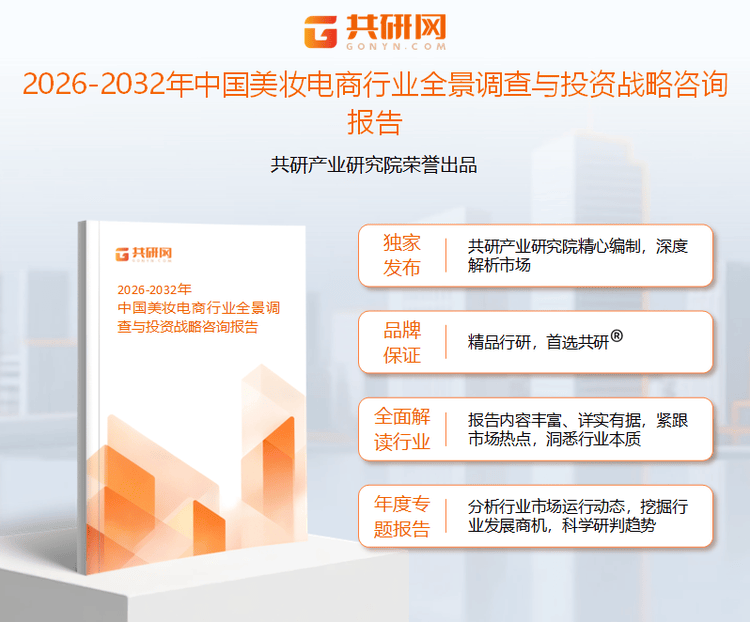
中国作为全球最大的美妆市场之一 2025年美妆电商销售额约3404亿元[图]
Sou Hu Cai Jing· 2025-10-27 05:46
Core Insights - The report titled "2026-2032 China Beauty E-commerce Industry Panorama Survey and Investment Strategy Consulting Report" provides essential reference for decision-makers and investors in the pure nickel wire industry [1] - The report is based on comprehensive data collection and analysis, including interviews with industry experts and executives, ensuring accuracy and relevance [4] - The beauty e-commerce sector leverages internet technology to digitize sales, promotion, and service processes, allowing consumers to purchase products anytime and anywhere [6] Industry Overview - Beauty e-commerce is defined as the application of e-commerce in the beauty sector, facilitating online transactions and consumer engagement [6] - The report outlines the industry's definition, characteristics, business models, risk factors, and barriers to entry [14] Market Trends - AI technology has penetrated the entire beauty e-commerce chain, enhancing product development and marketing services, with AI skin diagnostic tools covering over 40% of users [8] - The sales revenue of China's beauty e-commerce is projected to reach 559.4 billion yuan by 2028 [8] Economic and Technological Environment - The report analyzes the economic and technological environment for the beauty e-commerce industry in 2025, including barriers related to talent, operations, and branding [15] - It discusses the impact of macroeconomic conditions on the beauty e-commerce sector, both globally and within China [15] Competitive Landscape - The report provides an analysis of the competitive landscape within the beauty e-commerce industry, including brand competition and regional concentration [17] - It includes a SWOT analysis to identify strengths, weaknesses, opportunities, and threats within the industry [17] Future Projections - The report forecasts the supply, demand, pricing, and strategic directions for the beauty e-commerce industry from 2026 to 2032 [14][19] - It emphasizes the importance of understanding market dynamics and consumer needs for effective investment strategies in the beauty e-commerce sector [13][19]

包子铺“逆袭”背后有套社区治理方案 上海两个案例入选《上海手册》向全球推介
Jie Fang Ri Bao· 2025-10-27 01:57
Core Insights - The article highlights the successful transformation of a small eatery, "Long Ming Xuan," which overcame a rental crisis and became a popular destination through community support and digital technology [1] - The Shanghai East Ming Road community has implemented innovative digital governance strategies to enhance local engagement and business performance [2][3] - The Shanghai Metro has adopted a "smart maintenance" model, significantly improving operational efficiency and passenger experience through advanced technologies [4][5] Group 1: Community and Business Transformation - "Long Ming Xuan" moved to a less expensive location and quickly became profitable, attracting a diverse clientele including foreign visitors and corporate executives [1] - The eatery benefited from a community-driven initiative that utilized "metaverse" technology for online promotion, fostering a supportive ecosystem among local businesses and social organizations [1] - A mobile application was developed to consolidate local merchant offers and activities, increasing visibility and customer engagement for businesses like "Long Ming Xuan" [2] Group 2: Digital Community Governance - The East Ming Road community was previously seen as a "resource gap," with low youth engagement; efforts were made to increase participation through digital tools [2] - A location-based electronic coupon system was established, allowing residents to receive digital benefits when within a designated area, enhancing community interaction [3] - The digital governance model has expanded from East Ming Road to 16 neighborhoods across Shanghai, demonstrating its scalability and effectiveness [3] Group 3: Smart Maintenance in Metro Operations - The Shanghai Metro has a total operational mileage of 896 kilometers, with a daily passenger flow exceeding 10 million [4] - Traditional maintenance methods were inadequate for the growing demands, leading to the adoption of a proactive "smart maintenance" approach using industrial internet, AI, and big data [5] - The new maintenance system has increased inspection frequency by 300 times and reduced average fault response time from 60 minutes to 20 minutes, significantly enhancing operational efficiency and passenger satisfaction [5]
外汇局副局长刘斌:健全“四更”外汇管理体制 助力上海金融中心建设
Quan Jing Wang· 2025-10-27 01:30
Core Insights - The State Administration of Foreign Exchange (SAFE) aims to enhance a more convenient, open, secure, and intelligent foreign exchange management system to support the development of Shanghai as an international financial center [1][2] - SAFE plans to steadily expand high-level institutional opening in the foreign exchange sector while balancing the internationalization of the Renminbi and high-quality opening of capital accounts [1] - There will be a focus on facilitating foreign financial institutions' investment in China and deepening the development of the foreign exchange market, including addressing issues related to long-term, multi-variety, and small currency foreign exchange market development [1] Group 1 - SAFE will promote the optimization of exchange rate risk management services by financial institutions as the demand for hedging becomes more diverse and personalized due to the expansion of international transaction scales [1] - The principle of "the more integrity, the more convenience" will be upheld, encouraging innovative and integrated exploratory policies in Shanghai, including the application of AI and big data for smarter and more efficient foreign exchange services [2] - SAFE emphasizes that both openness and convenience must be predicated on security, implementing a dual management approach of "macro-prudential + micro-regulation" to effectively prevent risk transmission across regions, markets, and borders [2] Group 2 - The ability to prevent risks will determine the degree of openness, with effective risk prevention being fundamental to high-quality development and high-level opening [2]
灵活换租彰显政策温度(编辑手记)
Ren Min Ri Bao· 2025-10-26 22:01
一间间舒适宜居、配套便利的房子,一项项以人为本、细致入微的政策,不断增强人民群众获得感、幸 福感、安全感。坚持全心全意为人民服务的宗旨,与时俱进地提升工作方法和技术手段,就能使政策更 贴合实际、温暖人心,让迈向"十五五"的民生图景更加绚丽多彩。 (文章来源:人民日报) 从单间配套,到两室一厅,再到三室一厅——两次公租房换租经历,记录着一家人在重庆中心城区扎 根、团圆的故事,也彰显出灵活换租政策的温度。 住房困难群众,也会面临家庭人员增多等新情况,产生新的住房需求。因此,"有房住"只是住房保障的 第一步,在此基础上,还应当争取让更多群众"住得好"。灵活换租政策的可贵之处,不仅在于关注到了 群众需求,更在于通过人工智能、大数据等技术手段,提升了管理效率和配租频次,从而能够及时调整 方案,充分满足群众需求。 ...
以创新赋能企业高质量发展
Sou Hu Cai Jing· 2025-10-26 21:12
Group 1 - The changing development environment presents both challenges and opportunities for companies, with global industrial chain restructuring offering chances to optimize global layouts [1] - The new round of technological revolution and industrial transformation creates favorable conditions for strengthening basic research and cultivating new productive forces [1] - Companies are encouraged to leverage institutional and policy innovations to convert existing advantages into driving forces for high-quality development [1] Group 2 - The domestic market is characterized by its vast scale, rich layers, and continuous upgrades, serving as both a testing ground for technological innovation and a stabilizing factor for business operations [2] - During the "14th Five-Year Plan" period, domestic demand contributed an average of 86.4% to GDP growth, significantly higher than during the "13th Five-Year Plan" [2] - Strategies to enhance domestic demand include optimizing income distribution, improving consumer rights protection, and expanding effective investment in new infrastructure and green transformation projects [2] Group 3 - Intellectual property (IP) protection is crucial for stimulating corporate innovation, with China achieving a high-value invention patent ownership of 15.3 per 10,000 people by June this year, surpassing the "14th Five-Year Plan" target of 12 [2] - New challenges in IP protection arise from the rapid development of emerging technologies like AI and big data, necessitating legislative and judicial innovations to establish a suitable IP protection framework [2] - Future efforts should focus on accelerating legislation related to emerging technologies and improving the IP transaction market to facilitate innovation [2] Group 4 - A rich human resource base is a core advantage for companies, with a focus on investing in talent as a strategic measure to address aging populations and enhance competitive advantages [3] - The "15th Five-Year Plan" emphasizes creating an attractive talent development ecosystem through institutional innovations and improving talent training systems [3] - Companies are encouraged to cultivate high-quality technical talent and skilled workers to align with national strategic needs [3] Group 5 - A favorable business environment is essential for stabilizing and promoting employment, particularly for small and medium-sized enterprises (SMEs) [5] - Continuous efforts are needed to create a fair competitive market environment, eliminate administrative monopolies, and support SMEs through tax reductions and financing [5] - The focus should shift towards high-level competition based on technology, brand, quality, and service to stimulate the internal motivation of various business entities [5]

公募投研不再“独奏” 平台化吹响投资新乐章
Zheng Quan Shi Bao· 2025-10-26 17:42
Core Viewpoint - The investment research capability is the "lifeline" of public fund companies and is essential for enhancing investor returns in a complex market environment [1] Group 1: Industry Trends - The public fund industry is transitioning from a traditional model reliant on "star fund managers" to a focus on long-term sustainable performance through a "platform-based, integrated, industrialized" investment research system [1] - Leading firms like Vanguard, BlackRock, and State Street have established mature investment research systems that integrate processes to enhance decision-making efficiency, serving as a model for the industry [1] - Recent changes in performance rankings reflect this transformation, with previously prominent names being replaced by products supported by platform-based systems, indicating a shift in competitive focus from "star-making ability" to "system-building capability" [1] Group 2: Practical Examples - A public fund in South China is exploring a performance-oriented mechanism that encourages talent to emerge based on merit rather than hierarchy, promoting a culture of transparency and effective communication [2] - The integration of technology, such as AI and big data, is key to enhancing investment research efficiency by scientifically structuring complex investment processes [2] Group 3: Balancing Innovation and Structure - The transformation of the investment research system is not just about improving efficiency but also about finding a balance between institutionalization and creativity, which is a long-term exploration [3] - The relationship between platform-based systems and individual fund manager characteristics is complementary, with platforms enhancing competitiveness while allowing talent to realize their value [3]
美亚光电(002690):公司点评报告:2025Q3业绩超预期,全面拥抱AI共创智慧口腔
ZHONGTAI SECURITIES· 2025-10-26 08:23
Investment Rating - The report maintains a "Buy" rating for the company, expecting a relative performance increase of over 15% compared to the benchmark index within the next 6 to 12 months [3][11][14]. Core Insights - The company reported Q3 2025 earnings that exceeded market expectations, with a revenue of 1.694 billion yuan, a year-on-year increase of 7.35%, and a net profit of 519 million yuan, up 15.30% year-on-year [5][11]. - The company is embracing AI technology to enhance its dental medical services, launching the "Dental Medical Intelligent Matrix" which integrates hardware, software, and ecosystem solutions [10][11]. - The company has shown significant improvement in cash flow, with a net operating cash flow of 649 million yuan, a year-on-year increase of 34.91% [9][11]. Financial Performance Summary - For Q3 2025, the company achieved a revenue of 671 million yuan, a 3.67% increase year-on-year, and a net profit of 216 million yuan, reflecting a 21.33% growth [5][7]. - The gross profit margin for the first three quarters of 2025 was 52.95%, an increase of 2.50 percentage points year-on-year, indicating improved operational efficiency [8]. - The company’s R&D investment reached 111 million yuan in the first three quarters of 2025, a 17.36% increase year-on-year, representing 6.55% of total revenue [9][11]. Growth Projections - The company forecasts net profits of 759 million yuan, 888 million yuan, and 1.022 billion yuan for 2025, 2026, and 2027 respectively, with year-on-year growth rates of 16.85%, 17.11%, and 15.00% [11][12]. - Revenue projections for the next few years are 2.674 billion yuan for 2025, 3.039 billion yuan for 2026, and 3.410 billion yuan for 2027, with expected growth rates of 16% and 14% respectively [3][12].

美敦力在华首个数字化医疗创新基地在京落地
Xin Lang Cai Jing· 2025-10-26 02:59
Core Viewpoint - Medtronic's establishment of the Digital Health Innovation Hub and Museum in Beijing signifies its commitment to the Chinese market and aims to leverage local resources for innovative healthcare solutions [3][4]. Group 1: Medtronic's Strategic Initiatives - The Digital Health Innovation Hub is a critical step for Medtronic to deepen its presence in China and enhance its local value chain [3]. - The hub focuses on developing AI and big data-based disease management solutions, particularly in cardiovascular, minimally invasive surgery, and neuroscience fields [3][4]. - Medtronic aims to create a patient-centered smart healthcare model that offers personalized, intelligent, and efficient treatment options [3][4]. Group 2: Educational and Collaborative Aspects - The hub includes a patient care center that integrates digital technology to improve preventive management services [3]. - The Medtronic Museum features four main exhibition areas that showcase the evolution of medical technology, emphasizing the dual value of science education and health concept dissemination [3][4]. - Medtronic positions the hub as a key link between global innovation and local ecological partners, promoting China's digital healthcare innovations on a global scale [4]. Group 3: Market Position and Future Plans - After 36 years in China, Medtronic has evolved from a technology provider to a significant co-creator in the local healthcare ecosystem [4]. - At the upcoming China International Import Expo, Medtronic will showcase over a hundred innovative medical technology products and solutions, highlighting advancements in smart healthcare [4].


世界第一!我国核电装机突破1.25亿千瓦
Shen Zhen Shang Bao· 2025-10-25 17:24
Group 1 - The 2025 International Energy Transformation Forum's nuclear power industry development sub-forum was held in Suzhou, Jiangsu, focusing on the theme "Nuclear Power Empowering the Future, Innovation Leading Change" with over 150 representatives from national energy authorities, international organizations, nuclear enterprises, and research institutions [1] - The global nuclear power generation reached a nearly 10-year high in 2024, with strong growth expectations, as multiple international authoritative organizations have raised nuclear energy development forecasts for four consecutive years, predicting that by 2050, global nuclear power installed capacity will exceed 900 million kilowatts, achieving a doubling growth [1] - China, as one of the few countries with a complete nuclear power industrial system, plays an indispensable role in this process, currently operating 59 nuclear power units with a total installed capacity of 62.48 million kilowatts and has 53 units under construction with a capacity of 62.93 million kilowatts, bringing the total installed capacity to over 125 million kilowatts, maintaining the world's leading position [1] Group 2 - China's nuclear power units have safely and stably operated for over 600 reactor years, achieving the top score in the World Association of Nuclear Operators (WANO) comprehensive index for nine consecutive years, with 43.18% of the globally top-scoring units coming from China according to the 2024 WANO report [2] - The Chinese nuclear power industry is rapidly advancing digital transformation, with a core breakthrough being the development of an autonomous nuclear-grade digital control system (DCS) platform called "Hemu System," making China the fourth country globally to master this technology [2] - In April of this year, the first nuclear power industrial operating system with complete independent intellectual property rights, "Smart Nuclear Power," was launched, integrating cutting-edge technologies such as artificial intelligence and big data, enabling intelligent upgrades of nuclear power plant equipment [2]