加密货币

Search documents
比特矿业上涨2.58%,报3.19美元/股,总市值5691.28万美元
Jin Rong Jie· 2025-08-18 15:24
Group 1 - The core viewpoint of the article highlights the financial performance and market position of Bit Mining (BTCM), indicating a mixed financial outlook with a significant drop in revenue but a substantial increase in net profit [1][2]. - As of August 18, Bit Mining's stock price increased by 2.58% to $3.19 per share, with a total market capitalization of $56.91 million [1]. - For the fiscal year ending December 31, 2024, Bit Mining reported total revenue of $32.92 million, a year-over-year decrease of 23.62%, while the net profit attributable to shareholders was $12.07 million, reflecting a year-over-year increase of 142.05% [1]. Group 2 - Bit Mining is recognized as one of the world's leading publicly traded cryptocurrency mining companies, with operations in cryptocurrency mining, mining pools, and data center management [2]. - The company possesses a theoretical hash rate of 1,425.3 PH/s and operates the entire mining pool business under BTC.com, including the domain and cryptocurrency wallet [2]. - As part of its growth strategy, Bit Mining aims to prioritize the development of low-carbon energy and expand its data center and hash computing capabilities globally to strengthen its industry leadership [2].

全线跳水,超13万人爆仓
Zheng Quan Shi Bao· 2025-08-18 14:00
Market Overview - The cryptocurrency market experienced a significant decline on August 18, with Bitcoin dropping below $115,000 and a 24-hour decline of nearly 3% [1][3] - Ethereum, Solana, and Cardano saw declines exceeding 6%, while the total market capitalization fell below $400 billion, currently reported at $388 billion [3][4] Liquidation Events - Over the past 24 hours, more than $550 million in cryptocurrency contracts were liquidated, affecting over 130,000 traders, with the majority being long positions [4][5] - The largest single liquidation occurred on Bitmex-XBTZ25, valued at $7.825 million [4] Influencing Factors - Analysts attribute the recent downturn to multiple factors, including profit-taking, weakened expectations for Federal Reserve interest rate cuts, and comments from U.S. Treasury Secretary Janet Yellen that impacted market confidence [1][6] - The recent volatility follows a period where Bitcoin reached a historical high of over $124,000 and Ethereum approached $4,800, indicating a rapid market correction [3][8] Economic Context - The decline in cryptocurrency prices is also linked to rising inflation in the U.S., which diminishes hopes for aggressive interest rate cuts by the Federal Reserve [8][9] - Recent Producer Price Index (PPI) data showed a significant increase, leading to a shift in market expectations regarding future monetary policy [8][9] Institutional Behavior - Despite the downturn, analysts suggest that the market's decline is more about capital rotation rather than a complete loss of investor confidence, as institutional participation remains robust [5][6] - Funds have been flowing out of certain Bitcoin ETFs while others, like BlackRock's IBIT, continue to attract net inflows, indicating a strategic repositioning rather than an exit from the market [5]


加密货币全线跳水 过去24小时内超13万人爆仓
Sou Hu Cai Jing· 2025-08-18 13:58
Group 1 - The cryptocurrency market experienced a significant decline, with Bitcoin dropping below $115,000 and a nearly 3% decrease within 24 hours [1] - Ethereum, Solana, and Cardano saw declines exceeding 6% [1] - Over the past 24 hours, more than $500 million in cryptocurrency contracts were liquidated, affecting over 130,000 traders [1] Group 2 - Cryptocurrency-related stocks also fell after the US stock market opened, with DeFi Development down over 6%, BMNR nearly 5%, and Canaan Creative down over 2% [1] - Major companies like Coinbase, MicroStrategy, and Circle experienced declines of around 1% [1] - Analysts attribute the recent sell-off in cryptocurrencies to multiple factors, with profit-taking being a primary reason [1] Group 3 - The weakened expectations for interest rate cuts by the Federal Reserve and recent comments from US Treasury Secretary Janet Yellen have negatively impacted confidence in the cryptocurrency market [1]
突然,全线跳水!超13万人爆仓!
Zheng Quan Shi Bao Wang· 2025-08-18 13:55
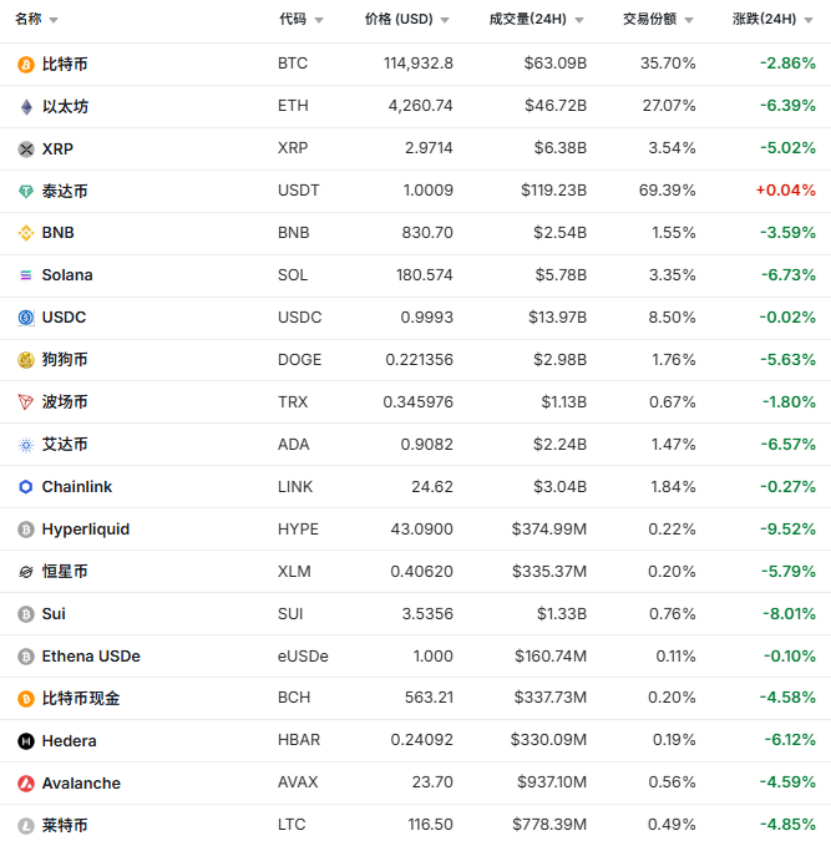
加密货币,集体杀跌! 今日(8月18日),加密货币市场大幅跳水,截至记者发稿时,比特币跌破11.5万美元,24小时内跌幅接近3%;以太 坊、Solana、艾达币跌超6%。Coinglass数据显示,过去24小时内,加密货币全网合约爆仓超5亿美元,爆仓人数超过 13万人。 美股开盘后,加密货币概念股也集体下跌,DeFi Development跌超6%,BMNR跌近5%,嘉楠科技跌超2%,Coinbase、 微策投资、Circle跌1%。 分析人士指出,加密货币此轮杀跌,受多方面因素影响,资金获利回吐是主要原因之一。此外,美联储降息预期减 弱,以及美国财政部长贝森特的最新言论,也打击了币圈的信心。 BTCMarkets的加密货币分析师Rachael Lucas表示,现货ETF的资金流动数据表明,此次市场下跌更多是资本轮动所 致,而非投资者信心崩溃。上周五,资金从灰度(Grayscale)和方舟投资(Ark Invest)的比特币ETF流出,而贝莱德 的IBIT则继续吸引资金净流入。根据SoSoValue的数据,现货以太币ETF也呈现类似趋势。 Rachael Lucas称,"虽然整体每日资金流动略有下降,但机构参 ...
加密货币全线重挫,超13万人爆仓
Zheng Quan Shi Bao· 2025-08-18 13:08
当地时间6月3日,美国白宫发表声明称,美国总统特朗普宣布将进口钢铁和铝及其衍生制品的关税从25%提高至50%。该关税政策自美国东部时间2025年 6月4日凌晨0时01分起生效。 关税传来利空消息,当地时间18日,美国扩大钢铝关税范围的措施正式生效。 当地时间8月15日,美国特朗普政府宣布扩大对钢铁和铝进口征收50%关税的范围,将数百种衍生产品纳入加征关税清单。 美国商务部在当天晚间发布的《联邦公报》公告中表示,工业与安全局已将407个产品编码加入《美国协调关税表》,这些产品将因所含钢铁和铝成分而 被加征额外关税。 公告称,这些产品中非钢铁和铝的部分,将适用特朗普总统对特定国家商品所征收的关税税率。扩大的关税清单将于8月18日正式生效。 | 总爆仓 | | | | | --- | --- | --- | --- | | 1小时爆仓 | $302.67万 | 4小时爆仓 | $5702.59万 | | 念東 | $225.37万 | 念東 | $4227.66万 | | 空車 | $77.29万 | 空車 | $1474.93万 | | 12小时爆仓 | $4.27亿 | 24小时爆仓 | $5.50亿 | | ...

全线重挫!超13万人爆仓,关税,传来大消息!
Zheng Quan Shi Bao Wang· 2025-08-18 12:25
关税传来利空消息,当地时间18日,美国扩大钢铝关税范围的措施正式生效。 当地时间8月15日,美国特朗普政府宣布扩大对钢铁和铝进口征收50%关税的范围,将数百种衍生产品纳入加征关税清单。 此外,加密货币市场也全线下跌,比特币跌破115000美元,近24小时跌幅近3%,以太坊更是大跌超6%,截至发稿跌破4300美元。 | 总爆仓 | | | | | --- | --- | --- | --- | | 1小时爆仓 | 4小时爆仓 | $5702.59万 | $302.67万 | | 参東 | 念車 | $4227.66万 | $225.37万 | | 空車 | 空車 | $77.29万 | $1474.93万 | | 12小时爆仓 | $4.27亿 | 24小时爆仓 | $5.50亿 | | 念車 | 念車 | $3.98 乙 | $4.86 Z | | 空单 | 空車 | $2900.91万 | $6388.76万 | | 最近24小时,全球共有130.773人被爆仓,爆仓总全额为$5.50 亿 | | | | 数据显示最近24小时内加密货币共有超13万人被爆仓。 综合自央视新闻 美国商务部在当天晚间发布的《联邦 ...
凌晨1时15分特朗普将与泽连斯基在白宫会晤;三大期指齐跌,中概股普涨,爱奇艺涨超15%;加密货币交易所股齐跌【美股盘前】
Mei Ri Jing Ji Xin Wen· 2025-08-18 12:08
Group 1 - Ukrainian President Zelensky is set to meet with US President Trump on August 18, 2023, to discuss the ongoing Russia-Ukraine conflict, followed by a multilateral meeting with European leaders [1] - Major US stock indices, including Dow Jones, S&P 500, and Nasdaq, experienced slight declines, with Dow futures down 0.15%, S&P 500 futures down 0.16%, and Nasdaq futures down 0.16% [2] - Semiconductor stocks in the US saw a collective decline, with Intel down 1.18%, AMD down 0.77%, and Nvidia down 0.38% [3] Group 2 - The Federal Reserve has relaxed its regulatory stance on banks' cryptocurrency activities, leading to a drop in cryptocurrency exchange stocks, with Coinbase down 1.67% and Circle down 1.07% [5] - Novo Nordisk's weight loss drug Wegovy received FDA approval for treating metabolic fatty liver disease, resulting in a 4.02% increase in the company's stock [6] - OpenAI employees plan to sell approximately $6 billion worth of stock at a valuation of $500 billion to a group of investors including Thrive Capital and SoftBank [7] Group 3 - Tesla is offering rental discounts of about 40% in the UK due to declining sales, with July sales dropping to 987 units, a year-on-year decrease of approximately 60% [8] - NIO announced plans to enter the markets of Singapore, Uzbekistan, and Costa Rica between 2025 and 2026, with a collaboration in Singapore to launch a right-hand drive model [9]



【美股盘前】凌晨1时15分特朗普将与泽连斯基在白宫会晤,三大期指齐跌;中概股普涨,爱奇艺涨超15%;美联储放松银行加密货币监管,加密货币交易所股齐跌;W...
Mei Ri Jing Ji Xin Wen· 2025-08-18 11:11
Group 1 - Ukrainian President Zelensky arrived in Washington for a meeting with President Trump, scheduled for August 18, 1:15 PM ET, followed by a multilateral meeting with European leaders to discuss the Russia-Ukraine conflict [1] - Major U.S. stock index futures showed a decline, with Dow futures down 0.15%, S&P 500 futures down 0.16%, and Nasdaq futures down 0.16% [2] - U.S. semiconductor stocks experienced a collective drop, with Intel down 1.18%, AMD down 0.77%, and Nvidia down 0.38% [3] Group 2 - The Federal Reserve announced the cessation of its "new activity regulatory program" aimed at enhancing cryptocurrency business oversight in banks, leading to declines in cryptocurrency exchange stocks, with Coinbase down 1.67% and Circle down 1.07% [5] - Novo Nordisk's weight loss drug Wegovy received FDA approval for treating metabolic fatty liver disease, resulting in a 4.02% increase in the company's stock [6] - OpenAI employees plan to sell approximately $6 billion worth of stock at a valuation of $500 billion to a group of investors including Thrive Capital and SoftBank [7] Group 3 - Tesla is offering rental discounts of about 40% in the UK due to a significant drop in sales, with July sales falling to 987 units, a year-on-year decrease of approximately 60% [8] - NIO announced plans to enter the markets of Singapore, Uzbekistan, and Costa Rica between 2025 and 2026, with a collaboration in Singapore to launch its first right-hand drive model [9]


比特币、以太币:美数据打压,币价下跌资金轮动
Sou Hu Cai Jing· 2025-08-18 09:46
Core Insights - Bitcoin and Ethereum prices have significantly dropped due to unexpected U.S. macroeconomic data and statements from the Treasury Secretary [1] - Investor sentiment has turned cautious as inflation exceeds expectations, reducing hopes for interest rate cuts by the Federal Reserve [1] - The market is currently in a "neutral" state according to the Fear and Greed Index, indicating a wait-and-see approach among traders [1] Price Movements - Bitcoin fell by 2% in the last 24 hours, trading at $115,500, with a low of $115,046, down 7.5% from its recent high of approximately $124,350 [1] - Ethereum experienced a decline of 3.33%, trading at $4,329 [1] Market Sentiment - The recent drop in cryptocurrency prices reflects a cautious investor sentiment amid high inflation, which strengthens the dollar and promotes risk-averse behavior [1] - Treasury Secretary Yellen's statement about not purchasing Bitcoin for strategic reserves has further impacted market confidence [1] Fund Flows - Data indicates that the recent market downturn is more related to capital rotation rather than a collapse in investor confidence [1] - Funds have flowed out of Grayscale and Ark Invest's Bitcoin ETFs, while BlackRock's IBIT continues to attract net inflows [1] Technical Analysis - Current key support levels for Bitcoin are identified at $115,000 and $112,500, with potential further declines to $110,000 if these levels are breached [1] - Analysts agree that the next major market catalyst will be U.S. macroeconomic events [1]
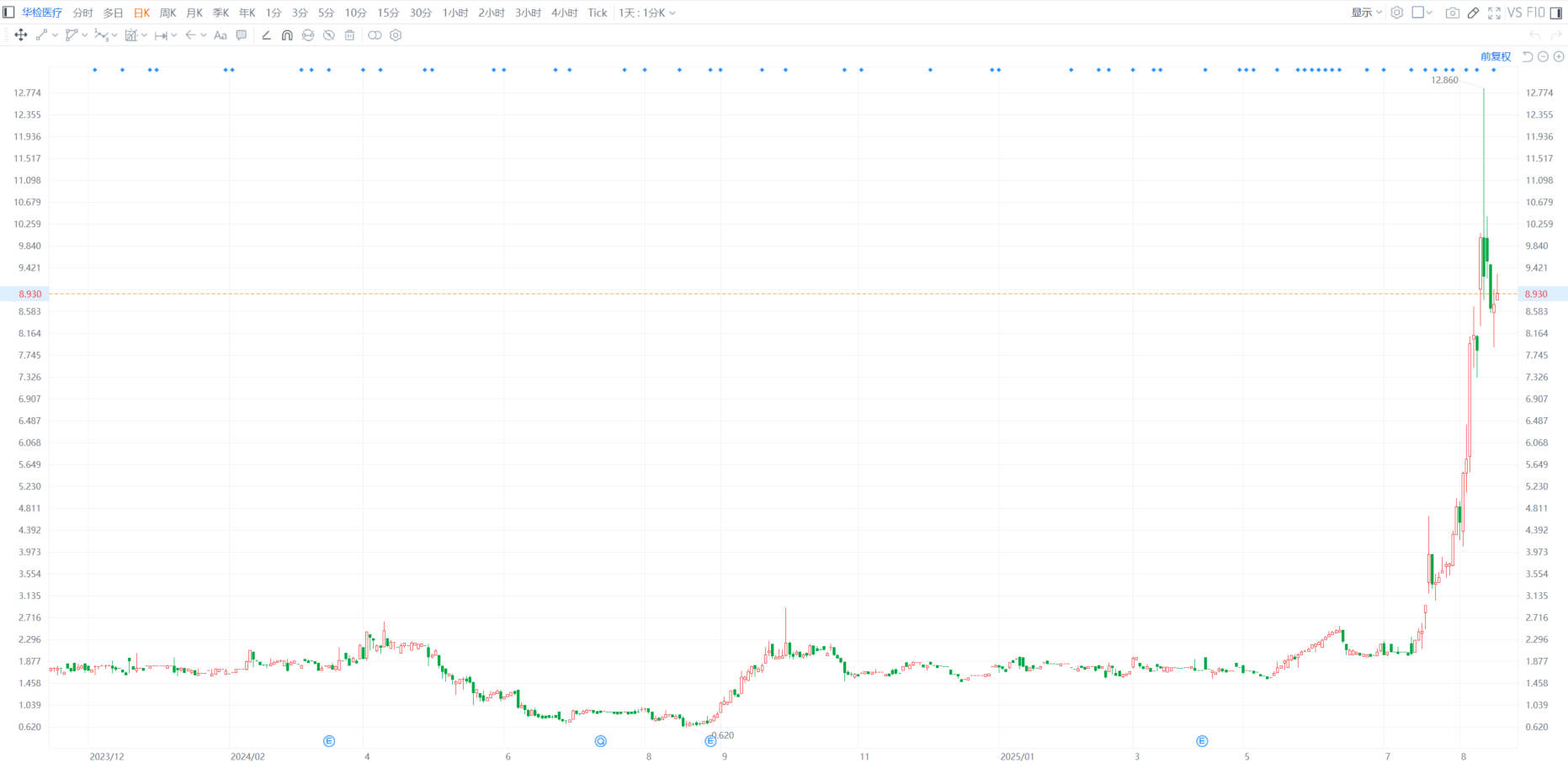
港股异动丨华检医疗一度涨超6% 拟购买加密货币 总金额不超30亿港元
Ge Long Hui· 2025-08-18 07:56
Core Viewpoint - The company, Huajian Medical (1931.HK), has proposed to seek shareholder approval for a purchase authorization to invest in cryptocurrencies, particularly Ethereum (ETH), as part of its asset allocation strategy and business development plans [1] Group 1: Company Actions - The company's board believes that purchasing and holding cryptocurrencies is a crucial step in solidifying its Ethereum reserves and accelerating the development of the ivd.xyz exchange ecosystem [1] - The board has recommended that shareholders approve a resolution allowing the company to potentially purchase cryptocurrencies over a period of 36 months, with a total purchase limit not exceeding 3 billion HKD [1] Group 2: Strategic Alignment - The potential cryptocurrency purchases and the authorization for such purchases are considered to align with the company's long-term development strategy and the overall interests of its shareholders [1]