全球安全倡议

Search documents
丁薛祥会见乌拉圭总统奥尔西
Xin Hua She· 2025-11-05 03:20
丁薛祥表示,双方要持续夯实政治互信,推动政府、政党、立法机构、地方等友好交往,加强治国 理政经验交流,巩固双边关系积极发展势头。持续提升务实合作水平,在高质量共建"一带一路"合作框 架下,加强经贸、财金、农牧业、基础设施建设等领域合作,加快培育信息通信、人工智能、数字经济 合作新亮点。持续深化人文交流,拓展教育、体育、智库、青年、地方等领域合作,增进相互了解,巩 固社会民意基础。持续加强多边合作,推进落实全球发展倡议、全球安全倡议、全球文明倡议和全球治 理倡议,坚定维护多边主义和国际公平正义。 奥尔西请丁薛祥转达对习近平主席的诚挚问候,表示乌中建交以来,两国人民友谊日益深化,关系 持续向前发展。乌拉圭人民和各界都期待同中国进一步加强共建"一带一路"合作,推动乌中全面战略伙 伴关系再上新台阶。乌方赞同和欢迎习近平主席提出的系列重大理念和倡议,愿同中方加强沟通协作, 维护自由开放的国际贸易体系和多边主义。 新华社蒙得维的亚11月4日电(记者赵博超 孟鼎博)当地时间11月4日,中共中央政治局常委、国 务院副总理丁薛祥在蒙得维的亚会见乌拉圭总统奥尔西。 丁薛祥首先转达习近平主席的亲切问候和良好祝愿。丁薛祥表示,乌拉圭 ...
王毅发表署名文章
财联社· 2025-11-04 23:48
Core Viewpoint - The article emphasizes the importance of building a community with a shared future for mankind as a high goal of China's diplomacy in the new era, guided by Xi Jinping's thoughts on socialism with Chinese characteristics and foreign policy [2][3]. Group 1: Significance of Building a Community with a Shared Future - Building a community with a shared future is a major original thought proposed by Xi Jinping, reflecting the party's deepening understanding of human social development and providing a Chinese answer to the question of what kind of world to build and how to build it [3]. - This concept follows the development laws of human society, advocating for cooperation and coexistence among nations in the face of common challenges [3]. - It aligns with the trend of peaceful development, aiming to inject more certainty and stability into a world facing turmoil and change [4]. - The idea reflects the original mission of the Communist Party of China, emphasizing its role in promoting human progress and development [5]. - It has garnered broad consensus in the international community, evolving from a Chinese initiative to a widely recognized global concept [6]. Group 2: Main Tasks for Building a Community with a Shared Future - The article outlines several important initiatives for promoting this concept, including advocating for a multipolar world and inclusive economic globalization [7]. - It emphasizes the importance of deepening regional development integration, particularly with neighboring countries, to create a community of shared destiny [8]. - Maintaining overall stability in major power relations is highlighted as crucial, with a focus on promoting healthy and sustainable development in relationships with major countries [9]. - Strengthening cooperation with developing countries is also emphasized, as they are seen as natural allies in international affairs [10]. - The implementation of global initiatives on development, security, civilization, and governance is presented as a strategic guide for building this community [11]. Group 3: Practical Requirements for Building a Community with a Shared Future - The article stresses the need to uphold and strengthen the leadership of the Communist Party in foreign affairs, ensuring that decisions are implemented effectively [13]. - It advocates for a people-centered approach, addressing the common concerns of people worldwide and promoting equitable development [14]. - The necessity of innovation in diplomacy is highlighted, encouraging the adaptation of strategies to the evolving international landscape [15]. - A systematic perspective is recommended to address the interconnected challenges of development and security in a rapidly changing world [16]. - The importance of a fighting spirit is emphasized, urging resilience and strategic planning to safeguard national interests [16].


推动构建人类命运共同体(学习贯彻党的二十届四中全会精神)
Ren Min Ri Bao· 2025-11-04 22:12
Core Viewpoint - The construction of a community with a shared future for mankind is a noble goal pursued by China's diplomacy in the new era, reflecting the strategic deployment of the Central Committee of the Communist Party of China under Xi Jinping's leadership [1] Group 1: Significance of Building a Community with a Shared Future - The concept of building a community with a shared future is a major original thought proposed by Xi Jinping, representing the core idea of Xi Jinping's diplomatic thought and providing a Chinese answer to the question of what kind of world to build and how to build it [2] - This concept follows the development laws of human society, emphasizing that humanity is an integrated whole and that cooperation is essential to address common challenges [2] - It aligns with the trend of peaceful development, advocating for peace, development, cooperation, and win-win outcomes in the face of global challenges [3] - The idea reflects the original mission of the Communist Party of China, showcasing its commitment to both the happiness of the Chinese people and the progress of humanity [4] - The concept has gained broad consensus in the international community, evolving from a Chinese initiative to a widely recognized global principle [5] Group 2: Main Tasks for Building a Community with a Shared Future - Advocating for a multipolar world and inclusive economic globalization to address major global challenges and ensure that all countries can find their place in the international system [7] - Deepening regional development integration, particularly with neighboring countries, to enhance cooperation and maintain regional peace and stability [8] - Maintaining overall stability in major power relations, promoting healthy and sustainable development of relationships with major countries like the U.S., Russia, and Europe [9] - Strengthening solidarity and cooperation with developing countries, which are seen as natural allies in promoting the community with a shared future [10] - Implementing global initiatives focused on development, security, civilization, and governance to provide strategic guidance for building a community with a shared future [11] Group 3: Practical Requirements for Building a Community with a Shared Future - Emphasizing the importance of the Party's leadership in foreign affairs, ensuring that diplomatic efforts align with the Central Committee's decisions [14] - Adopting a people-centered approach in foreign policy to address global concerns and promote mutual development [15] - Encouraging innovation in diplomatic practices to adapt to changing international dynamics and enhance strategic positioning [16] - Maintaining a systematic perspective to address the interconnectedness of global issues and China's role within that context [16] - Fostering a spirit of struggle to confront challenges and protect national interests in the face of global pressures [16]
全球治理倡议有助于弥合南北发展差距
Ren Min Ri Bao Hai Wai Ban· 2025-11-03 03:41
Core Viewpoint - The global governance deficit is widening, and China's global governance initiative aims to uphold the core values and human ideals established 80 years ago by the United Nations, bridging the long-standing North-South development gap and injecting new momentum for fair cooperation and innovative development [1][2] Group 1 - The current global governance mechanisms are ineffective or unfair in addressing political, economic, military, and social turmoil, with wealthy countries holding disproportionate influence in international decision-making [1] - Developing countries, particularly in the Global South, face significant burdens due to inadequate representation in global governance, as exemplified by the climate change issue where developed nations have historically contributed to carbon emissions while pressuring developing nations [1] - China's global governance initiative emphasizes equal participation in international affairs for all countries, regardless of size or wealth, and aims to promote common development, thereby enhancing fairness in the global system [1] Group 2 - China calls for reforms in international financial institutions to address the persistent North-South gap and supports the legitimate development rights of emerging markets and developing countries amid disruptions caused by U.S. tariffs on global renewable energy markets [2] - The world is entering a new industrial revolution led by artificial intelligence and digital technology, with developing countries eager to leverage innovation for accelerated growth [2] - China's proposal to establish a World Artificial Intelligence Cooperation Organization aims to bridge the digital and intelligence divide, responding to the urgent needs of developing countries and inspiring international action towards the ideals enshrined in the UN Charter [2]
国际人士:中国致力于推动亚太合作
Yang Shi Xin Wen Ke Hu Duan· 2025-11-02 08:15
Core Points - International figures highly praise President Xi Jinping's important speeches during the APEC meeting, highlighting China's commitment to multilateralism and open cooperation in the Asia-Pacific region [1][3][5] - Xi's proposals are seen as crucial for regional economic development and are based on principles of free trade and open economies, emphasizing the importance of multilateralism and inclusivity [3][5] - China will host the APEC meeting again in 2026, which is anticipated to be a historically significant event [3] - China has played a vital role in APEC, actively participating and proposing several global initiatives, including the Global Development Initiative, Global Security Initiative, Global Civilization Initiative, and Global Governance Initiative, aligning with APEC's objectives [5][9] - The world is at a new crossroads, and China is contributing wisdom and solutions to address prominent global issues [5][9] Group 1 - International experts commend Xi Jinping's speeches for their depth and significance, viewing them as a foundation for global progress [3] - The emphasis on multilateralism and inclusivity in Xi's proposals is crucial for fostering cooperation in the Asia-Pacific region [3][5] - The upcoming APEC meeting in 2026 is expected to be a pivotal opportunity for advancing regional collaboration [3] Group 2 - China's proactive role in APEC is underscored by its introduction of various global initiatives that support multilateralism and free trade [5][9] - The initiatives proposed by China are increasingly influential in the global multilateral relationship framework [9] - The international community recognizes the importance of implementing these initiatives to address current global challenges [9]
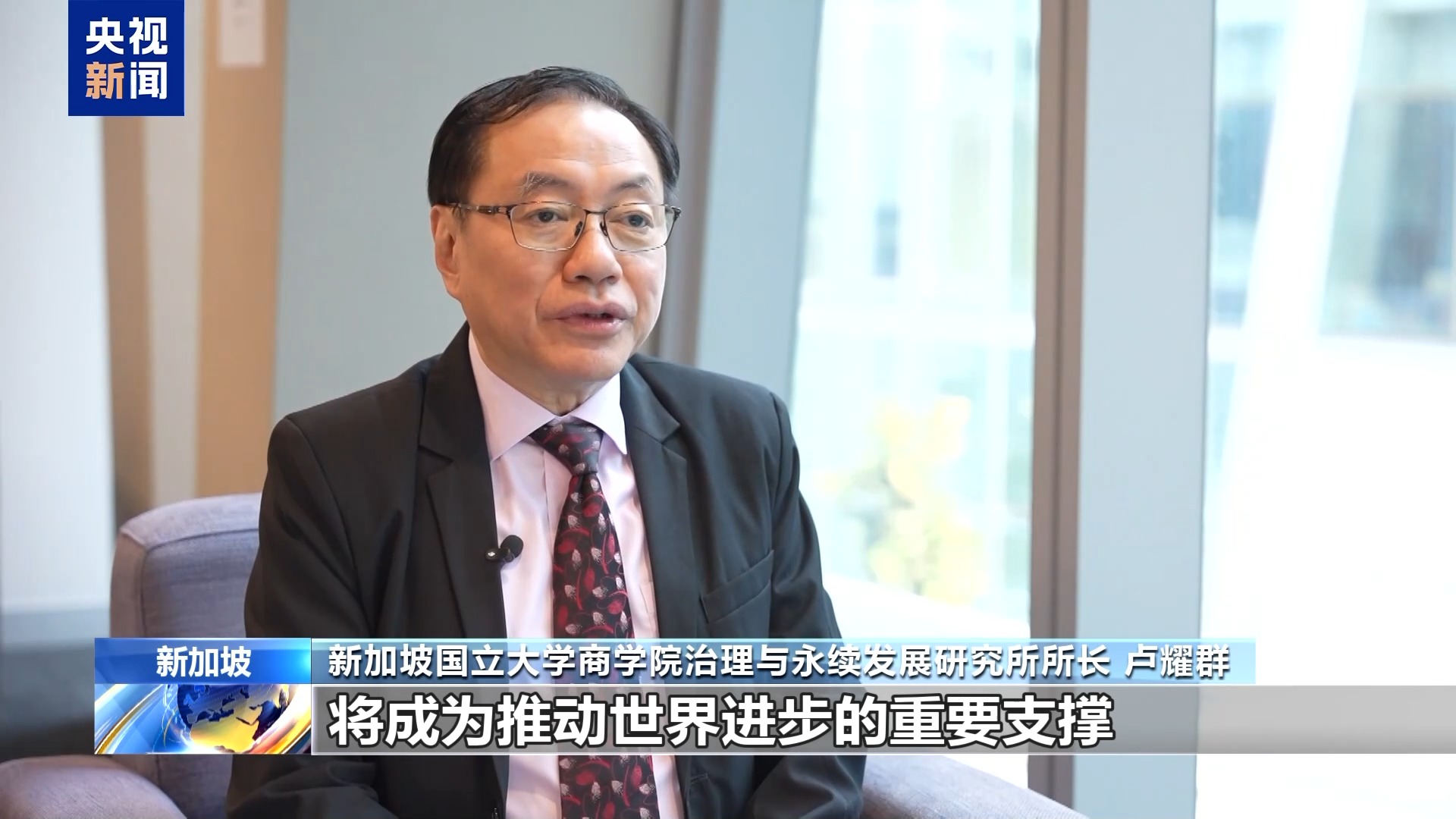
视频丨国际人士:中国致力于推动亚太合作
Yang Shi Xin Wen Ke Hu Duan· 2025-11-02 08:09
Core Points - International figures highly praised President Xi Jinping's important speech and written remarks during the APEC meeting, highlighting China's commitment to multilateralism and open cooperation in the Asia-Pacific region, aimed at promoting global development and prosperity [2] Group 1: Importance of Xi Jinping's Speech - The speech was described as profound and significant, establishing key principles such as free trade and open economies, while emphasizing the importance of multilateralism and inclusivity [4] - The upcoming APEC meeting in 2026, which China will host again, is viewed as a crucial opportunity with historical significance [4] Group 2: China's Role in APEC - China has played a vital role in APEC in recent years, actively participating and proposing a series of global initiatives, including the Global Development Initiative, Global Security Initiative, Global Civilization Initiative, and the recently introduced Global Governance Initiative [6] - These initiatives reflect China's support for multilateralism, free trade, and further openness, aligning with APEC's objectives [6] Group 3: Global Perspectives on China's Initiatives - International experts express strong support for China's proposed global initiatives, emphasizing the potential for building a mutually beneficial international community [8] - There is a call for the implementation of China's global initiatives, which are increasingly influential in the global multilateral relationship framework [9]
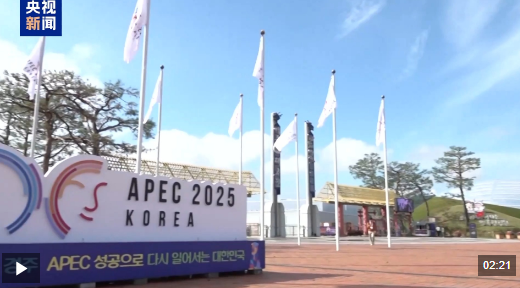
立足APEC,六大维度梳理中国如何成为亚太增长引擎 | 国际识局
Zhong Guo Xin Wen Wang· 2025-11-02 08:09
Group 1: APEC Meeting Overview - The APEC informal leaders' meeting was held in Gyeongju, South Korea, from October 31 to November 1, focusing on "Building a Sustainable Tomorrow - Connectivity, Innovation, Prosperity" [1] - APEC accounts for 37% of the global population and contributes 61% to world economic growth, with its share of the global economy increasing from 57% in 1989 to 61% in 2024 [1] - The absence of the United States at this year's meeting allows China to emerge as the largest economy among APEC members and will take over as the rotating chair in 2026 [1] Group 2: China's Economic Contributions - China has consistently contributed over 30% to global economic growth, accounting for more than half of APEC's economic growth [2] - In 2024, China's goods trade represents 29.2% of APEC's external trade, while its service trade accounts for 14.3% [2] - China is a major trading partner for 21 APEC member economies and the largest trading partner for 13 of them, as well as for over 150 countries and regions globally [2] Group 3: Green Development Initiatives - China has set targets for carbon peaking by 2030 and carbon neutrality by 2060, actively promoting economic restructuring and carbon reduction efforts [3] - The country has ceased new overseas coal power projects since 2019 and is focusing on renewable energy sources like wind and solar power, as well as electric vehicles [3] - China's green development efforts support sustainable development in the Asia-Pacific region and contribute significantly to global ecological governance [3] Group 4: Modernization and Investment - China is not only a major exporter of goods but also of technology, driving the digital, green, and intelligent transformation of traditional industries [4] - Over the past five years, China has attracted over $700 billion in foreign investment and ranks among the top three countries for outbound direct investment [4] - In 2024, 85% of China's outbound direct investment flows to 20 APEC partners, while 71.9% of its investment stock is held in 20 APEC countries, including the U.S., South Korea, and Japan [4] Group 5: Economic Integration Efforts - China has signed bilateral free trade agreements with at least seven APEC partners and has been instrumental in establishing the Regional Comprehensive Economic Partnership (RCEP) [6] - Ongoing negotiations for a China-Japan-Korea free trade agreement and efforts to join the Comprehensive and Progressive Agreement for Trans-Pacific Partnership (CPTPP) are underway [6] Group 6: Belt and Road Initiative - China is actively collaborating with APEC members on the Belt and Road Initiative, enhancing connectivity and supporting Laos in its strategic goals [7] - The China-Laos Railway connects to the broader Pan-Asian railway network, facilitating trade between ASEAN countries and China [7] - Initiatives with Vietnam, Thailand, and Singapore are also in progress to strengthen regional connectivity and economic growth [7] Group 7: Global Governance and Cooperation - China has proposed global governance initiatives to address international governance gaps and promote multilateralism, emphasizing principles like sovereignty and international law [8] - The country advocates for a comprehensive and sustainable security approach while promoting development and poverty reduction [8] - Efforts to build a community with a shared future in the Asia-Pacific region are being pursued in collaboration with APEC members [8]
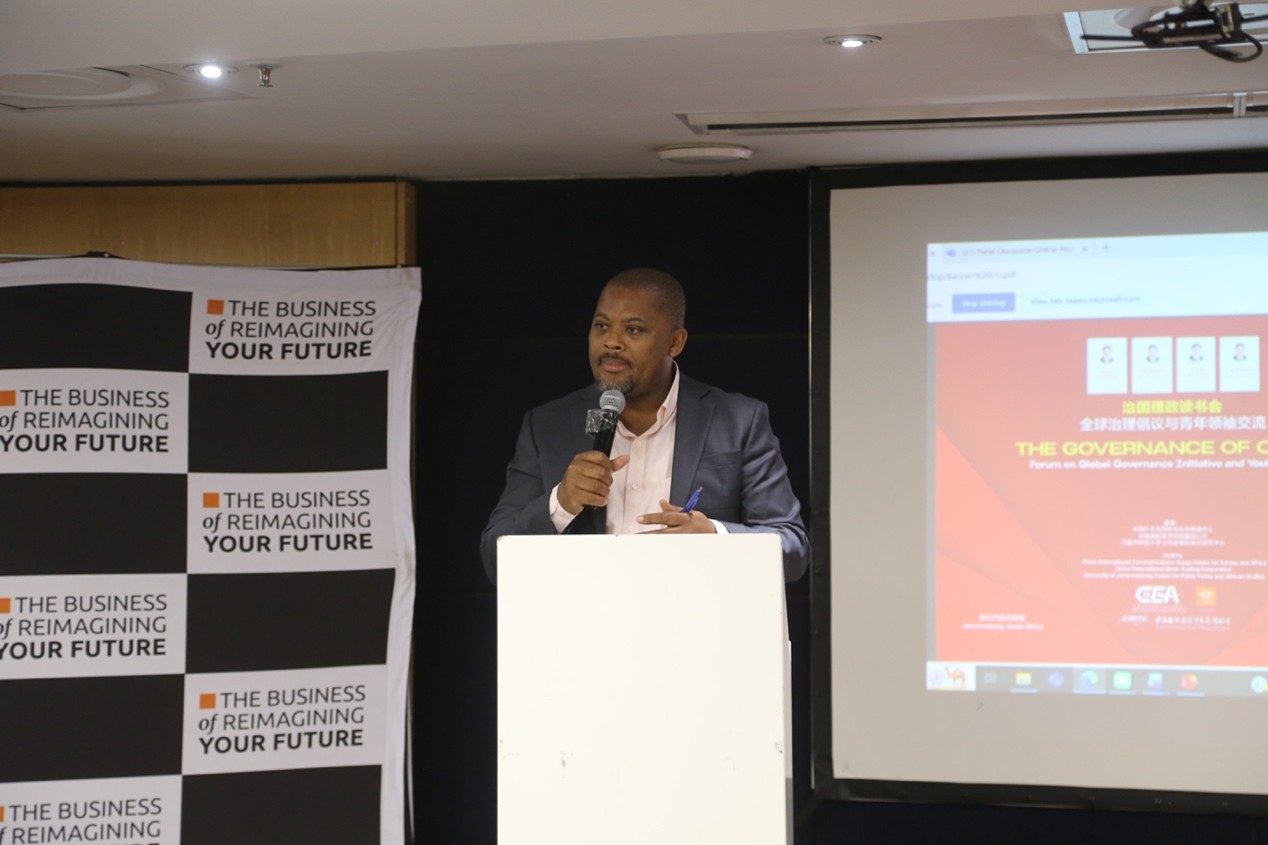
“治国理政读书会”在南非举办
人民网-国际频道 原创稿· 2025-11-02 03:21
Core Viewpoint - The event "Governance and Management Reading Club: Global Governance Initiatives and Youth Leadership Exchange" held in Johannesburg emphasizes the importance of global governance initiatives in providing stability and certainty in a rapidly changing international order [1][2]. Group 1: Global Governance Initiatives - The global governance initiative aligns with the world's needs and, along with global development, security, and civilization initiatives, injects valuable stability into a turbulent world [1]. - The current international order is evolving rapidly, facing risks of deterioration, and global governance initiatives are beneficial for promoting the reform and construction of the global governance system [1]. Group 2: Opportunities for Africa - The Deputy Speaker of the Mpumalanga Provincial Legislature highlighted that China's development brings opportunities to Africa through industrial modernization and innovation-driven growth, fostering economic growth and international cooperation [2]. - The "people-centered" development philosophy and the formulation and execution of long-term development plans are crucial aspects of China's development experience, which African countries like South Africa can learn from [2].
视频|国际人士:推动构建亚太共同体 中国展现大国担当
Yang Shi Xin Wen Ke Hu Duan· 2025-11-01 13:37
Core Points - Xi Jinping's speech at the APEC Business Leaders Summit emphasizes the concept of "four leaderships," showcasing China's commitment to shared opportunities and mutual benefits in global economic cooperation [2][4][9] - The speech reflects China's high regard for APEC cooperation and its responsibility in promoting inclusive economic globalization [2][5] Group 1 - The proposed ideas in Xi's speech positively influence the business community by supporting a multilateral trade system, which is essential for a fair and just global trade environment [4] - Xi's clear stance on multilateralism and trade equality serves as a foundation for economic cooperation among APEC members [5] - The interconnectedness of nations is highlighted, indicating that no country can achieve security in isolation, advocating for a global governance initiative that promotes a shared future for humanity [7] Group 2 - The "four leaderships" concept reflects a new era in China's diplomatic approach, emphasizing peace and stability in the Asia-Pacific region as a basis for economic cooperation [9] - The idea of building a community with a shared future is seen as a significant innovation, promoting dialogue among countries of all sizes on an equal footing and avoiding power imposition [11]

视频丨国际人士:推动构建亚太共同体 中国展现大国担当
Yang Shi Xin Wen Ke Hu Duan· 2025-11-01 13:32
Core Points - Xi Jinping's speech at the APEC Business Leaders Summit emphasizes the concept of "four leaderships," showcasing China's commitment to shared opportunities and mutual benefits in global economic cooperation [1][3][5] - The speech advocates for a multilateral trade system that is fair and just, which is essential for the prosperity of all partner nations [3][5] - The idea of building a community with a shared future for mankind is highlighted as a significant innovation in international relations, promoting equality among nations [5][9] Summary by Categories Economic Cooperation - Xi Jinping's speech underscores the importance of multilateralism and trade equality as foundational principles for economic collaboration among APEC members [3] - The promotion of a multilateral trade system is seen as a necessary response to current global challenges, aiming to benefit all countries rather than a select few [5] International Relations - The concept of a community with a shared future is presented as a new framework for international relations, allowing for dialogue among countries of all sizes on an equal basis [9] - Xi's leadership in advocating for peace and stability in the Asia-Pacific region is recognized as a solid foundation for economic cooperation [7] Global Governance - The global governance and security initiatives proposed by Xi Jinping are aimed at fostering collective survival and development, emphasizing the interconnectedness of nations [5] - The speech reflects a commitment to building a more inclusive international system that does not favor only a few countries at the expense of others [5]