
亲诚惠容周边外交理念

Search documents
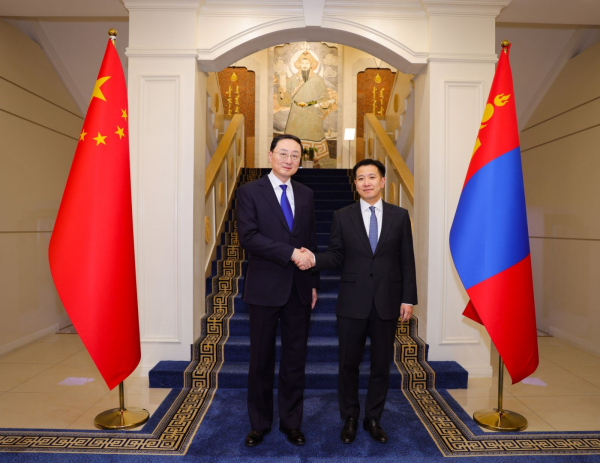
外交部副部长孙卫东赴蒙主持中蒙外交部门战略对话
Xin Lang Cai Jing· 2026-02-12 11:16
Group 1 - The core viewpoint of the article emphasizes the positive development of China-Mongolia relations under the strategic guidance of the leaders of both countries, which benefits the peoples of both nations and promotes regional peace, development, and prosperity [3] - The Chinese side expresses willingness to deepen cooperation across various fields and build a community with a shared future between China and Mongolia, guided by the important consensus reached by the leaders [3] - The Mongolian side reaffirms that developing relations with China is a primary diplomatic policy and supports China's stance on issues related to Taiwan, Tibet, Xinjiang, and Hong Kong, committing to the One China principle [3] Group 2 - Both sides agree to maintain the principles of the United Nations Charter and the basic norms of international relations, aiming to promote a more just and reasonable global governance system [3] - The discussions included a candid exchange of views on international and regional situations, indicating a mutual interest in maintaining stability and cooperation in the region [3] - Mongolia appreciates China's support for its economic and social development and expresses a desire to deepen strategic alignment and practical cooperation, particularly in the context of the Belt and Road Initiative [3]

“中国发展的成功经验对印尼具有启示意义”
Xin Lang Cai Jing· 2026-01-28 10:32
Group 1 - The bilateral trade between Indonesia and China has been growing rapidly for several years, with political mutual trust being the foundation of their relationship [1] - The relationship was elevated to a comprehensive strategic partnership in 2013, marking a significant milestone in their diplomatic history [1] - The cooperation framework has evolved from "four-wheel drive" to "five pillars" with the addition of security cooperation, enhancing the strategic foundation of their relationship [1] Group 2 - The year 2025 marks the 75th anniversary of diplomatic relations between Indonesia and China, with the current relationship being described as the best in history [1] - Indonesia benefits from high-quality infrastructure projects under the Belt and Road Initiative, which promotes regional integration and injects momentum into its development [2] - Both countries, as major developing nations, should strengthen cooperation under the framework of four global initiatives to promote a more just and reasonable international order [2]
中国发展的成功经验对印尼具有启示意义
Ren Min Ri Bao· 2026-01-28 01:46
Group 1 - The bilateral trade between Indonesia and China has maintained rapid growth for several years, with political mutual trust being the foundation of their relationship [1] - The relationship was elevated to a comprehensive strategic partnership in 2013, marking a significant milestone in their diplomatic history [1] - The cooperation framework has evolved from "four-wheel drive" to "five pillars" with the addition of security cooperation, enhancing the strategic foundation of their relationship [1] Group 2 - Indonesia has benefited from high-quality participation in the Belt and Road Initiative, with infrastructure projects like the Jakarta-Bandung High-Speed Railway promoting regional integration and providing development momentum [2] - Both Indonesia and China, as developing countries and emerging market powers, should strengthen cooperation under the framework of four global initiatives to promote multilateralism and build a more just international order [2]
专家:中国穿梭调停柬泰冲突 展现亚洲安全新思路|国际识局
Xin Lang Cai Jing· 2025-12-26 12:57
Core Viewpoint - The recent military conflict at the Cambodia-Thailand border poses a significant threat to regional security and stability, prompting China to engage in diplomatic mediation as a responsible major power, enriching the Asian security concept and providing insights for regional cooperation and security order reconstruction [1][5]. Group 1: Conflict Background and Implications - The Cambodia-Thailand border conflict stems from historical territorial disputes and highlights the deep vulnerabilities in Southeast Asia's security architecture, exacerbated by increasing global geopolitical tensions [1]. - The prolonged conflict has resulted in severe casualties and a localized humanitarian crisis, undermining ASEAN's principles of consensus and peaceful dispute resolution, potentially fragmenting political trust among member states [1][2]. - Continued conflict risks creating a geopolitical vacuum that could invite external powers' intervention, hindering regional cooperation and stability, which is crucial for Southeast Asia's role as a global growth engine [1]. Group 2: Mediation Efforts and Framework - Achieving lasting peace requires moving beyond traditional mediation methods, as previous ceasefire agreements have been repeatedly violated, indicating the need for a framework supported by political trust and institutional guarantees [2]. - China's mediation in the Cambodia-Thailand conflict exemplifies a constructive approach, focusing on conflict de-escalation and advocating for resolution within the ASEAN framework, thereby supporting ASEAN's central role in regional security [2][3]. Group 3: China's Strategic Role and Initiatives - China's mediation aims to complement existing ASEAN mechanisms rather than replace them, seeking sustainable solutions through dialogue and cooperation, which aligns with China's proposed Asian security concept emphasizing common, comprehensive, cooperative, and sustainable security [3]. - The unique advantage of China's mediation stems from its deep economic ties and political trust with both Cambodia and Thailand, leveraging its development-oriented influence to guide both parties towards rational consensus amidst complex situations [3][4]. - The mediation reflects China's strategic wisdom of "building security through development," emphasizing the importance of peace and stability in the region for major cooperation projects like the Belt and Road Initiative [4]. Group 4: Broader Implications for Regional Security - China's approach to the Cambodia-Thailand conflict illustrates a systematic interpretation and practice of the Asian security concept, advocating for security rooted in cooperative frameworks rather than confrontation [5]. - In the face of rising global uncertainties, China's pragmatic actions position it as an indispensable stabilizing force for regional and global peace and development, fostering a future built on dialogue, mutual trust, and cooperation [5].
论汉字符号“聚”在东博会官方宣传中的话语模因价值
Jing Ji Guan Cha Wang· 2025-12-14 01:27
Core Viewpoint - The article emphasizes the importance of ASEAN in China's neighborhood diplomacy and explores the potential of the Chinese character "聚" (gather) as a discourse model to promote the concept of a "China-ASEAN community with a shared future" through the analysis of promotional films from the China-ASEAN Expo [2][3][4]. Group 1: Importance of ASEAN in China's Diplomacy - ASEAN is prioritized in China's neighborhood diplomacy, reflecting a commitment to amity, sincerity, mutual benefit, and inclusiveness [4]. - The "China-ASEAN community with a shared future" is a significant experiment in China's broader neighborhood community strategy [4]. Group 2: Analysis of Promotional Films - The study analyzes the official promotional films from the 17th to 19th China-ASEAN Expos, focusing on their content structure and ideological characteristics [2][3]. - The films highlight the historical significance, economic achievements, and future prospects of the China-ASEAN Expo, showcasing its role as a practical platform for regional economic integration [4][10]. Group 3: Discourse Analysis and the Character "聚" - The character "聚" is linked to the concept of gathering and collective action, serving as a potential discourse model for expressing the "China-ASEAN community" idea [6][9]. - The character's etymology and usage in various contexts reflect its significance in promoting cooperation and shared goals among nations [7][8]. Group 4: Findings from the Promotional Films - The promotional films are structured into segments that illustrate the unique aspects of the Expo, including its historical context, economic data, and the gathering of political and business elites [12][15]. - Key statistics presented include a cumulative investment of over $310 billion and bilateral trade reaching $878.2 billion by 2021, underscoring the Expo's economic impact [12]. Group 5: Future Prospects and Vision - The films convey a vision for the future, emphasizing ongoing cooperation and the establishment of a closer "China-ASEAN community" through initiatives like the China-ASEAN Free Trade Area 3.0 [15][33]. - The closing messages of the films express aspirations for continued collaboration and prosperity, inviting participation in future endeavors [16][34].
推动中泰命运共同体建设结出新硕果(大使随笔)
Ren Min Ri Bao· 2025-11-12 22:19
Group 1: Core Perspectives - The visit of Thai King Vajiralongkorn to China marks the first official visit by a Thai monarch in 50 years, highlighting the importance both nations place on their bilateral relationship [1] - The relationship between China and Thailand is characterized by mutual respect, equality, and sincere trust, with a strong foundation built over 50 years of diplomatic ties [1] - High-level exchanges have strengthened strategic mutual trust, with recent meetings between leaders indicating a commitment to deepening cooperation and building a community with a shared future [1][2] Group 2: Economic Cooperation - China has maintained its position as Thailand's largest trading partner for 12 consecutive years, with bilateral trade reaching $114.3 billion in the first three quarters of 2025, a 17% increase year-on-year [2] - Thailand's participation as the guest country at the 8th China International Import Expo reflects its significant role in trade, with consistent high intention transaction amounts [2] - The China-Thailand railway project is a flagship initiative under the Belt and Road Initiative, with the first phase from Bangkok to Nakhon Ratchasima progressing steadily [2] Group 3: Cultural Exchange - Cultural events such as the "Happy Spring Festival" in Bangkok and various sports and artistic performances have been organized to celebrate the 50th anniversary of diplomatic relations, enhancing mutual understanding and friendship [2] - The exchange of cultural activities, including ice hockey matches and performances by Chinese troupes, has contributed to the deepening of people-to-people ties between the two nations [2] Group 4: International Collaboration - China and Thailand share broad common interests in international affairs, supporting initiatives for global development, security, and governance [3] - Thailand's support for China's proposals, including the Global Development Initiative, reflects a strong alignment in international policy and cooperation [3] - The ongoing strategic partnership is seen as a model for China's diplomatic relations in the region, with both countries looking to enhance economic integration through the China-ASEAN Free Trade Area 3.0 [3]
推动构建人类命运共同体(学习贯彻党的二十届四中全会精神)
Ren Min Ri Bao· 2025-11-04 22:12
Core Viewpoint - The construction of a community with a shared future for mankind is a noble goal pursued by China's diplomacy in the new era, reflecting the strategic deployment of the Central Committee of the Communist Party of China under Xi Jinping's leadership [1] Group 1: Significance of Building a Community with a Shared Future - The concept of building a community with a shared future is a major original thought proposed by Xi Jinping, representing the core idea of Xi Jinping's diplomatic thought and providing a Chinese answer to the question of what kind of world to build and how to build it [2] - This concept follows the development laws of human society, emphasizing that humanity is an integrated whole and that cooperation is essential to address common challenges [2] - It aligns with the trend of peaceful development, advocating for peace, development, cooperation, and win-win outcomes in the face of global challenges [3] - The idea reflects the original mission of the Communist Party of China, showcasing its commitment to both the happiness of the Chinese people and the progress of humanity [4] - The concept has gained broad consensus in the international community, evolving from a Chinese initiative to a widely recognized global principle [5] Group 2: Main Tasks for Building a Community with a Shared Future - Advocating for a multipolar world and inclusive economic globalization to address major global challenges and ensure that all countries can find their place in the international system [7] - Deepening regional development integration, particularly with neighboring countries, to enhance cooperation and maintain regional peace and stability [8] - Maintaining overall stability in major power relations, promoting healthy and sustainable development of relationships with major countries like the U.S., Russia, and Europe [9] - Strengthening solidarity and cooperation with developing countries, which are seen as natural allies in promoting the community with a shared future [10] - Implementing global initiatives focused on development, security, civilization, and governance to provide strategic guidance for building a community with a shared future [11] Group 3: Practical Requirements for Building a Community with a Shared Future - Emphasizing the importance of the Party's leadership in foreign affairs, ensuring that diplomatic efforts align with the Central Committee's decisions [14] - Adopting a people-centered approach in foreign policy to address global concerns and promote mutual development [15] - Encouraging innovation in diplomatic practices to adapt to changing international dynamics and enhance strategic positioning [16] - Maintaining a systematic perspective to address the interconnectedness of global issues and China's role within that context [16] - Fostering a spirit of struggle to confront challenges and protect national interests in the face of global pressures [16]
推动战略合作伙伴关系不断向前发展
Xin Hua She· 2025-10-27 17:08
Group 1 - Xi Jinping's visit to South Korea from October 30 to November 1 is expected to enhance political trust and deepen bilateral economic cooperation between China and South Korea [1][3] - The visit is seen as a significant opportunity to promote friendly relations and inject new momentum into regional peace and development [3][5] - The bilateral trade volume between China and South Korea reached $328.08 billion in 2024, marking a 5.6% increase, with China being South Korea's largest trading partner for 21 consecutive years [6][8] Group 2 - The visit is anticipated to strengthen cooperation in various sectors, including high-end manufacturing, logistics, and emerging fields like digital economy and artificial intelligence [8][10] - There is a strong belief among business leaders that the high-level exchanges will boost confidence and support local development for companies operating in both countries [8][10] - Cultural exchanges and mutual understanding are emphasized as essential for solidifying the foundation of bilateral relations, with increased tourism and people-to-people interactions noted since the implementation of a visa waiver policy [11][14]
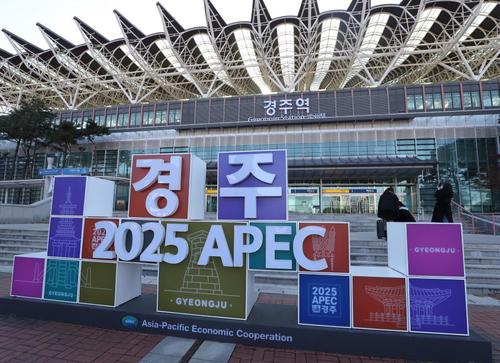
特稿|推动战略合作伙伴关系不断向前发展——韩国各界对习近平主席国事访问充满热切期待
Xin Hua She· 2025-10-27 14:32
Group 1: Core Perspectives - The upcoming state visit of President Xi Jinping to South Korea is expected to enhance political mutual trust, deepen bilateral economic cooperation, and promote friendly exchanges between the two nations, thereby advancing the strategic partnership [1][2][3] - South Korean officials express optimism that this visit will serve as a new starting point for bilateral relations, fostering cooperation in various fields such as trade and culture, and contributing to regional peace and development [2][3] Group 2: Economic Cooperation - The bilateral trade volume between China and South Korea is projected to reach $328.08 billion in 2024, reflecting a growth of 5.6%, with China being South Korea's largest trading partner for 21 consecutive years [5] - The two countries have seen significant economic collaboration since the establishment of diplomatic relations in 1992, overcoming ideological differences and enhancing cooperation across various sectors [2][5] - The visit is anticipated to further boost cooperation in emerging fields such as clean energy, biotechnology, and artificial intelligence, leveraging the strengths of both nations [5][6] Group 3: Cultural and People-to-People Exchanges - There is a strong emphasis on deepening cultural exchanges and mutual understanding between the two countries, which is seen as essential for solidifying the foundation of bilateral relations [7][8] - The recent increase in South Korean tourists visiting China reflects a growing interest in cultural and historical ties, enhancing the people-to-people connections [7][8] - The visit is expected to strengthen the cultural bonds and mutual trust between the two nations, contributing to a stable and healthy development of bilateral relations [7][8]
推动战略合作伙伴关系不断向前发展——韩国各界对习近平主席国事访问充满热切期待
Xin Hua She· 2025-10-27 14:12
Core Points - The visit of President Xi Jinping to South Korea from October 30 to November 1 is expected to enhance political trust and deepen bilateral economic cooperation between China and South Korea [1][2][3] - This visit marks Xi's first state visit to South Korea in 11 years, highlighting the importance of the relationship [1][2] - Various sectors in South Korea express optimism that this visit will lead to increased collaboration in trade, culture, and regional stability [2][3] Economic Cooperation - The bilateral trade volume between China and South Korea is projected to reach $328.08 billion in 2024, reflecting a growth of 5.6% [5] - China has been South Korea's largest trading partner for 21 consecutive years, while South Korea ranks as China's second-largest trading partner [5] - The two countries have developed a deeply intertwined supply chain, fostering mutual growth and cooperation in various sectors [5][6] Cultural Exchange - There is a strong emphasis on enhancing cultural exchanges to solidify mutual understanding and friendship between the two nations [7][8] - The recent increase in South Korean tourists visiting China indicates a growing interest in cultural ties and shared experiences [7][8] - The visit is anticipated to further deepen people-to-people connections, which are seen as vital for the long-term stability of bilateral relations [8]