
绿色制造

Search documents
10个生物产业项目落户灌南
Xin Hua Ri Bao· 2025-11-18 01:13
Core Insights - The 2025 (Lianyungang) Second Synthetic Biology Industry Development Conference opened in Guannan County, focusing on the theme "Synthetic Biology Creates the Future of Green Manufacturing" [1] - Over 250 experts and industry leaders from the synthetic biology field participated, aiming to foster collaboration and innovation in the industry [1] Event Highlights - The conference was co-hosted by the Chinese Society of Biotechnology and the Shanghai Society of Biotechnology, emphasizing both cutting-edge technology and practical development [1] - Significant initiatives were launched during the opening ceremony, including the unveiling of a science and technology innovation platform and the awarding of a pilot test platform [1] - Ten key projects in popular fields such as bio-based materials, bio-food, medical beauty raw materials, and bioreagents were signed on-site [1] Research and Discussions - Experts shared the latest research advancements on topics such as functional sugar cell factories, green manufacturing of aromatic compounds, and enzyme molecular engineering [1] - A roundtable forum discussed how synthetic biology technology can empower new production capabilities and its deep integration with AI technology, generating valuable insights for the development of the synthetic biology manufacturing industry in Lianyungang and nationwide [1]
金砖创新基地五载耕耘不辍:务实合作结硕果
Zhong Guo Xin Wen Wang· 2025-11-17 05:16
Core Insights - The BRICS Innovation Base has achieved significant results in its five years of operation, focusing on practical cooperation and development in various fields [1][2] Group 1: Establishment and Achievements - The BRICS Innovation Base was established in Xiamen, China, during the 12th BRICS Leaders' Meeting in November 2020, aiming to enhance policy coordination, talent training, and project development [1] - Over the past five years, the base has hosted more than 40 high-quality BRICS exchange activities and conducted over 90 training sessions, covering more than 100 countries, with over 2,600 individuals trained in-person [1] - A total of 138 BRICS cooperation projects have been signed, with an investment amounting to 62 billion RMB [1] Group 2: Talent Development and Educational Initiatives - The BRICS Innovation Base has established a comprehensive talent training system focusing on key areas such as artificial intelligence, green manufacturing, and digital economy, creating 33 exemplary training projects and developing 720 courses [2] - The "Golden Egret" Excellence Scholarship was announced during the 17th BRICS Leaders' Meeting to support talent development in industrial and communication sectors, with 30 participants from 22 countries in the first program [2] Group 3: Economic Impact and Trade Relations - The establishment of various innovative platforms, such as the BRICS Future Innovation Park and BRICS Digital Industrial Intelligence Valley, has facilitated industrial cooperation among member countries [2] - In the first three quarters of this year, Xiamen's trade with other BRICS countries reached 122.06 billion RMB, marking a 2.2% year-on-year increase, with exports at 45.56 billion RMB and imports at 76.49 billion RMB [2]
上海制造业“新底盘”愈发清晰 着力高端绿色智能 产业结构不断优化、产业布局持续向新向高
Jie Fang Ri Bao· 2025-11-17 01:42
Core Insights - Shanghai's manufacturing sector is experiencing significant growth, driven by high-end, green, and intelligent production methods [2][3] - The delivery of the "GRANDE TIANJIN" marks a milestone for the shipbuilding industry, showcasing the rapid pace of production in Shanghai [1] Group 1: Shipbuilding Industry - The delivery of the "GRANDE TIANJIN" marks the 600th vessel completed by Waigaoqiao Shipbuilding since 2003, averaging 27 large ships per year [1] - Shanghai's three major shipbuilding companies have over 60 vessels under construction and hold more than 270 orders, with over 95% being high-value-added ships [1][2] Group 2: Economic Performance - In the first three quarters of this year, the manufacturing output of Shanghai's leading and strategic emerging industries accounted for 56.4% of the city's industrial output [1] - Shanghai's industrial added value in September directly contributed 1.1 percentage points to the city's GDP [1] Group 3: High-End Manufacturing - Shanghai aims for high-end manufacturing, exemplified by the advanced technology required for LNG carriers, such as the fifth-generation "Changheng" series [2] - The "Changheng" series LNG carriers have a low evaporation rate of 0.085%, establishing Shanghai as a leader in the ultra-large LNG sector [2] Group 4: Green Initiatives - Shanghai is transitioning towards greener manufacturing, with projects like the 100,000-ton green methanol initiative by Huayi Group and the delivery of the world's first wind-assisted oil tanker by Waigaoqiao Shipbuilding [2] - Shanghai Electric delivered the world's first ITER magnet cold test Dewar, marking a significant achievement in nuclear fusion manufacturing [2] Group 5: Government Support - The Shanghai government has reduced industrial costs by 118 billion yuan for 2024, with an additional 88 billion yuan cut in energy, land, and VAT for advanced manufacturing [3] - Industrial profits in Shanghai grew by 18.1% from January to September, surpassing the national average by 14.9 percentage points [3] - Industrial investment in Shanghai increased by 20.3% year-on-year, with over 80% of projects exceeding 100 million yuan [3]
吉利控股亮相第30届联合国气候变化大会
Xin Lang Cai Jing· 2025-11-15 03:16
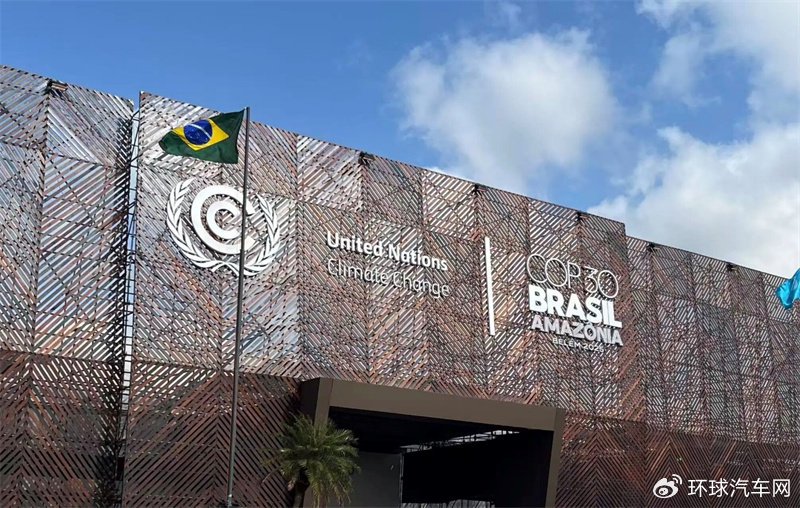
Core Viewpoint - The article highlights the participation of Geely Holding Group in the COP30 conference, showcasing its commitment to carbon neutrality and sustainable practices in the automotive industry [1][9]. Group 1: Participation in COP30 - Geely Holding Group attended the COP30 conference in Belém, Brazil, representing China and demonstrating its carbon neutrality achievements [1]. - The conference involved over 190 countries discussing greenhouse gas reduction and climate change [1]. Group 2: Green Manufacturing Initiatives - Geely has integrated green principles throughout its manufacturing processes, establishing a smart manufacturing system that includes "green factories," "waste-free factories," and "zero-carbon factories" [3]. - The company has created 17 national-level green factories, 11 waste-free factories, and 5 zero-carbon factories, with 6 vehicle bases using 100% renewable electricity [3]. Group 3: Energy Management and Material Recycling - Geely developed the EMS 2.0 energy management platform, utilizing IoT and AI for dynamic energy monitoring across 9 manufacturing bases [5]. - The company promotes the use of recycled materials, achieving a vehicle recyclability rate of over 96.6% and reducing annual solid waste by 18,000 tons through its supplier system [5]. Group 4: Technological Innovations and Collaborations - Geely completed the first phase of the "Geely Constellation" satellite network, providing global IoT communication services [6]. - A joint venture with Renault, named Haosi Power, focuses on efficient power solutions, with an annual production capacity of 5 million powertrains [7]. Group 5: Biodiversity and Sustainability Reporting - Geely released its "Nature and Biodiversity Report," becoming the first Chinese automotive company to publish such a report, reflecting its commitment to biodiversity and sustainable development [9]. - The report aligns with international frameworks, showcasing Geely's transparency and responsibility in addressing environmental impacts [9].


恒逸石化(000703) - 000703恒逸石化投资者关系管理信息20251114
2025-11-14 08:00
Group 1: Company Overview - Hengyi Petrochemical is a leading integrated enterprise in the "refining-chemical-fiber" industry chain, focusing on a strategic positioning of "one drop of oil, two strands of silk" [2] - The company has established a unique dual-main business model of "polyester + nylon" through the Brunei refining project, creating a closed-loop from crude oil processing to fiber products [2][3] Group 2: Financial Performance - In the first three quarters of 2025, the company achieved a revenue of CNY 83.885 billion and a net profit attributable to shareholders of CNY 231 million, with a year-on-year net profit growth of 0.08% [4] - As of September 30, 2025, total assets amounted to CNY 111.51 billion, and net assets attributable to shareholders were CNY 24.458 billion [4] Group 3: Market Insights - Southeast Asia is projected to be the largest net importer of refined oil due to insufficient infrastructure investment, despite having rich oil and gas resources [4][5] - The region's oil demand is expected to rise from 5 million barrels per day to 6.4 million barrels per day by 2035, with Southeast Asia anticipated to account for 25% of global energy demand growth in the next decade [4][6] Group 4: Polyester Industry Outlook - The company maintains a positive long-term outlook for the polyester industry, supported by steady downstream demand and a favorable industry environment [7] - In the first half of 2025, domestic retail sales increased by 5%, with textile-related categories growing by 3.1% [7] - The polyester industry is experiencing a slowdown in new capacity growth, with a significant focus on eliminating outdated capacity and enhancing environmental standards [8][9] Group 5: Project Updates - The Brunei refining project is progressing smoothly, with updates to be provided through company announcements [10] - The Qinzhou project, with a capacity of 1.2 million tons of caprolactam and nylon, has entered the trial production phase, featuring advanced technologies and a comprehensive production setup [12][13] Group 6: Technological Advancements - As of June 30, 2025, the company holds 566 effective patents, including 500 research and development patents, and has participated in the formulation of 58 standards [11] - The company is focusing on high-value differentiated products, with the proportion of differentiated fiber production reaching 27% in the first half of 2025 [11]

2025·“智造上海”|以技改为支点,上海加速撬动制造业高质量转型
Xin Lang Cai Jing· 2025-11-14 03:42
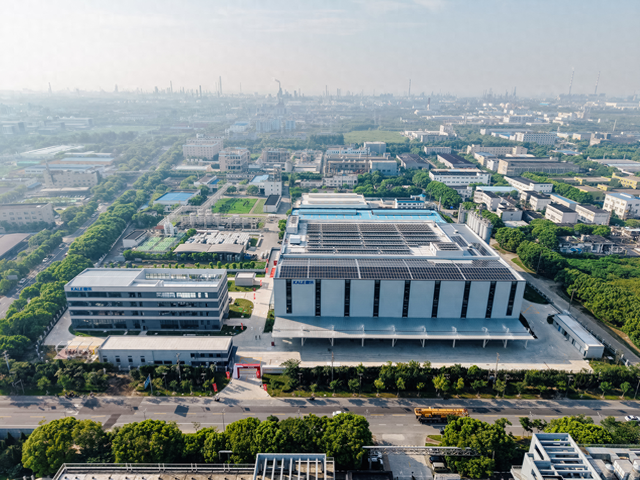
Core Insights - The article emphasizes the significant advancements in Shanghai's manufacturing sector driven by technological upgrades and policy support, highlighting a shift towards high-end, intelligent, and green manufacturing practices [1][17]. Group 1: Policy and Investment - The implementation of policies such as the "Action Plan for Large-Scale Equipment Renewal and Replacement" has accelerated technological upgrades in the manufacturing sector, with a target of over 25% growth in industrial equipment investment by 2027 compared to 2023 [2][17]. - Shanghai's industrial technology renovation investment has seen a year-on-year increase of over 20% in the first nine months of 2025, indicating strong momentum in the manufacturing sector [17]. Group 2: Company Case Studies - Weixing New Material's waterproof brand, Weixing Kale, has established a production base in Shanghai's Jinshan District, focusing on smart and green manufacturing with an annual capacity of 110,000 tons of water-based waterproof materials [4][6]. - Jinshan's location and supportive industrial policies have made it a strategic site for Weixing's production expansion, enhancing its national market reach and operational capacity [6][7]. - Jinshan's Golden Lion Chemical has invested over 65 million yuan in technological upgrades, resulting in a production capacity increase of 39,000 tons and breaking the monopoly of foreign high-end products in the market [9][11]. Group 3: Technological Transformation - The Shanghai International Test Track project exemplifies the collaboration between government, industry, and research, aiming to fill gaps in advanced testing technologies and support the local automotive industry's transition to electric and intelligent vehicles [13][15]. - The project is expected to generate additional revenue of 280 million yuan, profit of 61.5 million yuan, and create over 200 jobs, showcasing the economic impact of technological upgrades [15]. Group 4: Future Outlook - The ongoing technological transformation in Shanghai's manufacturing sector is not merely about equipment updates but represents a broader shift in industrial thinking and development models, injecting new vitality into traditional industries [16][17]. - The successful cases from companies like Weixing Kale and Golden Lion Chemical serve as replicable models for green transformation in traditional industries across the nation [16][17].
2025年中国螺纹加工刀具行业市场政策、产业链图谱、市场规模、竞争格局及发展趋势研判:国产化替代进程加速[图]
Chan Ye Xin Xi Wang· 2025-11-14 01:28
Core Insights - The demand for precision cutting tools, particularly thread processing tools, is significantly increasing in China's manufacturing sector, driven by the rapid development of the automotive and aerospace industries [1][7][11] - The market size of China's thread processing tool industry is projected to reach 3.323 billion yuan in 2024, with a year-on-year growth of 7.40% [1][7] Overview - Thread processing tools are specialized tools used to create specific thread profiles on materials like metal and plastic, categorized into cutting and rolling tools, and further divided into types such as taps, dies, thread mills, and rolling tools [2][3] Market Policies - The Chinese government has implemented several policies to support the development of the cutting tool industry, recognizing its critical role in manufacturing efficiency and product quality [4][5] Industry Chain - The upstream of the thread processing tool industry includes suppliers of raw materials like high-speed steel and carbide, as well as production equipment suppliers. The midstream involves R&D, design, and production, while the downstream encompasses various sectors such as automotive manufacturing, general machinery, and aerospace [6][8] Current Development - The thread processing tool industry is experiencing rapid growth due to the increasing precision requirements in manufacturing, particularly in high-end sectors like automotive and aerospace [1][7] Competitive Landscape - The industry features a mix of international players like Sandvik and Kennametal, and domestic companies such as Zhongtung High-tech and Hengfeng Tools, with domestic firms gaining market share through technological advancements [8][9] Representative Domestic Companies - Zhongtung High-tech focuses on tungsten and carbide products, reporting a revenue of 7.849 billion yuan in the first half of 2025, with cutting tools contributing 1.701 billion yuan [9][10] - Hengfeng Tools specializes in precision cutting tools, achieving a revenue of 0.338 billion yuan in the first half of 2025, with precision tools accounting for 19.80% of total revenue [10][11] Future Trends - The industry is expected to advance towards higher precision levels, with domestic companies aiming to enhance processing technologies and adopt environmentally friendly manufacturing practices [11][12]


连云港高新区再添省级绿色工厂 绿色制造集群持续壮大
Yang Zi Wan Bao Wang· 2025-11-12 14:11
Core Insights - Jiangsu Qitian Tower Manufacturing Co., Ltd. has been recognized as a "Green Factory" in Jiangsu Province for its outstanding performance in green production and low-carbon transformation [1][2] - The company has a production capacity of 100,000 tons annually, specializing in steel structure products for power and communication infrastructure [2] - The development of green factories is a key strategy for the Lianyungang High-tech Zone to promote the transformation and upgrading of the manufacturing industry [3] Group 1 - Jiangsu Qitian Tower has implemented comprehensive green modifications in its production processes, replacing high-energy-consuming equipment with environmentally friendly smart equipment [1][2] - The company has applied for a total of 85 patents, including 18 invention patents, which support its low-carbon transformation efforts [2] - The recognition as a "Green Factory" is a significant acknowledgment of the company's achievements in green manufacturing [2] Group 2 - The Lianyungang High-tech Zone has established a cultivation library for green factories, focusing on energy decarbonization, resource efficiency, and clean production [3] - Future initiatives will include enhancing the green manufacturing cultivation chain and increasing support for green technology and finance [3] - The goal is to build a high-efficiency, clean, low-carbon, and circular green manufacturing system to strengthen the leading role in green manufacturing [3]

严控新上这类印制电路板项目,工信部征求意见
Zhong Guo Zheng Quan Bao· 2025-11-12 04:18
Core Viewpoint - The Ministry of Industry and Information Technology (MIIT) is seeking public opinion on the draft regulations for the printed circuit board (PCB) industry, aiming to enhance industry management and promote high-quality development [1][2]. Group 1: Industry Management and Development - The draft regulations emphasize the need to control new PCB projects that have low technological levels and merely expand capacity [2]. - The regulations encourage the clustering of PCB industries and the establishment of well-equipped industrial parks, promoting technological and management innovation to improve product quality and reduce production costs [2][3]. Group 2: Technological and Environmental Standards - The draft outlines requirements for production scale, process technology, quality management, and environmental protection, focusing on high-end, green, and intelligent development [3]. - It promotes automation upgrades and digitalization in manufacturing to lower operational costs and shorten production cycles [3]. - Companies are encouraged to meet specific clean production standards and develop green supply chains that prioritize resource conservation and environmental friendliness [3]. Group 3: Compliance and Oversight - The MIIT will organize or commission third-party testing agencies to conduct random checks on PCB products from companies listed in the announcement [3]. - Companies that fail to meet standards in consecutive checks will be deemed unable to maintain compliance with the regulations [3].

仪征:从“橡胶灰”到“生态绿”,传统橡胶制品产业破茧成蝶
Yang Zi Wan Bao Wang· 2025-11-12 04:18
Core Insights - The transformation of the traditional rubber industry in Yangzhou is highlighted by the adoption of green manufacturing practices, exemplified by Dongxing Rubber's advanced environmental protection systems and significant sales growth [1][2][3] Group 1: Company Innovations - Dongxing Rubber has implemented a million-dollar waste gas collection system that ensures zero excess emissions while achieving a projected sales revenue of 150 million yuan this year [1] - The company has developed high-temperature conveyor belts that can operate stably in environments ranging from 200℃ to 500℃, addressing previous environmental challenges [1] - The collaboration with East China University of Science and Technology has led to the development of a wet continuous mixing technology that enhances rubber wear resistance by 40% [3] Group 2: Industry Transformation - The local rubber industry, with nearly 30 years of history, is undergoing a transformation through the integration of new technologies and processes, making traditional products suitable for major enterprises [2] - The establishment of a "voluntary + mandatory" dual-track clean production mechanism has resulted in a 100% clean production audit pass rate for key enterprises in the region [2] - A circular economy model is being developed, where rubber scraps are converted into recycled rubber materials, and waste heat steam is shared among enterprises, promoting resource efficiency [2] Group 3: Government and Economic Impact - The collaboration between government and enterprises is crucial in driving the clean production initiatives and technological upgrades in the rubber industry [2] - The shift from "pollute first, control later" to "green is competitiveness" reflects a broader trend towards high-quality economic development in the region [3] - The integration of ecological protection with rubber product manufacturing is positioning the industry for sustainable growth [3]