绿色金融

Search documents
浦发银行亮相2025可持续全球领导者大会以转型金融助推经济绿色增长
Xin Lang Cai Jing· 2025-10-18 03:33
Core Insights - The 2025 Sustainable Global Leaders Conference opened in Shanghai, focusing on "Facing Challenges Together: Global Action, Innovation, and Sustainable Growth" [1] - The conference gathered leaders from politics, business, and academia to discuss sustainable development strategies [1] Strategic Leadership - The concept of transition finance has shifted from an optional choice to a critical requirement for financial institutions, serving as a key driver for supporting the green and low-carbon transformation of the real economy [1] - Shanghai Pudong Development Bank (SPDB) is integrating green and low-carbon development into its strategic considerations, enhancing its green finance management system, and embedding ESG principles into all operational aspects [1] Innovative Practices - SPDB has launched the first "Industrial Low-Carbon Transition Loan" in the industry to address challenges faced by traditional high-carbon industries, providing targeted support for low-carbon transformation projects in sectors like steel, coal power, and construction materials [1] - Specific examples include loans for a steel company to build a high-temperature subcritical gas power generation project, significantly improving self-generation rates and reducing carbon emissions [1] Market Development - SPDB has introduced a series of green transition bond indices to enhance the liquidity of green bond investments, collaborating with the China Bond Valuation Center to release the "China Bond - Green Inclusive Theme Financial Bond Preferred Index" [1] - These innovations provide clear investment targets and performance benchmarks, effectively guiding social capital towards green sectors and contributing to the development of a pricing discovery mechanism in the green finance market [1] Future Outlook - SPDB aims to continue its commitment to sustainable development, deepen innovations in transition finance, and collaborate with various sectors to build a new ecosystem for green finance, contributing to a low-carbon future for the economy and society [1]

全文丨中国太保副总裁苏罡:以可持续发展理念为内核,深度融入上海发展大局
Xin Lang Cai Jing· 2025-10-18 02:51
Core Insights - The 2025 Sustainable Global Leaders Conference was held in Shanghai from October 16 to 18, focusing on sustainable development and collaboration in various sectors [1] - China Pacific Insurance (CPIC) emphasized its commitment to supporting Shanghai's "Five Centers" initiative as a key strategic task, integrating sustainable development into its core operations [3][4] Group 1: Economic Contributions - CPIC reported a year-on-year profit growth of 24.7%, reaching a net profit of 44.96 billion RMB, and insurance premium income in Shanghai close to 32 billion RMB, contributing significantly to the city's economic stability [6][7] - The company aims to inject vitality into Shanghai's international financial center through its high-quality development [6] Group 2: Sustainable Finance Initiatives - CPIC has integrated sustainable finance into its operations, with green insurance coverage exceeding 147 trillion RMB and a green investment scale surpassing 260 billion RMB [7][8] - The company achieved the highest MSCI ESG rating of AAA, becoming the only insurance institution in mainland China to receive this recognition [7] Group 3: Support for Innovation and Technology - CPIC supports over 10,000 technology enterprises, providing insurance solutions that cover clinical trials and product safety, with guarantees exceeding 1 billion RMB for innovative pharmaceutical companies [8] - The cumulative scale of technology investments by CPIC has exceeded 100 billion RMB, focusing on strategic emerging industries [8] Group 4: Maritime and Trade Support - CPIC is the only domestic insurance company capable of covering all types of vessels, providing comprehensive risk management for major maritime projects [9] - The company has provided risk coverage exceeding 3 trillion RMB for overseas business, supporting Chinese enterprises in international trade [9] Group 5: Collaborative Efforts - CPIC plans to deepen collaboration with government and industry partners to develop customized insurance products and enhance funding support for key areas in the "Five Centers" initiative [11]


中国人寿许崇苗:共同助力经济社会全面绿色低碳转型
Zheng Quan Ri Bao Zhi Sheng· 2025-10-18 02:41
Core Insights - China Life Insurance Co., Ltd. emphasizes its dual responsibility of economic and extensive social and environmental obligations, aiming to provide a model for the industry in sustainable development [1] - The company has established a clear ESG strategy with three dimensions and seven stakeholders, transitioning from a systematic approach to deeply integrating ESG into its core operations [1][2] Group 1 - The 2025 Sustainable Global Leaders Conference was held in Shanghai from October 16 to 18, highlighting the importance of sustainable development in the financial sector [1] - China Life's ESG strategy aims to build a world-class, responsible life insurance company, focusing on value co-creation and long-term growth [1] - The company has moved from the "systematic promotion" phase of ESG practices to a new stage of "deep integration" and "value leadership," driving high-quality development [1] Group 2 - China Life has internalized responsible investment as a top-level strategy, becoming the first domestic insurance asset management institution to sign the UN Principles for Responsible Investment [2] - The company has created a clear action roadmap for its strategic goals, increasing investments in green projects, exemplified by its strategic investment in China Huadian New Energy [2] - A closed-loop management system for responsible investment has been established, ensuring that commitments to national development are actionable and sustainable [2]

打通生态价值转化“毛细血管”
Jing Ji Ri Bao· 2025-10-17 22:05
Core Viewpoint - Financial institutions are actively innovating to enhance the conversion of ecological value into economic value, positioning green finance as a key player in this transformation [1][2]. Group 1: Development of Green Finance - China's green finance has evolved into a multi-faceted support system, with a focus on various financial products including green loans, bonds, equity, leasing, trusts, insurance, and funds [1]. - As of mid-2025, the balance of green loans in China reached 42.39 trillion yuan, with an annual growth rate exceeding 20%, and the issuance of green bonds has consistently ranked among the highest globally [1]. Group 2: Innovations in Financial Products - Financial institutions are incorporating environmental benefits into risk assessments and credit decisions, leading to a shift of funds towards low-carbon and environmentally friendly sectors [2]. - Examples include the climate-friendly project scoring system in Huzhou, Zhejiang, which links environmental performance to loan interest rates, and Jiangsu Bank's "Carbon Performance Loan" that prices loans based on carbon emission intensity [2]. Group 3: Challenges in Green Finance - The lack of unified standards for quantifying ecological value is a primary bottleneck for the development of green finance, hindering cross-regional and cross-market cooperation [3]. - Issues such as insufficient ESG governance, "greenwashing" risks, and inadequate environmental information disclosure are affecting market credibility and the sustainable development of green finance [3]. Group 4: Regulatory and Policy Recommendations - There is a need for mandatory environmental information disclosure for listed companies, requiring phased reporting of carbon emissions and environmental risk strategies [4]. - Recommendations include establishing a "green finance special refinancing" tool by the central bank, promoting green bonds, and adjusting risk weights for green loans to encourage long-term asset allocation by financial institutions [4]. - Local governments are encouraged to create "green credit risk compensation funds" to share risks associated with ecological project loans, promoting equitable distribution of benefits in ecological protection [4].
数智驱动+因地制宜 啃下绿色发展“难啃的骨头”
Zhong Guo Jing Ying Bao· 2025-10-17 19:13
Core Viewpoint - The article discusses the evolution and implementation of green finance in China, highlighting the role of Postal Savings Bank in supporting green development and achieving carbon neutrality goals through innovative financial products and risk management strategies [3][4][5]. Group 1: Green Finance Development - The concept of "Green Mountains and Clear Water are Gold and Silver Mountains" has influenced China's financial industry, shifting the focus from merely increasing green finance to addressing complex challenges such as carbon reduction and preventing greenwashing [3][4]. - Postal Savings Bank, with nearly 40,000 outlets, serves as a model for balancing inclusive finance and commercial viability in green finance [3][4]. Group 2: Financial Tools and Innovations - The bank has developed a comprehensive transformation finance service system to support low-carbon transitions across various industries, emphasizing institutional development, product innovation, and regional practices [4][5]. - Innovative financial products include the first "sustainable development-linked + energy supply" debt financing plan and a "carbon reduction support tool + sustainable development link + digital RMB" loan model [5][6]. Group 3: Risk Management in Green Finance - Postal Savings Bank has established a unified ESG risk management system to ensure the integrity and asset quality of its green finance operations, implementing a full-process risk control mechanism [6][7]. - The bank focuses on data governance, process control, and personnel training to mitigate risks associated with greenwashing [6][7]. Group 4: Technological Integration - The integration of financial technology, such as big data and artificial intelligence, is crucial for enhancing the efficiency of green finance services and risk management [7][8]. - The bank has developed a comprehensive environmental information database and an intelligent recognition engine for green projects, significantly improving the accuracy and efficiency of green asset identification [7][8]. Group 5: County-Level Green Finance Initiatives - Postal Savings Bank is actively addressing the unique green finance needs of county-level regions by innovating products and services tailored to local characteristics [9][10]. - Examples include a 150 million yuan financing model for water environment governance and a comprehensive green circular economy system for agricultural industries [9][10]. Group 6: Balancing Inclusivity and Sustainability - The bank aims to balance the inclusivity of county-level green projects with commercial sustainability by refining credit policies and enhancing ESG risk management [11][12]. - Strategies include precise credit resource allocation, strengthening risk monitoring, and utilizing structural monetary policy tools to lower financing costs for green projects [11][12].

潘功胜将出席!人民银行深度参与金融街论坛筹备,还有这些亮点
Bei Jing Shang Bao· 2025-10-17 14:09
Core Viewpoint - The 2025 Financial Street Forum will be co-hosted by multiple government and financial institutions in Beijing from October 27 to 30, focusing on international financial governance and cooperation, as well as financial technology advancements [1][4]. Group 1: Forum Details - The forum will feature key speakers including the Governor of the People's Bank of China, Pan Gongsheng, who will deliver a keynote speech [4]. - The main forum will address "International Financial Governance and Cooperation under Changing Circumstances," with various activities planned to enhance industry communication and policy interpretation [4]. - The People's Bank of China will also host multiple events, including the "Financial Technology Forum" aimed at promoting digital transformation in finance [4]. Group 2: Financial Innovation and Support - The People's Bank of China has implemented policies to support technology-driven enterprises, including a comprehensive evaluation mechanism for financial institutions serving tech innovation [5]. - During the 14th Five-Year Plan period, the average annual growth rate of loans to technology enterprises in Beijing is approximately 15% [5]. - As of September 2025, over 210 billion yuan in technology innovation bonds have been issued in the interbank market in Beijing, ranking among the top in the country [5]. Group 3: Green and Inclusive Finance - By the end of Q2 2025, the balance of green loans in Beijing reached nearly 2.4 trillion yuan [6]. - As of August 2025, inclusive small and micro loans and agricultural loans in Beijing grew by 13.5% and 8.8% year-on-year, respectively [6]. - The cumulative number of digital yuan personal wallets opened in Beijing reached nearly 20 million, with a total transaction amount close to 300 billion yuan [6]. Group 4: Cross-Border Financial Services - The People's Bank of China supports the establishment of integrated currency pools for multinational companies, with 105 companies participating in the pilot program [6]. - Financial management departments are optimizing services for multinational corporations, enhancing Beijing's role as an international consumption center and global tourism destination [6].

央行:“十四五”期间,北京市科技型企业贷款余额年均增速15%
Zhong Guo Jing Ying Bao· 2025-10-17 14:04
Group 1: Central Bank Initiatives - The People's Bank of China (PBOC) will host a forum titled "International Financial Governance and Cooperation under Changing Circumstances" during the 2025 Financial Street Forum, focusing on global financial governance from a central bank perspective [1][6] - The PBOC has introduced a series of policies to support Beijing in becoming a highland for technology finance, with an average annual growth rate of approximately 15% in loans to technology enterprises during the 14th Five-Year Plan period [1][2] Group 2: Financial Services and Support - The PBOC is enhancing financial services for the real economy, with a focus on green finance, inclusive finance, pension finance, and digital finance, contributing to high-quality economic development in Beijing [3] - As of the end of Q2 2025, the balance of green loans in Beijing reached nearly 2.4 trillion yuan, reflecting the city's commitment to becoming a benchmark for international green economy [3] Group 3: Digital Finance and Innovation - Beijing has promoted the application of digital RMB, with nearly 20 million personal wallets opened and a total transaction amount close to 300 billion yuan as of the end of August 2025 [4] - The PBOC supports the establishment of payment service centers for foreign guests at major airports in Beijing, enhancing the city's position as an international consumption center and global tourism destination [5] Group 4: Financial Standards and Forums - During the Financial Street Forum, the PBOC plans to release a series of financial standards and will host multiple events, including a financial technology forum aimed at promoting digital transformation in the financial sector [6]
联储证券:文化共融专业立身 奋力推动“五篇大文章”新时代金融使命
Zhong Zheng Wang· 2025-10-17 10:25
Core Viewpoint - The company emphasizes its commitment to responsible development and aims to enhance its services in various financial sectors, including technology, green finance, inclusive finance, pension finance, and digital finance, to support the construction of a strong financial nation [1] Group 1: Technology Finance - The company recognizes the importance of "patient capital" in supporting long-term investments in hard technology projects, with investment cycles extending to 7-10 years [2] - The company has established a partnership with Star River Dynamics, a commercial rocket developer, providing multi-dimensional support over a 6-year investment period, leading to significant advancements in the domestic commercial aerospace sector [2] - The company is preparing for the issuance of science and technology bonds to enhance financing capabilities for technology enterprises [2] Group 2: Inclusive Finance - The company aims to improve the coverage, accessibility, and satisfaction of inclusive finance services, focusing on small and micro enterprises [3] - In 2024, the company will initiate a wealth management transformation, emphasizing long-term asset protection for clients [3] - The company has developed a multi-layered investor education system, conducting numerous educational activities to enhance financial literacy [3] Group 3: Green Finance - The company is committed to sustainable development and actively engages in green finance, enhancing its role as a financial intermediary in bond financing [5] - The company is increasing its investment in green projects and aims to guide capital towards sustainable development [6] Group 4: Pension Finance - The company is developing a comprehensive pension finance service system to address the challenges of an aging population [7] - It offers tailored pension products and services, focusing on low-risk and stable investment options for elderly clients [7] - The company has organized specialized seminars for elderly clients, promoting wealth management and financial literacy [8] Group 5: Digital Transformation - The company is integrating digital transformation into its strategy to enhance operational efficiency and customer experience [9] - It has established a data service system to support management decisions and optimize operations [9] - The company is leveraging AI technology to streamline business processes, significantly reducing approval times and improving efficiency [10]
郑商所“绿色助企”专项启动:用期货力量为高耗能产业“减负增效”
Xin Lang Qi Huo· 2025-10-17 09:29
Core Insights - The 2025 Sustainable Global Leaders Conference is being held from October 16 to 18 in Shanghai, focusing on green development in various industries [1] Group 1: Green Development Initiatives - Zhengzhou Commodity Exchange (ZCE) is promoting green development in the ferroalloy industry through a special pilot program aimed at enhancing green finance [3] - ZCE has developed and implemented a green product certification standard for ferroalloys in collaboration with the China Ferroalloy Industry Association, which is expected to reduce average energy consumption per ton of product by approximately 15% if all companies achieve certification [3] - The initiative is projected to save around 25 billion kilowatt-hours of electricity annually and save companies about 10 billion yuan [3] Group 2: Industry Context - The ferroalloy industry is a significant sector within China's steel industry, characterized by high energy consumption, with production of silicon iron and manganese silicon consuming approximately 8,000 and 4,000 kilowatt-hours per ton, respectively [3] - The Chinese government is actively promoting energy-saving and carbon reduction efforts in the ferroalloy sector as part of its dual carbon strategy [3] Group 3: Pilot Projects and Impact - Since the launch of the "Green Assistance for Enterprises" initiative, 8 companies with 13 pilot projects have received approval, representing leading firms in the industry [4] - The ZCE's efforts are seen as a means to leverage futures markets to facilitate deep transformations in traditional industries towards low-carbon development [5]

共建美好未来 长城基金亮相2025可持续全球领导者大会
Xin Lang Ji Jin· 2025-10-17 09:03
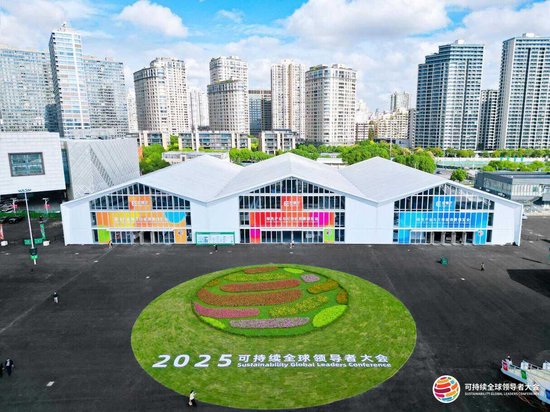
10月16日,2025可持续全球领导者大会在上海黄浦世博园区盛大启幕。作为参展商,长城基金携手长城 证券亮相大会配套的 "绿色产业与可持续消费博览会",集中展示在绿色金融领域的实践成果,彰显资 管机构助力绿色产业升级、推动可持续发展的责任担当。 本届大会由世界绿色设计组织与新浪集团联合主办,获上海市黄浦区人民政府支持,以 "携手应对挑 战:全球行动、创新与可持续增长" 为核心主题,邀请500位中外嘉宾,汇聚全球智慧力量,共探可持 续发展新路径,为全球可持续治理注入澎湃的"中国动能"。作为大会核心配套活动,"绿色产业与可持 续消费博览会" 紧扣 "绿色产业、可持续消费、科技创新" 主线,集中展示全球前沿绿色科技与产业成 果。 活动期间,长城基金重点展示公司在绿色金融领域的业务布局与实践路径,提供公募基金以专业力量赋 能实体经济、共绘绿色金融篇章的落地样本,向外界积极传递企业承诺与行动。 近年来,长城基金始终秉持责任投资理念,积极贯彻落实国家关于绿色金融建设的各项工作部署,围绕 "可持续治理、可持续投资、可持续运营" 三大核心维度,体系化推进绿色金融实践,助力国家绿色金 融发展战略目标落地。 在可持续治理层面,长 ...