
专守防卫

Search documents
高市政府内拥核势力明显抬头
Xin Lang Cai Jing· 2025-12-22 06:58
Core Viewpoint - The discussion around Japan potentially acquiring nuclear weapons has sparked significant debate within the ruling Liberal Democratic Party (LDP) and among opposition parties, highlighting a divide in Japan's security policy and its historical commitment to pacifism [1][2][3]. Group 1: Nuclear Policy Debate - A senior official from the Japanese Prime Minister's office expressed support for Japan acquiring nuclear weapons, which has led to criticism from various political factions, including opposition parties [1][2]. - The LDP's internal factions, particularly the faction led by Sanae Takaichi, are pushing to break Japan's "Three Non-Nuclear Principles," established in 1971, which state that Japan will not possess, manufacture, or introduce nuclear weapons [2][3]. - There is a concern that if Japan were to acquire nuclear weapons, it would have to withdraw from the Treaty on the Non-Proliferation of Nuclear Weapons (NPT) and the International Atomic Energy Agency (IAEA), complicating its energy policies [2][3]. Group 2: Political and Legal Constraints - The internal divisions within the LDP regarding nuclear policy reflect a complex interplay between Japan's post-World War II pacifist legacy and the desire to be seen as a "normal" nation with military capabilities [3]. - Legal restrictions, public anti-nuclear sentiment, and the opposition from various political parties pose significant challenges to any potential shift in Japan's nuclear policy [3][4]. - The recent discussions and actions by LDP leaders indicate a shift in Japan's defense strategy from "defensive" to "proactive deterrence," aiming to strengthen the Japan-U.S. alliance and enhance Japan's deterrent capabilities in the Asia-Pacific region [4]. Group 3: Regional and Global Implications - Any adjustment in Japan's nuclear policy could lead to a regional arms race, disrupt the security balance in the Asia-Pacific, and undermine global non-proliferation efforts [4].
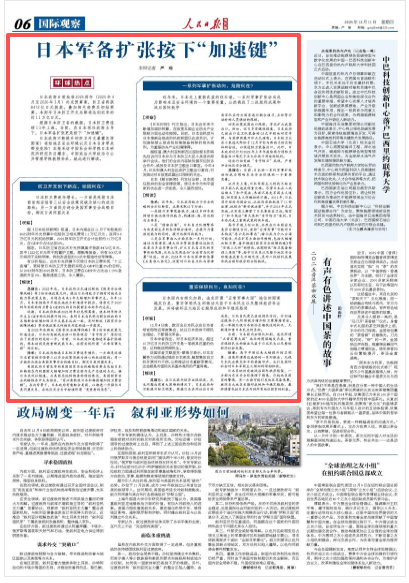
日本军备扩张按下“加速键”(环球热点)
Ren Min Ri Bao Hai Wai Ban· 2025-12-10 23:01
Core Viewpoint - The Japanese government has approved a supplementary budget for the fiscal year 2025, allocating 847.2 billion yen to the Ministry of Defense, leading to a record total defense spending of approximately 11 trillion yen for the current fiscal year, marking the 13th consecutive year of defense budget increases [1][2]. Group 1: Defense Spending Increase - Japan's defense budget is set to reach about 11 trillion yen for the fiscal year 2025, with a GDP ratio of 2% [2]. - The supplementary budget includes 1.1 trillion yen for defense-related expenses, with 847.2 billion yen specifically allocated for military equipment purchases, including 122.2 billion yen for frigates and submarines, and 56.6 billion yen for missiles [2]. - The defense spending as a percentage of GDP is projected to rise from 1.19% in fiscal year 2023 to 2% by fiscal year 2025, indicating a rapid increase [2]. Group 2: Strategic Motivations - The increase in defense spending is part of a broader strategy initiated by former Prime Minister Shinzo Abe, aimed at breaking through previous security policies and aligning with U.S. military objectives to strengthen the Japan-U.S. alliance [2][3]. - The Japanese government aims to achieve a "normal military power" status, moving away from the post-World War II principle of "defensive defense" [3][9]. Group 3: Regional Security Implications - Japan's military expansion poses significant risks to regional security, challenging the outcomes of World War II and the post-war international order [5][9]. - The government's actions, including the potential for arms exports and participation in international military exercises, indicate a shift towards a more aggressive military posture [7][8]. Group 4: Domestic Concerns - The rising defense budget has sparked public protests, with citizens expressing concerns over the neglect of social welfare in favor of military spending [10][11]. - The government’s plan to finance increased defense spending through personal income tax hikes raises concerns about the economic burden on the Japanese populace amid ongoing economic challenges [12].

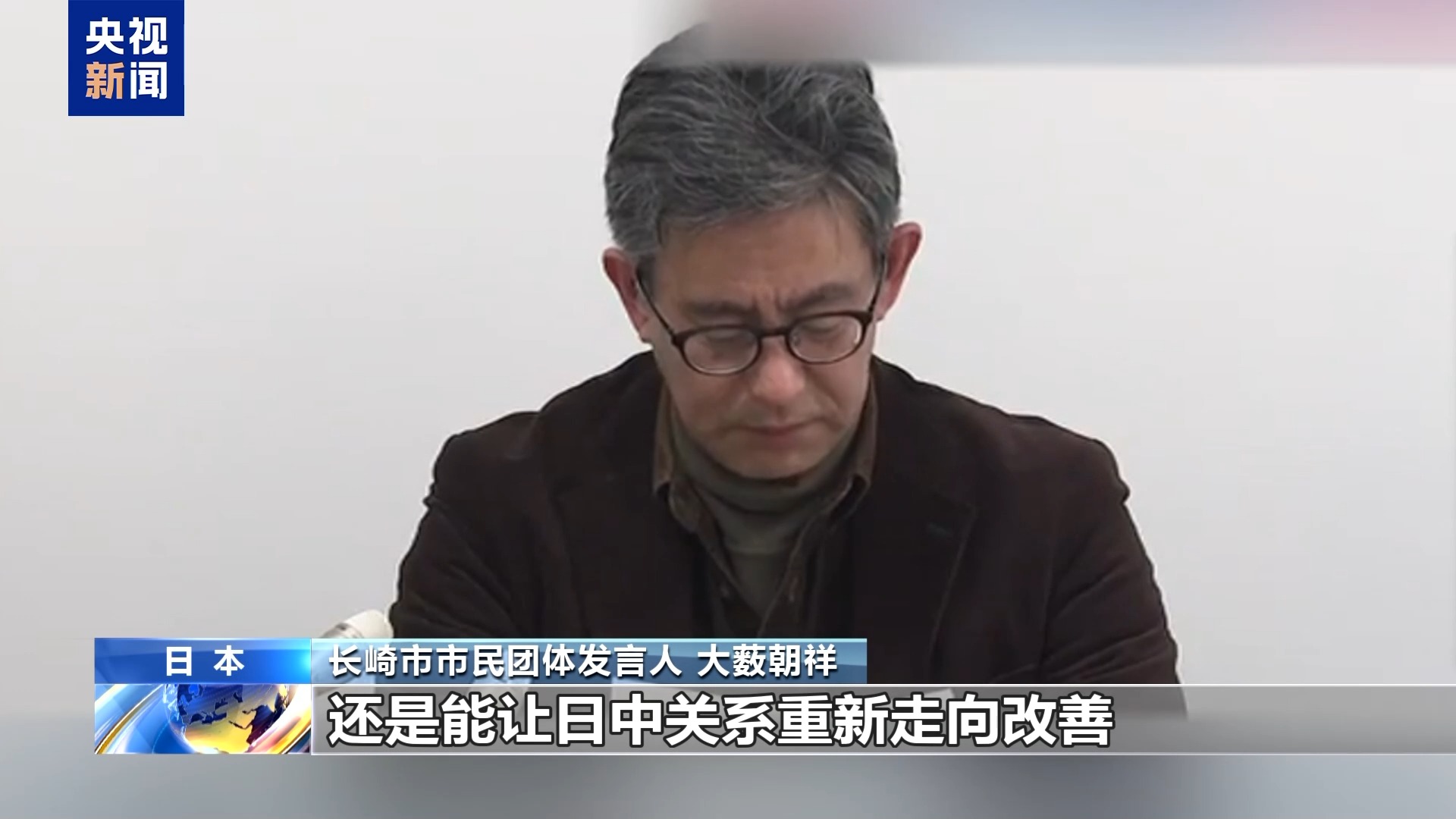
视频丨日本长崎市民团体要求高市撤回涉台错误言论
Yang Shi Xin Wen Ke Hu Duan· 2025-12-09 23:48
Group 1 - Japanese Prime Minister Sanna Takashi's controversial remarks regarding Taiwan and the government's accelerated military expansion have faced strong criticism domestically [1][3] - Citizen groups in Nagasaki and Kumamoto have organized protests against Takashi's statements and the deployment of long-range missiles, emphasizing the need to uphold Japan's "Three Non-Nuclear Principles" [5][6] - The planned deployment of upgraded Type 12 surface-to-ship missiles in Kumamoto, with a range extended to approximately 1,000 kilometers, has sparked significant public opposition [8][12] Group 2 - The first ground troops are set to be stationed at the Kumamoto Ground Self-Defense Force base by the end of March 2026, with the upgraded Type 12 missiles expected to be operational between April 2027 and March 2028 [8][12] - The deployment of these missiles is viewed as a shift away from Japan's pacifist constitution, raising concerns about regional security dynamics [12]
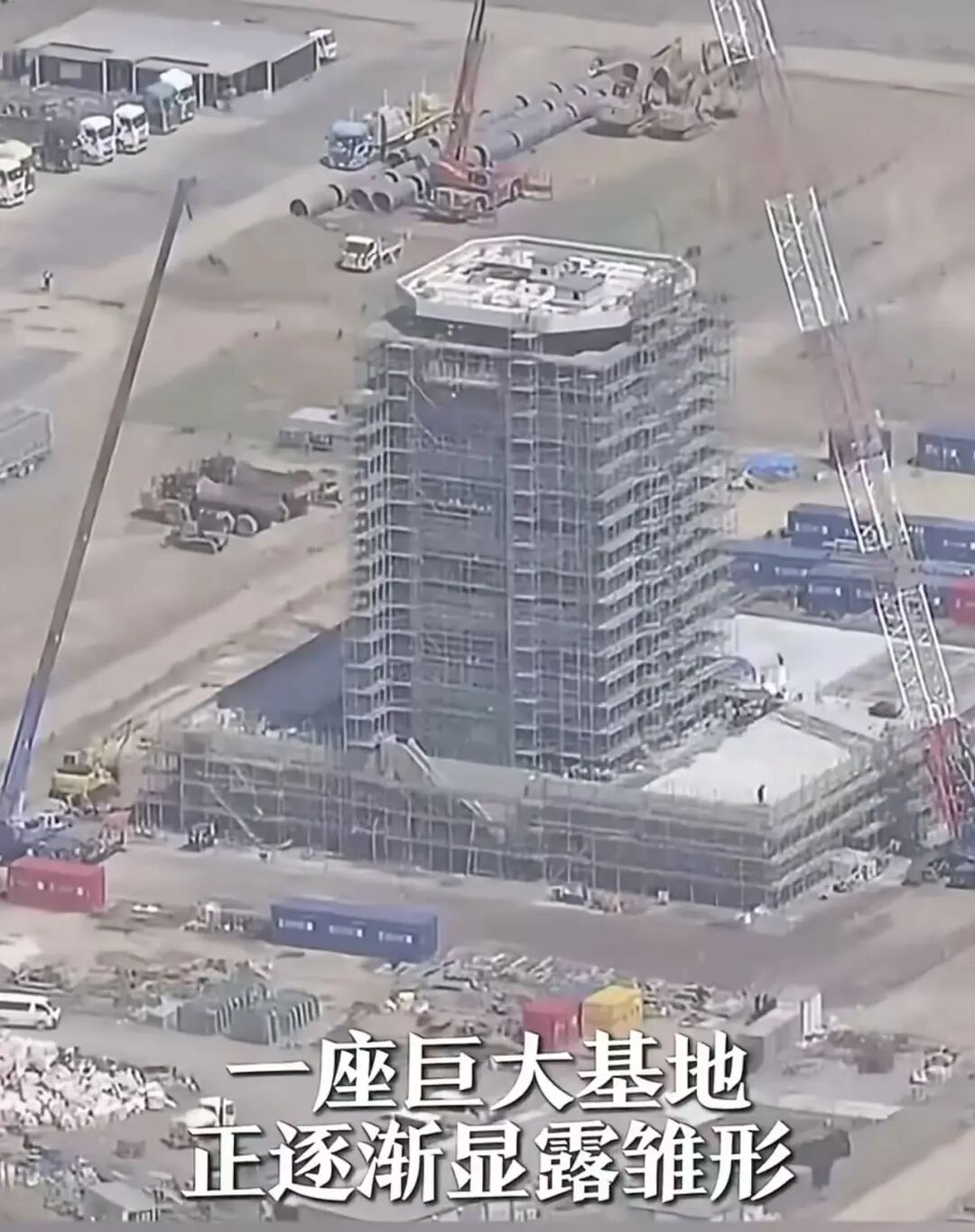
日本被曝昼夜赶建军事基地!现场曝光
Mei Ri Jing Ji Xin Wen· 2025-12-03 07:17
Core Points - Japan is enhancing its military capabilities, particularly in the southwestern islands, with a focus on Amami Oshima and Mako Island, which are strategically important [1] - A new runway of approximately 2000 meters is planned on Mako Island for U.S. aircraft carrier operations, with construction ongoing to meet a completion deadline of March 2030 [4] - Japan's defense budget for the fiscal year 2025 is set to reach approximately 11 trillion yen (about 498.2 billion RMB), marking a significant increase and a departure from the historical limit of defense spending being under 1% of GDP [8] Military Developments - Japan's military preparations are becoming more practical and detailed, indicating a shift towards a more proactive defense strategy in response to potential regional conflicts, particularly concerning Taiwan [6] - The Japanese government is investing in various defense-related initiatives, including the development of "universal plasma" and legal frameworks for wartime scenarios, reflecting a comprehensive approach to national security [6] Budgetary Changes - The approved supplementary budget for defense in 2025 includes 1.1 trillion yen (approximately 49.8 billion RMB), contributing to a total defense expenditure that will account for about 2% of Japan's GDP [8] - Japan's defense spending has seen a continuous increase for 13 consecutive years, indicating a significant shift in defense policy since 2012 [8] International Reactions - China's Foreign Ministry has expressed concerns over Japan's military expansion and changes to its defense policies, warning against a return to militarism and the potential disruption of post-war international order [10]
日本战争准备曝光
中国基金报· 2025-12-03 01:36
Core Viewpoint - Japan is significantly increasing its military preparedness, reflecting a shift towards a more proactive and practical defense strategy, particularly in response to potential conflicts in the Taiwan Strait [1][4]. Group 1: Military Spending and Policy Changes - Japan's defense budget has been on the rise for 13 consecutive years, with a notable increase from fiscal year 2012 to fiscal year 2025 [3]. - The Japanese cabinet approved a supplementary budget for fiscal year 2025 that includes defense-related expenses of 1.1 trillion yen (approximately 49.8 billion yuan), bringing the total defense spending for that year to about 11 trillion yen (approximately 498.2 billion yuan), which constitutes 2% of GDP [4]. - The new "security three documents" emphasize a fundamental strengthening of defense capabilities and the development of "counter-strike capabilities," which undermines Japan's principle of "defensive defense" [4]. Group 2: International Reactions and Concerns - China's Ministry of Foreign Affairs has expressed strong opposition to Japan's militaristic tendencies, viewing them as a revival of militarism [5][6]. - The Chinese government has criticized Japan's recent military policy changes, including the loosening of weapon export restrictions and the pursuit of collective self-defense, as violations of post-war international agreements [6].
戳穿“专守防卫”谎言,划下主权问题红线!再致函古特雷斯,中方批日无理狡辩
Huan Qiu Shi Bao· 2025-12-02 23:02
【环球时报综合报道】12月1日,中国常驻联合国代表傅聪再次致函联合国秘书长古特雷斯,针对日本常驻联合国代表山崎和之11月24日给古特雷斯致函中 有关无理狡辩言论予以严正批驳。中国外交部发言人林剑在2日的例行记者会上表示,日本首相高市早苗涉台错误言论公然挑战二战胜利成果和战后国际秩 序,严重违反《联合国宪章》宗旨和原则。中方向联合国秘书长致函阐明严正立场,完全正当必要。日方信函充斥错误观点和虚伪谎言。11月21日,傅聪就 曾致函联合国秘书长古特雷斯,就高市早苗涉华错误言行阐明中国政府立场。在高市早苗未撤回错误言论、中日关系恶化的背景下,一些日本团体希望能够 加强交流、缓和紧张局势。日本共同社2日披露,日本经济团体联合会、日中友好议员联盟最近先后向中方表达了访华的意愿。接受《环球时报》记者采访 的专家表示,这反映出日本国内一些理性力量的担忧,许多日本人依旧希望稳定日中关系。 外交学院教授周永生2日接受《环球时报》记者采访时表示,中国海警舰艇对非法进入钓鱼岛领海的日本渔船进行警告驱离,是合法合理的常规执法行动。 这同时表明,中国一直对钓鱼岛海域实施有效管控。 日本两个团体希望近期访华 在1日向古特雷斯的致函中,傅聪 ...
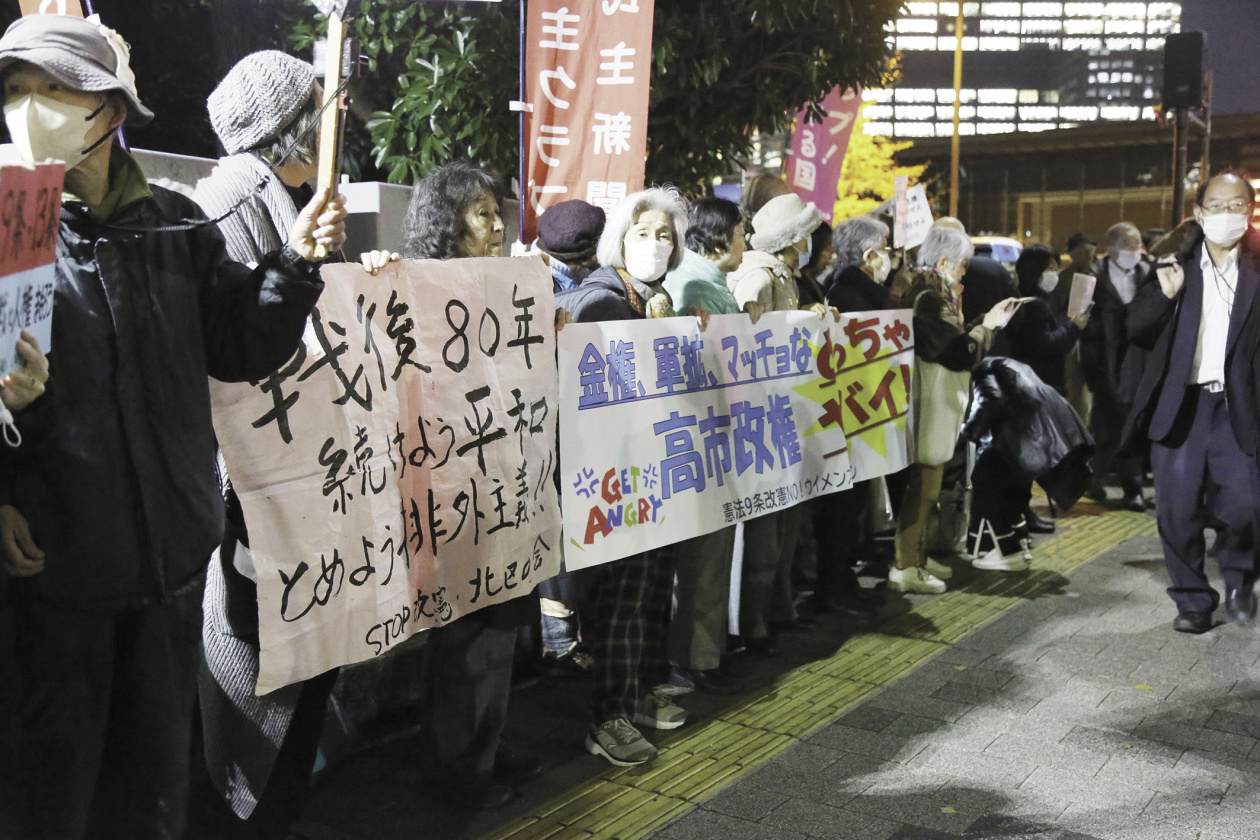
日本军事准备细节曝光,正研发"万能型血浆"
券商中国· 2025-12-02 13:14
Group 1 - Japan is investing part of its defense budget into "security resilience" initiatives, including the development of "universal plasma" and legal frameworks for wartime scenarios [1] - Japan's military preparations are becoming more practical and detailed, indicating a serious consideration of potential conflicts, particularly regarding the Taiwan Strait [1] - The post-World War II constitution of Japan, particularly Article 9, emphasizes a commitment to peace and the renunciation of war, which has historically shaped its defense policy [1] Group 2 - Japan's security policy has undergone a fundamental shift, moving away from its "exclusive defense" principle, which has been gradually eroded [2] - The Japanese defense budget has seen a continuous increase for thirteen consecutive years, reflecting a trend towards military expansion [2] - Recent changes in Japan's defense laws have allowed for collective self-defense and relaxed restrictions on arms exports, including lethal weapons [2]

中方致函古特雷斯
证券时报· 2025-12-02 04:58
Group 1 - The article discusses China's firm rebuttal to Japan's claims regarding Taiwan, emphasizing that Japan has not provided a clear stance on its position despite multiple inquiries from China [2][3] - It highlights that historical international legal documents, such as the Cairo Declaration and the Potsdam Proclamation, affirm China's sovereignty over Taiwan and Japan's obligation to return territories taken during wartime [2] - The article criticizes Japan's defense strategy, stating that recent comments by Japanese officials contradict their claimed passive defense posture and suggest a potential military threat to China [3] Group 2 - It points out Japan's increasing military budget, which has seen thirteen consecutive years of growth, and the modification of its post-war defense policies, indicating a shift away from its historical stance on military engagement [3] - The article warns that Japan's actions, framed as self-defense, echo historical militaristic tendencies and could pose a threat to regional stability [3] - It calls for international vigilance regarding Japan's military ambitions and the implications of its recent rhetoric on global peace and security [3]

日方早已突破“专守防卫”,正在重新武装!中方再次致函联合国,严正批驳日方无理狡辩倒打一耙
Mei Ri Jing Ji Xin Wen· 2025-12-02 01:38
Core Viewpoint - The Chinese government firmly rebuts the recent statements made by Japan's permanent representative to the UN, emphasizing its stance on Taiwan and Japan's historical commitments regarding territorial integrity [1][4][6]. Group 1: China's Position on Taiwan - China questions Japan's so-called "consistent position" on Taiwan, demanding clarity and a direct response from Japan regarding its stance [4][5]. - Historical documents such as the Cairo Declaration, Potsdam Declaration, and Japan's surrender documents affirm China's sovereignty over Taiwan, which Japan is obligated to recognize and respect [5][6]. Group 2: Japan's Defense Strategy - Japan's representative claims adherence to a "passive defense strategy," yet recent statements by Japanese officials suggest a potential military response concerning Taiwan, contradicting their stated defense posture [5][7]. - Japan's defense budget has seen continuous increases, indicating a shift away from its post-war defense principles, raising concerns about a resurgence of militarism [7][8]. Group 3: Bilateral Relations and Trust - The remarks made by Japanese officials have severely damaged mutual trust and the political foundation of Sino-Japanese relations, necessitating Japan to reaffirm its commitment to the One China principle [8]. - Japan is urged to retract its erroneous statements and align its actions with its commitments to China to avoid further consequences [8].
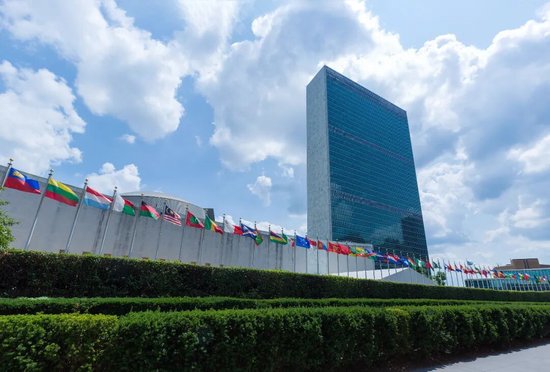
防卫费达到11万亿日元,警惕日本军备扩张大幅提速
Xin Jing Bao· 2025-12-01 05:05
Core Points - The Japanese government has approved a supplementary budget for the fiscal year 2025, increasing defense spending to 2% of GDP, raising concerns across various sectors [1][6] - The total defense-related expenses for fiscal year 2025 will reach approximately 11 trillion yen (about 498.3 billion RMB), including an initial budget of over 9.9 trillion yen [1][4] Group 1: Defense Budget Details - The supplementary budget allocates 847.2 billion yen for the purchase of naval vessels, including two "Maya" class destroyers and four "Taigei" class submarines [2] - The Japanese Maritime Self-Defense Force plans to construct 12 "Maya" class destroyers from 2024 to 2028, with upgrades for two existing destroyers funded separately [2] - The total defense-related budget, including missile procurement and other security-related expenditures, exceeds 1 trillion yen [3] Group 2: Historical Context and Policy Changes - Japan's post-World War II defense policy has historically adhered to a "self-defense" principle, with a self-imposed limit of 1% of GNP for defense spending established in 1976 [5] - The limit was theoretically lifted in 1987 but remained a practical constraint for two decades due to domestic opposition [5] - The U.S. has pressured Japan to increase military spending to share the burden of global military responsibilities, aligning with the ambitions of Japan's hawkish political factions [5][6] Group 3: Recent Developments and Public Sentiment - The current government aims to achieve a defense spending ratio of over 2% by fiscal year 2027, a target accelerated to be met within the current fiscal year [8] - The rapid increase in defense spending has been influenced by the Russia-Ukraine conflict and the assassination of former Prime Minister Shinzo Abe, which has shifted public sentiment towards supporting military expansion [7][8] - Critics argue that the rising defense budget, exceeding 10 trillion yen, poses a heavy burden on the economy and neglects public welfare [9]