
中国—中亚机制

Search documents
王毅:日本现职领导人竟然公开发出试图武力介入台湾问题的错误信号,讲了不该讲的话,越了不应碰的红线,中方必须予以坚决回击!
中国基金报· 2025-11-23 07:44
来源:外交部网站 11月23日,外交部网站 发布《 王毅在结束对中亚三国访问后接受中国媒体采访》,全文如下: 2025年11月19日至22日,中共中央政治局委员、外交部长王毅应邀赴吉尔吉斯斯坦、乌兹别克 斯坦、塔吉克斯坦举行外长战略对话,并同三国领导人友好交流。访问结束后,王毅接受中国媒 体采访。 王毅:5年前,中国同中亚五国着眼合作需要,顺应时代潮流,共同创立了中国—中亚机制。 2023年,中国—中亚机制升级至元首层级后,先后在中国西安和哈萨克斯坦阿斯塔纳两度成功 举行峰会,机制建设的四梁八柱迅速成型,13个部级合作平台有效运作,机制常设秘书处全面运 营,正在呈现出元首引领、政府推动、各界参与、多轨并行、全面推进的立体多元合作格局。 中国同中亚贸易水平不断攀升,已成为中亚最大贸易伙伴。今年前三季度,中国同中亚五国双边 贸易额接近800亿美元、同比增长15.6%,全年有望突破1000亿美元大关。双方贸易结构正在不 断优化,越来越多的中亚优质产品进入中国市场。 中国同中亚投资规模也在持续扩大。中国成为中亚国家主要投资来源国。截至目前,中国对中亚 国家投资累计超过500亿美元,农业、能源、基础设施等传统领域持续巩 ...


睦邻友好之道 发展共赢之路(国际论道)
Ren Min Ri Bao Hai Wai Ban· 2025-06-20 21:21
Core Points - The second China-Central Asia Summit held in Astana, Kazakhstan, is expected to deepen cooperation between China and Central Asian countries, enhancing their relationships and creating broader opportunities [2][3] - The summit is recognized as one of the most significant diplomatic events for Central Asian countries this year, reflecting their desire to strengthen ties with China [2] - China's approach emphasizes peaceful cooperation, which has garnered trust from Central Asian nations, facilitating the implementation of the Belt and Road Initiative [2][4] Mechanism Improvement and Cooperation Platforms - The China-Central Asia mechanism has become a successful model for regional cooperation, with ongoing improvements and expanding coverage across various sectors [3][4] - Since the first summit in 2023, practical cooperation between Kazakhstan and China has accelerated, with a focus on stability and sustainable development [3] - The mechanism's influence is growing, covering key areas such as trade, security, culture, and sustainable development, demonstrating its systematic and effective construction [3][4] Mutual Cooperation and Development - China has proposed four key principles for building a stable, prosperous, harmonious, and interconnected Central Asia, which have received widespread recognition [4] - The cooperation between China and Central Asian countries has yielded tangible results in agriculture, infrastructure, security, and cultural exchanges [4][9] - The China-Central Asia mechanism is evolving from a state-level framework to grassroots community ties, enhancing cooperation in education, poverty alleviation, healthcare, and culture [7][8] Economic and Trade Growth - The bilateral trade volume between China and Central Asia has been growing rapidly, with a reported trade value of $94.8 billion in 2024, making China the primary trading partner for the region [9][10] - Kazakhstan's agricultural exports to China have surpassed $1 billion for the first time, indicating deepening cooperation across various sectors [9][10] - Infrastructure projects like the China-Kyrgyzstan-Uzbekistan railway and the Aktao port container hub are significantly improving regional logistics and creating numerous job opportunities [10][11] Emerging Fields and Future Prospects - The summit is expected to stimulate further collaboration in emerging sectors such as digital economy and green energy, enhancing regional connectivity [11] - The joint development of the "Middle Corridor" is anticipated to elevate the level of interconnectivity in the region, reflecting the high-quality development of the Belt and Road Initiative [11]
被打疼了?美企誓言一年逆袭?中哈连签10份协议,拿下关键订单
Sou Hu Cai Jing· 2025-06-20 13:03
Core Viewpoint - The article discusses the challenges the U.S. faces in the rare earth sector and highlights China's dominant position in the global rare earth market, particularly following recent agreements with Kazakhstan that enhance China's strategic resources and geopolitical influence [1][3][8]. Rare Earth Industry - China holds approximately 70% of global rare earth mining, 85% of refining capacity, and about 90% of rare earth metal alloys and magnets production [1] - China's recycling technology for rare earths boasts a 95% recovery rate from used permanent magnets, establishing a comprehensive and efficient industrial chain [1] - The U.S. lacks the advanced separation and purification technology developed over 30 years in China, which is crucial for converting low-concentration rare earth ores into high-purity materials [3] U.S. Efforts and Challenges - The U.S. Department of Energy funded 15 domestic rare earth projects last year, but none have achieved commercial production yet [3] - American companies attempting to rebuild domestic smelting capabilities find themselves increasingly reliant on Chinese imports for critical production equipment [3] China-Kazakhstan Cooperation - In June, China and Kazakhstan signed 10 agreements covering energy, transportation, and technology, enhancing bilateral cooperation [3][4] - Key energy projects include the "North-1" block development agreement and the expansion of the Atyrau-Kenkiyak oil and gas pipeline, reinforcing China's energy ties in Central Asia [3] - Renewable energy projects totaling 1,700 MW are being developed, contributing to Kazakhstan's goal of achieving a 15% share of green energy by 2030 [3] Infrastructure and Trade Developments - Huawei is collaborating with Kazakhstan to build a digital center, improving cross-border e-commerce and logistics [4] - The trade volume between China and Kazakhstan is projected to reach $43.8 billion in 2024, with significant increases in Kazakhstan's exports of wheat, meat, and honey to China [6] - Chinese companies like BYD and Chery are localizing production in Kazakhstan, creating 3,600 jobs and fostering a "market for industry" exchange [6] Geopolitical Implications - The cooperation between China and Kazakhstan strengthens China's relationships with Central Asian countries and supports Kazakhstan's interest in joining the BRICS mechanism [7] - The agreements signed during the recent summit cover over 10 areas, embedding China-Kazakhstan cooperation within multilateral frameworks like the Shanghai Cooperation Organization [7] Economic Impact - The partnership drives economic development in Kazakhstan, leveraging Chinese investment and technology for energy transition and infrastructure upgrades [8] - China secures energy resource supply and expands its market presence through this cooperation, enhancing its position in global supply chains [8]
兰州大学中亚研究所所长杨恕:深化中国—中亚合作是新形势下的战略选择
2 1 Shi Ji Jing Ji Bao Dao· 2025-06-20 11:18
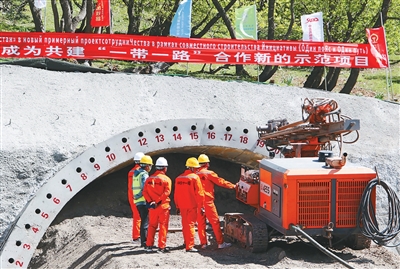
Core Viewpoint - The second China-Central Asia Summit held in Astana on June 17, 2025, marked a significant step in enhancing cooperation between China and the five Central Asian countries, focusing on building a "China-Central Asia community of shared destiny" and promoting various collaborative initiatives [1][2]. Group 1: Summit Outcomes - The summit resulted in the signing of the "Astana Declaration" and a permanent friendly cooperation treaty among China and the five Central Asian countries [1]. - A total of 12 cooperation documents were signed, covering areas such as the Belt and Road Initiative, trade facilitation, green minerals, and customs cooperation [1]. - The outcomes included a comprehensive list of 110 achievements across six priority cooperation areas, including trade, industrial investment, and agricultural modernization [1]. Group 2: Strategic Significance - The establishment of the China-Central Asia cooperation mechanism is seen as strategically significant, providing a platform for enhanced political trust and practical cooperation in various fields [2][5]. - The geographical advantages of Central Asia have become increasingly prominent, positioning the region as a crucial corridor for the China-Europe Railway Express and a source of key resources for China's green energy transition [2][5]. Group 3: Trade Dynamics - Trade between China and the five Central Asian countries has expanded significantly, with imports and exports growing from 3120.4 billion yuan in 2013 to 6741.5 billion yuan in 2024, marking a 116% increase [3][4]. - In the first five months of 2024, trade reached a historical high of 2864.2 billion yuan, with exports growing by 5.6% and imports by 21% [4]. - The import of agricultural products from Central Asia has surged, with notable increases in specific products such as flaxseed from Kazakhstan and raisins from Uzbekistan [4]. Group 4: Infrastructure Projects - The China-Kyrgyzstan-Uzbekistan railway project, which has recently entered the construction phase, is expected to significantly improve transportation conditions between China's southern regions and Central Asia [3][8]. - This railway will facilitate a new trade route to the Indian Ocean, enhancing the strategic autonomy and trade convenience for Central Asian countries [3][8]. - The project is anticipated to have a profound impact on regional connectivity and economic development, benefiting not only Central Asia but also Afghanistan [8].
第一观察 | 丝路的回响 时代的创举
Xin Hua She· 2025-06-19 14:49
Core Points - The article emphasizes the significance of the China-Central Asia cooperation mechanism, which has evolved rapidly since its inception, becoming a vital platform for dialogue and regional development [1][2][3] - The second China-Central Asia Summit highlighted the "China-Central Asia Spirit," focusing on mutual respect, trust, benefit, and assistance, which is seen as a guiding principle for future collaboration [3][4] - The signing of a permanent friendly cooperation treaty by the leaders of six countries marks a historic achievement in regional diplomacy and cooperation [4][5] Group 1 - The China-Central Asia mechanism has gained strategic importance and is recognized as a key platform for promoting dialogue and economic development among Central Asian countries [2][3] - The successful implementation of projects like the Astana light rail demonstrates the tangible benefits of China-Central Asia cooperation for local communities [3] - The summit resulted in the signing of a comprehensive cooperation document for the Belt and Road Initiative, enhancing Central Asia's role as a high-quality demonstration area for this initiative [3] Group 2 - The article underscores the importance of breaking away from zero-sum thinking, advocating for a collaborative approach to modernization that benefits all participating countries [4] - The commitment to unity and cooperation among the six countries aims to transform the heart of the Eurasian continent into a peaceful and prosperous region [5] - The ongoing collaboration is expected to yield more success stories, contributing to the construction of a shared future for China and Central Asia, as well as humanity as a whole [5]
中国—中亚机制为区域多边合作注入动力(观象台)
Ren Min Ri Bao· 2025-06-18 20:24
Group 1 - Since the establishment of diplomatic relations in 1992, trade between China and Central Asian countries, including Uzbekistan, has increased over 200 times, making China the most important trade and investment partner for the five Central Asian countries [1] - Uzbekistan has been actively strengthening its relationship with China, with frequent high-level visits and meetings between the two countries' leaders, leading to the establishment of a comprehensive strategic partnership in 2016 and an upgrade to a new era all-weather comprehensive strategic partnership in 2024 [1] - The bilateral trade volume between China and Uzbekistan is expected to exceed $13 billion in 2024, with plans to increase this figure to $20 billion in the coming years, and China's cumulative investment in Uzbekistan is projected to exceed $21 billion by 2024 [1] Group 2 - The China-Central Asia mechanism has been established to facilitate institutionalized cooperation, with regular summits and coordination mechanisms being set up to enhance collaboration [2] - China is a key driver of the China-Central Asia mechanism, being the world's second-largest economy and maintaining its position as the largest goods trader for eight consecutive years, with a projected total trade volume exceeding $6 trillion in 2024 [2] - The improvement of transportation and logistics infrastructure in the Eurasian continent is expected to boost the prospects of railway freight connecting China and Europe through Central Asia, with predictions of continued growth in railway logistics [2] Group 3 - The China-Kyrgyzstan-Uzbekistan railway project, initiated last year, is expected to enhance logistics potential in Central Asia and become a key transportation artery for the China-Central Asia-West Asia economic corridor, further expanding trade and investment between China and Central Asian countries [3] - In 2022, trade between China and Central Asian countries reached $94.8 billion, with expectations to surpass $100 billion in the coming years, and direct investment from China in the region exceeding $15 billion in 2023 [3] - The development plans of Central Asian countries in transportation infrastructure, industrialization, digitalization, and climate adaptation indicate a sustained increase in the scale of equipment imports from China and investment inflows, driving further development of the China-Central Asia mechanism [3]
携手前行 共谋发展
Jing Ji Ri Bao· 2025-06-17 22:13
Group 1 - The second China-Central Asia Summit held in Kazakhstan signifies the importance of deepening friendly relations and cooperation among the six countries [1] - The summit aims to enhance mutual support and cooperation, marking a new chapter in the shared destiny of the Eurasian continent [1] - China has established a comprehensive strategic partnership with Central Asian countries, demonstrating high political mutual trust and a commitment to a new type of international relations [1] Group 2 - Practical cooperation between China and Central Asian countries is injecting strong momentum into regional development, with various projects enhancing local industries and clean energy utilization [2] - In 2024, trade between China and Central Asian countries is projected to reach $94.8 billion, reflecting a 6% year-on-year growth, solidifying China's position as the largest trading partner in the region [2] - The China-Central Asia Economic Corridor is recognized as a core engine for regional growth by international institutions [2] Group 3 - China and the five Central Asian countries share similar historical experiences and development aspirations, positioning them as partners on the path to modernization [3] - Central Asian countries are aligning their national development strategies with the Belt and Road Initiative, enhancing collaborative effects and deepening cooperation [3] - In the face of rising unilateralism and protectionism, China and Central Asian countries are committed to upholding multilateralism and maintaining an open global economic system [3] Group 4 - The summit will further solidify mutual trust, gather cooperation consensus, and deepen strategic alignment, contributing positively to the China-Central Asia community of shared destiny [4]
相向而行 共谋发展
Ren Min Ri Bao· 2025-06-15 21:51
Core Points - The second China-Central Asia Summit will be held in Astana, Kazakhstan, from June 16 to 18, 2025, marking the first time the summit takes place in a Central Asian country [1] - The China-Central Asia mechanism has evolved significantly over the past five years, providing a platform for comprehensive cooperation among the six countries [2][6] - The mechanism aims to enhance mutual cooperation and support regional stability, focusing on economic recovery and high-quality Belt and Road Initiative construction [2][4] Group 1: Mechanism Development - The China-Central Asia mechanism has established various bilateral and multilateral cooperation frameworks, including regular foreign ministers' meetings and a dedicated secretariat [3] - The mechanism encompasses over ten key areas such as diplomacy, trade, agriculture, and education, creating a robust structure for cooperation [3] - The mechanism is characterized by transparency, mutual benefit, equality, and practicality, aiming to bring more benefits to the people of the six countries [3] Group 2: Strategic Alignment - There is a strong alignment between the Belt and Road Initiative and the national development strategies of Central Asian countries, facilitating comprehensive strategic partnerships [4] - The cooperation includes signing documents for Belt and Road cooperation and promoting a community with a shared future [4] Group 3: Project Outcomes - Significant projects have been initiated, including the opening of the China-Europe cross-Caspian express service and the launch of the China-Kyrgyzstan-Uzbekistan railway [5] - By 2024, bilateral trade between China and Central Asia is projected to reach a record $94.8 billion [5] Group 4: Future Prospects - The China-Central Asia mechanism is seen as a model for new international relations, emphasizing mutual respect, friendship, and win-win cooperation [6][7] - The mechanism's success is attributed to the commitment to openness, inclusivity, and collaborative development, which are essential for the future of the region and beyond [8]