
以存代算

Search documents
未知机构:美股存储继续强势创新高以存代算大趋势0121推理时代存储是核-20260121
未知机构· 2026-01-21 02:00
Summary of Key Points from Conference Call Industry Overview - The storage sector in the US continues to show strong performance, reaching new highs, indicating a significant trend towards storage as a core component in the era of inference [1] - The competition for storage capabilities is intensifying, with a clear focus on the importance of storage in determining efficiency and outcomes in commercial applications [1] Core Insights and Arguments - The growth of contextual data at the inference end is linear, necessitating stronger contextual memory as the commercial phase of agents progresses [1] - Current GPU and HBM configurations have limitations in task processing and efficiency, making structured memory and memory pooling (CXL) essential choices [1] - The demand for AI is driving the need for enhanced computing power, long-term memory, and robust inference capabilities [1] Key Companies Mentioned - Original Manufacturers: Micron, SK Hynix, Samsung, and two unnamed storage companies [2] - Module Manufacturers: SanDisk, Shannon Microelectronics, Kape Cloud, and Demingli [2] - Chip Manufacturers: Dico Technology (Q4 profits exceeded expectations, CXL) [2] - CPU Manufacturers: Haiguang Information, Hesheng New Materials [2] - Equipment & Packaging Materials: Yake Technology, Baiwei Storage, Changdian Technology, Huayuan Holdings [2] Additional Important Information - The emphasis on the necessity of structured memory and memory pooling highlights a shift in technological requirements within the industry, which may present new investment opportunities [1][2] - The mention of specific companies and their performance metrics indicates potential areas for further research and investment analysis [2]
未知机构:美股存储继续强势创新高以存代算大趋势0121推理时代存储是-20260121
未知机构· 2026-01-21 01:55
Summary of Key Points from the Conference Call Industry Overview - The storage industry in the US continues to reach new highs, indicating a strong trend towards storage as a critical component in the AI-driven era [1] - The era of "storage as computation" is emerging, highlighting the importance of storage in determining efficiency and outcomes in AI applications [1] Core Insights - The demand for storage is driven by the increasing volume of contextual data in AI inference, necessitating stronger memory capabilities [1] - The growth of KV cache is directly correlated with the linear increase in contextual data at the inference end, emphasizing the need for enhanced memory solutions [1] - Current GPU and HBM configurations have limitations in task processing and efficiency, making structured memory and memory pooling (CXL) essential choices for future developments [1] - The AI landscape is evolving to require more computational power, long-term memory, and robust inference capabilities [1] Key Companies Mentioned - Original manufacturers: Micron, SK Hynix, Samsung, and two unnamed storage companies [2] - Module manufacturers: SanDisk, Shannon Microelectronics, Kape Cloud, and Demingli [2] - Chip manufacturers: Dico Technology (Q4 profits exceeded expectations, focusing on CXL) [2] - CPU manufacturers: Haiguang Information and Hesheng New Materials [2] - Equipment and packaging materials: Yake Technology, Baiwei Storage, Changdian Technology, and Huayuan Holdings [2]
午间利好突袭,散户追涨杀跌时,外资已提前埋伏这四条暗线
Sou Hu Cai Jing· 2025-12-22 18:33
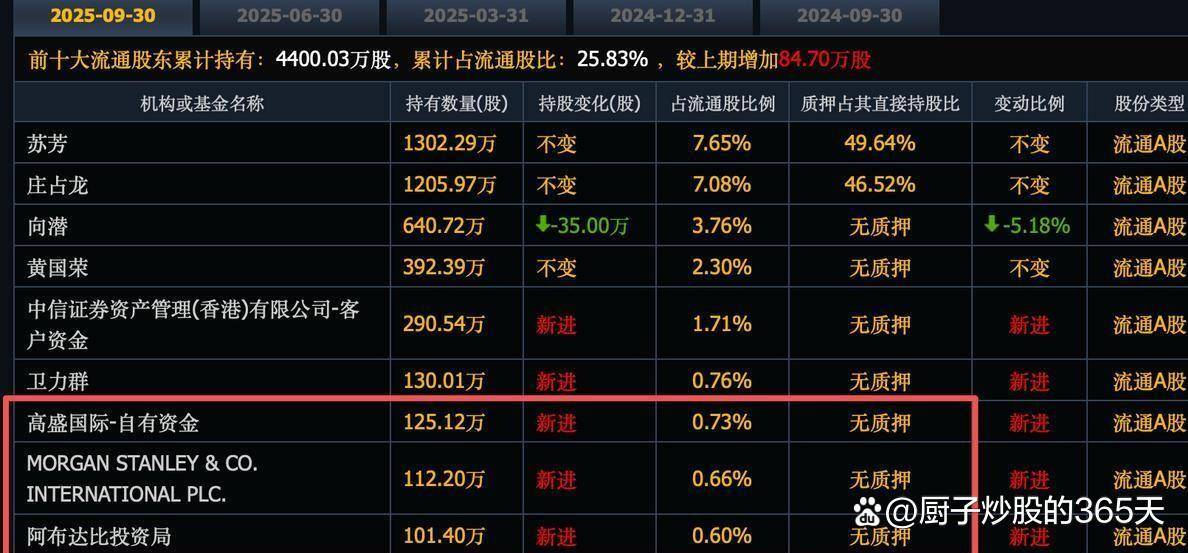
Core Viewpoint - The price of storage chips, particularly DRAM and NAND Flash, has surged over 300% since last September, driven by a significant demand from AI applications, marking a new "super cycle" in the industry [1][3][10]. Group 1: Market Dynamics - The current price increase is not a typical supply-demand fluctuation but is attributed to a transformative shift in AI usage from model training to inference, requiring substantial computational power [3][5]. - Major cloud service providers are aggressively purchasing storage chips to support AI inference, with OpenAI's monthly demand alone potentially equating to 900,000 wafers [6][10]. - The supply chain is heavily concentrated among three manufacturers: Samsung, SK Hynix, and Micron, who are prioritizing high-margin products like HBM (High Bandwidth Memory) for AI servers, leading to a structural shortage for consumer electronics [6][8]. Group 2: Industry Impact - The shift in focus to HBM has resulted in a significant reduction in the production capacity for standard memory products, causing a "structural shortage" that affects consumer electronics like smartphones and laptops [8][17]. - The inventory cycle for major manufacturers has decreased to just 2-4 weeks, indicating a rapid turnover and high demand [9][10]. - The financial performance of leading storage chip manufacturers, such as Micron, has improved dramatically, with optimistic future projections as the industry recovers from previous downturns [10][12]. Group 3: Investment Opportunities - The surge in storage chip prices has led to a collective rise in stock prices across the entire storage chip supply chain, with companies like Kema Technology and Jingzhida seeing significant stock price increases [13][14]. - Major investment firms, including Goldman Sachs and Morgan Stanley, are strategically positioning themselves in the storage chip sector, indicating strong confidence in the industry's growth potential [13][14][15]. - Domestic companies in China, such as Yangtze Memory Technologies and Changxin Memory Technologies, are gaining traction and market share, supported by government policies and funding, which may provide further investment opportunities [17][18].


存储芯片涨价潮来袭!AI驱动“以存代算”,哪些上游材料商将率先受益?
Jin Rong Jie· 2025-12-17 12:15
Group 1: Market Overview - The global storage chip market is experiencing significant structural changes due to a shortage and price surge, leading major PC manufacturers to raise product prices, with Dell increasing prices across its commercial computer range [1] - The driving force behind this price increase is the shift in AI development from training to application, resulting in a surge in demand for storage chips as they become strategic components in AI infrastructure [1] - Omdia forecasts that semiconductor industry revenue will reach a record high of $216.3 billion by Q3 2025, with a quarter-over-quarter growth of 14.5%, driven by storage chips and AI accelerators [1] Group 2: Industry Insights - Northeast Securities reports that the storage industry has passed its cyclical bottom, benefiting from the real demand explosion driven by AI infrastructure, leading to continuous chip price increases [2] - The demand for materials is expected to rise due to the expansion of domestic storage chip manufacturers [2] - The report from Zhongyou Securities highlights the increasing demand for plating solutions and photoresists in the storage chip sector, driven by advancements in HBM and 3D NAND technologies [2] Group 3: Key Companies in Storage Chip Sector - Zhaoyi Innovation (兆易创新) is a leading storage chip designer with a market share of 18.5% in global NOR Flash and has begun mass production of DDR4 DRAM in collaboration with Hefei Changxin [2] - Lanke Technology (澜起科技) holds over 40% market share in DDR5 memory interface chips and benefits from the increasing penetration of AI servers [2] - Baiwei Storage (佰维存储) specializes in embedded storage and PCIe SSDs, with products suitable for AI PCs and cloud service providers [3] Group 4: Storage Modules and Controllers - Jiangbolong (江波龙) is a leading domestic storage module company with over 100 million self-developed controller chips deployed [4] - Shannon Chip (香农芯创) is a core agent for SK Hynix, entering the Alibaba Cloud supply chain with its enterprise SSDs [4] - Demingli (德明利) focuses on self-developed storage controller chips and has accelerated the domestic replacement of its products [4] Group 5: Packaging and Manufacturing - Changdian Technology (长电科技) is the third-largest packaging and testing company globally, with a 25% market share in storage packaging [6] - SMIC (中芯国际) is a key player in domestic storage chip manufacturing, providing foundry services for NOR Flash and embedded storage chips [6] - Huahong (华虹公司) specializes in unique process storage chip foundry services, supporting production for IoT and automotive electronics [6] Group 6: Upstream Equipment and Materials - Northern Huachuang (北方华创) supplies core equipment for storage chip manufacturing, with growing orders for etching and deposition equipment [7] - Tuojing Technology (拓荆科技) leads in PECVD equipment, facilitating the expansion of storage capacity for major manufacturers [7] - Yake Technology (雅克科技) is a leading supplier of storage chip materials, breaking overseas monopolies and entering the supply chains of major global storage manufacturers [7] Group 7: Supporting Chips and Ecosystem - Jucheng Co. (聚辰股份) holds over 30% market share in DDR5 SPD chips, supporting platforms like NVIDIA H100 [8] - Guoxin Technology (国芯科技) is a leader in RAID storage chips, enhancing data security and performance for enterprise storage systems [8]




ETF盘中资讯 | 强者恒强!PCB概念股携手大涨,电子ETF(515260)拉升2.7%!机构:“以存代算”引爆存储涨价周期!
Sou Hu Cai Jing· 2025-12-17 06:55
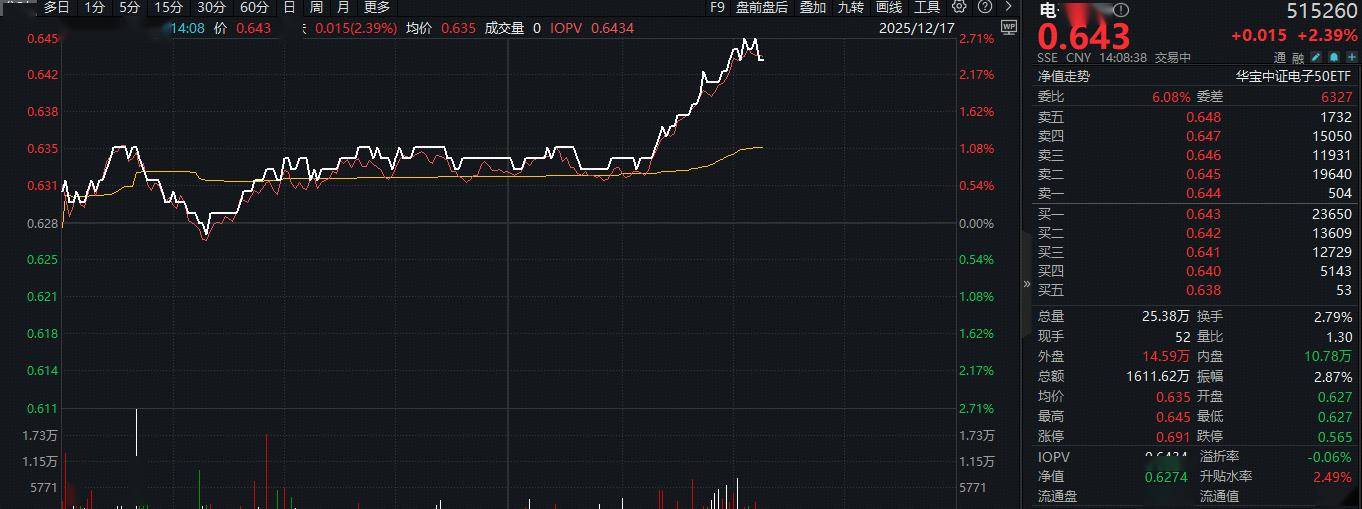
Core Viewpoint - The electronic ETF (515260) has shown strong performance, with a peak increase of 2.71%, indicating a bullish trend in the electronic sector [1]. Group 1: Market Performance - The semiconductor sector has seen significant gains, with companies like Jinghe Integrated rising over 8% and Zhaosheng Micro increasing by more than 7% [3]. - In the printed circuit board (PCB) sector, companies such as Shenzhen South Circuit and Pengding Holdings have also experienced notable increases, with gains exceeding 6% [3][4]. - The electronic ETF has recovered its 5-day, 10-day, and 20-day moving averages, signaling a strong bullish reversal [1]. Group 2: Sector Insights - The PCB market is expected to benefit from advancements in AI servers, with the value of PCBs for Nvidia's DGX H100 single GPU reaching $211, a 21% increase from previous generations [6]. - The storage chip market has experienced a "historic" price surge, with DRAM and NAND Flash prices rising over 300% since September, driven by the growth of AI applications [6]. - The shift from AI training to inference is driving hardware upgrades across the industry, with cloud service providers and AI initiatives enhancing the demand for related technologies [6]. Group 3: Investment Opportunities - The electronic ETF and its associated funds passively track the electronic 50 index, focusing on sectors like semiconductors, consumer electronics, and PCBs [7]. - The push for self-sufficiency in the semiconductor supply chain in China, along with government support, is expected to bolster the electronic sector [7].
强者恒强!PCB概念股携手大涨,电子ETF(515260)拉升2.7%!机构:“以存代算”引爆存储涨价周期!
Xin Lang Cai Jing· 2025-12-17 06:23
Core Viewpoint - The electronic ETF (515260) has shown strong performance, with a peak increase of 2.71% and currently up 2.39%, indicating a bullish reversal signal in the market [1][9]. Semiconductor Sector - In the semiconductor segment, companies like Jinghe Integrated Circuit have surged over 8%, while Zhuosheng Microelectronics has increased by more than 7% [3][11]. - The electronic ETF heavily invests in semiconductor and consumer electronics sectors, focusing on AI chips, automotive electronics, 5G, and cloud computing [5][15]. PCB and Storage Chip Insights - The PCB (Printed Circuit Board) sector is experiencing significant value enhancement due to AI servers, with the NVIDIA DGX H100 single GPU corresponding to a PCB value of $211, a 21% increase from previous generations. The domestic high-end PCB capacity is expected to be released in 2026, with local material manufacturers accelerating their breakthroughs [4][14]. - The storage chip market has seen a "historic" price surge since Q3, with DRAM and NAND Flash prices increasing over 300% since September. This price rise is driven by the shift towards AI applications and the "compute-to-storage" technology, with supply shortages expected to persist for the next couple of years [4][14]. Market Trends and Policy Support - The global AI technology transition from training to inference is driving hardware industry upgrades, with cloud service providers and sovereign AI initiatives boosting the demand for AI infrastructure [4][14]. - The Chinese government is pushing for self-sufficiency in the semiconductor supply chain, and AI is reshaping consumer electronics, enhancing user experiences. The electronic sector is poised for growth due to supportive national policies and industry initiatives [5][15].
狂飙超300%!存储芯片价格罕见暴涨!
证券时报· 2025-12-16 09:56
以下文章来源于e公司 ,作者证券时报 严翠 e公司 . e公司,证券时报旗下专注上市公司新媒体产品,立志打造A股上市公司资讯第一平台。提供7x24小时上市公司标准化快讯,针对可能影响上市公司股价的 主题概念、行业事件及时采访二次解读,从投资者需求出发,直播上市公司有价值的活动、会议。 业内人士指出,与以往的涨价潮不同,此轮涨价潮由人工智能发展转向应用中"以存代算"技术兴起推动,且市场缺口在最近一两年内很难补齐。 多位消费电子企业负责人、存储行业专家对证券时报记者表示,2026年手机、电脑等主要的消费电子产品涨势已定,消费电子企业或将祭出组合拳,具体表现为结构 性涨价与降配、与产业链共担成本等多管齐下,组合拳推出的时点可能是即将到来的元旦。 "以存代算"撬动周期 "这么短的时间这么大的涨幅,让我非常震惊,也是我从业十几年来第一次遇到。"时创意董事长倪黄忠对记者表示。 "我研究存储产业大概20年,从来没看到这么疯狂的情况。"集邦咨询资深研究副总经理吴雅婷说。 "无论闪存还是内存,现在钱不是重点,而是没货。"集邦咨询资深研究副总经理郭祚荣说。 对于本轮存储芯片涨价根源,倪黄忠对记者表示:"以前存储涨价,基本都是手机 ...
狂飙超300%!存储芯片价格罕见暴涨!消费电子产品涨势已定?
Zheng Quan Shi Bao Wang· 2025-12-16 03:13
Core Viewpoint - The global storage chip market has experienced an unprecedented price surge of over 300% since September 2023, driven by the rise of artificial intelligence and the "compute-in-memory" technology, leading to a structural supply shortage that is unlikely to be resolved in the near term [1][3][4]. Group 1: Price Surge and Market Dynamics - The price of DRAM and NAND Flash has increased by over 300% since September 2023, marking a significant shift in the storage chip market [1]. - This price surge is attributed to the transition from traditional storage roles to strategic components in AI applications, particularly with the emergence of "compute-in-memory" technology [3][4]. - The demand for AI servers has drastically increased, with typical AI servers requiring significantly more DRAM and NAND Flash compared to standard servers, leading to a reallocation of production capacity from consumer electronics to AI-related products [4][5]. Group 2: Impact on Consumer Electronics - The price increase in storage components is expected to lead to higher prices for consumer electronics, with predictions that smartphone and laptop prices will rise significantly by 2026 [5][6]. - Major brands are likely to respond to rising costs by either increasing prices, reducing specifications, or a combination of both, particularly in mid-range and entry-level products [7][8]. - Companies are exploring various strategies to manage costs, including supply chain management, internal cost reductions, and adjusting product specifications to maintain competitiveness [7][8]. Group 3: Long-term Industry Implications - The current supply-demand imbalance is expected to persist, with significant capital investments required for new production facilities, which typically take several years to come online [6][9]. - The ongoing price increases and supply chain challenges may accelerate industry consolidation and the push for domestic alternatives in the supply chain [9].
“以存代算”引爆存储涨价周期,消费电子ETF(561600)震荡蓄势
Xin Lang Cai Jing· 2025-12-16 02:44
Group 1 - The core viewpoint of the articles highlights a significant price surge in the global memory chip market, particularly in DRAM and NAND Flash, with prices increasing over 300% since September 2023, driven by the rise of AI applications [1][2] - The consumption electronics sector is expected to implement a combination of structural price increases and cost-sharing strategies with the supply chain, particularly as the demand for consumer electronics like smartphones and computers is projected to rise through 2026 [1] - The consumption electronics ETF closely tracks the performance of the China Securities Consumption Electronics Theme Index, which includes 50 listed companies involved in component production and brand design [2][3] Group 2 - The top ten weighted stocks in the China Securities Consumption Electronics Theme Index account for 56.39% of the index, indicating a concentration of investment in key players such as Luxshare Precision and Cambricon Technologies [3] - AI is enhancing the demand for consumer batteries, as the integration of AI in devices like smartphones and wearables is leading to increased power consumption and a higher demand for lithium batteries [2]



12.16犀牛财经早报:海南自贸港封关倒计时
Xi Niu Cai Jing· 2025-12-16 01:44
Group 1 - Commercial banks are accelerating capital increases and share expansions as the year-end approaches, with several banks like China Construction Bank and Bank of China taking measures to strengthen their capital base and support the real economy [1] - The issuance of special bonds targeting government investment funds has reached nearly 85 billion yuan this year, with multiple regions participating, indicating a trend of low-cost, long-term funding for government projects [1] Group 2 - Over 520 companies have been investigated by institutions since December, with a focus on popular sectors such as commercial aerospace and AI hardware, indicating strong interest in these areas [2] - 77 companies have reported full order books, particularly in the power equipment sector, suggesting robust demand and potential for profit growth in the coming years [2] Group 3 - The global memory chip market has experienced a significant price surge, with DRAM and NAND Flash prices increasing over 300% since September, driven by advancements in AI and "compute-in-memory" technology [3] Group 4 - The first large-scale production project for bio-methanol in China has officially commenced, marking a strategic advancement in clean fuel development [4] Group 5 - YUM China has announced a share repurchase plan totaling approximately $460 million, as part of a broader capital allocation strategy to return $1.5 billion to shareholders by 2026 [7][8] Group 6 - Yihua Group plans to raise nearly 200 million Hong Kong dollars through a new H-share placement, with 90% of the proceeds allocated for repaying bank loans [9] - Huafu Securities has had a 5 billion yuan public bond application accepted by the Shanghai Stock Exchange, aimed at supplementing working capital [9] Group 7 - The Southern Black Sesame Group is progressing with a share transfer to a state-owned enterprise, which will result in a change of control and ownership structure [11]