以存代算

Search documents
【财经分析】存储芯片价格攀升 视频压缩技术需求激增
Xin Hua Cai Jing· 2026-02-12 07:09
Group 1 - The core viewpoint of the articles highlights the increasing demand for video compression technology due to the rising prices of storage chips and the imbalance in supply and demand in the market [1][4]. - Companies like Xiaomi and OPPO have raised the prices of new smartphones to offset the cost pressures from rising storage chip prices, which may lead to a decline in smartphone shipments in 2026 [2][6]. - The demand for video storage solutions is increasing in sectors such as public security, finance, and power supply, driven by stringent storage duration and quality requirements [3]. Group 2 - The current surge in storage chip prices is primarily driven by cloud service providers (CSPs), whose procurement volumes have grown exponentially, leading to a price increase that surpasses previous cycles [4][5]. - Market research indicates that the average contract price for DRAM is expected to rise by 90% to 95% in Q1 2023, while NAND Flash prices are projected to increase by 55% to 60% [4]. - The demand for high-bandwidth memory (HBM) products is also expected to significantly boost growth on the demand side, as CSPs prioritize capacity for high-margin products [5].
未知机构:AI储存调研-20260211
未知机构· 2026-02-11 01:25
Summary of Conference Call Notes Industry or Company Involved - The discussion revolves around the AI and storage industry, particularly focusing on the optimization of agent execution processes and the implications of storage costs on AI performance. Core Points and Arguments 1. **Optimization in Agent Execution** - During the understanding phase, the most powerful models are used for planning agents, while various models are utilized in the execution phase to support operations. A tool matrix is employed to optimize resource allocation, saving computational power during inference by caching results. The cache hit rate can reach up to 67%, allowing for significant efficiency gains in processing similar queries [2][4]. 2. **Storage Architecture** - The storage system is structured in layers, including HBM, DRAM, and SSD, to manage hot, warm, and cold data effectively. This architecture is widely adopted in large companies [3]. 3. **Cache Hit Rate Dynamics** - The cache hit rate tends to improve with increased daily active users (DAU) and user engagement, but it approaches a ceiling of 60% to 70% due to the need for diverse responses in AI services [4]. 4. **Data Storage Practices** - For consumer users, data is modeled on an individual basis, but common queries can be identified. The system stores both questions and their corresponding key-value (KV) pairs to reduce computational load during the prefill phase [5][6]. 5. **Cost Efficiency in Computation** - The computational load is generally reduced from a potential 1:5 ratio to about 2-3 times due to storage optimizations, avoiding a simple linear relationship in resource consumption [7]. 6. **Rising Storage Costs** - The increase in storage prices, particularly for SSDs, is attributed to the demand for long-chain caching solutions. SSD prices are rising faster than DRAM, which serves as a bridge for data [8]. 7. **Log Storage and Data Lifecycle** - Logs are stored on HDDs, while KV pairs from inference processes are stored on SSDs. The lifecycle of KV data typically requires retention for at least 90 days for long-chain applications [11]. 8. **Impact of SSD Read/Write Frequency** - High read/write frequencies on SSDs do not significantly affect their lifespan, which is designed to handle several GBs of throughput per second [12]. 9. **Government Policies on Chip Imports** - Current policies regulate the import of advanced chips like H200, allowing only top enterprises engaged in large model training to apply for procurement, with a focus on narrowing the gap between domestic and foreign capabilities [15][16]. 10. **Economic Viability of Storage Solutions** - If SSD prices increase to 2-2.5 times their current levels, the cost-effectiveness of storage-based computation will be challenged. New technologies may emerge to mitigate these costs, but significant price hikes could necessitate a reevaluation of pricing strategies [17][21]. Other Important but Possibly Overlooked Content 1. **Diverse Supply Chain Strategies** - Companies are encouraged to diversify their supply chains to avoid reliance on overseas markets, especially in light of rising prices [20]. 2. **Technological Advancements in Cost Reduction** - Continuous advancements in AI infrastructure are crucial for reducing inference costs, which is a key focus for cloud service providers [14]. 3. **Market Dynamics and Future Predictions** - The market is expected to see a shift in the balance of GPU and storage costs, which will influence the overall cost structure of AI applications [21].
AI Agent正加速从概念走向规模化落地,软件ETF(159852)获资金关注
Xin Lang Cai Jing· 2026-02-02 02:51
Group 1 - The software development sector is experiencing fluctuations, with the CSI Software Service Index down by 0.81% as of 10:21 on February 2, 2026, and individual stocks showing mixed performance [1] - Alibaba has launched a localized intelligent Agent tool, QoderWork, designed for desktop office use, which operates entirely on user terminals without uploading data to the cloud, indicating a shift towards an "end-edge-cloud" collaborative AI software paradigm [1] - The introduction of QoderWork is expected to reshape the competitive landscape of office software and user interaction habits in China [1] Group 2 - AI Agents are transitioning from concept to large-scale implementation, with modern Agents requiring the ability to run hundreds to thousands of independent environment instances, increasing the operational pressure on CPU and memory bandwidth [2] - The DeepSeek Engram architecture and Anthropic Claude Cowork's introduction of a permanent knowledge base highlight the evolution of CPUs from traditional computing units to central hubs in the AI era [2] - As of January 30, 2026, the top ten weighted stocks in the CSI Software Service Index account for 60.27% of the index, including companies like iFlytek, Kingsoft Office, and 360 [2] Group 3 - The Software ETF (159852) tracks the CSI Software Service Index, providing a convenient tool for investing in the computer software industry [3] - Investors can also access AI software investment opportunities through the Software ETF linked fund (012620) [4]
优必选开源具身智能大模型Thinker,AI人工智能ETF(512930)开盘涨超1.1%
Xin Lang Cai Jing· 2026-02-02 02:05
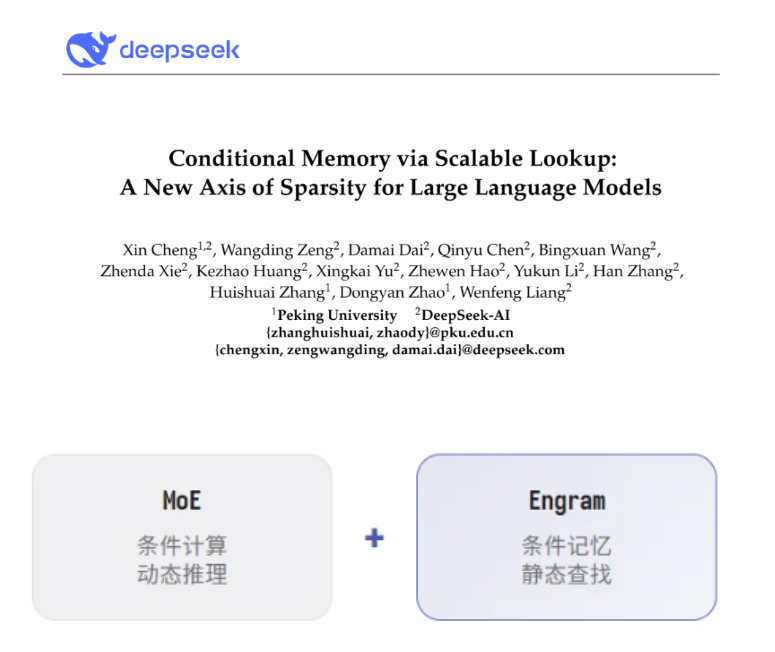
Group 1 - The core viewpoint of the news highlights the strong performance of the AI sector, with the CSI Artificial Intelligence Theme Index rising by 1.18% and notable gains in constituent stocks such as NewEase and 360 [1] - The AI Artificial Intelligence ETF (512930) also saw an increase of 1.14%, with the latest price reported at 2.4 yuan [1] - UBTECH announced the open-sourcing of its self-developed embodied intelligent model, Thinker, aimed at enhancing industrial humanoid robots' responsiveness and spatial awareness [1] Group 2 - The CSI Artificial Intelligence Theme Index (930713) includes 50 listed companies that provide foundational resources, technology, and application support for artificial intelligence, reflecting the overall performance of AI-related securities [2] - As of January 30, 2026, the top ten weighted stocks in the CSI Artificial Intelligence Theme Index accounted for 57.27% of the index, with companies like Zhongji Xuchuang and NewEase leading the list [2] - The AI Artificial Intelligence ETF closely tracks the CSI Artificial Intelligence Theme Index and has several connection funds available for investors [2] Group 3 - Guojin Securities pointed out that the DeepSeek Engram architecture may further promote the concept of "computing with storage," effectively decoupling computation and memory in large models [1] - The Engram architecture allows for the computation of all Transformer operators on GPU/accelerator cards while running a 100 billion parameter Engram table in CPU memory, which could enhance the demand for storage-based computing [1] - Anthropic's Claude Cowork introduces a new permanent memory method designed for Claude, which could also help overcome GPU memory limitations [1]
计算机:AI进入新临界点
SINOLINK SECURITIES· 2026-02-01 10:29
Investment Rating - The report suggests a positive outlook for the industry, indicating a potential increase in investment opportunities due to the expansion of the Agent ecosystem and the rising demand for CPU and storage solutions [4][6]. Core Insights - The Agent ecosystem is rapidly expanding, with companies like Anthropic significantly increasing their revenue forecasts, expecting sales to grow fourfold to $18 billion this year and $55 billion next year [11][12]. - The introduction of advanced models like K2.5 allows for the dynamic allocation of tasks among multiple agents, enhancing efficiency in handling complex tasks [12]. - The demand for CPU is expected to surge due to the operational requirements of Agent systems, which necessitate high-performance CPUs for logic orchestration and memory management [16]. - Storage needs are also increasing as Agents require substantial memory and context caching, leading to a growing market for SSDs and other storage solutions [31]. Summary by Sections 1. Expansion of the Agent Ecosystem - Recent advancements in the global Agent ecosystem highlight significant innovations, with Anthropic's revenue projections reflecting a strong market position and growth potential [11][12]. - The K2.5 model's ability to create a team of agents for task execution showcases the shift towards more sophisticated AI applications [12][14]. 2. Rigid Demand for CPUs Driven by Agents - The complexity of Agent workflows increases the operational burden on CPUs, necessitating enhanced processing capabilities to manage multiple tasks and context switching [16]. - The need for KV Cache Offloading to alleviate GPU memory constraints further emphasizes the critical role of CPUs in modern AI applications [16][20]. 3. Growing Storage Demand Driven by Agents - The execution of Agent tasks requires significant memory resources, leading to a heightened demand for storage solutions, particularly SSDs [31][40]. - Companies like Seagate and SanDisk are reporting substantial revenue growth, indicating a robust market for storage solutions driven by AI workloads [40][41]. 4. Related Companies - Key players in the overseas computing/storage sector include companies like Zhongji Xuchuang, New Yi Sheng, and Micron, while domestic players include Cambrian, Huafeng Technology, and China Longhua [4][42].
最稳定的Memory、液冷产业信息
傅里叶的猫· 2026-01-30 15:50
Group 1 - The core viewpoint of the article highlights that SanDisk's financial performance exceeded expectations, with total revenue reaching $3 billion, a quarter-over-quarter increase of 31%, and a gross margin of 51.1%, up 21 percentage points from the previous quarter [1] - The data center business revenue surged by 64% quarter-over-quarter, accounting for 15% of total revenue, with management indicating that they will complete more certifications for large-scale cloud service providers in the upcoming quarters [1] - For FY3Q26, the company guides a midpoint revenue of $4.6 billion and earnings per share of $13, aligning with market expectations that have been revised upwards to $11-13 [1] Group 2 - The article discusses four underlying logic points regarding NAND demand, including the concept of "using storage to compute," particularly with KV Cache persistence, which significantly reduces computational power consumption during the prefill phase [3] - The shift in data generation from human production to self-generation by models, which is not limited by time, attention, or physical boundaries, is noted, with SanDisk stating that "data growth is accelerating as the temperature of data is rising" [4][3] - The increase in the value of data reuse is emphasized, with historical storage rates previously at only 1%, now significantly enhanced by LLM/RAG, leading to a substantial increase in storage rates [8] - The inflation of data under the same semantic density is highlighted, with the transformation of plaintext into embeddings and KV, resulting in capacity expansion by 5-1000 times, driven by AI workloads and increased NAND content requirements [8]

金鹰基金:存储芯片涨价潮延续 关注三方向投资机会
Xin Lang Cai Jing· 2026-01-28 07:10
Core Viewpoint - The global storage chip market has entered an unprecedented price surge since the second half of 2025, driven primarily by the AI computing revolution rather than traditional consumer electronics demand [1][6]. Supply Side Analysis - The supply side is struggling to expand production quickly, with new wafer fabs taking an average of 18-24 months to establish, and stable supply often taking even longer to materialize [1][6]. - Overseas storage manufacturers have adopted production cuts and cautious capital expenditure during the previous downturn, leading to reduced supply elasticity, which causes prices to rise with slight demand fluctuations [1][6]. - Even with domestic manufacturers being more proactive, significant new capacity is unlikely to be reflected in statistics until the second half of 2026 or later [1][6]. Demand Side Analysis - The demand structure is shifting, with AI data centers increasing the priority for HBM, server memory, and enterprise SSDs, leading manufacturers to focus resources on high-margin products, thereby squeezing the supply of general-purpose DRAM and NAND [1][6]. - Downstream entities are pre-locking quantities and stockpiling, further amplifying short-term shortages and price increases [1][6]. Price Trends and Expectations - Compared to 2025, the price increase in storage chips this year is characterized by being more "comprehensive" and with a steeper slope, moving from structural shortages to mainstream DDR5 and client SSDs [2][7]. - The market's imagination regarding NAND/SSD demand is being elevated by AI, with leading companies emphasizing the potential for context storage layers to enhance inference efficiency and GPU utilization [2][7]. Future Outlook and Investment Opportunities - The current market conditions are expected to remain favorable at least until the first half of 2026, with strong upward price expectations for the first and second quarters of 2026 [3][8]. - Key variables include the release pace of new capacity, especially from domestic manufacturers, and the alleviation of advanced packaging/testing bottlenecks related to HBM [3][8]. - Investment opportunities include profit elasticity and product structure upgrades for storage IDM, as well as opportunities in equipment, materials, components, and advanced packaging/testing segments related to capacity expansion and generational upgrades [3][8].
涨价超预期!存储板块多只个股股价创新高
Zheng Quan Ri Bao Zhi Sheng· 2026-01-27 06:42
Core Viewpoint - The storage chip market is experiencing significant price increases driven by supply-demand imbalances, particularly influenced by the rising demand for high-performance storage due to AI technology [1][2][3]. Group 1: Market Performance - The A-share market saw all three major indices open lower, but the storage chip sector surged, with the sector index rising nearly 2% [1]. - Notable individual stock performances include Dongxin Technology reaching a market cap of 67.77 billion yuan and hitting a new high since its listing, while other companies like Xiechuang Data and Jingzhida also saw substantial gains [1]. - Several stocks in the storage sector have reported month-to-date increases exceeding 60%, indicating strong market momentum [1]. Group 2: Price Trends and Predictions - Analysts predict that NAND flash memory prices will increase by over 100% in Q1 2026, significantly surpassing previous market expectations [1]. - The ongoing price increases are attributed to a combination of supply and demand factors, with AI technology driving higher demand for advanced storage solutions [2]. - Supply-side constraints are exacerbated by leading manufacturers like Samsung and SK Hynix adopting conservative production strategies, leading to a reduction in general storage chip availability [2]. Group 3: Company Performance and Forecasts - Companies in the storage industry are expected to see substantial earnings growth, with predictions of a continued price increase for storage products through 2026 [2][3]. -兆易创新预计2025年归属于上市公司股东的净利润为16.1亿元,同比增长约46% [3]. - 德明利预计2025年度实现归属于上市公司股东的净利润6.5亿元至8亿元,同比增长85.42%至128.21% [4].


计算机行业点评:CPU涨价能持续多久?
SINOLINK SECURITIES· 2026-01-25 02:53
Investment Rating - The report suggests a positive investment outlook for the industry, indicating a potential increase in value over the next 3-6 months, with expectations of growth exceeding the market by more than 15% [40]. Core Insights - The report highlights three core logic points driving the rigid demand for CPU in the Agent era, emphasizing the shift in computational load from GPU to CPU due to the complexity of tasks performed by Agents [11][16]. - The global Agent ecosystem is predicted to experience exponential growth, with active Agents expected to rise from approximately 28.6 million in 2025 to 2.216 billion by 2030, alongside a significant increase in task execution and token consumption [16][21]. - A supply-demand imbalance is emerging, with Intel shifting production capacity to server CPUs, leading to delivery issues in consumer electronics, while NVIDIA plans to enhance CPU core counts in response to bottlenecks [33][37]. Summary by Sections Section 1: Three Core Logics Revealing the Rigid Demand for CPU - The shift in computational load towards CPU is driven by the Multi-Agent architecture, which increases OS scheduling pressure due to the complex workflow of Agents [11]. - The challenge of long context scenarios necessitates KV Cache offloading to CPU, which increases CPU load due to the need for task scheduling and data transfer [11][12]. - High concurrency in tool usage by Agents leads to significant CPU consumption, as non-model inference tasks are primarily handled by CPUs [15]. Section 2: Expansion of the Agent Ecosystem Igniting CPU Performance Bottlenecks - The number of active Agents is projected to grow significantly, with task execution expected to increase from 44 billion in 2025 to 415 trillion by 2030, indicating a shift towards deeper reliance on Agents in business processes [16][17]. - Token consumption is anticipated to surge from 0.0005 PetaTokens in 2025 to 152,667 PetaTokens by 2030, reflecting the increasing complexity of tasks handled by Agents [17]. Section 3: Supply-Demand Imbalance and New Shortboards in Computing Power - Intel's urgent shift in production to server CPUs has resulted in a decline in consumer electronics delivery rates, while NVIDIA's new architecture aims to address CPU bottlenecks [33]. - Market data indicates a growth in global client CPU shipments, with a 7.9% quarter-on-quarter increase and a 13% year-on-year increase in the second quarter of 2025 [33][34]. Section 4: Related Companies - Key companies in the CPU sector include Haiguang Information, Zhongke Shuguang, He Sheng New Materials, China Great Wall, Longxin Zhongke, and others [4][38]. - Domestic computing power companies include Haiguang Information, Cambricon, Dongyangguang, and others, while overseas companies include Zhongji Xuchuang, New Yisheng, and others [4][38].


大摩眼中的DeepSeek:以存代算、以少胜多!
Hua Er Jie Jian Wen· 2026-01-22 02:48
Core Insights - DeepSeek is revolutionizing AI scalability by utilizing a hybrid architecture that replaces scarce HBM resources with more cost-effective DRAM, focusing on smarter design rather than merely increasing GPU clusters [1][5] Group 1: Technological Innovation - DeepSeek's innovative module, "Engram," separates storage from computation, significantly reducing the need for expensive HBM by employing a "Conditional Memory" mechanism [1][3] - The Engram architecture allows for efficient retrieval of static knowledge stored in DRAM, freeing up HBM for more complex reasoning tasks, thus enhancing overall efficiency [3][5] Group 2: Cost Structure and Economic Impact - The shift from reliance on HBM to DRAM is expected to reshape the hardware cost structure, making AI infrastructure more affordable [5][7] - A 100 billion parameter Engram model requires approximately 200GB of system DRAM, indicating a 13% increase in the use of commercial DRAM per system compared to existing setups [5][7] Group 3: Competitive Landscape - Despite hardware limitations, Chinese AI models have rapidly closed the performance gap with leading global models, demonstrating strong competitive capabilities [6][8] - DeepSeek V3.2 achieved an MMLU score of approximately 88.5% and coding capability of around 72%, showcasing its efficiency in reasoning and performance [6][8] Group 4: Future Outlook - The upcoming DeepSeek V4 model is anticipated to leverage the Engram architecture for significant advancements in coding and reasoning, potentially running on consumer-grade hardware [8] - This development could lower the marginal costs of high-level AI inference, facilitating broader deployment of AI applications without reliance on expensive data center GPUs [8]