
供应冲击

Search documents
鲍威尔最新讲话:未来通胀或更加波动,美国可能进入更频繁的"供应冲击"时期
Sou Hu Cai Jing· 2025-05-15 16:04
Core Viewpoint - The Federal Reserve, led by Chairman Powell, is undergoing a reassessment of its policy framework in light of significant economic changes over the past five years, particularly regarding inflation and interest rates [1][3][10]. Group 1: Economic Context - The Fed has experienced a period of soaring inflation, prompting aggressive interest rate hikes, with the current policy rate set between 4.25% and 4.5% [2][11]. - Powell indicated that future inflation may be more volatile, suggesting the U.S. could face more frequent and prolonged supply shocks, posing challenges for both the economy and the central bank [2][11]. - Historically, during economic downturns, the Fed has typically lowered rates by about 500 basis points [2][11]. Group 2: Policy Framework Review - The Fed is revisiting its strategic framework based on lessons learned from the past five years, focusing on improving communication regarding uncertainty and risks [3][14]. - The last comprehensive review of the Fed's policy framework occurred in 2012, establishing a 2% inflation target, which remains a critical focus [5][14]. - The upcoming review aims to ensure the framework remains resilient in the face of diverse economic conditions and developments [14][15]. Group 3: Communication and Transparency - Clear communication is essential for reducing uncertainty and enhancing policy effectiveness, especially during complex economic events [5][15]. - The Fed plans to enhance its communication tools to better convey its understanding of economic uncertainties and the implications for policy [14][15]. - There is a consensus among participants that improvements in communication are necessary, even during stable periods [15].

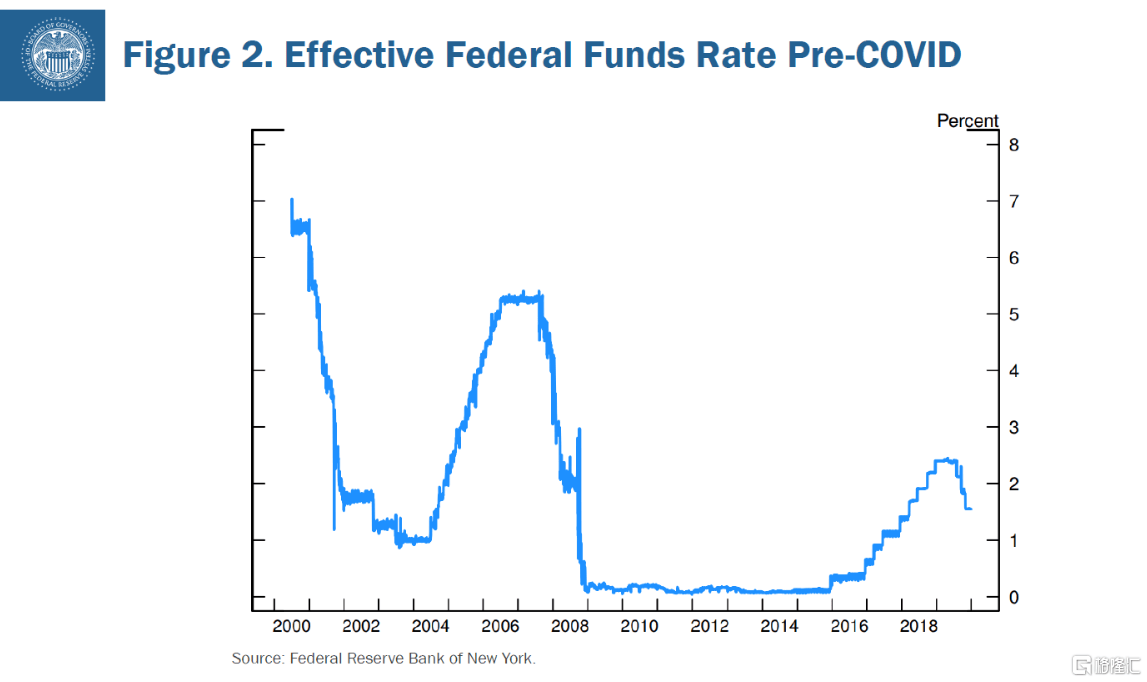
鲍威尔:将重新评估货币政策框架的“关键部分”,长期利率可能走高,“供应冲击”或成新常态
Hua Er Jie Jian Wen· 2025-05-15 14:07
Core Insights - The Federal Reserve is reassessing key components of its monetary policy framework, including inflation targets and the handling of employment gaps, in response to changing economic conditions [2][3] Group 1: Monetary Policy Framework Changes - The current monetary policy framework established in 2020 is deemed unsuitable due to significant changes in economic conditions post-pandemic [3] - Powell emphasized that the zero lower bound on interest rates is no longer a baseline scenario, indicating a shift in the Fed's approach to interest rates [3][10] - The review of the framework will focus on effective communication regarding economic uncertainties and the Fed's understanding of the economic outlook [12] Group 2: Employment and Inflation Targets - The Fed is moving away from an excessive focus on employment gaps, which previously influenced preemptive rate hikes to cool the labor market [4][5] - The concept of a "flexible average inflation target" is under reconsideration, as critics argue it is not suitable for the post-pandemic economic environment [7][8] - Despite the framework revisions, Powell reaffirmed the importance of maintaining a 2% inflation target, which is crucial for anchoring expectations [10] Group 3: Economic Challenges Ahead - Powell warned of a potential new normal characterized by more frequent and persistent supply shocks, posing challenges for both the economy and the central bank [11] - The possibility of higher long-term interest rates is anticipated as a reflection of increased volatility in future inflation compared to the 2010s [2][9]

鲍威尔:未来通胀波动加剧 美国或迎持久供应冲击期
news flash· 2025-05-15 13:59
Core Viewpoint - Federal Reserve Chairman Jerome Powell indicated that future inflation may become more volatile, suggesting that the U.S. may be entering a period characterized by more frequent and prolonged supply shocks, posing significant challenges for both the economy and the central bank [1] Group 1 - Powell stated that the Federal Reserve will reassess certain aspects of its strategic framework based on experiences from the past five years [1] - The committee is considering improvements to its policy communication tools regarding uncertainty and risk [1] - Ongoing discussions within the committee are focused on lessons learned from the past five years, with plans to complete a review of consensus statement modifications in the coming months [1]
鲍威尔抛出重磅信号:低失业率≠通胀风险,未来供应冲击更严峻
Sou Hu Cai Jing· 2025-05-15 13:56
Group 1 - The Federal Reserve is reassessing the terminology of "labor market slack" to avoid interpreting low unemployment as a signal of inflation risk [2] - The Fed is adjusting its "average inflation target" framework to adapt to broader economic changes, indicating a willingness to accept higher inflation for stronger employment growth [2] - Powell anticipates that the Personal Consumption Expenditures (PCE) price inflation will decrease to 2.2% in April, but tariffs may still drive prices up [3] Group 2 - The Fed is modifying its overall policy framework to address structural changes in inflation and interest rate outlook post-pandemic, with a focus on the increased instability of inflation due to rising real interest rates [4] - The evaluation of the new policy framework is expected to be completed and announced in August or September, while current interest rate decision-making will remain unchanged in the short term [4] - Powell warns that increasing supply shocks will pose significant challenges for the economy and the central bank [4]
美联储理事库格勒:不确定性的程度可能略有下降,供应冲击的程度也有所减轻。
news flash· 2025-05-12 15:19
Group 1 - The degree of uncertainty may have slightly decreased [1] - The extent of supply shocks has also lessened [1]
德商银行:欧洲央行应加快行动,以应对日益增长的供应冲击
news flash· 2025-04-29 12:18
Core Viewpoint - Deutsche Bank's Joerg Kraemer emphasizes that the European Central Bank (ECB) should act more swiftly to address increasing supply shocks and rising inflation, as the likelihood of sudden reductions in commodity supply and subsequent price hikes is growing [1] Group 1 - The ECB should avoid the misconception that supply shocks are temporary and refrain from waiting passively [1] - The strategy of waiting has proven ineffective in the context of post-COVID price surges [1] - The ECB should not overly rely on mid-term forecasts, which have been shown to be unreliable [1] Group 2 - Only by recognizing these shocks as not merely temporary and taking decisive action can the recent inflation events be considered exceptions [1]