
通胀飙升

Search documents
盘中,大跌2500点!特朗普,最新发声!伊朗:反对美方谈判条件!
券商中国· 2026-03-30 01:08
Market Overview - The Asia-Pacific markets experienced significant declines, with the Nikkei 225 index dropping over 2500 points, a decrease of 4.80%, and the KOSPI index falling nearly 4% [1][3]. Geopolitical Tensions - Analysts noted that the ongoing tensions in Iran have led to rising oil prices, negatively impacting Japan and South Korea, which heavily rely on energy imports from the Middle East [2]. - U.S. President Trump expressed intentions to "seize" Iranian oil, indicating a potential military escalation, while also mentioning that negotiations for a ceasefire might progress [2][6]. Stock Market Reactions - The Japanese and South Korean stock markets saw substantial drops, with individual stocks like SoftBank Group down nearly 8% and Toyota Motors down close to 5% [3]. - Investors are preparing for a prolonged conflict in the Gulf, which has already caused record monthly increases in oil prices and heightened inflation risks globally [3]. Economic Implications - The closure of the Strait of Hormuz could lead to a sharp increase in oil prices, potentially reaching $150 per barrel if the situation persists for another month, impacting industrial energy consumers [4]. - Rising inflation expectations have prompted investors to adjust their outlook on interest rates, with the market now anticipating a tightening of 12 basis points from the Federal Reserve this year [4][5]. Upcoming Economic Data - Upcoming U.S. retail sales, manufacturing, and employment data are expected to provide insights into the economic situation, with March employment numbers projected to increase by 55,000 [5]. - In the EU, March's annual inflation rate is anticipated to rise from 1.9% in February to 2.7% [5]. Military Actions and Responses - Reports indicate that an Iranian petrochemical plant was attacked, and Israel has conducted airstrikes targeting Iranian military infrastructure [6][8]. - Iranian officials have stated their readiness to respond to any military actions from the U.S., emphasizing that their military operations will focus on U.S. bases and assets rather than Arab nations [7][8].


G7紧急开会:拟协调释放石油储备
凤凰网财经· 2026-03-09 13:54
Core Viewpoint - The International Energy Agency (IEA) is likely to activate strategic reserves held by its 32 member countries in response to the sharp rise in oil prices due to the Gulf conflict, with the G7 finance ministers planning an emergency meeting to discuss a coordinated release of oil reserves [1][2]. Group 1: Oil Price Surge and Market Impact - Oil prices have surged dramatically, with Brent crude rising by 24% to $116.71 per barrel and West Texas Intermediate increasing by 28% to $116.45 per barrel during the Asian trading session [3]. - The rapid increase in oil prices has raised global concerns about inflation, which could have long-term detrimental effects on global economic growth [3]. Group 2: Emergency Measures and Strategic Reserves - The IEA has prepared to take action to stabilize the oil market, with member countries holding over 1.24 billion barrels in public stocks and an additional 600 million barrels in industry stocks available for market release if necessary [3]. - Some U.S. officials believe that a coordinated release of 300 to 400 million barrels of oil, approximately 25% to 30% of total emergency reserves, is an appropriate response scale to the current crisis [2].

特朗普之子放言美联储将有大动作!彼得·希夫再度拉响通胀警报
Jin Shi Shu Ju· 2025-09-30 10:08
Group 1 - Peter Schiff expresses concern over Eric Trump's comments regarding the Federal Reserve potentially restarting quantitative easing, suggesting it reflects the White House's view on the U.S. economy [1] - Schiff believes Eric's statements indicate awareness of the U.S. economy's underlying weaknesses and the significant risk of rising inflation [1] - Eric Trump predicts Bitcoin's price could rise to $1 million due to quantitative easing and seasonal strength in the cryptocurrency market [1] Group 2 - Eric Trump previously stated that he believes Bitcoin's price could surge, contrasting with market predictions that suggest it will likely remain below $107,000 this month [2]
英国央行如期维持利率不变,放缓缩表步伐
Jin Shi Shu Ju· 2025-09-18 11:24
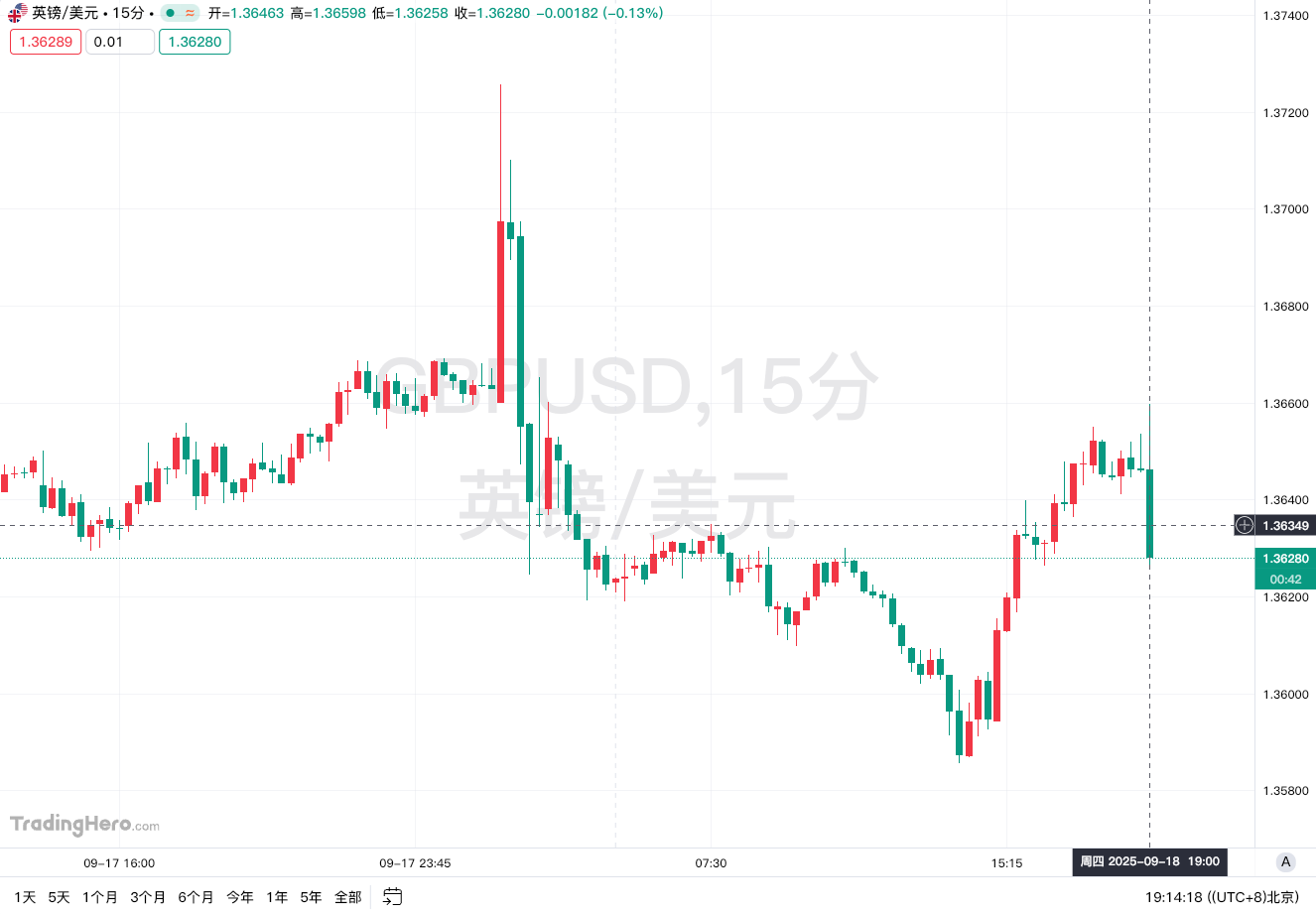
Core Viewpoint - The Bank of England maintained its policy interest rate at 4.00%, aligning with market expectations, while reducing its quantitative tightening pace from £100 billion to £70 billion [1][3] Group 1: Monetary Policy Decisions - The decision to keep the interest rate unchanged was supported by 7 members, while 2 members voted for a rate cut [1] - The Bank of England warned that future rate cuts will be "gradual and cautious," depending on the easing of underlying inflationary pressures [3] - The central bank's latest decision contrasts sharply with the Federal Reserve, which announced rate cuts earlier [5] Group 2: Inflation and Economic Outlook - Current inflation in the UK is nearly double the Bank of England's target of 2%, with expectations that inflation will rise to 4% this month [5][6] - The Bank of England noted that progress in alleviating wage pressures has outpaced that of price pressures, but recent inflation increases could create greater pressure on both fronts [4] - The UK economy is performing better than expected, with GDP growth forecast for Q3 revised up from 0.3% to 0.4% [6]
苹果价格翻三倍!利润达五倍,难怪波兰农民不愿乌克兰粮食进欧盟
Sou Hu Cai Jing· 2025-07-20 10:10
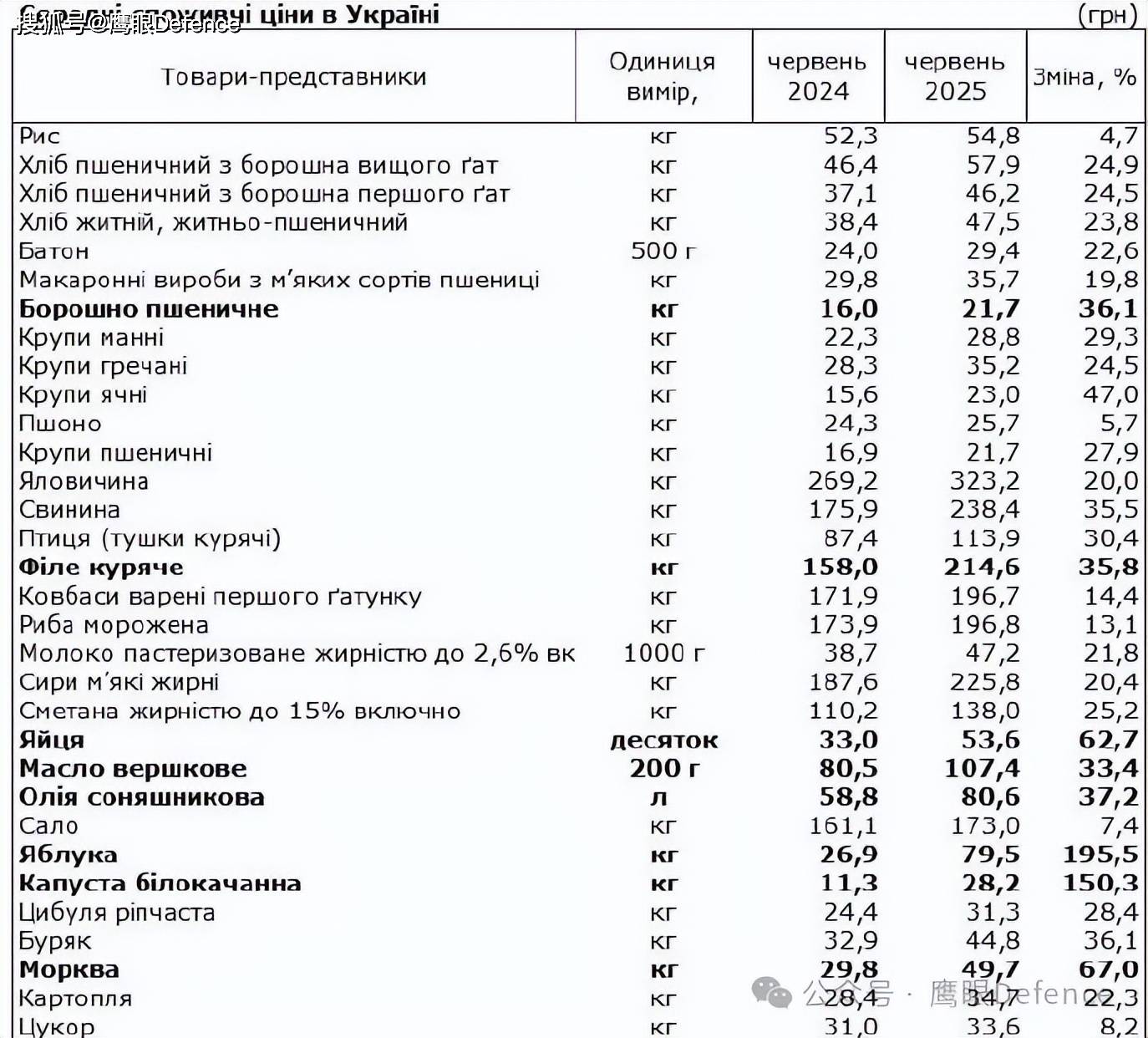
Group 1: Inflation in Russia and Ukraine - Russia is experiencing significant inflation, with electricity prices rising by 13%, natural gas by 13.5%, and water prices by 14.9%, marking the largest increase in recent years [1] - Ukraine is also facing rising prices, with food prices soaring; for instance, apple prices have nearly tripled, cabbage prices increased by 2.5 times, and chicken egg prices rose by 62.7% [1] Group 2: Agricultural Export Dynamics in Ukraine - The average cost of exporting 1 ton of agricultural products from Ukraine is €291, while the average cost for the EU is $1,538, indicating a significant profit margin for Ukrainian exports [2] - The cost advantage of Ukrainian agricultural products is a key reason for Eastern European countries' resistance to Ukraine's EU membership, fearing detrimental impacts on their agricultural sectors [4] Group 3: Government Measures in Ukraine - To address domestic food price increases due to high agricultural exports, the Ukrainian government plans to impose a 10% export tax on soybeans and sunflower seeds, which is expected to generate over 7 billion hryvnias annually for the government [4] - The export tax will be gradually reduced by 1% each year over the next five years and will only affect traders, not producers [4]
知名经济学家狂买黄金,押注债务危机“不可避免”!
Jin Shi Shu Ju· 2025-05-26 05:29
Group 1 - Marc Faber, a long-time investor, emphasizes the importance of gold as a hedge against economic crises, holding 25% of his portfolio in gold [1] - There is a growing trend among ordinary investors to purchase gold, driven by fears of a debt crisis, asset price collapse, and rising inflation [1] - Global demand for gold bars surged to 257 tons in Q1 2025, a 13% increase year-on-year, according to the World Gold Council [1] Group 2 - Interest in gold has spiked following market turmoil, such as tariffs imposed by the U.S. and a downgrade of U.S. debt by Moody's, leading to increased search interest for "gold bars" on Google [2] - Genesis Gold Group reports a significant rise in demand for their "survival gold bars," with a 20% increase in Q1 2025 following the U.S. presidential election [2] - The percentage of company clients wanting to hold physical gold has increased from 20% to 70%, reflecting a broader concern about economic stability [2] Group 3 - Analysts believe that as long as economic uncertainty persists, demand for gold will remain strong, with a favorable outlook for gold prices in 2025 [3] - The sentiment among investors is that the more challenging the economic environment becomes, the stronger gold's position will be [3] - The World Gold Council's Cavatoni states that both the support level and upward trajectory for gold prices in 2025 are in a very favorable position [3]
衰退风险已经上升 国际黄金压制依旧存在
Jin Tou Wang· 2025-04-30 07:03
Group 1 - The international gold price opened under pressure from moving averages, showing a slight decline of 0.28% to $3307.89 per ounce, with a high of $3327.91 and a low of $3305.61 [1] - The gold market is expected to experience volatility, with resistance levels identified at $3340-42 and $3330-32, while support is noted at $3299 and $3305 [3] Group 2 - Melanie Baker from Royal Asset Management anticipates two rate cuts by the Federal Reserve in 2025, with signs of economic slowdown expected in the second half of the year [2] - Joerg Kraemer from Deutsche Bank emphasizes the need for the European Central Bank to act swiftly to address potential supply shocks and rising inflation, arguing against the reliance on mid-term forecasts [2]
机构:大选后加拿大将迎来投资旺季
news flash· 2025-04-29 13:39
Group 1 - The core viewpoint is that Canada is expected to experience an investment boom following the recent federal election, particularly for investors interested in bonds, foreign exchange, and stocks sensitive to environmental, regulatory, and trade policies [1] - The Liberal Party, led by Mark Carney, has won a minority government, which will influence upcoming discussions with the United States [1] - The Trump administration continues to discuss the idea of Canada as the "51st state," but may shift its policy direction due to rising inflation concerns [1] Group 2 - Mark Carney will need to select a new cabinet, which will be crucial for the government's policy direction [1] - The upcoming Throne Speech will clarify which items from the Liberal Party's campaign platform will be prioritized in the early days of governance [1] - A revised fiscal cost assessment will not be available until the formal budget is released, expected in June [1]
德商银行:欧洲央行应加快行动,以应对日益增长的供应冲击
news flash· 2025-04-29 12:18
Core Viewpoint - Deutsche Bank's Joerg Kraemer emphasizes that the European Central Bank (ECB) should act more swiftly to address increasing supply shocks and rising inflation, as the likelihood of sudden reductions in commodity supply and subsequent price hikes is growing [1] Group 1 - The ECB should avoid the misconception that supply shocks are temporary and refrain from waiting passively [1] - The strategy of waiting has proven ineffective in the context of post-COVID price surges [1] - The ECB should not overly rely on mid-term forecasts, which have been shown to be unreliable [1] Group 2 - Only by recognizing these shocks as not merely temporary and taking decisive action can the recent inflation events be considered exceptions [1]