养老服务体系建设

Search documents
宿豫:构建专业养老服务体系 托起幸福“夕阳红”
Xin Lang Cai Jing· 2026-01-11 21:22
(来源:新华日报) 宿豫区建立"社工+护理员"联合服务机制,通过入户评估和需求调研,为老人制定"一户一策"方案。"十 四五"期间,全区总投入资金超190万元,对1400余户困难老人家庭实施了适老化改造,切实提升老年人 居家安全系数。按照"先行试点、逐步推开"原则,在多个街道(乡镇)推进养老助餐点建设,同步开展 邻里互助活动,将助餐点拓展为老年人情感交流和社会参与平台。 多元参与,激发为老"服务活力" 积极引进培育社会力量,引入安康通、社康、瑞德等6家国内知名专业化机构,开展居家和社区养老服 务连锁运营。创新探索"体验式"服务模式,建设由街道综合性养老服务中心运营、专业公司供应的示范 型老年体验店,集中展示起居辅具、智能监测、康复理疗等5大类60余件适老化产品,提供无障碍起居 室、防滑卫生间等多场景体验,日均接待体验80余人次,以科技赋能老年生活。持续推进机构提质,仁 爱、安汇老年公寓均达四级标准,较好满足辖区高龄、失能老年人养老需求。 智慧赋能,跨越助老"数字鸿沟" 充分发挥老龄社会组织、志愿者队伍、社区社工等多方力量,聚焦老年人智能技术运用培训,实用性、 互动性、趣味性有机统一。通过问卷、访谈等形式掌握老年 ...
提升养老服务 增进民生福祉
Xin Lang Cai Jing· 2026-01-09 18:43
Group 1 - The core viewpoint emphasizes the importance of improving and safeguarding people's livelihoods through the establishment of a social security system and the promotion of equal access to basic public services, aligning with the provincial committee's directives [1] - The Henan Mongolian Autonomous County is set to launch the Happiness Care Day Care Center by December 2025, focusing on elderly care needs and translating development ideas centered on the people into tangible benefits [1] - A collaborative mechanism involving party leadership, government guidance, departmental responsibility, and social participation has been established to enhance the elderly service system, optimizing fiscal expenditure and increasing investment in elderly care [1] Group 2 - The county has integrated 19.2 million yuan to build four standardized community elderly service centers and allocated 2.2 million yuan for essential service facilities, with an additional 2.5 million yuan earmarked for various support services [1] - A diversified funding mechanism has been innovatively constructed, combining government subsidies, contributions from village collective economies, personal investments, corporate donations, and social contributions to energize the development of elderly care services [1] - In the integration of medical and elderly care services, the county has broken down barriers between nursing homes and hospitals, facilitating deep cooperation and establishing a medical insurance treatment channel for regular health check-ups and services for the elderly [2]
中新武威观 | 天祝织密养老服务网 构建服务新格局
Xin Lang Cai Jing· 2026-01-05 06:23
Core Viewpoint - The article emphasizes the comprehensive development of a multi-faceted elderly care service network in Tianzhu County, aiming to enhance the quality and dignity of life for the elderly through a structured approach that includes a three-tier service network, diverse service models, medical and elderly care integration, and policy support [1] Group 1: Service Network Development - The county has established a three-tier elderly care service network consisting of a county-level institution, town comprehensive service centers, and village mutual aid happiness homes, achieving full coverage of urban and rural elderly care services [2] - Currently, there is one county-level public elderly care institution and one "public-private partnership" institution, accommodating 327 elderly residents, along with eight town service centers and 15 village mutual aid homes [2] - Over 3,868 elderly individuals have received meal assistance services totaling 32.41 million instances, addressing the issue of food access for rural elderly living alone [2] Group 2: Tailored Service Models - The county has implemented a "menu-style" elderly care service to meet the diverse needs of different elderly groups, including over ten home services such as health management and meal delivery [3] - A smart elderly care cloud platform has been established, providing 348 sets of smart wristbands and emergency call systems for elderly individuals, ensuring real-time monitoring of health data [3] - A total of 14.356 million yuan has been allocated for home modifications for 2,522 elderly households, significantly improving their living conditions [3] Group 3: Medical and Elderly Care Integration - The county has deepened the integration of medical and elderly care services, establishing a regular joint consultation mechanism between the elderly welfare service center and the Tibetan hospital's geriatric department [4] - More than 1,800 elderly individuals have been served through home visits by medical experts, promoting knowledge of elderly disease prevention and facilitating a green channel for referrals [4] - By 2025, health check-ups for 16,800 elderly individuals aged 65 and above are planned, aiming for comprehensive health screening of the elderly population [4] Group 4: Policy Support and Community Engagement - The county has reinforced policy support for elderly care, including the implementation of high-age subsidies for 3,530 individuals aged 80 and above, totaling 1.096 million yuan in subsidies with a 100% issuance rate [5] - A collaborative care system involving civil affairs, departmental coordination, and community participation has been established, with over 180 volunteer activities benefiting more than 5,000 elderly individuals [5] - The county has conducted 15 training sessions for elderly care workers, training 1,210 individuals with a 100% certification rate, enhancing the professionalism of the service workforce [5]
一系列创新举措积极探索破解养老照护难题 让养老服务“扩容+提质+增效”
Yang Shi Wang· 2026-01-01 09:47
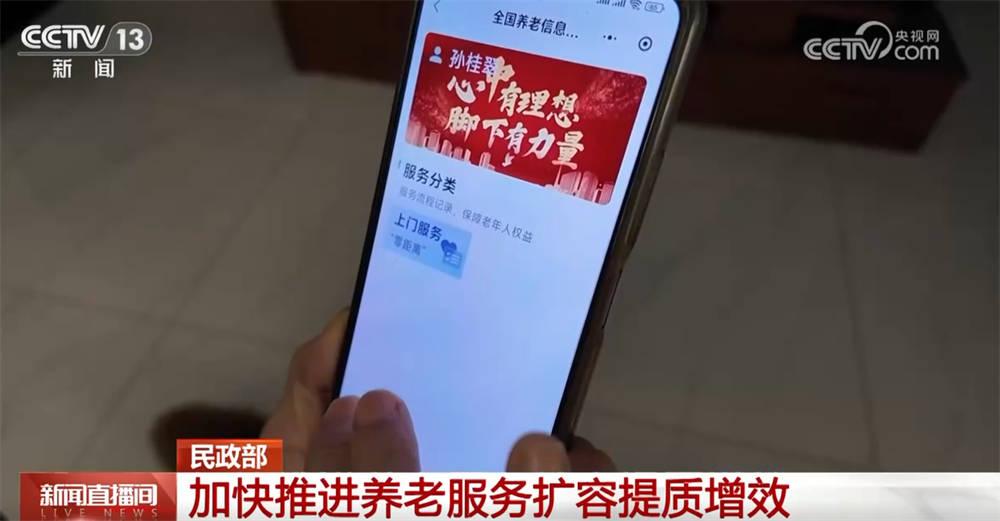
Core Insights - The year 2025 is identified as a critical year for the construction of China's elderly care service system, aiming for a more comprehensive coverage of urban and rural areas [1] - The government plans to enhance the quality and efficiency of elderly care services through various measures, including the reform of elderly care institutions and the provision of cognitive impairment care services [1] Group 1: Policy Initiatives - Starting from July 2025, subsidies for elderly care services will be issued in seven pilot regions, including Zhejiang, Shandong, and Chongqing, specifically targeting elderly individuals with moderate to severe disabilities to alleviate family caregiving pressures [3] - The government is exploring innovative measures such as centralized care for economically disadvantaged disabled elderly individuals and joint residency of elderly parents with disabled children in care institutions [3] Group 2: Financial Support and Infrastructure - In 2025, the government will continue to promote home modifications for the elderly and implement a subsidy program for replacing old consumer goods, which will stimulate consumption while improving the living environment for seniors [5] - A total of 296 million yuan will be allocated to support 59 regions in piloting innovative mechanisms for county-level elderly care services, addressing the shortcomings in rural elderly care [5] Group 3: Community and Home-Based Services - The central government will invest 900 million yuan to support 50 project areas in building family care beds and providing home services, ensuring that elderly individuals at home have access to care and support [7] - The development of community-supported home care services will be prioritized, with a focus on expanding and improving the quality of these services [11] Group 4: Technological Advancements - Technological advancements will play a significant role in enhancing elderly care services, with the availability of smart products such as companion robots, smart nursing beds, exoskeleton robots, and intelligent bathing equipment, significantly improving service quality and the quality of life for the elderly [9]

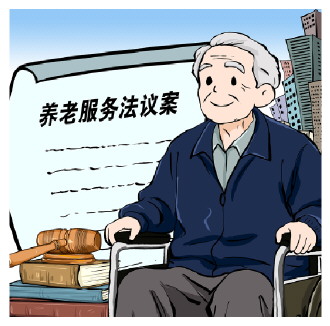
多名代表提出制定养老服务法议案
Xin Lang Cai Jing· 2025-12-22 18:17
Group 1 - The core viewpoint of the article is that the formulation of a pension service law has been included in the legislative plan of the 14th National People's Congress Standing Committee, with an emphasis on accelerating the legislative process to create a mature draft for review [3] - The National People's Congress Social Construction Committee has suggested that relevant departments of the State Council expedite the legislative work, aiming to clarify the basic principles, management system, system construction, guarantee system, team building, and supervision management of pension services [3] - The Central Committee of the Communist Party and the State Council have placed significant importance on the development of pension services, having issued a series of documents and top-level designs in recent years [3] Group 2 - The Ministry of Civil Affairs is advancing the legislative work on pension services, having developed a legislative work plan and established a special working group with a clear timeline and roadmap [3] - The next steps include organizing legislative work seminars and special research, enhancing communication and coordination with relevant parties, and broadly soliciting opinions to further revise and improve the draft text [3] - Various ministries, including the National Development and Reform Commission and the Ministry of Justice, are committed to implementing the decisions of the Central Committee, focusing on planning, policy, and funding support to strengthen the pension service system [3]
北京已建成152家区域养老服务中心,覆盖207万老年人
Bei Jing Shang Bao· 2025-12-11 08:30
Group 1 - The core viewpoint of the article highlights Beijing's efforts in enhancing its elderly care services through the establishment of a comprehensive three-tiered elderly care service network over the past five years [1] Group 2 - Beijing has built 152 regional elderly care service centers, covering 2.07 million elderly individuals, with 293,000 being "old elderly" (aged 80 and above), representing 44% of the total elderly population in the city [1] - The city has integrated 413 elderly care stations and 1,022 professional service providers to offer various services such as meal assistance, care for the elderly, home-based care, and integrated medical and nursing services [1] - A guideline for nursing bed capacity in elderly care institutions has been introduced to enhance the professional care capabilities for "old elderly," resulting in the establishment of 622 elderly care institutions with a total of 110,000 beds, of which 68% are nursing beds [1]
青年“金点子”,结出养老“金果子”
Ren Min Ri Bao· 2025-12-03 22:29
Core Insights - The introduction of the "Silver Age Consumption Voucher" program in Shanghai's Pudong New District has received positive feedback, allowing elderly residents to access various services at a reduced cost [1] Group 1: Program Overview - The "Silver Age Consumption Voucher" program offers services in four main areas: life care, health management, rehabilitation support, and mental care [1] - The program was initiated by a student from Tongji University, who identified issues such as fragmented service supply and insufficient consumption motivation among the elderly during a community visit [1] Group 2: Implementation and Development - The program was developed through community suggestions and discussions led by the Dongming Road Street Office, which included optimizing the initial proposal to focus on precise elderly care services [1] - The original idea of a broad "health care consumption voucher" was refined into a targeted elderly care service voucher, with a shift from a labor-exchange points system to a more inclusive direct subsidy approach [1] - Professional elderly care institutions were introduced to ensure the quality of services provided under the program [1]
【铜川】将敬老爱老融入城市血脉
Shan Xi Ri Bao· 2025-11-20 23:22
Core Points - The city of Tongchuan is actively enhancing its elderly care services through various initiatives and programs aimed at improving the quality of life for senior citizens [1][2][4][5][6]. Group 1: Government Initiatives - Tongchuan has implemented multiple policy documents such as the "Implementation Plan for Promoting the Construction of Basic Elderly Care Service System" and "Basic Elderly Care Service List" to establish a comprehensive elderly care service framework [1]. - The city is working towards creating a "15-minute elderly care service circle" to facilitate easier access to services for the elderly [1]. Group 2: Community Engagement - Local figures, such as Gong Xiaoyong, the director of the social welfare institute, have been recognized for their dedication to elderly care, showcasing the importance of community role models in promoting respect and care for the elderly [2]. - Volunteer initiatives, like the Warm Sun Volunteer Service Team, have provided extensive support to over 3,000 elderly individuals, demonstrating community involvement in elderly care [2]. Group 3: Daily Care Services - The city has established 51 standardized elderly meal service points to address the dining needs of seniors, ensuring they have access to hot meals at home [4]. - Innovative approaches, such as the "Silver Age Classroom" in nursing homes, are being utilized to teach elderly residents how to use smartphones, enhancing their connectivity and engagement [4]. Group 4: Cultural and Social Activities - The "Silver Age Action" initiative encourages elderly individuals to participate in community activities, with over 165 volunteer service teams formed, engaging more than 4,000 volunteers [6]. - Cultural events, such as art exhibitions and fitness showcases, are organized to allow seniors to express their talents and maintain an active lifestyle [6].
2025连云港市海州区银龄生活嘉年华成功举办 一站式养老服务获好评
Yang Zi Wan Bao Wang· 2025-11-04 09:34
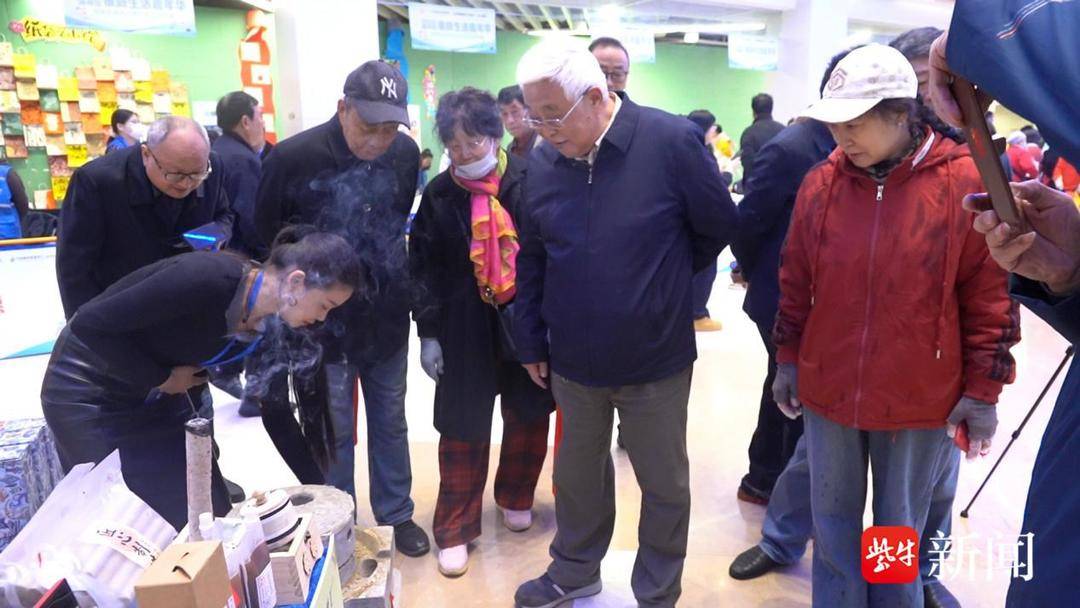
Core Viewpoint - The "2025 Haizhou District Silver Age Life Carnival" successfully concluded on November 2, aiming to create a comprehensive elderly care service platform that integrates product experience, service consultation, and cultural entertainment, receiving widespread acclaim from participants [1][3]. Group 1: Event Overview - The event featured four major exhibition areas: elderly care services, age-friendly renovation products, elderly finance, and elderly culture and tourism, addressing the daily needs of senior citizens [3]. - The elderly care services area showcased various service models, including community and institutional care, while the age-friendly renovation products area offered trials of smart health monitoring devices and rehabilitation aids [3]. - The elderly finance area provided personalized retirement financial planning consultations, and the culture and tourism area introduced cultural courses and age-appropriate travel routes [3]. Group 2: Community Engagement - The event maintained a public welfare attribute by offering free health checks, legal consultations, and financial advice, alongside cultural activities such as talent shows and live teaching, highlighting the positive spirit of modern seniors [3][5]. - Participant feedback indicated that the event was both practical and enjoyable, reflecting the community's care for the elderly [5]. Group 3: Strategic Implications - The Haizhou District Civil Affairs Bureau described the event as a beneficial attempt to integrate government, enterprise, and social resources to enhance the elderly care service system, aiming to improve the quality of life for seniors and foster a respectful social atmosphere [5][6]. - The successful hosting of the carnival established a platform for connecting social resources with elderly care needs, marking a successful exploration of a new model for elderly care characterized by "government guidance, social participation, and market operation" [6].

关键词读懂“十五五”丨@所有人 你关心的都在规划里!
Yang Guang Wang· 2025-10-30 14:03
Core Viewpoint - The Central Committee of the Communist Party of China has released recommendations for the 15th Five-Year Plan, focusing on various measures to enhance employment, income, education, and social security in the realm of public welfare [1]. Employment Strategies - Implementation of an employment-first strategy and improvement of employment promotion mechanisms [5]. - Active cultivation of new professions and job positions, supporting enterprises in stabilizing and expanding jobs [6]. - Establishment of a lifelong vocational skills training system [6]. - Focus on stabilizing and expanding employment for key groups such as college graduates, migrant workers, and veterans [6][7]. - Promotion of flexible employment and healthy development of new employment forms [6]. Income Distribution - Increase the proportion of residents' income in national income distribution [10]. - Enhance labor remuneration in the primary distribution of income [10]. - Improve the mechanism for determining initial distribution based on market evaluation of contributions [10]. - Implement a plan to increase income for urban and rural residents [10]. Education Improvements - Expand educational resources for the net inflow of school-age population into urban areas [15]. - Gradually expand the scope of free education and explore extending the duration of compulsory education [15]. - Enhance the capacity of vocational schools and build distinctive higher vocational colleges [15]. Social Security Enhancements - Improve and implement a nationwide basic pension insurance system [17]. - Accelerate the development of a multi-level, multi-pillar pension insurance system [17]. - Optimize the medical insurance payment and drug procurement policies [17]. Housing Policies - Optimize the supply of affordable housing to meet the basic housing needs of urban wage earners and low-income families [22]. - Implement housing quality improvement projects and enhance property service quality [22]. - Establish a safety management system for the entire lifecycle of housing [22]. Health and Family Support - Optimize fertility support policies and incentives, effectively reducing family upbringing costs [27]. - Implement a maternity leave system and enhance the maternity insurance system [30]. - Develop integrated services for childcare and early education [30].