农耕文明

Search documents
视频丨“立春一日,水暖三分” 解码古老农谚背后的科学原理
Yang Shi Xin Wen Ke Hu Duan· 2026-02-04 06:31
Group 1 - The arrival of the "Beginning of Spring" (Lichun) marks the end of winter and the start of warmer temperatures, with many regions in China experiencing temperatures 8-10°C higher than the historical average for this time of year [1][13] - The phrase "Lichun Yiri, Shui Nuan San Fen" indicates that with the arrival of spring, water temperatures begin to rise, signaling the awakening of nature [2][9] - Historical observations have led to a deep understanding of climate changes associated with Lichun, reflecting ancient wisdom in the interpretation of seasonal shifts [4][11] Group 2 - The phrase "Lichun Qi Dongfeng, Tian He Shou Cheng Feng" symbolizes the arrival of the east wind, which is associated with favorable weather conditions for agriculture, indicating a shift from cold to warm air masses [14][15] - The east wind brings necessary moisture and temperature conditions that benefit the growth of crops, particularly in northern regions where winter wheat begins to thrive [19][21] - This agricultural wisdom is still relevant today, as it helps guide farming practices and seasonal preparations [21] Group 3 - The custom of eating spring pancakes during Lichun reflects a cultural practice that aligns with seasonal dietary needs and symbolizes hopes for a prosperous year ahead [22][28] - The preparation of spring rolls in various regions showcases local culinary traditions that celebrate the arrival of spring and the abundance of fresh ingredients [24][26] - The practice of "biting into spring" (Yao Chun) emphasizes gratitude for nature's offerings and the transition from winter scarcity to spring abundance [28]


年糕的记忆
Xin Lang Cai Jing· 2026-02-01 17:15
转自:衢州日报 沈庆文 (来源:衢州日报) 年糕的制作,其实很费时费力,要经过选米、浸泡、磨粉、蒸煮、捶打、切段定型等工序。第一次看到 制作年糕,是在初中寒假。二中的邻居发小同学一家是上海人,喜欢吃糖炒或糖拌年糕,但上世纪70年 代,年糕需凭票在春节期间供应,数量有限,去粮店晚了还无货。也不知他母亲怎么打听到龚家埠头有 年糕加工点,就买来糯米,让我们送去加工。龚家埠头当时是农村,在现今西安门大桥往西区方向右边 桥下。我们从二中步行至此,被告知要两三天后来取成品年糕。第三天下午两人带着原先装糯米的布袋 再去,场面很热闹,室外泥地上,许多人围观几位加工人员抡起木槌在三四个石臼里捶打年糕,一下一 下地反复用力击打,衢州人叫这事为"锵年糕"。 等到我们取年糕时,天早已暗了下来。尴尬的是,加工人员看我们提着布袋,说这怎么装得下。他们很 善良,借给我们一只箩筐和一根扁担,说你们抬回去吧,明天还回来就是了。不记得我们带去了多少斤 糯米,但做年糕要充些粳米,要加水磨浆之类,成形的年糕肯定比原先带去的糯米要多得多,足有半箩 筐。教书的父母辈可能不懂这些,我们初中生更是不懂。 更有意思的是返回二中的事。那时教师宿舍在校园内,不像 ...
广州市番禺区南村镇中心小学农耕体验文明实践活动
Xin Lang Cai Jing· 2026-01-17 18:43
(来源:中国妇女报) 转自:中国妇女报 (田恬) 同学们聆听了板桥村负责人讲述板桥村从农耕走向城乡融合的变迁历程,跟着农户代表了解当地水稻种 植的起源、演变,近距离触摸了农具,沉浸式感受乡土农耕文明的深厚底蕴。之后,同学们亲自下田实 践,开展收割、打谷等劳作,感受"一粥一饭,当思来之不易"的深刻内涵。 此次农耕体验文明实践活动,同学们沉浸体验乡土生活,在活动中体会农耕生产中的奋斗精神与勤俭节 约美德,感悟到劳动的价值与劳动的意义。 1月6日,广州市番禺区南村镇中心小学学生代表在老师的带领下,到板桥村参加"稻香话文明 板桥绘新 景"农耕体验文明实践活动。 ...
第八批中国重要农业文化遗产候选项目名单公示 广东4项传统农业系统上榜
Xin Lang Cai Jing· 2026-01-13 00:14
Core Points - The Ministry of Agriculture and Rural Affairs announced the inclusion of 90 traditional agricultural systems, including four from Guangdong, in the eighth batch of candidates for China's important agricultural cultural heritage [1][2] - The initiative aims to promote the protection and inheritance of excellent farming culture in China, contributing to rural revitalization and enhancing the role of agricultural cultural heritage in supply security, ecological protection, cultural transmission, and income generation [1] - The criteria for selection include a history of at least 100 years, significant value in the origin and dissemination of important agricultural species, and the embodiment of the harmonious coexistence of humans and nature [2] Criteria for Selection - The agricultural systems must demonstrate a living transmission of agricultural technical knowledge, a traditional rural culture based on farming, clear core protection elements and areas, distinctive traditional agricultural industries, and a sustainable social foundation for protection and inheritance [2]
黄土之下,纸页之上 一部丛书背后的千年回响
Xin Lang Cai Jing· 2026-01-03 23:23
这是世界上黄土层最厚的一块塬地。 已灭绝的黄河古象曾埋葬在这里,中华民族的人文始祖"黄帝"和中医始祖"岐伯"的故事发生在这里。 法国人桑志华在这里发现了中国出土的第一件旧石器。哈佛大学考古学家张光直评价,中国古人类化石 与旧石器时代文化研究就是从此开始的。 秦始皇修建的秦直道从这里穿过。王昭君出塞时经过,在一道山梁上梳妆打扮,"打扮梁"的地名至今沿 用。 这里是庆阳。 曾为黄土高原拍摄纪录片的导演金铁木在这里工作后,常常在想一个问题——贫瘠的黄土地,怎么会拥 有那么大的力量? 如今,他或许可以从新出版的一套书中找到答案——《庆阳历史文化大观丛书》。这套丛书是首部反映 庆阳历史文化整体概貌的著作,包括遗址文物卷、民俗非遗卷、名人贤达卷等6卷,共140万余字,历时 两年多完成,由中国青年出版总社出版。 地方史志有记录生活的传统 实际上,生活在这块土地上的人们,一直在记录着他们的生活。庆阳历来重视编修地方史志,明清时期 至少有7部府志和19部县志问世,留下极为宝贵的山川地理、堡寨要隘、赋役物产、历史沿革的资料, 形成较甘肃其他地区更为完备的编写体例和续修传统。 其中保存最为完整、史料价值最大的一部《庆阳府志》,藏于 ...

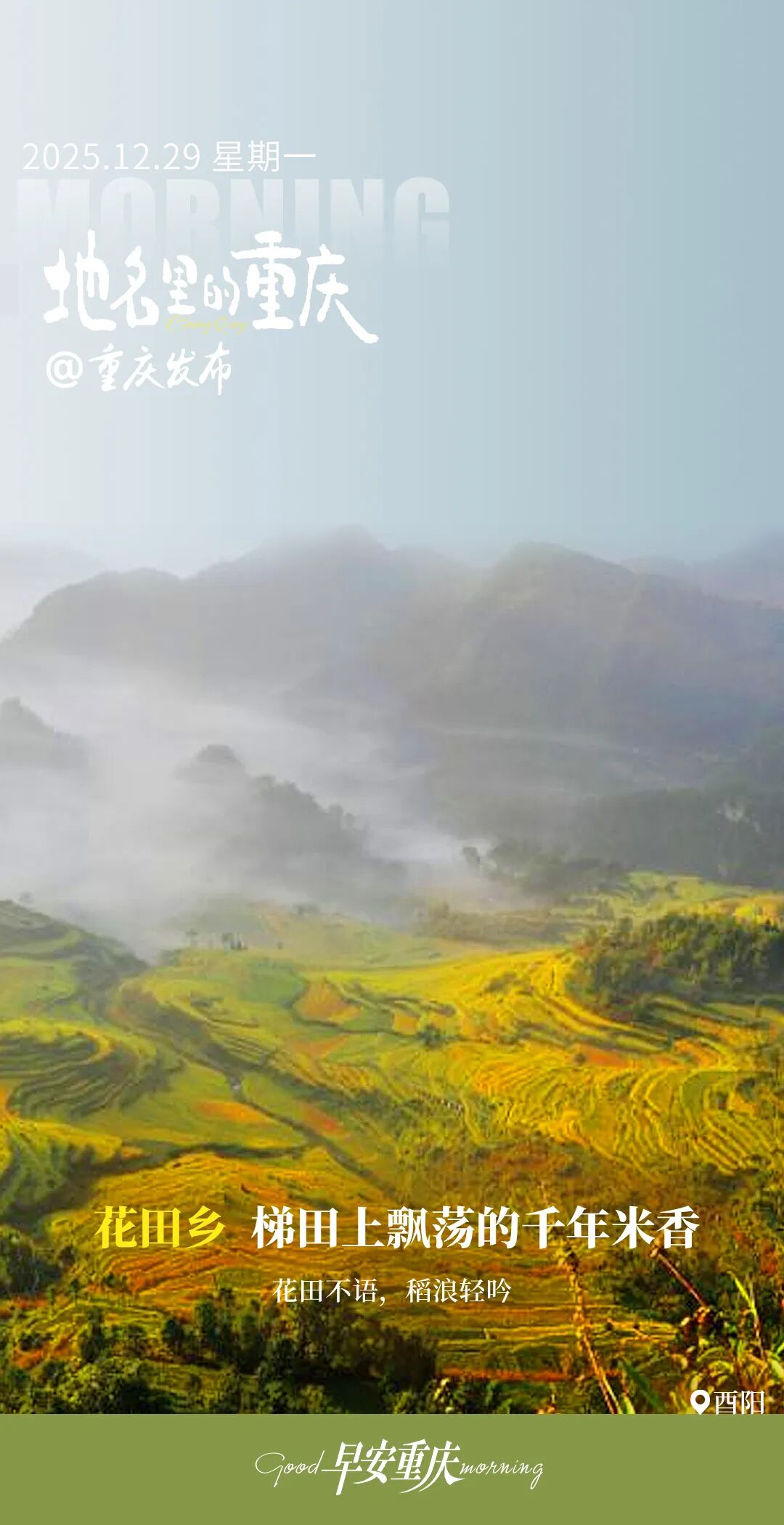
地名里的重庆 | 酉阳花田乡 梯田上飘荡的千年米香
Xin Lang Cai Jing· 2025-12-28 23:34
Core Viewpoint - The article highlights the cultural and historical significance of Huatian Township in Chongqing, particularly its renowned tribute rice, which has a legacy dating back to the Ming Dynasty, and its picturesque terraced fields that symbolize agricultural civilization and natural harmony [5][8][10]. Summary by Sections Historical Background - Huatian Township was established in 1953, with its name derived from nearby garden names and the scenic terraced fields [5][6]. - The tribute rice from Huatian has a storied history, being recognized as "imperial rice" during the Tang Dynasty and officially designated as tribute rice during the Ming Yongle period [8]. Geographic and Demographic Information - The township covers an area of 79 square kilometers and consists of six administrative villages, with a population of over 10,000 residents [5]. - The terraced fields are located at altitudes between 700 to 900 meters, featuring a vertical drop of 800 meters across 5 square kilometers, making it the largest terraced landscape in the Wuling Mountains [10]. Cultural Significance - The terraced fields, cultivated by the He family over five generations, represent a deep connection between agriculture and the environment, embodying a living narrative of farming civilization [10]. - The local rice is celebrated for its delicate flavor, as expressed in the folk song "Huangyang Bian Dan," which reflects the cultural heritage associated with Huatian's tribute rice [6][8].
李胜亚 | 印象米脂
Xin Lang Cai Jing· 2025-12-21 09:22
Core Viewpoint - The article reflects on the historical and cultural significance of Mizhi, a county in Shaanxi Province, China, highlighting its transformation from a traditional agricultural society to a modern community while retaining its rich heritage and local flavors [3][5][6]. Group 1: Historical and Cultural Significance - Mizhi was once a prominent area with a rich history, known for its notable figures and cultural contributions, which continue to be a source of pride for its descendants [3][5]. - The region is characterized by its unique geographical features, including the Loess Plateau, which has shaped the local culture and lifestyle, emphasizing agricultural practices and community values [4][6]. Group 2: Modern Transformation - The infrastructure in Mizhi has significantly improved, with modern roads and parks enhancing the living conditions and connectivity of the area, reflecting a commitment to community development [5][6]. - The local economy is supported by various industries, including agriculture and salt chemical production, which contribute to the overall prosperity of the region [6]. Group 3: Local Cuisine and Traditions - Mizhi is known for its distinctive local cuisine, such as millet dishes and donkey meat, which are integral to the cultural identity and culinary heritage of the area [4][5]. - Traditional music and crafts, such as the suona (a traditional wind instrument), play a vital role in the cultural expression of Mizhi, showcasing the region's artistic heritage [5][6].
涵养文明乡风
Ren Min Ri Bao· 2025-11-28 00:47
Core Viewpoint - The article emphasizes the importance of cultivating a civilized rural atmosphere as a key component of China's modernization, highlighting the interplay between material and spiritual civilization in rural revitalization efforts [1][2]. Group 1: Civilized Rural Atmosphere - A civilized rural atmosphere is characterized by improved social interactions, simplified customs, and the revitalization of local cultural heritage, reflecting the positive spirit of rural residents [1]. - The 20th National Congress of the Communist Party of China has included the enhancement of social civilization as a major goal for economic and social development during the 14th Five-Year Plan period [1]. Group 2: Community Engagement and Cultural Heritage - The key to fostering a civilized rural atmosphere lies in mobilizing community engagement, as seen in the acceptance of lower bride prices and simplified wedding customs, which alleviate social burdens for villagers [2]. - Traditional cultural elements such as shadow puppetry, paper-cutting, and wax dyeing are gaining attention and market presence through initiatives like agricultural cultural heritage recognition and rural craftsmanship training [2]. Group 3: Integration of Agricultural and Urban Cultures - The article discusses the interaction between agricultural and urban cultures, exemplified by rural poets and community sports events that bridge the gap between rural and urban experiences [3]. - To enhance cultural resonance between urban and rural areas, there is a need to improve rural cultural infrastructure and promote cultural services in villages, enabling farmers to become active participants in shaping their cultural narratives [3].
涵养文明乡风(话说新农村)
Ren Min Ri Bao· 2025-11-27 22:30
Group 1 - The core idea emphasizes the importance of cultivating a civilized rural atmosphere as a vital link to good family values and simple folk customs, which are essential for the comprehensive revitalization of rural areas [1][2] - The article highlights that the improvement of spiritual and cultural soft power in rural areas is increasingly valued as living conditions improve and economic development progresses [1][2] - It points out that even with urbanization, approximately 400 million people will still live in rural areas, making the level of social civilization in these areas crucial for the quality of Chinese-style modernization [1][2] Group 2 - The key to nurturing a civilized rural atmosphere lies in mobilizing people's enthusiasm, as seen in the acceptance of lower bride prices and simplified wedding ceremonies, which alleviate the burden of social obligations for villagers [2] - The article discusses the significance of rural cultural heritage, noting that traditional cultural forms like shadow puppetry and paper-cutting are gaining attention and expanding into broader markets [2] - It emphasizes the need for cultural resources to be integrated into rural areas, enhancing infrastructure like cultural halls and libraries, and promoting cultural performances and legal consultations to empower farmers as creators of civilized rural culture [3]
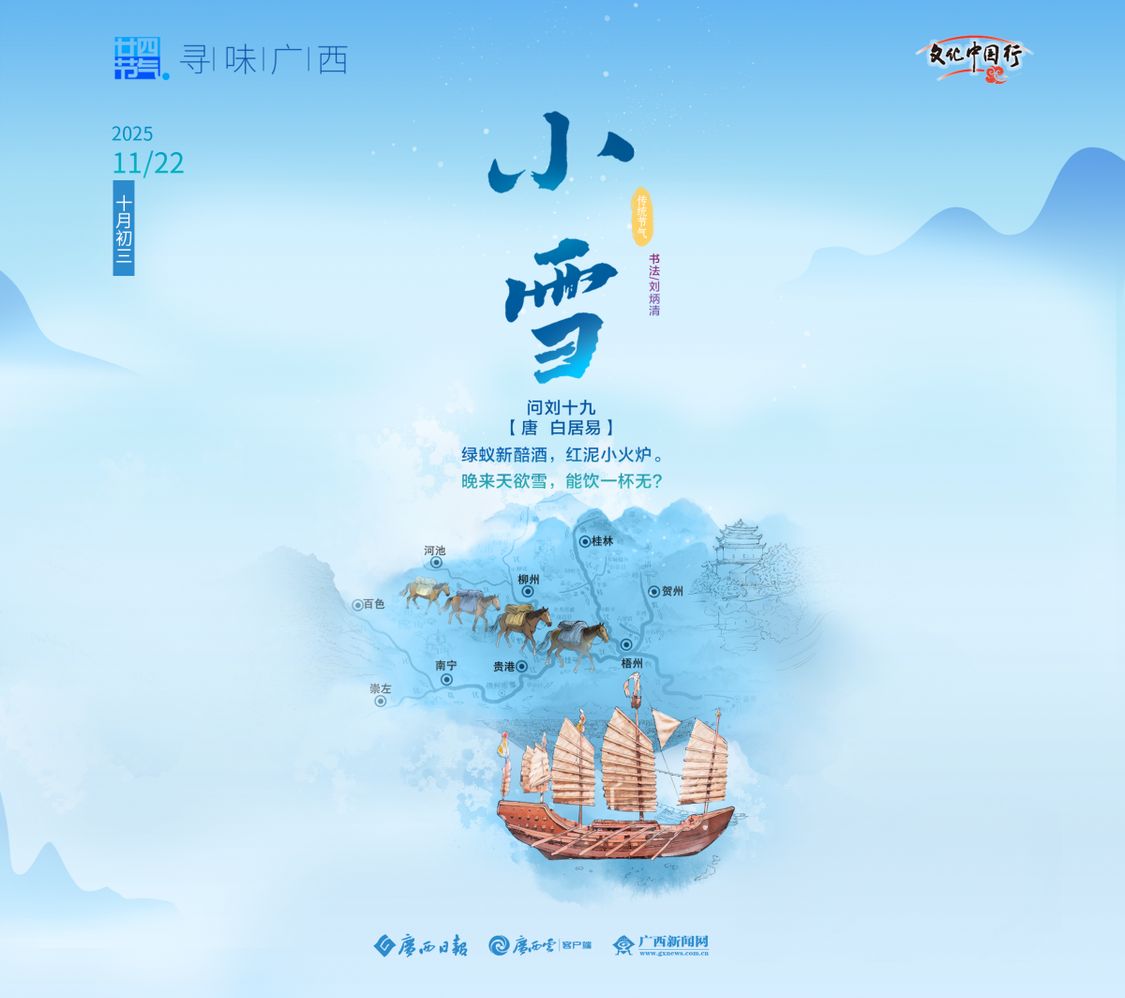
二十四节气·寻味广西丨小雪
Guang Xi Ri Bao· 2025-11-22 12:18
Group 1 - The article highlights the significance of the 24 solar terms in Chinese agricultural history and culture, emphasizing their connection to nature and the wisdom of the Chinese people [1] - Guangxi Daily has launched a special column "Taste Guangxi · 24 Solar Terms" to explore the meteorological aspects of Guangxi and delve into the profound connotations of this world-class intangible cultural heritage [1] Group 2 - Hepu is identified as one of the starting ports of the ancient Maritime Silk Road, where fishermen have thrived for centuries due to their connection to the sea [3] - The modern fishing industry in the Beibu Gulf has developed into a global marine industry chain, supported by advanced production technologies and stable electricity supply [5] - The construction of a comprehensive energy security zone is accelerating, providing stable electricity to support the high-quality development of the marine economy in Guangxi [7] Group 3 - The article discusses the historical significance of the tea transportation routes in Guangxi, particularly the "Tea Boat Ancient Road," which symbolizes the region's transition from an isolated inland area to a broader maritime economy [14] - The upcoming completion of the Pinglu Canal is expected to enhance the tea industry by creating a new "river-sea combined transport" channel [16] Group 4 - The article reflects on the historical paths of the Xiaojie Ancient Road and the Wanli Tea Road, emphasizing their roles in trade and cultural exchange [17] - The ongoing development of the Xiaojie Ancient Road Economic Belt aims to create a platform for cultural integration and regional cooperation [19] Group 5 - The article describes the customs and practices associated with the "Small Snow" solar term in Guangxi, including traditional food preparations like making glutinous rice cakes [32] - It emphasizes the importance of adapting to seasonal changes and maintaining health through appropriate lifestyle choices during the winter months [35]