
北极航道

Search documents
船已抵达!连接中国和欧洲,北极航线有重大进展
Mei Ri Jing Ji Xin Wen· 2025-10-19 16:52
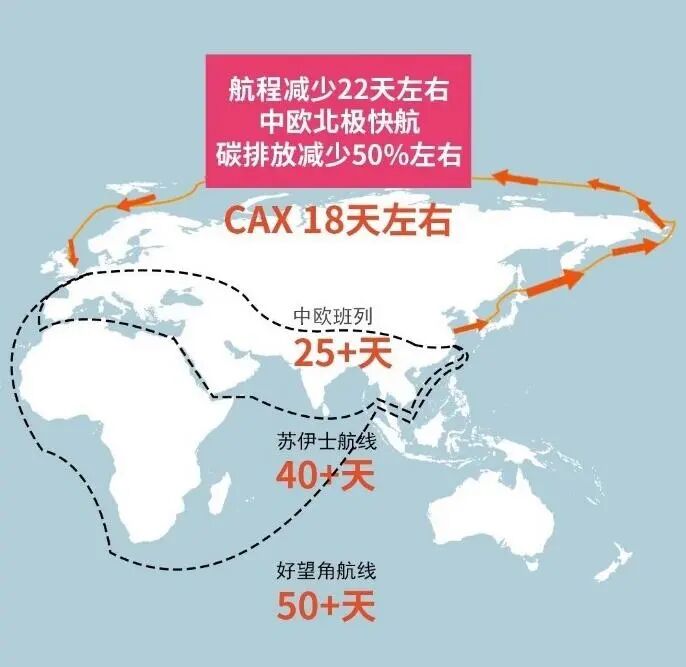
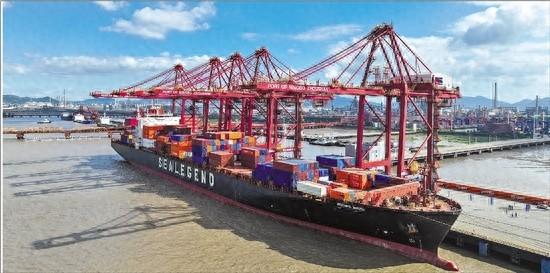
Core Viewpoint - The successful launch of the China-Europe Arctic Container Fast Shipping Route significantly reduces shipping time and costs, enhancing trade efficiency between China and Europe [1][9]. Group 1: Shipping Route Details - The first cargo ship of the China-Europe Arctic Fast Shipping Route arrived at Gdansk Port, Poland, after a 26-day journey from Ningbo-Zhoushan Port [1]. - The ship departed on September 23, making stops at Felixstowe, UK, and Hamburg, Germany, before reaching Gdansk [2]. - The Arctic route takes only 20 days to reach Felixstowe, compared to approximately 40 days via the Suez Canal and 50 days via the Cape of Good Hope, showcasing a clear time advantage [2][6]. Group 2: Economic Impact - The Arctic route is expected to optimize global supply chains and enhance economic cooperation along the route, serving as a core channel of the "Ice Silk Road" [4]. - The cargo value of the "Istanbul Bridge" ship, which successfully navigated this route, was approximately 1.4 billion yuan, including goods such as clothing and energy storage cabinets [6]. - Experts believe that the new shipping route will strengthen the resilience of the China-Europe supply chain and improve trade efficiency, particularly in sectors like automotive parts and assembly [9][11]. Group 3: Future Prospects - The Arctic route is anticipated to develop further, potentially allowing for more efficient transportation of high-value goods, including electric vehicle components [11][14]. - The route may also facilitate increased exports from Europe to China, addressing the current imbalance where containers often return empty [14]. - The integration of the Arctic route with the China-Europe Railway Express is expected to enhance mutual benefits in trade [11][13].

乌电崩了?普京亮出290亿吨王牌!澳洲铁矿王座要凉?
Sou Hu Cai Jing· 2025-10-18 17:53
Group 1 - The article highlights the shift in the Ukraine conflict from military engagements to resource, financial, and demographic factors as key determinants of victory [1][27] - Ukraine's military capabilities are severely diminished, with recent airstrikes causing significant damage to infrastructure and revealing a depletion of defense resources [3][5] - The financial situation in Ukraine is dire, with a projected budget deficit of $370 billion for 2025, heavily reliant on foreign aid that is becoming increasingly uncertain [5][33] Group 2 - Russia's announcement of 29.4 billion tons of iron ore reserves is seen as a strategic move to assert its resource wealth and potential economic stability post-conflict [9][11] - The iron ore market is less susceptible to sanctions compared to oil and gas, providing Russia with a stable revenue stream to sustain its military efforts [9][11] - The potential for Russia to leverage its vast mineral resources in post-war negotiations and partnerships, particularly with countries looking to diversify their supply chains, is significant [11][40] Group 3 - Australia's dominance in the iron ore market is threatened by Russia's emerging capabilities and strategic partnerships, particularly with China [19][22] - The shift in global supply chains and resource pricing dynamics is evident, with potential implications for Australian mining companies as they face increased competition from Russian exports [19][42] - The article suggests that the future of the iron ore market may see a significant shift if Russia can effectively capitalize on its resources and establish long-term agreements with key buyers [25][42]

大外交|全球首条中欧北极快航通航,北极航道战略、商业价值日渐凸显
Xin Lang Cai Jing· 2025-09-28 15:09
Core Insights - The "Istanbul Bridge" cargo ship has embarked on the inaugural voyage of the world's first Arctic container fast route between China and Europe, marking a significant milestone in the development of the "Ice Silk Road" initiative [3][4][5] - This new Arctic route is expected to reduce shipping times by approximately 10 days and costs by around 35% compared to traditional routes, providing a strong supplement to existing maritime transport channels between China and Europe [4][5][6] Summary by Sections Inaugural Voyage - The "Istanbul Bridge" departed from Ningbo Zhoushan Port on September 23 and is scheduled to arrive at the UK's largest container port, Felixstowe, on October 11, with a transit time of only 18 days [4][5] - The ship will also visit Rotterdam and Hamburg before concluding its journey in Gdansk, Poland, on October 16 [4] Route Significance - The Arctic Northeast Passage, approximately 2,700 nautical miles (about 5,000 kilometers) long, is the shortest maritime route between Russia's Far East and Europe, significantly shortening shipping distances by over one-third [3][4] - The route is particularly beneficial for high-value industries, such as lithium battery storage and electric vehicle components, allowing for better quality control due to reduced transit times [5] Geopolitical Context - The opening of this route is seen as a response to increasing geopolitical uncertainties and trade tensions, particularly between China and the West, and is expected to deepen economic ties between China and major European economies [5][9] - The Arctic route is viewed as a safer alternative to traditional shipping lanes, avoiding regions prone to piracy and geopolitical risks [9] Future Prospects - Experts suggest that as climate change continues to open up the Arctic, the potential for increased shipping through this route could reshape global trade patterns, with estimates indicating that 10%-30% of cargo could eventually shift to the Arctic route [4][6][9] - However, challenges remain, including limited infrastructure in the Russian Arctic and the seasonal nature of the route, which currently only operates from July to November [6][7]
“冰上丝路”重塑中欧贸易版图
Sou Hu Cai Jing· 2025-09-28 08:54
Core Viewpoint - The opening of the Arctic shipping route, marked by the departure of the "Istanbul Bridge" from Ningbo, China, signifies the establishment of the world's first direct container shipping line between China and Europe, reducing transit time to 18 days and offering strategic advantages amid geopolitical tensions and evolving trade structures [1][2]. Group 1: Geopolitical Context - The Arctic route serves as a strategic solution to the "Malacca Dilemma," enhancing China's resilience and security in the global value chain [2]. - Traditional trade routes are increasingly vulnerable due to geopolitical risks, making the Arctic route a safer alternative that bypasses hotspots and reduces carbon emissions by 50% [2]. Group 2: Industrial Upgrade Opportunities - The Arctic route is expected to act as a "strategic lever" for China's industrial upgrade, particularly benefiting high-value products that require temperature control, thus shifting the focus from cost competition to quality leadership [3]. - The rapid transit time allows for timely delivery of seasonal goods, enabling Chinese manufacturers to transition from mass production to flexible customization [3]. Group 3: Trade Dynamics with Europe - The Arctic "Ice Silk Road" will reshape China's trade landscape with Europe, providing new opportunities for coastal ports and opening pathways for inland regions [4]. - Coastal ports like Ningbo-Zhoushan are set to enhance their capabilities, while inland trade hubs can leverage the Arctic route alongside traditional rail services to improve trade flexibility [4]. Group 4: Green Transition and Technological Innovation - The construction of the Arctic route aligns with China's green transition and innovation strategies, significantly reducing carbon emissions and facilitating access to European markets for low-carbon products [5]. - The development of ice-capable vessels is expected to spur technological advancements in China's shipbuilding industry, enhancing domestic production capabilities [5]. Group 5: New Development Framework - The Arctic route plays a crucial role in promoting domestic and international dual circulation, providing a direct channel for high-value products to Europe and enhancing China's competitive edge [7]. - It supports the establishment of a comprehensive trade network across Asia and Europe, mitigating risks associated with geopolitical tensions and regulatory challenges from Western nations [7].
中欧北极快航,对我国城市格局将有何影响?
Hu Xiu· 2025-09-25 23:43
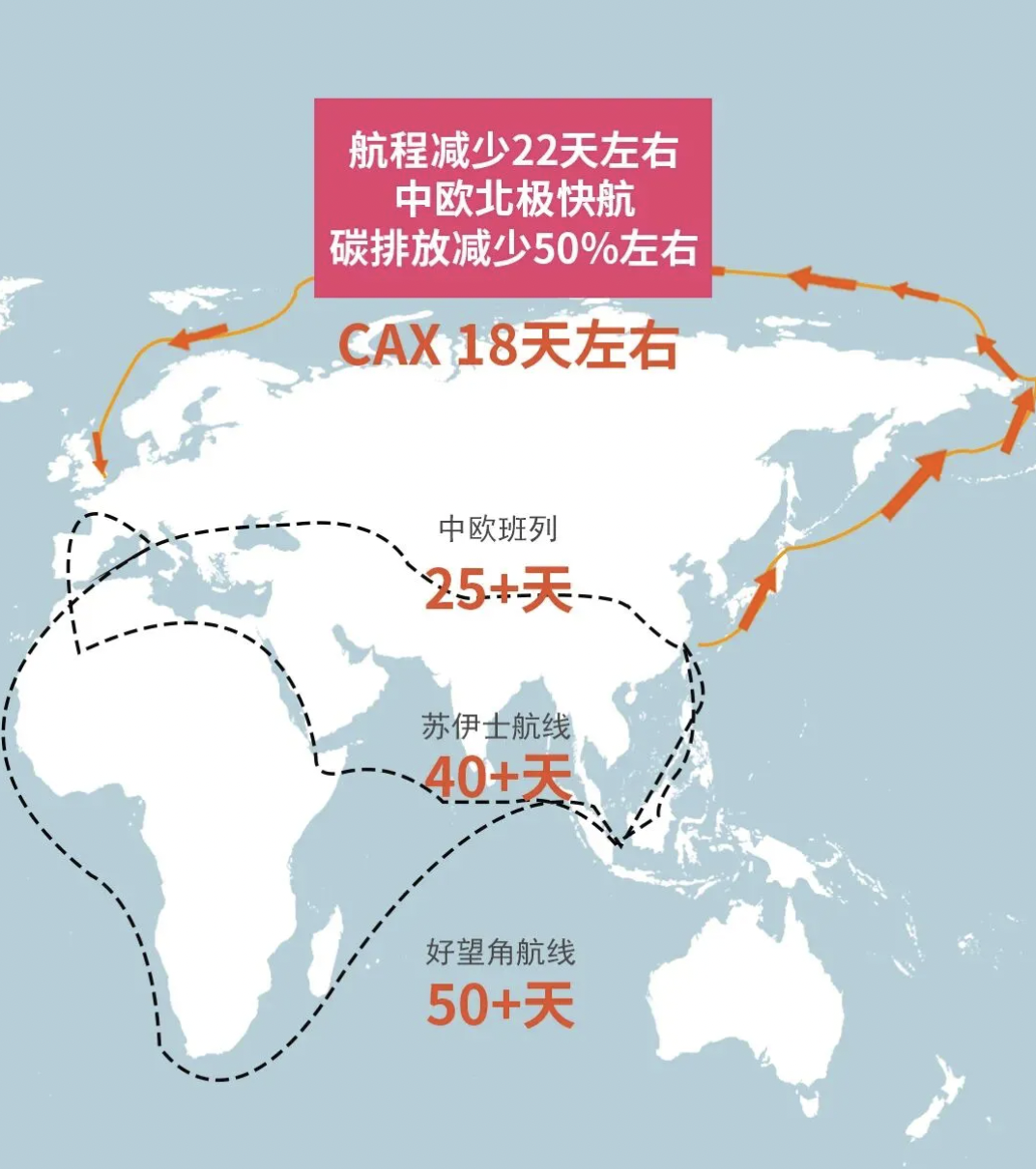
Core Viewpoint - The launch of the "China-Europe Arctic Express" (CAX) marks a significant development in global shipping, providing a faster route from Ningbo to the UK, reducing transit time to 18 days compared to over 40 days via the Suez Canal [1][2][9]. Group 1: Route Efficiency and Impact - The new Arctic route significantly shortens shipping times, allowing for a 40% reduction in inventory levels for companies and lower carbon emissions due to the shorter journey [9][10]. - The Arctic route is becoming a focal point for global trade, with the potential to enhance China's international logistics capabilities and improve the efficiency of trade with Europe [3][23]. Group 2: Historical Context and Development - The Arctic shipping route has evolved from being deemed impractical to a viable option due to climate change, which has extended the navigable period to approximately five months a year [6][7]. - The "China-Europe Railway Express" previously initiated a transformation in China-Europe trade logistics, establishing a network of rail connections that complement the new Arctic shipping route [2][4]. Group 3: Geopolitical and Economic Implications - The Arctic route is not only significant for trade but also for resource development, with the region holding substantial untapped oil and gas reserves [12][13]. - The emergence of the Arctic route may shift economic centers towards northern cities in East Asia, enhancing their trade capabilities with Europe and North America [20][21]. Group 4: Challenges and Future Prospects - Despite its potential, the Arctic route faces challenges such as high operational costs during winter and environmental concerns that need to be addressed for sustainable development [30][31]. - The goal is to establish a fixed summer route by next year, with plans to enhance fleet capabilities to achieve year-round operations [31].
俄罗斯国家原子能公司:今年经由北极航线的夏季至秋季航行期将于7月1日至11月30日开放。今年外国船只通过该航线的航次将增长50%。预计国际社会对北极航道的兴趣将呈现明显的上升趋势。
news flash· 2025-05-30 11:16
Core Insights - The Russian state nuclear energy company announced that the summer to autumn navigation period via the Arctic route will be open from July 1 to November 30 this year [1] - There is an expected 50% increase in the number of foreign vessels transiting through this route [1] - The international community's interest in the Arctic shipping lane is anticipated to rise significantly [1]