
新能源汽车零部件

Search documents
贝斯特20230331
2026-04-01 09:59
Summary of Conference Call Notes Company Overview - The company discussed is Best, focusing on its performance and strategic initiatives in the automotive parts and new energy sectors. Key Points Industry and Company Performance - In Q4 2025, the company faced pressure on gross margins due to currency fluctuations (USD/CNY dropping to 6.9), rising raw material costs (aluminum/copper), and depreciation from new factories, with 2026 expected to be the peak for depreciation [2][3] - Revenue for 2025 surpassed 1.5 billion CNY, a year-on-year increase of 10.82%, with the automotive parts business contributing over 90% and growing by 12% [3] - The new energy business is projected to grow over 30% in 2025, with the Anhui factory's capacity utilization increasing from nearly 0% at the beginning of the year to over 50% by year-end [2][3] - The turbocharger segment maintained a steady growth of over 8%, while the hydrogen energy business is currently around 10 million CNY in scale [2][3][9] Financial Challenges and Outlook - The company anticipates profit pressure in the second half of 2025 due to increased depreciation (approximately 25 million CNY), foreign exchange losses exceeding 10 million CNY, and high costs from subsidiaries still ramping up production [3] - For 2026, the company is optimistic about growth, particularly in the turbocharger and new energy sectors, supported by capacity releases from Anhui and Thailand factories [3][4] Factory and Production Insights - The Anhui factory is expected to achieve breakeven in 2026, with a planned output of 400-500 million CNY [4][8] - The Thailand factory is set to begin production in April 2026, with a total planned output of 800-1,000 million CNY, covering turbochargers, new energy, and robotics [2][16] - The company is focusing on high-precision products, with a target to maintain high precision levels in industrial mother machines and robotics [13][14] Market Dynamics - The downstream structure for turbocharger components shows that passenger vehicles account for about 80% of the segment, with hybrid models making up 50% of domestic sales [7] - The company is enhancing its foreign exchange risk management by implementing a currency-neutral principle and establishing quarterly price adjustment mechanisms with clients [6] Product Development and Client Engagement - The company is actively working on its roller screw products for automotive applications, currently in the sampling and validation phase [10] - The industrial mother machine's roller screw products have passed validation with leading domestic manufacturers and are entering mass production, with expected rapid order growth starting in 2026 [11] Strategic Goals - The company aims for significant growth from 2026 to 2028, driven by transitioning from small-batch to large-scale production [13] - The focus remains on high-precision screw products, with plans to expand into new precision ranges based on customer needs [13][14] Organizational Structure - The Thailand factory will initially rely on personnel from headquarters, with plans to increase local staffing over time while maintaining core personnel from China [17] Additional Important Insights - The company is experiencing a shift in product structure, with an increasing share of new energy vehicle components, which may temporarily lower overall gross margins [5] - The company is leveraging its self-manufactured equipment to enhance production efficiency and reduce costs [13]
三花智控20260324
2026-03-26 13:20
Company and Industry Summary Company Overview - The company is Sanhua Intelligent Control, which reported a total revenue of 31 billion RMB in 2025, marking an 11% year-on-year increase. The gross profit margin was 28.78%, up by 1.3 percentage points, and the net profit attributable to shareholders reached 4.06 billion RMB, a 31% increase year-on-year [3][4]. Key Business Segments Refrigeration Business - Revenue from the refrigeration segment was 18.59 billion RMB, up 12.2% year-on-year, with a gross margin of 28.77%, an increase of 1.4 percentage points. The net profit for this segment was 2.08 billion RMB, reflecting a 30.9% increase [3][4]. - The commercial refrigeration segment achieved approximately 20% revenue growth and about 40% net profit growth in 2025, indicating strong customer loyalty and stability [14]. Automotive Parts Business - The automotive parts segment generated revenue of 12.42 billion RMB, a 9.1% increase year-on-year, with a net profit of 1.98 billion RMB, also up 31% [3][4]. - Major clients include a large customer in the U.S. and BYD, with significant orders from Xiaomi and other emerging players. The profit growth for 2026 is expected to slightly exceed revenue growth [2][3]. Emerging Strategic Industries - Revenue from emerging strategic industries, including liquid cooling and energy storage thermal management, reached 2 billion RMB in 2025, doubling year-on-year. The growth rate for 2026 is projected to be between 50% and 100% [2][4]. - The company has established connections with major U.S. AI technology firms and Tier 1 manufacturers for these products [2][4]. Bionic Robotics Business - The bionic robotics segment is positioned as a supplier of components for all potential manufacturers, with internal progress reported as smooth. The strategy has shifted from focusing on benchmark clients to a broader customer base [5][11]. Financial Strategies and Capital Expenditure - The company plans to invest 7 to 8 billion RMB over the next three years, focusing on overseas bases in Mexico, Vietnam, Poland, and Thailand to mitigate macroeconomic risks and support global markets [2][8]. - In 2025, the investment in the Thailand electromechanical factory was reported at 400 million RMB [8]. Raw Material Management - The company has implemented strategies to manage raw material price fluctuations, including price linkage for copper products and hedging for aluminum products. The use of stainless steel as a substitute for copper has been emphasized [7][9]. Market Outlook and Guidance - For 2026, the company targets a 15% growth in net profit, with expectations of a slight slowdown in growth due to subsidy policy changes and overseas market fluctuations [2][3]. - The automotive parts business is expected to face pressure from the downstream automotive industry, with strategies in place to manage aluminum price risks through hedging and material substitution [9][11]. Additional Insights - The company has noted a significant difference in net profit margins between the automotive and home appliance segments, attributed to improved operational efficiency and a shift in business strategy towards selecting quality clients [6][10]. - The company remains optimistic about the long-term growth of the electric vehicle market, despite current market fluctuations, and is committed to capturing opportunities in both electric and traditional fuel vehicle markets [11][12]. Conclusion - Sanhua Intelligent Control is positioned for growth across its various business segments, with a strong focus on emerging technologies and strategic investments in overseas markets. The company is actively managing raw material costs and adapting its strategies to maintain profitability in a changing market environment.
战略转型期阶段性承压,华阳变速2025年亏损2487.06万元
Ju Chao Zi Xun· 2026-02-28 03:43
Core Viewpoint - Huayang Transmission reported a significant decline in financial performance for the year 2025, with a notable drop in revenue and an increase in net losses, indicating operational challenges during the transition from traditional automotive components to new energy vehicle components [2][5]. Financial Performance Summary - The company achieved an operating revenue of 31,513.27 million yuan in 2025, a year-on-year decrease of 38.47% [2][4]. - The net profit attributable to shareholders was -2,487.06 million yuan, with a year-on-year loss increase of 52.52% [2][4]. - The net profit after deducting non-recurring gains and losses was -2,595.03 million yuan, down 48.3% year-on-year [2][4]. - Basic earnings per share were -0.18 yuan, reflecting a 50% decline compared to the previous year [2][4]. - Total assets at the end of 2025 were 56,930.58 million yuan, a decrease of 20.02% year-on-year [2][4]. - Shareholders' equity was 19,591.33 million yuan, down 11.26% year-on-year [2][4]. - The net asset value per share was 1.45 yuan, a decline of 11.59% year-on-year [2][4]. Reasons for Performance Changes - The decline in operating revenue was primarily due to a reduction in aluminum ingot sales, which decreased by 15,635.63 million yuan, and lower-than-expected revenue from new energy products, estimated to be about 5,000 million yuan less than the previous year [5]. - The significant drop in gross profit was attributed to lower revenue from new energy products, high unit costs due to insufficient scale effects, and increased depreciation costs from new equipment during the transition phase [5]. - The company recognized impairment losses on inventory and fixed assets based on accounting prudence, which directly impacted net profit [5]. Strategic Transition and Future Outlook - The company is currently undergoing a strategic transition from traditional fuel vehicle components to new energy vehicle components, facing challenges such as slowing revenue growth, cost pressures, and asset impairments [6]. - Future plans include expanding research and application of lightweight new energy products and core technologies to enhance product competitiveness, releasing capacity from invested projects, and improving the return on initial transition investments [6].

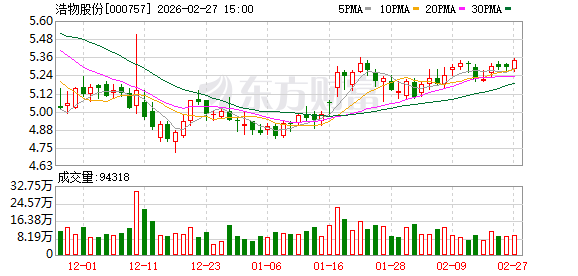
浩物股份:汽车零部件业务板块深耕现有产品并将积极拓展其他新能源汽车零部件产品
Zheng Quan Ri Bao· 2026-02-27 08:39
Group 1 - The core viewpoint of the article is that the company, Haowu Co., is focusing on expanding its automotive parts business, particularly in the field of new energy vehicle components [2] - The company plans to deepen its existing product offerings while actively exploring other new energy vehicle parts [2] - The expansion strategy will primarily involve independent research and development as well as external mergers and acquisitions [2]

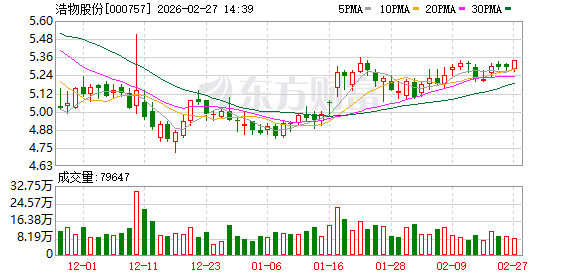
浩物股份:公司将积极拓展其他新能源汽车零部件产品,拓展方式主要包括自主研发及外延式并购
Mei Ri Jing Ji Xin Wen· 2026-02-27 06:38
Group 1 - The company is considering expanding its electric vehicle (EV) component business through mergers and acquisitions to enhance its overall vehicle support capabilities [2] - The company plans to actively explore other EV component products while deepening its existing automotive parts business [2]
浩物股份:将积极拓展其他新能源汽车零部件产品,拓展方式主要包括自主研发及外延式并购
Jin Rong Jie· 2026-02-27 04:02
Core Viewpoint - The company is considering expanding its business in the new energy vehicle (NEV) components sector through both independent research and external acquisitions to enhance its overall vehicle support capabilities [1] Group 1: Company Strategy - The company is actively deepening its existing automotive parts business while also looking to expand into other NEV component products [1] - The primary methods for expansion will include self-research and external acquisitions [1]
旭升集团:可全方面满足客户在各种应用场景下新产品、新技术的开发合作
Zheng Quan Ri Bao Wang· 2026-02-13 13:14
Core Viewpoint - Xusheng Group (603305) positions itself as a primary supplier for globally recognized new energy vehicle brands, indicating its capability to support clients in the development and collaboration of new products and technologies across various application scenarios [1] Group 1 - The company emphasizes its role as a first-tier supplier for well-known new energy vehicle enterprises [1] - Xusheng Group claims to comprehensively meet customer needs in diverse application scenarios [1] - The specific business situation is advised to be referenced from the company's announcements, official website, and media accounts [1]

粤港澳大湾区中欧班列开行突破5000列
Yang Shi Xin Wen· 2026-02-11 07:19
Core Viewpoint - The Guangzhou International Port Railway Station has marked a significant milestone with the departure of the X8426 China-Europe freight train, which is loaded with high-end electronic equipment and new energy vehicle components, indicating the high-quality development of the "Steel Silk Road" and the strong momentum for the Guangdong-Hong Kong-Macao Greater Bay Area's high-level opening-up [1] Group 1 - The China-Europe freight train service from the Guangdong-Hong Kong-Macao Greater Bay Area has officially surpassed 5,000 trips since its first operation in 2013 [1] - The recent train departure signifies a new phase in the development of the freight service, emphasizing its role in enhancing international trade and connectivity [1] - The cargo includes high-end electronic devices and components for new energy vehicles, reflecting the growing importance of these sectors in the region's economy [1]
长春英利汽车工业股份有限公司关于本次向特定对象发行股票部分募投项目新增实施主体及实施地点的公告
Xin Lang Cai Jing· 2026-02-10 19:00
Core Viewpoint - Changchun Yingli Automotive Industry Co., Ltd. is announcing the addition of a new implementation entity and location for its fundraising project related to the "New Energy Vehicle Parts Intelligent Manufacturing Center Construction Project" to enhance the efficiency of the raised funds [2][3]. Fundraising Overview - The company has received approval from the China Securities Regulatory Commission to issue 91,532,828 shares at a price of RMB 5.33 per share, raising a total of RMB 487,869,973.24, with a net amount of RMB 478,159,024.44 after deducting issuance costs [3][4]. - The funds have been deposited into a special account approved by the board of directors, and a tripartite supervision agreement has been signed with the sponsor and the bank [3]. Project Investment Details - The actual net amount raised is lower than the planned amount in the fundraising prospectus, leading to an adjustment in the fundraising usage plan [4]. - The new implementation entity, Yizheng Yingli Automotive Parts Manufacturing Co., Ltd., is added to the project, with the new location being at 31 Lianzhong Road, Yizheng (Yangzhou) Automotive Industrial Park [5][6]. Impact on Operations - The addition of the new implementation entity and location is a strategic decision aimed at optimizing internal resource allocation without changing the investment purpose or scale, thus not adversely affecting the company's operations or financial status [7]. Decision-Making Process - The board of directors held meetings on February 9 and 10, 2026, to review and approve the proposal for the new implementation entity and location, which does not require shareholder approval [8][12]. Special Opinions - The audit committee and the sponsor, CITIC Securities, have confirmed that the adjustments comply with relevant regulations and will enhance the efficiency of fund usage without harming the interests of the company or minority shareholders [9][10].

泉峰汽车2月2日获融资买入388.98万元,融资余额1.06亿元
Xin Lang Cai Jing· 2026-02-03 01:32
Group 1 - The core viewpoint of the news is that QuanFeng Automotive's stock experienced a decline of 1.77% on February 2, with a trading volume of 59.40 million yuan, indicating a negative sentiment in the market [1] - On February 2, the financing buy amount for QuanFeng Automotive was 3.89 million yuan, while the financing repayment was 4.03 million yuan, resulting in a net financing outflow of 137,700 yuan [1] - As of February 2, the total balance of margin trading for QuanFeng Automotive was 107 million yuan, with the financing balance accounting for 3.77% of the circulating market value, which is below the 50th percentile level over the past year, indicating a low financing level [1] Group 2 - QuanFeng Automotive, established on March 19, 2012, and listed on May 22, 2019, is located in Jiangning District, Nanjing, and specializes in the research, production, and sales of aluminum alloy and black metal automotive components [2] - The company's main business revenue composition includes 60.45% from new energy vehicle components, 19.37% from automotive transmission components, 10.69% from engine components, and smaller percentages from other automotive and household appliance components [2] - For the period from January to September 2025, QuanFeng Automotive achieved an operating income of 1.93 billion yuan, representing a year-on-year growth of 22.99%, while the net profit attributable to the parent company was -230 million yuan, reflecting a year-on-year increase of 39.46% [2]
